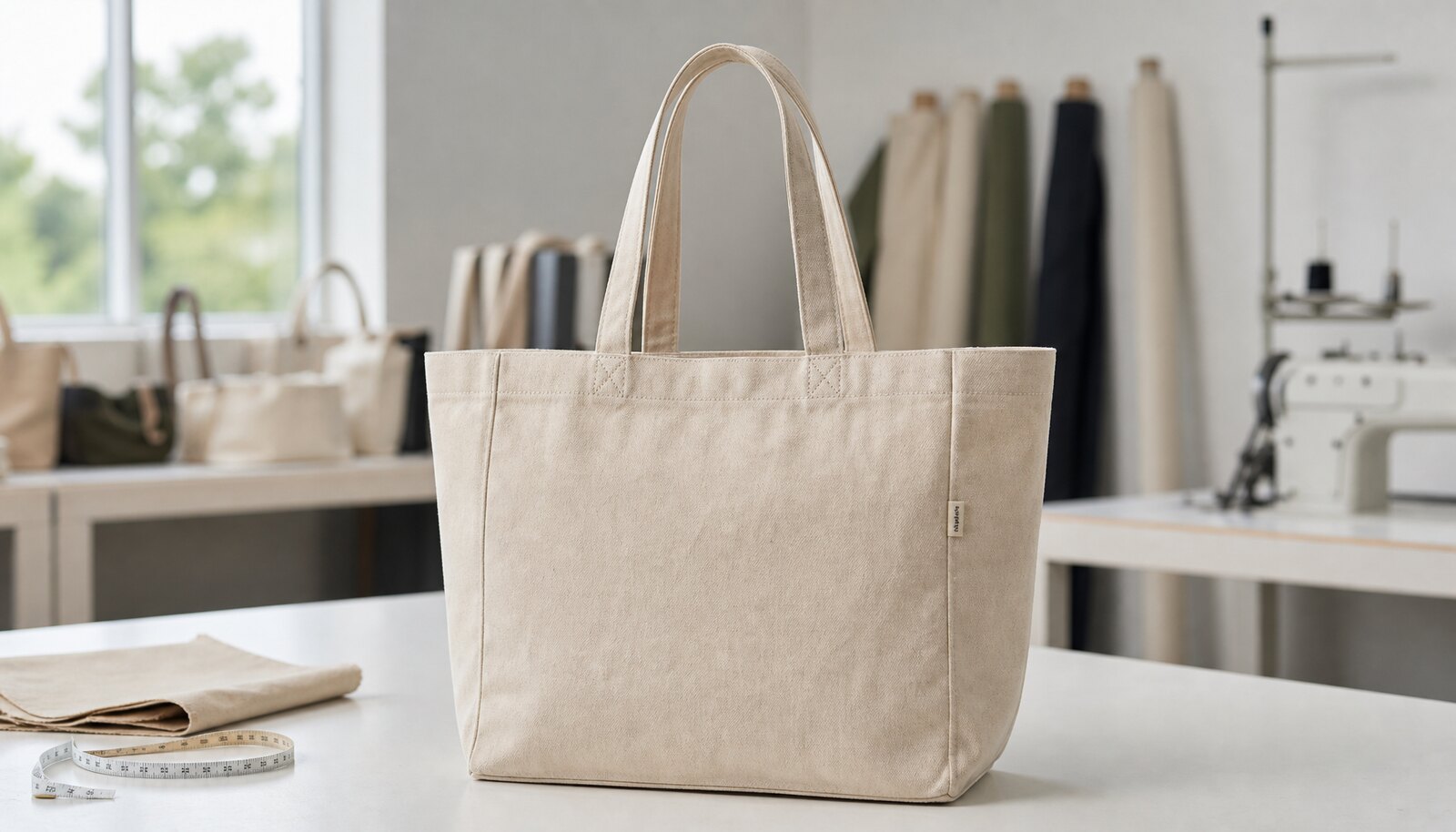
What gift shop buyers are actually buying
A custom canvas grocery tote for a gift shop is doing two jobs at once. It has to function like a reusable carry bag, and it has to look polished enough to sit on a shelf next to higher-margin impulse items. That means the buyer is not only purchasing dimensions and print placement. They are buying perceived quality, retail presentation, and a low-return experience after the first use. The tote that wins in a procurement meeting is not always the one that wins at the register if it arrives wrinkled, dusty, or visually weak.
The intended channel should drive the spec. A bag sold at a register as a quick add-on needs a clean silhouette, straightforward packing, and a price that survives the margin stack. A tote used as a gift-with-purchase item can justify more structure, better handle finish, and a slightly heavier canvas because the brand is absorbing the cost. If the bag is meant to become part of a gift shop's permanent SKU set, you need stronger repeatability in fabric weight, print registration, and carton pack-out than you would for a one-off event order.
- Shelf appeal matters as much as carrying strength for gift shop programs.
- A tote that folds badly or arrives dirty can lose the sale before a customer touches it.
- Define the selling channel first, then set the fabric and packing spec.
Choose the canvas spec before decoration
The most common spec error is asking for artwork before the base fabric is locked. Canvas weight changes the feel, structure, print behavior, and freight profile of the tote. For retail gift shop use, lighter 8 oz or 9 oz canvas can work when the bag is meant for simple promo distribution, but it often feels soft and less premium on display. A 10 oz to 12 oz canvas usually gives better body, better shelf shape, and a more convincing retail handfeel. If the bag will carry groceries, catalog bundles, or other heavier items, the additional structure is usually worth the higher material cost.
Weight is not the only variable. Ask for the actual GSM or oz value, the weave type, the color state, and whether the fabric is pre-shrunk or washed. A loose weave may print cleanly but distort during sewing. A denser weave generally gives cleaner edges, more stable seams, and less visual variation from one production lot to the next. If the bag has to look premium, request a sample made from the exact fabric lot or a documented match to it. A swatch in a file photo is not enough to approve the finished retail appearance.
- 8 oz to 9 oz canvas suits light promotional use and lower price points.
- 10 oz to 12 oz canvas is usually safer for gift shop retail use and repeated customer carrying.
- Ask for measured GSM or oz, not a marketing adjective.
- Confirm shrinkage control before you approve finished dimensions.
Specify construction details that affect durability
For a canvas grocery tote, the construction is where the usable life of the bag is won or lost. Handle material, seam allowance, reinforcement pattern, gusset depth, and base construction all affect how the bag behaves when loaded. A handle that looks fine in a flat sample can fail quickly if the anchor points are not reinforced. A bottom seam that is acceptable on a light display piece may open when the tote is actually used for groceries or books. Buyers should not treat these details as factory defaults because factories often optimize for speed unless the order says otherwise.
Use the purchase order to define the construction in plain terms. State the handle length, handle width, whether the handle is self-fabric or webbing, and whether reinforcement is required at both ends. If the tote needs a gusset, define the width in the finished size, not only in the sketch. If a pocket, snap, zipper, or board insert is included, write down its exact placement because those additions can shift weight and distort the printed area. For a gift shop SKU, even a small construction change can alter the bag's look enough to affect sell-through.
- Require reinforcement at every load-bearing handle attachment point.
- Define gusset depth and handle length in the approved drawing, not only in email.
- Treat pockets, snaps, inserts, and closures as spec changes, not free extras.
- Reject bags with seam twists, asymmetry, or distortion that shows from shelf distance.
Match the decoration method to the artwork and the shelf
Decoration should follow the art, the fabric, and the retail use case. Screen print is still the most controlled option for simple logos, flat spot colors, and repeat orders because it gives strong coverage and predictable repeatability when the factory has a disciplined process. It is usually the safest route when the buyer wants the same tote reordered throughout the year. Heat transfer and digital methods solve different problems, especially when the artwork has gradients, fine details, or color complexity, but those methods can change the handfeel and may look less premium if the film or ink layer is too visible.
The RFQ should define the print size, placement, number of colors, and the acceptable shift from the approved centerline or seam edge. The buyer should also define what is not acceptable. For example, if the logo is supposed to read cleanly from display distance, then a print that is slightly fuzzy or off-center may still be a defect even if it is technically usable. For gift shop programs, subtle branding often performs better than oversized art. The right question is not how much ink the supplier can apply. The right question is whether the tote still looks intentional after printing, folding, packing, and shelf display.
- Use screen print for solid logos and reorderable SKUs.
- Use transfer or digital decoration only when the artwork genuinely needs it.
- Define print placement and registration tolerance in millimeters.
- Approve print quality on the final canvas, not a substitute fabric.
Compare sourcing routes with real tradeoffs
A quote is only useful when the buyer understands how the supplier route shapes the result. A direct factory with sewing and printing under one roof usually offers the best visibility into process control, provided the supplier actually owns the key steps. A trading company can be useful when speed matters or when the buyer needs multi-category sourcing, but the buyer must then verify who is making the bag, who is printing it, and who is responsible when a defect appears. A domestic decorator using stock totes can be the right answer for urgent, low-complexity orders, but the tradeoff is less control over the underlying fabric, dimensions, and handle construction.
The practical decision is not which route sounds cheapest. It is which route reduces total project risk for the specific program. For a repeat retail SKU, a direct factory usually gives the best balance of price control and repeatability. For a short-term event order, the fastest local decorator may be worth the premium. For larger programs, a sourcing partner only adds value if they can document the production record and the inspection result instead of simply passing through a quote.
- Direct factory sourcing gives the most leverage on spec control and repeatability.
- Trading routes can hide where defects are introduced, so request process transparency.
- Small urgent orders may justify a local supplier if the specs are intentionally simple.
- Ask every route to quote the same product definition so you can compare like for like.
Use samples as a production gate
A sample is useful only if it proves the actual production path. A pre-production sample should use the final canvas, final trim, final decoration method, and final packing method. If the supplier sends a near-match material or a different print process, the sample may still be helpful for shape reference, but it should not be used to release bulk production. Buyers often lose time because they approve an attractive sample that cannot be reproduced efficiently in the bulk line. That creates the exact problems procurement is meant to avoid: late substitutions, cost creep, and quality drift.
Review the sample against measurable points. Measure bag width, height, gusset depth, and handle length. Check seam symmetry, print placement, thread trimming, and whether the bag opens and folds as expected. If the tote has a board insert, pocket, or liner, inspect how those parts sit inside the bag and whether they change the outside silhouette. For gift shop use, also evaluate the tote from customer eye level, not just on a bench. If the sample looks flat or baggy under display conditions, it will likely look the same in the store.
- Approve only a sample that uses the final material and final decoration method.
- Measure the sample and compare it to the approved drawing.
- Inspect the first packed unit as part of sample approval.
- Treat any deviation from the approved sample as a written change order.
Set inspection thresholds the factory can follow
Quality inspection is stronger when the threshold is explicit. A practical tote program often uses AQL 2.5 for major defects and 4.0 for minor defects, but the bigger issue is defining what counts as a major defect in your own context. For a gift shop tote, a missing handle reinforcement, an open seam, a wrong size beyond tolerance, a badly shifted logo, or a visible stain on retail-ready goods should be treated as major because it affects usability or sellability. A loose thread, a slight fold wrinkle, or a very small print alignment shift may be minor only if it stays within the agreed visual standard.
The factory should know the rejection points before cutting starts. Ask for a simple control plan that covers incoming fabric check, in-process stitching check, print check, and final packing check. If the tote is meant to carry groceries, require a load test that reflects the intended use and a hold time long enough to reveal seam weakness. If the brand cares about shelf appearance, define acceptable print shift and cloth contamination from normal viewing distance rather than relying on the supplier's judgment. The cleaner the retail requirement, the more you should insist on measurable QC steps instead of general statements like good quality or good workmanship.
- Use AQL or a similar standard, but define major and minor defects in writing.
- Treat open seams, missing reinforcement, wrong size, and bad print placement as major defects.
- Require a defined load test if the tote is sold as functional grocery carryware.
- Inspect from shelf distance for cosmetic defects that affect retail sell-through.
Build a packing spec that protects retail value
Packing is where many otherwise good totes lose value. A canvas grocery tote can arrive folded badly, wrinkled, dusty, or out of shape if the packing method was left vague. For shelf-ready gift shop programs, the buyer should specify whether the tote is packed flat, folded with an insert card, polybagged individually, or packed in bulk by dozens. The right answer depends on how the receiving team handles the shipment and how the shop displays the item. If the tote needs to look clean at the point of sale, an insert card, belly band, or controlled fold pattern can make a real difference.
Carton spec matters just as much as unit packing. Ask for carton dimensions, gross weight, units per carton, and any pallet pattern if the tote is going to be distributed through a retail network. A poor carton size can create unnecessary freight cost and crush the bags before they reach the shelf. Also define carton marks so receiving staff can sort by style, color, and carton number without opening every box. If the order has more than one SKU or artwork version, request a packing photo or pack-out sample before bulk release. That is cheaper than sorting a mixed shipment after arrival.
- Define unit packing before production, not after the first batch is sewn.
- Choose carton counts that protect shape and avoid wasted air volume.
- Use barcodes or item stickers if the product enters retail receiving systems.
- Require a pack-out sample or packing photo for multi-SKU orders.
Use quote structure to expose hidden cost
A useful quote should break the tote into cost drivers: fabric, cutting and sewing, decoration setup, decoration application, trims, packing, carton work, testing, and export handling if relevant. That breakdown lets procurement compare suppliers who may be using different fabric weights or different print methods. If one supplier quotes a lower unit price but excludes screens, insert cards, barcodes, or cartons, the apparent savings usually disappear. The buyer should also compare on the same incoterm because EXW, FOB, and delivered pricing move responsibility in different ways and can make a quote look cheaper than it is.
For landed-cost comparison, add sample charges, artwork setup, freight, customs handling, and the expected cost of overage or defect allowance. If the tote is being sold into a gift shop channel, even a small hidden cost can matter because the retail margin is often tight. Ask the supplier to state what is included and what is excluded. A transparent quote with clear exclusions is usually safer than a low quote that hides the real cost of print setup or packing labor.
- Compare quotes on the same fabric weight, print method, packing method, and incoterm.
- Ask for setup charges and repeat-order charges separately.
- Review exclusions before comparing unit price.
- Calculate landed cost with freight and defect allowance, not only factory gate price.
Turn the RFQ into a production brief
The RFQ should read like a manufacturing instruction sheet, not a marketing note. Include the bag size, canvas weight, weave or finish, handle construction, print size and position, packing method, target order quantity, target delivery date, and the inspection standard you want followed. If brand color matters, attach artwork in vector form and specify the approved color reference. If the gift shop needs a shelf-ready presentation, include the barcode, insert card, and pack-out rules so the supplier quotes the full job instead of guessing the retail finish later.
The RFQ should also list the items that must be priced separately. That usually includes sample charges, screens or plates, extra print colors, carton changes, special inserts, testing, and any documentation the buyer needs. This prevents the supplier from burying real cost in the unit price and then trimming the spec to protect margin. A good RFQ reduces back-and-forth because it removes ambiguity before the first quote lands. It also creates a cleaner record if the buyer needs to compare multiple suppliers or explain the sourcing decision internally.
- Attach production-ready artwork and color references.
- State the packing requirement in the RFQ, including labels and carton marks.
- Ask for separate prices for setup, repeat orders, and optional upgrades.
- Write the delivery window and the inspection standard into the brief.
Specification comparison for buyers
| Spec decision | Typical cost driver | MOQ and sampling behavior | Lead-time impact | QC burden |
|---|---|---|---|---|
| Direct factory with sewing and printing in-house | Lowest hidden markup, but setup, cutting waste, and print screens are real cost drivers | Often moderate MOQ per color or artwork version; one sample cycle is usually enough if the factory is disciplined | Usually the best control over schedule, but delays show up when fabric is not stocked or artwork is changed late | Medium to low if the factory shares actual production and inspection records |
| Trading company or sourcing agent | Markup is built into the quote, and the real production cost is harder to see | MOQ can look flexible because the agent is combining multiple programs, but each spec change can trigger a re-quote | Can speed up the first quote and sample coordination, but final delivery depends on the underlying factory | High unless the agent provides the actual factory QC report and traceability |
| Domestic decorator using blank stock totes | Blank stock price plus decoration fee; the base tote is often the biggest constraint | Usually the lowest MOQ and fastest sample approval when the tote is already in stock | Fastest path for urgent programs, but customization options are limited | Low on fabric development, medium on decoration accuracy, and high if stock variation is wide |
| Factory with in-house screen print | Screen setup, color count, and print coverage drive cost more than the bag itself on small runs | Best when artwork is stable and reorderable; MOQ rises when more print colors or special placements are added | Lead time is predictable if artwork is approved early and screens are reused | Lower print risk for solid logos, but you must define registration tolerance |
| Factory using outsourced print finishing | Decoration is often the variable cost and can swing with capacity | MOQ may be flexible on sewing, but the print subcontractor can force batching | Often slower because the bag moves between vendors | Higher because responsibility splits across two parties |
| Supplier offering organic or recycled canvas | Material certification, traceability, and documentation add cost | MOQ may rise because certified fabric is not always held in the right color or weight | Lead time can extend if the certified fabric lot must be sourced first | Medium to high because claims must match the finished tote, not only the yarn |
| Supplier with shelf-ready packing service | Extra labor for folding, inserts, barcodes, and retail-ready pack-out | MOQ can stay reasonable, but each pack variant may be treated as a separate SKU | Adds time at packing and final QC | Higher because packing errors become customer-visible defects |
| Supplier with weak documentation or no test reports | Low upfront quote, but the real cost appears in rework, claims, or unusable stock | MOQ may look attractive, but sample reliability is usually poor | Schedule risk is high because you cannot validate process control early | Very high because the buyer must inspect more incoming product |
Buyer checklist before sampling
- Define the bag size, gusset depth, handle length, and target finished weight before asking for a quote.
- Specify canvas weight in GSM or oz, not a marketing label like heavy duty or premium.
- State whether the tote is natural, bleached, dyed, or garment-washed, because color, shrinkage, and handfeel change with each route.
- Lock the print method, print size, print position, and number of colors before sampling.
- Ask for a pre-production sample made from the final fabric, final trim, and final packing method.
- Confirm the seam allowance, handle reinforcement, and bottom construction in the production brief.
- Set inspection limits for dimension tolerance, print registration, stitch quality, fabric flaws, odor, and carton count.
- Ask how each artwork version, colorway, or packing option changes MOQ and lead time.
- Require a packing spec with polybag, insert card, barcode sticker, master carton marks, and carton quantity.
- Compare quotes on the same incoterm and the same landed-cost assumptions, not just unit price.
Factory quote questions to send
- What exact canvas weight do you propose in GSM or oz, and what tolerance will you hold on bulk production?
- Is the body single-layer or double-layer, and what seam allowance do you use on the main panels?
- Which print method is included in your quote, how many colors are included, and what is the cost for an extra color?
- What is the MOQ by size, color, and artwork version, and does MOQ change if we change handle color or packing?
- Can you provide a pre-production sample made from the final material, not a near-match substitute?
- What inspection standard do you use for bulk goods, and can you share a sample QC report format?
- What is included in packing: polybag, insert card, barcode sticker, silica gel, carton marks, and carton quantity?
- What is your production lead time after sample approval and deposit, and what can delay the schedule?
- Are overs and shortages allowed, and if yes, what percentage range do you apply?
- Which costs are excluded from the quote: artwork setup, screens, plate charges, testing, inland freight, or export documents?
Quality-control points to confirm
- Fabric weight should match the approved spec within about plus or minus 5 percent, with no visibly thin, streaky, or weak sections.
- Finished dimensions should stay within the agreed tolerance, and the tote should still sit square after folding and opening.
- Handle attachment should use box-X, bartack, or equivalent reinforcement at both ends, with no missed stitches or loose anchor points.
- Main seams should be straight and secure, with no open seam wider than your accepted limit and no seam puckering that affects use.
- Print placement should stay within the approved register tolerance, with no obvious skew, bleed, ghosting, or double-hit marks.
- Color should match the approved reference closely enough that shelf display does not reveal a batch-to-batch mismatch.
- A simple load test should be defined in the PO or QC sheet, with no stitch failure or handle separation at the intended carrying weight.
- Odor, dirt, oil marks, mildew, and water stains should be absent on bulk cartons and retail-ready units.
- Folding, polybagging, and insert placement should match the packing instruction so shelf presentation is consistent across the order.
- Carton count, inner pack count, barcode labels, and shipping marks should reconcile with the purchase order before release.