Start With the Receiving Constraint, Not the Tote
Trade show tote orders fail in the receiving room long before they fail on the sewing line. The common mistake is to buy a bag first and think about cartons later. At a venue, the limits are usually physical: dock windows, short move-in hours, no warehouse overflow, and booth staff who have to carry cartons by hand or move them on a small cart. If your carton plan ignores those limits, the tote can be perfect and still arrive awkward, late, or expensive to handle.
A practical pack plan starts with the show operation. Define who receives the cartons, where they sit before setup, and how much weight one person can move without help. For many buyers, the best result is not the densest carton, but the one that can be unloaded fast, counted fast, and opened without repacking. Once that is clear, the supplier can quote a tote spec and a carton pack that work together instead of fighting each other.
- State the venue receiving window and dock rules before asking for a quote.
- Decide whether the cartons must be hand-carried, cart-moved, or palletized.
- Separate booth-stock cartons from any cartons meant for retail redistribution.
Choose Canvas Weight and Construction Around the Carton Plan
For custom canvas grocery totes, the fabric weight should match the job, not the trend. An 8 oz canvas, roughly 270 GSM, is usually a light promotional choice. A 10 oz canvas, around 340 GSM, is the most balanced option for grocery-style use, because it gives enough body without making the bag too bulky in the carton. A 12 oz canvas, around 400 GSM, is better when the tote needs to carry heavier loads or when the buyer wants a more premium feel. If the factory only gives you an ounce label, ask for the actual GSM on the production lot.
Construction affects the carton before it affects the shelf. Longer handles, wider gussets, reinforced bottoms, and thicker fabric all increase the folded volume. That changes how many pieces fit in a carton and can push the gross weight above a comfortable handling range. For trade show use, the bag should fold flat, stack cleanly, and keep its shape after compression. Ask the factory to quote the finished size, handle length, seam style, and expected pieces per carton together, because those details are part of the freight cost.
- Use 10 oz / about 340 GSM as the default starting point for most grocery tote programs.
- Move to 12 oz / about 400 GSM when the bag will carry heavier products or needs a firmer premium feel.
- Keep the fold profile simple so the carton count does not collapse after the first few bags.
Print Method Changes Risk More Than Decoration Cost
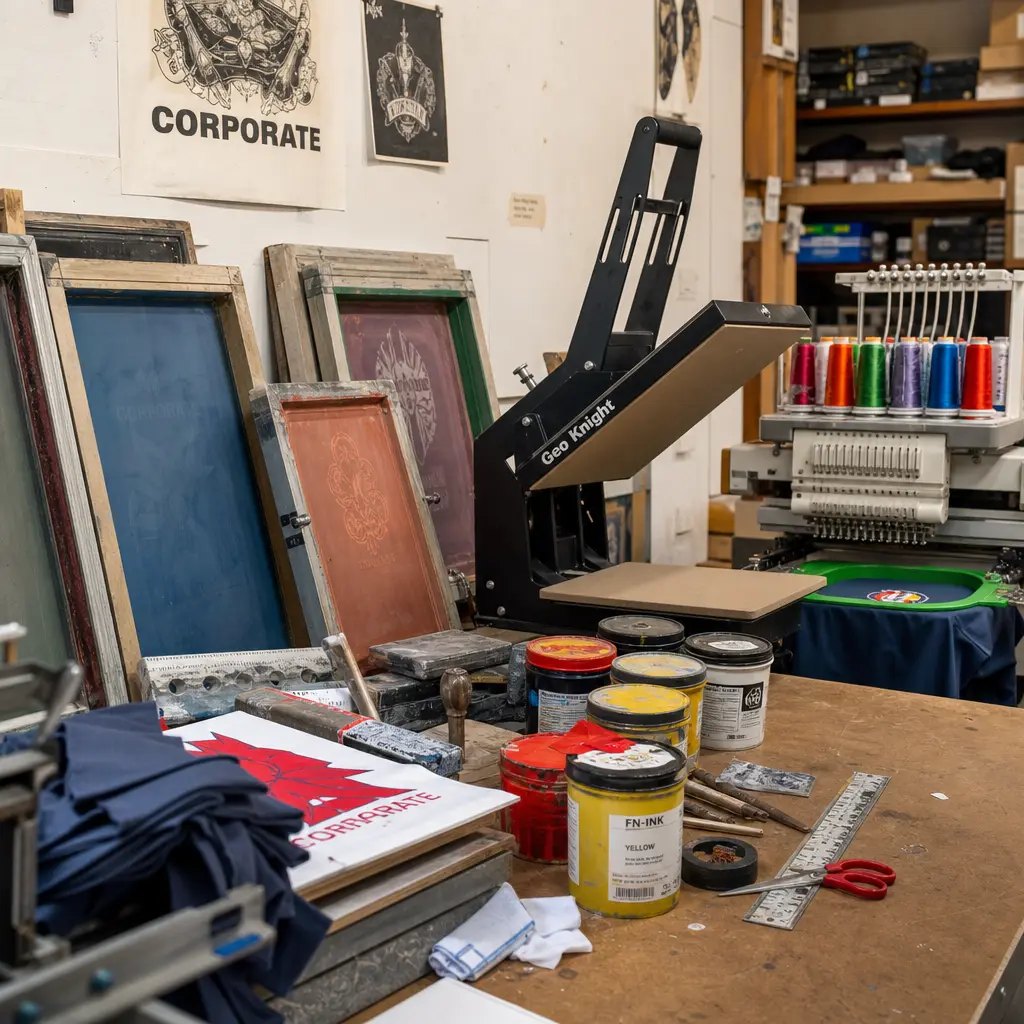
For canvas grocery totes, a simple screen print is still the most reliable bulk method when the art is one or two colors. It is predictable, repeatable, and usually easier to keep clean in transit than more fragile decoration methods. If the logo needs fine gradients or full coverage artwork, the factory may propose digital transfer or heat transfer, but those methods can show fold marks, crack at stress points, or look less stable after shipping. If the tote is a trade show giveaway, stable print often matters more than visual complexity.
Print placement should be chosen with the carton in mind. A logo that sits too close to a seam can distort after folding. A heavy print area can stick to the next bag in a tight stack. Ask for the exact print size, cure method, and rub-resistance expectation. If the bag will sit on a booth table and be handled often, use a print that tolerates being folded and unfolded several times without edge cracking. For higher-end programs, a woven side label or sewn-in label can complement the print and survive shipping well.
- Screen print is usually the safest default for one- or two-color brand marks.
- Avoid placing critical artwork across seams or high-pressure fold points.
- Approve the bag in the same folded state it will ship in.
Build the Carton Pack Around the Move-In Plan
The right carton pack is the one that moves easily, stacks safely, and counts correctly. For exhibitor orders, a very heavy master carton is often a bad tradeoff even if it lowers carton count. A good working target is to keep the gross weight in a range that one person can move without strain, then adjust pieces per carton to fit that limit. For many tote programs, 20 to 25 pieces per carton is workable for a 10 oz canvas bag, while a heavier 12 oz bag may need fewer pieces. The exact number depends on size, fold method, and whether each piece is individually polybagged.
Do not treat carton count as a random packaging detail. It affects receiving speed, damage risk, and freight class. Ask the factory for carton dimensions, gross and net weight, and whether the cartons are printed with item code, color, size, quantity, and carton number. If the show team needs to distribute totes to different booths, states, or distributors, separate the packs by destination. For sea freight or humid routes, use a clean inner polybag or moisture barrier only when needed; overpacking with unnecessary plastic adds cost without solving the real issue.
- Aim for cartons that are easy to lift and do not collapse under stacking.
- Use separate carton marks for each SKU, color, and destination.
- If the venue requires pallet delivery, get the pallet dimensions and drayage terms before award.
Use MOQ Logic to Compare Quotes Correctly
MOQ on a canvas tote is not just about cutting fabric. It is driven by fabric purchase, cutting efficiency, print screens, labor setup, carton prep, and whether the pack is standard or special. A one-color natural canvas tote with a simple sewn label is easier to scale at a lower MOQ than a dyed canvas body with multiple print colors and a custom carton layout. Buyers sometimes compare two quotes that look similar on the bag price but differ sharply once print setup and packing labor are added. That comparison is misleading unless the spec sheet is identical.
The quote should show the cost structure, not only the final unit number. Ask the factory to break out fabric, sewing, print, label, packing, export carton, palletization if needed, and shipping terms. If the supplier refuses to explain how the carton count changes the price, the quote is not very useful. A clean comparison comes from a line-by-line quote against one frozen spec, one pack method, and one delivery assumption. That is how you find the real supplier difference instead of a distorted headline price.
- One-color printing and natural canvas usually give the cleanest MOQ logic.
- Extra print colors, custom labels, and special cartons raise setup cost faster than most buyers expect.
- Compare quotes only after the carton count and shipping term are fixed.
Approve a Packed Sample, Not Only a Bag Sample
A loose sample proves the bag can be sewn. A packed sample proves the order can be shipped. For trade show buyers, the packed sample is the one that matters because it shows how the tote behaves after folding, stacking, sealing, and carton closing. It also reveals whether the print scuffs when bags touch each other, whether the handles spring up and create excess height, and whether the carton closes cleanly without crushing the product. If the factory only sends a single loose bag, the approval is incomplete.
The sample review should compare the actual bag to the approved spec sheet and then compare the packed carton to the proposed bulk plan. Check size, handle drop, stitch quality, print placement, carton count, label layout, and gross weight. If the packed sample is difficult to repack or the contents shift too much in transit, production line workers will struggle to repeat it consistently. The factory should be able to follow the same fold direction and bundle style on every line, or the final shipment will vary carton to carton.
- Approve one packed master carton before bulk production.
- Inspect the sample in the folded state used for shipping, not only unfolded.
- Require the factory to repeat the same pack method on the production line.
Supplier Evidence That Actually Helps a Buyer
Good supplier evidence is specific to your tote, not generic factory marketing. Useful proof includes recent production photos of the same canvas weight, a copy of the carton mark format, in-line QC photos, and images of the packed master carton. If the supplier claims testing or compliance, ask for the document that matches the exact product description and date. A factory that can explain the document and the carton plan in plain language is usually easier to work with than one that only repeats broad claims.
For trade show orders, communication quality is part of supplier quality. The right partner notices when your carton pack looks too heavy, when the print placement risks scuffing, or when a lead time is too tight for the freight mode you picked. A quote is only useful if the vendor can turn it into a production instruction. If the team answering your RFQ cannot discuss sample approval, packing, or carton marks, expect more corrections later.
- Ask for photos of the exact tote body, not a similar style from a different order.
- Request carton mark examples and packing-list format before you place the order.
- If any document is mentioned, make sure the product name and SKU match your tote.
Lead Time Risk Is Usually a Spec Freeze Problem
Trade show dates punish optimism. A supplier may quote a normal production window, but your real clock includes sample approval, art correction, cutting, sewing, printing, carton prep, export booking, customs, and the venue receiving appointment. Even a good factory can be late if the artwork changes after the sample or if the carton label format is not frozen early. The safest buyers treat the pre-production sample as the last moment to change anything important.
If the event date is firm, build a buffer and use a split shipment only when the carton plan is already stable. In some cases, a sample lot or first shipment can go by air while the main order moves by sea. That works only if the same carton marks, SKU logic, and pack method are used for both shipments. The biggest schedule risk is not the truck or the vessel; it is rework caused by a late spec change that forces repacking, relabeling, or reprinting.
- Freeze artwork and carton marks before bulk cutting starts.
- Keep a buffer for rework, relabeling, and customs delays.
- Use split shipping only when the pack plan is already proven.
Compare Sourcing Routes by Landed Cost, Not Unit Price
The lowest tote quote often becomes the most expensive landed result once packing and freight are included. A direct factory can be the best route when the carton pack is standardized and the buyer can manage the approval flow. A trading company can be useful when the order needs mixed SKUs or coordination across several suppliers. A local decorator can solve speed, but the fabric, stitching, and carton options may be narrower than a factory-direct order. Each route has a role; the wrong one is the one that hides handling cost until the shipment arrives.
When comparing sourcing options, keep the spec identical and compare the whole landing path. Carton size, gross weight, palletization, drayage, and receiving rules all change the final cost. A heavier bag in a larger carton can trigger more freight cost even if the unit price looks attractive. The right decision is the route that meets the booth date, matches the carton plan, and leaves no surprise labor for the event team.
- Direct factory is strongest when one supplier can control fabric, sewing, print, and packing.
- Trading companies help when you need consolidation, but they must show the real bag spec and carton spec.
- Local decoration is useful for urgent orders, not for hiding weak carton engineering.
Specification comparison for buyers
| Spec decision | Recommended option | When it fits | Buyer risk to check |
|---|---|---|---|
| Direct factory with export carton packing | Best when one factory can cut, print, pack, and label to your receiving plan | Stable volumes, one or two SKUs, and a fixed trade show date | Packing instructions can drift unless you approve a packed sample |
| Trading company handling multiple suppliers | Useful when you need tote bags plus other show items under one PO | Mixed sourcing, shared shipments, or a buyer with limited vendor management time | Margin layers can hide the true fabric weight, carton count, or packing cost |
| Local decorator for final branding | Practical when the event is close and you need fast turn on print or labels | Domestic shows, short replenishment runs, or last-minute sponsor changes | The tote body may not match the canvas spec quoted by the decoration shop |
| Blank import plus domestic print | Good when art is not frozen and you want lower risk on the bag body | Early planning is weak on graphics but the show schedule is still manageable | Two vendors can create blame gaps if print scuffs or carton counts are off |
| Sea freight bulk plus air freight samples | Strong route for fixed events with enough lead time for a staged rollout | High volume, strict booth date, and a need to approve production before bulk ships | The sample must be frozen early or the air shipment becomes a rescue cost |
| Prepacked exhibitor kits | Best when each booth or region needs fixed quantities by color or SKU | Distributor meetings, multi-booth events, or field teams with strict allocation | Mis-picks rise if carton marks and internal bundle labels are weak |
| Mixed cartons of the same SKU family | Works when warehouse space is tight and several colors ship together | Buyers who can receive and sort cartons before the show floor | Mixed packs slow receiving and increase counting errors if pack slips are vague |
| Palletized delivery to venue warehouse | Appropriate when the venue has dock appointments and forklift handling | Large orders, strict venue rules, or cartons that would be damaged in loose handling | Extra pallet, drayage, and appointment fees can erase savings if not quoted early |
Buyer checklist before sampling
- Fix the tote spec first: finished size, gusset, handle length, canvas GSM, print colors, and any label or trim requirement.
- State the trade show receiving window, dock rules, booth access limits, and whether the cartons must be carried by hand or moved on pallets.
- Define the case pack target by carton weight, not only by piece count, so the cartons stay manageable for staff and freight.
- Request a packed pre-production sample, not only a loose bag sample.
- Ask for carton dimensions, gross weight, carton marks, and barcode format before approving mass production.
- Separate show-ready giveaway packs from retail-reship packs if the bags will serve both roles.
- Freeze artwork and print placement before cutting bulk fabric.
- Confirm the replacement policy for short shipments, damaged cartons, and print defects before the order is awarded.
Factory quote questions to send
- What canvas weight in GSM will you use, and what actual lot tolerance do you allow?
- What finished tote size, gusset, and handle length do you recommend for my target carton count?
- Which print method are you quoting, how many colors are included, and what is the setup cost logic?
- Can you provide the proposed case pack, carton dimensions, gross weight, and estimated CBM per carton?
- Will the quotation include inner packaging, carton marks, and palletization if needed?
- What is your sample timeline for a loose sample and for a packed pre-production sample?
- What inspection points do you cover before shipment, and can I receive photos of the packed cartons?
- What cost changes if I adjust the carton count, add a woven label, or split the shipment by delivery date?
Quality-control points to confirm
- Verify the actual fabric weight against the agreed GSM, not only the seller's ounce description.
- Measure finished dimensions after sewing and pressing, including handle drop and gusset depth.
- Inspect seam strength at the handle attachment, bar-tacks, and side seams under normal pull force.
- Check print placement, registration, cure quality, and resistance to rubbing on a folded tote.
- Confirm that the packed sample carton repeats the same fold direction, count, and bundle style that will be used in bulk.
- Match carton marks, SKU codes, and quantity labels to the packing list and purchase order.
- Reject cartons with moisture, odor, crush damage, or visible dirt that would be unacceptable at a trade show.
- Verify carton gross weight and dimensions against the receiving and manual handling plan.