Start With the Real MOQ Constraint
MOQ for custom canvas grocery totes is seldom one clean number. It is usually a stack of smaller minimums: fabric purchase, cutting yield, print setup, sewing-line changeover, trim buying, packing labor, carton planning, and export handling. Artisan bakeries often need quantities that make commercial sense for a store opening, seasonal gift bundle, farmers market program, bread subscription, local collaboration, or retail merchandise test. Those quantities may be perfectly reasonable for the bakery but awkward for a factory if every detail is customized.
The first negotiation should not be, “What is your lowest MOQ?” A better question is, “Which part of this specification creates the MOQ?” If fabric is the bottleneck, stock natural cotton canvas may help. If print setup is the issue, fewer colors and one shared placement may reduce friction. If sewing is the constraint, one standard body size with one handle specification is easier than three small variants. If packing creates the problem, flat bulk packing will usually beat individual retail packing at low volume.
Ask the supplier to quote the defined product first, then ask what changes below the normal MOQ. The answer should be specific. It may involve a surcharge, longer lead time, stock material, fewer artwork versions, simpler packing, or a different production slot. That discussion keeps the negotiation grounded in cost and workflow instead of pushing the supplier toward quiet substitutions.
The strongest buyer position combines a firm product standard with controlled flexibility. A bakery might hold the line on 10-12 oz natural canvas, reinforced handles, and approved logo placement, while allowing stock natural shade, standard carton quantity, or a wider delivery window. That protects the tote where customers notice it and gives the factory room to reduce setup friction.
- Ask for MOQ by process: fabric, cutting, printing, sewing, trim, packing, and export carton setup.
- Negotiate one approved tote body before adding seasonal art, store names, or co-branded graphics.
- Compare MOQs only when fabric weight, finished size, handle type, print method, packing, and trade term are identical.
- Use flexibility on shade, carton count, or lead time rather than weakening handles, seams, or canvas weight.
- Require the supplier to state the cost and quality impact of producing below normal MOQ.
Define Bakery Use Before Quantity
A tote sold beside sourdough, coffee, preserves, and cookbooks has a different job from a one-day giveaway bag. A resale tote needs a credible hand feel, clean stitching, stable print, and enough structure to look good at the counter. A gift-bundle tote may need a wider boxed bottom so pastry boxes, jam jars, coffee bags, or bottles sit properly. A farmers market tote needs comfortable shoulder carry and useful capacity. A short-term promotional bag may tolerate lighter fabric and a simpler finish.
Write the use case into the RFQ. “Canvas tote with logo” leaves too much open. “Open-top grocery tote for two bread loaves, one jar, and one 250 g coffee bag” tells the supplier how the bag will be handled. It also helps the buyer defend important details during MOQ negotiation. A flat 8 oz cotton bag may be fine for flyers and a small pastry box; it is not the same product as a 12 oz boxed-gusset grocery tote.
Use case also shapes the right purchasing strategy. If the tote is an ongoing retail SKU, it is worth locking a repeatable body and paying for proper sample approval. If it is a fixed seasonal campaign, stable stock fabric and fewer decoration colors may matter more than premium construction. If several stores or bakery partners are involved, one common construction with different logos is usually the cleanest path.
Decide this before comparing price. Otherwise, the lowest MOQ quote can pull the specification in the wrong direction. A bakery does not need to overbuild every tote, but it should not save a small amount by removing the details that make the bag useful: enough canvas weight, a practical gusset, comfortable handles, and reliable reinforcement.
- State whether the tote is resale merchandise, gift packaging, subscription packaging, farmers market carry, giveaway, or distributor promotion.
- List likely contents such as bread loaves, baguettes, pastry boxes, jars, coffee bags, bottles, or mixed grocery items.
- Define the value tier: budget giveaway, everyday bakery tote, premium retail tote, or gift-bundle component.
- Separate repeat programs from one-time campaigns because reorder continuity matters more for ongoing SKUs.
- Use expected load and sales channel to set fabric weight, gusset depth, handle width, and reinforcement.
Specify Canvas Buyers Can Verify
Canvas weight drives cost, MOQ, sewing performance, carton weight, and perceived quality. For most bakery grocery totes, 10 oz to 12 oz cotton canvas, about 270-340 GSM, is a practical starting range. It has more body than lightweight promotional cotton without becoming difficult to sew or ship. An 8 oz bag can work for budget events, but it may collapse on display and feel too thin for paid merchandise. A 14 oz bag can feel premium, yet it may raise fabric minimums, slow sewing, increase carton weight, and lift landed cost.
Specify fabric in measurable terms. “12 oz natural cotton canvas” is useful, but not enough for procurement control. Ask for GSM, composition, fabric width, weave type where available, color or shade reference, shrinkage expectation, and tolerance. Two suppliers may describe fabric with the same ounce weight while delivering different hand feel because yarn count, weave density, finishing, and natural cotton shade vary.
Natural cotton canvas is often the easiest route for MOQ negotiation because many suppliers can access stock or commonly booked greige fabric. Bleached, dyed, recycled, or organic canvas may fit a bakery’s brand story, but they add approval steps and may raise minimums. Dyed fabric needs shade approval, usually through lab dips or production swatches. Recycled and organic claims need documentation if the bakery will repeat those claims in retail copy, hangtags, website listings, or distributor materials.
Control substitutions in writing. A practical RFQ line is: “Target 12 oz / about 340 GSM natural 100% cotton canvas; supplier may quote 10 oz / about 270 GSM as a separate alternate only with sample approval.” That gives the factory room to propose options without turning a sturdy grocery tote into a thinner promotional bag.
- Use 8 oz only for lightweight promotion where structure and repeat use are not primary requirements.
- Use 10 oz for balanced bakery grocery totes where cost, handling, and durability must stay practical.
- Use 12 oz when the tote is sold as merchandise or expected to carry mixed bakery and grocery items.
- Use 14 oz and above only when the buyer accepts heavier cartons, higher cost, and possible fabric MOQ pressure.
- Ask for fabric weight tolerance, commonly +/-5%, and confirm how the supplier measures it.
Build One Standard Tote Body
Small bakery programs become expensive when every campaign changes the size, handle, gusset, trim, or finish. A better sourcing model is one standard grocery tote body that works for most programs. A common range is 35-40 cm wide by 35-42 cm high with an 8-12 cm bottom gusset, but the final size should come from real contents. Test the bag around actual bread, pastry boxes, jars, coffee bags, and other bakery retail items, not just a flat drawing.
Use finished measurements after sewing. Cut panel size does not tell the buyer how the tote will perform. Seam allowance changes final width, the gusset changes usable capacity, and handle placement changes the carry feel. Ask for both handle length and handle drop. A 60 cm handle can feel different from supplier to supplier if the attachment point or bag height changes. For shoulder-carry grocery totes, a target handle drop around 25-30 cm is often more meaningful than handle length alone.
Keep the body simple unless the retail purpose justifies more. Open-top totes with boxed bottoms, cotton webbing handles, reinforced handle attachment, and overlocked internal seams are easier to produce than lined bags with zippers, pockets, snaps, custom closures, and mixed materials. Bound internal seams can look cleaner and reduce fraying, but they add labor and cost. For a first production run, strength and consistency usually beat extra features.
Once approved, treat the body like a controlled SKU. Give it a style code, keep the measurements, store the artwork placement, record the packing method, and use the same body across locations or seasonal campaigns. Repeatability makes future MOQ discussions easier because the supplier can reuse patterns, sewing instructions, carton plans, and inspection standards.
- Specify finished width, height, gusset depth, handle length, handle drop, handle width, and seam finish in centimeters.
- Use tolerances such as +/-1 cm for main finished dimensions and a tighter tolerance for print placement where practical.
- Confirm whether the gusset is a true boxed bottom, side gusset, or folded bottom construction.
- Define handle webbing width, usually 25-38 mm for grocery totes, and require reinforcement at each attachment point.
- Lock the approved construction under one style code so artwork changes do not change the tote body.
Match Decoration to Artwork
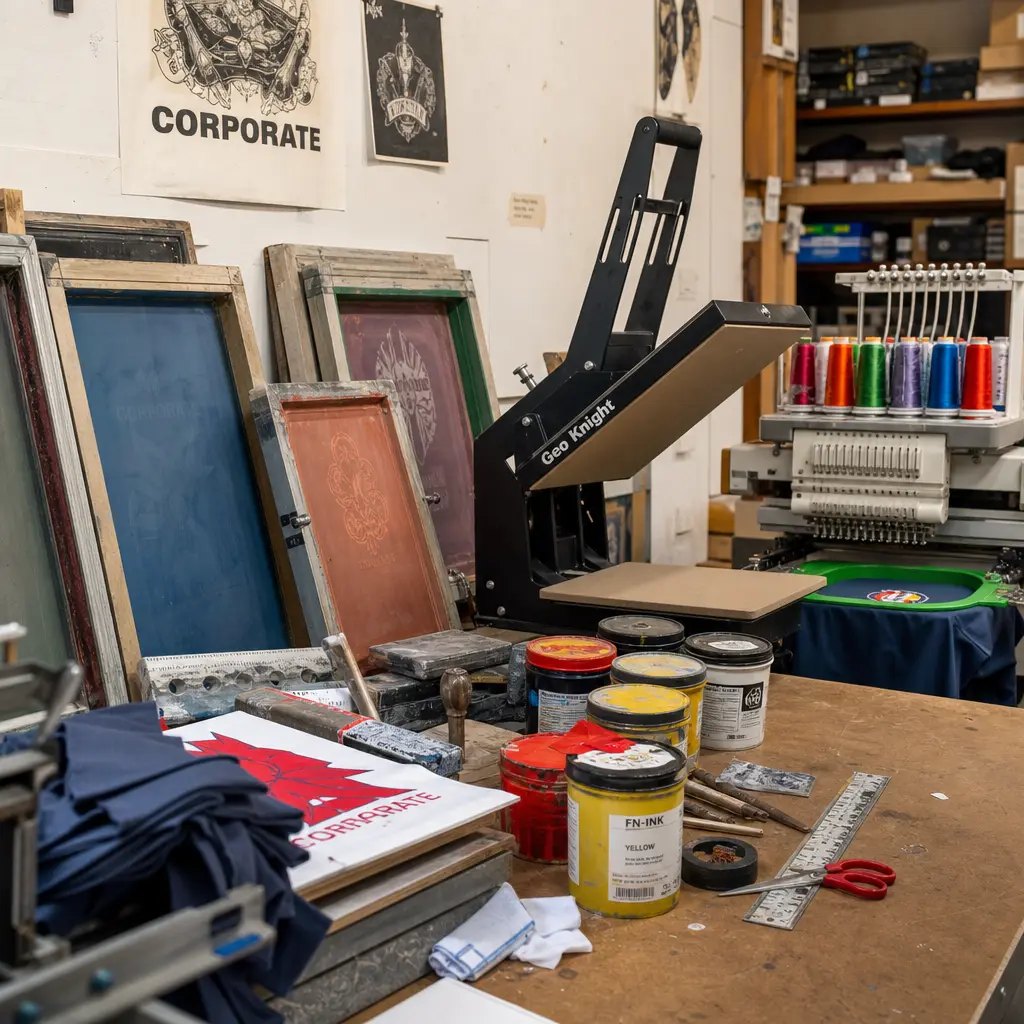
Many artisan bakery graphics are a natural fit for screen printing: wordmarks, line drawings, neighborhood names, bread illustrations, small slogans, or farmers market graphics. Water-based screen print is a strong baseline for one to three solid colors on natural canvas because it can give a softer hand than a heavy film-like decoration. Still, canvas is not a smooth label stock. Yarn texture, slubs, and weave variation can interrupt fine lines and small details.
Decoration can quietly become the MOQ driver. Every screen color may involve setup, registration, curing, and cleanup. Every artwork version may need its own screen, film, transfer setup, or color approval even when the tote body stays the same. Heat transfer can handle detailed multicolor art, but it changes the surface feel and may not match a natural bakery look. Embroidery can work for a small premium mark, although it may pucker lighter canvas and becomes costly on large logos. Woven labels add retail polish but bring label MOQ, sewing placement tolerance, and another inspection point.
For multi-location bakeries, distributors, or co-branded campaigns, split the body MOQ from the print-version MOQ. A supplier might sew 1,000 identical bodies and print 250 pieces across four logos. Another may require 500 pieces per artwork because setup is inefficient below that level. If the quote only says “MOQ 1,000 pieces,” the buyer still does not know whether five logos are practical.
Artwork should be production-ready before final quotation. Provide print size, color count, Pantone or color reference where relevant, placement measurement, and notes on fine detail. A strike-off on production canvas is the safest way to check ink coverage, edge quality, detail retention, and color appearance before bulk printing.
- Use one-color screen print on stock natural canvas for the lowest practical setup complexity.
- For two or three colors, confirm screen count, registration tolerance, setup charge, and minimum per artwork.
- Avoid small reversed text, thin lines, and gradients unless the supplier proves them on actual canvas.
- Keep print size and placement identical across artwork versions to reduce setup variation.
- Approve a strike-off before bulk production when logo accuracy, color, or fine detail matters.
Separate MOQ, Price Breaks, and Surcharges
A low MOQ is not automatically the best deal. One supplier may accept 300 pieces but add setup charges, a higher unit price, limited fabric choice, and a longer lead time. Another may require 1,000 pieces but provide cleaner process control, stronger repeatability, and better export packing. The right choice depends on whether the bakery is buying a one-time campaign item or building a repeat retail SKU.
Ask for price breaks at realistic volumes using the exact same specification. For example, request 300, 500, 1,000, and 2,000 pieces with the same fabric, dimensions, handles, print, packing, inspection requirement, and trade term. If the unit price drops sharply after 500 pieces, setup and line efficiency may be the main pressure. If it barely moves, fabric, labor, or packing may be the larger cost drivers.
Look beyond the unit price. Screen charges, sample fees, sample courier, barcode labels, hangtags, individual polybags, carton marks, palletizing, inspection, export documents, and inland freight may sit outside the quoted tote price. Multi-artwork orders need special attention because each bakery logo may carry separate setup cost. A cheaper tote can become the more expensive program once five logos and retail packing are added.
Clarify quantity tolerance before the PO. Some factories ask for a small overrun or underrun allowance because of cutting, printing, or packing yield. For small store allocations, even 3-5% can matter. State whether overproduction is accepted, whether short shipment is allowed, and how any variance will be priced.
- Request identical-spec price breaks at several quantities instead of asking only for the lowest MOQ.
- List setup charges separately from unit price so artwork versions can be compared fairly.
- Ask what surcharge applies below standard MOQ and what specification changes are required.
- Clarify overrun and underrun tolerance, especially for split artwork or store allocation orders.
- Compare landed program cost, not only ex-factory unit price.
Use MOQ Levers That Do Not Damage the Tote
The safest MOQ levers make the factory’s work simpler without weakening the product. Stock natural canvas, one approved body size, standard cotton webbing, one print placement, one ink system, bulk carton packing, and a flexible production window can all reduce friction. These choices keep the tote stable while making a smaller order easier to schedule.
Risky levers cut into performance. Dropping fabric weight below the intended use, removing handle reinforcement, accepting raw internal seams, using unknown leftover fabric, skipping strike-offs, or allowing untested ink substitutes can create failures that cost more than the savings. Bakery totes often sit beside premium bread, coffee, preserves, and gift items. If the bag feels weak or the print looks careless, the brand takes the hit.
Lead time is a negotiation tool. A below-MOQ urgent order may be expensive because the factory has to interrupt normal scheduling. A buyer who can accept a wider production window may allow the supplier to combine fabric purchasing, printing setup, or sewing capacity with compatible work. It will not always reduce MOQ, but it gives the supplier a real path to quote.
Share planning information carefully. If the bakery expects a repeat program, give a realistic forecast, but do not present it as a committed order. Ask the supplier to keep sample records, cutting patterns, artwork files, and packing specifications for reorders. A repeatable program is easier for both sides than a one-off low-MOQ order with loose approvals.
- Good levers include stock fabric, one body size, one handle type, one print placement, bulk packing, and longer lead time.
- Risky levers include thinner-than-needed fabric, weak handle stitching, raw seams, untested ink, and undocumented leftover material.
- Use forecasts carefully: share planning intent, but do not represent forecast volume as a confirmed order.
- Improve supplier efficiency by approving artwork, sample, strike-off, and packing quickly.
- Decide which matters most: lowest MOQ, lowest unit cost, or fastest delivery, because optimizing all three increases risk.
Approve Samples With Written Tolerances
A pre-production sample should show how the bulk order will actually be made. It should use the intended canvas, handle webbing, thread, seam construction, print method, logo placement, and packing fold whenever possible. A showroom sample or substitute-material sample can be useful early, but it is not final production approval. If any part of the sample is substituted, write that into the approval record.
Make sample comments measurable. “Center the logo” is weaker than “print centerline aligned to bag centerline within agreed tolerance.” “Handle feels weak” is weaker than “use box-X reinforcement and pass the agreed static load check.” “Fabric should be thicker” is weaker than “target 12 oz / about 340 GSM with agreed tolerance.” Clear tolerances help suppliers price accurately and help inspectors make fair decisions.
Working tolerances for canvas grocery totes often include +/-1 cm for main finished dimensions, +/-0.5 cm to +/-1 cm for handle drop depending on construction, and +/-5 mm to +/-10 mm for print placement depending on artwork size and sewing variation. These are starting points, not universal standards. Soft sewn products cannot hold the same tolerances as rigid packaging, and very tight limits can raise cost or rejection risk.
Test the sample the way a bakery will use it. Load it with equivalent goods, carry it by hand and shoulder, place it on a counter, check whether a pastry box sits flat, and inspect the logo under store lighting. Fold it as it will be packed and check whether the print creases or transfers. If the tote will be sold, judge whether the hand feel, stitching, cleanliness, and presentation support the intended retail price.
- Measure finished width, height, gusset, handle length, handle drop, handle width, and logo position.
- Record fabric weight, shade, stiffness, odor, lint level, and visible slubs in the print area.
- Check handle comfort and seam stress using realistic bakery goods or an agreed equivalent weight.
- Approve photos, measurements, fabric swatch, print strike-off, and packed sample with revision date.
- Do not release bulk production until sample deviations and approved tolerances are documented.
Control Packing and Store Allocation
Packing changes cost, carton cube, defect risk, and store handling. Flat bulk packing is usually efficient for canvas grocery totes. Depending on size and fabric weight, export cartons may hold about 50-100 pieces, but the supplier should confirm this using the actual packed sample. Heavy canvas can push cartons beyond comfortable handling limits, so ask for gross weight and maximum carton weight before approving the quote.
Individual polybags are not always needed. They can protect cleanliness for retail shelves, direct-to-store delivery, or e-commerce handling, but they add labor, plastic, carton volume, and unpacking time. For warehouse, distributor, or bakery back-room delivery, bulk inner protection by 25, 50, or 100 pieces may be enough. If sustainability messaging matters, avoid plastic that does not solve a real logistics or retail problem.
Control curing and folding. If totes are folded too soon after printing, ink can transfer, block, tack, or mark adjacent bags. If the fold cuts across the logo, creasing can hurt retail presentation. Ask the supplier to confirm curing time, fold method, whether interleaving is needed, and how many pieces sit in each bundle. A packed sample shows the real fold marks, carton fit, and handling condition.
Allocation details matter when one PO covers several stores, logos, or seasonal versions. Carton labels should identify SKU, artwork version, quantity, and destination where needed. The packing list should match carton marks and version counts. Good packing control prevents short allocations and avoids repacking work after arrival.
- Define flat pack, half-fold, retail fold, belly band, hangtag, individual polybag, or bulk inner packing before final pricing.
- Request carton quantity, carton dimensions, gross weight, net weight, CBM, and carton board strength if available.
- Set a maximum carton weight suitable for warehouse and bakery handling, often around 15-20 kg unless the buyer accepts otherwise.
- Confirm carton marks, SKU labels, barcode labels, store allocation labels, and pallet requirements before production.
- Require print curing before folding and packing to reduce transfer, blocking, and crease defects.
Write the QC Plan Before Production
Quality control belongs in the PO, not in a complaint after shipment. The approved sample, spec sheet, artwork file, packing instruction, and defect classification should become the inspection standard. For bulk orders, buyers may use an AQL inspection approach with the general inspection level and acceptable quality limits agreed in advance. The exact settings depend on order size, channel risk, and buyer tolerance, but the pass/fail logic should be clear before production starts.
Canvas tote QC must go beyond a front-panel photo. Inspectors should measure finished dimensions, confirm fabric weight, check stitch quality, verify handle reinforcement, review print placement, test rub performance, check curing, smell for mold or chemical odor, look for stains, count cartons, and verify packing. A tote can look fine in one image and still fail because the handles pull out, gussets twist, seams open, or cartons are short-packed.
Classify defects in practical terms. Critical defects may include mold odor, unsafe contamination, severe ink transfer, or handle detachment under the agreed load check. Major defects may include wrong size beyond tolerance, wrong artwork, missing reinforcement, open seams, heavy stains, unacceptable print offset, or material substitution. Minor defects may include small loose threads or slight shade variation within the approved range.
For bakery retail launches, consistency across cartons is part of quality. If several artwork versions are packed together, QC should verify version counts and carton labels. If totes ship directly to stores, a packing error can disrupt the launch as much as a sewing defect. A clear QC plan gives the supplier a fair standard and gives the buyer a stronger position before shipment.
- Base inspection on the approved sample, spec sheet, artwork file, packing instruction, and purchase order tolerances.
- Classify defects as critical, major, or minor before inspection so pass/fail decisions are not subjective.
- Check handle load, stitch quality, seam finish, fabric weight, dimensions, print placement, rub resistance, odor, stains, and carton count.
- Verify artwork version counts and carton labels for multi-store or multi-logo bakery programs.
- Inspect after packing but before shipment when order value, retail timing, or quality risk justifies it.
Specification comparison for buyers
| Spec decision | Procurement baseline | Typical measurable target | Buyer risk to check |
|---|---|---|---|
| Canvas weight | 10 oz to 12 oz cotton canvas for most bakery grocery tote programs | About 270-340 GSM, with fabric weight tolerance agreed, commonly +/-5% | 8 oz may feel like a giveaway tote; 14 oz can increase sewing difficulty, carton weight, freight cost, and fabric MOQ |
| Fabric composition | 100% cotton canvas unless recycled cotton, organic cotton, or blended content is specifically required | Ask for composition, fabric width, weight, color, shrinkage note, and claim documentation where claims are used | Unsupported recycled or organic claims can create compliance and marketing risk; leftover fabric can hurt reorder consistency |
| Finished size | Open-top grocery tote sized for bread, pastry boxes, jars, coffee bags, or gift bundles | Common range: 35-40 cm W x 35-42 cm H x 8-12 cm bottom gusset; main dimensions often +/-1 cm | Flat tote dimensions do not equal usable capacity; require finished measurements after sewing |
| Handle specification | Cotton webbing handles for shoulder carry | 55-65 cm handle length, 25-38 mm width, target handle drop usually 25-30 cm after sewing | Thin webbing, short drop, or weak reinforcement can create complaints even if the bag body is acceptable |
| Handle attachment | Box-X, cross-stitch, or bartack reinforcement at each handle end | Stitch density and reinforcement size defined on sample; load test standard agreed before PO | A visual stitch pattern alone does not prove load strength; skipped stitches and loose thread nests must be rejected |
| Seam construction | Overlocked internal seams as baseline; bound seams for cleaner premium finish | Seam allowance, stitch density, thread color, and raw-edge control confirmed on sample | Raw canvas edges can fray; inconsistent gusset sewing makes totes lean, twist, or lose capacity |
| Print method | Water-based screen print for 1-3 solid colors on natural canvas | Print placement tolerance commonly +/-5 mm to +/-10 mm depending on artwork and bag construction | Small reversed text, gradients, and fine lines can fill in on textured canvas; require a strike-off on production fabric |
| Artwork versioning | One shared tote body with split print versions | Quote body MOQ separately from per-artwork minimum and setup charge | A low total MOQ can become expensive if each bakery logo requires separate screens, films, labels, or minimum runs |
| Packing method | Flat bulk packing unless retail presentation requires individual packing | Often 50-100 pcs/carton depending on canvas weight and size; max carton weight should be agreed, often 15-20 kg for handling | Over-compression can crease prints; individual polybags add labor, plastic, carton cube, and unpacking time |
Buyer checklist before sampling
- Define the commercial use first: resale tote, gift-bundle packaging, subscription bag, farmers market carry bag, store-opening giveaway, distributor promotion, or co-branded retail item.
- Specify the tote as a finished product: width, height, bottom gusset, handle length, handle drop, handle width, seam finish, reinforcement method, print size, print position, and packing fold.
- State canvas weight in both oz and GSM where possible, and define composition, natural or dyed shade, recycled or organic claim requirements, and acceptable fabric weight tolerance.
- Separate MOQ into fabric MOQ, bag-body MOQ, print MOQ, artwork-version MOQ, trim MOQ, packing MOQ, and export-carton quantity so the real constraint is visible.
- Ask whether the quote uses stock natural canvas, greige fabric to be finished, custom-dyed fabric, leftover fabric, or special certified material, because each route affects MOQ and reorder continuity.
- Choose decoration based on artwork: water-based screen print for solid logos, transfer for detailed multicolor artwork, embroidery for small premium marks, and woven labels only when label MOQ and sewing tolerance are acceptable.
- Request a pre-production sample made with production canvas, production handle webbing, actual thread, final seam construction, final print process, and intended packing fold.
- Define objective sample approval notes: finished size tolerance, print placement tolerance, acceptable slub level in print area, thread trimming, odor limit, and handle reinforcement acceptance.
- Require quote data for unit price, price breaks, setup charges, sample charge, courier charge, carton quantity, carton dimensions, gross weight, net weight, CBM, lead time, payment term, and trade term.
- Confirm QC plan before PO: inspection stage, AQL level, defect classification, handle load check, dry/wet rub review, carton count, packing verification, and photo reporting requirements.
Factory quote questions to send
- What is your normal MOQ for this exact fabric weight, finished size, handle webbing, seam construction, print method, packing method, and trade term?
- Which part of the MOQ is the limiting factor: fabric purchase, cutting efficiency, screen or transfer setup, sewing-line changeover, trim MOQ, packing labor, carton quantity, or export handling?
- Are you quoting stock natural canvas, booked greige canvas, custom-dyed canvas, leftover material, recycled canvas, organic cotton canvas, or a blend, and what documentation is available for any material claim?
- What is the fabric specification: composition, oz weight, GSM, fabric width, weave type, color/shade reference, shrinkage expectation, and fabric weight tolerance?
- What finished size tolerance, handle length tolerance, handle drop tolerance, print placement tolerance, fabric weight tolerance, and carton quantity tolerance will you accept in the purchase order?
- Can one tote body be split across multiple bakery logos, and what is the minimum per artwork, screen or film charge per artwork, color-change charge, and extra lead time per version?
- Will the sample use production canvas, production handle tape, production ink, production thread, and the final seam finish, or will any substitute material be used for sampling speed?
- Can you provide fabric swatches, print strike-offs, a sewn pre-production sample, and a packed sample, and what are the cost and lead time for each approval item?
- What in-house checks can you perform for fabric weight, finished measurements, stitch quality, handle load, seam slippage, print dry rub, light wet rub, odor, moisture protection, and carton drop or compression risk?
- How many pieces fit per export carton under the proposed packing, and what are the estimated carton dimensions, gross weight, net weight, CBM, carton board strength, and maximum carton weight?
Quality-control points to confirm
- Fabric weight should be checked against the approved specification using agreed units, preferably GSM and oz, with a written tolerance such as +/-5% unless the purchase order states another limit.
- Finished size should be measured after sewing and normal pressing or handling, including width, height, gusset depth, handle length, handle drop, handle width, and panel symmetry.
- Handle attachment should match the approved reinforcement method, with no skipped stitches, loose stitches, broken threads, thread nests, distorted webbing, or incomplete bartacks at stress points.
- A handle load check should reflect the intended bakery use; for example, the buyer and supplier can agree to a static load such as 8-10 kg for a defined time, with no tearing, seam opening, or handle detachment.
- Stitch density should be consistent with the approved sample, and seams should not show needle damage, seam slippage, raw fraying, open overlock, or uneven gusset corners.
- Print placement should be measured from agreed reference points such as top edge, side seam, bottom gusset fold, or handle centerline, with placement tolerance written into the spec sheet.
- Print quality should be checked for registration, pinholes, bleeding, cracking, poor coverage, blocked small details, ink stains, and visible tilt beyond the approved tolerance.
- Print curing should be verified before folding and packing so ink does not transfer, block, tack, crack at folds, or mark adjacent totes inside the carton.
- Dry rub and light wet rub checks should be performed according to the agreed ink system and end use, especially for dark inks on natural canvas and prints crossing textured slub areas.
- Canvas surface should be free from oil marks, mold odor, heavy stains, excessive lint, large slubs in the logo area, major shade variation, and foreign fibers that affect retail presentation.