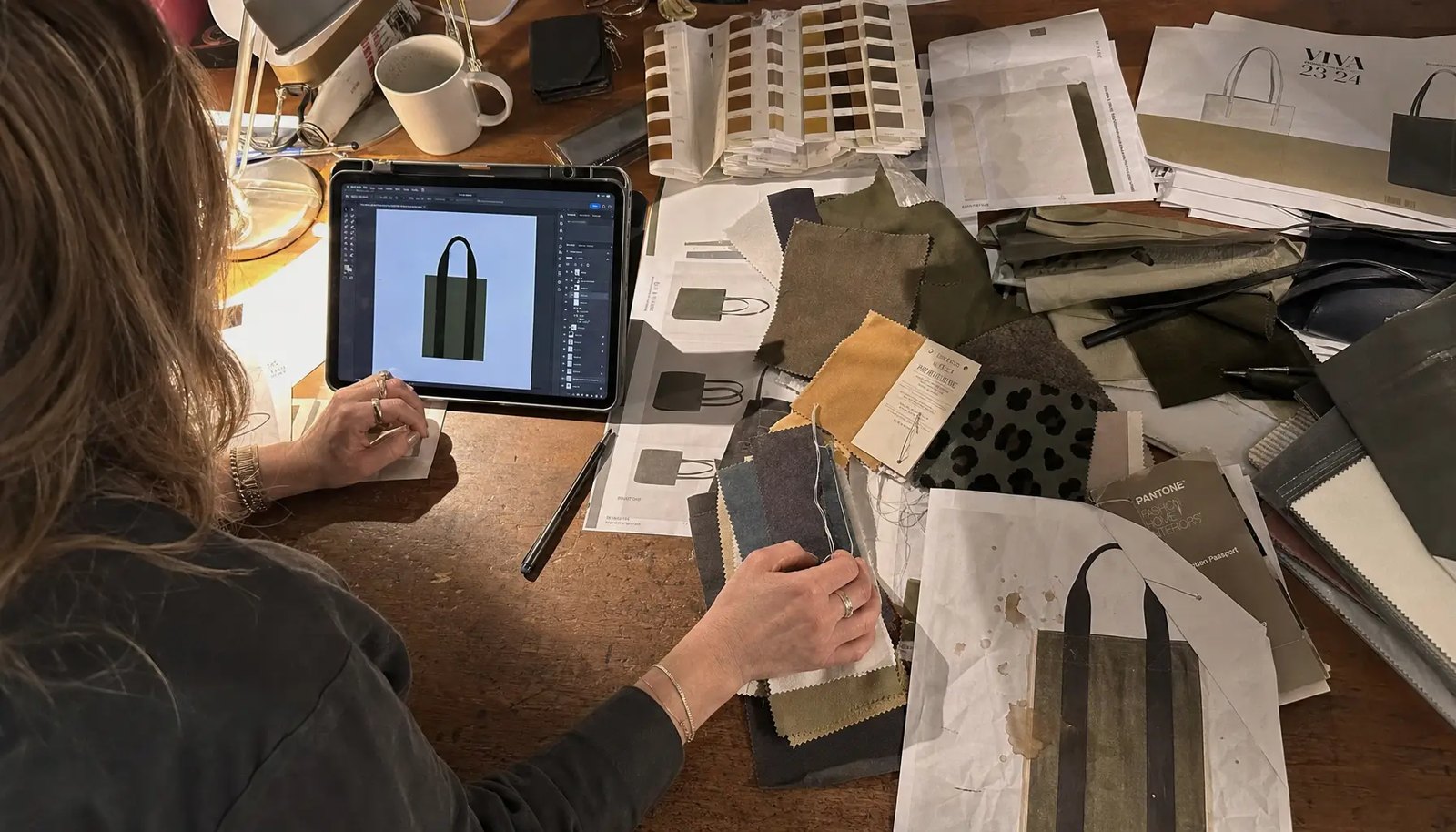
Start With the Bookstore Selling Job
A custom canvas grocery tote for a university bookstore has to do more than carry a logo. It may sit in a checkout bin, hang near licensed apparel, support a food pantry program, or ship as part of an orientation kit. One campus may want a low-cost add-on bag for snacks and notebooks. Another may want a sturdy retail tote that can hold textbooks, bottles, folded hoodies, and alumni gifts without looking flimsy. Those differences change the right fabric weight, handle construction, gusset depth, print method, and packing plan.
Begin the buying process by naming the job the tote must perform. A front-view mockup is not enough because factories can interpret the same artwork in very different ways. One quote might be for a flat 10 oz promotional bag with narrow handles. Another might be for a 12 oz bottom-gusset grocery tote with reinforced webbing. A third may include retail labels and paper bands. All three can look similar in a digital proof, yet land at different costs and perform differently in the store.
A strong RFQ gives the supplier commercial context. Share the expected contents, target retail price range, sales channel, display method, and whether university licensing approval applies. If the bag must hold grocery items, say so. If it must fit inside a kit carton, say that too. The clearer the selling job, the easier it is to avoid a cheap quote that fails the bookstore’s real use case.
- Define whether the tote is a retail grocery tote, checkout add-on, textbook carrier, orientation giveaway, gift bag, or licensed premium item.
- List expected contents such as two textbooks, grocery items, water bottles, folded apparel, or a merchandise bundle.
- State whether the tote will hang, fold flat, sit in a checkout bin, ship to multiple stores, or be packed inside kits.
- Confirm whether university licensing approval is required for logo color, logo position, hangtags, or retail labels.
Specify Canvas Weight With GSM and Finished Bag Weight
Canvas weight is usually quoted in ounces, but procurement teams should also ask for GSM. Ounce descriptions are not applied consistently by every supplier, and a nominal fabric label does not tell the whole story. As a practical buying reference, 10 oz cotton canvas is commonly around 320-340 GSM, 12 oz is commonly around 380-410 GSM, and 14-16 oz can range roughly from 450-540 GSM. These are working ranges, not universal standards. The approved swatch and approved pre-production sample should control the order.
For many university bookstore grocery totes, 12 oz canvas is the safest starting point. It has enough body to feel retail-ready, supports clean screen printing, and usually avoids the freight and sewing burden of heavier canvas. A 10 oz version can make sense for orientation giveaways, checkout promotions, or high-volume price-sensitive programs, provided the handles and seams are not weakened to chase price. A 14 oz or heavier canvas can support premium alumni merchandise or gift bundles, but it can also raise carton weight, sewing time, and landed cost.
Finished bag weight in grams is one of the best ways to compare quotes. Two suppliers may both write 12 oz canvas, yet one may use lighter handles, a smaller pattern, or a looser weave. Ask each factory to estimate finished bag weight for the same dimensions, same handle style, same gusset, same print area, and same packing method. Once the final sample is approved, that finished weight range becomes a useful check against fabric substitution or construction drift.
- Request nominal ounce weight, GSM range, fabric swatch, and finished bag weight for every quoted option.
- Compare 10 oz, 12 oz, and 14 oz versions using the same dimensions, handle type, print area, and packing method.
- Use 12 oz canvas as a practical baseline for many retail grocery tote programs, then adjust for budget or premium positioning.
- Write the approved fabric swatch and pre-production sample into the purchase order as the production standard.
Choose Natural, Bleached, Dyed, or Washed Canvas
Natural unbleached canvas is a common choice for university bookstore totes because it looks practical, reusable, and familiar. It also pairs well with navy, black, forest green, maroon, and other campus colors. Buyers should remember, though, that natural cotton is not perfectly uniform. Seed specks, small slubs, and shade variation may appear in normal unbleached canvas. Those marks are not automatically defects, but they need written limits, especially on the front logo panel.
Bleached or white canvas gives artwork a cleaner background and can help bright graphics read better. The tradeoff is visibility of dirt, carton dust, oil marks, and handling stains. If a white or bleached tote will move through a warehouse and bookstore floor, inspection criteria should treat dirty panels and visible stains as major defects. Dyed canvas can create strong school-color branding and a more intentional retail look. It also brings extra controls: fabric color MOQ, dye-lot approval, crocking or rub risk, shrinkage, and print opacity on darker shades.
Washed canvas has a softer, more casual hand. It can be attractive for premium bookstore programs, but it should not be treated as a simple finish change. Washing may affect shade, size, label appearance, print surface, and seam shape. The RFQ should state whether the fabric is washed before cutting or the completed bag is washed after sewing. Pre-washed fabric may improve size stability before production; garment washing after sewing may change final dimensions. If the buyer wants both a washed look and tight size tolerance, that requirement should be sampled and costed before bulk approval.
- Use natural canvas when seed specks and slight shade variation are acceptable within written limits.
- Use bleached canvas when bright print color and a clean face are more important than hiding handling marks.
- Use dyed canvas when school color is part of the value proposition and the order can support dye-lot MOQ and testing.
- Clarify whether washed fabric is washed before cutting or after sewing, and set final size tolerance accordingly.
Engineer Handles for Books and Grocery Loads
Handles deserve more attention than they usually get. A tote body may be strong enough, but the product can still fail if the handles are narrow, poorly attached, or sewn only into a simple top hem. Campus shoppers do not always carry light loads. They may put textbooks, water bottles, laptops, snacks, folded apparel, and dorm supplies into the same bag. For that reason, handle design should be a written construction requirement, not a factory default.
A handle width of about 1.25-1.5 inches is a practical range for many bookstore grocery totes because it improves comfort and perceived strength. Cotton webbing handles give consistent width and are easy to specify in natural, dyed-to-match, or contrast colors. Self-fabric handles can look more integrated, but they need proper folding and stitching so they do not twist, stretch unevenly, or feel thin in the hand. Handle drop should be specified separately. A short drop may work for hand carry at checkout, while a longer shoulder-carry drop is often more useful for campus shopping.
Reinforcement should be visible, measurable, and inspectable. X-box stitching, box stitching, or bar-tacks at handle attachment points create a clear standard for the sewing line and the inspector. The RFQ should state the reinforcement pattern, approximate size, thread color, stitch density expectation, and whether the reinforcement is allowed to show on the front face. Include handle pull checks in the QC plan, especially for grocery positioning or heavier canvas. Also check that the attachment area has enough hem depth and fabric layers to support repeated loading.
- Specify handle material, width, total length, finished drop, color, thread color, and reinforcement pattern.
- Use wider handles for comfort when the tote may carry textbooks or grocery loads.
- Require X-box, box-stitch, or bar-tack reinforcement instead of simple straight stitching at stress points.
- Include handle pull checks and visual stitch checks in the QC plan before shipment.
Define Gusset, Capacity, and Finished Dimensions
A grocery tote is not the same product as a flat promotional tote. A flat bag can carry notebooks, brochures, or apparel, but it does not load groceries as well and may not sit neatly in a campus convenience area. A bottom gusset of 4-6 inches is a common buying range for canvas grocery totes because it creates usable volume without making the front panel overly wide. Side gussets can create a boxier shape, but they add sewing complexity and can affect how the print looks when the bag is full.
Write finished dimensions as width, height, bottom gusset, optional side gusset, and handle drop. Also state how the dimensions will be measured: laid flat, opened, or after pressing. Cotton canvas moves during cutting, sewing, pressing, and packing, so realistic tolerances prevent unnecessary disputes. A typical soft-goods working tolerance may be plus or minus 0.5 inch for main dimensions unless the buyer and factory agree to a different standard. Handle drop should have its own tolerance because it directly affects comfort and shelf presentation.
If capacity is part of the retail promise, test it with real items. A tote intended for food pantry goods should be sampled with boxes, cans, or similar shapes. A tote sold near textbooks should be tested with books. A gift-bundle tote should be checked with the actual bundle contents if possible. Review the bag filled and empty. Watch for distorted gussets, print bending across fold lines, handles pulling inward, or a top opening that feels too narrow.
- Write dimensions as finished width, height, bottom gusset, optional side gusset, and handle drop.
- State measurement method and tolerance, such as plus or minus 0.5 inch for main dimensions if acceptable.
- Use a 4-6 inch bottom gusset for many grocery-oriented bookstore totes rather than increasing width only.
- Approve the sample with representative campus items if capacity is part of the retail promise.
Match Print Method to Licensed Artwork
Screen printing is often the most practical method for custom canvas grocery totes with university names, bookstore marks, mascots, department graphics, and bold one- to four-color artwork. It works well on natural canvas, gives solid coverage, and can be economical for repeat bulk orders. The buyer should specify print size, print side or sides, placement reference points, color targets, and whether the print must avoid seams, folds, gussets, or handle stitch areas. For licensed marks, approval should happen on the actual canvas, not only on a digital proof.
Transfer print or digital print can be useful when artwork includes gradients, many colors, photographs, or small order quantities that do not justify several screens. Those methods may have a different hand feel, edge visibility, or durability profile than screen print. Embroidery can work for small premium marks on heavier canvas, but large embroidery areas may pucker unless backing, stitch density, and fabric tension are controlled. For grocery totes with a large front graphic, screen print is usually the more practical route.
Print durability belongs in the inspection plan. Ask for a strike-off before bulk printing, especially on dyed canvas, dark fabric, or licensed color work. Ink curing should be controlled so the print does not smear, transfer, crack, or stick during packing. Large solid ink blocks should be reviewed against the fold method because sharp fold lines can crease heavy ink. If the tote will be packed with the print folded inward, approve the sample that way and reopen it after compression.
- Use screen print for solid logos, bookstore branding, and repeat orders with limited color count.
- Use transfer or digital print when artwork complexity justifies the higher review burden and different hand feel.
- Approve print color, opacity, line clarity, and placement on the actual production canvas.
- Define print placement tolerance from fixed points such as top edge, side seam, or center line.
Separate MOQ, Cost Drivers, and Quote Terms
MOQ is rarely one simple number. A supplier may have one sewing MOQ for standard natural canvas, another MOQ for custom dyed fabric, another for dyed handles, and separate minimums for woven labels, printed labels, hangtags, barcode stickers, paper bands, or individual packaging. A quote can look clean at first and then change once artwork, trims, and retail packing are added. Ask the factory to separate each MOQ and each cost driver so the bookstore can make a real decision.
The major cost drivers are fabric weight, finished size, gusset complexity, handle material, reinforcement labor, print method, print color count, label type, packing method, carton size, and order quantity. Heavier canvas increases more than fabric cost. It may slow sewing, require stronger needle and stitch settings, increase carton weight, and affect freight. A 14 oz tote may support a higher retail price, but the buyer should check landed cost, expected margin, and receiving limits before moving to bulk production.
FOB unit price alone is not enough for a university bookstore buyer, importer, or distributor comparing suppliers. The quote should list sample charge, screen charge, setup charge, label charge, packing charge, export carton cost if separate, Incoterms, lead time, carton dimensions, pieces per carton, gross weight, net weight, and total CBM. Without those details, the lowest unit price can become the higher landed cost after freight, handling, and defects are considered.
- Request quantity breaks such as 500, 1000, 3000, and 5000 pieces if those volumes are realistic for the program.
- Separate MOQ for bag body, fabric color, handle color, print, label, hangtag, barcode, and packing method.
- Ask for sample charges, screen charges, setup charges, packing charges, and Incoterms instead of one blended number.
- Compare landed cost per sellable unit using carton count, CBM, gross weight, and expected defect allowance.
Approve Samples as Production Standards
A blank sample can help the buyer check size and basic sewing, but it is not enough for a retail bookstore order. The pre-production sample should use the final canvas weight, final finish, final handle material, approved reinforcement, actual print method, actual logo size, label position, hangtag or barcode if required, and the intended fold method. If shelf presentation matters, review the tote after it has been packed, compressed, reopened, and handled.
Sample approval should turn preferences into measurements. Instead of writing that the fabric feels thick, record the approved GSM range, swatch reference, and finished bag weight. Instead of writing that the logo is centered, record print width, print height, and distance from the top edge, side seam, or center line. Instead of writing that handles are strong, record handle width, handle drop, reinforcement pattern, stitch density, and any pull-check expectation. These details help the factory, buyer, and inspector work from the same evidence.
When possible, retain one sealed pre-production sample as the master sample and keep a clear photo set in the purchase order file. If university licensing approval is required, do not release bulk printing until the correct stakeholder has approved the strike-off or physical pre-production sample. Multi-location bookstore programs should also clarify whose approval is final. Otherwise, production can stall while departments review the same logo, label, or color in different ways.
- Approve final fabric, construction, print, labels, fold method, and packing before bulk cutting or printing.
- Record measurable sample details: GSM, finished weight, dimensions, handle drop, print location, and stitch pattern.
- Keep one sealed master sample or clear sample photo set as the production and inspection reference.
- Do not treat digital artwork approval as physical print approval on canvas.
Build a Retail-Focused QC Plan
Canvas grocery totes sold in a bookstore are visible retail products, so QC needs to cover appearance, construction, function, and packing. Appearance defects may include stains, oil marks, dirty panels, severe slubs in the logo area, ink smears, print pinholes, off-center logos, and shade mismatch. Construction defects may include skipped stitches, broken stitches, loose threads, twisted handles, uneven gussets, needle cuts, puckered seams, and weak handle reinforcement. Packing defects may include wrong counts, crushed cartons, excessive compression, moisture, and carton marks that do not match the purchase order.
Classify defects before production starts. A small loose thread may be minor if it can be trimmed. A stain on the front logo panel is usually major for a retail product. A handle that detaches, a seam that opens under a reasonable pull check, or an unreadable barcode may be major or critical depending on the buyer’s standard. If AQL inspection is used, the defect list should reflect bookstore retail risk rather than relying on a generic apparel checklist.
Inspection can be staged. Inline production photos can show fabric, cutting, sewing, handle attachment, printing, curing, and packing before all units are complete. Final inspection should include random measurement, finished weight checks, print position checks, print color review, rub or adhesion checks appropriate to the ink system, handle pull checks on sampled pieces, carton count verification, and packing review. For cotton canvas, check moisture and odor as well, especially after humid storage or long transit.
- Define critical, major, and minor defects before production instead of negotiating defect severity after inspection.
- Check measurements, fabric weight, finished weight, handle reinforcement, stitch density, print placement, and print condition.
- Open cartons from different production lots or pallet positions to confirm count, compression, moisture, and carton markings.
- Require production photos and final inspection records before shipment release.
Plan Packing for Bookstore Receiving
Packing affects product appearance, receiving labor, and shelf readiness. Bulk packing is efficient and uses less packaging material, but it can create wrinkles, counting work, and extra handling at the store. Individual polybags protect each unit but add material, labor, carton volume, and sustainability concerns. Paper bands, belly bands, hangtags, and barcode labels can improve retail presentation while avoiding some plastic, yet they also need artwork approval, placement tolerance, and sometimes separate MOQ.
The fold method should be tested with the actual print. A large screen print folded sharply through the ink area may crease or crack. Handles tucked unevenly can distort the front panel. Too much carton compression can flatten the gusset and leave fold marks that remain visible on the shelf. The RFQ should define whether totes are flat packed, half folded, tri-folded, banded, bulk stacked, or individually packed, and whether the print faces in or out. Approve the sample in the proposed packing condition, not only loose on a table.
Carton planning is part of procurement, not an afterthought. Heavy canvas totes can make cartons difficult to handle if too many pieces are packed together. Set a maximum gross carton weight that fits bookstore or warehouse receiving rules. Ask for carton dimensions, pieces per carton, gross weight, net weight, and total CBM before final quote approval. Carton marks should include purchase order, SKU, color, quantity, carton number, and destination when the order ships to multiple locations. For ocean freight or humid seasons, discuss inner liners, desiccants, pallet wrapping, and carton strength before packing begins.
- Choose bulk pack, paper band, hangtag, or individual pack based on the bookstore display and receiving process.
- Approve fold direction and confirm that the print is not sharply creased or pressed against wet ink or rough carton surfaces.
- Set pieces per carton, maximum gross weight, carton dimensions, and carton marking requirements.
- Include moisture protection and carton strength in the packing specification, especially for cotton canvas shipments.
Specification comparison for buyers
| Spec decision | Recommended option | When it fits | Buyer risk to check |
|---|---|---|---|
| Body fabric weight | 12 oz cotton canvas, typically about 380-410 GSM, with the approved swatch as the controlling standard | Most university bookstore grocery totes where the bag must feel retail-ready, hold campus purchases, and print cleanly | Some quotes use nominal ounce descriptions loosely; request GSM test data, fabric swatch, and estimated finished bag weight |
| Budget fabric alternative | 10 oz cotton canvas, commonly about 320-340 GSM, with reinforced seams and handles | Orientation giveaways, bookstore promotions, high-volume price-sensitive programs, or add-on bags at checkout | May feel too soft for a grocery tote; confirm seam strength, handle pull performance, and whether print show-through is acceptable |
| Premium fabric alternative | 14-16 oz cotton canvas, commonly about 450-540 GSM, with bottom gusset and stronger needle/stitch setup | Alumni shops, gift bundles, licensed premium merchandise, sustainability programs, or higher retail price points | Higher fabric cost, carton weight, and freight impact; confirm sewing lead time, foldability, and landed margin before approval |
| Canvas finish | Natural unbleached canvas for standard retail look; bleached or dyed canvas only with defined shade and colorfastness requirements | Natural canvas works for reusable grocery positioning; dyed canvas fits school-color programs when MOQ and shade control are acceptable | Unbleached cotton may include seed specks, slubs, and shade variation; dyed cotton needs dye-lot approval and rub/colorfastness review |
| Handle construction | 1.25-1.5 inch cotton webbing or self-fabric handles with X-box or bar-tack reinforcement at stress points | Grocery loads, textbooks, water bottles, dorm supplies, and repeated shoulder carry | Narrow tape and simple top-edge stitching may reduce unit cost but increase return risk; specify handle width, drop, stitch pattern, and thread |
| Gusset and capacity | 4-6 inch bottom gusset; add side gussets only when boxier capacity is needed | Campus grocery sections, food pantry programs, convenience-store areas, and tote-as-shopping-bag retail use | Flat tote quotes look cheaper but do not perform like grocery bags; require finished width, height, gusset depth, and capacity expectations |
| Print method | Screen print for solid logos and bookstore marks; transfer or digital print only when artwork complexity requires it | University names, mascots, department marks, bookstore branding, and one- to four-color artwork | Heavy ink blocks can crack or crease on fold lines; approve ink, curing, rub resistance, print placement, and fold direction on actual canvas |
| Retail trims | Woven label, printed neck label, hangtag, belly band, or barcode label only when required by the retail plan | Licensed merchandise, multi-store distribution, SKU tracking, gift sets, and shelf presentation programs | Trims can have separate MOQ and lead time; confirm label artwork, placement tolerance, barcode readability, and packing labor cost |
| Packing method | Bulk pack or paper-banded pack, commonly 50-100 pieces per export carton depending on fabric weight and size | Bulk checkout bins, backroom replenishment, bookstore warehouse receiving, or multi-location distribution | Over-compressed cartons can crease prints and deform gussets; define fold method, pieces per carton, maximum gross weight, carton strength, and moisture protection |
Buyer checklist before sampling
- Define the retail use case first: grocery carry, textbook carry, checkout add-on, gift bundle, food pantry program, orientation kit, or premium licensed merchandise.
- State finished dimensions as width, height, bottom gusset, optional side gusset, handle drop, and allowed tolerance; do not rely on a photo reference.
- Specify canvas in both ounces and GSM, and make the approved swatch or approved pre-production sample the controlling standard for bulk production.
- Ask for finished bag weight in grams for each quoted fabric option so unit price can be compared against freight, carton weight, and perceived retail value.
- Define handle material, handle width, handle drop, stitch pattern, thread color, and reinforcement method based on expected load, not only on appearance.
- Set target construction details: seam type, hem width, stitch density, X-box or bar-tack dimensions, and whether inside seams are overlocked, bound, or turned.
- Match print method to artwork complexity, fabric color, quantity, and durability requirements; approve print color on the actual production canvas.
- Require a pre-production sample with final fabric, final handles, actual logo size, actual print colors, label position, fold method, and carton-style packing if relevant.
- Record measurable acceptance criteria for fabric shade, seed specks, slubs, size tolerance, print placement, stitch defects, loose threads, stains, and carton crushing.
- Ask for carton dimensions, pieces per carton, gross weight, net weight, estimated CBM, pallet plan if needed, and maximum carton weight before approving the final quote.
Factory quote questions to send
- What is the exact canvas specification in nominal ounces, GSM range, yarn/weave description if available, finish, and shrinkage control method?
- Is the fabric greige, natural unbleached, bleached, dyed, washed, enzyme washed, or pre-shrunk, and what visible variation should we expect?
- What is the estimated finished bag weight in grams for our requested dimensions in 10 oz, 12 oz, and 14 oz canvas?
- Can you quote the same size and construction in 10 oz, 12 oz, and 14 oz canvas so we can compare unit cost, carton weight, CBM, and retail feel?
- What handle material will be used, what is the handle width and total length, what is the finished drop, and what reinforcement stitch is included?
- What seam construction, stitch density, thread type, hem depth, and gusset construction are included in the quoted price?
- Which print method do you recommend for our artwork, and what are the setup charges, color limits, minimum line width concerns, and print placement tolerances?
- Can you match Pantone or licensed color references on the actual canvas, and will you provide a strike-off or printed pre-production sample before bulk printing?
- What MOQ applies separately to bag sewing, custom fabric color, dyed handles, woven labels, printed labels, hangtags, barcode stickers, paper bands, and individual packing?
- What tolerances do you propose for finished width, height, gusset, handle drop, print position, print color, fabric weight, and carton quantity?
Quality-control points to confirm
- Fabric weight should match the approved swatch within a written tolerance; plus or minus 5 percent is a common working tolerance when no stricter standard is agreed.
- Finished width, height, gusset depth, and handle drop should be measured after sewing and pressing; typical soft-goods tolerances are often plus or minus 0.5 inch for main dimensions unless the buyer writes another standard.
- Handle attachment should use the approved X-box, box-stitch, or bar-tack pattern with no skipped stitches, broken stitches, loose ends, or misaligned reinforcement at stress points.
- Stitch density should be defined before production, such as stitches per inch or stitches per centimeter, and checked at handles, top hem, side seams, and gusset seams.
- Print placement should be measured from fixed references such as top edge, side seam, or center line; visual judgment alone is not sufficient for licensed logos.
- Print color should be checked on the actual canvas under consistent lighting, with Pantone references treated as targets because absorbent cotton can shift perceived color.
- Ink adhesion and curing should be checked with rub or tape-style checks appropriate to the ink system, especially for dark dyed canvas and heavy ink coverage.
- Natural canvas defects should be classified before cutting; small seed specks may be acceptable, while stains, oil marks, holes, severe slubs in the logo area, and dirty panels should be major defects.
- Finished bags should be checked for twisted handles, uneven gussets, distorted top hems, puckered seams, loose threads, needle damage, and untrimmed thread tails.
- Carton checks should include quantity count, carton marks, carton strength, gross weight, moisture condition, compression marks, and whether fold lines damage the print area.