Why coffee roasters need a procurement-grade tote specification
A custom canvas grocery tote for a coffee roaster is not just a generic promotional bag with a logo added to the front. It may be sold as retail merchandise, used for subscription pickup, packed with holiday gift sets, carried at a farmers market, or displayed near the point of sale as an add-on purchase. It also carries unusually dense products: 250 g, 340 g, 500 g, and 1 kg coffee bags, plus mugs, jars, boxed filters, drippers, and small brew tools. That weight sits low in the bag and puts real stress on the base, side seams, top hem, and handles.
The brand risk is higher than many buyers expect. Coffee customers notice tactile details. A tote that feels flimsy, smells musty, prints with broken logo edges, or tears at the handle does not feel like a supplier problem to the end customer. It feels like a roaster quality problem. For a procurement team, material selection is therefore not only a creative decision. It affects customer experience, repeat ordering, landed cost, and complaint risk.
The common mistake is sending factories a short request such as “heavy canvas grocery tote with logo” and then comparing the cheapest prices. One supplier may quote nominal 10 oz canvas with short handles, no gusset, and simple packing. Another may quote 380 GSM finished canvas, a 150 mm bottom gusset, box-X handle stitching, print strike-off, carton labeling, and inspection support. The mockups can look nearly identical. The products will not be comparable.
A better RFQ defines the use case, load, finished GSM, construction, gusset, handle build, print method, tolerances, packing, and inspection expectations. The point is not to overbuild every tote. The point is to make suppliers quote the same intended product so buyers can compare cost, lead time, risk, and repeatability with fewer surprises.
- Paid retail tote: prioritize hand feel, print clarity, clean sewing, and consistent shade.
- Reusable grocery tote: prioritize GSM, gusset structure, handle reinforcement, and loaded performance.
- Gift-with-purchase tote: balance cost with enough quality that it still supports the roaster’s brand image.
- Subscription or pickup tote: define repeat load, SKU packing, carton labels, and durability expectations.
- Event tote: lighter fabric may be acceptable, but print curing and basic seam quality still matter.
Start with the coffee load, not the canvas ounce
Fabric weight is easier to choose after the buyer defines what the tote must actually carry. A café counter tote for two 340 g coffee bags is a different product from a holiday bundle tote holding two 1 kg bags, a ceramic mug, and a boxed dripper. Many tote issues appear because an empty sample looked good on a table, while the bulk product was used loaded, hanging from a shoulder, and swinging during normal shopping.
Write both the normal working load and the maximum test load into the RFQ. For example, a roaster may expect normal use around 3 kg to 5 kg, then ask the factory to check the construction at 7 kg or 8 kg for a defined hanging period. Those numbers should be agreed with the supplier. Canvas weight alone does not decide strength. Handle insertion depth, top hem width, stitch density, thread, seam allowance, and reinforcement pattern can matter as much as, or more than, adding another fabric ounce.
Coffee products are compact and dense. A tote filled with coffee bags concentrates weight at the bottom and pulls the handles inward. If the gusset is too shallow, the bag bulges and the front print bends out of shape. If the handle drop is too short, customers cannot carry it comfortably on the shoulder. If the top hem is weak, the handle area can deform even when the fabric body feels sturdy.
Use real products during sample review. Put in filled coffee bags, jars, mugs, boxes, and gift components. Carry the sample for several minutes, set it on a counter, hang it, and check it again. The best material choice is not the one that sounds heaviest in a spreadsheet. It is the one that behaves properly in the roaster’s actual retail setting.
- Define normal load in kilograms and include a representative product mix in the RFQ.
- Define maximum test load separately from expected customer use.
- Test pre-production samples with real coffee products, not paper filler or random weights only.
- Check loaded logo distortion, handle twist, base shape, and top-edge strain.
- For reusable grocery positioning, specify stronger construction than for a one-day giveaway.
- Keep approved loaded sample photos in the buyer file for QC reference.
Canvas weight, GSM, ounces, and the language problem
Canvas weight creates more confusion than almost any other tote detail. In textile measurement, ounces often refer to ounces per square yard. Under that conversion, 1 oz/yd² is about 33.9 GSM, so 10 oz is about 339 GSM and 12 oz is about 407 GSM. In actual tote quoting, however, suppliers in different markets may use “10 oz canvas” as a trade description rather than a verified finished fabric measurement. Some refer to greige fabric before finishing. Others refer to finished fabric after dyeing, washing, or calendaring.
For procurement accuracy, specify finished GSM and ask how the supplier measures it. If the internal team still prefers ounce language, use both. A clear line might read: “Finished cotton canvas target 340 to 380 GSM; supplier may describe as approximately 10 oz to 11 oz, subject to actual GSM confirmation.” This prevents arguments later when two suppliers both quote “12 oz” but send fabrics that feel and weigh different.
For many custom canvas grocery totes for coffee roasters, a practical finished GSM range is about 300 to 400 GSM. Lighter fabrics around 240 to 280 GSM can work for event or promotional totes, but they usually feel less structured for grocery use. Heavier fabrics above 400 GSM can feel premium and sturdy, yet they also increase cutting effort, needle stress, carton weight, and freight volume. They may be harder to fold neatly as well.
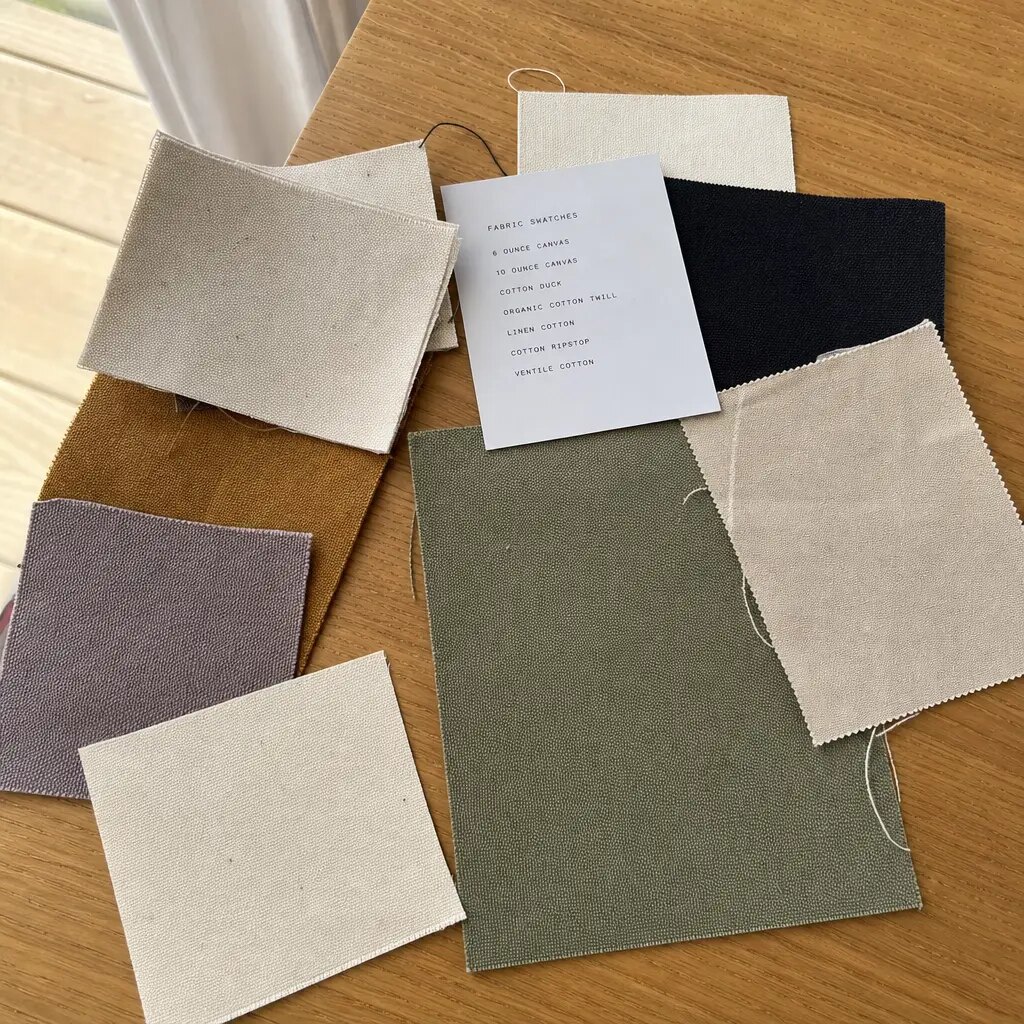
Do not look at weight in isolation. A smooth plain-weave canvas usually prints cleaner than a coarse rustic canvas. Duck canvas can be dense and durable, but suppliers use the term differently, so buyers should review swatches and print strike-offs instead of trusting the name. For coffee logos in black, brown, cream, forest green, or other solid brand colors, surface consistency and controlled slub are critical.
- 240 to 280 GSM: suitable for lighter promo or event totes, but usually not ideal for reusable grocery positioning.
- 300 to 340 GSM: good entry range for coffee retail totes with moderate loads.
- 340 to 400 GSM: strong middle range for reusable grocery totes and paid merchandise.
- Above 400 GSM: premium and sturdy, but check sewing, folding, unit cost, carton weight, and freight impact.
- Always request finished GSM, not only nominal oz.
- Ask for GSM tolerance; plus or minus 5 percent is a common commercial baseline if not otherwise agreed.
- Approve a fabric swatch and print strike-off from the same fabric quality planned for bulk.
Natural, bleached, dyed, organic, and recycled canvas options
Natural cotton canvas is the default for many coffee roasters because it fits café aesthetics, usually supports practical MOQs, and works well with dark one-color prints. It also has a relaxed, reusable look that suits coffee packaging and retail shelves. The tradeoff is shade variation. Natural cotton is not a fixed white. It may read as cream, oatmeal, beige, or slightly grey depending on cotton lot and finishing. If the roaster’s brand needs a specific warm natural tone, approve a shade band rather than one perfect swatch.
Bleached canvas gives a cleaner white base and stronger contrast for minimalist designs. It can look sharp on a retail wall or in ecommerce photography, but it shows dirt, oil, and handling marks more easily. Buyers should think beyond the first product photo. White canvas may need more careful factory handling, inner wrapping, carton protection, and receiving storage.
Custom dyed canvas can make the tote feel more ownable: charcoal, forest green, cocoa brown, navy, terracotta, or another brand color may match packaging and café interiors. Dyeing changes the sourcing path, though. Expect lab dip approval, higher MOQ per color, shade tolerance management, longer lead time, and sometimes additional colorfastness testing. Light ink on dark fabric needs opacity review. Dark dyed canvas also deserves rub testing so buyers can reduce the risk of color transfer.
Organic cotton, recycled cotton, recycled polyester blends, and other claimed materials should be treated as documentation decisions, not just buying preferences. If the tote, hangtag, product page, or retail signage will say “organic” or “recycled,” define the proof required before quoting. Depending on the market and claim, that may involve supplier declarations, transaction certificates, content certificates, or chain-of-custody documentation. If no customer-facing claim is needed, conventional cotton canvas is often simpler, more flexible, and easier to reorder consistently.
- Natural canvas: efficient and café-friendly, but shade variation must be accepted or controlled.
- Bleached canvas: clean and high-contrast, but more vulnerable to visible dirt and handling marks.
- Dyed canvas: strong brand color, but requires lab dip, shade approval, and usually higher MOQ.
- Organic cotton: useful only when the claim has commercial value and documentation is available.
- Recycled content: request exact fiber content and proof before using claim language.
- Avoid vague terms such as “eco canvas” unless the claim is defined, documented, and approved.
Gusset and size engineering for coffee retail packout
A grocery tote needs usable volume, not just height and width. The gusset determines how the tote opens, how rectangular coffee bags sit inside, and how much the front artwork distorts when the bag is full. For coffee roasters, a bottom gusset of about 120 to 150 mm is often a practical starting point. It creates room for coffee bags, mugs, jars, tins, and small boxes without making the tote too bulky for storage or display.
A flat tote may be cheaper, but it is not always the right grocery product. Dense coffee bags can make a flat tote bulge at the bottom and pull the print out of shape. A bottom gusset gives the bag a more useful base. Side gussets add even more capacity and help the tote behave like a shopping bag, but they also add sewing operations, folding complexity, and carton cube. They may reduce the uninterrupted front print area too.
Dimensions need to be written as measurable finished dimensions. State flat width, finished height, bottom gusset depth, side gusset if used, top hem width, and whether dimensions are measured with the bag flat or opened. Tolerances should be agreed before production. For many canvas totes, a practical commercial starting point may be around plus or minus 10 mm for body width and height, plus or minus 5 to 10 mm for gusset depth, and plus or minus 20 mm for finished handle length, but the buyer and factory should confirm what is realistic for the design and order size.
Think about display and fulfillment as well. A tote sold folded at the café counter can be softer. A tote used for gift sets may need enough structure to stand when filled, or it may need a cardboard insert, heavier base, or larger gusset. Inserts add cost, material, packing time, and receiving complexity, so they should be specified only when display or kitting truly requires them.
- Bottom gusset 80 to 100 mm: compact tote for lighter coffee purchases.
- Bottom gusset 120 to 150 mm: useful general grocery range for coffee bags and small add-ons.
- Bottom gusset above 150 mm: suitable for larger gift boxes, but check logo distortion and carton cube.
- Side gussets: add volume but increase complexity and may reduce clean print area.
- Confirm whether size is measured flat, opened, pressed, or after packing.
- Review sample photos empty, loaded, side view, bottom view, and folded for carton packing.
Handle construction, drop, stitching, and load-bearing details
Handles are often the first place a canvas grocery tote fails. A strong body fabric will not save the product if the handle ends are inserted too shallowly, stitched too close to the edge, or reinforced with a decorative pattern that does not spread load. For coffee roaster totes, handle construction deserves the same attention as fabric weight.
For shoulder-carry grocery totes, finished handle length commonly falls around 600 to 700 mm. That range usually gives enough drop for adult customers wearing normal clothing, but the sample should be tested. Handle width often sits around 25 to 35 mm. Wider handles may feel more comfortable under load, while narrow handles can dig into the shoulder. Self-fabric folded handles give a unified canvas look. Cotton webbing handles may feel cleaner and strong, though they can introduce color-match and texture differences.
The attachment area needs measurable details. A typical build may include a turned top hem, inserted handle ends, box-X reinforcement, and backtacking. Bartacks can add strength when placed at stress points. Multiple rows of stitching can also work if stitch density, thread, and seam allowance are adequate. Do not accept a weak box-X just because the words appear in the quote. If the X is too small, too close to the top edge, or sewn with loose tension, it may not provide the intended reinforcement.
Ask the factory for a load or pull check method. A basic production check may hang a defined weight for a defined time, then inspect for seam opening, thread breakage, and fabric tearing. The exact method should be agreed, especially when the tote will be sold as reusable grocery merchandise. Buyers do not necessarily need a laboratory protocol for every order, but they do need a consistent check that relates to real coffee retail loads.
- Specify finished handle length and tolerance, not only “long handles.”
- Review handle drop on a loaded sample for shoulder comfort.
- Choose self-fabric handles for a unified canvas look or webbing handles for a different hand feel.
- Specify top hem width, handle insertion depth, reinforcement pattern, thread, and stitch density.
- Inspect box-X size and placement against the approved PP sample.
- Require loaded sample testing before bulk approval.
- Treat uneven handle length, twisting, and weak stitching as functional defects, not cosmetic details.
Print method selection for coffee branding on canvas
Most coffee roaster tote artwork uses bold logos, clean typography, icons, badges, or one- to three-color graphics. For those designs, screen printing is usually the most practical production method at volume. It offers good unit economics, strong opacity when set up properly, and a more integrated look on cotton canvas than many transfer methods. The final result still depends on the fabric surface, ink system, screen setup, and curing control.
Water-based ink can give a softer hand that suits natural canvas. Pigment or higher-opacity systems may be needed for dense dark marks or light ink on dyed fabric. Digital mockups are useful for layout, but they are not color approvals. Pantone references help, yet the actual fabric color, yarn texture, absorbency, and curing process all affect the final appearance. A strike-off on the actual production fabric is the correct approval point.
Heat transfer, digital transfer, and DTG can be useful for low-volume trials, complex gradients, or designs that change frequently. They may support seasonal drops or short merch runs. The tradeoffs are hand feel, edge behavior, cracking risk, and long-term appearance on textured fabric. Embroidery can look premium for a small mark or patch, but large filled embroidery can be expensive and may distort medium-weight canvas. Woven labels, side tabs, and small patches are helpful when the roaster wants subtle branding or SKU differentiation without a large front print.
Define print QC before production. State print size, print location measured from top edge and side seams, color target, acceptable registration variation, and whether minor slub-related pinholes are acceptable. For dark inks on natural canvas, include a practical rub check after curing. If the tote will be washed or marketed as washable, add a wash test during sample approval.
- Screen print: best default for solid logos and repeat orders.
- Water-based ink: softer hand, but opacity and curing must be verified.
- High-opacity ink: useful for dark fabric or light-colored logos.
- Transfer print: useful for low MOQ or complex art, but test cracking, lifting, and hand feel.
- Embroidery: premium for small marks, not ideal for large filled artwork on many grocery totes.
- Woven label or side tab: efficient for small brand detail and version control.
- Approve a strike-off on actual bulk fabric before printing production pieces.
MOQ, quote comparison, and landed-cost traps
Canvas grocery tote quotes can be misleading when the specification is incomplete. A low unit price may be based on lighter fabric, shorter handles, reduced reinforcement, a shallower gusset, basic bulk packing, or a higher MOQ than the buyer can realistically use. A higher quote may include finished 380 GSM canvas, box-X stitching, strike-off, inspection support, and carton labels. Procurement teams need a quote sheet that normalizes every major assumption.
MOQ is rarely one number. There may be MOQ by fabric color, dye lot, print design, artwork color count, bag size, label, packing style, and shipment split. Stock natural canvas with one screen print is often the most flexible route for a first order. Custom dyed canvas, multiple café SKUs, woven labels, retail hangtags, and special packing can each raise the practical MOQ. If the roaster has several locations, ask whether store-specific carton labels can be added without turning every store allocation into a separate SKU.
Landed cost should be reviewed before the PO, not after the goods are packed. Heavy canvas and wide gussets increase carton weight and volume. Individual polybags protect the tote and improve retail presentation, but they add material, labor, plastic use, and CBM. Hangtags, belly bands, barcode labels, and store-ready cartons may increase origin cost while reducing labor after import. The best packing choice depends on whether the roaster receives bulk cartons at one warehouse, ships to stores, sells online, or builds gift kits.
Ask suppliers for carton dimensions, pieces per carton, gross weight, net weight, and estimated CBM. A slightly cheaper tote can become more expensive landed if it packs poorly or requires repacking. On the other hand, a stronger tote may justify its cost when it becomes a paid merchandise item with repeat orders and fewer customer complaints.
- Compare quotes only after normalizing GSM, size, gusset, handle, reinforcement, print, and packing.
- Ask MOQ by body color, print design, size, label, packing type, and shipment split.
- Separate sample cost, screen charge, strike-off, PP sample, and inspection cost from unit cost.
- Request carton dimensions and gross weight before PO approval.
- Check whether individual polybags are necessary or whether inner bundles are enough.
- Identify what triggers requoting: heavier GSM, longer handles, larger print, extra colors, custom dye, labels, or tighter packing.
- For repeat retail totes, value reorder consistency as well as first-order price.
Sample approval: prove production intent, not just visual appeal
A sample should prove that bulk production can match the approved product. For a custom canvas grocery tote, the pre-production sample should use the intended fabric weight, fabric color, handle construction, gusset, sewing method, print method, ink, label, and packing approach. If the sample uses substitute fabric, hand printing, non-production thread, or a temporary handle build, the supplier should say so clearly.
Start with measurement. Measure body width, height, gusset depth, top hem width, handle width, finished handle length, handle drop, print size, and print position. Record the numbers. If changes are needed, use measurable instructions. “Make the logo higher” should become “move print center up 20 mm.” “Make handles longer” should become “finished handle length 680 mm, tolerance plus or minus 20 mm.”
Then check function. Load the tote with the agreed coffee product mix and carry it by hand and shoulder. Look for handle twist, top-edge puckering, side seam strain, and base collapse. Hang it with the target test load if that is part of the agreed check. Look at the front print while the bag is filled, because gusset shape can change how centered or level the logo appears.
Finally, check print and finish. Compare the print to the strike-off under consistent lighting. Review opacity, edge sharpness, registration, pinholes, curing odor, dry rub, damp rub if relevant, and flexing at folds. If washability is claimed, wash a sample and record shrinkage, seam twist, print fade, and handle change. Keep one signed approved sample, or a documented approval set with photos and measurements, for final inspection.
- Approve fabric swatch, print strike-off, and PP sample as separate checkpoints.
- Confirm whether the sample is production-intent in fabric, sewing, print, and packing.
- Measure all critical dimensions and keep the actual numbers.
- Convert subjective feedback into millimeters, tolerances, or approved references.
- Test with real coffee bags, mugs, jars, and boxes.
- Retain an approved sample for QC and receiving comparison.
- Do not release bulk production until deviations are documented and accepted.
Bulk QC plan: fabric, printing, sewing, final inspection, and packing
A reliable QC plan starts before final inspection. Incoming fabric should be checked for GSM, shade, odor, stains, holes, severe slubs, and front-panel suitability before cutting. Natural canvas can show cotton seed flecks and minor texture, but visible oil marks, mildew smell, dirt streaks, or obvious panel mismatch should be rejected according to the agreed defect list. If custom dyed fabric is used, shade lots should be controlled before printing.
Print QC should happen at setup and during production. Keep the approved strike-off at the print line. Check logo position, color, registration, opacity, pinholes, and curing. Coffee branding often uses simple logos, which means small errors stand out. A logo that is 15 mm off-center or noticeably tilted can make the tote look unprofessional even when the sewing is acceptable. For dark inks and dyed fabrics, rub behavior and curing deserve extra attention.
Sewing QC should focus on load-bearing points: handle attachment, top hem, side seams, bottom seam, gusset corners, and reinforcement stitches. Inspect skipped stitches, broken threads, loose tension, open seams, needle cuts, puckering, and inconsistent handle placement. Measure handle length and left-right symmetry. A grocery tote with uneven handles may pass a flat photo review, then fail comfort testing in real use.
Final inspection should combine flat checks, measurement checks, loaded checks, and packing checks. Many B2B buyers use an agreed sampling plan such as general inspection level II with AQL levels defined by critical, major, and minor defects, but the exact plan should be written in the PO or quality agreement. Carton inspection matters too. Wrong SKU mix, missing labels, overweight cartons, weak cartons, and moisture-damaged packing can create receiving problems for roasters, distributors, and multi-store operations.
- Incoming fabric: verify GSM, shade, odor, stains, slubs, and defects before cutting.
- Printing: compare to strike-off for color, position, registration, opacity, and curing.
- Sewing: inspect handle attachment, seam strength, stitch density, top hem, and gusset corners.
- Measurements: check body, gusset, handle length, handle drop, and print placement against tolerance.
- Loaded review: test random units with the agreed representative load or test load.
- Final defects: classify critical, major, and minor defects before inspection starts.
- Packing: verify SKU count, inner bundles, carton labels, gross weight, carton strength, and moisture protection.
- Documentation: request inspection photos, defect summary, measurement table, and packed carton photos before shipment.
Specification comparison for buyers
| Spec decision | Recommended option | When it fits | Buyer risk to check |
|---|---|---|---|
| Fabric weight | Specify finished GSM first. A practical reusable coffee grocery tote range is often about 300 to 400 GSM, sometimes described by suppliers as 10 oz to 12 oz canvas depending on local convention. | Coffee bags, mugs, jars, small brew tools, farmers market use, and paid retail merchandise where the tote should feel reusable rather than disposable. | Oz terminology is not used consistently. Require finished GSM, test method, tolerance, and an approved bulk swatch weight before comparing quotes. |
| Fiber type | Use conventional cotton canvas unless organic, recycled, or blended content is required and can be documented. | Stable supply, practical MOQ, predictable sewing, and reliable print behavior for most coffee roaster merchandise programs. | Material claims need certificates or declarations. Vague wording such as “eco canvas” can create compliance, retail copy, and customer trust risk. |
| Weave and surface | Plain-weave cotton canvas or duck canvas with controlled slub and a smooth print panel. | Solid coffee logos, typography, one- to three-color screen prints, and clean front branding. | Rustic texture can look good, but heavy slub may cause pinholes, broken logo edges, and uneven ink coverage. |
| Finish and shrinkage | Choose unwashed canvas unless softness, pre-shrinking, or home-wash performance is part of the product promise. | Most dry coffee retail, store pickup, event merch, and gift programs where the tote is not marketed as machine-washable. | Unwashed cotton can shrink and skew after washing. If washability is claimed, define care wording, shrinkage limits, and a wash check. |
| Bag construction | Rectangular grocery tote with a bottom gusset of about 120 to 150 mm. Add side gussets only when extra cube is needed. | 250 g to 1 kg coffee bags, boxed filters, mugs, grinders, tins, jars, and gift bundles. | Large gussets affect print placement, folding, carton cube, and how the bag looks when loaded. |
| Handle material and length | Self-fabric folded handles or cotton webbing. Finished handle length commonly falls around 600 to 700 mm for shoulder carry, with handle width often 25 to 35 mm. | Reusable grocery and market tote use where customers carry several dense items. | Handle variation is both visible and functional. Require length tolerance, attachment method, reinforcement pattern, and load check. |
| Handle reinforcement | Box-X stitch or bartack with adequate top hem, handle insertion depth, seam allowance, thread, and stitch density. | Reusable coffee grocery totes expected to carry 5 kg or more in normal use. | A decorative X is not proof of strength. Inspect stitch length, placement, backtacking, insertion depth, and pull or load test results. |
| Print method | Screen print for solid logos and repeat orders. Consider transfer or DTG only for complex art, small tests, or variable designs. | Coffee roaster branding with bold marks, dark ink, clean typography, and repeat SKU orders. | Ink can crock, under-cure, crack, or look weak on coarse canvas. Require strike-off, rub check, and curing confirmation. |
| Packing | Bulk packed in inner bundles for wholesale use. Use individual polybags, belly bands, hangtags, or barcode labels only when retail presentation or fulfillment requires them. | Roastery receiving, multi-store distribution, wholesale kitting, online sales, and event merchandise. | Packing changes CBM, carton weight, labor, plastic use, receiving efficiency, and landed cost. Request carton dimensions before PO release. |
Buyer checklist before sampling
- Define the business use first: paid retail tote, reusable grocery bag, gift-with-purchase, subscription pickup bag, wholesale pickup tote, farmers market bag, online merch item, or event merchandise.
- List the representative load case in the RFQ, such as 4 x 340 g coffee bags plus 1 mug, or 2 x 1 kg bags plus a dripper box.
- State the normal working load and maximum test load in kilograms. Avoid vague buying language such as “strong,” “premium,” or “heavy duty” unless it is supported by measurements.
- Specify finished fabric GSM, target tolerance, weave type, canvas color, and whether the fabric is stock, custom dyed, washed, organic, recycled, blended, or conventional cotton.
- If using ounces, clarify whether the supplier means oz per square yard, nominal canvas ounce, greige fabric weight, finished fabric weight, or another local convention. Ask for the equivalent finished GSM.
- Define flat body width, body height, bottom gusset, optional side gusset, top hem width, handle width, finished handle length, and handle drop with tolerances.
- Confirm whether the tote must fit shoulder carry. Review loaded handle drop on an actual sample, not only on a flat measurement sheet.
- State whether the tote must stand upright when filled, hold rectangular gift boxes, or only carry flexible coffee bags and small retail items.
- Attach vector artwork with print dimensions, Pantone or brand color references, print location measured from top and side edges, and acceptable print method alternatives.
- Require a print strike-off on the actual bulk fabric color and weight before approving production printing.
Factory quote questions to send
- What is the finished fabric GSM of the quoted canvas, what tolerance do you apply in bulk, and how do you verify GSM before cutting?
- When you quote 10 oz, 12 oz, or another canvas ounce, does that mean oz per square yard, nominal trade weight, greige fabric weight, or finished fabric weight?
- Is the fabric stock greige, stock finished canvas, stock dyed canvas, or custom woven/custom dyed fabric, and what does that mean for MOQ, shade variation, and lead time?
- Can you provide the yarn count or yarn description, weave type, surface finish, and slub level, especially if the tote has a large front screen print?
- What shrinkage can be expected if the bag is washed at home, and is the quoted fabric unwashed, pre-shrunk, enzyme washed, or otherwise finished?
- What handle construction is included: same-fabric folded handles, cotton webbing, inserted ends, turned top hem, box-X stitch, bartack, or reinforcement patch?
- What thread type, stitch density, seam allowance, top hem width, and handle insertion depth are used at the handle attachment and side seams?
- Which dimensions are measured flat, which are measured after opening the gusset, and what standard tolerances apply to body, gusset, handle length, and print position?
- What load test or pull test do you use for this construction, how many pieces are tested, what weight is applied, and for how long?
- Does the quote include artwork review, screen charges, Pantone matching, print strike-off, PP sample, curing check, and print position approval?
Quality-control points to confirm
- Finished fabric GSM should match the approved standard within the agreed tolerance. Plus or minus 5 percent is a common commercial starting point when no stricter requirement is negotiated.
- Fabric panels should be checked before cutting for shade variation, stains, oil marks, dirt streaks, mildew odor, severe slubs, holes, weaving faults, and front-panel defects.
- Natural canvas shade should match the approved swatch or approved shade band under consistent lighting. Obvious panel-to-panel mismatch should be treated as a visual defect.
- Body width, body height, gusset depth, handle length, handle width, and print position should follow written tolerances. Tote programs usually need tighter control on print position than on sewn body dimensions.
- Handle left-right length mismatch should be controlled because it affects both appearance and carrying comfort. Measure finished handle length and loaded drop during inspection.
- Print registration, logo position, edge sharpness, opacity, pinholes, color tone, and coverage over slubs must match the approved strike-off or signed PP sample.
- Ink curing should be checked by the factory using a defined method. Practical buyer checks may include dry rub, damp rub, odor review, flexing at folds, and wash check if washability is claimed.
- No skipped stitches, open seams, broken threads, loose thread nests, needle cuts, excessive puckering, or unraveling should appear at handle attachments, top hems, side seams, bottom seams, or gusset corners.
- Reinforcement stitching must match the approved pattern, size, stitch count, and placement. Box-X, bartack, and backtack details should not drift from sample to bulk.
- Gusset seams should open evenly so the bag fills correctly. Twisted bases, uneven gusset depth, or distorted corners affect grocery usability and retail display quality.