Start With the Bakery Use Case, Not the Bag Photo
A custom canvas grocery tote for an artisan bakery has a different job from a fashion tote or a giveaway bag. It may carry crusty bread, pastry boxes, coffee bags, preserves, flour packs, holiday hampers, or mixed retail purchases. Those products create uneven weight, sharp package corners, crumbs, grease risk, and shelf presentation requirements. If the RFQ only says “canvas tote with logo,” suppliers will quote whatever construction keeps the unit price low.
Before choosing fabric, define the heaviest realistic basket and how customers will carry it. A tote used for two baguettes and a croissant box can be lighter and softer. A tote sold as a reusable grocery bag beside jams, coffee, and ceramics needs stronger handles, a more stable gusset, and better seam finishing. This early definition prevents the common mistake of approving a beautiful flat sample that performs poorly when loaded in store.
- Bread-only tote: lighter canvas may work if the bag is mostly for brand visibility and repeat visits.
- Mixed grocery tote: choose firmer 10 oz to 12 oz canvas with reinforced handles and a usable gusset.
- Gift hamper tote: consider 12 oz to 14 oz canvas, wider base, and stricter packing to protect shape.
- Retail resale tote: prioritize clean finishing, consistent color, and print durability because customers pay for it.
Choose Canvas Weight by Function and Landed Cost
Canvas weight is usually discussed in ounces, but international suppliers may also quote GSM. For bakery grocery totes, 10 oz to 12 oz cotton canvas, roughly 340 to 410 GSM depending on the mill, is the practical middle range. It gives enough strength for daily grocery use while keeping sewing time, carton volume, and freight cost under control. Lighter canvas can be acceptable for promotional bread bags, but it often collapses under retail grocery loads.
Heavier is not automatically better. A 14 oz canvas tote looks premium and holds shape well, but it increases material cost, needle wear, sewing time, print ink consumption, and shipping weight. If the tote is bundled with products or sold at checkout, the heavier option may justify the added cost. If it is a free-with-purchase item, the same budget may be better spent on 10 oz canvas with stronger handle stitching and a clean screen print.
- 8 oz canvas: suitable for light promotions, not ideal for grocery loads with jars or boxed goods.
- 10 oz canvas: good entry point for bakery grocery totes with standard bread and coffee purchases.
- 12 oz canvas: strong buyer-safe choice for reusable bakery retail totes and small hamper sets.
- 14 oz canvas: premium option for resale, gifting, or brand merchandise where structure matters.
- Quote control: request weight in oz and GSM so suppliers cannot hide a lighter fabric behind vague descriptions.
Fabric Construction Matters More Than the Weight Label
Two fabrics with the same weight can perform differently. A dense plain weave canvas with a firm handfeel will hold print better, resist distortion, and make the tote look more substantial. A loosely woven canvas may feel soft and natural, but the print can sink into the texture, the body can sag, and the seams may pucker. For bakery buyers, this difference shows up when the tote is placed on a counter, photographed for retail, or loaded with boxed pastries.
Natural cotton canvas also has shade and surface variation. Small cotton seed flecks are normal and often fit artisan bakery branding. Oil marks, large slubs, holes, and uneven panels are not acceptable. If the tote will sit in a premium retail display, include clear fabric appearance criteria in the RFQ. If rustic variation is acceptable, say so, but still define what level of stain or slub becomes a rejection.
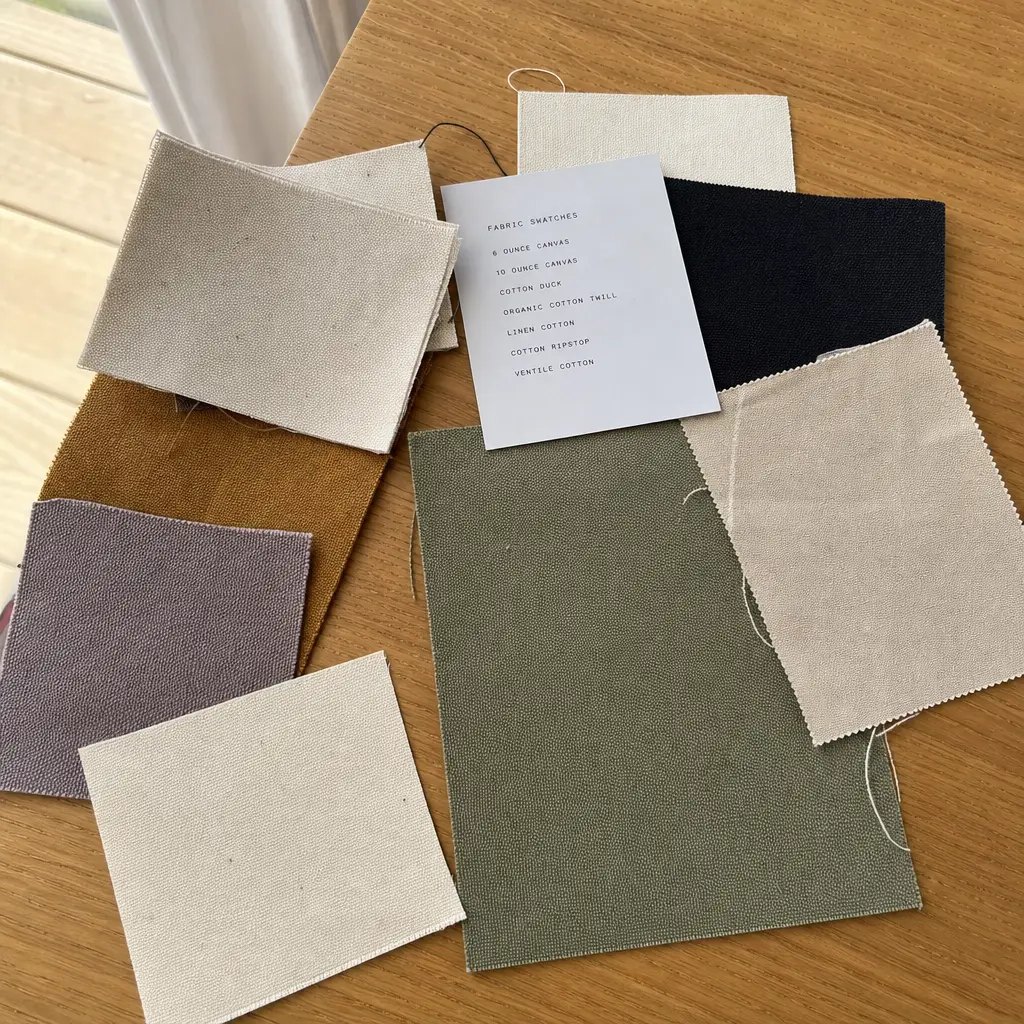
- Request a swatch set before sample production, not only a supplier photo.
- Compare fabric after folding, pressing, and printing because canvas handfeel changes through production.
- Use natural canvas for warm bakery branding, but control major shade differences between panels.
- For dyed canvas, approve a lab dip and state acceptable shade tolerance under D65 or agreed lighting.
- Avoid very open weave fabric for large solid logo prints because ink coverage can look uneven.
Size, Gusset, and Handle Specs Decide Real Capacity
A grocery tote should be specified by finished dimensions, not by a general description such as medium or large. For artisan bakeries, a common usable range is 35-40 cm width, 35-42 cm height, and 8-12 cm gusset. The gusset is especially important because it lets pastry boxes, coffee bags, and bread packs sit flat instead of tilting. A narrow gusset saves fabric, but it reduces the bag’s value at checkout.
Handle construction is one of the highest-risk areas. A beautiful body fabric will not save a tote if the handle tears at the top hem. Self-fabric canvas handles usually give a cohesive look, while cotton webbing can reduce sewing bulk. For grocery use, specify handle width, handle drop, stitch pattern, and reinforcement. A box-stitch or cross-stitch at each attachment point is usually better than a single horizontal stitch.
- Handle width: 3 cm to 3.8 cm is comfortable for typical bakery grocery loads.
- Handle drop: 22 cm to 28 cm allows hand carry and shoulder carry for many shoppers.
- Reinforcement: box-stitch with X or dense bar tack should be approved on the sample.
- Top hem: double-fold hem improves strength and gives the handle attachment more support.
- Load review: test with the buyer’s real product mix, not only sandbags or books.
Print Method Selection for Bakery Branding
Most bakery tote artwork works well with water-based screen printing: a logo, bakery name, simple illustration, tagline, or one to three solid colors. Screen printing is cost-efficient at bulk quantities and bonds well to canvas when the artwork is not overly detailed. It also keeps the finished tote natural-looking, which matters for artisan bakery positioning. The buyer should provide vector artwork, Pantone references, print size, and exact placement from seams or top edge.
Heat transfer, digital print, and embroidery can fit specific needs, but they change cost and risk. Transfers can reproduce fine detail on dark canvas, yet they may feel less natural and require wash or rub testing. Digital print can handle gradients but is slower and may have MOQ or color limitations. Embroidery gives a premium look but adds cost, can pucker lighter canvas, and is not ideal for very large front graphics.
- Screen print: best for simple bakery logos, line art, and solid colors on natural canvas.
- Discharge or special inks: only use when the supplier can show previous canvas test results.
- Heat transfer: useful for detailed artwork, but approve edge feel and cracking resistance.
- Embroidery: suitable for small premium badges, not large grocery tote front panels.
- Artwork rule: convert fonts to outlines and provide print size in centimeters, not only a mockup image.
Cost Drivers Buyers Should Separate in the RFQ
Canvas grocery tote quotes can look inconsistent because suppliers include different items. One quote may include screen charges, inner packing, and carton marks. Another may show only the sewn bag price and add every setup cost later. To compare properly, separate fabric, sewing, printing, accessories, packing, sample, inspection, and freight assumptions. This is especially important for importers and distributors quoting multiple bakery accounts.
MOQ logic also affects cost. Stock natural canvas can often support lower MOQs than custom dyed canvas. A standard bag size will cost less than a fully custom shape because cutting, sewing guides, and carton planning are simpler. Large print areas require bigger screens and more ink. Premium packing for retail stores raises labor and material cost but may reduce repacking work after arrival.
- Fabric cost: driven by GSM, width utilization, dyeing, shrinkage, and fabric inspection loss.
- Sewing cost: affected by gusset, binding, handle reinforcement, and stitch density.
- Printing cost: affected by color count, print area, ink type, screen setup, and curing time.
- Packing cost: affected by folding method, individual bags, paper bands, hangtags, and carton strength.
- MOQ cost: lower quantities carry more setup cost per piece and less fabric buying leverage.
- Freight cost: heavier canvas and bulky flat cartons can change the landed cost more than expected.
Sample Approval Should Simulate Bulk Production
A sample is only useful if it uses the same material and process as bulk. Many problems start when a buyer approves a showroom sample made from available fabric, then the bulk order uses a different canvas lot. For canvas grocery totes, approve fabric swatch, print strike-off, and full pre-production sample before bulk cutting. The sample should include final handle width, gusset, stitch reinforcement, label, folding method, and packing style.
Measure the sample like an inspector, not only like a designer. Load it with the intended bakery products and leave it hanging for several hours. Review seam strain, handle comfort, print cracking, and whether the base holds shape. If the tote will be sold in a bakery shop, place it on a shelf or counter and judge the presentation. A few extra sample checks can prevent a container of bags that look acceptable in cartons but disappoint at retail.
- Fabric approval: keep a signed swatch with GSM, color, and supplier reference.
- Print approval: keep a strike-off showing ink color, coverage, edge sharpness, and placement.
- Fit approval: measure width, height, gusset, handle drop, and print position from fixed points.
- Load approval: test with a realistic bakery basket such as bread, coffee, jam, and pastry box.
- Packing approval: confirm fold line does not run through a large logo or create permanent print creases.
Quality Thresholds That Prevent Retail Complaints
Canvas bags are simple products, but quality disputes often come from vague standards. Define tolerances before production. For dimensions, plus or minus 1 cm is a common working tolerance for body size, while handle width and print placement may need tighter control. For printing, define acceptable registration shift, pinholes, smudges, ink bleeding, and color variation. For stitching, define skipped stitches, loose thread length, and handle attachment strength.
AQL inspection can be used, but the inspection checklist must match the product risk. Bakery tote buyers should pay extra attention to stains, odor, lint, handle strength, and carton condition. Canvas can absorb factory smells if stored near chemicals or damp areas. Natural fabric can also show dirt quickly. Pre-shipment inspection should include random load testing and carton drop or compression review when the shipment will go through long export handling.
- Critical defects: broken handle, major oil stain, wrong logo, sharp object, mold, or unsafe contamination.
- Major defects: open seam, severe print defect, wrong size outside tolerance, wrong packing, or bad carton mark.
- Minor defects: small thread ends, light natural slub, tiny print speck within approved tolerance.
- Load test: agree weight, duration, and pass criteria before production starts.
- Odor check: reject strong chemical, mildew, or storage odor that conflicts with food retail environments.
Packing Choices Affect Store Readiness and Freight
Packing is not just a warehouse detail. Canvas totes crease, and printed panels can mark if folded incorrectly before ink has fully cured. For bakery retail buyers, the bag should arrive ready for back-room storage, easy counting, and clean presentation. Flat packing in bundles of 25 or 50 pieces is common. Individual polybags protect the product but may conflict with sustainability goals, so some buyers choose paper bands or bulk inner bags instead.
Carton size and weight need practical limits. Overloaded cartons can burst, deform the bags, or create handling issues at distribution centers. Underfilled cartons waste freight space. The RFQ should state maximum carton gross weight, carton marks, barcode needs, and whether inner packs must be separated by color or store allocation. If the order is for multiple bakery branches, carton labeling can save significant sorting time after arrival.
- Standard export packing: flat packed, 25-50 pieces per inner bag, moisture protection as agreed.
- Retail packing: paper band, hangtag, barcode sticker, or individual bag based on store process.
- Avoid heavy compression: it can create hard creases on canvas and visible marks across printed logos.
- Carton marks: include PO number, item code, color, quantity, gross weight, net weight, and destination.
- Moisture control: use dry cartons and clean storage; avoid packing canvas before prints are fully cured.
Lead Time and Schedule Risk for Bakery Programs
Bakery tote programs often connect to store openings, seasonal launches, holiday gift sets, or packaging refreshes. The lead time risk is usually not sewing alone. Fabric procurement, dyeing, lab dip approval, print strike-off, sample revision, carton material, inspection booking, and vessel space can each add delay. A realistic schedule starts from approved artwork and confirmed deposit, not from the first inquiry date.
For stock natural canvas and simple screen print, sample and bulk timing can be faster than custom dyed fabric. For custom colors, allow extra time for lab dips and fabric production. If the tote must arrive before a seasonal bakery campaign, freeze the material and artwork early. Late changes to print size, handle color, or packing method often restart pricing and production planning.
- Fastest route: stock natural canvas, standard size, one-color screen print, standard export packing.
- Moderate route: adjusted size, two or three print colors, approved paper band or hangtag.
- Longer route: custom dyed canvas, multiple SKUs, retail barcode packing, or complex artwork.
- Schedule buffer: reserve time for sample freight, internal buyer approval, and pre-shipment inspection.
- Risk control: require a production timeline with fabric ready date, cutting date, printing date, sewing date, and inspection date.
Specification comparison for buyers
| Spec decision | Recommended option | When it fits | Buyer risk to check |
|---|---|---|---|
| Main fabric weight | 10 oz to 12 oz cotton canvas, roughly 340-410 GSM depending on mill standard | Best balance for bakery grocery totes carrying bread, jars, coffee bags, and small retail purchases | Do not compare quotes by ounce only; request actual GSM, yarn count if available, and finished fabric feel after washing or calendaring |
| Fabric construction | Plain weave canvas with firm handfeel and limited stretch | Works for boxy grocery tote shapes that must stand reasonably well on a counter or shelf | Loose weave fabric may look similar in photos but distort under print pressure and sag after loading |
| Color choice | Natural, ecru, black, or bakery brand color dyed to lab dip approval | Natural canvas suits rustic bakery branding; dyed fabric fits premium retail ranges | Dyed canvas can raise MOQ and lead time; check crocking, shade tolerance, and whether handles match body fabric |
| Handle material | Self-fabric canvas handles, 3 cm to 3.8 cm wide, reinforced with cross-stitch or box-stitch | Suitable for grocery weight and comfortable hand carry over short distances | Thin webbing or single-row stitching may pass a light sample test but fail when customers carry glass jars or flour bags |
| Bottom and side structure | Flat bottom with 8 cm to 12 cm gusset; optional bottom insert only for premium sets | Helps bakery goods sit upright and improves perceived capacity at retail | A narrow gusset saves fabric cost but reduces usable grocery volume; clarify finished dimensions under load |
| Print method | Water-based screen print for 1-3 solid colors; heat transfer only for detailed artwork on darker fabric | Screen print is economical and durable for bakery logos, slogans, and simple illustrations | Ink migration, uneven coverage on coarse canvas, and excessive print area can change both cost and handfeel |
| Inside finishing | Overlock seam with binding on stress areas for standard orders; full inner binding for premium export programs | Keeps cost reasonable while preventing fraying in repeated grocery use | Unbound raw seams can shed lint onto bakery packaging and look cheap when the tote is opened |
| Packing method | Flat packed 25-50 pieces per inner polybag or paper band, export carton sized to avoid crushing | Good for distributors, retail back rooms, and bakery chain rollouts | Vacuum compression can crease canvas and print; bakery retail buyers may reject poor shelf presentation |
Buyer checklist before sampling
- Define the actual load: bread only, mixed pastry boxes, coffee bags, jars, flour, or gift bundles.
- Specify finished tote size, gusset width, handle drop, handle width, and reinforcement stitch pattern.
- Request fabric weight in both oz and GSM, plus whether the value is greige fabric or finished fabric.
- Decide if natural canvas variation is acceptable or if shade must follow a lab dip tolerance.
- Match print method to artwork: screen print for solid bakery graphics, transfer or digital only when detail requires it.
- Approve a pre-production sample with the same fabric, print size, handle construction, and packing method as bulk.
- Set measurable QC thresholds for dimensions, fabric defects, print registration, seam strength, and carton labeling.
- Include barcode, hangtag, folding direction, carton marks, and master carton weight limits in the RFQ.
- Compare quotes using landed cost per usable tote, not only ex-factory unit price.
- Reserve production buffer for fabric dyeing, print screen setup, sample revisions, and pre-shipment inspection.
Factory quote questions to send
- What is the exact fabric weight in GSM and oz, and is it measured before or after finishing?
- Is the canvas stock fabric, made-to-order natural fabric, or dyed fabric requiring a separate MOQ?
- What yarn count or weave description can you provide, and can you send a fabric swatch before sample making?
- What load test do you recommend for this tote size and handle construction?
- Which print method is included in the quoted price, and what is the maximum print size covered?
- Are screen charges, lab dips, strike-offs, sample freight, inner packing, and carton marks included or separate?
- What is the sample lead time after artwork approval and the bulk lead time after sample approval?
- How many pieces are packed per inner bag and per export carton, and what are the estimated carton dimensions and gross weight?
- What inspection standard do you use for fabric stains, broken stitches, print defects, and dimensional tolerance?
- Can you quote alternative options for 10 oz, 12 oz, and 14 oz canvas so our team can compare cost against durability?
Quality-control points to confirm
- Finished size tolerance should normally stay within plus or minus 1 cm for body width and height, and plus or minus 0.5 cm for handle width.
- Handle attachment should withstand the agreed static load test without seam opening, broken thread, or fabric tearing.
- Print should pass a dry rub test and show no obvious cracking, pinholes, heavy ink bleeding, or registration shift beyond the approved sample.
- Canvas surface should be free from oil stains, large slubs, holes, needle damage, and severe shade panels within the same bag.
- Stitch density should be consistent, with no skipped stitches at the handle box-stitch, gusset corners, or top hem.
- Cartons should match the approved packing plan, remain under the agreed gross weight, and carry correct item code, quantity, PO, and destination marks.