Define the Buying Problem Before Artwork Placement
For artisan bakeries, the tote is not just a giveaway bag. It may carry sourdough loaves, boxed pastries, jam jars, coffee beans, flour packs, or a seasonal gift bundle. Logo placement has to work when the bag is empty on a display hook and when it is filled with uneven bakery products. A flat artwork proof does not show this behavior, so the RFQ should describe the retail use before asking for a price.
The keyword custom canvas grocery totes logo placement guide for artisan bakeries sounds like an artwork topic, but most production problems start earlier: wrong tote dimensions, weak handles, an overlarge print area, or a logo that lands inside the natural fold line of the canvas. Procurement teams should specify the use case first, then let the logo position follow the bag construction.
- For a bread-and-grocery tote, define a load target such as 5 to 8 kg rather than saying heavy duty.
- For counter display, specify whether bags are stacked flat, folded, hung, or filled as a sample set.
- For retail resale, state whether the barcode goes on a hangtag, sewn label, paper belly band, or carton only.
- For bakery branding, identify whether the logo must be visible in customer photos when the tote is carried by hand or on the shoulder.
Choose Canvas Weight Around Load and Print Behavior
Most bakery grocery totes sit in the practical range of 10 oz to 12 oz cotton canvas, roughly 340 to 407 GSM depending on weave and finishing. A 10 oz canvas is easier to fold, cheaper to ship, and suitable for light pastry and bread use. A 12 oz canvas gives better body for jars, coffee bags, boxed cakes, and farmers market purchases. A 14 oz canvas can feel premium, but it increases sewing time, carton volume, and freight cost.
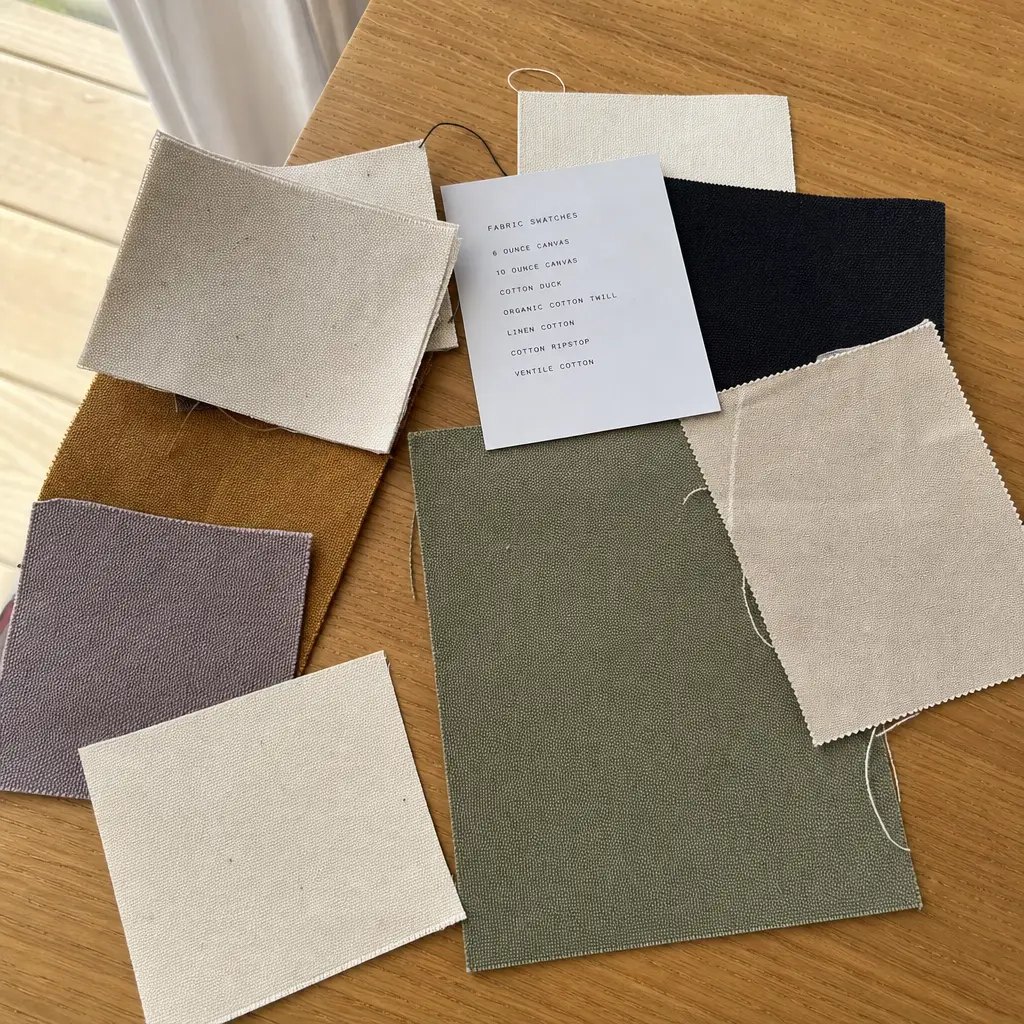
Fabric finish changes the print result. Natural unbleached canvas has visible cotton seed flecks and shade variation, which can suit artisan bakery branding but can reduce contrast for pale inks. Bleached or dyed canvas gives cleaner logo contrast but may require tighter shade control across batches. If the brand has a cream, oat, or kraft-style visual identity, request physical swatches instead of choosing from a screen image.
- 10 oz canvas: good for lighter bakery retail bags and lower freight cost.
- 12 oz canvas: stronger all-around option for grocery totes with jars, bottles, and heavy bread.
- 14 oz canvas: premium handfeel, but higher unit cost, sewing resistance, and carton CBM.
- Natural canvas: good artisan look, but expect minor slubs and flecks unless a stricter grade is quoted.
- Dyed canvas: better brand color control, but requires shade band approval and may need higher MOQ.
Set Logo Placement From Seams, Not From Visual Guesswork
A reliable logo placement spec uses fixed measurement points. For a front panel print, measure from the top opening seam to the top of the logo, and from each side seam to the logo edge or centerline. For many grocery totes, a front logo starting 70 to 90 mm below the opening seam gives enough clearance from the hem and handle reinforcement while keeping the mark visible when the tote is filled.
The logo should not fight with the bag structure. If the tote has a deep gusset, the front panel may bow when filled. If handles are sewn low on the panel, the handle stitching box can interrupt the artwork. If the bag is folded for packing, a crease line may pass through the print. A good supplier should return an artwork placement drawing on the actual tote pattern, not only a PDF proof floating on a rectangle.
- Use millimeters for placement, not inches mixed with visual notes.
- Define whether the measurement is to the logo edge, logo center, or full print bounding box.
- Leave at least 45 to 60 mm from side seams for common bakery logos on medium totes.
- Avoid crossing the bottom fold line, side gusset fold, or handle reinforcement area.
- For repeated orders, keep a signed artwork placement sheet with PO number and sample date.
Match Print Method to Bakery Artwork
Spot color screen printing is usually the safest production method for custom canvas grocery totes ordered by bakeries and distributors. It works well for one- to three-color logos, ingredient illustrations, bakery names, and simple line art. It also gives stable unit cost when quantities rise. The limitation is that fine gradients, photo-style pastry artwork, and tiny text will not reproduce well on textured canvas.
Heat transfer can handle more detail and small color runs, but buyers should check handfeel, edge durability, and whether the transfer surface fits the bakery's natural brand positioning. Embroidery can look premium for small chest-style marks or side labels, but it is often unsuitable for a large grocery tote front logo because stitch density can pucker canvas and cost rises with stitch count. Woven labels are useful for subtle side branding, not for main shelf visibility.
- Screen print: best for solid bakery logos, lower setup complexity, and repeat wholesale orders.
- Water-based ink: softer handfeel, but may look less bright on natural canvas.
- Plastisol ink: stronger opacity, but heavier surface feel may not suit eco-style branding.
- Heat transfer: useful for multicolor graphics, but test edge adhesion after folding.
- Embroidery: premium for small marks, not ideal for large front-panel bakery graphics.
Control Cost Drivers Without Weakening the Tote
The main cost drivers are canvas weight, tote size, gusset depth, handle material, print method, number of print colors, print area, packing method, and order quantity per style. Buyers often compare quotes that are not truly comparable: one supplier quotes 10 oz canvas with one-color print and bulk packing, while another quotes 12 oz canvas, two-color print, and individual polybags. The cheaper quote may not be cheaper after inspection failures, rework, or freight differences are included.
MOQ logic also matters. A factory may accept a combined MOQ across several bakery locations if the fabric, tote size, and print setup stay the same. However, different logo sizes, different ink colors, different bag colors, or separate side-gusset prints can turn one order into several production lots. If the buyer needs regional bakery logos, it is often better to standardize the tote body and use one controlled logo zone.
- Lowest-cost base: 10 oz natural canvas, one front screen print, bulk carton packing.
- Balanced wholesale spec: 12 oz canvas, reinforced handles, one or two spot colors.
- Premium resale spec: heavier canvas, inside seam finishing, hangtag, and cleaner shade control.
- Cost risk: large print areas require more ink, longer drying time, and more inspection attention.
- MOQ risk: every artwork or ink color change can create a new setup and production batch.
Approve Samples in the Same Form Customers Will See
A flat pre-production sample can pass visually but still fail in the bakery. Fill the tote with a realistic mix of products before approval: two loaves, a pastry box, one jar, and a coffee bag, or whatever the buyer expects to sell. When filled, the front panel may curve, the gusset may pull the logo sideways, and the handles may cover part of the print. These problems are cheaper to fix before bulk printing starts.
The sample process should separate three approvals. First, approve the fabric and construction with a blank sample. Second, approve print color and ink behavior using a strike-off on the actual canvas. Third, approve the finished pre-production sample with final logo placement. Skipping directly to a finished sample can save a few days, but it makes it harder to identify whether a problem comes from fabric, sewing, print setup, or artwork measurement.
- Blank sample: confirms size, gusset, handle drop, fabric weight, and seam construction.
- Print strike-off: confirms ink color, opacity, edge sharpness, and rub resistance on real canvas.
- Pre-production sample: confirms final placement, handle clearance, folding, and packed appearance.
- Filled sample photo: confirms logo visibility in practical bakery retail use.
- Signed sample: becomes the inspection reference for bulk production and repeat orders.
Write QC Thresholds That Inspectors Can Use
Quality control should not rely on a general statement such as good workmanship. For custom canvas grocery totes, the inspection team needs measurable acceptance points: finished size tolerance, logo placement tolerance, print defects, stitch density, handle strength, fabric stains, and carton marking accuracy. A normal sewn cotton tolerance may be wider than a rigid product tolerance, but it still needs to be written clearly.
For logo placement, many buyers use plus or minus 5 mm as a practical front-panel target when the print is applied to cut panels or accurately positioned finished bags. For finished dimensions, plus or minus 10 mm can be realistic depending on fabric shrinkage and sewing method. Print defects should be judged by viewing distance and defect size, but large smudges, missing ink, ghosting, obvious pinholes in the logo, and severe skew should be rejectable.
- Logo position: measure from top seam and side seams, not from the fabric edge before sewing.
- Print skew: define maximum visible tilt, especially for rectangular bakery logos and text marks.
- Stitching: reject broken stitches, skipped stitches at handle stress points, and unsecured thread ends.
- Fabric: define acceptable natural flecks separately from stains, oil marks, holes, and weaving defects.
- Load check: test representative samples with the agreed bakery load for handle and seam stress.
Plan Packing Around Print Protection and Freight
Packing affects both product appearance and landed cost. Flat packing 50 to 100 pieces per export carton is common, but the right quantity depends on canvas weight, tote size, and whether the handles are folded inward. A 14 oz tote packed too tightly can arrive with deep creases across the logo. A water-based print that is not fully cured or is packed under pressure may show transfer marks, especially on natural canvas.
Individual polybags protect resale totes but add labor, material cost, and plastic waste. Many bakery brands prefer bulk packing with tissue or paper slip sheets only where needed. Importers should request carton dimensions and gross weight at quote stage, not after production, because a tote that looks only slightly heavier can increase CBM enough to change freight planning. For distributors, carton marking should include SKU, PO, color, quantity, and carton number for easier warehouse receiving.
- Bulk carton packing: lower cost and less plastic, suitable for in-store distribution.
- Individual polybag: better for ecommerce resale, but conflicts with some sustainability policies.
- Slip sheet protection: useful when large dark prints face natural canvas surfaces.
- Carton compression: avoid overpacking that creases the front logo panel.
- Carton data: collect length, width, height, gross weight, net weight, and pieces per carton.
Build a Lead Time Plan With Real Approval Gates
Lead time is not only sewing time. A normal custom tote program may include fabric sourcing, cutting, print screen setup, strike-off approval, sewing, trimming, pressing, packing, final inspection, and export booking. The schedule becomes risky when buyers approve artwork slowly, change logo placement after strike-off, or add regional bakery versions after production planning has started.
Procurement teams should put approval gates into the order calendar. For example, blank sample approval can release fabric purchasing, print strike-off approval can release screen setup, and pre-production sample approval can release bulk cutting and printing. If the order is for a seasonal bakery launch, build buffer time for artwork revision and inspection rework. A few days spent approving the right sample can prevent weeks of sorting rejected printed totes.
- Artwork review: confirm vector file, Pantone colors, print size, and placement drawing.
- Material gate: approve fabric weight, shade, shrinkage behavior, and handle webbing.
- Print gate: approve ink color, opacity, handfeel, curing, and rub result.
- Production gate: approve finished pre-production sample before bulk printing.
- Shipment gate: complete final inspection before balance payment and cargo release.
Compare Quotes on Landed Cost, Not Unit Price Alone
A bakery tote quote should include enough data for the buyer to calculate landed cost. Unit price without fabric weight, carton CBM, packing method, MOQ split, sample cost, setup cost, and lead time is not a sourcing decision. A low unit price may become expensive if the carton volume is high, if logo placement rejects are sorted after arrival, or if the supplier charges separately for screens, strike-offs, labels, or revised samples.
A useful RFQ asks suppliers to quote a base spec and two alternates. For example, quote 10 oz, 12 oz, and 14 oz canvas using the same tote size and one-color front print. This allows the importer to compare material cost against freight and retail value. If the bakery plans to resell the tote, the premium version may justify the added cost. If the tote is a gift-with-purchase, the balanced 12 oz version may be the better margin decision.
- Quote data: unit price, currency, trade term, validity, MOQ, sample cost, setup cost, and payment terms.
- Product data: fabric oz and GSM, size, gusset, handle width, handle length, print area, and print colors.
- Packing data: pieces per carton, carton size, gross weight, net weight, and packing material.
- Schedule data: sample lead time, bulk lead time after approval, inspection window, and shipment booking date.
- Risk data: tolerance standard, inspection method, replacement policy, and how defects are documented.
Specification comparison for buyers
| Spec decision | Recommended option | When it fits | Buyer risk to check |
|---|---|---|---|
| Fabric weight for bakery grocery loads | 10 oz to 12 oz cotton canvas, about 340 to 407 GSM, with reinforced handle stitching | Best for bread loaves, jars, flour packs, pastry boxes, and retail gift sets without making the tote too bulky | Low GSM can sag under jars; very heavy canvas increases carton volume and freight cost |
| Main logo position | Centered front panel, 70 to 90 mm below top opening, with artwork sized to leave 45 to 60 mm side clearance | Works for bakery shelves, checkout counters, market stalls, and customer reuse where the logo must stay readable | Artwork placed too high may fold under the opening seam; too low can disappear when the bag is filled |
| Side gusset branding | Small vertical logo, ingredient icon, or batch-style mark on one side gusset only | Useful for narrow retail displays where totes face sideways or hang from peg hooks | Gusset distortion can make fine text unreadable; keep line art simple and approve a filled-bag sample |
| Print method for bakery identity | Spot color screen print for solid logos; heat transfer only for detailed multicolor graphics; embroidery for premium small marks | Screen print suits most artisan bakery logos and gives good cost control at wholesale volume | Water-based ink can look muted on natural canvas; plastisol feel may be too heavy for eco-positioned brands |
| Artwork size control | One master front logo size plus one approved tolerance, normally plus or minus 5 mm placement and plus or minus 3 mm print size | Keeps repeat orders consistent across PO splits and seasonal bakery campaigns | Without tolerance written into the PO, each factory batch may look slightly different at store level |
| Handle length and logo visibility | 55 to 60 cm cotton webbing handles for shoulder carry, placed so they do not cover the printed mark | Good for grocery use, farmers market purchases, and commuter reuse after bakery purchase | Short handles improve carton packing but reduce usability; long handles may cross over the logo in photos |
| MOQ logic for custom placement | Combine one fabric, one tote size, and one print setup across colorways where possible | Helps importers reach factory MOQ without overbuying slow bakery designs | Changing logo size, print location, or ink color can create separate setup charges or separate MOQ |
| Packing method | Flat packed 50 to 100 pcs per export carton with front logo facing one direction and inner polybag only if required | Protects print surface and supports efficient distributor receiving and store allocation | Overtight cartons can crease logo areas; unnecessary individual polybags add cost and may conflict with bakery sustainability claims |
Buyer checklist before sampling
- Define the tote size, gusset depth, handle length, fabric weight, and target carrying load before discussing logo position.
- Provide artwork in vector format with Pantone references, print size in millimeters, and placement measured from fixed seams.
- State whether the bag will be displayed flat, hanging, folded, or filled at bakery retail counters.
- Approve one physical pre-production sample with the tote filled to the expected bakery load, not only a flat sample photo.
- Set written placement tolerance, print color tolerance, seam allowance, and handle alignment criteria in the purchase order.
- Confirm carton dimensions, pieces per carton, gross weight, and whether the printed panels require tissue or slip-sheet protection.
- Separate must-have specifications from optional upgrades so suppliers can quote a base version and alternates clearly.
- Request photos of cutting, printing, sewing, packing, and final AQL inspection for repeat-order traceability.
Factory quote questions to send
- What canvas weight in oz and GSM are you quoting, and is it greige, bleached, dyed, or washed fabric?
- What is the exact finished tote size, gusset depth, handle width, handle length, and seam construction included in the price?
- Which print method is included, how many colors are quoted, and what is the maximum print area at this price?
- What logo placement tolerance can your factory hold in bulk production, measured from the top seam and side seams?
- Is the MOQ based on fabric color, print artwork, print color, tote size, or total combined order quantity?
- What sample types are included: blank size sample, strike-off, pre-production sample, or full finished sample?
- What are the carton packing details: pieces per carton, carton size, gross weight, and whether individual bags are included?
- What lead time applies after sample approval and deposit, and what steps can delay production?
- What inspection standard do you support for stitching, stains, print defects, placement deviation, and carton marking?
- Can you quote alternates for 10 oz, 12 oz, and 14 oz canvas so the buyer can compare product cost against freight impact?
Quality-control points to confirm
- Measure finished tote width, height, and gusset with a flat tolerance suitable for sewn cotton goods, usually plus or minus 10 mm unless stricter control is agreed.
- Check logo placement from the top opening seam and both side edges, with acceptance normally within plus or minus 5 mm for front-panel screen print.
- Run a print adhesion and rub test appropriate to the ink system, especially for dark prints on natural canvas and repeated grocery handling.
- Inspect handle box stitching and cross-stitching for skipped stitches, loose threads, and symmetry because heavy bakery contents stress the handle joint first.
- Fill the tote with the buyer's expected load example, such as bread boxes and jars, to confirm logo visibility and bag shape.
- Review fabric shade, slubs, oil marks, weaving defects, and dye lot consistency before printing, because printing will not hide poor canvas.
- Confirm carton packing does not crease the printed logo area, transfer ink, or distort the handles during export transport.
- Verify barcode labels, carton marks, PO numbers, and country of origin labels before shipment release.