Start with the real calendar, not the quoted production days
For custom canvas grocery totes, the supplier's stated production lead time is only one part of the procurement schedule. A factory may quote 25 or 35 working days, but that often starts after deposit, final artwork, material confirmation, and pre-production sample approval. If an eco apparel brand treats that number as the whole project timeline, the launch date can be missed before cutting begins.
Plan backward from the required warehouse arrival date. Add time for RFQ clarification, quote comparison, sample making, sample transit, internal review, material booking, bulk production, inspection, packing, freight booking, customs clearance, and receiving. Buyer-side review time needs a deadline; a sample sitting with marketing for a week is still a project delay.
First orders need more room than repeats because the tote body, print, packing, labels, and supplier communication are being proven. Repeat orders can move faster only when the approved fabric, dimensions, artwork, labels, carton count, and inspection standard are unchanged.
- Ask when the factory lead time begins and get it in writing.
- Build the schedule from target arrival date, not PO date.
- Separate first-order timing from repeat-order timing.
- Freeze artwork, fabric, dimensions, and packing before bulk release.
- Add buffer when using a new supplier, new artwork, special packing, or seasonal freight windows.
Use scenario timelines to expose hidden approval time
Exact timing depends on order size, country, factory load, and freight mode, but scenario planning helps buyers see where risk enters. Treat these examples as planning structures, not promises. The main lesson is that faster tote programs use in-stock fabric, simple print, standard packing, and quick approvals.
A natural 12 oz canvas tote with one-color screen print and flat bulk packing is usually the cleanest route. The critical path is artwork approval, print setup, PP sample, bulk production, final inspection, and shipment. If the factory already has fabric and the buyer approves the sample quickly, this route has fewer waiting points.
Dyed canvas adds color approval. The buyer may need a lab dip or fabric swatch before bulk fabric is dyed or purchased. Certified organic or recycled cotton may add supplier qualification and document review before price and lead time are final. Retail packing can add another gate for barcode, carton marks, hangtags, and polybag decisions.
- In-stock natural canvas, 1-color screen print: allow RFQ and artwork review, sample or strike-off, PP approval, bulk production, inspection, and freight.
- Dyed canvas body: add lab dip approval, dyeing or fabric sourcing time, and shade-lot review before cutting.
- Certified or claimed material route: add time to confirm scope certificates, transaction certificates where applicable, composition statements, or test reports before claim approval.
- Complex multi-artwork launch: add time for separate print setups, SKU labels, carton segregation, and buyer review of each version.
- Retail-ready packing: add time for barcode testing, hangtag approval, carton specification, and packing sample photos.
Translate brand intent into an inspectable tote specification
A brief such as "natural canvas grocery tote with our logo" is not enough for comparable pricing. The RFQ should define fabric weight, GSM, finished size, gusset, handle length, handle width, top hem, reinforcement, print size, print position, label placement, packing, and tolerances. Otherwise, suppliers may quote different bags while appearing to answer the same request.
For grocery use, 10 oz canvas can fit lighter-duty promotions. A 12 oz canvas tote is often a balanced choice for reusable grocery and apparel-brand merch because it feels substantial without becoming too bulky. A 14 oz tote can feel more premium but may increase material cost, sewing time, carton weight, and freight cost.
Dimensions should be tested on a real sample. A tote may look balanced in a mockup but be too shallow for groceries, too narrow for folded apparel, or uncomfortable for shoulder carry. If shoulder use matters, check actual handle drop on a filled sample.
- State fabric weight in oz and request GSM confirmation.
- Confirm finished dimensions, not only cutting dimensions.
- Specify gusset depth if the tote must hold bulky items.
- Define handle length, width, drop, and box-X reinforcement.
- Use the same spec version on the quote, PO, sample approval, and inspection sheet.
Define sustainability requirements before sourcing
Canvas totes are often used in lower-waste retail programs, but material claims require discipline. Conventional cotton, organic cotton, recycled cotton, and blended recycled content can differ in availability, MOQ, cost, color consistency, and documentation. The buyer should define the required claim before asking for quotes.
Natural canvas is a practical visual option for eco apparel brands and works well with simple one- or two-color graphics. It also shows stains, oil marks, slubs, and shade variation more readily than dark dyed fabric. Bleached canvas provides a cleaner print ground. Dyed canvas supports brand colors but can add lab dip approval, colorfastness review, and shade-lot risk.
Ask what documents the supplier can provide before writing hangtag or product-page copy. Depending on the claim and supplier route, buyers may request a material composition statement, fabric test report, scope certificate, transaction certificate, recycled content documentation, or other chain-of-custody support. Availability should never be assumed by default.
- Decide whether the order needs a documented claim or simply a reusable cotton tote.
- Ask for available documents before approving sustainability wording.
- Add lab dip time for dyed canvas.
- Review natural canvas for shade variation and visible handling marks.
- Ask about shrinkage if consumers may wash the tote.
- Keep claim language aligned with the documents actually supplied.
Choose the print method before comparing quotes
Print method affects price, approval steps, and lead time. A one-color screen print quote is not equivalent to a transfer print, digital print, embroidery, or woven label quote. The RFQ should state print size, placement, color count, Pantone target when needed, and whether one or both sides are included.
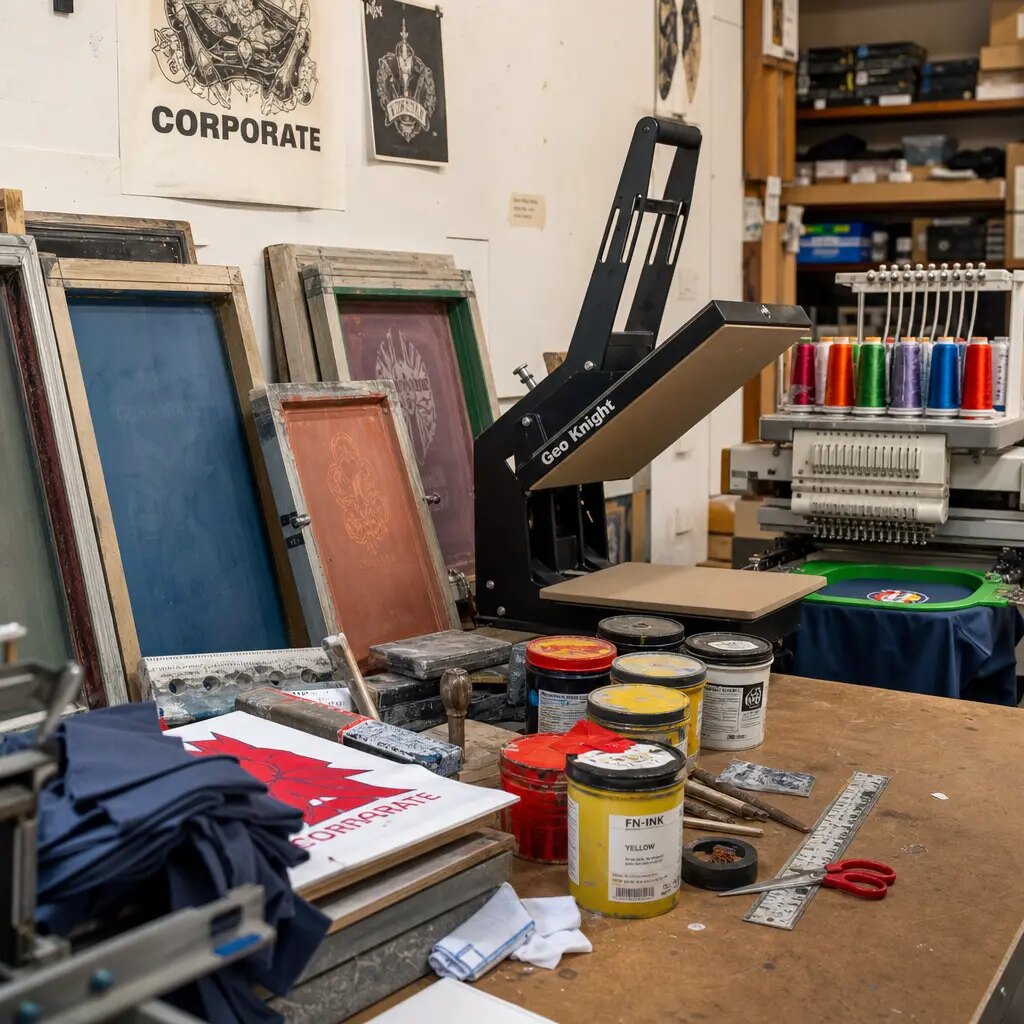
Screen print is a strong route for bulk canvas grocery totes with bold logos, simple icons, slogans, and limited color counts. It is efficient at volume and can be durable when ink, curing, and fabric absorption are controlled. For natural canvas, review opacity because the fabric texture can change how ink appears.
Transfer or digital print can suit detailed artwork, gradients, or smaller quantities, but buyers should validate hand feel, edge behavior, adhesion, and rub resistance. Embroidery works better for small premium marks than large grocery graphics because dense stitching can add cost, time, and puckering risk.
- Use screen print for bold 1-2 color artwork and larger runs.
- Use transfer print when artwork complexity justifies the extra review.
- Reserve embroidery for small brand details, not large filled panels.
- Confirm included print positions and color count.
- Approve a strike-off when color, opacity, or fine detail matters.
- Include a dry and light damp rub check in sample review.
Plan MOQ by version, not only by total quantity
MOQ is really version planning. A supplier may accept 1,000 pieces total but not at the same price if the order is split across ten artworks, three body colors, and two packing formats. Each version can require separate fabric control, print setup, labels, carton marks, and counting.
The fastest route is usually one tote body, one fabric color, one handle construction, and controlled artwork versions. If the brand needs variety, standardize the bag body first and ask how MOQ changes per artwork. This prevents design variety from creating avoidable production complexity.
Inventory risk also belongs in the MOQ conversation. A low MOQ can reduce stock exposure but may raise unit price and sample cost per unit. A higher MOQ may improve cost but creates slow-moving inventory if each print is too niche. Show the factory the intended quantity split and request realistic price breaks.
- Request MOQ by body color, artwork, size, and packing version.
- Ask for price breaks at practical quantities.
- Limit body colors when timing is tight.
- Use SKU or artwork codes for every version.
- Confirm acceptable overage or shortage before PO release.
- Avoid late artwork additions after print setup planning.
Make sampling prove production repeatability
A pre-production sample should be a rehearsal for bulk production, not just a nice-looking prototype. It should use the actual canvas weight, print method, thread, handle construction, label placement, and proposed packing fold. If a substitute fabric or process is used, the supplier should say so clearly.
The sample path can be staged. A digital proof confirms layout and logo scale. A print strike-off checks color, opacity, line sharpness, and canvas absorption. A full PP sample confirms bag construction, handle comfort, label placement, and packing. For higher-risk programs, buyers may request first bulk photos or an in-line check before the full run continues.
Approval notes should be specific. Instead of writing "approved with changes," list the changes: move logo down 2 cm, increase handle length to 60 cm, keep 12 oz natural canvas, use flat pack, and place barcode on the lower-right polybag face. Then ask whether these changes affect price or timing.
- Measure the sample and record results in the approval file.
- Photograph seams, handle reinforcement, labels, print, and packing.
- Use the final approved sample as the inspection reference.
- Clarify whether each revision requires a new sample.
- Do not release bulk production until sample exceptions are documented.
- Keep one sealed approval sample for comparison if possible.
Lock packing before production, not after sewing
Packing can change labor, carton dimensions, labels, freight data, and lead time. A bulk-packed tote is different from an individually polybagged tote with barcode sticker, hangtag, insert, retail fold, and destination-specific carton marks. If packing is decided late, the factory may need to repack finished goods.
Flat packing is often practical for grocery totes because it keeps cartons predictable and reduces hard fold marks. A controlled fold can be acceptable when carton size or retail presentation requires it, but the buyer should review whether the fold crosses the print. A crease through a screen print can make a good bag look poorly handled.
Polybag decisions should reflect both sustainability goals and warehouse requirements. Some brands avoid individual polybags, while some retailers require them for barcode scanning and product protection. If no polybag is used, define how the factory will protect light canvas from dirt, moisture, and carton abrasion.
- Define flat pack, folded pack, bundle pack, or individual pack in the RFQ.
- Specify barcode placement, hangtags, inserts, and carton marks.
- Request carton dimensions, pack count, net weight, and gross weight before freight booking.
- Review folded sample photos before approving bulk packing.
- Confirm suffocation warning requirements if polybags are used.
- Make carton count verification part of final inspection.
Use a quote that shows the critical path
A useful quote makes hidden work visible. It should state fabric weight, GSM, body color, dimensions, gusset, handle construction, print method, included colors and positions, label details, MOQ, price breaks, sample cost, sample timing, packing method, carton data, payment terms, incoterm, and lead-time start trigger.
The quote should also state exclusions. Print setup, Pantone matching, barcode labels, hangtags, upgraded cartons, individual polybags, document fees, third-party inspection support, inland freight, and export charges may or may not be included. A low quote with missing packing or setup details may not be the lowest landed cost.
For lead-time planning, the start trigger is critical. Ask for wording such as: "Bulk lead time is 30 working days after deposit, final artwork, material confirmation, and PP sample approval." Tie the final quote date or quote number to the PO so finance, QC, and production teams are working from the same version.
- Compare quotes only against the same spec and packing plan.
- Separate unit price from setup, labeling, packing, and freight-related charges.
- Ask for lead-time start trigger in writing.
- Request sample turnaround and revision rules.
- Confirm carton data early enough for freight planning.
- Attach the final approved quote to the PO and inspection file.
Control quality at the points where tote failures happen
Canvas grocery totes look simple, but quality failures are usually predictable: lighter fabric than approved, crooked dimensions, weak handles, poor print curing, stains on natural canvas, incorrect labels, or carton count errors. QC should focus on these practical risks instead of only checking overall appearance.
Inspection should compare bulk goods with the approved PP sample and PO specification. Measure pieces from different cartons, not only the top carton. Check width, height, gusset, handle length, handle drop, print placement, and stitch consistency. Handle attachment deserves special attention because it is the most visible functional failure point for grocery use.
Print checks should include opacity, edge sharpness, registration, placement, curing, and rub resistance. Packing checks should include barcode accuracy, carton marks, SKU separation, polybag or bundle method, and carton count. These checks reduce warehouse disputes and prevent a good product from being delayed by receiving errors.
- Check fabric weight, color, hand feel, and visible defects against the approved sample.
- Inspect seams, top hems, bottom corners, and handle box-X stitching.
- Run a practical handle pull check based on the agreed standard.
- Test print rub with dry and light damp cloth before shipment.
- Open random cartons to verify count, SKU, labels, and packing method.
- Document defects with photos and agree on rework before goods ship.
Specification comparison for buyers
| Spec decision | Recommended option | When it fits | Lead-time or cost impact | Buyer risk to check |
|---|---|---|---|---|
| Fabric weight | 10-12 oz canvas for most grocery tote programs; 14 oz for premium or heavier-load use | Retail resale totes, eco apparel merch, grocery campaigns, repeat-use shopper bags | Heavier canvas can increase fabric cost, sewing time, carton weight, and freight cost | Too-light fabric can stretch, distort print panels, and increase seam or handle complaints |
| Canvas finish | Natural canvas for fastest standard route; bleached or dyed when the brand needs a cleaner or specific color base | Natural-positioned brand programs, neutral retail bags, or brand-color launches | Dyed canvas may add lab dip, dyeing, shade approval, and colorfastness checks | Loose terms like "natural heavy canvas" make quotes hard to compare and can hide substitutions |
| Certified or claimed material | Define whether conventional, organic, recycled, or blended content is required before RFQ | Brands making product or hangtag claims, retail compliance programs, or sustainability-led assortments | Documented material routes may affect supplier choice, MOQ, cost, and approval time | Do not make organic, recycled, or chain-of-custody claims unless documents support them |
| Print method | 1-2 color screen print for bulk; transfer print for detailed artwork; embroidery for small premium marks | Bold logos, grocery graphics, campaign slogans, and limited-color artwork | Extra colors, large print areas, strike-offs, and curing checks can add time and setup cost | Quotes may look cheaper because print method, color count, or curing standard is not equivalent |
| Handle construction | Self-fabric or cotton webbing handles with box-stitch and X reinforcement | Reusable grocery totes expected to carry weight repeatedly | Reinforced handles add sewing steps but reduce visible failure risk | Weak attachment, narrow handles, or short stitch length can cause early complaints |
| MOQ route | One approved body with controlled artwork variations; confirm MOQ per artwork, color, size, and packing version | Brands balancing SKU variety, inventory control, and stable pricing | Many versions add setups, carton control, and scheduling complexity | A total MOQ may not apply when quantities are split across several colors or logos |
| Sample path | Digital proof, print strike-off when needed, then PP sample with actual fabric, print, stitching, and packing | First orders, new factories, new prints, new materials, or retail packing programs | Sampling and transit time often sit outside quoted production lead time | Mockups do not prove fabric hand feel, print opacity, handle strength, or packing behavior |
| Packing method | Flat pack or controlled fold with carton count, barcode placement, carton marks, and polybag choice agreed before PO | Wholesale, retail DC, marketplace, and brand warehouse replenishment | Late packing changes can require new cartons, labels, labor, or rework | Incorrect labels or carton counts can delay receiving even when product quality is acceptable |
| Supplier route | Direct factory for tighter tote control; trading company for multi-category consolidation | Importers, apparel brands, promotional buyers, and retailers with different SKU mixes | More sourcing layers can slow problem solving unless roles are clear | Limited visibility into material booking, printing, sewing, and inspection can hide delay causes |
Buyer checklist before sampling
- Final vector artwork with approved logo size, print placement, print color count, Pantone references when exact color matters, and rules for fine lines or small text
- Confirmed tote body specification: fabric weight in oz and GSM, canvas color, finished dimensions, gusset depth, top hem, seam allowance expectation, handle length, handle width, and reinforcement method
- Material expectations: natural, bleached, or dyed canvas; acceptable slub level; shrinkage expectation; hand feel target; and whether organic cotton, recycled cotton, transaction certificate, scope certificate, material composition statement, test report, or other documentation is required
- MOQ and order split plan showing quantity by artwork, body color, size, and packing version, plus acceptable overage or shortage percentage
- Sample calendar covering digital layout review, print strike-off if needed, pre-production sample, buyer approval deadline, and production release date
- Packing specification: flat pack or folded pack, individual polybag or bulk pack, barcode label placement, suffocation warning requirement, carton pack count, master carton marks, and any hangtag or insert
- Quality-control criteria: fabric weight tolerance, finished-size tolerance, stitch density, handle pull check, print rub resistance, print placement tolerance, stain screening, odor check, and carton count verification
- Quote comparison sheet separating unit price, sample fee, print setup, label cost, packing cost, carton cost, inland freight, export fees, payment terms, incoterm, and lead-time start trigger
- Production calendar built backward from required arrival date, including sample transit, approval time, material reservation, bulk production, inspection, packing, freight booking, customs clearance, and warehouse receiving
- Change-control rule stating that artwork, fabric, handle, packing, label, or documentation changes after sample approval may reset pricing, sample approval, or production timing
Factory quote questions to send
- What exact canvas weight are you quoting in both oz and GSM, and is the fabric natural, bleached, dyed, organic, recycled, blended, or conventional cotton?
- Is the quoted fabric in stock, greige, or made to order, and how many working days are needed before cutting can start?
- What finished bag size, gusset, top hem, handle length, handle width, and reinforcement construction are included in this price?
- Is the quote based on screen print, heat transfer, digital print, embroidery, woven label, or another method, and how many logo colors and print positions are included?
- What artwork limits apply, including minimum line thickness, small text size, maximum print area, Pantone matching, and curing or wash expectations?
- What is your MOQ per artwork, per body color, per size, and per packing version, and how does unit price change if the order is split across multiple versions?
- Does the stated lead time begin after deposit, artwork approval, material confirmation, or pre-production sample approval, and what is your current capacity for this order size?
- Can you provide a pre-production sample using the actual bulk fabric, print method, stitching, label placement, and proposed packing before bulk production starts?
- How many sample revisions are included, what is the usual sample turnaround, and which revisions would reset the production schedule?
- What packing is included: individual polybag, bulk pack, barcode sticker, hangtag, care label, carton mark, carton strength, and carton dimensions?
Quality-control points to confirm
- Fabric weight should be checked against the approved spec in oz and GSM where possible; a 12 oz quote should not become a noticeably lighter bulk bag without written approval
- Canvas color and hand feel should be compared with the approved sample under consistent light, especially for natural, bleached, dyed, organic, or recycled cotton lots
- Finished dimensions should be measured on pieces from different cartons, including width, height, gusset depth, handle length, handle drop, and print placement
- Side seams, bottom seams, top hems, and handle attachment areas should show even stitch density with no skipped stitches, loose thread clusters, broken threads, or open seams
- Handle box-stitch or X reinforcement should be secure and repeatable because grocery totes fail most visibly at the handles
- Print opacity, edge sharpness, registration, curing, and placement should be checked against the approved sample, especially on natural canvas where ink absorption can vary
- Print rub resistance should be tested with a practical dry and light damp rub check; transfer, flaking, or tackiness should be resolved before shipment
- Stains, oil marks, dirt, excessive lint, and odor should be screened before packing because light natural canvas shows handling defects quickly
- Labels, hangtags, barcodes, and carton marks should match the PO and destination warehouse requirements; incorrect labels can create receiving delays
- Carton pack count should be verified against the packing list and carton markings, with random carton opening before shipment to reduce shortage claims and warehouse rework