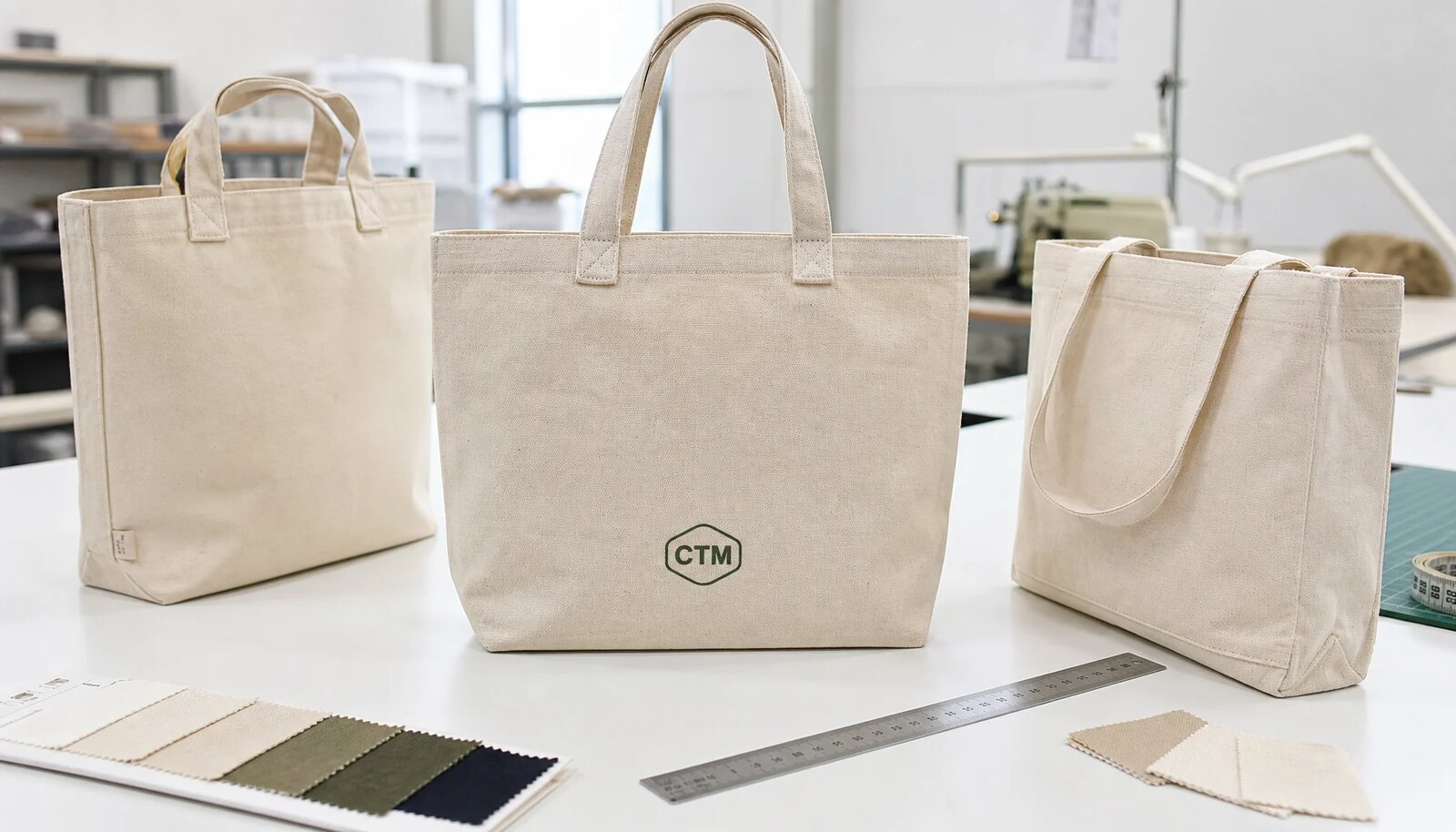
Start With the Hotel Retail Use Case
A custom canvas grocery tote for hotel retail is not the same product as a conference tote or a lightweight giveaway bag. The buyer is usually trying to solve one practical problem: the tote must look retail-worthy on a shelf, carry real guest purchases, and protect the hotel brand from a cheap-handfeel product. That means material selection should begin with load, display, and repeat-use expectations, not with the lowest FOB price.
For hotel retail, the bag may carry bottled beverages, spa products, snacks, folded apparel, towels, souvenirs, or local market items. These goods create different stress points than paper inserts at a trade show. If the bag collapses on the counter, has weak handles, or shows a patchy logo print, the hotel buyer sees it immediately. Procurement should define the operating use before asking suppliers to quote.
- For paid retail totes, prioritize heavier canvas, clean stitching, and strong shelf presentation.
- For amenity replacement or guest convenience, prioritize practical weight, foldability, and stable cost.
- For resort grocery programs, prioritize bottom gusset, handle strength, and carton-efficient packing.
- For distributor stock, prioritize repeatable fabric availability and simple colorways that can be reordered.
Choose Canvas Weight by Function, Not Habit
Most RFQs use terms such as 8 oz, 10 oz, 12 oz, or heavy canvas, but not all suppliers interpret these terms the same way. A reliable RFQ should state both ounce and approximate GSM. As a working range, 8 oz canvas is usually around 220-240 GSM, 10 oz is often around 270-300 GSM, 12 oz is usually around 320-340 GSM, and 14 oz to 16 oz can move toward 380-450 GSM depending on weave and finishing. The actual handfeel also changes with yarn count, washing, and finishing.
For hotel retail grocery totes, 10 oz to 12 oz canvas is often the practical middle range. It gives enough body for a sellable bag without making freight and sewing costs jump too far. If the tote is a premium shop item with a high perceived retail value, 14 oz or 16 oz may be justified. If it is mainly a low-cost packaging replacement, 8 oz can work, but it needs a realistic load expectation and may require careful seam reinforcement.
- 8 oz canvas: lower cost, easier folding, weaker shelf body, better for light amenity programs.
- 10 oz canvas: balanced option for many hotel retail grocery totes and repeat wholesale programs.
- 12 oz canvas: stronger handfeel and better structure for a branded retail item.
- 14 oz to 16 oz canvas: premium perception, higher freight, slower sewing, and larger carton volume.
Match Fabric Finish to Brand Standard
Natural canvas is popular for hotel retail because it looks tactile, simple, and reusable. The buying risk is shade variation. Unbleached canvas can shift from cream to greyish beige between fabric lots, and this matters when a hotel group wants the same visual standard across several properties. If the tote will sit beside branded candles, spa products, or apparel, shade control should be part of the approval process.
Bleached, dyed, or washed canvas can give a cleaner retail look but adds cost and quality checks. Dyed canvas needs colorfastness attention, especially for dark navy, black, forest green, or red. Washed canvas feels softer but can shrink and distort dimensions if not controlled. Procurement should not approve fabric from a photo. A physical swatch with weight, shade, and finishing notes is the minimum evidence before a commercial sample.
- Natural canvas works well when minor shade variation is acceptable and the brand wants a raw cotton look.
- Bleached canvas gives a cleaner base for bright print colors but may show dirt more easily in retail handling.
- Dyed canvas supports strong brand color but needs rubbing, washing, and shade-lot control.
- Washed canvas improves handfeel but can reduce dimensional stability if the factory does not control shrinkage.
Specify Size, Gusset, and Handle Drop Together
A grocery tote is defined by capacity, not only by front panel dimensions. A common mistake is quoting a flat tote size and later expecting it to perform like a boxed shopping bag. Hotel retail buyers should define width, height, side gusset, bottom gusset, and handle drop as one system. A tote with a 10-15 cm gusset can hold boxed snacks, glass jars, slippers, or folded apparel more neatly than a flat tote.
Handle drop affects both user comfort and shelf display. A short handle may be neat for hand carry but poor for guests wearing resort clothing or carrying luggage. A long handle may work for shoulder carry but hang too low on retail fixtures. For many grocery-style canvas totes, a handle drop around 24-30 cm is practical, but the final choice depends on tote height and target user. Reinforcement at the handle attachment is more important than making the handle excessively wide.
- Quote finished dimensions, not cutting dimensions, because shrinkage and sewing allowance change the result.
- Use a boxed bottom gusset when the tote must stand or carry square retail items.
- Set handle drop based on actual carry style: hand carry, shoulder carry, or both.
- Require cross stitching, bartack, or reinforced box stitching at handle stress points.
Select Printing by Artwork and Canvas Texture
Screen printing is usually the safest choice for solid hotel logos, simple artwork, and medium to large wholesale runs. It gives a clean look on cotton canvas when the artwork is not too fine and the ink is matched to the fabric texture. For natural canvas, darker print colors such as black, dark green, navy, burgundy, and warm brown usually read well. Very light print colors on natural canvas may look muted unless the printer uses the correct ink base.
Heat transfer can reproduce detailed multicolor artwork, gradients, or photographic graphics, but it changes the handfeel and can look less integrated on coarse canvas. Embroidery can look premium for small logos but adds cost, weight, and needle distortion, especially on lighter canvas. For hotel retail grocery totes, the best method is often the one that survives guest handling and still looks intentional after shelf display. The buyer should approve a strike-off on the actual nominated canvas, not on a smoother substitute cloth.
- Screen print: best for solid logos, larger print areas, and repeatable wholesale production.
- Heat transfer: useful for complex color artwork but must be tested for edge lifting and handfeel.
- Embroidery: premium for small marks, less efficient for large grocery tote graphics.
- Woven or side labels: useful for subtle branding, but placement must not interfere with folding or seams.
Understand the MOQ Logic Behind the Quote
MOQ is not only a factory preference. It is driven by fabric sourcing, dyeing, cutting efficiency, print setup, labor scheduling, and packing materials. A supplier may accept 300 pieces if they have stock fabric and a simple one-color print, but that does not mean the same MOQ applies to a dyed canvas, custom handle, special label, and individual retail packaging. Procurement should separate MOQ per fabric color, per print design, and per shipment.
For hotel groups and distributors, the smarter approach is often to build a tiered RFQ. Ask for 500, 1,000, 3,000, and 5,000 pieces with the same specification. This shows the real cost curve and prevents a false comparison between suppliers quoting different assumptions. If a hotel brand has multiple properties, consolidating the same base tote with different local prints may reduce fabric waste while still supporting property-specific retail.
- Low MOQ works best with stock natural canvas, standard size, and one-color screen print.
- Custom dyed canvas often needs higher MOQ because dye lots and shade control require minimum fabric volume.
- Multiple logo versions can be efficient if fabric, size, and construction stay the same.
- Very small runs often carry higher sample, setup, and handling cost per unit even when the unit price looks acceptable.
Compare Quotes by Cost Drivers
A cheap canvas grocery tote quote can hide cost in lighter fabric, smaller dimensions, narrow handles, loose packing, or a print method that is not suitable for the artwork. Procurement should compare quote data line by line. The most useful quote is not the shortest one; it is the quote that explains material weight, construction, print method, packing, carton data, and lead time assumptions clearly enough to verify.
The main cost drivers are fabric weight, fabric finish, tote size, gusset structure, handle material, logo complexity, number of print colors, label or hangtag requirements, packing method, inspection standard, and order quantity. Freight is also a material decision. A 16 oz canvas tote may have a higher FOB cost and a higher CBM per piece. For retail programs with imported goods, landed cost per sellable tote matters more than factory unit price.
- Compare fabric weight in GSM and finished bag weight, not only supplier descriptions.
- Request carton quantity, carton size, gross weight, and CBM per 1,000 pieces.
- Separate tooling, sample, print setup, and label costs from the unit price.
- Review whether rejected or unsellable bags are likely because of weak print, poor stitching, or carton creasing.
Build Sample Approval Around Acceptance Criteria
A hotel retail tote sample should not be approved only because it looks good in a photo. The sample should represent bulk material, bulk print method, real handle construction, and intended fold or packing. If the sample uses a different canvas weight or a substitute logo method, it is only a style reference. Procurement should label it as such and require a pre-production sample before bulk production.
The approval process should include measurable checks. Weigh the sample, measure the finished dimensions, load it with the expected goods, rub the print with a white cloth, inspect stitch density, and check whether the bottom stands correctly. If the tote will be sold in a hotel boutique, review how it looks after being folded and unpacked. A bag that arrives with deep creases or print transfer can become a retail rejection even if the sewing is technically acceptable.
- Keep one signed physical sample as the production standard.
- Record fabric GSM, bag weight, print size, print placement, handle drop, and carton fold method.
- Approve color under stable lighting, not only under warm hotel shop lighting.
- Do not release bulk cutting until fabric swatch and logo strike-off are approved.
Set QC Thresholds Before Bulk Sewing
Canvas totes are simple products, but simple products still fail when tolerances are not defined. The most common failures are uneven size, weak handle stitching, wavy seams, mixed fabric shade, poor print coverage, loose threads, and dirty packing. These issues are visible in hotel retail because the tote is handled by staff and guests before purchase. QC should be written into the purchase order or specification sheet before production starts.
A practical inspection plan should cover incoming fabric, inline sewing, print quality, finished dimensions, loading performance, and final packing. For many wholesale tote orders, buyers use a normal AQL inspection approach, but the key is to define product-specific defects. A 2 mm print shift may be acceptable for a rustic natural tote but not for a centered hotel crest. A loose thread inside the seam may be minor, while weak handle reinforcement is a serious functional defect.
- Critical defects: broken handle attachment, severe print transfer, mildew, wrong logo, wrong material, or unsafe contamination.
- Major defects: size outside tolerance, visible shade mismatch, skipped stitches, crooked logo, weak seam, or dirty retail surface.
- Minor defects: small loose thread, slight natural cotton speck, or minor crease within approved retail standard.
- Functional test: load the tote to the agreed weight and inspect handle seam distortion after suspension.
Plan Packing for Retail Presentation and Freight
Packing is part of material selection because heavier canvas behaves differently in a carton. Thick canvas handles can leave marks if over-compressed, and fresh prints can transfer if the bags are stacked too tightly before curing. Hotel retail buyers often care about the first unpacking experience at the property or distributor warehouse. A tote that must be steamed, reshaped, or cleaned before display creates hidden labor cost.
Flat packing is usually safer for grocery totes than aggressive roll packing. The carton should be sized to prevent crushing while still controlling freight volume. If the hotel requires barcodes, hangtags, belly bands, or recycled paper sleeves, those items need to be quoted early because they affect labor and packing speed. Individual polybags may protect against moisture but may conflict with hotel sustainability policies, so procurement should define the packaging rule instead of leaving it to the factory.
- Use carton liners or moisture protection for sea freight, especially during humid seasons.
- Confirm whether bags are packed flat, folded once, folded twice, or individually sleeved.
- Avoid stacking uncured prints face-to-face without protection.
- Include carton marks, SKU labels, PO number, destination code, and quantity per carton in the packing instruction.
Specification comparison for buyers
| Spec decision | Recommended option | When it fits | Buyer risk to check |
|---|---|---|---|
| Main fabric weight | 10 oz to 12 oz canvas, about 270-340 GSM | Best balance for hotel retail grocery totes that must stand neatly, carry packaged goods, and still fold for guest purchase | Some quotes call 10 oz canvas by yarn count only; require actual GSM tolerance and pre-production swatch weight |
| Premium upgrade fabric | 14 oz to 16 oz canvas, about 380-450 GSM | Fits resort boutiques, high-ticket gift shops, and reusable retail programs where the tote is sold as merchandise | Higher weight raises freight, sewing difficulty, needle marks, and carton volume; compare landed cost, not only unit price |
| Canvas finish | Natural unbleached or reactive dyed canvas with light shrinkage control | Works for hotel retail where a tactile cotton look supports an eco-positioned store display | Unbleached lots can vary in shade; dyed canvas needs colorfastness and rubbing tests before bulk cutting |
| Handle construction | Same-fabric 2.5-3.2 cm handles with reinforced cross stitching | Suitable for grocery totes carrying boxed snacks, towels, bottled drinks, and souvenir items | Thin webbing handles reduce cost but may look like a giveaway bag; require handle pull strength and stitch density standards |
| Bottom structure | Boxed bottom gusset of 10-15 cm with clean inside seam binding when budget allows | Helps the tote stand on retail shelves and hold square hotel retail items without collapsing | A flat tote is cheaper but performs poorly for grocery use; verify finished dimensions under loaded condition |
| Logo print method | Screen print for solid hotel logos; heat transfer only for detailed multicolor artwork | Screen print gives durable, clean branding on canvas at wholesale quantities | Heavy canvas texture can break fine lines; approve strike-off with the actual fabric weight and ink color |
| MOQ planning | Start from fabric color and print setup: usually easier at 500-1,000 pcs per colorway | Fits importers consolidating several hotel properties or distributors stocking a repeat retail SKU | Low MOQ quotes may use available fabric and manual cutting; confirm shade continuity and repeat order feasibility |
| Packing method | Flat packed 25-50 pcs per export carton with carton liner and moisture control | Reduces creases and supports efficient receiving at hotel warehouse or distributor DC | Over-compression saves freight but causes deep handle marks, print offset, and poor retail presentation |
Buyer checklist before sampling
- Define the tote use first: paid retail item, amenity replacement, resort grocery bag, welcome shop packaging, or distributor stock SKU.
- Specify fabric in both ounce and GSM, with acceptable tolerance, instead of using only vague terms like heavy canvas or premium cotton.
- Confirm finished size, gusset depth, handle drop, load target, seam type, and whether the tote must stand on a retail shelf.
- Send logo artwork in vector format and identify exact print position, print size, Pantone references, and whether fine lines are acceptable on textured canvas.
- Require a pre-production sample made in the nominated fabric weight, not a showroom sample made from a different canvas.
- Set sample approval checkpoints for fabric handfeel, shade, shrinkage, print adhesion, stitch quality, and carton packing presentation.
- Compare quotes by landed cost per sellable tote, including carton volume, duty classification assumptions, inland freight, and rejected goods risk.
- Confirm carton quantity, carton dimensions, gross weight, polybag policy, moisture protection, barcode or hangtag requirements, and retail fold method.
- Build lead time around fabric sourcing, dyeing if needed, sample approval, bulk cutting, printing, sewing, final inspection, and vessel cutoff.
- Keep an approved gold sample and a sealed fabric swatch for incoming inspection at the hotel warehouse or distributor receiving point.
Factory quote questions to send
- What exact fabric weight will be used for bulk production in oz and GSM, and what tolerance do you control during incoming fabric inspection?
- Is the canvas greige, bleached, unbleached, dyed, or washed, and can you provide a physical swatch from the same fabric lot before sample making?
- What is the recommended finished size and gusset structure for carrying 5-7 kg of hotel retail goods without handle distortion?
- Which print method do you recommend for our artwork on this canvas weight, and what line thickness or color limitations should we adjust before sampling?
- What MOQ applies per fabric color, per print design, and per shipment, and how does the price change at 500, 1,000, 3,000, and 5,000 pieces?
- Will the pre-production sample be made with the actual bulk fabric, actual handle construction, actual print method, and intended packing fold?
- What stitch type, stitch density, seam allowance, bartack or cross-stitch reinforcement, and needle size will be used for the handle area?
- What load test, rubbing test, print adhesion test, and dimensional tolerance do you use before final packing?
- What are the carton dimensions, pieces per carton, gross weight, and estimated CBM per 1,000 pieces for the recommended material option?
- What lead time is needed for fabric procurement, sample approval, bulk printing, sewing, inspection, and export packing after deposit and artwork approval?
Quality-control points to confirm
- Fabric weight must match the approved swatch within the agreed GSM tolerance, with no mixed shade panels within one tote.
- Finished size should normally stay within plus or minus 0.5 cm for small dimensions and plus or minus 1.0 cm for large body dimensions unless otherwise agreed.
- Handle drop must match the approved sample so the tote works for both hand carry and shoulder carry when loaded.
- Handle attachment should pass the agreed pull test or load test without seam tearing, skipped stitches, or visible fabric distortion.
- Print color should match the approved strike-off under consistent lighting, with no pinholes, ink bleeding, misregistration, or excessive cracking after rubbing.
- Seams should be straight, trimmed, and secured, with no loose threads longer than the buyer’s accepted limit for retail merchandise.
- Bottom gusset and side panels should align cleanly so the bag stands correctly when filled with typical hotel retail products.
- Cartons should be clean, dry, export-grade, correctly labeled, and packed to prevent print transfer, mildew, crushing, or deep fold marks.