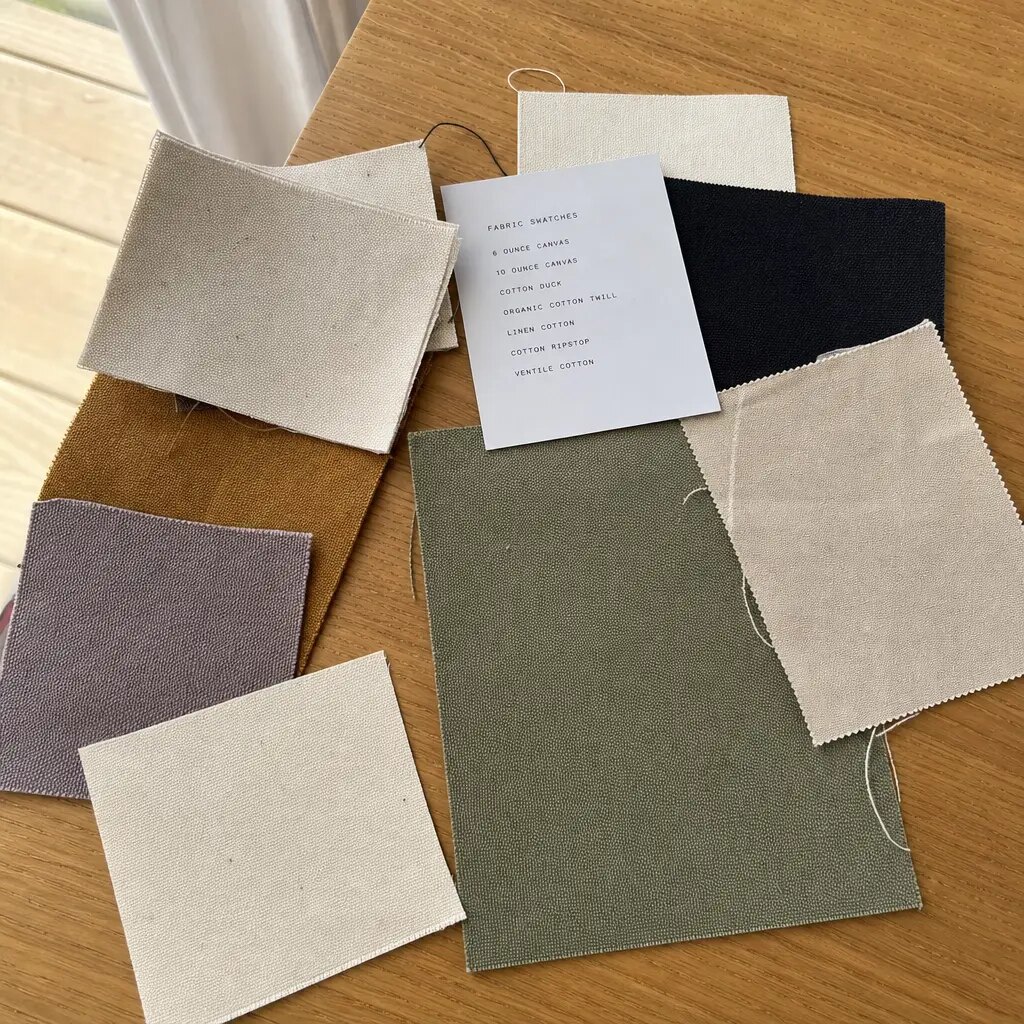
Start With The Use Case
A custom canvas grocery tote for corporate gifting is not just a shopping bag with a logo on it. It has to carry a known load, present the brand cleanly, and survive the handoff from warehouse to event desk to end user. If the tote is too flimsy, the gift feels cheap. If it is too heavy or overbuilt, you pay for cloth and freight that the buyer never needed.
The first sourcing mistake is choosing fabric before defining use. A conference giveaway that holds a notebook and water bottle does not need the same build as a client gift that carries a wine bottle, sample kit, or boxed product. Decide what goes inside, how far the user will carry it, and whether the tote is meant to be reused daily or handed out once.
- List the heaviest expected contents, not just the average contents.
- State whether the bag is for event gifting, retail resale, or internal employee use.
- Decide if the tote must stand upright, fold flat, or hold a rigid insert.
- Write down the brand impression you want: practical, premium, or utility-first.
Choose The Right Canvas Weight
For grocery totes, canvas weight is usually quoted in ounces and GSM, and you should ask for both. As a practical starting point, 10 oz canvas is roughly 340 GSM, 12 oz is around 400 GSM, 14 oz is near 470 GSM, and 16 oz moves into a heavier utility feel. The numbers are only part of the story. Yarn quality, weave density, and finishing can make a 12 oz fabric feel cleaner and stronger than a loose 14 oz cloth.
For corporate gifting, 12 oz is often the safest middle ground because it balances handfeel, print quality, and strength. Go lighter when the tote is a simple event giveaway and the load is modest. Go heavier when the gift needs a premium texture, stronger structure, or repeated daily use. If you expect product weight, add reinforcement at the base and handle points rather than solving everything with heavier cloth.
- 10 oz to 12 oz: good for light giveaway kits, brochures, and soft goods.
- 12 oz to 14 oz: better for durable corporate gifts and grocery use.
- 14 oz and above: useful when the tote must feel premium or carry heavier items.
- If shrinkage matters, ask for pre-shrunk or washed fabric and confirm the post-wash size basis.
Match Fabric To Print Method
Canvas is forgiving, but not every print method performs the same way on it. Screen printing is still the most predictable option for flat logos, simple artwork, and larger buy volumes because it sits well on the fabric and stays readable after handling. Heat transfer works when you need more colors or a shorter run, but you need to watch cracking, edge lift, and the way the transfer feels on a textured surface. Embroidery can look strong on heavier canvas, yet it adds cost and can pucker the cloth if the stitch density is too high.
If the logo has small text or tight line work, do not assume any fabric will print cleanly. Ask for a strike-off or digital proof on the actual cloth, not on paper. A smoother, tighter weave will usually hold a sharper edge than a slubby open weave. For premium gifting, a woven label or side seam label often gives a cleaner long-term brand mark than trying to force a complex full-color art file onto a tote that is meant to look understated.
- Use screen print for one to three solid colors and repeat runs.
- Use heat transfer only when the art needs gradient detail or a short run justifies it.
- Use embroidery for a simple mark on a heavier tote, not for fine text.
- Ask whether the ink or transfer has been cured and rubbed for basic adhesion before bulk production.
Compare Sourcing Routes
The quote changes as much by sourcing route as by fabric. A direct factory with sewing and printing in-house gives better control over cloth, stitch, and decoration, but it may require a more disciplined spec and a larger order. A domestic decorator using stock blanks can move fast, yet you inherit the fabric choice that was already on the shelf. Trading companies can simplify communication and bundle services, but you need to know how much of the production is actually controlled by them.
Use route comparison to avoid comparing a true factory quote against a reseller quote as if they were the same thing. Ask who owns the fabric, who cuts and sews, who prints, and who packs. If the answer changes from one step to the next, your risk goes up. The comparison table in this article is meant to separate control, speed, and cost so the buyer can choose the route that fits the program instead of the route that just answers first.
- Request the actual manufacturing path, not just the sales contact.
- Ask whether the sample is made in the same facility as the bulk order.
- Confirm who is responsible for decoration, packing, and carton labeling.
- Treat a very low quote without process detail as a risk until the route is clear.
What Drives Quote Differences
The ex-works number is only one piece of the landed cost. Fabric weight, fabric width, handle material, gusset depth, number of print colors, screen setup, packing style, and carton size all move the number. Freight also changes a lot when the tote is overpacked, individually polybagged, or packed in a carton that leaves unused space. For a corporate gift program, packaging can matter almost as much as sewing because the tote often arrives as part of a presentation, not a standalone utility item.
When suppliers send quotes that do not break out the base spec and the add-ons, they are usually hiding the real cost drivers. A one-color logo on one side is not comparable to a two-side print with a sewn label and custom inner fold. Ask for a line-by-line quote so you can see where the spend is going. That makes internal approval easier and helps you decide whether to simplify the art, reduce the print size, or adjust the fabric weight.
- Fabric basis weight and cloth width
- Handle type, handle length, and reinforcement method
- Print colors, screen setup, and decoration location
- Packing style, carton count, and any kitting labor
- Testing, local inland transport, freight, and duty assumptions
Set MOQ And Sampling Rules
MOQ is rarely one number. A factory may have one minimum for fabric color, another for print setup, and another for a custom pack style. If you choose multiple body colors or multiple logo versions, the real MOQ can multiply fast. The right way to manage this is to separate the variables. Decide which elements are fixed across the run and which elements are allowed to change so the supplier is not pricing a moving target.
Sampling needs the same discipline. A useful sample chain is a fabric swatch or hand sample first, then a pre-production sample with the final artwork and construction, then a top-of-production sample if the run is large or the spec is sensitive. In many programs, a first round of samples can be turned in about 7 to 14 days, while production often lands in the 30 to 45 day planning range after approval, depending on cloth sourcing, print complexity, and packing requirements.
- Separate MOQ by fabric color, print artwork, and packing style.
- Approve the sample on the actual canvas, not only on a digital proof.
- Use signed sample photos and measurements so there is one reference point.
- If the fabric is custom dyed, allow time for shade matching and rework.
Write A Clean RFQ
A good RFQ makes it hard for suppliers to quote on assumptions. Start with the finished dimensions, canvas weight, handle length, handle stitch detail, and print method. Add the number of colors, the print placement, and the expected contents if the tote needs to carry a specific item. Then specify how you want it packed, how many pieces go into a carton, and whether the shipment needs barcode labels or retail marks. The clearer the inputs, the fewer pricing surprises you get later.
Avoid vague buying language like premium, durable, or eco-friendly unless you convert it into a measurable spec. A supplier can only price what you define. If you want a cleaner handfeel, say whether you want bleached, natural, or washed canvas. If you want a sharper brand mark, say whether the art needs a woven label, a one-color screen print, or embroidery. That makes comparison possible and keeps the buyer from being forced into guesswork after the quote comes back.
- Give the supplier one page of must-have spec data and one page of artwork references.
- State whether size tolerances are based on cut size or finished packed size.
- Specify whether the quote should include freight, testing, and carton marks.
- Ask for a separate price for alternatives so you can compare options cleanly.
Specify Packing For Gifting
Packing is not a side note when the tote is part of a corporate gift. A bag that looks fine in bulk can arrive creased, dusty, or misfolded if the pack method is not defined. For a trade show giveaway, bulk folding in a master carton may be enough. For executive gifting or retail presentation, you may need individual polybags, tissue, inserts, or a sewn-on side label that makes the product look finished when it is first opened.
The more handwork you add, the more you need to control accuracy and lead time. Kitting an insert card or brochure into each tote introduces a chance for count errors and carton mismatch. If the tote is going to a distribution center, ask for carton dimensions, gross weight, and pallet assumptions early so the logistics team can plan receiving. If the tote is going to a branded event, ask how the supplier will keep the bags clean, folded, and readable after packing.
- Define whether the bag is bulk folded, banded, polybagged, or retail ready.
- State if inserts, hangtags, barcodes, or tissue are part of the order.
- Ask for carton dimensions and gross weight so freight is not guessed later.
- If the gift program is time sensitive, minimize hand kitting unless it adds clear value.
Lock QC Acceptance Criteria
Quality control should be written before production starts, not after a problem appears. The most common failures on canvas totes are uneven seam lines, weak handle attachment, print variation, size drift, and dirty packing. These are easy to miss in a sample photo and hard to fix once a full run has started. A buyer should set acceptance criteria that are specific enough to reject a bad lot without arguing over taste.
A simple field test can reveal a lot. Pull random bags from the carton, load them with a realistic weight, and look at the handle pull point, side seam, and base shape. Check that the print is centered, the ink is cured, and the tote does not smell like solvent or storage contamination. Compare the production bags to the signed sample under the same light. If the tote is being gifted, visual consistency matters as much as strength because the recipient notices the first impression before they ever test the load.
- Check seam finish, thread trim, and handle symmetry on random pulls from each carton.
- Measure finished size, gusset, and handle length against the approved sample.
- Test print rub resistance and basic color consistency across the lot.
- Reject bags with oil marks, odor, torn stitches, or visible shade mismatch in the same run.
Choose The Right Build For Your Budget
The best build is the one that matches the real buying objective. If the tote is a campaign giveaway, a 10 oz to 12 oz canvas with one-color screen print and bulk packing usually gives the cleanest value. If the tote is a premium corporate gift, a 12 oz to 14 oz canvas with reinforced handles, a sewn side label, and cleaner packing usually justifies the extra spend. If the tote is meant to be reordered, keep the spec stable and avoid decorative changes that force a full re-qualification every time.
Think in terms of total delivered value, not unit price alone. A cheap tote that tears, prints poorly, or arrives badly packed can cost more in replacements and buyer complaints than a slightly better spec. On the other hand, over-specifying the cloth or adding too many decoration steps can make the program hard to approve internally. The right answer is usually a controlled middle ground: enough weight for confidence, enough print simplicity for repeatability, and enough packing discipline for presentation.
- Use the lightest fabric that still carries the real load with margin.
- Keep the artwork simple unless the brand value clearly needs more decoration.
- Spend on reinforcement and packing before spending on unnecessary fabric weight.
- For repeat programs, hold the spec stable so reorders stay comparable.
Specification comparison for buyers
| Spec decision | Recommended option | When it fits | Buyer risk to check |
|---|---|---|---|
| Fabric control | Direct cut-and-sew factory with in-house fabric sourcing | You need a fixed canvas weight, a specific handfeel, and repeat orders that must match the first run | Confirm the actual mill or cloth source, not just the finished bag sample |
| Speed | Domestic decorator using stock blanks | The campaign date is tight and the logo is simple enough to use existing tote stock | Expect fewer size and color choices, plus less control over fabric weight and stitch detail |
| Lowest unit price at scale | Overseas direct factory with stable repeat spec | You can commit to a larger MOQ and the tote is a long-running program | Check lead time, transit risk, and whether quote assumptions include packaging and testing |
| Small pilot order | Trading company with sample stock and flexible sourcing | You need a test run before committing to a full buy | Ask who actually makes the bag and whether repeat production will match the sample route |
| Premium branding | Factory with embroidery, woven label, or patch application in-house | The tote is part of a higher-value corporate gift or retail-style program | Make sure the decoration method will not distort the fabric or slow production too much |
| Multi-item gift kit | Supplier with kitting and carton assembly capability | The tote ships with inserts, brochures, or bundled product inside the bag | Confirm pack accuracy, insert placement, and carton count control |
| Traceability-sensitive program | Supplier that can document recycled-content or organic-content traceability | The brand needs support for sustainability claims in buyer-facing materials | Require documents that match the exact fabric lot and final spec, not generic statements |
| Reorder stability | Local converter holding consistent dyed or greige stock | You need quick repeat orders with minimal artwork change | Watch for color drift between lots and make sure the stock basis stays available |
Buyer checklist before sampling
- Define the actual contents the tote must carry, including weight, shape, and whether any item has sharp edges
- Lock the finished size, gusset depth, handle length, and handle attachment method before asking for prices
- Choose a canvas weight in both oz and GSM so every supplier quotes the same cloth basis
- State the print method, number of colors, and whether the artwork needs exact Pantone matching
- Specify whether the tote will be bulk packed, polybagged, folded, or kitted with inserts
- Ask for sample stages: fabric swatch, pre-production sample, top-of-production sample, and final shipment sample
- Require carton dimensions, units per carton, and carton marks in the quote
- Confirm the lead time starts after artwork approval and approved sample, not after the first email
Factory quote questions to send
- What exact canvas weight, weave density, and shrinkage tolerance are you quoting?
- Is the canvas greige, bleached, dyed, or washed, and where is the cloth sourced?
- Which print method are you pricing, how many setup screens are included, and what is the cost impact of extra colors?
- What MOQ applies per color, per artwork, and per packing style?
- What sample stages do you provide, who pays sample freight, and how many revisions are included?
- What are the finished size tolerance, handle length tolerance, and stitch allowance you will hold in production?
- What packing method, carton size, and master carton count are included in the quote?
- What lead time do you quote from approved sample and deposit, and what factors can extend it?
- What inspection standard or defect allowance do you use before shipment?
- Can you confirm whether sewing, printing, decoration, and packing are all done in-house or subcontracted?
Quality-control points to confirm
- Fabric weight matches the approved spec within the agreed tolerance and the cloth does not feel underbuilt in the handle or base area
- Finished size, gusset, and handle length stay within tolerance after pressing and packing
- Handle reinforcement, bar tacks, and seam stitching are even, secure, and placed in the same position on every bag
- Print registration, color density, and edge sharpness match the approved strike-off with no pinholes, smudging, or ghosting
- No loose threads, skipped stitches, raw seam edges, or frayed handle ends are visible on random carton pulls
- No oil marks, odor, dust contamination, or fabric stains are present at unpacking
- Carton count, carton marks, barcode labels, and outer pack configuration match the purchase order
- Random carry tests do not show seam pull, handle stretch, or base distortion under the agreed load