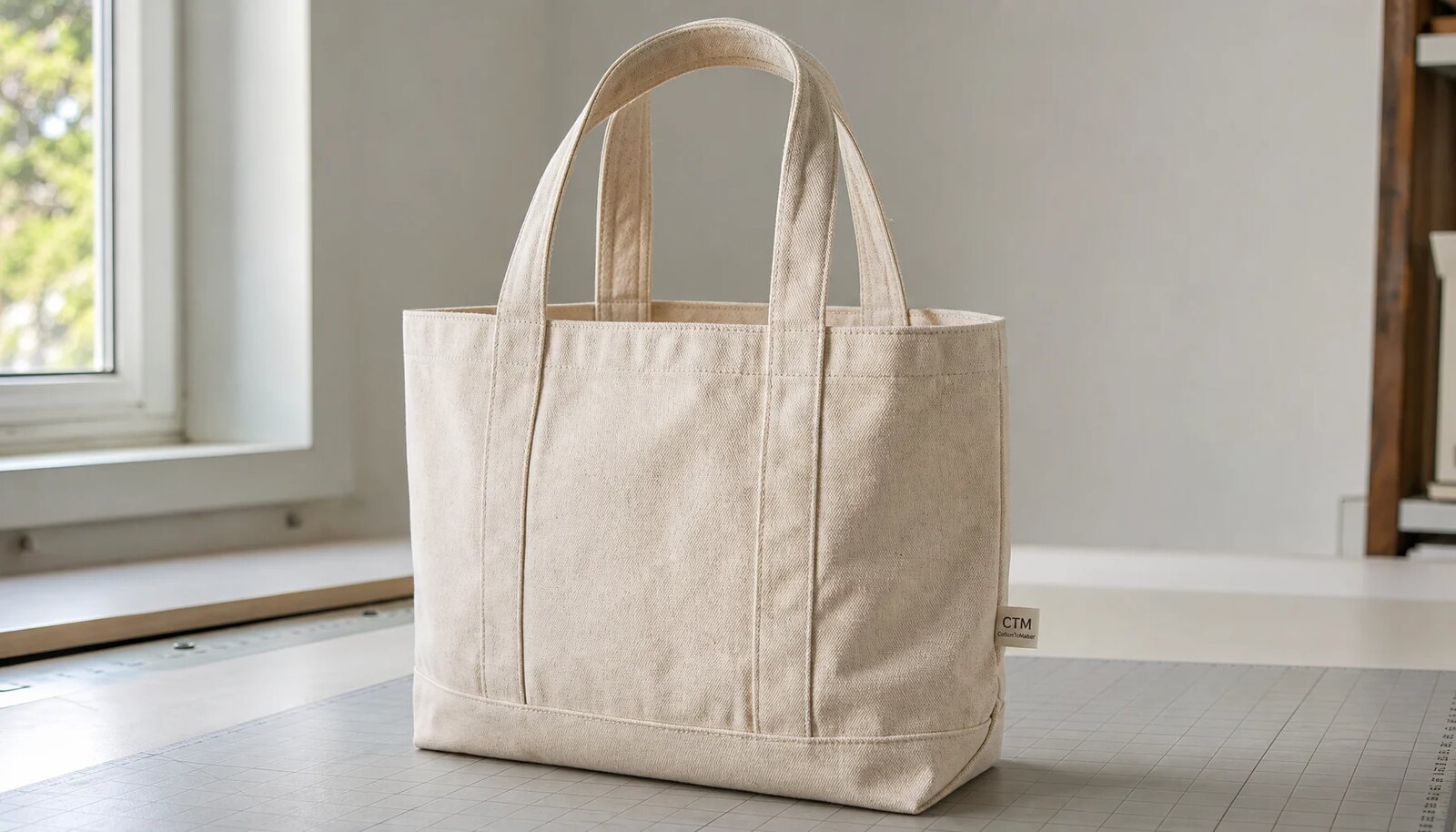
Begin With the Event Job, Then Price the Bag
A custom canvas grocery tote looks simple until the order has to arrive on time, carry real contents, satisfy sponsors, and be counted quickly at a venue. That is why the best bulk pricing plan starts with the tote's job, not with a target unit price. A bag for a folded agenda and a T-shirt is a different product from a tote expected to hold bottled drinks, packaged food, catalogs, produce, or sponsor samples. If the request says only canvas grocery totes with logo, every supplier has room to imagine a different bag.
For event planners, that ambiguity creates bad comparisons. One supplier may quote a light stock tote with a one-color front print. Another may include a custom 10 oz gusseted body. A third may price wider handles, two-sided decoration, and better packing. The spreadsheet will show three unit prices, but not three equivalent offers. Procurement then risks choosing a cheaper tote that cannot do the actual event work.
Write the use case in plain operational language. What will attendees put inside? How long will they carry it? Will the tote be handed out at registration, filled at a sponsor booth, sold as merchandise, or shipped in kits before the event? Does it need to sit upright on a table? Will the sponsor expect reuse after the event? These answers influence fabric weight, gusset depth, handle comfort, printing, packing, and inspection.
The most useful early number is expected working load. State 5 kg for a light welcome kit, 8 kg for moderate grocery-style contents, or 10 kg for heavier reusable use if that is realistic for the program. This does not mean every tote must be overbuilt. It gives the factory a target for construction and gives the inspector a measurable pass/fail point.
- Light welcome kit: prioritize clean branding, low carton volume, easy counting, and fast table distribution.
- Grocery-carry event: prioritize gusset depth, handle comfort, bottom seam strength, and load testing.
- Premium sponsor gift: prioritize fabric hand feel, shade consistency, print accuracy, and presentation packing.
- Multi-city program: prioritize repeatable specs, retained gold samples, stable artwork files, and reorder control.
Turn the Tote Into a Measurable Specification
Bulk pricing becomes useful only after the tote is defined in measurable terms. A complete RFQ should list finished width, finished height, gusset depth, top hem depth, bottom construction, handle material, handle width, finished handle length, handle drop, stitch pattern, fabric weight, fabric color, print method, print size, print placement, packing method, carton quantity, and delivery terms. It sounds detailed because production is detailed. The goal is to make every supplier quote the same object.
Use finished measurements rather than product nicknames. Standard grocery tote can mean many things. A 15 x 16 inch tote with a 5 inch gusset tells the supplier much more. The gusset changes capacity, fabric consumption, carton size, and sewing time. Handle drop matters too. A short hand-carry handle may work for a table giveaway. A shoulder-carry handle is often better when attendees move between parking, transit, hotels, outdoor market areas, and the main venue.
Measurement points should be written into the quote package. Finished height may be measured from the top edge to the bottom seam with the bag laid flat. Handle drop may be measured from the top edge to the highest inside curve of the handle. Print placement should be measured from fixed seams, not estimated visually. These small definitions prevent long arguments later, especially when multiple production lines or inspection teams are involved.
Separate the base bag from optional upgrades. Woven side labels, hangtags, inside pockets, contrast handles, bottom inserts, barcodes, retail sleeves, and individual polybags can be useful. They can also quietly distort price comparisons. Ask suppliers to quote the base tote first, then list add-ons separately. Procurement can then decide which details support the event and which only add cost.
- State finished size and measurement points: top width, height from top edge to bottom seam, gusset depth, and handle drop from top edge.
- List tolerances in the RFQ: sewn dimensions +/-1 cm, handle drop +/-1 cm, print placement +/-0.5-1 cm, and print size +/-3% are common starting points.
- Define whether the bag is measured empty and laid flat, filled, washed, or unwashed.
- Request separate line items for labels, hangtags, inserts, barcodes, individual bags, cartons, and special packing.
Choose Canvas Weight With More Than an Ounce Number
Canvas weight affects cost, structure, print result, sewing performance, and freight. In tote sourcing, weight is often described in ounces per square yard and sometimes in grams per square meter. Approximate conversions help buyers compare offers: 8 oz is about 270 GSM, 10 oz is about 340 GSM, and 12 oz is about 400 GSM. These are useful guideposts, not a substitute for approving the actual fabric.
Do not rely on the ounce number alone. Ask for actual GSM and the accepted tolerance, commonly +/-5% unless the project requires tighter control. Also look at weave tightness and hand feel. A loosely woven 10 oz canvas can feel less stable and print less sharply than a tighter fabric of similar nominal weight. For sponsor work, perceived quality may come from density and finish as much as from weight.
Natural canvas has its own character. Seed flecks, slubs, and shade variation may suit a farmers market, community grocery, sustainability, or handmade-positioned event. The same variation may frustrate a sponsor expecting a clean white background. Bleached canvas gives brighter artwork but changes the look and sometimes the price. Dyed canvas can support brand color, but it adds shade approval and crocking checks.
Shrinkage needs attention when fabric is washed, dyed, or finished before sewing. If the finished tote is washed after sewing, approve the final post-wash dimensions and texture. If the tote is unwashed, it may shrink later if consumers wash it at home. That may be acceptable for an event giveaway. It is less acceptable if the bag is sold as merchandise with a specific finished size.
- 8 oz / approx. 270 GSM: suitable for light handouts and low-load contents, but often too light for a grocery-positioned program.
- 10 oz / approx. 340 GSM: practical starting point for many custom canvas grocery totes used in bulk event programs.
- 12 oz / approx. 400 GSM: stronger structure and higher perceived value for heavier fills and sponsor-funded giveaways.
- 14 oz / approx. 475 GSM: sturdy and premium, but check sewing capability, print hand feel, carton weight, and total cost.
Engineer the Stress Points Before They Fail
Grocery totes rarely fail in the middle of a flat panel. They fail where force gathers: handles, handle attachments, side seams, gusset joins, bottom seams, and top hems. A tote can look good in a sample photo and still perform poorly when filled with canned goods, bottled drinks, catalogs, or food packs. Build the specification around those stress points.
Handle details deserve more than one line. Ask whether the handle is cotton webbing, self-fabric folded canvas, polyester webbing, or a blend. For grocery-style totes, handle widths of about 2.5-3.8 cm are common, with wider handles generally feeling better under load. Shoulder-carry finished handle lengths often fall around 55-65 cm, depending on bag size and market preference. The correct number depends on the event, but it should be chosen before quoting.
Reinforcement stitching should be named. Box stitch, box-X stitch, bartack, or reinforced multi-line stitching gives a clearer expectation than reinforced handles. Stitch density should be consistent, thread should suit the canvas weight, and the stitch box should be large enough to spread stress. If the thread color is visible, specify whether it matches the body, matches the handle, or creates contrast.
For heavier fills, require a load check. The method can be simple: place the agreed weight in the tote, lift or hang it for a defined period, and inspect for handle tearing, seam opening, or serious distortion. The key is to write the method into the PO or inspection plan. Otherwise, one factory may test casually while another does not test at all.
- Specify handle material, handle width, finished handle length, handle drop, stitch pattern, stitch box size, and thread color.
- Use a 4-6 inch gusset for many grocery-style applications, then confirm capacity against expected contents and carton efficiency.
- Inspect bottom corners and gusset joins carefully because bulky contents concentrate stress there.
- For heavier fills, define the load check clearly: weight, duration, method, sample size, and pass/fail standard.
Match Decoration to Artwork and Event Risk
Decoration can be the difference between a professional sponsor gift and a tote that looks improvised. Screen printing is usually the most predictable method for bulk canvas grocery totes with one-color or two-color logos, event names, sponsor marks, or bold graphics. Setup cost spreads across the order, color can be controlled with Pantone references, and inspection checkpoints are straightforward: placement, registration, opacity, curing, and edge sharpness.
Detailed artwork changes the calculation. DTF, heat transfer, or digital transfer can reproduce gradients, photographs, and many colors without making separate screens for each color. That can be useful for short runs or complex sponsor art. It also introduces different risks: heavier hand feel, transfer edge lift, cracking after folding, heat marks, or changes after cartons are compressed in transit.
Natural canvas is not a bright white print surface. Fine text, low-contrast colors, thin lines, and reversed sponsor marks can lose clarity on textured fabric. Before approving artwork, check it at actual size. A logo that looks crisp in a PDF may fill in when printed on a rough weave. Small sponsor lockups may need more spacing, a larger print area, or a simpler color treatment.
Digital mockups are helpful for layout, but they are not production approval. Approve a strike-off or pre-production sample on the final canvas, especially when brand color matters. The sample should show ink absorption, opacity, true color under normal lighting, print hand feel, and the way the graphic sits over seams or fabric texture.
- Screen print: best for larger quantities, spot colors, simple logos, and repeat programs.
- DTF or transfer: useful for detailed art and many colors, but approve hand feel, folding behavior, edge adhesion, and carton compression results.
- Embroidery: suitable for compact premium marks, but inefficient for large grocery tote graphics or small sponsor text.
- Always state print size and placement from fixed points, such as top edge and side seam, rather than centered on front.
Build Price Breaks Around Real MOQ Drivers
MOQ is not a random number. It comes from fabric purchasing, cutting efficiency, print setup, sewing line planning, trim availability, and packing labor. A stock natural canvas tote with a one-side screen print may run at a lower MOQ because the body already exists or uses standard materials. A custom grocery tote with dyed fabric, contrast handles, woven label, two-sided print, and retail packing needs more coordination and usually a higher minimum.
Ask for price breaks that match the event forecast. Useful breaks might be 1,000, 2,500, 5,000, and 10,000 pieces, or the required event quantity, a 3-5% overage, and a forecast reorder quantity. Random breaks can make the spreadsheet look busy without helping decisions. The point is to see where cost changes because setup is spread across more pieces, fabric usage improves, or carton packing becomes more efficient.
Keep one-time charges visible. Screen charges, artwork setup, sample fees, courier fees, plate or setup charges for certain trims, inspection costs, special packing, inland freight, and export handling can change the real total. A low unit price can lose its advantage once these are added. For event planners, the commercial goal is not simply the lowest FOB unit cost. It is the best total cost for the confirmed date with acceptable quality risk.
Also ask what specification changes would reduce MOQ without damaging the event function. A standard natural canvas instead of a custom dye, a stock body instead of custom cutting, one-side print instead of two-side print, or bulk packing instead of individual packing may help. The supplier should explain the tradeoff clearly, not quietly change the spec inside the quote.
- Lower MOQ usually comes from stock bodies, natural or standard canvas colors, standard handles, and one-side spot-color printing.
- Higher MOQ usually follows custom fabric color, custom size, special trims, two-side printing, transfer decoration, and retail-ready packing.
- Request the same specification at every price break so changes in price are not caused by hidden construction changes.
- Ask suppliers to identify any quantity threshold where fabric purchasing, printing, or carton packing becomes more efficient.
Compare Sourcing Routes by Control, Not Just Price
Direct factory sourcing, trading company sourcing, promotional distributors, and local decorators can all be reasonable. They are not interchangeable. A direct factory with cutting, sewing, printing, inspection, and packing under one management system gives buyers more control over specs and revisions. This route suits custom sizes, repeat programs, tighter tolerances, and buyers who need retained gold samples for reorders.
A trading company can add value when the order includes several bag styles, split shipments, multiple factories, or one commercial contact for a complex event. The buyer should still ask for production visibility. Who controls the factory? Who approves samples? Who handles rework if inspection fails? Who pays for replacement if the tote construction is wrong? A trading partner with disciplined QC can be useful. A broker who hides production details increases risk.
Local decorators and promotional distributors are often the fastest option for short deadlines and small orders. They may decorate imported stock totes already available in the market. That can be perfect for a rush event. The tradeoff is less control over fabric weight, gusset size, handle construction, carton count, and reorder consistency. For sponsor-funded grocery totes expected to be reused, custom production may be safer if the calendar allows it.
Procurement should compare service level along with price. A supplier who manages sampling, production photos, carton labeling, pre-shipment inspection, and freight documents may appear more expensive than a bare unit-price quote. The difference may be worthwhile if the event date is fixed and failure would be visible.
- Use direct factory sourcing when custom construction, repeatability, and QC control are priorities.
- Use a trading company when coordination value is real and factory visibility, QC process, and defect responsibility are documented.
- Use local decoration when speed and small quantity matter more than exact construction control.
- Do not compare sourcing routes by unit price alone because they include different service levels and risks.
Read Quotes Like Production Documents
A professional quote should read like a short production bill. It should state fabric composition, canvas weight, fabric color, finished size, gusset, handle specification, print method, number of print colors, print location, packing method, pieces per carton, lead time, sample terms, setup charges, and Incoterm. If the quote says canvas tote with logo and little else, it is not detailed enough for procurement approval.
Normalize quotes before awarding the PO. One supplier may include 12 oz canvas while another includes 10 oz. One may include two-sided printing while another includes front print only. One may include individual polybags and carton labels while another assumes bulk flat packing. One may quote FOB port while another quotes EXW factory. These differences can explain major price gaps, but they are easy to miss when the spreadsheet focuses on unit cost.
Freight deserves early attention because canvas totes are bulky relative to their value. Pieces per carton, fold method, carton dimensions, and gross weight affect freight estimates, warehouse handling, and venue receiving. A slightly cheaper tote that ships in inefficient cartons may not be cheaper by the time it reaches the event.
If the order ships directly to a venue, quote review should include receiving rules. Does the venue require delivery appointments, pallet labels, liftgate service, limited delivery windows, or advance notice? Will cartons be opened by event staff, a 3PL, or volunteers? The tote is only useful if the right cartons arrive in a form the receiving team can process quickly.
- Compare the same Incoterm, destination, delivery deadline, packing method, and inspection responsibility.
- Ask for carton dimensions and gross weight before confirming freight estimates.
- Flag unusually low quotes for missing fabric weight, smaller dimensions, narrower handles, one-side print only, or omitted packing.
- Require written confirmation of any supplier-proposed deviation from the RFQ specification.
Approve Samples, Tolerances, and QC Before Bulk Production
The approved sample is not a courtesy preview. It is the production standard. For custom canvas grocery totes, the sample should prove final fabric or an explicitly approved equivalent, finished dimensions, gusset depth, handle construction, reinforcement stitching, print method, print placement, labels, seam quality, and packing fold. A logo printed on an available blank tote is only a decoration reference; it is not a full production sample.
Tolerances should be realistic for sewn textile goods. Canvas totes are cut and sewn products, so minor variation is normal. Still, acceptable limits belong in writing before production starts. Common procurement tolerances include finished width, height, and gusset +/-1 cm; handle drop +/-1 cm; print placement +/-0.5-1 cm; print size +/-3%; and fabric GSM +/-5%. Adjust these values for the design and supplier capability, but do not leave them undefined.
Inspection should classify defects in advance. Critical defects affect safety or basic function, such as broken handles, open seams, sharp contamination, severe mold, or unusable construction. Major defects affect presentation or commercial acceptability, such as large stains, wrong print color, wrong dimensions, crooked placement, missing labels, or visible shade mismatch. Minor defects are small issues that do not materially affect function or event presentation, such as a removable loose thread.
If AQL inspection is used, state the inspection level and acceptable quality limits in the PO. If the event is high profile and requires 100% sorting, state that as well. Inspect across multiple cartons and, if possible, multiple production batches. Top pieces from one carton do not represent the whole order. The inspection plan should also state remedies before shipment: rework, replacement, sorting, credit, discount, or remake.
- Approve one sealed buyer gold sample and one retained factory reference sample before bulk production.
- Define measurement points, tolerances, lighting conditions for color checks, and acceptable shade variation.
- Inspect fabric, sewing, handles, print, labels, packing, carton marks, and load performance against the same written spec.
- Agree on remedies before shipment so inspection findings do not become a last-minute negotiation.
Control Packing, Labels, and Event Receiving
Packing is part of the bulk pricing plan because it affects cost, freight, receiving labor, and event readiness. Bulk flat packing is often best for large events because it keeps unit cost controlled, reduces unnecessary handling, and makes kit assembly easier. Still, bulk packing needs details: fold method, pieces per carton, carton dimensions, gross weight, carton strength, inner liner, moisture protection if needed, and outside carton labels.
Individual packing has a place, but it should solve a real operational problem. Polybags, barcode labels, hangtags, tissue, insert cards, or retail sleeves add labor and may increase carton volume. If the totes are sold as merchandise, scanned into inventory, shipped to individual recipients, or presented as premium gifts, individual packing may be justified. If they are handed out from a registration table, it may slow distribution and create extra waste.
Carton labeling should be built for the people receiving the order, not just for export paperwork. Each carton should show the PO number, SKU or item name, quantity, carton number, total carton count, destination, and event name when shipping to a venue or 3PL. For split shipments, location-specific labels matter even more. Mixed SKUs should be avoided when possible or clearly marked when unavoidable.
Do not leave the final logistics questions until production is complete. Confirm pallet requirements, delivery windows, appointment rules, and whether cartons need to be sorted by event day, booth, sponsor, or kit type. A well-made tote can still create an event problem if the receiving team cannot find, count, or distribute it quickly.
- Use bulk flat pack for cost control, fast distribution, and efficient kit assembly.
- Use individual packing only when presentation, scanning, resale, shipping, or inventory control justifies the cost.
- Confirm carton count, carton dimensions, gross weight, pallet requirements, and delivery appointment rules before final freight booking.
- Require carton labels that support fast receiving: PO, SKU, description, quantity, carton number, destination, and event name.
Specification comparison for buyers
| Procurement decision | Typical B2B specification | Best fit | QC or commercial risk to verify |
|---|---|---|---|
| Body route | Stock grocery tote body with custom decoration | Rush events, smaller quantities, simple one-color logos, and programs where exact dimensions are flexible | Confirm live inventory, finished dimensions, canvas weight, handle construction, carton quantity, and whether reorder bodies will match the first order |
| Body route | Custom-cut tote with specified size, gusset, handle, trims, and packing | Flagship conferences, sponsor kits, retail-style giveaways, grocery programs, and repeat event calendars | Requires sampling, written tolerances, production approval, longer lead time, and clear ownership of cutting, sewing, printing, and inspection |
| Canvas weight | 8 oz / approx. 270 GSM cotton canvas | Light welcome kits, brochures, apparel inserts, handouts, or low-load giveaways | May feel too light for grocery positioning; check show-through, seam strength, shrinkage, and perceived value |
| Canvas weight | 10 oz / approx. 340 GSM cotton canvas | Common starting point for reusable event grocery totes with balanced cost, structure, and printability | Verify actual GSM tolerance, weave tightness, fabric shade, shrinkage, and print opacity on the approved production fabric |
| Canvas weight | 12 oz / approx. 400 GSM cotton canvas | Heavier grocery contents, premium sponsor programs, community food events, and longer reuse expectations | Higher material cost and carton weight; confirm sewing capability, needle marks, handle reinforcement, and freight impact |
| Construction | 3-4 cm top hem, reinforced handle stitching, 4-6 inch gusset, secure bottom seam | General grocery-carry format where the tote must hold bulkier contents and stand better during use | Inspect handle attachment, bottom seam, gusset joins, stitch density, loose threads, and load performance against the agreed working weight |
| Handle spec | Cotton webbing or self-fabric handle, 2.5-3.8 cm wide, 55-65 cm finished length for shoulder carry | Events where attendees walk between venues, parking, transit, outdoor markets, or sponsor booths | Confirm handle drop tolerance, box/X stitch size, thread quality, comfort under load, and consistency across cartons |
| Print method | Screen print, 1-2 spot colors, Pantone reference, properly cured ink | Bulk programs with simple logos, sponsor marks, event names, and repeatable placement requirements | Check ink opacity, curing, crocking/rub resistance, registration, edge sharpness, and placement tolerance from fixed seams |
| Print method | DTF, heat transfer, or digital transfer for many colors | Detailed artwork, gradients, short runs, and designs with photographic or multi-color elements | Approve hand feel, edge lift, cracking after folding, heat marks, carton compression marks, and durability on final canvas |
Buyer checklist before sampling
- Define the tote's actual event job: light welcome kit, grocery carry, sponsor gift, retail merchandise, staff distribution, or multi-city replenishment.
- Estimate the realistic content weight. For event grocery use, state an expected working load such as 5 kg, 8 kg, or 10 kg instead of saying strong handles.
- Specify finished width, height, gusset depth, top hem depth, bottom construction, and whether dimensions are measured empty, laid flat, filled, washed, or unwashed.
- Choose canvas weight in both oz and GSM, and require the supplier to state the acceptable fabric GSM tolerance, commonly +/-5% unless otherwise agreed.
- Identify fabric finish: natural, bleached, dyed, washed, enzyme washed, unwashed, organic cotton, recycled blend, or conventional cotton, and require shade approval from production fabric.
- Lock handle material, handle width, finished handle length, handle drop, stitch pattern, stitch box size, thread color, and reinforcement method.
- Define print method, number of colors, Pantone or brand color references, print size, print placement from top and side seams, and whether one or both panels are printed.
- Set sewn-product tolerances before quoting, such as finished size +/-1 cm, handle drop +/-1 cm, print placement +/-0.5-1 cm, and print size +/-3%.
- Ask for price breaks at event-relevant quantities: required event quantity, 3-5% overage, and any forecast reorder quantity.
- Separate one-time charges from unit cost: sample fee, screen charge, artwork setup, plate/setup fee, courier, inspection, special packing, and freight.
Factory quote questions to send
- What exact canvas weight are you quoting in oz and GSM, and what GSM tolerance will you accept on bulk fabric?
- Is the fabric 100% cotton, cotton/poly blend, recycled cotton blend, organic cotton, or another composition, and can you provide composition documentation if required by our program?
- Is the fabric natural, bleached, dyed, washed, or treated, and what shrinkage range do you expect before and after sewing?
- What finished tote dimensions, gusset depth, top hem depth, handle length, handle drop, and measurement tolerances are included in your quote?
- Is this a stock tote body or a custom-cut body, and can you guarantee the same construction for reorders?
- Are cutting, sewing, printing, trimming, inspection, and packing performed in-house? If any step is outsourced, which step, where, and who is responsible for defects?
- What is the MOQ for this exact specification, and what changes would reduce MOQ without changing the event function?
- Please quote the same specification at our requested quantity breaks and separate unit cost, setup charges, sample charges, packing charges, and freight assumptions.
- What print method are you quoting, how many colors are included, what is the maximum print area, and what artwork format and resolution do you require?
- How do you control Pantone matching, screen registration, ink curing, wash/rub/crocking resistance, and transfer edge adhesion on this canvas?
Quality-control points to confirm
- Finished width, height, gusset depth, top hem, and handle drop match the approved sample and written tolerance, typically within +/-1 cm for sewn dimensions unless a tighter tolerance is agreed.
- Canvas weight is checked against the approved fabric standard; GSM should be within the agreed tolerance, commonly +/-5%, and fabric hand feel should match the gold sample.
- Fabric color, shade, slub level, weave density, and visible contamination are compared under consistent lighting against the approved material swatch or sample.
- Panels are cut consistently and aligned reasonably on grain, with no severe twisting, puckering, shade mismatch, or distortion after sewing.
- Print size, placement, color, opacity, edge sharpness, and registration match the approved artwork proof and gold sample; print placement should be checked from fixed seams, not by eye only.
- Ink curing or transfer bonding is verified by rub, scratch, tape, or stretch/fold checks appropriate to the decoration method and agreed buyer requirement.
- Handle material, width, length, drop, reinforcement pattern, thread color, and stitch density are consistent across inspected cartons.
- Handle attachments, side seams, bottom seam, gusset joins, and top hem show no open seams, broken stitches, skipped stitches, unraveling, or weak stress points.
- A load check is performed to the agreed working load, such as 5-10 kg depending on the event use case, with no handle tearing, seam opening, or excessive distortion.
- No oil stains, mold marks, rust marks, holes, sharp creases, needle cuts, odor, dirt, or obvious fabric defects are present on visible panels.