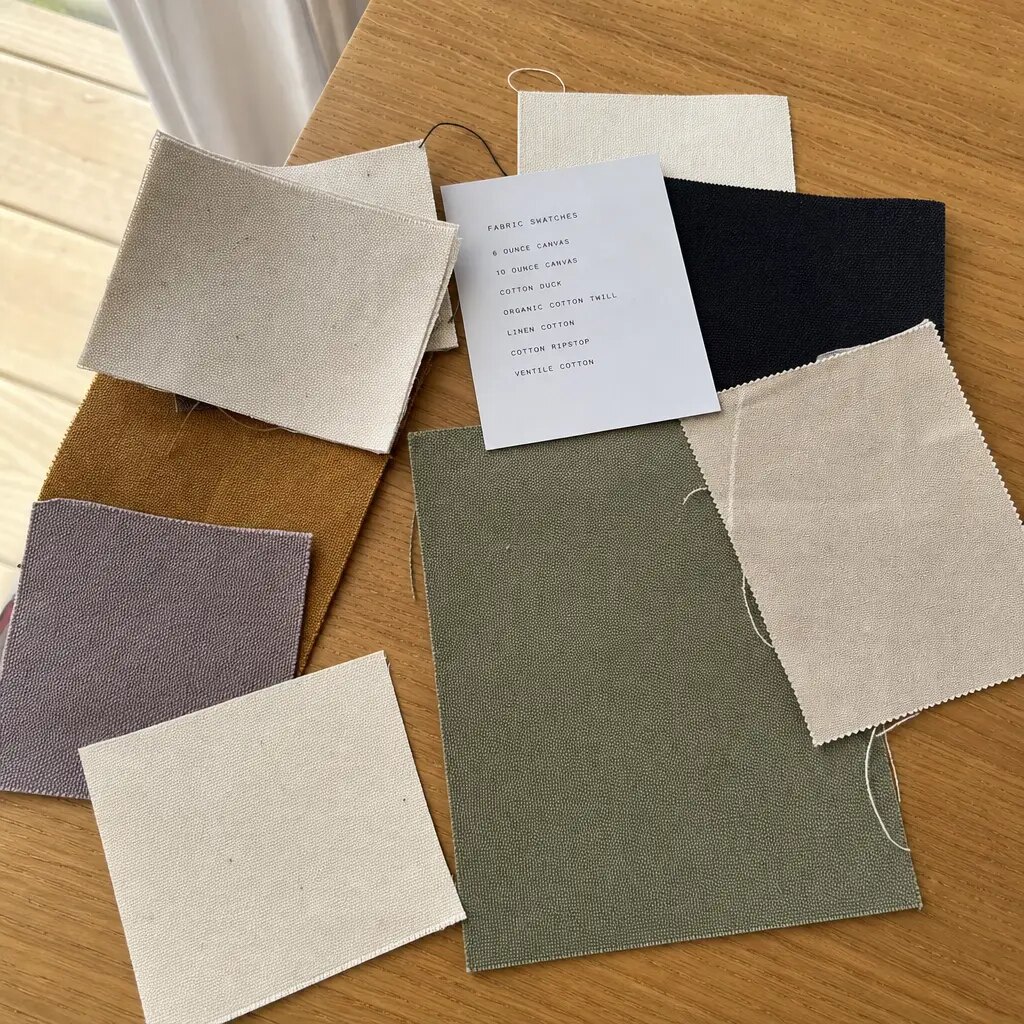
Why craft fair tote pricing goes wrong
Most buyers start with a simple unit price target and discover later that the quote was built on a different fabric, a different print method, or a different packing assumption. For custom canvas grocery totes, those small differences move the real cost more than a few cents. A 10 oz canvas tote with a one-color print and loose bulk packing is not comparable to a 12 oz tote with a front pocket, reinforced handles, and retail-ready bagging.
The craft fair use case makes this even more sensitive because the tote has to look giftable, carry merchandise, and survive repeated handling by shoppers. If the bag feels too thin, it can hurt brand perception at the booth. If it is overbuilt, you pay for extra fabric and labor that may never return value in sell-through.
- Do not compare quotes until fabric weight, size, handle type, and print count are fixed.
- If one supplier includes packing and another excludes it, the lower quote is not really lower.
- Craft fair buyers usually need a stable price plan for repeat events, not a one-off bargain quote.
Start with the tote spec that fits the merchandise
A grocery tote for craft fairs should be specified by finished size, gusset depth, handle drop, and intended load. For general event sales, a common workable build is around 14 x 15 x 4 inches with cotton web handles and a 12 oz canvas body. That spec gives enough structure to hold packaged goods, candles, stationery, or apparel without making the bag unnecessarily heavy or expensive.
Fabric choice is the first pricing lever. Ten-ounce canvas is cheaper and softer, but it can look underpowered next to higher-end booth merchandise. Twelve-ounce canvas is usually the best middle ground for buyers who want a practical bag that still photographs well. Fourteen-ounce canvas works when the tote is part of a premium bundle or when the buyer expects heavier loads, but labor and freight both rise.
- 10 oz canvas: lowest cost, softer hand feel, higher risk of a thin look.
- 12 oz canvas: best balance for most craft fair and retail programs.
- 14 oz canvas: stronger structure, higher material and freight cost.
- Always define whether the stated weight is before or after washing or finishing.
What drives the bulk price beyond fabric cost
The quote should be built from fabric consumption, sewing time, print setup, packing labor, and carton efficiency. Canvas is not like a flat cut-and-sew item with one simple stitch line. A tote with gusset construction, inside seams, reinforced handles, and a logo print consumes more labor than buyers expect. On a 2,000-piece order, small time differences per unit become a real line item.
Print method is the other major cost driver. For simple logos, one-color or two-color screen print remains the most cost-effective route at scale. If your art uses gradients, fine type, or multiple spot colors, you may be pushed to digital transfer or another method that can raise cost and introduce more variation. Buyers should ask suppliers to quote by print method, not lump all decoration into one line.
- Fabric weight affects both material cost and sewing difficulty.
- Handle reinforcement adds labor but reduces claim risk.
- Extra print colors add setup and registration risk.
- Retail-ready packing can add meaningful labor even if the tote itself is unchanged.
How to compare supplier options without getting misled
For procurement teams, the smartest comparison is not factory A versus factory B by unit price. It is direct factory versus trading company, in-house print versus outsourced print, and bulk carton packing versus retail packing. Those routes create different risk profiles. A factory that cuts, sews, prints, and packs internally usually gives better control over schedule and consistency, while a trading company may be easier to manage if you need mixed product sourcing across multiple categories.
Ask for evidence that matches your risk level. That can include production photos of the sewing line, close-up print photos on the same canvas weight, carton marking samples, and a pre-production sample with actual logo placement. If the supplier cannot show a sample on the correct fabric and construction, you are comparing assumptions rather than real output.
- Direct factory: best for repeat orders, cost control, and engineering changes.
- Trading company: useful if you need consolidated buying, but pricing transparency can be weaker.
- In-house print line: stronger control over registration and lead time.
- Outsourced print: often slower and harder to hold accountable for defects.
Comparison table: sourcing routes for custom canvas grocery totes
The table below is meant to help buyers compare sourcing routes, not just spec sheets. Use it when you are deciding how to split business between a direct factory, a trading partner, or a local decorator. The best route depends on how sensitive your program is to print consistency, carton control, and reorders.
If your craft fair program is seasonal and repeated, a factory route is usually easier to scale. If you need a small one-off run with multiple branded items in the same shipment, a trading partner may be acceptable, but the quote should still show the underlying tote spec in detail.
- Write decisions in measurable language, not only descriptive wording.
- Ask for sample photos plus one physical approval sample for important orders.
- Keep quotation, sample approval, and inspection notes tied to the same spec version.
MOQ logic and the pricing curve buyers should expect
Canvas tote pricing usually improves sharply once the order can absorb cutting waste, print setup, and line changeover. That is why a 500-piece order may not be much cheaper per unit than 1,000 pieces if the same print screens, cutting layout, and carton setup are required. In many factories, the real efficiency point appears when the order reaches a stable production batch, often around 1,000 to 3,000 pieces per color or version.
For a craft fair program, keep color splits under control. A two-color tote line with 1,500 total pieces is easier to cost and produce than three colors at 500 each if each color requires separate print preparation. Buyers sometimes chase multiple shades because they want booth variety, but every extra version increases risk of leftover stock and pricing fragmentation.
- One artwork version across multiple colors is easier to manage than multiple artwork versions.
- Separate logo placements should be priced as separate print setups.
- Ask the factory to show the price break at 500, 1,000, 3,000, and 5,000 pcs if you expect repeat buys.
Sample checks that prevent expensive mistakes
A first sample should not be treated as a formality. It is the only practical moment to catch problems with logo size, handle drop, sewing symmetry, and finished bag proportions. For custom canvas grocery totes, an approval sample should show the actual canvas weight, final print method, stitching at stress points, and the carton label format if packing is part of the order.
When reviewing the sample, measure more than one piece. Canvas can shift slightly after cutting and sewing, and small variation can become a problem if the tote must fit shelf displays or retail gift sets. If the sample has a front pocket, test whether the pocket opening is usable and whether the added panel causes puckering near the print area.
- Measure finished width, height, and gusset on at least three samples.
- Rub-test the print lightly to see whether ink sheds or cracks too early.
- Load the tote with realistic product weight, not just paper.
- Verify handle stitch placement and symmetry before releasing mass production.
Packing details that affect landed cost and receiving speed
Packing is often overlooked because it feels secondary to the tote itself, but it changes carton size, labor time, and receiving speed. Bulk packing is usually best for wholesale and distribution orders. If you need retail-ready units, polybagging and barcode labeling may be required, but that increases labor and can affect carton cube. For craft fairs, some buyers prefer loose bulk packed totes because they can unpack and fold locally, yet distributors often need a more standardized carton structure.
Define carton rules early: pieces per carton, maximum gross weight, carton dimension target, and whether mixed sizes are allowed. A carton that is too heavy creates warehouse handling issues. A carton that is too small may reduce freight efficiency. If you are shipping to a retail DC, ask for pallet pattern suggestions and carton marks that match the receiving team’s requirements.
- Bulk packing lowers unit cost but needs clear count control.
- Polybagging improves shelf presentation but increases labor and cube.
- Barcode labels and carton marks should be approved before packing starts.
- Keep carton gross weight within practical warehouse handling limits.
Lead time risk and how to protect the launch date
A realistic tote timeline includes artwork confirmation, sample production, sample approval, bulk material booking, cutting, printing, sewing, finishing, packing, and outbound booking. If the fabric is not already in stock, the longest delay is often material procurement rather than sewing. Buyers who need a craft fair launch should leave enough buffer for sample revisions, not just final production.
A clean schedule is usually more important than the fastest promise. If a supplier says yes to every date without discussing fabric availability, screen preparation, or packing capacity, the risk simply moves to the ship date. For seasonal event programs, it is better to lock the artwork and fabric spec early, approve the sample quickly, and hold one contingency week for corrective work.
- Sample approval delays are the most common cause of schedule slip.
- Artwork changes after sampling should be treated as a new version.
- If a supplier quotes a very short lead time, ask whether fabric is greige stock or already dyed/finished.
- Plan buffer for seasonal congestion before major craft fair dates.
A practical landed-cost view for procurement teams
To compare suppliers correctly, convert the quote into landed cost per sellable tote. Start with factory unit price, then add decoration setup if applicable, internal packing, inland freight to port or DC, international freight, duty or tax exposure, and any receiving labor caused by poor packing. A cheap tote that arrives in weak cartons or wrong bundle counts can cost more than a slightly higher factory quote with better packing discipline.
For retail buyers and importers, landed cost should also reflect reorder behavior. If a supplier can repeat the same canvas shade, handle length, and print position on the next PO without re-approval drama, that consistency has value. The buyer should pay attention to version control because tote programs often grow from event giveaways into retail shelves, and the spec that works for 1,000 pieces may not survive a second season unless it is documented well.
- Compare total landed cost, not only FOB or EXW price.
- Factor in rejects, rework, and receiving time when choosing the route.
- Keep one master spec sheet for repeat orders and seasonal reorders.
Specification comparison for buyers
| Spec decision | Recommended option | When it fits | Buyer risk to check |
|---|---|---|---|
| Fabric weight | 12 oz canvas for balanced hand feel and cost | Mid-priced craft fair programs where totes must feel sturdy but stay quote-friendly | Lightweight 10 oz canvas can wrinkle and feel cheap; heavier 14 oz raises freight and may slow sewing |
| Supplier route | Direct factory with print and packing in-house | When you need tighter control over spec, repeat orders, and carton consistency | Middlemen can hide fabric source and add margin without improving QC |
| Print method | 1-2 color screen print for large repeat orders | When the artwork is simple, bold, and ordered in high volume | Fine details and gradients may fill in; Pantone match tolerance must be written into the PO |
| MOQ structure | 1,000-3,000 pcs per color/style as a practical starting point | For seasonal craft fairs and retail rollouts where setup cost must be spread | Very low MOQs usually push up unit price, carton inefficiency, and print waste |
| Handle construction | Self-fabric or cotton web handles with reinforced X-stitch | For grocery use, heavier product loads, and visible quality expectations | Short handle drop or weak bartacks can cause returns and claim issues |
| Lining and pockets | Unlined body with optional front pocket only if the use case needs it | For simple grocery tote programs that must stay cost-controlled | Every extra panel increases labor, sewing time, and QC points |
| Packing route | Bulk packed by style/color with master carton labels and inner bundle counts | For distributor inventory and retail DC receiving | Mixed packing without count control creates receiving disputes and rework |
| Sampling path | Pre-production sample plus photo approval on print and carton mark | For first-time artwork, new fabric shades, or new vendor onboarding | Approval based on one loose sample can miss color shift, seam tension, or shrinkage issues |
Buyer checklist before sampling
- State the tote size in finished dimensions, not just panel cut size, and include acceptable tolerance for width, height, and gusset.
- Fix the fabric weight in oz or GSM and decide whether you want natural, bleached, or dyed canvas before quoting starts.
- Specify print location, print size, color count, and whether a Pantone target is required.
- Set handle length, width, attachment method, and minimum stitch reinforcement.
- Define whether you need bulk packing, polybagging, barcode labels, or retail-ready insert cards.
- Ask for sample stage approval: artwork proof, pre-production sample, and final shipment photo set.
- Write the expected carton count, carton weight limit, and palletization request if the order is for distribution centers.
- Compare landed cost, not only FOB unit price: include packing, inland trucking, and likely freight class impact.
Factory quote questions to send
- What exact canvas weight are you quoting, and is that finished fabric weight before or after washing?
- Is the print quoted as screen print, heat transfer, or digital print, and how many setup charges apply?
- What is the minimum order quantity by color and by print version?
- Can you quote the tote with and without inner packing, and show the cost difference per piece?
- What is your acceptable dimensional tolerance after sewing and any expected shrinkage range?
- How do you pack cartons, how many pieces per carton, and what is the gross weight per carton?
- What samples do you provide before mass production, and how long does each sample stage take?
- If we need a second logo location or a woven side label, what is the incremental cost and lead time impact?
Quality-control points to confirm
- Fabric weight must match the approved spec within a reasonable production tolerance; any lighter lot should be flagged before cutting.
- Canvas weave should be even, without thin spots, slubs in critical print areas, or visible oil stains.
- Print registration must stay aligned; no more than minor edge variation on multi-color logos, and no obvious pinholes or ink smears.
- Handle bartacks or X-stitch reinforcement should be tight, symmetrical, and free of skipped stitches.
- Finished tote size must remain within the agreed tolerance after sewing and, if relevant, after pre-shrink treatment.
- Carton count must match purchase order count with no mixed style or mixed color cartons unless explicitly approved.
- Each production lot should include a retained sealed sample or photo record for claim comparison if needed.