Start with the procurement risk, not the product photo
A custom canvas grocery tote can look deceptively simple. It is fabric, handles, a logo, and a carton. That simplicity is exactly why weak specifications slip through early sourcing. A supplier can send an attractive mockup and a sharp unit price before anyone has agreed on canvas weight, handle reinforcement, print curing, carton quantity, or compliance evidence. By the time those gaps appear, the order may already be sampled, priced, and promised to a retail calendar.
For eco apparel brands, the tote usually does more than carry groceries. It may sit beside apparel at checkout, ship as part of a welcome kit, hold folded garments at an event, or sell as low-price branded merchandise. Customers read it as part of the brand. A sustainability message printed on a flimsy or poorly sewn tote creates a quality problem and a credibility problem at the same time.
A supplier compliance checklist gives procurement a cleaner way to compare options. It forces every supplier to quote the same product under the same commercial assumptions. A 10 oz natural cotton tote in bulk pack should not be ranked against a 12 oz dyed tote with barcode labels as if the price gap proves efficiency. The job is to make the build, documentation, tolerances, packing, Incoterm, and testing scope visible before price is judged.
- Use the checklist before supplier shortlisting, not only before final inspection.
- Treat the tote as a controlled SKU with a tech pack, approved sample, and receiving standard.
- Require every quote to state the same fabric, print method, packing format, Incoterm, and compliance scope.
- Flag any quote that avoids factory identity, fabric weight, carton data, or testing assumptions.
Define the tote by use case and load expectation
The strongest specification starts with use. A light event giveaway does not need the same construction as a grocery tote expected to carry bottles, produce, packaged food, and repeated weekly loads. A retail resale tote needs cleaner folding, tighter appearance standards, stronger print control, and more disciplined packaging. A premium apparel-brand tote may need a heavier hand feel, precise label placement, and a neater top hem because the product is part of the brand experience.
Canvas weight is one of the biggest cost and performance drivers. In sourcing conversations, 10 oz canvas is often used for lighter promotional carry and is roughly 340 gsm, depending on construction. A 12 oz canvas, about 407 gsm, is a common stronger default for grocery and reusable retail programs because it offers more structure without becoming too stiff to fold and pack. A 16 oz canvas, about 542 gsm, can suit heavier-duty or premium totes, but it raises material cost, sewing difficulty, shipping weight, and sometimes MOQ.
Do not ask a supplier to recommend a fabric without context. Give the target load, finished dimensions, and carry style. A boxed-bottom grocery tote with a 10 cm gusset and a 60 cm handle drop behaves differently from a flat tote with short handles. If the bag must stand open at checkout, hold folded apparel, or carry heavier groceries, put that in the RFQ. Then the supplier can price fabric, reinforcement, and sewing time against a real job, not a mood board.
- Choose one primary use case: promotional, grocery, retail resale, premium merchandise, loyalty program, or kit packaging.
- State the expected carry context, such as light apparel, mixed groceries, bottles, folded garments, or customer reuse.
- Specify finished width, height, gusset depth, handle width, handle drop, and target load-use expectation.
- Ask suppliers to explain any fabric upgrade or downgrade in cost, weight, MOQ, and production terms.
Build a spec sheet suppliers can price without guessing
A useful RFQ does not need to be beautiful. It needs to be complete. Include finished dimensions, construction drawing or reference photo, canvas weight, fiber composition, fabric color, handle details, stitch color, artwork, print dimensions, print position, label details, packing method, order quantity, delivery term, destination, and required documentation. If those details are missing, suppliers will fill the blanks with their own defaults, and every quote will describe a different tote.
Tolerances should be practical and measurable. For many canvas totes, a finished dimension tolerance around plus or minus 0.5 to 1.0 cm may be workable, depending on size and construction. The agreed limit should match the product and the inspection method. Handle drop often needs close control because it changes how the tote feels on the shoulder. Print placement should be measured from a top edge, side edge, or centerline. A phrase like centered logo is not enough when the product is being inspected by carton lot.
Construction language needs the same discipline. Reinforced handles can mean box-X stitching, bar tack, double-row stitching, a fabric patch, or simply a few extra back-tacks. Define the top hem depth, side seam type, bottom gusset method, seam allowance, thread color, and stitch density if they matter to the brand. Leave room for supplier advice, but make the baseline clear enough that the quote is real.
- Include product specs and commercial specs in the same RFQ package.
- Use finished dimensions, not only flat pattern dimensions or catalog sizes.
- Define tolerances for body size, gusset, handle drop, handle placement, print placement, and label placement.
- Separate required features from optional cost alternates so suppliers can quote clearly.
- Ask suppliers to confirm the spec line by line instead of replying only with a unit price.
Verify supplier identity and production ownership
Supplier compliance starts with a basic question: who will actually make the bag? A sales office, marketplace storefront, or trading company profile is not the same as the cutting and sewing floor. Ask for the production site name, physical address, production scope, and which processes are done in-house. Cutting, sewing, screen printing, dyeing, washing, finishing, and packing may happen at different locations. That can be acceptable, but it must be disclosed and controlled.
Direct factories often give buyers clearer technical answers. They can usually speak directly about seam allowance, fabric yield, stitch density, inline checks, and rework capacity. Trading companies can still be useful, especially when the buyer needs mixed products or extra coordination, but they should be transparent about factory selection and QC authority. If a supplier cannot name the production site before sample approval, the quote is not ready for award.
Documents should line up with the production reality. The names on business registration, audit files, invoices, packing lists, and inspection reports should be consistent or clearly explained. If the supplier wants to move bulk production to a different factory after the sample is approved, require written approval, production-flow confirmation, and usually a new pre-production sample. The biggest tote problems often start when a clean sample is made in one room and bulk production quietly moves to another.
- Ask who owns cutting, printing, sewing, finishing, packing, and final inspection.
- Request the actual production site name and address before awarding the order.
- Confirm whether subcontractors are used and which party is responsible for their defects.
- Do not accept a factory change after approval without written review and sample confirmation.
- Match compliance documents to the site and product family, not only to the selling company.
Check material compliance and sustainability claims
Eco apparel brands have to be precise with material language. Natural cotton, recycled cotton, organic cotton, undyed cotton, bleached cotton, and blended canvas are not interchangeable. Each has different availability, cost, certification needs, and labeling implications. If a supplier quotes recycled or organic content, ask what document supports that claim for the exact material or certified supply chain. A certificate image in a sales deck is not enough for procurement review.
At a basic level, request fiber composition, fabric weight, color standard, and restricted substances information relevant to the selling market. If the tote will be sold at retail, shipped internationally, or labeled with fiber content, the declaration needs to match local labeling rules and brand requirements. Dyes, inks, coatings, woven labels, care labels, thread, and trims can also affect the compliance file. The main canvas is important, but it is not the whole product.
Testing should match risk. For a simple natural canvas tote, the plan may focus on fiber content, restricted substances, seam and handle strength, odor, and general appearance. For dyed canvas, colorfastness to rubbing and water becomes more important. For printed bags, ink cure, rub resistance, cracking, transfer, and print durability deserve attention. For washable totes, dimensional change after washing should be discussed before sampling, not after complaints arrive.
- Require a fiber composition declaration for the exact product being ordered.
- Ask for lot-linked evidence when recycled, organic, certified, or other sustainability claims are used.
- Review dyes, inks, labels, thread, and trims as part of the compliance file, not just the canvas.
- Choose tests based on market, sales channel, color, print method, and use case.
- Keep sustainability wording conservative unless the supplier can support the exact claim.
Approve samples as production controls
A pre-production sample is not a courtesy. It is the physical control standard for the order. The sample should use final canvas weight, final color, final handle construction, final thread, final print method, final label, and final packing fold wherever possible. If the supplier sends a similar sample in substitute fabric, use it for construction discussion only. Do not treat it as bulk approval unless the deviation is written, limited, and resolved before production.
Measure the sample and record the results. Check finished width, height, gusset depth, handle width, handle drop, top hem depth, seam allowance, print size, and print position. Compare the artwork against the approved file and color target. Look for panel skew, twisting, uneven handles, loose threads, rough hems, stains, odor, weak back-tacking, and print defects. If the tote is expected to handle real grocery loads, run a simple loading review and look again at the handle bases and bottom seams after carrying.
Once the sample is approved, retain a signed reference. Tag it with supplier name, order number, sample version, approval date, fabric weight, print method, and any approved deviations. Keep it available for incoming inspection and dispute resolution. Without a retained sample, buyers and suppliers argue from memory. With one, final inspection has a concrete standard.
- Do not approve a sample made from substitute fabric unless the deviation is documented and temporary.
- Use a measurement sheet during sample review and share results with the supplier.
- Approve print placement, label placement, handle feel, seam finish, and packing fold, not only the bag shape.
- Keep one controlled reference sample and provide a duplicate standard to the factory if needed.
- Require a new sample when fabric weight, print method, factory, label, or construction changes.
Control decoration, branding, and artwork execution
Decoration is where many tote programs become visibly uneven. Screen printing is often a strong choice for simple logos and spot-color artwork because it can give good opacity on woven fabric. Still, canvas texture, absorbency, ink thickness, mesh selection, and curing all affect the result. A design that looks clean in a digital mockup may lose sharp edges on coarse canvas if the artwork and print method are not tested together.
Artwork should be ready before sampling. Provide vector files when possible, define print size, state color targets, and place the art using measurements from the top edge, side edge, or centerline. If the design includes fine lines, small type, gradients, heavy solid coverage, or close registration, ask the supplier to confirm feasibility on the chosen canvas. Heat transfer, embroidery, woven labels, printed labels, and hangtags can all work, but each brings its own setup cost and inspection points.
Print and label tolerances should be written into the order. Define acceptable variation for print placement, color shade, registration, edge sharpness, opacity, label angle, and label stitch position. Ask how the supplier checks ink cure before packing. Poorly cured ink can mark the next bag in the stack, especially when totes are tightly packed or shipped through warm conditions. It is cheaper to catch cure and transfer problems at the print table than after cartons reach the warehouse.
- Provide final artwork files before the supplier makes the approval sample.
- Confirm print method, number of colors, print size, print position, and color target in the quote.
- Set placement tolerance using fixed measurements instead of subjective alignment language.
- Ask for a strike-off or print test on actual canvas when artwork risk is high.
- Inspect labels, hangtags, care labels, and barcode stickers as separate branded components.
Set inspection gates and defect rules before bulk
Quality control should start before final cartons are sealed. A practical tote program normally has three gates: pre-production sample approval, first-piece or inline production check, and final inspection. The first-piece check is especially valuable because it catches handle placement, stitch density, fabric shade, print position, and label errors before the factory completes the full order. For repeat programs, it also confirms that the approved construction has not drifted since the last run.
Defect classification should be clear. Critical defects may include contamination, unsafe metal fragments, severe odor, or any issue that makes the product unfit for sale. Major defects may include open seams, broken handle reinforcement, wrong dimensions outside tolerance, wrong artwork, severe print misplacement, heavy stains, shade mismatch beyond the approved standard, or incorrect labels. Minor defects may include small loose threads or slight cosmetic variation that does not affect function or brand presentation. The exact list should match your channel, not a generic template.
Many buyers use AQL-based final inspection, either through a third party or an internal quality team. Whatever method you choose, define sample size, defect limits, measurement method, photo requirements, and reporting format before production begins. Also agree what happens if the order fails: rework, sorting, replacement goods, discount, reinspection, or cancellation. Quality terms are easier to negotiate before the goods are finished and the vessel date is close.
- Use at least one inline checkpoint for first-piece construction and print review.
- Define critical, major, and minor defects in the purchase order or quality appendix.
- Measure dimensions after normal conditioning, pressing, or folding, not while the bag is distorted from tight packing.
- Inspect handle bases, top hem, side seams, bottom gusset, print, labels, stains, odor, carton count, and carton marks.
- Agree in writing who pays for rework, reinspection, replacement goods, and shipment delays.
Lock packing, carton data, and warehouse receiving
Packing affects landed cost, product condition, and receiving speed. A quote without carton quantity, carton dimensions, gross weight, net weight, folding method, and labeling assumptions is incomplete. The same canvas tote can look cheaper at unit level and become more expensive after freight, storage, repacking, relabeling, or warehouse labor. Ask for packing details at quote stage while changes are still easy to price.
Common options include flat bulk pack, folded bulk pack, tied bundles, paper bands, individual polybags, retail hangtags, barcode labels, inner cartons, and master carton marks. Each option changes labor, material cost, carton efficiency, presentation, and receiving accuracy. For eco apparel brands, packaging may also need to align with plastic-reduction policies, retailer rules, or moisture-protection needs. Avoid vague instructions such as standard export carton. Define what standard means for this order.
Cartons need to protect the bag without creating new defects. Over-compressed cartons can wrinkle panels and distort handles. Loose cartons can allow scuffing, dirty edges, and label damage. Moisture protection may be needed depending on the shipping lane, season, storage time, and carton material. If the tote is going into a retailer distribution center, provide barcode, carton mark, pallet, and ASN-related rules early so the supplier can build them into the quote.
- Request carton quantity, carton dimensions, gross weight, net weight, and pack method with every quote.
- Define unit pack, inner pack, master carton, mixed-SKU rules, barcode placement, and carton marks.
- Confirm whether polybags, paper bands, tissue, desiccant, palletization, or moisture protection are included.
- Check that carton weight is practical for warehouse handling and destination rules.
- Run a small packing pilot when retail presentation, wrinkle control, or SKU separation is important.
Compare quotes by landed cost and decision readiness
The best supplier is not automatically the lowest unit price. A procurement-ready quote identifies unit cost, setup charges, screen or plate fees, labels, sample fees, testing, packing extras, inspection costs, Incoterm, payment term, production lead time, and quote validity. If one supplier quotes FOB and another quotes EXW, the prices are not comparable until inland freight and export handling are added. If one quote includes testing and another excludes it, the cheaper quote may simply be unfinished.
MOQ should be broken down by the real production driver. A supplier may have one MOQ for natural canvas, another for custom-dyed fabric, another for each print version, and another for retail-ready packing. Ask for MOQ by fabric color, artwork version, label version, and packing version. This prevents a common surprise: the total order meets MOQ, but each SKU split is too small to run efficiently.
Lead time also deserves detail. A clean schedule separates artwork approval, sample making, sample shipping, fabric booking, printing, sewing, packing, inspection, and export handoff. This shows the real critical path and highlights buyer approvals that can delay production. Before awarding the order, ask what changes if quantity moves by 20 percent, a second print color is added, or packing changes from bulk to retail-ready. A serious supplier should be able to explain the impact in practical terms.
- Compare suppliers only after matching spec, quantity, packing, documentation, testing, and Incoterm.
- Use a landed-cost view that includes freight, duties, inspection, repacking risk, and warehouse labor where relevant.
- Ask for MOQ by fabric, color, print version, label version, and packing version.
- Require lead time by stage and identify the buyer approvals that can delay production.
- Treat missing cost lines as open commercial risk, not as savings.
Specification comparison for buyers
| Supplier option | What to verify | Commercial advantage | Buyer risk to control |
|---|---|---|---|
| Direct sewing factory | fabric swatch, approved sample, seam close-ups, logo test photos, packing pilot, and final inspection evidence | Better sample-to-bulk control and faster production feedback | May be weaker on export paperwork or branded packing unless checked early |
| Trading company | Factory name, production photos, trim-source proof, and who owns QC decisions | Can coordinate small mixed orders and extra services | Markup can hide real factory capability and slow defect decisions |
| Specialized bag workshop | bag size, gusset, handle drop, seam allowance, stitch density, reinforcement patch, and loading expectation | More practical for detailed construction, trims, and repeat programs | Capacity may be limited during peak seasons |
| Low-price general supplier | 8-12 oz cotton canvas, 120-220 gsm cotton, recycled cotton, or blended fabric selected by use case and target price | Useful for simple promotional runs with loose specs | Material downgrades, weak packing, and vague inspection scope can erase savings |
| Retail-ready supplier | fold method, inner bundle, carton count, carton mark, moisture protection, SKU separation, and warehouse receiving needs | Can handle labels, SKU separation, carton marks, and receiving rules | Higher unit cost must be compared against reduced warehouse work |
| Compliance-focused supplier | Fabric records, labeling review, test plan, and production traceability | Safer for retail programs and repeat brand orders | Documentation claims need evidence, not only sales language |
| Local sample room plus bulk factory | Signed sample, bulk factory handoff, first-piece photos, and deviation owner | Good for complex branding before large production | Sample room quality may not match bulk line unless handoff is controlled |
Buyer checklist before sampling
- Define the end use first: light promotional carry, retail resale, grocery load, loyalty program, event kit, apparel packaging, or premium branded merchandise.
- Freeze finished width, height, gusset depth, handle width, handle drop, fabric weight, fiber content, color, print size, print position, label details, and packing method before requesting quotes.
- State canvas weight in both oz and gsm where possible; for example, 10 oz is about 340 gsm, 12 oz is about 407 gsm, and 16 oz is about 542 gsm.
- Ask the supplier to identify the actual production factory, not only the sales office, and confirm whether printing, sewing, washing, finishing, or packing is subcontracted.
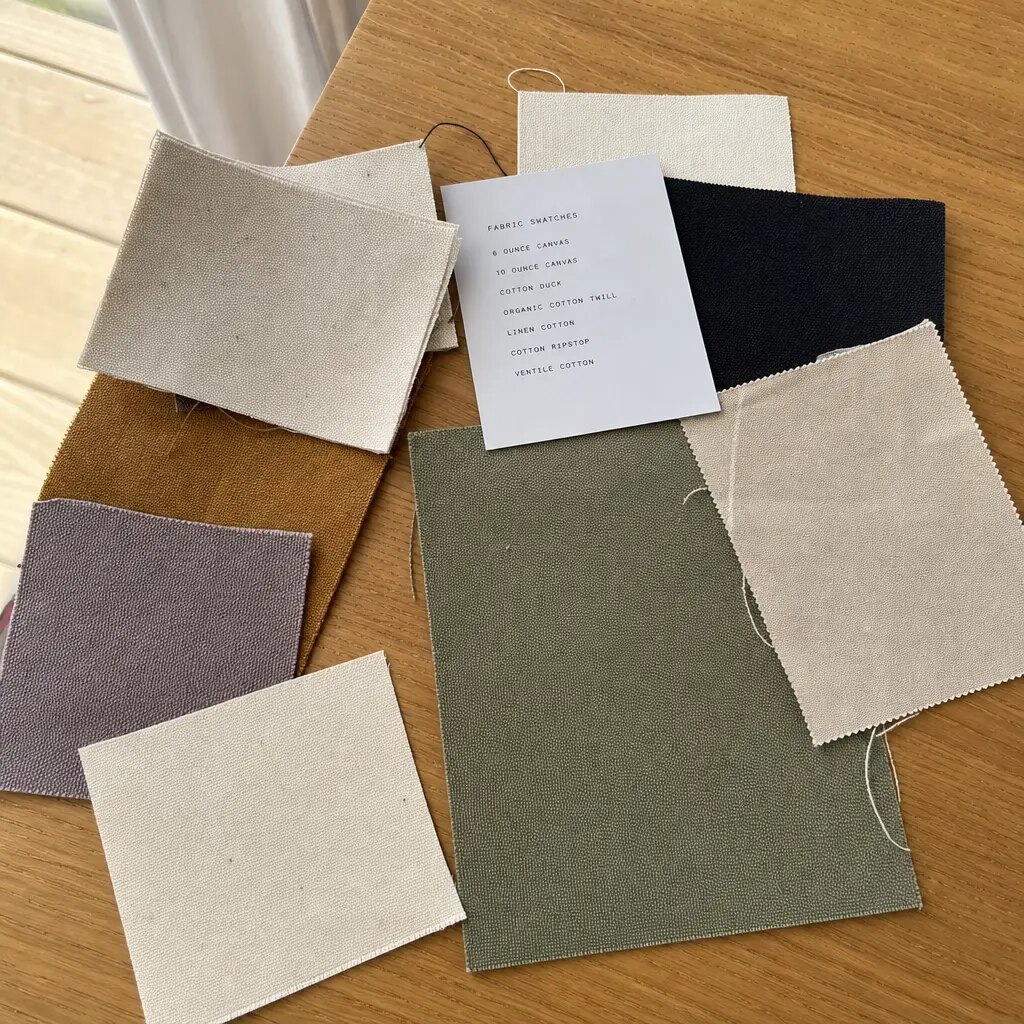
- Request swatches from the intended material lot, or from the closest available bulk fabric if the final lot is not yet booked, and label the swatch source clearly.
- Require a pre-production sample made with final fabric, final dimensions, final handle construction, final print method, final label, and final packing format.
- Compare supplier quotes using the same Incoterm, currency, quantity, material spec, print colors, carton pack, documentation scope, and testing assumptions.
- Confirm whether the supplier can provide fiber composition, restricted substances information, product labeling review, and any market-specific declarations needed for your sales channel.
- Approve one physical reference sample, sign or tag it with date, version, supplier, order number, approved deviations, and keep it available for final inspection comparison.
- Set dimensional tolerances in writing for body width and height, gusset, handle drop, handle placement, print placement, label position, seam allowance, and carton quantity.
Factory quote questions to send
- What exact canvas weight are you quoting in oz and gsm, and what tolerance do you allow on fabric weight?
- What is the fiber content, weave type, shrinkage expectation, and color standard for the quoted fabric?
- Is the quoted price based on greige, natural, bleached, dyed, recycled cotton, organic cotton, or blended canvas?
- Which actual factory will cut, sew, print, finish, and pack the bags, and which steps are subcontracted?
- Can you provide the production site name, address, business registration, and any relevant audit or capability documents?
- What finished dimensions are included in the quote, including width, height, gusset depth, handle width, and handle drop?
- What dimensional tolerances do you apply after sewing, pressing, folding, and packing?
- What seam construction, seam allowance, stitch density, reinforcement method, and thread type are included?
- Which print method is included, how many colors are priced, and what setup, screen, plate, or artwork charges apply?
- What print placement tolerance, color tolerance, curing control, and rub-resistance check can you support?
Quality-control points to confirm
- Canvas weight is checked against the approved oz/gsm target using the agreed tolerance and a defined measurement method.
- Fiber content, weave, hand feel, and color match the approved swatch or material specification for the production lot.
- Finished body width, height, gusset depth, handle width, and handle drop match the approved tech pack after normal conditioning, pressing, and folding.
- Bag panels are cut square enough that the tote does not twist, lean, or distort after sewing.
- Handle placement is centered, consistent from bag to bag, and reinforced with the approved stitch pattern.
- Handle attachment areas show no skipped stitches, loose thread loops, broken needle damage, open seam ends, or weak back-tacking.
- Seam allowance is consistent across side seams, bottom seams, top hem, and gusset joins within the approved construction limit.
- Stitch density matches the approved range and does not vary enough to weaken stress points or create a visibly uneven finish.
- Print position matches the approved artwork placement, with clear tolerance for distance from top edge, side edge, or centerline.
- Print color, opacity, registration, edge sharpness, and ink coverage match the approved sample within the agreed visual limit.