Start With The Use Case, Not The Bag
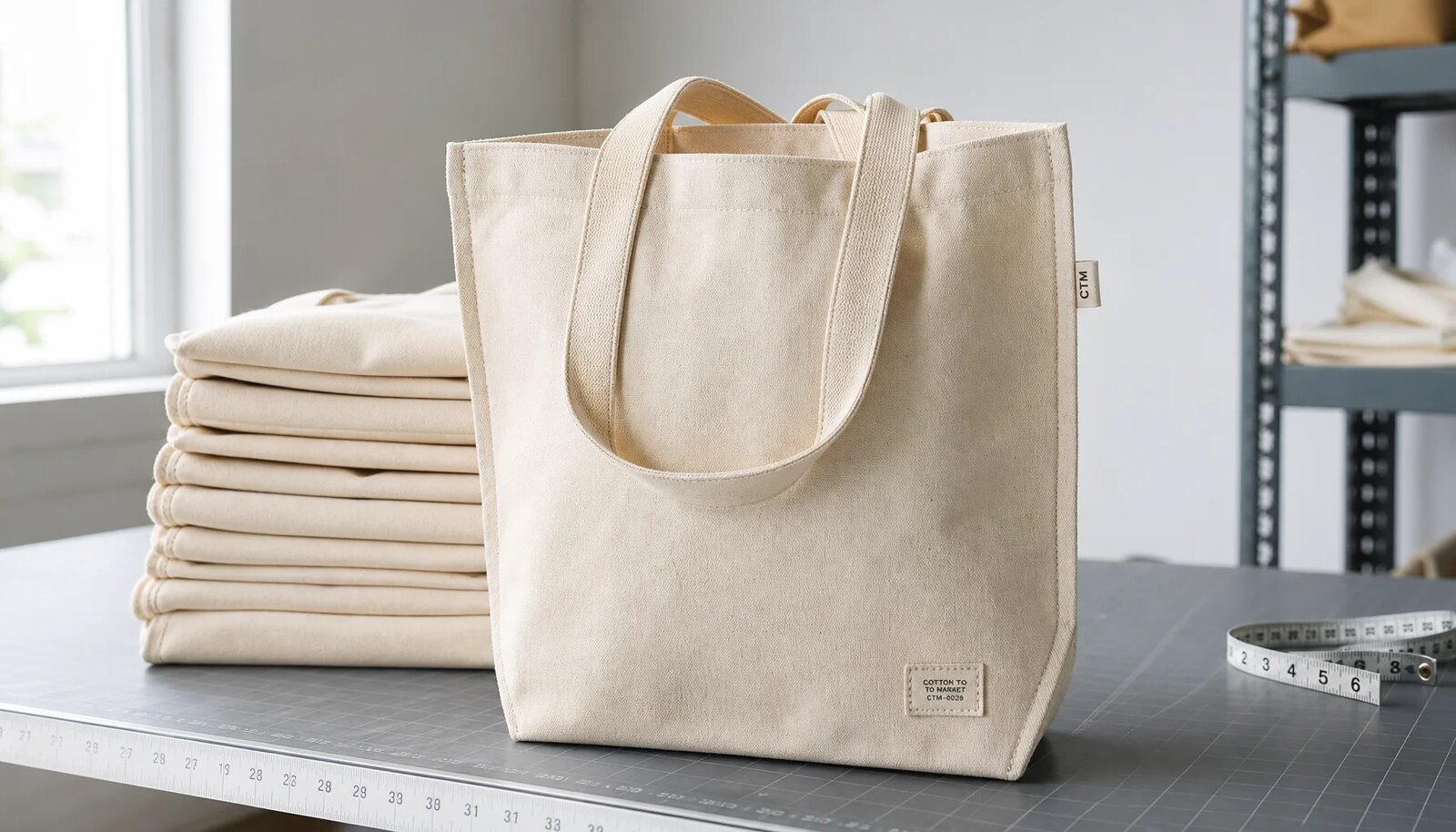
Farmers market grocery totes are not a generic promotional bag. They need to carry produce, fit into a retail or community program, and survive repeated folding, loading, and hand washing. If the RFQ starts with a logo file and a color request, the quote usually comes back vague because the factory has no way to judge fabric weight, handle load, or print method. Start by defining how the bag will be used: grocery carry, resale, giveaway, subscription box insert, or market membership item. That use case drives the rest of the spec.
A practical RFQ should tell the supplier what matters most. For example, if the bag is meant to sit on a market table and hold heavy produce, structure and handle strength matter more than a soft hand feel. If it is a retail item, the buyer may care more about print sharpness, stitching consistency, and clean packing. Do not let the factory fill in these choices for you. The goal is to make every quote line up against the same commercial requirement, not against the supplier's default bag.
- State the end use: grocery carry, retail resale, event giveaway, or membership program.
- Describe the expected load: light produce, mixed groceries, bottles, or heavier household items.
- Name the buyer priority: lowest cost, premium feel, long life, or quick replenishment.
Set The Core Bag Specification
For a farmers market tote, the core spec usually starts with a plain canvas bag in the 10 oz to 16 oz range, depending on the target price and the expected load. A 12 oz canvas, around 340 GSM, is the most common middle ground because it balances cost, print clarity, and everyday utility. Heavier 14 oz to 16 oz canvas gives a firmer body and a more premium look, but it adds sewing difficulty, freight weight, and usually a higher unit cost. If the bag is too light, the walls collapse and the tote feels like a giveaway item instead of a reusable grocery bag.
The rest of the construction should be written in measurable terms. Specify finished width, height, gusset depth if any, handle drop, handle width, and whether the bag uses self-fabric handles or cotton webbing. For load-bearing bags, the handle anchor should have a box-X or bar tack reinforcement rather than a simple top stitch. If you want the bag to hold shape, say so directly. If you want a softer folded profile for retail packaging, say that too. Vague language like 'good quality' creates room for quote drift.
- Common buyer-friendly baseline: 12 oz canvas, natural color, cotton web handles, reinforced corners.
- Use 14-16 oz only when the bag must feel premium or carry heavier loads.
- Add exact dimensions and tolerance targets so the sample is not treated as a guess.
Choose The Print Method That Matches Volume
Most custom canvas grocery totes for farmers market programs use one of three decoration routes: screen print, heat transfer, or woven/sewn branding. Screen print is usually the most commercial option for a simple logo or line art in one or two colors. It gives strong opacity on natural canvas and can scale well when the artwork stays stable. Heat transfer can be useful for short runs or complex artwork, but it often looks less integrated with the fabric and can raise durability concerns if the bag is folded and washed often. Woven labels or sewn-on patches make sense when the brand wants a more retail-looking finish and the decoration area is small.
The RFQ should specify more than just the logo file. State the number of print colors, print area, print location, and whether Pantone matching is required. If the artwork includes thin lines, halftones, or small type, tell the factory to confirm minimum line thickness before sampling. For multi-color graphics, ask how the supplier will register the print on textured canvas. A good quote should separate artwork setup, screen charges, and per-unit decoration cost so you can see where volume breaks happen.
- Use screen print for simple logos and larger repeat orders.
- Use sewn labels or patches when you want a premium retail finish or lower print wear risk.
- State minimum line thickness and print placement if the logo has fine detail.
Build The Quote Around MOQ And Yield
MOQ for canvas totes is not just a number. It is the point where material purchasing, cutting efficiency, decoration setup, and packing labor become workable for the factory. A buyer can often lower the unit price by simplifying the spec, but the same order can become more expensive if it adds multiple colors, handle variations, or mixed print locations. Ask the supplier to quote one clean base style first, then price optional upgrades separately. That makes it obvious whether the extra cost comes from fabric, labor, decoration, or packing.
Yield matters as much as MOQ. Canvas has a usable width, and cutting layout affects how many bags come out of each fabric roll. If the tote is oversized or the gusset is deep, the cutting yield drops and the unit price rises. Ask the factory to state whether the quote is based on a standard width roll, whether prewashing causes shrinkage, and whether the price assumes one production batch or several partial shipments. For buyers comparing suppliers, the lowest unit price is not meaningful if one quote hides a higher setup charge or more expensive packing.
- Request one base quote plus separate prices for extra colors, labels, special packing, and rush orders.
- Ask whether the quoted MOQ is per design, per color, or per material lot.
- Confirm whether the quote includes cutting loss and normal production waste or assumes an ideal yield.
Compare Suppliers On More Than Unit Price
A useful bid comparison does not stop at the bag price. Buyers need to know who controls the sewing, who controls the print room, and who owns the final packing step. A direct factory with in-house decoration often gives the clearest accountability, especially when the bag needs a stable fabric weight, repeat print placement, and better carton control. A trading company can be useful when the buyer needs flexibility, but the quote must disclose the real factory and the handling structure. A local decorator paired with an imported blank bag can work for rush programs, but the buyer often pays for it in freight, shade variation, and less control over the final look.
This is where supplier evidence matters. Ask for recent production photos of the same or a very similar tote, not just generic factory images. Ask for the factory name, sewing line ownership, and whether the print process is internal or subcontracted. If the supplier is unwilling to state which process is outsourced, treat the quote as incomplete. The goal is not to eliminate trading companies or hybrid sourcing routes. The goal is to know exactly who is responsible if the canvas shrinks, the print mis-registers, or the handles fail at the seam.
- Direct factory route: best control, clearer accountability, usually better for repeat orders.
- Trading company route: useful for flexibility, but verify the real factory and extra handling layers.
- Blank plus local decoration: useful for urgent small runs, but usually weaker on cost and consistency.
Approve Samples Against Measurable Limits
A sample is only useful if the buyer knows what it is supposed to prove. For grocery totes, the sample should confirm fabric weight, handle strength, print quality, seam finish, and packed appearance. Do not approve a sample just because it looks neat on the table. Measure the bag, weigh it if needed, and inspect the stitching at the handle anchor and bottom seam. If the sample is preproduction, ask the supplier to mark it clearly so the approved reference does not get mixed with random workshop samples later.
Sample review should include a simple stress test. Load the tote with product weight similar to the real use case and inspect whether the handles stretch, seams distort, or the print cracks at the fold line. Check the bag after folding and reopening, because farmers market totes are often stored flat and reused repeatedly. If the fabric is naturally irregular, decide what level of slub, shade variation, or weave inconsistency is acceptable before the bulk order starts. The sample is the contract for visual and functional acceptance, so put the key points in writing.
- Measure width, height, gusset, handle drop, and print placement against the approved spec.
- Test the tote under a realistic load, not just by hand feel.
- Keep the signed sample or photos of the signed sample tied to the purchase order.
Lock Down Packing And Carton Rules
Packing has a direct effect on cost, warehouse handling, and retail readiness. For canvas grocery totes, the factory can fold the bag in a simple way, place it in an inner polybag or paper band, and then pack a fixed quantity per carton. The buyer should define whether the bag is meant for shelf display, shipping efficiency, or gift-ready presentation. If the program goes to stores, ask for a packing format that keeps the handles flat and the print visible without excessive wrinkles. If the bags will go directly into distribution, prioritize compact packing and predictable carton weights.
Carton details should not be an afterthought. A quote should include carton dimensions, packed quantity, gross weight, and whether labels, barcodes, or case marks are required. This matters for both freight planning and receiving accuracy. A small change in fold method or carton count can alter the cube enough to change shipping cost materially. If the buyer needs retail units grouped in exact multiples, state that clearly and make sure the count is checked at the carton stage, not only at final shipment. Packing errors are expensive because they are usually found after export, not during sewing.
- Define the inner pack: loose fold, polybag, belly band, or paper wrap.
- State carton pack quantity and carton label requirements in the RFQ.
- Ask for carton dimensions and gross weight so freight can be estimated accurately.
Plan Lead Time Around Art, Fabric, And Peak Season
Lead time for custom canvas grocery totes is often more sensitive to artwork approval and fabric availability than to sewing itself. A buyer can lose several days waiting for logo correction, print proof approval, or fabric confirmation. If the tote uses dyed canvas, matching the shade can add time. If the order falls near peak market season or before a retail launch, the factory may have to slot the job around larger programs. That is why the RFQ should ask for lead time from deposit, from sample approval, and from final artwork sign-off. Those are not the same thing.
Build a schedule with a real buffer. For a straightforward one-color tote, a common production path may include sample making, sample approval, bulk fabric reservation, cutting, sewing, printing, final inspection, and carton booking. If the design has multiple colors, a special label, or revised dimensions, add time for rework. The buyer should also ask what happens if a fabric lot is delayed or if the print screen has to be remade. A good supplier gives a clear recovery plan, not just a best-case shipment promise.
- Separate lead time into sample, approval, production, and export steps.
- Reserve extra time for dyed canvas, print revisions, and seasonal demand spikes.
- Ask what the supplier does if fabric, ink, or carton materials arrive late.
Compare Landed Cost Before You Award
The cheapest ex-factory quote can still be the most expensive landed bag. When comparing offers, line up all the cost components: unit price, decoration setup, sampling, packing materials, carton size, inland handling, and freight efficiency. A heavier canvas or oversized tote may increase freight enough to cancel out a lower sewing price. Likewise, a supplier with a low unit price but expensive packing or weak carton utilization can produce a worse landed result than a cleaner, more disciplined quote.
For importers and distributors, the right comparison is a normalized cost model. Put every supplier on the same base spec, then compare not only the unit price but also how the quote changes with color count, print area, and carton count. If one supplier quotes a low price because they left out labels or used a smaller handle reinforcement, that quote is not comparable. The award decision should go to the supplier that can hold the spec, meet the schedule, and present the lowest total cost with the least production risk.
- Normalize all bids to the same size, fabric weight, print method, and packing format.
- Include setup, samples, cartons, and expected freight cube in the comparison.
- Reject quotes that do not state what is included and what is excluded.
Use A Clean RFQ Packet And Award Rule
The best RFQ packet for custom canvas grocery totes is short, specific, and hard to misread. It should include a dimension sketch, fabric target, print artwork, quantity split, packing instruction, target lead time, and destination port or warehouse if shipping is part of the quote. The packet should also state what counts as an acceptable sample and what happens if the bulk production does not match it. That clarity saves time on both sides because the supplier can quote the real job instead of guessing at the missing parts.
Award the order only after the supplier has answered the technical questions and the quote lines can be compared without interpretation. If the answers are vague, the quote is not complete. If the price is attractive but the supplier cannot show similar production experience, expect more supervision later. For canvas grocery totes, the most reliable sourcing outcome usually comes from a stable spec, one approved sample, and a quote that itemizes the real cost drivers instead of hiding them inside a single number.
- Send one clean base spec before asking for options.
- Require written confirmation of anything that changes cost, lead time, or packing.
- Compare quotes only after the sample and production notes are aligned.
Specification comparison for buyers
| Spec decision | Recommended option | When it fits | Buyer risk to check |
|---|---|---|---|
| Sourcing route | Direct cut-and-sew factory with in-house printing | Best when you need one owner for fabric, sewing, decoration, and final packing | Verify the factory actually controls production and does not quietly outsource critical steps |
| Sourcing route | Trading company with disclosed factory network | Useful for mixed programs, small launch quantities, or buyers who need sourcing help across several styles | Confirm the real production site, who signs off on quality, and whether extra handling fees are buried in the quote |
| Sourcing route | Blank bag importer plus local decorator | Works for very small seasonal runs or urgent event inventory | Check shade variation between blank lots and decorated lots, and expect higher landed cost per unit |
| Fabric weight | 12 oz canvas, roughly 340 GSM | Balanced choice for grocery carry, decent print clarity, and commercial cost control | Ask for finished shrinkage and make sure unwashed fabric does not change size after the first wash |
| Fabric weight | 14-16 oz canvas, roughly 470-540 GSM | Better for premium retail programs or bags that must feel structured and durable | Watch total weight, higher sewing difficulty, and freight impact |
| Handle construction | Cotton web handles or self-fabric handles with box-X or bar tack reinforcement | Suitable for repeated loading, shoulder carry, and supermarket-style reuse | Check handle drop, stitch count, and pull strength at the seam anchor |
| Print method | 1-2 color screen print with proper curing | Best for clean logos, farmers market graphics, and repeat orders with stable artwork | Confirm ink opacity, cure quality, wash resistance, and screen setup fees |
| MOQ strategy | One base spec with limited color or print variation | Helps buyers hit a useful price break without over-fragmenting inventory | Every extra colorway, handle color, or label version can trigger separate setup and carton changes |
Buyer checklist before sampling
- Define the finished bag size, handle drop, and acceptable tolerance before asking for quotes.
- Lock the fabric weight in GSM and state whether the canvas is natural, dyed, prewashed, or bleached.
- Specify the print method, number of colors, placement, and Pantone target if color matters.
- State the target order quantity, split by design or color, so MOQ can be evaluated correctly.
- Ask for a sample that matches both fabric weight and decoration method, not a generic stock sample.
- Confirm stitching requirements at the handle anchor, side seams, and bottom seam.
- Request packing details: inner pack, carton quantity, carton size, and label format.
- Require the supplier to identify any subcontracted process, especially printing or washing.
- Compare all quotes on the same basis: unit price, setup, sampling, packing, and freight readiness.
- Reserve a schedule buffer for artwork approval, sample corrections, and peak-season production congestion.
Factory quote questions to send
- What is the exact fabric weight in GSM and the finished width of the canvas after cutting?
- Is the fabric greige, dyed, or prewashed, and what shrinkage range should we expect after washing?
- Which print method will you use, how many colors are included, and what are the setup charges?
- What is the MOQ per design, per color, and per logo version?
- What is included in the unit price: sewing, decoration, packing, cartons, and labels?
- Can you share a sample approval flow and state how many revision rounds are included?
- What is the production lead time after artwork approval and deposit, and how does peak season change it?
- Can you provide carton dimensions, carton quantity, gross weight, and palletization if required?
Quality-control points to confirm
- Fabric weight should land within the agreed tolerance and feel consistent across the lot.
- Bag dimensions should stay within the tolerance you set for width, height, gusset, and handle drop.
- Handle anchors need box-X or bar-tack reinforcement that matches the sample and does not twist under load.
- Print placement must stay centered and aligned, with no visible cracking, smearing, or under-cure after folding.
- Seams at the bottom and side panels should be straight, even, and free of skipped stitches or loose threads.
- Shade consistency should be checked against the signed sample and across cartons, especially for dyed canvas.
- Packing counts and carton labels must match the PO, including barcode, item code, and buyer-specific marks.
- Finished bags should be clean, odor-free, and free from oil marks, needle damage, and fabric contamination.