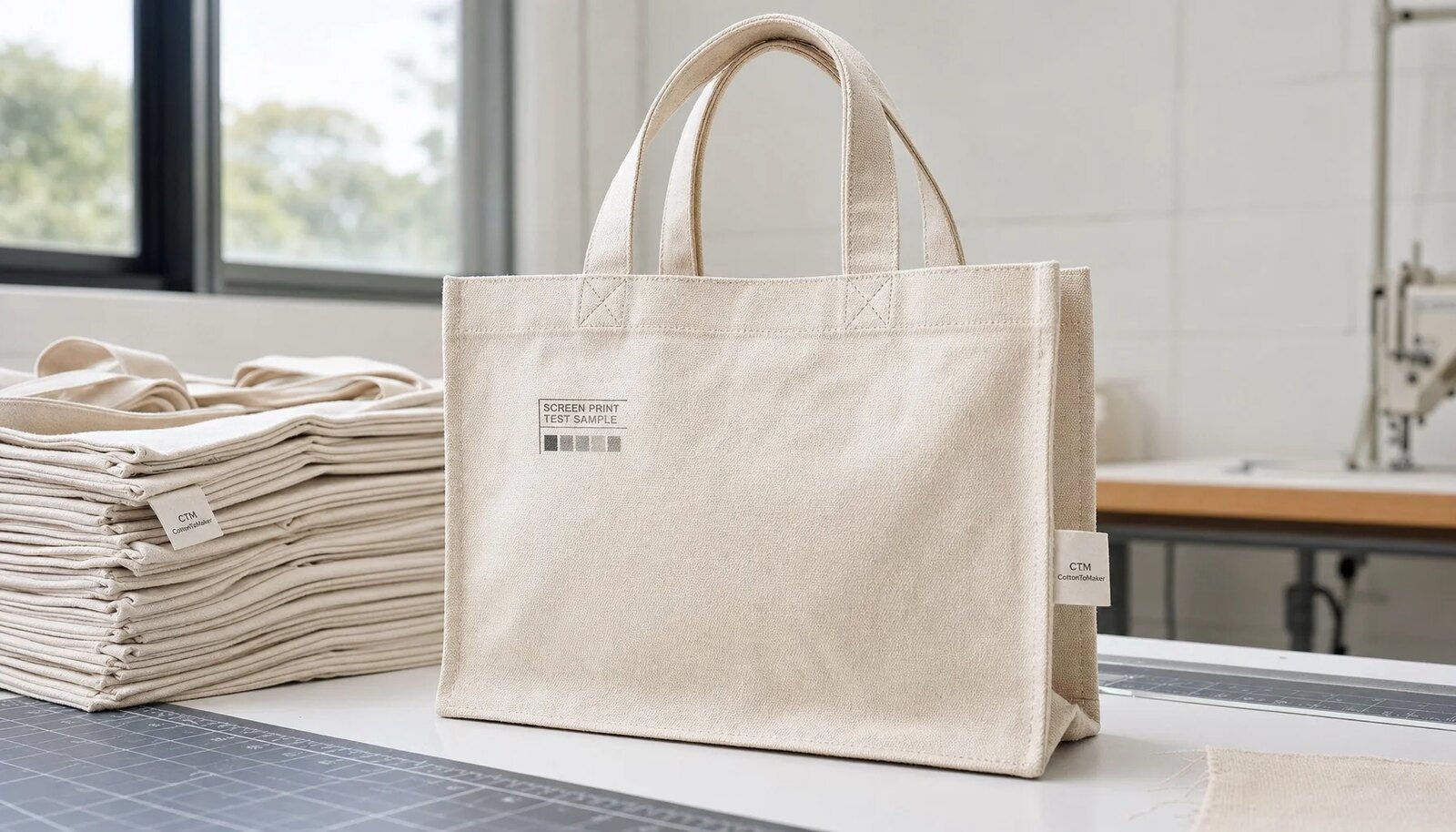
Start With the Use Case, Not the Tote
Custom canvas grocery totes fail in procurement when the buyer treats them as a generic giveaway instead of a working carry bag. An event tote may need to hold brochures, bottles, apparel, or boxed samples, and the right spec changes with each load. A bag that looks good on a render can still feel flimsy in hand, distort after folding, or fail at the handle join once attendees actually use it. For event planners, that is not a branding issue; it is a logistics problem that creates waste, complaints, and replacements.
Before you request pricing, define the role of the tote in one sentence. Is it carrying a 1 kg welcome kit, a 3 kg retail gift set, or a stack of conference papers? The answer drives fabric weight, handle construction, print coverage, and packing. If the tote is only for indoor handout use, you can optimize for lower cost and lighter fabric. If the tote is expected to be reused after the event, the spec must protect seam strength, shape retention, and print durability.
- State the load target in kilograms or by contents, not just by event name.
- Say whether the tote must stand upright on a table or fit flat into a registration kit.
- Clarify if the bag is a disposable event carry bag or a reusable retail-style item.
- Tell the supplier whether the tote will be folded, stuffed, or shipped empty in cartons.
Choose Fabric Weight by Real Use, Not by Price Alone
For canvas grocery totes, finished fabric weight matters more than the word "canvas" on a quote sheet. A common buyer mistake is accepting a price based on raw fabric weight without clarifying the finished GSM after washing or finishing. For light event handouts, a bag around 8 oz, roughly 270 GSM, can work if the load is modest and the buyer accepts a softer hand. A standard reusable event tote is usually more dependable around 10 oz, roughly 340 GSM. If you expect heavier contents or want a more premium retail feel, 12 oz, around 405 GSM, is a safer starting point.
Fabric weight is not the only variable. Weave density, yarn quality, shrinkage after washing, and surface finish affect how the bag prints, folds, and holds shape. Unbleached natural canvas can vary more in shade than dyed fabric, and lower-density cloth may look substantial while still sagging at the bottom panel. Ask the factory to quote the exact GSM, whether the cloth is pre-shrunk, and whether the same fabric will be used on every reorder. That is the difference between a stable program and a one-time sample that never repeats cleanly.
- Use about 8 oz / 270 GSM only when the tote carries light inserts and short-term event materials.
- Use about 10 oz / 340 GSM for most reusable conference and grocery-style tote programs.
- Use about 12 oz / 405 GSM when the bag must feel premium, hold heavier loads, or support retail resale.
- Request a swatch or cut panel from the actual lot, not a generic fabric reference.
Lock Down Construction Before You Approve Art
The construction details decide whether a tote survives the event floor. Handle width, handle drop, seam allowance, and reinforcement at the stress points should all be fixed before the art proof is approved. A wide decorative print can look clean on a spec sheet and still cover a seam that needs reinforcement, which creates print distortion after sewing. On canvas grocery totes, handle failure is the most expensive defect because it is visible, functional, and usually discovered after packing or use.
A practical buyer spec for a reusable event tote should include the finished size, handle drop, bag opening, bottom construction, and reinforcement method. Many buyers do well with self-fabric or webbing handles that are bar-tacked or X-stitched at the join. If the bag is carrying heavier inserts, ask for a stable bottom seam and enough stitch density to prevent seam creep. The right goal is not the prettiest bag on the quote page; it is a tote that arrives square, carries evenly, and keeps its shape after folding and unpacking.
- Target symmetrical handle length and placement so the bag hangs level in use.
- Ask for reinforced joins at the handle stress points, not only decorative stitching.
- Set a clear tolerance for bag height, width, and gusset so cartons do not contain mixed shapes.
- Require a clean top edge and no loose threads longer than the limit written in the PO.
Match the Print Method to the Artwork and Volume
Print choice is where many tote projects quietly go wrong. For simple logos and one or two spot colors, screen printing is usually the most cost-effective and durable option on canvas, especially at repeat-event volumes. It gives good color density and a clean retail look when the ink is cured correctly. If the artwork is complex, gradient-heavy, or photo-based, a transfer method may be easier for low quantities, but the buyer should expect a different hand feel and more risk of cracking on fold lines if the finish is not controlled.
Do not choose decoration only on the basis of the lowest setup fee. A print that feels stiff across the whole front panel may be acceptable for a giveaway, but it can reduce perceived quality on a retail-style bag. Embroidery can work well on heavier canvas and gives a premium feel, but it slows production and increases cost. Woven labels or sewn patches are often better when you want a subtle logo without ink coverage on the bag face. The right question is not "What is the cheapest decoration?" It is "Which decoration method will still look correct after folding, shipping, and event use?"
- Use screen print for simple logos, strong coverage, and larger order volumes.
- Use transfer methods only when the art is complex and the order quantity is low enough to justify it.
- Use embroidery or woven labels when the brand wants a premium, lower-ink look.
- Request a strike-off on the actual canvas, because print behavior changes with fabric texture and absorbency.
Compare Supplier Routes Before You Compare Unit Price
A tote quote is only useful if you know what kind of supplier produced it. A direct factory quote often looks simpler because the sewing, printing, and packing are all under one roof. That usually gives you better control over fabric, sample approval, and reorder stability. A trading company can be useful if you need sourcing support, multiple items, or help with freight coordination, but you should still see the underlying factory spec so you know what is actually being made.
For short-run event jobs, a local decorator buying blank totes can be the fastest route. For repeat programs or premium brand use, that route is often too weak on consistency because the blank stock can change. The same logic applies to marketplace wholesalers and consolidation agents: they are useful when speed and convenience matter, but they can blur the true spec if you do not insist on proof of who made the bag, what fabric was used, and how the goods were packed. Use the comparison below as a sourcing filter, not as a theoretical list.
- Prefer direct factory sourcing when you need repeatability and stable specifications.
- Use trading support when you are consolidating multiple SKUs or need language and logistics help.
- Use local decoration only when speed matters more than exact spec control.
- Avoid comparing suppliers on price until the tote spec is identical across quotes.
Use Measurable QC Thresholds, Not General Quality Language
A good inspection checklist for canvas grocery totes should be simple enough for a factory to execute and strict enough to protect your brand. At minimum, inspect fabric weight, bag dimensions, handle symmetry, seam quality, print alignment, and packing count. The most useful checks are measurable. "Looks okay" is not a QC standard. A more defensible standard is that the bag width, height, and handle placement are within agreed tolerance, the print is centered within a small registration limit, and no visible sewing defects appear on the face panel or load-bearing seams.
Do the inspection in three stages: before bulk starts, during production if the order is large enough, and at final packing. That is especially important for event orders because one mistake can multiply across hundreds or thousands of bags. If the approved sample uses a different canvas lot or a different curing temperature than bulk production, the run can drift. Set an acceptance plan that covers what matters most to the end user: clean appearance, reliable carry strength, and consistent packing count.
- Set size tolerance in the PO, then measure random units from multiple cartons.
- Reject visible print shift, color failure, or seam damage on the load-bearing side of the bag.
- Check handle symmetry because uneven handles are easy to spot on a stacked tote display.
- Verify carton count and packing list match before the shipment leaves the factory.
Approve Samples Like a Buyer, Not Like a Designer
The sample stage should remove ambiguity, not create it. For custom canvas grocery totes, a proper approval process usually includes a prototype or sewn sample, a print strike-off or color approval, and then a production sample if the order is large or the spec is tightly controlled. A digital proof alone is not enough because canvas texture changes the way ink sits on the surface and how the logo reads after stitching. If the tote includes a label, woven mark, or special trim, approve that physical detail before the factory cuts bulk material.
When you sign off, do it against a single master sample and a written spec sheet. Mark the approved sample with date, order number, and any accepted exceptions. If the sample is slightly different from the final order for cost reasons, write that down clearly so the bulk team does not copy a temporary prototype detail by mistake. For event planners, the sample should also be tested with real inserts. A tote that looks correct empty can behave differently when loaded with brochures, bottles, or boxed merchandise.
- Approve color under daylight and indoor warehouse light if the bags will be used in mixed environments.
- Test the sample with the real contents or weight you plan to ship to the event.
- Keep one sealed golden sample for production reference and one working sample for inspection.
- If the art is complex, approve a strike-off before the factory starts screen setup for bulk.
Build the Quote Around MOQ, Setup, and Reorder Logic
MOQ is not just a factory preference; it is a cost structure. A stock blank tote with a simple one-color logo can usually support a lower MOQ because the supplier is not paying for custom fabric development, new cutting markers, or repeated screen setup. Once you move into a fully custom size, custom color, custom label, or multi-color decoration, the MOQ rises because line setup time and waste increase. Buyers often see a low opening quote, then discover the final price grows once they add print colors, label fees, and special packing. A clean RFQ avoids that surprise.
A useful quote should break out the real cost drivers. Ask for the base tote price, print setup, artwork change fees, sample cost, packing cost, and the price difference between the first order and a reorder. That last point matters because event planners often reorder the same tote for a different season or location. If the supplier cannot quote a repeat price clearly, the first order may be cheap while the second one becomes expensive or inconsistent. Quote transparency is the fastest way to compare suppliers without wasting time on hidden extras.
- Ask whether MOQ changes if you switch from one-color print to multi-color art.
- Separate sample charges from bulk unit price so you can compare suppliers fairly.
- Request a reorder price for the same spec, not only a first-order price.
- Confirm whether labels, tags, and carton markings are included or treated as extras.
Pack for Transit, Not Just for the Warehouse
Packing matters because canvas totes crease, absorb moisture, and pick up dirt more easily than people expect. For event use, a tote may be handled many times before it reaches the attendee, so the packing format should protect the face print and keep the bag shape presentable. Some buyers want every bag individually polybagged; others prefer bulk folding to reduce plastic and cost. There is no universal answer. The correct choice depends on how the tote will be distributed, whether it must remain pristine, and whether the event team will unpack it directly into kits.
Carton packing should support both counting and handling. The carton marks need to show order number, size, color, quantity, and destination clearly enough that receiving teams can sort them quickly. If the route is humid or long-haul, ask whether the supplier uses moisture protection or desiccant. If the bags are for retail resale or premium sponsor kits, ask for tissue, fold consistency, and a carton compression standard that keeps the stacks neat. This is not cosmetic detail. Bad packing turns an acceptable tote into a damaged one before the customer ever sees it.
- Choose individual polybags only when product appearance or hygiene requires it.
- Specify whether the tote should be folded flat, rolled, or packed with inserts.
- Match carton count to event distribution so venue teams do not need to repack on site.
- Require moisture protection if the shipment will cross humid ports or store for long periods.
Check Lead Time and Landed Cost as One Decision
A realistic tote schedule starts with sampling, not bulk production. A simple sample might move in about 5 to 10 days, while bulk production after approval can run roughly 25 to 40 days depending on fabric stock, print complexity, and factory load. Add transit time on top of that, and an event date can become tight very quickly. If the order is urgent, the fastest way to reduce risk is to simplify the tote: use a stock fabric, standard size, one-color print, and ordinary packing. Every extra custom element adds time and raises the chance of a delay.
When comparing quotes, focus on landed cost rather than factory price alone. The cheapest FOB number may become the most expensive option once you add inland transport, inspection, ocean or air freight, duty, broker fees, and local delivery. For procurement teams, the right comparison is the total cost to the event warehouse or distribution point. That is also why quote questions should force the supplier to state what is included. If the supplier cannot describe the cost path clearly, the apparent savings are not real savings.
- Use a simple build when the event date is fixed and the lead time is tight.
- Compare FOB, CIF, and DDP on the same shipment basis before approving the order.
- Include freight, duty, and local receiving costs in the budget, not only tote unit price.
- Keep one final spec sheet so the next event can reorder without reworking the quote from zero.
Specification comparison for buyers
| Spec decision | Recommended option | When it fits | Buyer risk to check |
|---|---|---|---|
| Direct factory with in-house cut, sew, and print | Best for repeat orders, controlled QC, and cleaner cost breakdowns | You need consistent build quality and want the same tote reordered for multiple events | Confirm the factory actually owns the sewing and print process, not just outsourcing it |
| Trading company managing multiple factories | Useful when you need sourcing support or mixed product consolidation | You are buying several SKUs and want one contact to manage them | Make sure the quote separates factory cost from service margin and does not blur the real spec |
| Local decorator printing blank imported totes | Good for very small quantities or last-minute regional events | You need fast turnaround and do not need custom fabric or size changes | Blank tote quality can vary and local print may not match the supplier sample exactly |
| Stock blank tote plus custom print | Lowest setup complexity for simple logo runs | You only need a standard size, neutral color, and one or two print colors | Check whether the stock blank is thick enough and whether stock changes will affect repeat orders |
| Fully custom OEM tote | Right for retail programs, premium events, or long-term brand use | You need a specific GSM, handle length, label, or bag shape | MOQ is usually higher and sample approval must lock every detail before bulk starts |
| Regional converter using imported fabric | Works when you need faster inland delivery and tighter communication | You want a nearby production base but still need custom sewing | Fabric source traceability and shade consistency can be weaker than at a vertically integrated factory |
| Marketplace wholesaler with decoration add-on | Only for test buys or commodity giveaways | You are validating artwork or testing demand before a large rollout | Spec control is limited and the same listing may not reflect the exact carton, print, or fabric you receive |
| Consolidation agent combining tote production and freight | Helpful when your team needs landed-cost support and one shipment plan | You are shipping to multiple destinations or need import paperwork help | The agent must still prove who made the tote and what QC standard was applied |
Buyer checklist before sampling
- Confirm the tote use case: registration kit, grocery carry bag, sponsor gift, retail bag, or premium reusable item.
- Specify finished fabric weight in GSM and state whether the fabric is raw, washed, or pre-shrunk.
- Lock the finished size, handle length, handle width, and gusset or flat-bag style before quoting.
- Choose the print method by artwork complexity, color count, target feel, and expected reorder volume.
- Set measurable QC limits for size tolerance, stitch quality, print registration, and visible defects.
- Request a pre-production sample or strike-off on the actual fabric, not only a digital proof.
- Define packing format, carton count, carton marks, and whether individual polybags are required.
- Ask for lead time broken into sample, bulk production, and transit so event dates are realistic.
- Compare quotes on the same basis: fabric, print colors, packing, sample cost, and incoterm.
- Keep one approved golden sample and one signed spec sheet for reorders and dispute resolution.
Factory quote questions to send
- What finished GSM are you quoting, and is that based on raw fabric or washed fabric weight?
- What are the exact bag dimensions, handle length, handle width, and seam allowance included in your price?
- How many print colors are included, what print method will you use, and what is the setup charge for each color?
- What is your MOQ for this exact tote spec, and what changes the MOQ if I move from one-color to full-color artwork?
- Does the unit price include inner packing, carton packing, carton marks, and barcode labels if needed?
- Can you provide a pre-production sample, a strike-off, or a stitched prototype before bulk production starts?
- What are your standard tolerances for size, stitch density, handle symmetry, and print registration?
- What is the production lead time after sample approval, and what part of that time is dedicated to material sourcing?
- What are the usual hidden costs: screen fees, plate fees, sample courier charges, label charges, or special packing?
- Which incoterms can you quote, and what changes if I need FOB, CIF, or DDP delivered pricing?
Quality-control points to confirm
- Fabric weight should match the approved GSM within an agreed tolerance, ideally around plus or minus 5 percent for a commercial order.
- Bag width, height, and gusset should stay within the size tolerance written in the PO, with the same target on every carton.
- Handle length and handle placement should be symmetrical, because uneven handles are obvious and reduce perceived quality.
- Stress points at handle joins should use reinforced stitching or bar-tacks with no skipped stitches or loose thread bundles.
- Seam lines should be straight and secure, with no seam opening, puckering, or needle damage on the visible face.
- Print should be centered, properly cured, and free from major misregistration, pinholes, or cracking on fold lines.
- Color should match the approved strike-off or golden sample under daylight and warehouse lighting, not only on a screen.
- Packed quantity should match the carton label and packing list exactly, with no mixed sizes or mixed print versions in one carton unless approved.
- Polybag, tissue, desiccant, and carton protection should keep the bag clean, dry, and crease-controlled during transit.
- Final cartons should pass a simple drop and compression check appropriate to the route, especially for long sea freight or mixed freight handling.