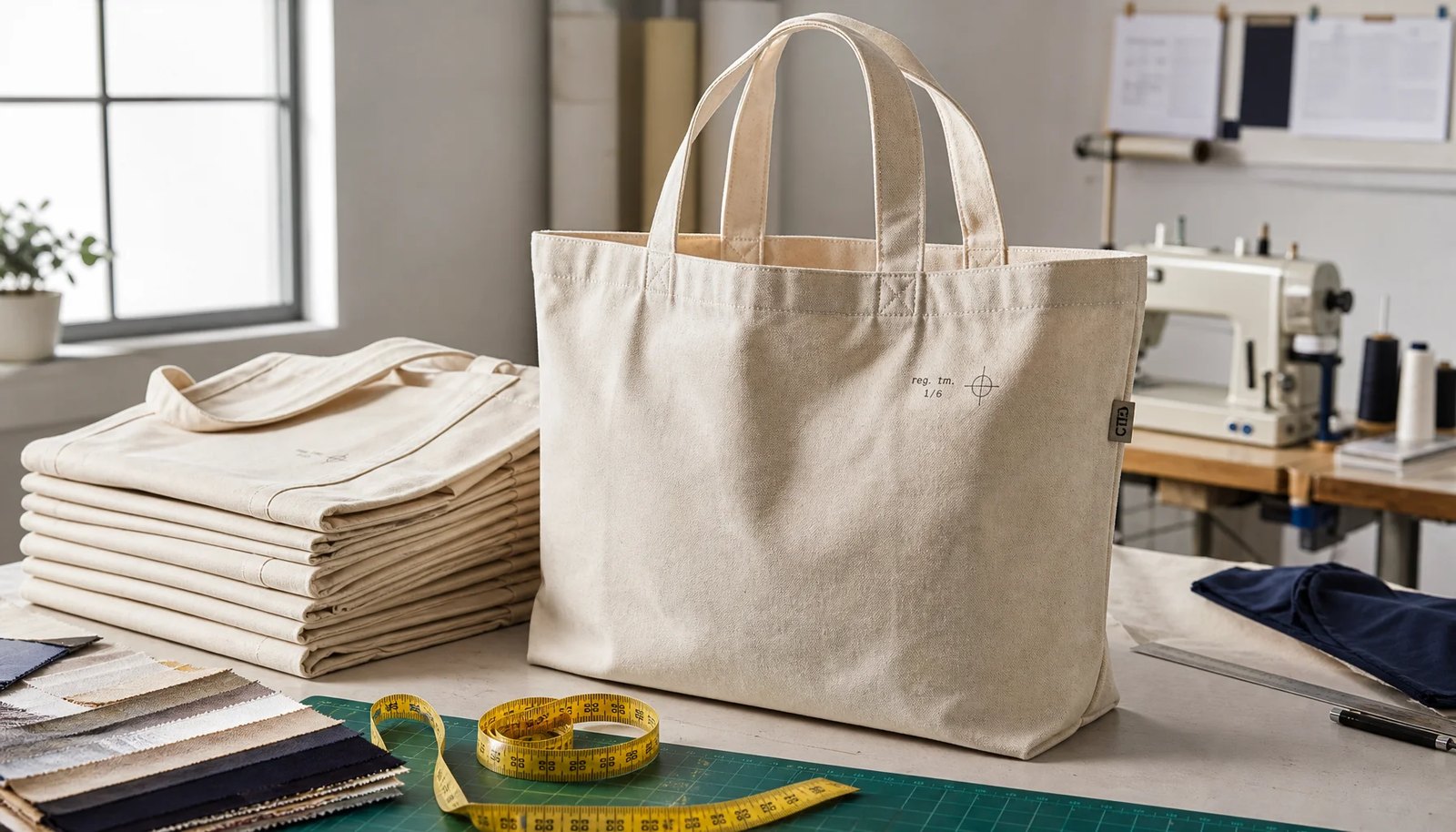
Start with the load, not the logo
For a trade show exhibitor, a canvas grocery tote is a utility item first and a branding surface second. The bag has to carry catalogs, sample packs, bottles, and the extras people collect between the booth and the hotel. A tote can look clean in a mockup and still fail in the aisle if the handle attachment opens, the bottom seam spreads, or the print starts cracking after a few fills.
That is why procurement should begin with use-case detail. A tote meant for a light brochure handout has a very different risk profile from a tote that will be reused during a multi-city roadshow. If you define the actual contents, the average carry time, and whether the bag must stand upright on a table, the supplier can quote a bag that fits the job instead of a generic canvas rectangle.
A practical spec starts with three questions: what will the bag carry, how often will it be reused, and what is the acceptable failure mode. If the answer to any of those is vague, the order usually ends up overpaying for features that do not matter or underbuilding the seams that do.
- Define the planned contents in pounds, not only in descriptive terms.
- Separate one-day giveaway use from repeat-use exhibitor carry.
- Treat the handle, seam, and bottom construction as the durability core.
Choose fabric weight by what the tote must carry
Fabric weight sets the baseline for structure, print behavior, and shipping cost. For light giveaway use, 12-14 oz canvas is usually enough if the contents are limited and the branding is simple. For most exhibitor programs, 16-18 oz is the safest middle ground because it balances body, cost, and sewability. If the bag must carry denser sample kits, bottles, or premium collateral, 20-24 oz gives more structure, but it also increases sewing effort, carton weight, and freight cost.
Do not buy on the word canvas alone. Ask for the finished fabric weight in ounces or GSM, the weave description, and whether the fabric is natural, bleached, dyed, or pre-shrunk. Those variables change how the tote hangs, how it prints, and how much it may tighten or relax after conditioning. A supplier who only quotes a style name without a measurable fabric spec is not giving you a procurement-ready answer.
Heavy fabric does not automatically mean a durable bag. If the handle anchor, top edge, or bottom seam is underspecified, extra weight can make the failure more obvious instead of preventing it. The right decision is the lightest fabric that survives the load and the route to the show floor.
- 12-14 oz: light handouts and brochure carriers.
- 16-18 oz: best general-purpose spec for trade show totes.
- 20-24 oz: heavy sample kits, premium programs, and repeat use.
Compare the core product choices before you ask for price
A useful comparison for buyers is not about which sourcing route is easiest. It is about which product decisions actually change durability and unit cost. Fabric weight, handle build, seam reinforcement, decoration method, finish, and packing all affect whether the tote survives the event and whether the quote is comparable to other quotes.
If you compare totes by source only, you miss the real tradeoffs. A direct factory and a trading company can both quote the same bag, but the bag itself may be built very differently. For procurement, the question is whether the tote has enough structure for the load, enough print stability for the artwork, and enough packaging protection to arrive ready for handout.
Use the comparison matrix to decide where the budget should go. It is often better to spend on a stronger handle anchor or a pre-shrunk fabric than to chase a larger logo area that adds cost without improving the bag's usefulness.
- Compare the tote structure before comparing seller type.
- Prioritize the features that prevent failure at the show.
- Use one spec version so every quote is built on the same assumptions.
Specify the build that protects the handle and the bottom
Handle attachment is the most common failure point on a tote that carries real weight. A long carry handle can look premium on a sample board and still tear under repeated lift cycles if the anchor area is too small or the stitch pattern is too light. Ask for the exact reinforcement method: box-X stitching, bar tacks, double-layer reinforcement, or a combination of those. If the handle is self-fabric, the folded width and stitch density should also be written into the spec.
Top edge finishing matters because it affects both durability and the way the bag feels when loaded. A turned or bound top edge usually gives a cleaner finish and better shape retention, but it adds labor. A simple raw-turned construction may be fine for lighter programs, yet it needs inspection for fraying and stitch consistency. If the tote has a gusset, the side seam and bottom seam should be treated as separate stress points rather than one generic seam line.
Do not stop at handle length. Handle drop determines how the tote rides on the shoulder and how much stress lands on the top edge. For exhibitor use, a filled sample should hang and carry like the real bag, because a comfortable strap that fails to distribute load becomes a return issue even if the stitching looks neat in a flat photo.
- Require reinforcement at the handle anchor, not just along the strap length.
- Write the top edge, side seam, and bottom seam as separate build details.
- Verify handle drop with a filled sample, not an empty bag.
Choose decoration that survives rubbing, folding, and handling
For most canvas grocery totes, screen print is still the default because it is economical, repeatable, and generally durable when the cure is correct. The right method depends on artwork complexity and expected handling. A one-color logo with a strong ink film may be the best value for a high-volume event. A detailed multicolor graphic may need transfer or digital decoration, but the buyer should verify rub performance and fold resistance on the exact canvas weight being quoted.
The important point is not whether a decoration method is modern. It is whether the print survives the actual path from carton to booth to attendee to hotel room. Heavy ink coverage can stiffen the canvas and may crack sooner if the cure is weak or the fabric is rough. On the other hand, a print that is too light can wash out visually and make the tote look cheap even if the bag body is strong.
If brand presentation matters, define a hierarchy. A small one-color chest logo, a larger side panel print, and a sewn woven label are very different risk levels. In many buyer programs, a sewn label or small print is a better procurement choice than chasing full-bleed decoration on a heavy canvas body that does not need it.
- Screen print: best for simple logos and volume.
- Transfer or digital: useful for detail, but verify fold and rub performance.
- Woven label: low-risk branding when the bag structure matters more than artwork size.
Use measurable QC targets before production starts
Durability is not a feeling; it is a set of acceptance criteria. Buyers should agree on test targets before the first bulk unit is sewn. For handle strength, ask the factory to state a pull-test method and a minimum target in pounds-force or newtons. For many exhibitor totes, a practical buyer-set target lands in the 30-50 lbf range for standard construction, with a higher target for heavy-duty programs. The exact number should be based on the planned load and the bag style, not on the supplier's default.
Add a filled-bag carry test. Load the sample with the planned contents or a realistic surrogate and complete repeated carry cycles. If the handle stretches, the top edge twists, or the stitch line opens during the test, the sample is not ready for bulk approval. The point is to catch structural weakness before production starts, not after the show date is fixed.
Print rub should also be measured, not described. Ask the supplier to confirm a dry rub and light wet rub standard on the exact canvas weight and cure process. The output should be simple: no visible transfer, no early cracking, no pinholes, and no smearing beyond the agreed limit. For size and shrinkage, agree a tolerance before the sample is approved, and set a shrinkage allowance that reflects how the tote will be handled in transit and in use.
- Set a pull-test target and the test method in writing.
- Run a filled-bag carry test on the approved sample.
- Define acceptable rub, shrinkage, and size variation before bulk starts.
Use an inspection plan the factory can actually execute
If the order is large enough to matter, inspection should follow a defined sampling plan rather than a loose visual check. ANSI/ASQ Z1.4 is a common reference point, and many buyers use an AQL of 2.5 for major defects and 4.0 for minor defects, unless the event risk is tighter. The point is not the standard itself. The point is that the factory and buyer should know what constitutes a reject before the lot is packed.
Major defects for a tote usually include open seams, handle attachment failure, missing prints, wrong size outside the buyer's tolerance, and severe damage to the canvas. Minor defects can include loose threads, light smudges, small print misalignment, or cosmetic variation that does not affect use. If the supplier does not separate major from minor defects, every inspection becomes subjective and the quote becomes hard to trust.
Keep the inspection close to the production process. Inline checks should catch stitch drift and print shift before the last cartons are packed, and a final inspection should verify lot consistency across size, color, and packing method. A buyer who sees only the first sample and the shipment paperwork is not really controlling the order.
- Use a named sampling method instead of a generic visual check.
- Separate major structural defects from minor cosmetic issues.
- Inspect inline plus final, not just the shipping carton.
Write the RFQ so every supplier quotes the same tote
Many tote quotes are hard to compare because buyers ask for a style name instead of a build spec. The RFQ should list the finished size, gusset depth, fabric weight, handle length, handle drop, stitching details, print method, print placement, and packing requirements. If the tote includes a pocket, closure, contrast trim, or label, those items need the same level of detail as the body. Otherwise, suppliers will make different assumptions and the unit prices will not mean the same thing.
Ask the factory to quote a base version and at least one controlled upgrade. For example, compare a standard handle against a reinforced handle or a one-color print against a two-color print. That tells you which features actually move cost. It also prevents the common problem where a buyer assumes a small design change is cheap when it is really a major sewing or setup change.
A procurement-ready quote should also separate sample cost, tooling or setup, unit price tiers, packing cost, and freight-sensitive weight. If the supplier can only give one all-in number, you lose visibility into what drives the price and what will change on reorder. That is the fastest path to a program that looks affordable in sourcing and expensive in execution.
- Quote one base spec and one or two controlled upgrades.
- Separate sample cost, setup, unit cost, packing, and freight-sensitive weight.
- Avoid vague style names when the stitch or fabric construction is the real issue.
Treat sample approval like a functional test, not an artwork review
A sample should prove that the bag can survive the real use case. Start with a pre-production sample that uses the same fabric lot, thread, handle build, print method, and packing method planned for bulk. Then load the tote with the actual contents you expect on the show floor and test how it hangs, carries, and folds. If the tote twists when filled, the seam reads uneven, or the handle bites into the hand, the sample is not yet approved.
The approval step should lock down the construction sequence, not only the appearance. Many problems begin when a buyer approves the look but leaves room for the factory to substitute a lighter thread, a simpler stitch pattern, or a different label attachment. If any of those changes happen, the sample is no longer the approved product and should be rechecked.
Keep one binding sample on file and make sure the supplier knows which details cannot change without re-approval. For recurring trade show programs, that control matters more than minor price fluctuations because the same tote may be reordered under time pressure and still needs to match the first run.
- Approve the exact fabric lot and construction sequence.
- Test the sample in a filled state.
- Treat any unapproved stitch or material change as a new approval event.
Pack for transit, not just for presentation
Packing can ruin a good tote long before it reaches the booth. A bag that leaves sewing in perfect condition can arrive creased, dusty, or crushed if the folding method and carton spec are weak. Buyers should define whether the tote is flat-folded, tissue-wrapped, or polybagged, and whether each carton contains one SKU only. Mixed packing sounds efficient, but it creates counting errors and slows receiving at the event or warehouse.
Carton marks should be simple and operational: product name, PO number, color, quantity, gross weight, net weight, carton number, and destination if needed. If the tote has a print face, request a folding direction that protects the visible panel and keeps the handle from being crushed. For natural canvas, also set an acceptable level of lint, dust, and fiber specking so the supplier knows what is too much.
If the shipment will be stacked, ask the supplier how the packed carton behaves under compression. The goal is not a lab headline. It is a box that opens with clean handles, flat panels, and no visible transit damage. For trade show timelines, that matters more than clever packing density.
- Define folding and inner wrapping before the first carton is packed.
- Use clear carton marks that receiving teams can read quickly.
- Protect the handle and print face from crushing and crease damage.
Specification comparison for buyers
| Spec decision | Recommended option | When it fits | Buyer risk to check |
|---|---|---|---|
| Fabric weight | 16-18 oz canvas | Best all-round choice for exhibitor totes carrying brochures, light samples, and bottled items | Confirm finished fabric weight, not only yarn count or a vague canvas description |
| Fabric weight | 12-14 oz canvas | Works for low-fill giveaways and simple literature handouts | Do not overspec the artwork or promise heavy-load use on a light body |
| Fabric weight | 20-24 oz canvas | Better for premium programs, repeat use, or heavier sample kits | Check sewing quality and carton weight before assuming heavier fabric solves durability |
| Handle construction | Self-fabric handles with box-X or bar-tack reinforcement | Good for standard trade show carry bags with moderate load | Ask for handle anchor dimensions and a filled-bag pull test, not just a flat sample |
| Handle construction | Webbing or folded reinforced handles | Useful when the tote will carry dense or awkward contents | Verify the handle material does not twist, cut into the hand, or distort the top edge |
| Seam reinforcement | Boxed bottom with reinforced side and handle seams | Best when the bag must stand up and survive floor traffic | Check for skipped stitches, seam slippage, and loose thread at stress points |
| Decoration method | One-color screen print or sewn woven label | Low-risk branding when durability matters more than complex graphics | Test rub resistance and cure quality on the exact canvas weight being quoted |
| Decoration method | Heat transfer or multi-color decoration | Appropriate for detailed artwork or short-run events | Verify crack resistance after folding and repeated handling |
| Finish | Pre-shrunk or washed canvas | Reduces size drift and makes repeat orders easier to manage | Ask for a stated shrinkage allowance and actual finished dimensions after conditioning |
Buyer checklist before sampling
- State the intended load in pounds and name the contents the tote must carry, such as brochures, bottles, boxed samples, or mixed literature.
- Specify finished size, gusset depth, handle length, handle drop, and fabric weight in ounces or GSM.
- Require the exact handle build: self-fabric, webbing, double-layer, or binding, plus reinforcement at the anchor points.
- Ask for a pre-production sample made from the same fabric lot, thread, print method, and packing method planned for bulk.
- Set pass/fail criteria for handle pull, seam appearance, print rub, and size tolerance before the supplier starts production.
- Use an inspection standard such as ANSI/ASQ Z1.4 with an agreed AQL, often 2.5 for major defects and 4.0 for minor defects unless your risk profile is stricter.
- Define acceptable stitch defects in writing, including no open seams, no skipped stitches on load-bearing seams, and no loose thread bundles longer than the buyer-approved limit.
- Request a shrinkage allowance and actual finished-size tolerance after conditioning or light steam exposure.
- Confirm packing count, folding method, carton size, outer marks, and whether carton compression has been reviewed for the shipping lane.
- Ask for sample approval, bulk start date, and ship date as separate milestones so lead time risk is visible before the order is placed.
Factory quote questions to send
- What is the exact finished fabric weight, weave, and finish, and can you share a swatch or mill spec with the quote?
- What stitch count do you use on load-bearing seams and handle anchors, and how are the handle stress points reinforced?
- What pull-test target do you recommend for this tote style, and what test method do you use to verify it?
- What is the print method, cure process, and rub-resistance standard for the exact canvas weight I am buying?
- What shrinkage allowance should I expect after conditioning, washing, or steam exposure, and how much size variation is acceptable in production?
- Can you quote the same tote with standard handles, reinforced handles, and a premium build so I can see the cost of each upgrade?
- What AQL or lot inspection method do you use for bulk QC, and who signs off on major and minor defects?
- What carton configuration do you recommend to protect handles and print faces during transit, and can you share carton dimensions and gross weight?
- How many sample rounds are included, what is the charge for additional samples, and which sample is binding for production?
- What is the production lead time after sample approval, and where do you see capacity risk this month?
Quality-control points to confirm
- Fabric weight, weave, and finish match the approved spec within the buyer-agreed tolerance, not just a similar hand feel.
- Load-bearing seams show no skipped stitches, seam slippage, broken threads, or puckering at the handle anchors and bottom corners.
- Set a pull-test target before production, then check sample bags at the same point every time; for many exhibitor programs, buyers use a target in the 30-50 lbf range for standard totes and higher for heavy-duty builds.
- Run a filled-bag carry test with the planned contents or a matching load surrogate for at least 20 cycles; reject if the handle elongates, the top edge distorts, or the anchor stitches open.
- Print should pass dry and light wet rub checks on the exact canvas weight, with no visible transfer, premature cracking, or pinholes in the ink film after folding.
- Finished dimensions should stay within the agreed tolerance, and shrinkage after conditioning should stay within the buyer-approved limit, commonly no more than 3% for a controlled program.
- Inspection should use a defined AQL or equivalent sampling plan, with major defects covering structural failures and minor defects covering cosmetic issues.
- Cartons should hold up under stacking and handling without crushing handles, creasing the print face, or breaking inner packaging, and the pack count should reconcile to the PO on the first count.