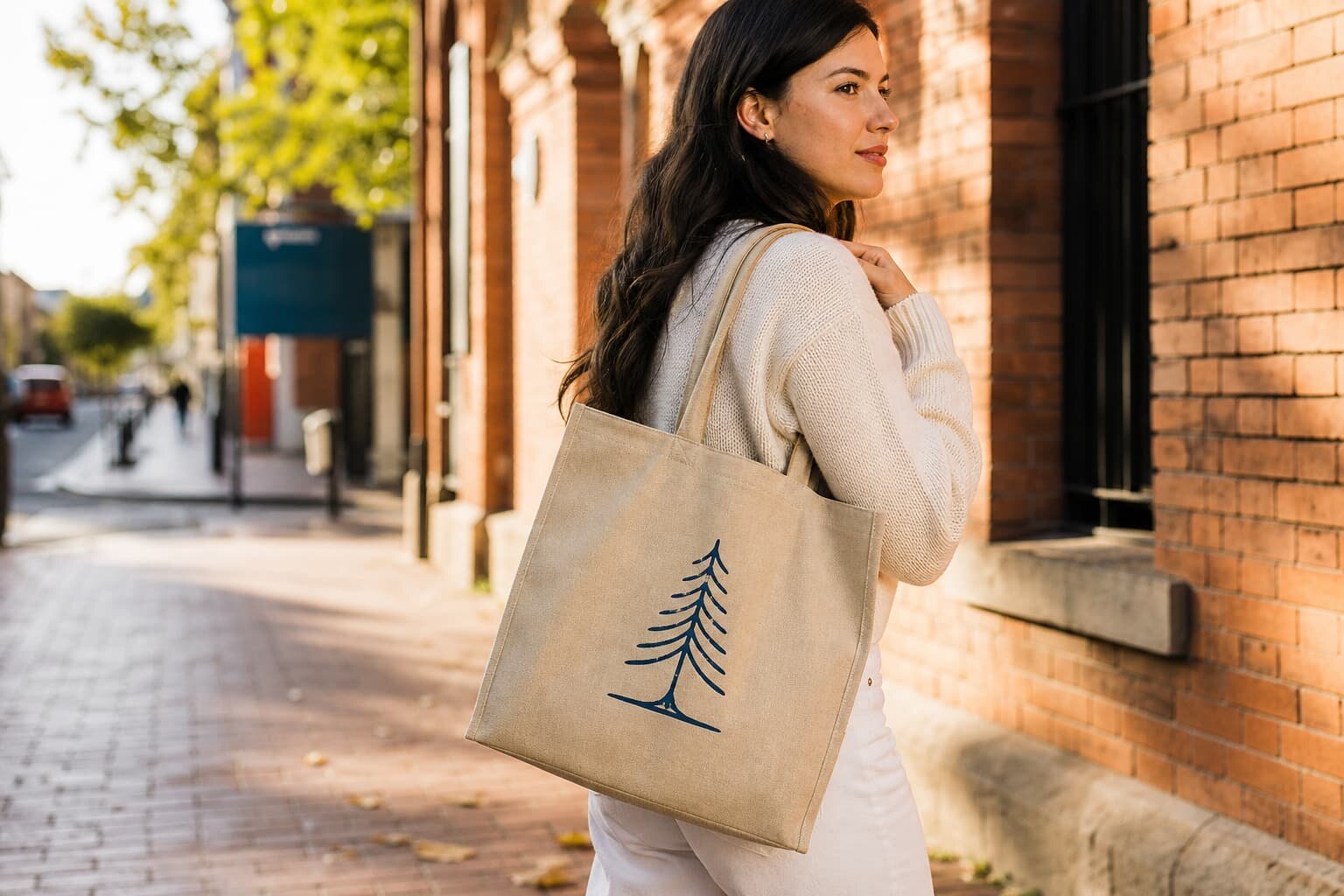
Start With the Use Case, Not the Bag
The fastest way to get quote gaps on custom canvas grocery tote bags wholesale is to ask for a generic tote. Suppliers may all picture the same shape, but the real cost changes once you define how the bag will be used. A checkout giveaway does not need the same fabric weight, handle build, or print durability as a retail bag that will carry produce, canned goods, and bottles every week.
Before you send an RFQ, lock the commercial use case. If the bag is for supermarket checkout resale, the buyer usually needs a cleaner finish, more consistent packing, and a print that looks good on the shelf. If the bag is for a campaign or member reward, price and lead time may matter more than premium finishing. The clearer the use case, the less likely the supplier is to pad the quote with unnecessary upgrades or leave out a critical detail.
- State the target channel: retail sale, in-store promo, loyalty gift, or staff use.
- Describe the typical load: lettuce and paper goods, canned food, bottles, or mixed groceries.
- Say whether the bag must be sold as a reusable item or only handed out once.
- Tell the supplier if you need a flat retail presentation or a bulk shipment only.
Choose Canvas Weight That Matches the Load
For grocery totes, fabric weight is one of the biggest cost and performance levers. An 8 oz canvas, often around 270-280 gsm, can work for light groceries and promotions, but it may feel thin if the customer expects repeated reuse. A 10 oz canvas, often around 330-340 gsm, is usually the best balance for wholesale grocery programs because it still prints well, holds shape, and does not push freight volume as hard as heavier fabric.
Once you move up to 12 oz or more, the bag feels more premium and more structured, but sewing becomes slower and the landed cost rises. Heavy canvas is useful when the buyer wants strong shelf presence or expects frequent carrying of dense items. The tradeoff is that a heavier bag may crease differently, need stronger needles and thread, and require more careful folding in packing. If the quote only says canvas without GSM, you are not comparing the same product.
- 8 oz / 270-280 gsm: good for light promotions and low-cost carry items.
- 10 oz / 330-340 gsm: good all-around choice for most grocery retail programs.
- 12 oz / 400+ gsm: better for premium reuse, heavier loads, or higher shelf value.
- Ask whether the fabric is prewashed or pre-shrunk, because shrinkage changes final dimensions.
Let the Artwork Decide the Print Method
The wrong print method can make a cheap bag look expensive or a premium bag look weak. For most grocery totes, one-color screen print is the most stable choice because it gives clear logo edges, good repeatability, and manageable setup cost. It also behaves well on natural canvas, where the texture can complicate fine detail. If the artwork is simple and the buyer wants durable branding, screen print is usually the first option to compare.
When the design has gradients, multiple colors, or small text, some buyers move to transfer methods or other decoration systems. That can work, but the buyer should ask how the ink or film will sit on the canvas after folding, rubbing, and repeated use. Embroidery and woven labels can be attractive for premium retail, but they are not always the best fit for a grocery tote that needs a wide print area and a clean cost structure. For wholesale, decoration should match both the brand look and the abuse level of the bag.
- Ask for the print area size and the exact placement on the front, back, or side.
- Confirm the number of colors priced and whether each color adds a setup charge.
- Check if the print is intended to cover the natural weave or show the fabric texture.
- Request rub resistance guidance if the bag will be folded, stacked, or carried daily.
Get the Dimensions and Handles Right the First Time
Many tote problems start with bag dimensions that look fine on paper but fail in use. Grocery buyers usually need enough depth for bulky items, enough width for shelf appeal, and enough height for an easy hand carry. A common mistake is to approve a flat, narrow bag that looks elegant but fails when customers try to carry a loaf of bread, fruit, and a carton at the same time. The gusset matters as much as the face size because it determines usable volume.
Handles deserve the same attention. If the handle is too short, the bag rides too high under the arm. If it is too narrow, it digs into the hand and can look cheap even when the body fabric is strong. For grocery use, ask for the handle width, handle drop, and attachment method in writing. Reinforced cross-stitching or bar-tacks at the stress points are not optional details; they are what keep the bag from failing after a few heavy loads.
- Confirm body size, gusset depth, and usable volume in the approved spec.
- Ask for handle width and drop, not only handle length.
- Specify whether the handles are self-fabric, webbing, or a mixed construction.
- Request reinforcement details at the handle base and upper seam.
Understand MOQ Logic Before You Compare Prices
MOQ is not just a supplier preference; it usually reflects how the factory buys fabric, sets up printing, and schedules sewing lines. A stock natural canvas bag with one-color print may have a much lower MOQ than a custom dyed bag with multiple print positions and special packing. If you compare a low-MOQ quote against a large-run quote without understanding the production logic, the cheaper line item may simply exclude the custom work you actually need.
The practical way to manage MOQ is to separate what is standard from what is custom. Standard fabric colors, standard bag sizes, and one print position are easier to build at lower volume. Custom dyeing, woven labels, special folding, and retail insert cards all increase setup time and waste. If you need a test market order, ask the supplier whether they can hold the same spec across a small pilot and a future repeat run so your buyer team is not forced to redesign the bag later.
- Lower MOQ usually comes from stock fabric, one print color, and simple folding.
- Higher MOQ usually comes from custom dye, special hardware, extra labels, or mixed packing.
- Ask for price breaks at your real volume tiers, such as 500, 1,000, and 3,000 pcs.
- Make sure the MOQ is stated separately for size, color, and artwork version.
Read the Quote Line by Line
A useful supplier quote should be structured enough that two factories can be compared item by item. If the quote only gives one unit price, you cannot tell whether the supplier used heavier fabric, a different print method, or lighter packing. For custom canvas grocery tote bags wholesale, the quote should show the body spec, the printing spec, the sewing spec, and the packing spec. That is what lets procurement teams compare true landed value instead of just chasing the lowest headline number.
The most common hidden cost is that one supplier includes something another supplier leaves out. Cartons, inner polybags, label tags, print setup, and sample fees are all common sources of mismatch. Ask for the cost breakdown in the same order every time so your team can evaluate quote quality quickly. If the supplier is reluctant to separate sewing, printing, and packing, that is usually a sign that later adjustments will be hard to manage.
- Ask for fabric GSM, weave type, and whether the fabric is stock or custom made.
- Ask for sewing details, handle reinforcement, and print setup per color.
- Ask for sample charge, bulk packing method, and carton count per master carton.
- Ask for incoterm, production lead time, and any overrun or underrun policy.
Approve Samples Like a Production Manager
A sales sample tells you the idea; a pre-production sample tells you what the factory can actually repeat. For grocery totes, the sample should use the same fabric source, same ink or thread, same handle material, and same folding method as the bulk order. Do not approve a sample that looks right but is made with different fabric weight or a cleaner print method than the production line will use. That is how procurement teams end up with a sample that never reappears in bulk.
When you inspect the sample, treat it as a small production audit. Measure the bag, check the seam tension, inspect the print edges, and load it with realistic grocery items. If the logo is near a seam or gusset, confirm that it does not distort when the bag is filled. If the bag will be sold at retail, ask for one sample packed the way it will ship so you can verify fold lines, wrinkles, and label placement before production starts.
- Check fabric weight, bag dimensions, handle drop, and logo placement.
- Load test with cans, bottles, or other dense retail items.
- Review print opacity, alignment, and any cracking after light folding.
- Write down your acceptance criteria before sample approval, not after.
Packing and Cartons Can Move the Landed Cost
For grocery totes, packing affects freight more than many buyers expect. A bag that looks inexpensive at the factory can become costly if the folded size is bulky or the carton count is inefficient. Flat folding, consistent stacking, and reasonable carton dimensions matter because ocean freight and warehouse handling are both affected by volume. If you are buying for distribution centers or retail chain replenishment, the carton spec is part of the product spec, not an afterthought.
Avoid packing assumptions. Some buyers want each tote in a polybag for cleanliness, while others want bulk packing to reduce waste and freight. Some programs need hang tags, barcode labels, or country-of-origin stickers; others do not. The point is to define these choices in the RFQ because every packing layer adds labor and changes the master carton size. A supplier that quotes a clean unit price but ignores packing detail may still give you a higher landed cost than a more transparent factory.
- Confirm whether each tote is individually polybagged or bulk packed.
- Ask for pcs per carton, carton dimensions, and carton gross weight.
- Check that folding will not crush the print or create a deep permanent crease.
- Request shipping marks and label format before bulk packing begins.
Lead Time Depends on More Than Sewing
Factories often quote lead time as if sewing is the only step, but grocery tote production has several checkpoints. Fabric sourcing, cutting, printing, stitching, sample approval, packing, and final inspection all add time. If the fabric is stock and the print is simple, the schedule can be relatively fast. If the order needs custom dye, new artwork screens, or a special retail pack, the timeline expands quickly. Buyers should ask where the actual bottleneck is instead of accepting one total number without context.
A better way to manage lead time is to map the order in stages. First, confirm artwork and spec. Second, approve the pre-production sample. Third, release bulk production. Fourth, verify packing and inspection. This keeps the buyer team aligned with the supplier and makes delays visible early. In seasonal retail, the risk is not only a late ship date; it is also receiving the right product after the selling window has already passed. That is why schedule detail matters as much as unit price.
- Ask for the timeline from artwork confirmation to PPS, then from PPS to bulk completion.
- Confirm whether fabric, print screens, or labels must be prepared before sample approval.
- Check if peak season or holiday demand affects your slot in the sewing line.
- Build in time for internal review so you do not approve samples under schedule pressure.
Specification comparison for buyers
| Spec decision | Recommended option | When it fits | Buyer risk to check |
|---|---|---|---|
| Fabric weight | 10 oz / 330-340 gsm natural canvas | General grocery retail where the bag needs real daily carry strength without a premium weight penalty | Confirm true GSM, shrinkage after washing, and whether seam reinforcement is included in the same quote |
| Fabric weight | 8 oz / 270-280 gsm canvas | Light grocery promotions, event giveaways, and price-sensitive programs with low load expectations | Check if the bag will still hold canned goods and if handles or bottom seams need extra reinforcement |
| Print method | One-color screen print | Clean logo artwork, repeat orders, and buyers who want the lowest setup cost per print position | Confirm ink opacity on natural canvas, curing method, and rub resistance before bulk approval |
| Packing format | Flat folded in polybag, then packed by count per carton | Ocean freight programs where carton volume matters and bags must arrive clean and ready for distribution | Check packed thickness, carton gross weight, and whether the supplier counts inner and outer packs the same way |
Buyer checklist before sampling
- Fix the final bag size, gusset depth, handle length, and carry position before asking for quotes.
- State the target canvas GSM and whether you accept natural, bleached, or dyed fabric.
- Name the print method, print locations, number of colors, and artwork size.
- Request a pre-production sample made with the same fabric, thread, and ink system.
- Ask for MOQ by size, color, and print variation, not one blended MOQ number.
- Confirm packing details, including folding method, polybag yes or no, and pcs per carton.
- Ask for carton size, gross weight, and estimated carton loading efficiency for your route.
- Get the production lead time after sample approval and the tolerance for overrun or underrun.
Factory quote questions to send
- What exact canvas GSM, weave type, and fabric width will you use for this quote?
- Is the fabric stock available, or does it need to be woven, dyed, or pre-shrunk first?
- What is the exact bag size, handle length, gusset depth, and seam reinforcement method?
- Which print method are you pricing, how many colors are included, and what is the setup charge per color?
- What is the MOQ by color, size, and print version, and does the MOQ change for custom dye or special packing?
- Can you separate the quote into fabric, sewing, printing, packing, and sample charges?
- What sample options do you offer, and will the pre-production sample match the final bulk material?
- What is your packing spec per inner bag and per master carton, and what carton dimensions do you expect?
- What is the production lead time after PPS approval, and what stages can delay it?
- What are your overrun and underrun limits, and how do you handle rejected units during final inspection?
Quality-control points to confirm
- Check the actual fabric weight against the approved sample and confirm it is consistent across the roll.
- Measure the finished bag body, gusset, and handle drop after sewing, not only before cutting.
- Inspect handle attachment, cross-stitching, and stress points for symmetry and loose threads.
- Verify logo position, print registration, ink opacity, and color match under normal indoor light.
- Test for seam skipping, puckering, and weak bottom corners under a practical load.
- Confirm the bag folds flat to the agreed packed size and does not trap print damage in the fold line.
- Check carton count, inner pack count, shipping marks, and PO label accuracy.
- Review any wash, rub, or surface transfer risk if the bag will be sold as a reusable retail item.