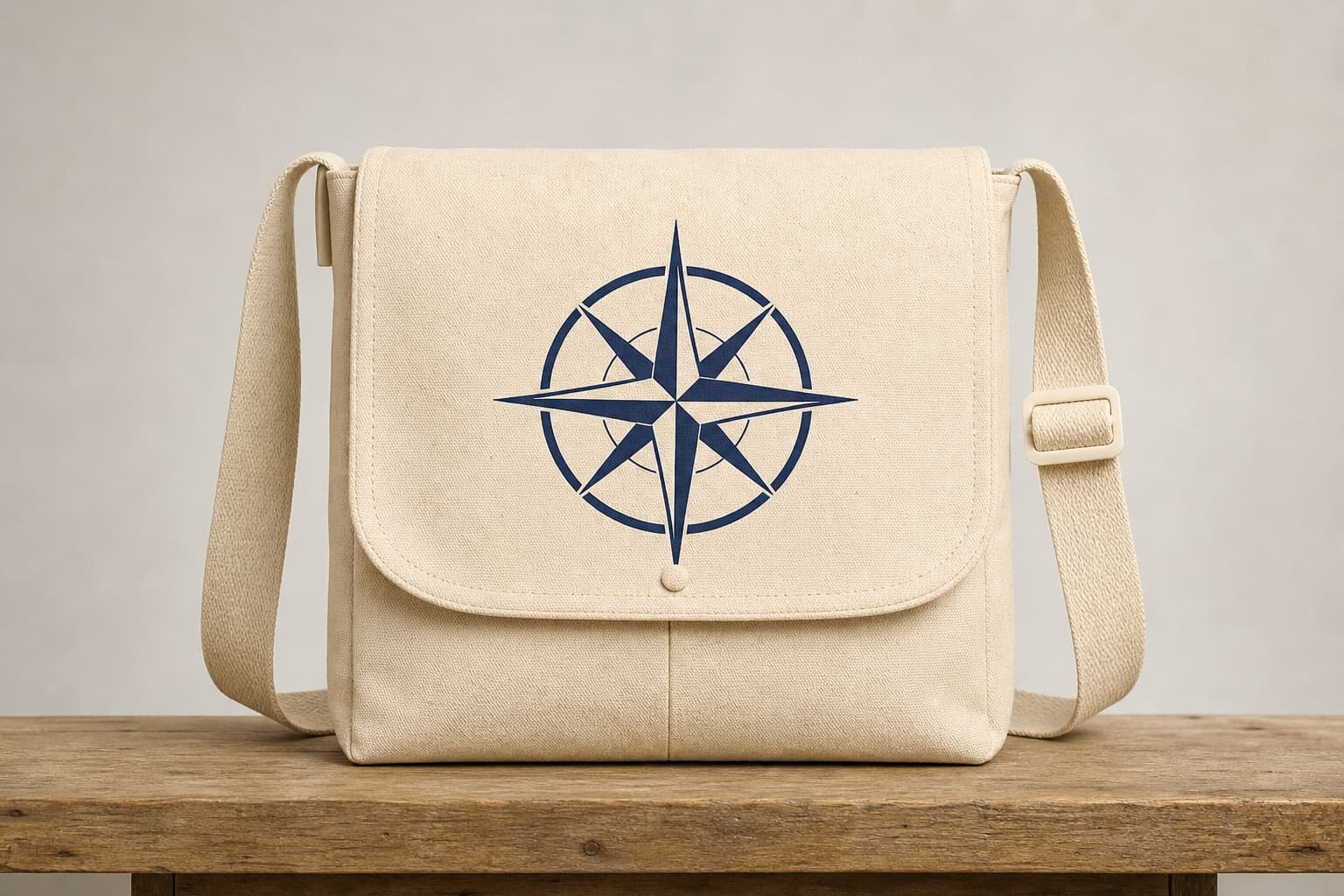
Why MOQ planning matters for crossbody canvas bags
MOQ planning for a crossbody canvas bag is not just a negotiation about the lowest number a factory will accept. It is a decision about fabric sourcing, cutting efficiency, logo setup, hardware availability, packing method, and how many versions your sales channel can actually absorb. A buyer may ask for 300 pieces, but the real question is whether those 300 pieces can support the requested canvas color, strap color, buckle finish, printed logo, woven label, hangtag, carton mark, and inspection standard without creating hidden cost or production risk.
Crossbody canvas bags sit between promotional cotton bags and structured canvas messenger bags. They usually need better sewing strength than a simple tote, but buyers still expect an accessible unit cost. The MOQ becomes difficult when the order is split across too many colors or small design changes. A practical plan gives the factory enough production continuity while giving the buyer enough flexibility to test the market.
- Use MOQ planning to control version count before asking for final price.
- Separate the minimum for fabric, printing, hardware, and finished bag assembly.
- Treat each body color and logo version as a potential MOQ driver.
- Plan sample approval early so bulk materials are not booked against an unconfirmed design.
Start by defining the commercial purpose of the order
A distributor replenishment order, a retail private label launch, a corporate merchandise program, and a marketplace test order do not need the same MOQ strategy. If the bag is a retail item, color balance, hangtag, barcode, carton packing, and return quality matter. If it is a promotional order, logo clarity, delivery date, and packing count may be more important than a premium strap or lining. Before asking suppliers for MOQ, define what success looks like for this order.
Procurement teams often create problems by asking for a quote before the range architecture is clear. A crossbody canvas bag with one natural canvas body, one black strap, and one screen print can be quoted cleanly. The same bag in six colors, three logo placements, two strap colors, and two closure types becomes twelve or more production versions. Even if total quantity looks attractive, each version may be below the factory's efficient cutting or printing level.
- For a market test, reduce versions and spend the MOQ on one strong specification.
- For an ongoing retail program, ask for price breaks at reorder quantities.
- For a promotional order, confirm whether the delivery date or the lowest MOQ is more important.
- For a distributor order, request carton and packing data early for warehouse planning.
Understand what the factory means by MOQ
Factories use the word MOQ in different ways. One supplier may mean total shipment quantity. Another may mean per color. Another may mean the minimum fabric dye lot before sewing starts. A fourth may accept a low finished bag MOQ only if you choose stock canvas, stock webbing, common zipper, and a standard logo method. Unless the quote states the MOQ basis, two supplier offers are not directly comparable.
For crossbody canvas bags, the most common MOQ drivers are canvas fabric, strap webbing, metal hardware, lining fabric, logo application, and packing materials. A low MOQ is easier when all components come from existing factory stock. It becomes harder when the buyer wants custom dyed canvas, custom printed lining, branded metal pullers, special color webbing, or a private mold buckle. The buyer should ask the factory to break down which part controls the MOQ instead of pushing only for a lower final number.
- Finished bag MOQ: the minimum pieces the sewing line will produce for one style.
- Color MOQ: the minimum quantity for each body fabric color or strap color.
- Material MOQ: the minimum fabric, webbing, lining, or hardware quantity from the component supplier.
- Logo MOQ: the minimum for screen setup, embroidery setup, woven label run, patch run, or transfer print run.
- Packing MOQ: the minimum for custom carton mark, printed polybag, retail sleeve, barcode label, or hangtag.
Fabric weight and GSM affect both MOQ and usability
Most bulk crossbody canvas bags are made from cotton canvas or cotton-poly canvas in the 10 oz to 16 oz range. For retail use, 12 oz to 14 oz is often a practical balance because it gives enough body to hold shape but does not become too stiff or heavy when worn across the shoulder. In GSM terms, buyers often see roughly 340 GSM for lighter 10 oz canvas, around 400 GSM for 12 oz, around 475 GSM for 14 oz, and above 540 GSM for heavier 16 oz constructions. Exact conversion depends on weave and finishing, so the quote should include both the supplier's stated oz and GSM.
Fabric decisions influence MOQ because stock fabric and custom dyed fabric follow different rules. Natural, black, navy, and khaki canvas may be available from regular inventory. A special Pantone dyed canvas may require a fabric dye lot that produces more material than your first order can consume. Washed canvas can also add variation and shrinkage risk. If your brand needs a very specific shade, plan a higher MOQ or accept that the unit price will carry the cost of unused fabric.
- 10 oz canvas: lighter, easier to fold, suitable for budget or event use but less structured.
- 12 oz canvas: common balance for crossbody bags with print and moderate daily use.
- 14 oz canvas: stronger hand feel, better retail appearance, higher sewing and shipping weight.
- 16 oz canvas: durable and premium, but can increase needle wear, seam bulk, freight weight, and minimum cutting concerns.
- Washed canvas: softer look, but requires stricter shade and shrinkage confirmation before bulk approval.
Logo method can quietly raise the order minimum
Many buyers treat the logo as a small decoration decision, but it can change the MOQ and sample path. Screen printing is usually efficient for simple logos on canvas, especially one or two colors. It is suitable for front flap prints, inside pocket prints, or brand marks on the bag body. The risk is that rough canvas texture can reduce fine detail, so small text and thin lines should be tested on actual bulk fabric.
Embroidery, woven labels, leather patches, heat transfers, and metal logo plates each carry different setup logic. Embroidery needs stitch programming and may pucker lighter canvas if density is high. Woven labels may require a label production MOQ but are stable for repeat programs. Leather or PU patches need material, cutting, and stitching control. Metal plates or branded zipper pullers can involve mold cost and a separate component MOQ. If the first order is small, choose a logo method that protects appearance without forcing too many component commitments.
- Choose screen print for simple artwork, larger marks, and flexible MOQ control.
- Choose woven side label for repeat retail programs where subtle branding is acceptable.
- Choose embroidery for a premium textile feel, but check puckering and back-side finish.
- Choose leather or PU patch when the brand wants a durable badge, but confirm patch edge and stitching.
- Avoid custom metal logo hardware on test orders unless you can absorb tooling and component MOQ.
Use version control before negotiating the number
The fastest way to make MOQ unworkable is to multiply versions too early. Buyers often request one bag in natural, black, olive, navy, burgundy, and beige, then ask for each color to have two logo colors and two strap options. The total order may be 1200 pieces, but the factory sees twenty-four small combinations. Cutting, printing, sewing, packing, and inspection all become fragmented. The quoted price rises, the delivery plan becomes weaker, and mistake risk increases.
A better sourcing workflow is to first decide the core construction, then select the minimum number of commercially necessary colorways. If the order supports 1000 pieces, two colors at 500 pieces each may be stronger than five colors at 200 pieces each. If the channel requires multiple colors, keep the logo, strap, lining, and hardware identical across colors. This gives the factory more continuity and gives procurement a cleaner basis for comparing suppliers.
- Lock one bag size before adding color versions.
- Use one strap width and one hardware finish across the first order.
- Keep logo size and placement identical across all colorways.
- Avoid different linings unless lining is a key selling feature.
- Ask the factory for the cost difference between 1, 2, and 4 color splits.
Build a realistic MOQ-based cost breakdown
A useful quote should show more than a unit price. For crossbody canvas bags, the cost is shaped by fabric consumption, fabric width, cutting loss, lining, zipper or closure, strap, adjuster, buckle, sewing complexity, logo setup, packing, carton loading, and inspection expectations. If one quote is much lower than the others, it may be using lighter canvas, thinner webbing, substitute hardware, lower stitch density, or simpler packing.
Ask suppliers to identify where the price break starts. Sometimes moving from 500 pieces to 1000 pieces gives a meaningful reduction because printing setup, cutting, and line arrangement are spread across more units. Moving from 1000 to 1200 pieces may not change much if the same fabric lot and sewing line arrangement apply. This information helps buyers order the quantity that improves value instead of chasing a round number.
- Fabric: weight, width, color, dyeing, washing, shrinkage, and cutting loss.
- Components: strap webbing, lining, zipper, snap, buckle, adjuster, D-ring, puller, thread.
- Branding: print screen, embroidery programming, label run, patch cutting, placement fixture.
- Labor: pocket count, flap construction, binding, reinforcement, lining attachment, trimming.
- Packing: individual bag, tissue, hangtag, barcode, carton, carton mark, pallet requirement.
- Commercial terms: sample charge, tooling, payment term, quote validity, lead time, inspection support.
Sample approval should prove the MOQ decision
The sample is not only for appearance. It is the buyer's proof that the planned MOQ can be produced with the selected materials and process. A sales sample made with substitute fabric or available hardware may be useful for checking size, but it is not enough to release bulk production. Before bulk cutting, request a pre-production sample using actual fabric weight, actual fabric color, actual logo method, actual strap, actual lining if any, and actual hardware.
Procurement should inspect the sample as a production reference, not as a showroom piece. Measure the bag, wear the strap crossbody, open and close every closure, load the bag with realistic weight, check how the flap sits, and review the logo after bending the fabric. The approved sample should be sealed or digitally documented with photos, measurements, and comments. Any approved deviation must be written into the purchase order.
- Check finished size tolerance, not only flat pattern size.
- Confirm strap adjustable range for the target market and wearing style.
- Test strap attachment reinforcement with load, not just visual inspection.
- Review print adhesion on textured canvas after rubbing and light bending.
- Confirm whether the sample fabric has the same GSM and finishing as bulk fabric.
- Record accepted shade variation if using washed or garment-dyed canvas.
Packing and carton planning are part of MOQ planning
Packing can change the real cost and the workable order quantity. A soft canvas crossbody bag may be flat packed to save volume, but a structured flap, padded panel, leather patch, or stiff base may need more careful packing to avoid creases. Retail buyers may need barcode labels, hangtags, paper sleeves, recycled polybags, silica gel, or carton marks by SKU. Each extra packing element can have its own MOQ or setup requirement.
Before finalizing the order, ask for estimated carton quantity, carton dimensions, gross weight, and packing method. This helps importers calculate freight, warehouse intake, and marketplace compliance. It also prevents a common production mistake: approving a beautiful sample, then receiving bulk goods with crushed flaps or bent straps because the carton count was pushed too high to reduce freight volume.
- Flat packing is efficient but can crease heavy flaps if cartons are overfilled.
- Light shaping protects retail appearance but increases carton volume.
- Individual polybag protects from dust but may conflict with retailer packaging rules.
- Paper sleeve or belly band improves presentation but adds printing MOQ.
- Carton weight should remain practical for warehouse handling and inspection sampling.
- SKU-level carton marks reduce receiving errors when several colors ship together.
Lead time depends on approval speed and component availability
MOQ planning should be connected to lead time planning. A simple stock-fabric crossbody canvas bag with screen print can move faster than a custom dyed, washed, lined, embroidered, hardware-branded version. However, even a simple style can lose time if artwork is revised repeatedly, Pantone color is unclear, or the buyer approves a sample but later changes strap width. Factories schedule fabric booking and sewing lines around confirmed information, not tentative chat messages.
For RFQ comparison, ask each supplier to separate sample lead time, material lead time, bulk production time, inspection window, and packing time. Do not accept only a single total lead time without conditions. A responsible factory may say that timing starts after artwork, deposit, material approval, and sample approval. That is not evasive; it is how production risk is controlled.
- Artwork approval delays logo screen, embroidery programming, label weaving, or patch making.
- Custom dyed canvas adds lab dip approval and bulk shade control.
- Custom webbing or lining can become the longest component lead time.
- Hardware changes after sample approval can delay bulk assembly.
- Inspection should be scheduled before final carton sealing when possible.
- Shipping documents and carton marks should be confirmed before packing starts.
Specification comparison for buyers
| Spec decision | Recommended option | When it fits | Buyer risk to check |
|---|---|---|---|
| Fabric weight | 12 oz to 14 oz cotton canvas, about 400-475 GSM | Retail crossbody bags needing structure without becoming too heavy | If fabric is quoted only as oz, confirm GSM, shrinkage allowance, and whether it is greige, dyed, or washed |
| Entry MOQ plan | Start with 500-1000 pcs per style when using stock fabric and common hardware | First replenishable order, promotional retail launch, distributor trial | Do not assume MOQ includes multiple body colors, strap colors, and logo versions |
| Logo method | Screen print or woven side label for most MOQ-controlled orders | Clean branding, moderate artwork detail, repeatable production | Embroidery and leather patch can raise MOQ through thread, patch mold, or sewing setup requirements |
| Color strategy | One body fabric color plus one strap color in the first order | Buyers testing sell-through or consolidating stock risk | Splitting into many colors can push each color below factory cutting and dyeing efficiency |
| Closure and hardware | Snap, zipper top, or simple metal buckle from factory standard range | Stable costing and shorter sample approval | Custom metal color, logo puller, or special buckle may add separate MOQ and tooling time |
| Packing | Flat packed in individual polybag or paper sleeve, master carton by size and weight | Export cartons, marketplace inbound, distributor warehouse intake | Overstuffed cartons can crease flaps, deform straps, and fail carton drop expectations |
| Sample approval | Pre-production sample using actual fabric, logo, strap, and hardware | Bulk orders where appearance and handle feel affect retail acceptance | Do not approve a sample made with substitute fabric unless all substitutions are recorded |
| Lead time planning | Separate fabric booking, sample approval, bulk production, inspection, and packing windows | Orders with fixed delivery windows or seasonal retail launches | Late artwork approval or color confirmation usually consumes the buffer before sewing starts |
Buyer checklist before sampling
- Define whether MOQ is per style, per color, per logo, per size, or per shipment before comparing quotes.
- List the target fabric in both oz and GSM, for example 12 oz canvas around 400 GSM, and ask whether dyeing or washing changes final weight.
- Limit the first order to the fewest sellable body colors instead of spreading volume across many weak colorways.
- Confirm strap type, strap width, adjuster material, zipper grade, snap type, buckle finish, and any custom hardware MOQ.
- Send logo artwork with final size, placement, color count, Pantone reference, and print method preference.
- Request a pre-production sample made with actual bulk fabric, actual logo process, actual lining if used, and actual hardware.
- Ask the factory to quote packing dimensions, carton quantity, estimated gross weight, and whether the bag ships flat or lightly shaped.
- Build MOQ around fabric and component realities, not only the lowest advertised number on a supplier profile.
- Reserve order quantity for inspection rejects, online return allowance, and channel-specific labeling mistakes.
- Record every approved sample detail in the purchase order so the factory does not rely on chat history.
Factory quote questions to send
- Is your MOQ for this crossbody canvas bag per style, per color, per fabric color, per logo design, or total order quantity?
- What is the minimum cutting quantity for 12 oz, 14 oz, and 16 oz canvas if we use your stock fabric colors?
- If we need a custom dyed canvas color, what is the fabric dyeing MOQ and how does that translate into finished bag quantity?
- Which strap widths and colors are available from your regular stock, and which require separate webbing MOQ?
- For our logo size and artwork, do you recommend screen print, embroidery, woven label, leather patch, or heat transfer, and what setup applies?
- Can the quoted unit price include actual bulk hardware, zipper, adjuster, buckle, snap, and lining, or are any parts sample substitutes?
- What sample stages do you recommend before bulk cutting, and how long does each stage normally take after artwork approval?
- How many pieces fit per export carton under your standard packing method, and what are the estimated carton dimensions and gross weight?
- What quote data will you provide with the offer: fabric GSM, dimensions, logo method, packing, lead time, payment terms, and validity period?
- At what order quantity do price breaks become meaningful for fabric, printing, hardware, or sewing line efficiency?
Quality-control points to confirm
- Measure finished bag dimensions after sewing and pressing, including width, height, gusset, flap length, and strap adjustable range.
- Check fabric hand feel, GSM, color shade, surface slubs, shrinkage, and whether the bulk fabric matches the approved sample.
- Inspect logo position, print color, edge sharpness, ink penetration, embroidery density, label placement, and patch stitching.
- Test strap attachment with reinforced bartacks or box stitching, especially where the crossbody strap carries full bag weight.
- Open and close zippers, snaps, buckles, magnetic buttons, and adjusters repeatedly to catch weak plating, loose sliders, or poor alignment.
- Review inside seams, binding, loose threads, skipped stitches, raw edges, lining fit, and pocket depth before final packing.
- Confirm individual packing, hangtag, barcode, carton mark, silica gel requirement, and carton strength against the purchase order.
- Compare random production pieces with the sealed pre-production sample instead of relying only on specification sheets.