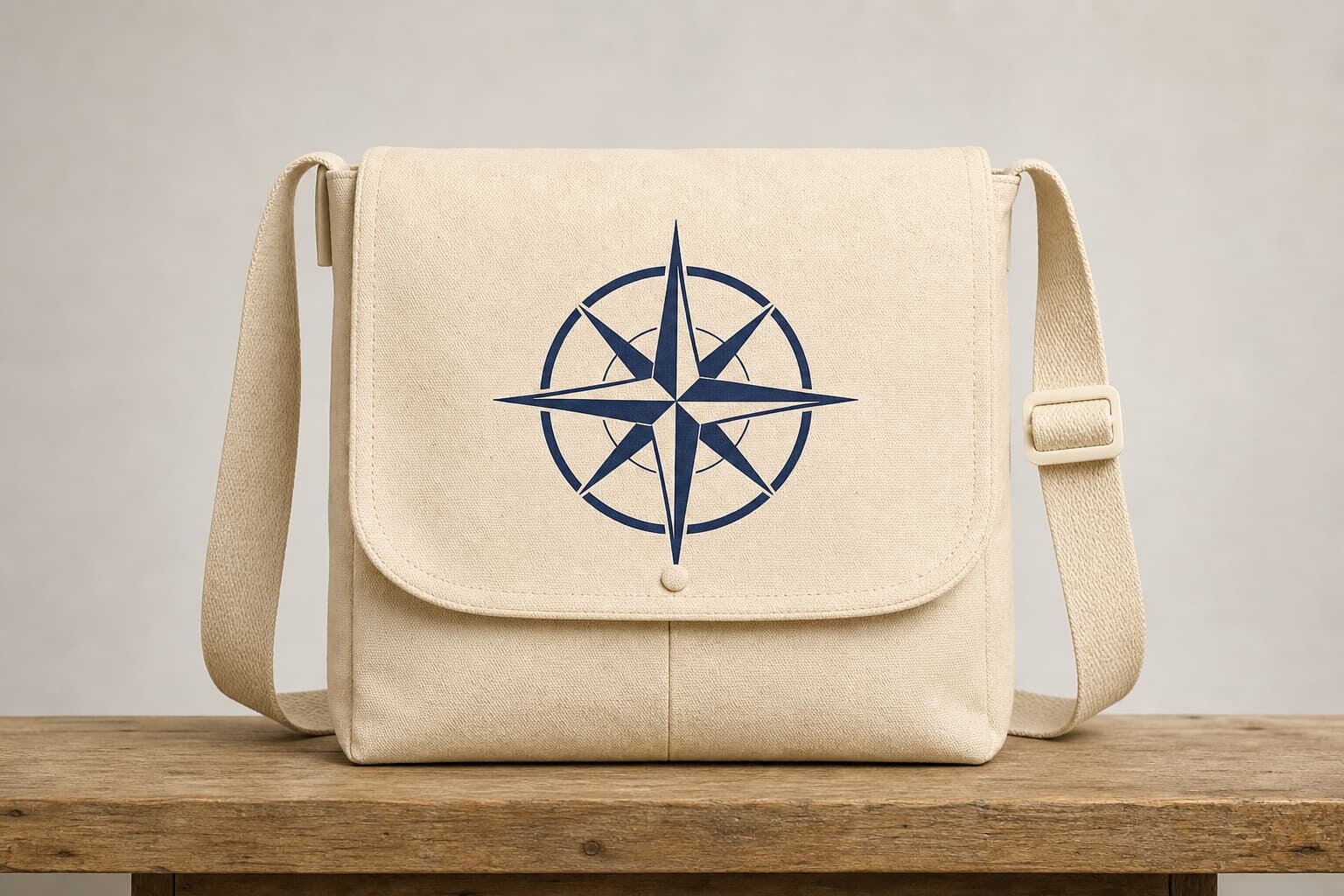
Why Canvas Crossbody Bag Quotes Are Hard to Compare
A crossbody canvas bag looks simple in a product photo, but the factory quote can include very different assumptions. One supplier may quote 10 oz canvas with overlocked seams, a basic zipper, and a one-color screen print. Another may quote 12 oz canvas, bound inside seams, metal hardware, a longer adjustable strap, and retail packing. Both quotes may use the same product name, but they are not quoting the same bag.
For procurement teams, the buying problem is not only finding a low unit price. The real task is separating real cost differences from missing specifications. A low quote may be valid if the bag is intended for a short-term promotion. It may be a problem if the product must sit on a retail shelf, carry books, or represent a premium brand. Your comparison should force every factory to price the same construction, fabric, logo, packing, sample process, and lead time.
- Do not compare only FOB unit price; compare the included specification.
- Ask whether the quote is based on a drawing, physical reference sample, previous production, or factory suggestion.
- Separate material cost, logo cost, packing cost, and sampling cost where possible.
- Record all assumptions in the RFQ so the next quote revision does not restart the discussion.
Start With the Bag Use, Not the Cheapest Fabric
The right canvas weight depends on how the buyer expects the bag to be used. A fashion crossbody for light daily items can use a different fabric than a campus messenger bag that may carry notebooks, bottles, and electronics. If your RFQ only says cotton canvas crossbody bag, factories will choose a fabric that fits their own cost target or stock availability.
In canvas bags, fabric weight is often described in ounces per square yard, while many import teams also want GSM. These numbers are related but not always perfectly converted because weave, finishing, washing, and dyeing affect the final hand feel. For quotation purposes, give both where possible and ask the factory to confirm actual test data or production standard.
- 8 oz canvas, about 240-280 GSM, is usually too light for structured messenger-style crossbody bags unless the design is intentionally soft and promotional.
- 10 oz canvas, about 300-340 GSM, can work for budget retail or promotional bags with moderate load expectations.
- 12 oz canvas, about 380-420 GSM, is a strong default for many branded crossbody canvas bags.
- 14-16 oz canvas, about 450-540 GSM, gives a sturdier hand feel but raises sewing difficulty, freight weight, and material cost.
- Washed canvas feels softer but may shrink, change shade, and reduce crisp print edges if not controlled.
Quote the Construction Details That Change Cost
A canvas crossbody bag has more cost variables than a flat tote bag. Flaps, gussets, zipper openings, lined or unlined interiors, inside pockets, binding, strap anchors, and metal sliders all add labor. If one supplier includes a full-width zipper and another assumes only a flap closure, the cheaper quote is not better; it is incomplete.
Construction also affects failure risk. Strap attachment points need enough seam allowance and bar-tacking because they carry most of the load. Bottom corners need clean turning or binding because thick canvas can create bulky corners. Zipper ends should be secured so they do not pull out during use. These are small details on a drawing, but they become the difference between a reliable product and a complaint after delivery.
- Define whether the bag has a flap only, zipper only, or zipper plus flap.
- Show the gusset depth and whether the bottom is boxed, folded, or cut-and-sewn.
- State whether the inside seams are bound, overlocked, or hidden by lining.
- Identify all pockets by size, position, closure type, and stitch method.
- Require bar-tacks at strap anchors and other load-bearing points if the bag is for daily carry.
Logo Method: Compare Real Production, Not a Visual Mockup
Most quote errors happen when the logo is treated as decoration instead of a production step. A one-color screen print on a flat front panel is usually efficient. A multi-color print across a pocket seam, embroidery on heavy canvas, or woven label sewn into a side seam may require different setup, different sampling, and different inspection criteria. A factory may give a base bag quote first and add logo cost later unless you ask clearly.
For canvas crossbody bags, screen printing is common because it works well on flat panels and gives good value at volume. Embroidery can look premium but may distort lightweight fabric or become too stiff on small details. Woven labels are stable for brand identification and work well on side seams, flaps, or inside labels. Heat transfer can be useful for detailed graphics, but buyers should check hand feel, adhesion, and heat marks on dyed canvas.
- Give artwork in vector format and include print size in centimeters or inches.
- State Pantone colors and ask whether the quote includes color matching.
- Confirm logo placement from fixed points such as top edge, side seam, pocket edge, or flap center.
- Ask whether a print strike-off is included before the full sample.
- For embroidery, ask for stitch count, backing method, and whether digitizing is included.
- For woven labels, ask label size, fold type, MOQ, and sewing position.
MOQ Logic: Style, Fabric Color, and Logo Are Separate
Many buyers ask for MOQ as if it is one number. In reality, a factory may have one MOQ for sewing efficiency, another for custom fabric dyeing, another for webbing color, and another for woven labels or printed packaging. A quote saying MOQ 500 pieces may only apply to natural canvas with a one-color print. The same bag in custom dyed black canvas with matching webbing and retail barcode labels may have a higher effective MOQ.
When comparing factories, ask them to explain the MOQ driver. If the limitation is fabric dyeing, you may reduce MOQ by choosing stock fabric. If the limitation is printing setup, you may combine colors with the same logo. If the limitation is sewing line efficiency, the unit price may rise at lower quantity but production may still be possible. Understanding the reason gives you negotiation options without damaging the product.
- Ask MOQ per bag style, not only per order.
- Ask MOQ per fabric color and whether stock colors are available.
- Ask MOQ per logo design, logo color, and logo method.
- Ask MOQ for custom webbing, custom lining, custom zipper tape, and woven labels.
- Request price breaks at realistic quantities such as 500, 1,000, 3,000, and 5,000 pieces if those volumes match your plan.
Build a Quote Sheet That Exposes Missing Costs
A useful factory quote should do more than state a unit price. It should show what is included and what is excluded. Procurement teams should create a comparison sheet with columns for fabric, construction, logo, packing, sample, lead time, Incoterm, payment terms, and quote validity. This makes price differences easier to explain internally and reduces the risk of approving a quote that later becomes more expensive.
Do not force every supplier to reveal a full internal cost breakdown if that is not their practice. Instead, ask them to separate buyer-facing cost items that commonly change: base bag, logo setup, logo running charge, custom label, special packing, sample cost, and freight estimate if requested. This level of detail is usually enough to compare quotes fairly and identify where a supplier has made a different assumption.
- Base bag: fabric, cutting, sewing, standard hardware, and standard packing.
- Logo: setup screen, embroidery digitizing, woven label mold, print proof, or strike-off.
- Custom materials: dyed canvas, special webbing, lining, zipper puller, metal hardware finish.
- Packing: individual polybag, paper wrap, hangtag, barcode, carton label, inner carton, master carton.
- Commercial terms: Incoterm, currency, payment terms, quote validity, production lead time, and sample lead time.
Sample Approval Should Match the Quote Version
A common mistake is approving a sample without connecting it to the exact quote version. If the first quote was based on 10 oz canvas but the sample uses 12 oz stock canvas, your approval may not match the final price. If the sample has a premium zipper from the sample room but bulk production uses the quoted basic zipper, the delivered product may feel different. Every sample should be tied to a dated specification and quote number.
For crossbody canvas bags, the pre-production sample is more important than a photo mockup because it confirms hand feel, shape, strap comfort, seam bulk, print result, and packing fit. Buyers should inspect the sample as if they are checking bulk production, not only brand appearance. Write approval comments in measurable terms so the factory can repeat the result.
- Measure fabric weight or request a fabric swatch card marked with GSM and color standard.
- Check finished size, flap drop, pocket size, gusset depth, and strap length range.
- Load the bag with a realistic weight to check strap comfort and seam stress.
- Open and close zippers, snaps, Velcro, and buckles repeatedly before approval.
- Compare logo position against the artwork sheet and record allowed tolerance.
- Take approval photos of front, back, inside, side, bottom, logo close-up, and packing.
Packing and Carton Specs Affect Cost and Claims
Packing is often treated as an afterthought, but it affects unit cost, carton volume, warehouse receiving, and damage claims. A canvas crossbody bag with a flap, strap, and metal hardware can arrive wrinkled or scratched if folded badly. If the buyer requires retail presentation, barcode labels, hangtags, or plastic-free packing, those details must be quoted before production begins.
Carton data also matters for import planning. Pieces per carton, carton size, gross weight, and carton strength can affect freight cost and warehouse handling. A quote without carton information is incomplete for buyers who need landed cost. If you are comparing several factories, ask each one to estimate packing dimensions based on the same folding method and same individual packing requirement.
- Define whether each bag is flat packed, lightly folded, stuffed, or folded with strap tucked inside.
- Choose individual polybag, recycled polybag, paper band, glassine bag, or no individual bag according to market needs.
- Confirm whether desiccant, warning labels, barcode stickers, and hangtags are included.
- Ask for pieces per export carton, carton dimensions, gross weight, and net weight.
- Avoid cartons that are too heavy for manual handling or too loosely packed to protect bag shape.
Lead Time Comparison: Separate Sample, Material, and Sewing Time
A short lead time may be realistic for natural canvas, standard webbing, standard hardware, and a simple one-color print. It may not be realistic for custom dyed canvas, custom zipper tape, new woven labels, washed finishing, or complex embroidery. When a supplier quotes a faster lead time than others, ask what materials are already available and what approvals are excluded from the timeline.
For planning, divide the timeline into sample development, sample approval, material purchasing, cutting, printing or embroidery, sewing, finishing, inspection, packing, and export handover. This prevents a factory from giving only the sewing time as the full lead time. It also helps the buyer understand which decisions must be made early, such as color approval and logo proof approval.
- Blank sample may be faster than a logo sample, but it does not confirm print or embroidery quality.
- Custom dyed fabric requires color approval and may need lab dip or strike-off time.
- Woven labels, custom hardware, and custom zipper pullers can become critical path items.
- Bulk production should start only after written pre-production sample approval.
- Inspection and packing time must be included before shipment booking.
How to Read a Low Quote Without Rejecting It Too Fast
A low quote is not automatically wrong. Some factories are efficient because they have stock canvas, stable sewing lines, and experience with the style. The problem is when the low quote is created by removing details that the buyer assumed were included. Before rejecting or accepting it, ask the supplier to confirm the exact fabric, construction, logo, packing, inspection, and lead time behind the number.
Use a controlled value-engineering approach. If the target price is too high, ask the factory what changes would reduce cost with the least effect on function. For example, reducing from 14 oz to 12 oz canvas may be acceptable, while removing bar-tacks at strap anchors may not be. Changing from embroidery to woven label may keep brand quality and reduce risk. Reducing carton protection may save little but increase damage claims.
- Safe cost adjustments may include using stock fabric color, simplifying pocket layout, or reducing print colors.
- Risky cost cuts include thinner strap webbing, weaker zippers, fewer bar-tacks, or lighter canvas than the use requires.
- Ask the factory to identify the top three cost drivers in your design.
- Keep durability features fixed if the bag will carry books, bottles, electronics, or travel items.
- Document every approved cost change in the spec sheet and updated quote.
Specification comparison for buyers
| Spec decision | Recommended option | When it fits | Buyer risk to check |
|---|---|---|---|
| Main body fabric | 12 oz cotton canvas, about 380-420 GSM | Good balance for retail crossbody bags, bookstore merchandise, gift programs, and daily carry | Confirm actual GSM after washing or dyeing; some quotes list yarn count but deliver lighter fabric |
| Budget fabric option | 10 oz canvas, about 300-340 GSM | Large promotional runs where low weight and freight saving matter more than structure | Bag may collapse, flap corners may curl, and dark print may show less solid on uneven weave |
| Heavy-duty option | 14-16 oz canvas, about 450-540 GSM | Premium retail, outdoor brand merchandise, utility-style messenger bags | Need stronger needles, wider seam allowance, and higher freight cost; ask if sewing line has handled this weight |
| Closure | Zipper main compartment plus flap with magnetic snap or Velcro | Better for commuter, school, and travel buyers who need security | Magnet position and zipper length must be approved on sample; cheap Velcro can damage screen print or collect lint |
| Logo method | Screen print for flat panels; woven label for seams; embroidery only for small dense logos | Most brand programs needing clean, repeatable logo placement | Logo cost may be quoted separately; confirm number of colors, print size, and whether strike-off is included |
| Strap construction | 38 mm cotton webbing or polyester webbing with metal slider | Standard adult crossbody fit with adjustable wearing length | Check strap length range, slider strength, colorfastness, and whether webbing shade matches body fabric |
| Inside finishing | Bound seams or overlocked seams depending on price level | Bound seams for retail quality; overlock for promotional or budget bags | Loose threads and exposed seam allowance affect perceived value; define acceptance standard before order |
| Packing | One bag per recyclable polybag or paper band, export carton with moisture control | Retail-ready goods, distributor stock, and ecommerce replenishment | Carton dimensions, gross weight, and barcode label rules must be quoted, not added after production |
Buyer checklist before sampling
- Define the bag size by finished dimensions, not only artwork layout; include tolerance such as plus or minus 1 cm unless a tighter standard is required.
- State fabric weight in oz and approximate GSM, plus color, dyeing method, and whether the bag should be washed, unwashed, soft finished, or stiff.
- List all compartments, zipper lengths, flap size, gusset depth, inside pocket details, and whether seams are bound, overlocked, or turned.
- Specify strap width, total adjustable length range, webbing material, hardware material, and metal finish.
- Provide logo artwork with print size, Pantone colors, placement distance from seams, and preferred method such as screen print, embroidery, woven label, or heat transfer.
- Ask for MOQ by style, by fabric color, and by logo design because these three MOQ numbers are often different.
- Request sample cost, sample lead time, bulk lead time, and whether sample cost is refundable after order confirmation.
- Require carton packing data, including pieces per carton, carton size, gross weight, net weight, polybag or paper band requirement, and shipping mark format.
- Compare quotes using the same Incoterm, payment terms, inspection level, and packaging requirement.
- Ask the factory to confirm which specs affect price most so you can adjust cost without damaging the product.
Factory quote questions to send
- What exact canvas weight are you quoting in oz and GSM, and is it measured before or after dyeing, washing, or finishing?
- Is the quoted fabric greige, stock dyed, custom dyed, or piece dyed after sewing, and what MOQ applies to the color?
- Which seams are bound, overlocked, double-stitched, or bar-tacked in your quote?
- What zipper brand, zipper gauge, puller type, and zipper length are included?
- What is the strap material, width, thickness, and adjustable length range?
- Does the quote include logo setup, screen charge, embroidery digitizing, woven label mold, or print proof?
- How many logo colors and what maximum print area are included in the quoted unit price?
- What is your sample lead time for a blank sample, logo sample, and pre-production sample?
- What is your production lead time after deposit and approved pre-production sample?
- What packing method, carton quantity, carton size, and carton weight are included in the price?
Quality-control points to confirm
- Check fabric GSM against the approved sample and quote, especially after dyeing, washing, or soft finishing.
- Measure finished bag width, height, gusset, flap drop, strap width, and strap length range against the approved spec sheet.
- Inspect seam strength at strap joints, side seams, bottom corners, zipper ends, flap corners, and pocket openings.
- Confirm logo color, print coverage, registration, edge sharpness, placement distance from seams, and rubbing resistance.
- Test zipper opening, slider movement, puller strength, snap alignment, Velcro grip, and buckle adjustment.
- Check inside finishing for loose threads, skipped stitches, exposed raw edges, and uneven binding.
- Review packing for correct polybag or paper band, carton count, moisture protection, shipping marks, barcode labels, and carton strength.
- Compare production sample, approved pre-production sample, and random bulk pieces side by side before shipment release.