Why Barcode Placement Becomes a Cost Issue
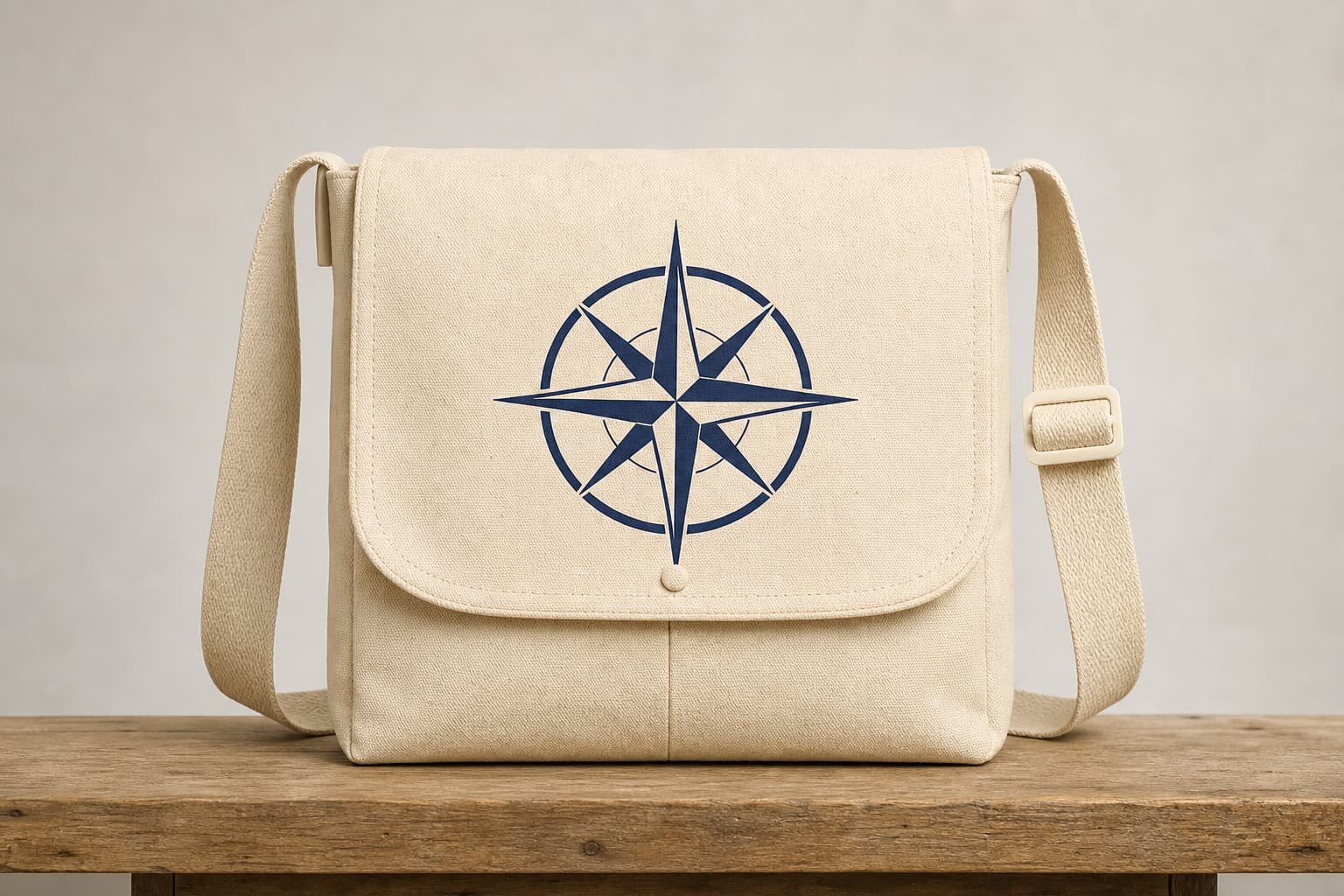
Barcode placement on a crossbody canvas bag looks like a small packaging detail until a shipment reaches a retailer distribution center and the receiving team cannot scan it. Then the issue becomes chargebacks, manual relabeling, delayed allocation, and sometimes repacking at the importer warehouse. For canvas messenger bags, the risk is higher than for flat tote bags because the product has a flap, gusset, strap hardware, zipper pull, inner pocket, and often a folded packing method. A label that scans well on the sample table may be hidden after the bag is folded into the polybag.
The buying problem is not only where to put the barcode. It is deciding which barcode belongs at which level: item, polybag, inner label, hangtag, and master carton. A procurement team should make this decision before quote comparison, because label type affects cost, packing labor, MOQ, sample lead time, and inspection method. If one supplier quotes a simple carton label and another includes unit hangtags, polybag stickers, and scan testing, the cheaper quote may not be comparable.
- Use item-level barcodes when retail staff or store receiving teams must scan the bag itself.
- Use polybag barcodes when ecommerce or distributor warehouses receive sealed units.
- Use carton barcodes when inbound logistics needs carton-level receiving and routing.
- Avoid placing adhesive labels directly on visible canvas unless the buyer accepts residue risk.
- Treat barcode placement as a production specification, not a last-minute packing note.
Start With the Scanning Moment, Not the Label
A practical placement guide starts by asking who scans the code and at what moment. A warehouse operator scanning sealed cartons has different needs from a boutique sales assistant scanning a hangtag at checkout. If the code must be scanned before the unit is removed from its polybag, the barcode belongs on the polybag or a visible hangtag facing outward. If the bag will be unpacked and merchandised on a rack, a removable hangtag near the strap hardware is usually cleaner than a sticker on fabric.
For crossbody canvas bags, the bag shape changes between production, packing, shipping, and display. The strap may be folded under the flap, the front panel may be covered by the flap, and the gusset may compress in the carton. A barcode placed on the lower front panel can disappear when the flap folds down. A barcode tied to a strap loop may rotate inside the polybag. Your RFQ should state the scanning moment so the factory can design the label position around real handling.
- Retail checkout scan: hangtag attached to strap D-ring, zipper pull, or side loop.
- Retail shelf inventory scan: visible hangtag with human-readable SKU and color.
- Warehouse sealed-unit scan: polybag sticker on the flattest outward-facing side.
- Importer receiving scan: carton label on two adjacent master carton panels.
- Internal traceability scan: inner sewn label or small hidden QR label, only if not used for retail scanning.
Best Placement Options on Crossbody Canvas Bags
The most reliable item-level placement for a crossbody canvas bag is usually a hangtag fixed near a stable hardware point. Common positions include the strap D-ring, side seam loop, zipper pull, or a dedicated cotton string through a reinforced label hole. This keeps adhesive away from the canvas body and allows the barcode to stay flat enough for scanning. The tag should hang outside the bag when packed, not fold between the flap and body.
Direct fabric stickers are less reliable on canvas because the surface is textured, absorbent, and sometimes washed or coated. On 10 oz to 16 oz cotton canvas, the weave can reduce adhesive contact. On pigment-dyed, enzyme-washed, or water-repellent canvas, the risk of lifting and residue is higher. If the buyer insists on a removable sticker, test it on the actual fabric finish and remove it after at least 24 to 48 hours, because fresh adhesive behavior on the sample table may not match warehouse conditions.
- Preferred: hangtag attached near D-ring, side loop, or zipper pull.
- Acceptable: polybag sticker if the unit stays sealed through receiving.
- Conditional: inner label barcode for traceability, not fast retail scanning.
- Risky: removable sticker directly on washed, dyed, printed, or coated canvas.
- Avoid: barcode hidden under flap, behind strap pad, inside pocket, or under folded webbing.
Fabric Weight, Surface Finish, and Label Behavior
Fabric weight changes how the bag folds and how label positions behave. A 10 oz canvas crossbody bag may fold flatter and show the front face clearly inside a polybag. A 14 oz or 16 oz canvas messenger bag has more body, stronger seams, and a thicker gusset, so the packed shape can push a hangtag to one side or create wrinkles in the polybag sticker area. If the bag uses foam padding, lining, or a structured flap, the barcode position should be confirmed on a packed sample, not a flat sample.
Surface finish matters as much as GSM. Natural greige canvas, dyed canvas, pigment-washed canvas, waxed canvas, and water-repellent canvas all interact differently with adhesives and printing. A clean white thermal sticker may stick well to a smooth polybag but poorly to a dusty canvas panel. A woven side label with CTM or buyer branding can sit neatly in the side seam, but it is not usually large enough for a retail barcode unless designed wider from the start. When comparing suppliers, ask what fabric finish they are quoting, because the same placement note may perform differently on a different finish.
- 8-10 oz canvas: lighter bag, easier folding, but less structure for hangtag presentation.
- 12 oz canvas: common balance for promotional and retail crossbody bags.
- 14-16 oz canvas: stronger handfeel, better durability, but bulkier packing and more label movement.
- Washed canvas: attractive soft finish, higher risk of adhesive marks or label lifting.
- Water-repellent finish: confirm sticker adhesion and residue before approving direct labels.
Print Method and Branding Conflicts
Barcode placement should not fight with the decoration plan. Crossbody canvas bags often use screen print on the flap, heat transfer on the front panel, embroidery on a patch, woven side labels, or leather-look patches. A barcode sticker or hangtag that covers the brand logo in the polybag may cause approval delays because sales teams want the logo visible when the bag is received or photographed. A hangtag placed too close to an embroidered patch can also rub during transit and leave marks.
Print method affects heat, surface texture, and placement tolerance. Screen print on canvas can have raised ink edges that make nearby adhesive labels uneven. Heat transfer areas should not be covered by stickers because removal can lift the transfer edge. Embroidery creates thread texture, so a barcode tag should not be tied where the thread can snag. If the bag has a side woven label with CottonToMaker or buyer branding, keep barcode hangtags separate so the brand label remains visible and the barcode remains scannable.
- Screen print: keep barcode stickers away from inked areas and allow full curing before packing.
- Heat transfer: avoid adhesive contact with transfer film or printed edges.
- Embroidery patch: avoid tag strings rubbing over raised thread during shipment.
- Woven label: good for brand identity, usually too small for reliable retail barcode scanning.
- Leather-look patch: do not assume adhesive stickers remove cleanly from PU or recycled leather patches.
MOQ Logic for Barcode Labels and SKU Control
Barcode placement can change MOQ even when the bag construction stays the same. A plain canvas crossbody bag may have one body fabric and one strap, but the buyer may need different barcode data by color, print design, size, retailer, or marketplace bundle. If every colorway has a unique hangtag and carton label, the factory must control separate printed materials and packing lines. This adds labor and raises the chance of wrong-label application.
A clean RFQ separates bag MOQ from printed label MOQ. Hangtags, woven labels, sticker rolls, and printed polybags may each have different minimums. For example, a factory may accept 500 bags per color but the hangtag printer may prefer 1,000 pieces per barcode version. That does not mean the order is impossible, but the excess labels, setup cost, and data control should be visible in the quote. Buyers should ask whether unused labels are destroyed, stored, or shipped with the order.
- Define barcode versions by SKU, not only by style name.
- Ask for label MOQ separately from bag MOQ.
- Confirm whether multiple colorways can share one barcode or require unique codes.
- Request a packing control sheet for orders with more than three barcode versions.
- Add supplier responsibility for mixed-label errors when the approved SKU list is clear.
Sample Approval Should Include Packed Scan Testing
A barcode approval photo is useful, but it is not enough. The factory should scan the barcode after the hangtag, polybag sticker, and carton label are applied to the actual pre-production sample. For crossbody canvas bags, the sample should be folded the same way bulk goods will be folded, with strap, flap, zipper pull, dust bag if any, and polybag all in final position. This is where problems show up: the hangtag flips backward, the polybag seam crosses the sticker, or the strap hides the human-readable number.
The approval sample should also include the final fabric weight and finish. A barcode sticker tested on unwashed 12 oz natural canvas does not prove performance on 14 oz pigment-washed navy canvas. If the buyer is approving several colors, test the darkest and thickest combination because it often creates the most packing movement and lowest contrast around label photos. Keep one sealed approved sample at the factory packing station and one with the buyer or inspection company.
- Scan barcode before packing, after unit packing, and from a closed carton sample if required.
- Check that the quiet zone around the barcode is not cut, punched, or covered by tag string.
- Measure tag size and barcode size against the buyer standard.
- Confirm the human-readable number matches the SKU list exactly.
- Photograph the final placement from front, side, packed unit, and master carton views.
Packing Layout and Carton Label Position
Packing method can make a good barcode placement fail. Crossbody messenger bags are often packed with the strap folded inside the body, wrapped around the bag, or tucked under the flap. If the hangtag is attached to the strap D-ring but the strap is packed inside, the barcode is no longer accessible. If the barcode is on the polybag but the bag shape creates a curved surface, the code may wrinkle. Your RFQ should include a simple packing drawing or packing reference photo, especially for structured canvas bags.
Carton label position is another common source of receiving disputes. Many buyers require a label on the long side of the carton; some retailer routing guides require two adjacent sides. The label should not sit across carton tape, corner crush areas, or strapping bands. It should include enough data for receiving: PO number, SKU, color, style, quantity, carton number, gross weight, net weight, dimensions, country of origin when required, and barcode. Mixed cartons need special approval because they increase pick-and-scan errors.
- Place polybag barcode on the flattest outward-facing surface after final folding.
- Do not allow polybag seams, air holes, or warning text to cross the barcode.
- Use carton labels on consistent panel positions for the whole shipment.
- Number cartons as 1 of 60, 2 of 60, and so on, if the buyer requires sequence tracking.
- Apply carton labels after final weighing and measuring to avoid mismatched carton data.
Lead Time and Cost Items Buyers Often Miss
Barcode work can add lead time when data is not ready before sampling. The bag factory may be ready to cut canvas, but hangtag artwork, UPC data, retailer compliance format, and carton label layout may still be waiting for buyer approval. If barcode data arrives after bulk packing has started, the factory may need to stop packing, relabel units, or open cartons. This is avoidable if the procurement calendar treats barcode approval as part of pre-production, not as a shipping document task.
Cost is usually not only the label itself. There may be design layout time, printing plate or digital setup, hangtag stringing, label application labor, extra QC scanning, carton label printing, and management of multiple SKU versions. In quote comparison, ask suppliers to separate these items so you can see whether a low unit price excludes packing controls. For small orders, barcode label setup can be a meaningful share of total cost, especially when many SKUs are ordered below efficient label printing quantities.
- Quote bag unit price separately from hangtag, sticker, sewn label, and carton label cost.
- Ask whether barcode scan testing is included in standard QC or charged as extra labor.
- Confirm lead time impact for custom hangtags, woven labels, or printed polybags.
- Set a barcode data freeze date before bulk label printing.
- Clarify who pays for relabeling if buyer data changes after approval.
Acceptance Criteria for RFQ and Inspection
The best way to prevent barcode disputes is to write measurable acceptance criteria into the RFQ. Avoid vague wording such as barcode on bag or label as usual. Instead, state the exact label type, location, size, code format, scan requirement, and packing condition. A factory can follow a clear marked photo and tolerance much more reliably than a paragraph of general instructions. For example, attach hangtag to left side D-ring, barcode facing outward when bag is packed, with no strap covering the code.
Inspection should include scan-read checks from finished packed goods, not only visual label counts. The inspector should pull units from different cartons and scan the code against the SKU list. If there are multiple colors, prints, or retailer versions, the sample set should cover every barcode version. The inspection report should include photos of the unit label, polybag label, carton label, and scan result where possible. This gives the buyer evidence before the goods leave the factory.
- Barcode must scan on first or second attempt using normal handheld scanner distance.
- Human-readable digits must match buyer-approved barcode data with no missing digits.
- Label placement must match approved sample photo within agreed tolerance.
- No barcode may be folded, wrinkled, trimmed, covered, or placed across a curved corner.
- Wrong SKU barcode on any checked unit should trigger expanded inspection or 100 percent sorting.
Specification comparison for buyers
| Spec decision | Recommended option | When it fits | Buyer risk to check |
|---|---|---|---|
| Retail barcode on individual bag | Removable hangtag near strap D-ring or zipper pull, not adhesive on fabric | Best for department stores, boutiques, and mixed-SKU retail receiving | Confirm the tag does not hide branding, block zipper use, or fall inside the bag during packing |
| Barcode on polybag | White thermal or printed sticker on flat polybag face, same orientation for every unit | Best for ecommerce fulfillment, distributor warehouses, and pre-packed color-size assortments | Polybag wrinkles, recycled poly texture, and low contrast can reduce scanner read rate |
| Barcode on inner care label | Sewn satin or cotton label with barcode only if scanner access is not needed at retail receiving | Useful for traceability or warranty tracking rather than shelf scanning | Small label width and fabric movement often cause unreadable codes unless tested early |
| Carton barcode for master shipping | Carton side label on two adjacent panels with PO, SKU, color, quantity, and carton number | Needed for importer warehouse receiving and retailer DC routing | Wrong carton face, weak adhesive, or missing carton sequence can create inbound delays |
| Barcode type | UPC-A, EAN-13, Code 128, or QR only as specified by the buyer system | Depends on retail channel, marketplace, ERP, and warehouse scanning rules | Factories should not choose barcode format by guesswork; wrong symbology may pass visual check but fail system upload |
| Bag material under label area | Avoid adhesive labels directly on 10-16 oz canvas, washed canvas, pigment-dyed canvas, or jute-blend panels | Important for canvas messenger bags with textured weave, garment wash, or water-repellent finish | Adhesive may lift, leave residue, stain the panel, or damage printed graphics when removed |
Buyer checklist before sampling
- State whether the scannable barcode belongs on the bag, hangtag, polybag, inner label, carton, or more than one level.
- Provide barcode artwork or data source, not only SKU names; include symbology, number string, size, quiet zone, and human-readable text requirements.
- Mark the exact placement on a product drawing or approval photo, including distance from seam, D-ring, zipper, flap edge, or side gusset.
- Confirm whether the barcode must remain visible before unpacking, after unpacking, or only at warehouse receiving.
- Ask the factory to test scanning after actual packing, not only on a flat printed label before attachment.
- Approve one sealed pre-production sample with final label position, final bag fabric, final print method, and final packaging.
- Check that adhesive labels do not touch printed logos, coated canvas, washed surfaces, or fabric areas that may show glue marks.
- Define carton label position, carton numbering format, PO reference, mixed-carton rules, and whether two-side carton labeling is required.
- Specify replacement label responsibility if buyer barcode data changes after sample approval.
- Add barcode placement and scan-read acceptance criteria to the inspection checklist before mass production starts.
Factory quote questions to send
- Where will you place the barcode on the crossbody canvas bag, and can you send a marked photo using the actual bag construction?
- Will the barcode be printed on a hangtag, polybag sticker, sewn label, carton sticker, or another item? Please quote each level separately.
- What label material, size, adhesive, and print method will you use for each barcode label?
- Can your factory scan-test UPC-A, EAN-13, Code 128, and QR labels after packing, and what scanner or app is used for the check?
- How do you control barcode data by SKU, color, strap style, and carton quantity to avoid mixed-label errors?
- What is the MOQ impact if each colorway or design needs a different hangtag, woven label, or carton barcode?
- At which production stage do you attach labels, and how do you prevent wrong-label attachment during packing?
- Can you include barcode placement photos in the pre-production sample report and final inspection report?
- If the buyer changes barcode data after material purchase, what cost and lead time impact should we expect?
- Can you provide a packing mockup showing one inner polybag label, one unit label, and one master carton label before bulk packing?
Quality-control points to confirm
- Scan every barcode type from the approved sample using the buyer-provided number string and compare against the SKU list.
- Check label position against the approved placement photo with tolerance, not by verbal description.
- Confirm barcode labels remain flat, readable, and accessible after the bag is folded and packed.
- Inspect that adhesive labels do not transfer glue, lift fiber, stain canvas, or damage printed decoration during removal.
- Verify carton labels show correct PO, SKU, color, quantity, gross weight, net weight, carton dimensions, and carton sequence.
- Perform random scan checks from packed cartons at AQL inspection, including first, middle, and last cartons packed.
- Confirm mixed-SKU cartons, if allowed, use a clear mixed carton label and inner SKU separation method.
- Check that barcode hangtags are attached consistently to the approved D-ring, strap loop, zipper pull, or label string location.
- Reject labels with low contrast, trimmed quiet zones, distorted bars, faded thermal print, or wrinkles across the code.
- Keep one approved barcode placement sample at the packing line for operator reference.