Cotton Tote OEM Communication Workflow Review for United States Buyers
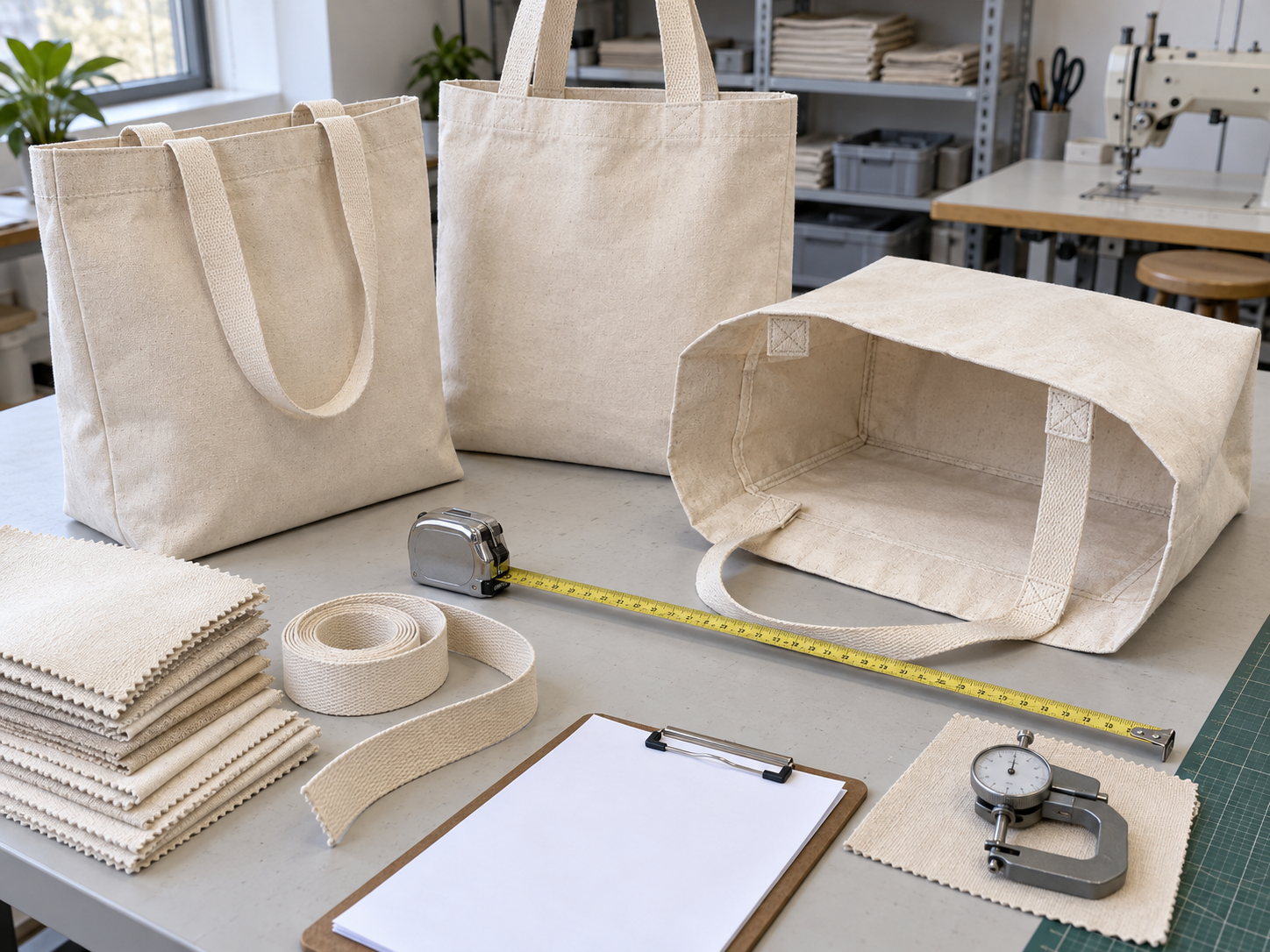
United States buyers placing an OEM cotton tote order should freeze communication before fabric is cut. The practical answer is a four-gate record: a versioned RFQ, a marked physical sample, a locked specification sheet, and a written bulk release that cites only that revision. A cotton tote OEM communication workflow review is the check that those gates exist, that each message names the same SKU, and that no side email changes handle length, print placement, or packing after approval. Informal threads fail when comments are not marked on the sample and when confirmation is assumed rather than written, which bag-production guidance identifies as a direct path to bulk goods that miss the agreed spec (Communication Mistakes in Bag Production).
Byline: Vincent Xi, Editorial Author, https://cottontotemaker.com/authors/vincent-xi/. This page is a manufacturing communication review for one product family, the cotton tote. It is not a fabric encyclopedia, a price survey, or a multi-product sourcing guide. Vincent Xi prepared it from published procurement descriptions only. No factory visit, in-house test, client program, certification, or personal production outcome is claimed.
What United States Buyers Should Lock in a Cotton Tote Manufacturing File
A usable manufacturing file states what will be made, how a change is approved, and what accepted means when the lot is ready to leave the factory. Wholesale cotton tote descriptions start with fabric and design selection, then physical confirmation of color, size, and printing, then mass production with inspections, packing, and logistics tracking (cotton tote wholesale procurement process). Custom-order guidance adds a written product sheet locked after the counter sample, artwork supplied as vector files with a Pantone reference, and an AQL inspection on OEM lots (how to order custom tote bags).
Those pages describe a sequence. They do not publish a universal lead time, a price for this site, or a measured defect rate. Buyers should put figures into the RFQ as their own requirements. Example specification assumption to verify in the supplier quote, not a measured product: one open-top cotton tote, body 15 inches wide by 16 inches high by 4 inches of gusset, handles 26 inches long, fabric 10 ounces per square yard of cotton canvas. Unit: inches and ounces per square yard. Scope: one SKU on a single purchase order. As-of context: the quotation date the buyer writes on the RFQ. If the factory answers in centimeters and grams per square meter, require both unit systems on the same revision so a conversion error is visible before cutting.
United States delivery language belongs in that same file. Example assumption to verify in the supplier quote: a lot of 3,000 pieces packed 50 pieces per export carton, which is 60 cartons, with the product price quoted separately from freight to a named United States warehouse. Unit: pieces and cartons. Scope: one SKU and one shipment. As-of context: the quotation date. The split is an illustration so two quotes can be compared. It is not a freight index and not a landed-cost offer. A manufacturing-origin line on the quote is only the place of production for labeling and transit planning. It is not an invitation to sell into that country.
A Communication Workflow Review Before Cotton Tote Bulk Manufacturing
The task of this communication workflow review is to test whether a later message can still change the bag after the buyer believes the specification is closed. Move through the gates in order. Do not skip a gate because a salesperson says the sewing line already knows the tote.
At RFQ issue, send one specification sheet, one artwork set, and one quantity and date request. The Omaska bag-production article recommends structured RFQs and version-controlled specification sheets so design, sales, and the sewing line do not work from different attachments. Put the revision in the subject line and in the file name. Example document-control assumption to verify with the supplier's actual system: three retained revisions for the SKU, revision 0 for the RFQ, revision 1 for sample comments, and revision 2 for the locked bulk sheet. Unit: revision count. Scope: one cotton tote SKU file set. As-of context: the purchase-order date. A shared folder that overwrites files without keeping revision 1 hides which comment was approved.
At sample review, require a physical pre-production or counter sample when color, hand-feel, or handle drop can change the order. Wellpromotion's wholesale sequence treats physical confirmation of color, size, and printing as the step before mass production. Ecobagfactory's ordering guide treats sample approval, then a written product sheet after the counter sample, as the lock. Mark each comment on a numbered photo or on the sample, and restate it in writing as accept, change, or reject. An unmarked approval email does not identify which stitch or print position the buyer saw. Photo-only review can support a first screen of artwork placement. It does not replace the physical reference when canvas feel or handle drop is part of acceptance.
At specification lock, the supplier issues a product sheet that matches the accepted sample, and the buyer approves that sheet in writing. A later change needs a new revision and, when construction or artwork changes, a new sample. Cutting bulk against revision 1 while the purchase order cites revision 2 is a failed gate even if both sides remain polite. The approved sample kept by the buyer and the counterpart kept by the factory should be identifiable as the same revision, which the Omaska article describes as golden-sample control before bulk production.
At bulk release, tie inspection and shipment messages to the locked revision. The Ecobagfactory guide points buyers toward an AQL inspection for OEM lots but does not state a numeric plan. Example assumption to verify in the supplier quote and on the inspection appointment: the buyer requests ANSI/ASQ Z1.4 general inspection level II, with an AQL of 2.5 for major visual defects and an AQL of 4.0 for minor visual defects, on one production lot, recorded on the inspection date named in the purchase order. Unit: AQL as defects per 100 units under that sampling standard. Scope: one lot of the cotton tote SKU. This plan is not printed in the cited guides and is not evidence of a certificate. ANSI/ASQ Z1.4 is a sampling standard a buyer may invoke on an order. Naming it states a requirement. It does not mean the supplier is certified, and this page does not claim any certification.
Example schedule assumption to verify in the supplier quote: bulk sewing quoted at 25 calendar days after written pre-production approval for a 5,000-piece lot, with the buyer's sample review capped at 5 business days. Unit: calendar days, business days, and pieces. Scope: one lot and one SKU. As-of context: the dates written on the quotation. If the review runs past the cap, the ex-factory date moves by the extra days unless the quote says otherwise. The cited pages do not publish these durations. Silence after the cap should be defined in the purchase order as either a hold or a deemed comment cycle, never as an unstated approval.
Decision Table: Communication Gates for Cotton Tote Manufacturing
Use this table to compare what must be true before the next manufacturing message is sent. Each row is a buyer control for specifying, approving, or releasing the cotton tote.
| Gate | Buyer action | Record that must match | Order risk if the record is missing |
|---|---|---|---|
| RFQ | Specify fabric, dimensions, artwork, quantity, incoterm, and United States destination on one revision | Revision 0 sheet plus vector art and a Pantone callout | Quotes that cannot be compared, or a sample built from a different attachment |
| Sample | Approve or reject a physical pre-production sample with numbered comments | Comment log tied to revision 1 and sample photos | Bulk copies an unapproved stitch, color, or print position |
| Spec lock | Require written approval of the product sheet that matches the accepted sample | Revision 2 sheet cited on the purchase order | The sewing line follows chat notes instead of the sample |
| Change control | Ask who may change a spec after the purchase order and how the new sample is marked | Named approver and a new revision code | A late artwork move ships without a new approval |
| Inspection | Verify the sampling plan, defect classes, and fail procedure before production ends | Inspection report dated and referenced to the locked revision | Defects are debated after the goods are in transit |
| Pack and ship | Compare carton count, quantity, and labels with the purchase order before release | Packing list and fiber or origin labels for the United States receipt | Short shipment or relabel cost after import |
Measurable Trade-offs in Review Time, Documents, and Inspection
Communication choices change calendar risk even when the unit price looks fixed. A photo-only approval is faster than a couriered physical sample, but it hides canvas hand-feel, true handle drop, and stitch density. For a United States buyer who will refill the same cotton tote, the physical sample is the reference later lots must match. Keep that sample at the buyer's office and require the factory to keep a counterpart through the end of the order. The cited guides describe this golden-sample or counter-sample step. They do not set a courier budget.
A short review window protects a material reservation. It also raises the chance that an approver is unavailable and that an unclear email is treated as consent. The 5-business-day cap above is a planning assumption to verify in the quote. If the live quote allows only a different number of business days, write that number into the purchase order. Version control adds clerical time and removes the more expensive failure: recut panels or reprinted art because two departments used different files. Omaska's mistake list — incomplete specs, unclear drawings, unmarked sample comments, and unconfirmed emails — is the failure set this review is built to prevent. That page is a supplier education article, not an audit of any one factory.
Inspection strictness is a similar trade. A tighter AQL can catch more visual defects and can also delay shipment or raise the quoted price if the factory adds extra screening. An undefined AQL does the opposite: the lot can leave, and the dispute starts at the warehouse. Because the cited OEM guide names AQL without a number, the buyer must specify the plan. A factory's internal checklist is not the same record as a sampling standard named on the purchase order.
Landed-cost messages are part of manufacturing control for a United States receipt. Ask the quote to separate product, export packing, and freight, and to name the incoterm. Without that split, a lower unit price can hide a door-delivery exclusion. No freight rate is repeated here because the cited pages do not provide a United States lane rate. Before bulk approval, confirm with a qualified advisor which fiber-content, country-of-origin, and company-identification marks the shipment needs under current United States textile rules, plus any retailer add-on. This article does not interpret those rules for a specific shipment and does not claim that a label has been reviewed.
RFQ Checklist
- Specify one revision-controlled cotton tote sheet covering fabric name and weight with unit, body and gusset dimensions with unit, handle length and attachment, stitch and bartack requirements, artwork file type, color reference, and print or embroidery placement.
- Ask the supplier to quote quantity, sample quantity, incoterm, production site for origin labeling, sample lead time, and bulk lead time after written approval, all tied to the same revision code and quotation date.
- Require the manufacturer to send a physical pre-production sample and a numbered comment form, and to wait for a written accept, change, or reject before bulk cutting.
- Verify that the purchase order cites only the locked specification revision and states what happens if a later message conflicts with that revision.
- Compare at least two suppliers on document control, not only on unit price: who keeps the approved sample, whether older files remain available, and whether inspection results cite the revision.
- Ask the supplier to name the approver for post-order changes and to describe how a revised sample is marked so the sewing line cannot use the superseded tote.
- Require the manufacturer to propose an inspection sampling plan in writing, including defect classes and the rule for rework or reinspection, and to treat any AQL figure as the plan both sides accept rather than as a certificate.
- Specify United States receipt details, including destination, carton-mark contents, and the fiber and origin label text that must be approved before production.
- Verify the packing list against the approved quantity and carton count before authorizing dispatch, and withhold release when the list cites a different revision than the purchase order.
How This Review Was Derived, and What It Does Not Prove
Methodology. This communication workflow review compares three public process descriptions and turns their shared sequence into buyer controls. Source context one: the Omaska article on communication mistakes in bag production describes OEM and ODM bag work, including tote bags, and recommends version-controlled specification sheets, structured RFQs, golden-sample approval, pre-production sample review, and QC checklists so teams align before bulk production. Source context two: the Wellpromotion cotton tote wholesale article describes fabric and design selection, physical sample confirmation of color, size, and printing, mass production with quality inspections, packaging, logistics tracking, and after-sales feedback. Source context three: the Ecobagfactory custom tote guide describes defining use, quantity, budget, and timeline; material choices such as organic cotton canvas; vector artwork and Pantone references; sample approval; locking a written product sheet after the counter sample; and AQL inspections for OEM orders. No keyword-demand, click-price, or ranking figure is used, and none is estimated. No production log from CottonToMaker was available. Exact numbers above are example calculations or assumptions for the buyer's own quote, each with a unit, a scope, and an as-of context, unless a source is named for a qualitative practice.
Limitations. The three sources are commercial guides, not independent laboratory reports, customs rulings, or dated price indices. The material used here does not show a publication date this review can cite. The guides do not establish any factory's lead time, defect rate, or certificate. Words such as organic cotton, canvas weight, and eco-friendly packing describe topics a buyer may specify. They are not proof that a mill or this site meets a standard. A sampling standard named in an RFQ is an order requirement, not a certification. United States labeling, importer filings, and freight contracts change by product and port; confirm them on the live shipment. If a supplier quote contradicts an example dimension or the example AQL plan in this article, the quote and the approved sample govern, not this page.
Read the locked revision, the physical sample, and the purchase order as one communication set before fabric is cut. That is the cotton tote OEM communication workflow review for a United States manufacturing order.
Discuss Your Requirements
Review our manufacturing capabilities, then share your specifications for a supplier-fit review.