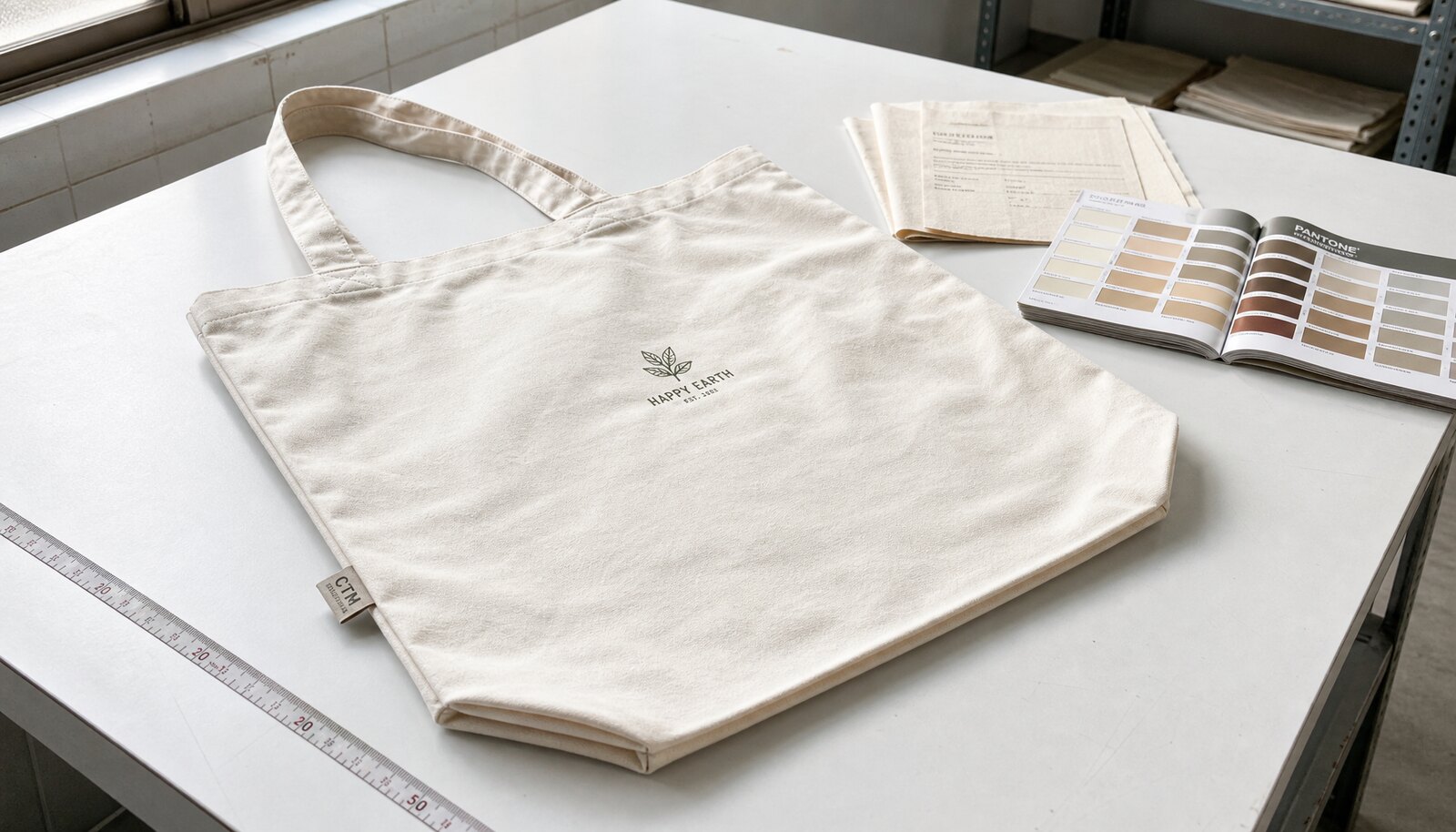
Why ecommerce buyers source cotton shopping bags differently from retail tote buyers
Cotton shopping bags for ecommerce sit between packaging and product. They need to protect the contents, support the brand, and move through a warehouse without becoming a labor problem. That is different from a standard retail tote, where visual appeal may matter more than pack efficiency. For ecommerce programs, the bag often has to fold consistently, ship flat, and survive both fulfillment handling and customer reuse.
The commercial mistake is to treat all cotton bags as the same category. An insert bag, a resale tote, and a gift bag can use the same base material but need different structures, print coverage, and packing formats. A buyer who names the use case clearly will get better quotes and fewer assumptions from suppliers.
There is also a channel difference. Ecommerce operators care about pick speed, carton utilization, and whether the bag fits into an existing pack workflow. Retail buyers may care more about shelf presence, hand feel, and display value. If those priorities are not separated early, the quote will drift toward whichever concern the supplier guesses is most important.
A strong sourcing brief should answer three questions before any supplier is invited to quote: what the bag carries, how it is packed, and how it is inspected. If those answers are vague, suppliers will fill in the gaps with assumptions. That is where price comparisons become unreliable and where hidden cost usually appears.
- Use case comes first: ecommerce insert, resale tote, gift bag, or subscription packaging.
- Do not compare a thin promo bag against a structured reusable shopping bag as if they were the same item.
- For repeat programs, consistency across reorders matters more than a one-time low quote.
Set the fabric spec before you discuss price
Fabric weight is the biggest driver of both performance and cost. For lighter ecommerce use, 140-160 GSM can be enough if the product load is modest and the customer is not expecting a premium tote. For mixed contents or a more substantial brand presentation, 180-220 GSM is a more realistic commercial range. Above that, you are usually buying stronger shape retention, less see-through fabric, and a more premium hand feel, but also more freight volume and slower sewing.
A buyer should not only ask for GSM. Ask whether the number refers to raw cloth or finished cloth, because processing can change the effective result. If the supplier has already planned for washing, heat setting, or print curing, the finished dimensions and hand feel can differ from what the spec sheet suggests. That is why you need a shrinkage allowance in writing.
Weave construction also matters. Plain weave is often the cheapest route and can work well for basic ecommerce use. Twill canvas usually looks more refined, holds structure better, and gives screen prints a cleaner surface. The tradeoff is cost and sometimes a slightly heavier feel. If your brand image depends on a crisp print and a more premium retail look, twill is usually the safer commercial choice.
Material mix matters as well. Some programs use pure cotton to support a natural product story. Others use cotton blends or recycled cotton blends to improve price stability or dimensional consistency. If a blend is acceptable, ask for the exact fiber ratio and evidence of composition, because “cotton” in marketing copy is not the same thing as a documented material declaration.
For dyed or colored bags, ask about fabric shade control, lot matching, and pre-shrinking. Even when the base color is “natural cotton,” buyers often see visible lot variation. If your replenishment program needs consistency across months, define the acceptable shade range in a way the supplier can actually inspect against.
The most useful spec is one that connects the fabric to the use case. A bag that only needs to hold a lightweight promotional set does not need the same body as a heavy retail carry bag. Put the target load, expected reuse level, and print style in the same spec sheet as the GSM target. That is the fastest way to avoid overbuying or underbuying material.
- Ask for raw GSM and finished GSM if the cloth is processed after weaving.
- Define shrinkage allowance before sample approval, not after a problem appears.
- Request the supplier’s weave type, fabric width, and whether the cloth is pre-shrunk or unfinished.
- If blends are acceptable, ask for the exact fiber ratio and material declaration.
Print method, artwork complexity, and the real cost of decoration
Print choice should be matched to artwork, volume, and durability needs. Screen printing remains the most practical option for simple logos, solid blocks of color, and repeat orders. Once setup is absorbed, it is usually the most economical for medium and higher volumes. The risk is not the method itself but the mismatch between the method and the artwork. Fine text, gradients, tiny details, or many colors can quickly increase rejection risk and make screen setup expensive.
Heat transfer and digital print are useful when the order is short, the artwork changes often, or the design requires fine detail. Those methods can save setup time, but buyers should verify adhesion, flex resistance, and wash performance if the bag will be handled often or reused. A print that looks sharp on day one is not necessarily durable after packing, folding, and customer use.
The quote should show all print-related costs separately: screen or plate fees, color matching fees, setup charges, and any reprint policy if the first run is off-spec. Buyers often compare unit prices while ignoring that one supplier has included three screens and another has not. That makes the later landed-cost comparison unfair. For procurement, the key is not the print method in isolation. It is whether the decoration method is appropriate for the actual artwork and order lifecycle.
Also ask about the print area and placement tolerance. A chest-sized logo and a full-front graphic are not priced the same, even if the bag size is identical. If the brand cares about alignment, the supplier should state how far the artwork may shift before it is considered rejectable. That keeps the approval conversation measurable instead of subjective.
For ecommerce operators, the print also has to survive handling. Bags folded into mailers, stacked in bins, or repacked by a 3PL see more abrasion than display-only product. If the design has heavy coverage or thick ink, ask how the print behaves at fold lines and seam edges. A supplier that can explain ink cure, adhesion checks, and rub testing is usually easier to work with than one that simply says the print is “good quality.”
- Screen print fits bold logos, repeat runs, and better unit economics after setup.
- Digital or transfer printing fits short runs, detailed graphics, and frequent design changes.
- Insist that setup fees, plate costs, and reprint terms appear separately in the quotation.
- Ask how the print behaves at fold lines and seam edges, not just on a flat sample.
How MOQ, SKU count, and order structure change the quote
MOQ is not just a factory rule; it is the point where cutting, sewing, print setup, and packing become commercially efficient. A low MOQ may be useful for testing, but the buyer should expect a higher unit price or a simplified production route. If the supplier is quoting multiple colors, sizes, or artwork versions, you need MOQ per SKU, not just one generic number for the whole order.
The biggest hidden cost in low-volume bag programs is complexity. Every additional size or logo can mean a different cutting layout, extra screens or transfer film, separate carton labeling, and more manual handling. If you want variety, try to keep the fabric spec, print placement, and packaging format shared across SKUs so the factory can run them on the same production line. That keeps comparisons clearer and usually reduces waste.
For launches, buyers should compare two scenarios: one larger SKU run versus several small runs. The smaller runs may look flexible, but they often create higher packaging cost, more QA touchpoints, and more shipping overhead per unit. If the program is likely to reorder, it may be better to accept a slightly larger initial quantity in exchange for lower follow-on pricing and fewer process changes.
It also helps to ask suppliers how their price changes once a setup cost is absorbed. A factory that looks expensive at 1,000 pieces may become the better option at 5,000 or 10,000 if its cost curve drops more sharply than a decorator’s. Procurement should ask for actual breakpoint pricing rather than assuming every quote scales the same way.
When a program includes more than one bag variant, keep the comparison discipline tight. A quote for one size, one color, and one print should not be mixed with a quote that covers two sizes, custom labels, and special cartons. Too many sourcing teams compare unit prices without normalizing the SKU count. That creates false savings on paper and real confusion in production.
- Request MOQ per size, per color, and per artwork version.
- Compare one larger SKU run against several small runs before deciding on launch volume.
- Keep fabric, print placement, and packing format shared wherever possible to simplify production.
- Ask for breakpoint pricing at 1,000, 3,000, 5,000, and 10,000 pieces if the supplier can support it.
Supplier route selection: direct factory, trader, or local decorator
The right supplier route depends on volume, complexity, and geography. A direct factory is usually the best fit when the program is repeatable, the buyer needs transparency on fabric and sewing costs, and export logistics matter. This route gives procurement better visibility into where price is coming from and makes it easier to enforce spec control, especially on seam quality, print process, and carton packing.
A trader or sourcing company can make sense when the buyer needs mixed product categories, consolidated shipping, or a single commercial contact across several factories. The tradeoff is that the quote may carry extra handling margin and less visibility into the true cost build-up. For buyers who need apples-to-apples comparison, a trader quote should still show fabric, printing, sewing, packing, and freight assumptions separately.
A local decorator or regional converter can be the fastest solution when the order is small, urgent, or tied to a near-term campaign. This route is often practical if the buyer needs shorter transit time, easier communication, or domestic rework support. But local decoration often relies on pre-made blanks, which can limit fabric choice, construction control, and cost efficiency. That tradeoff is acceptable when speed matters more than technical optimization.
The choice is easier when the buyer defines what matters most: cost transparency, speed, or customization depth. Direct factory is usually strongest on control. Trader is useful for coordination. Local decorator is useful for turnaround. None of them is automatically best; the right route is the one that fits the commercial risk the buyer is actually carrying.
One practical point: ask each route to show proof of who actually makes the bag. If the quote comes from a trader, ask for factory identity, production location, and whether the factory is audited or otherwise verified. If the quote comes from a local converter, ask what elements are outsourced. That prevents surprises when a sample approved in one place is later produced in another.
- Direct factory: best for repeat volume, spec control, and better cost transparency.
- Trader: useful for consolidated buying, but ask for a full cost breakdown and service scope.
- Local decorator: useful for urgent or small-batch orders, but confirm blank quality and decoration durability.
- Ask who actually makes the bag and where the production happens.
Build a landed-cost comparison, not a unit-price comparison
For cotton shopping bags for ecommerce, landed cost is the number that actually matters. The cheapest factory quote may still cost more once freight, carton size, packing density, label fees, and rework risk are included. A slightly higher unit price can be more competitive if the bag packs flatter, ships more efficiently, and passes inspection the first time.
When comparing suppliers, hold the spec constant. That means the same finished size, the same fabric weight, the same print method, and the same packing format. Once those are fixed, procurement can compare supplier-side differences more fairly: factory versus trader, inland location versus port-adjacent, standard packaging versus retail-ready packaging, and standard QC versus enhanced inspection support.
It also helps to separate direct cost from process cost. Direct cost is the bag itself. Process cost includes screens or plates, sampling, carton design, freight impact, warehouse labor, and the cost of remaking rejected goods. These are not theoretical extras. They can materially affect the delivered cost per usable bag, especially on lower-volume programs.
If you want a meaningful quote comparison, ask each supplier to quote the same Incoterm and to disclose what is excluded. EXW quotes without packing details are difficult to compare against FOB or DDP offers. If one supplier includes test costs and another does not, the gap is not real until those costs are normalized.
A more disciplined comparison sheet should also show commercial assumptions side by side. For example: carton count, gross carton weight, print setup, test fees, sample freight, and whether the supplier expects the buyer to approve artwork changes before or after the first pre-production sample. Those assumptions often explain why one quote looks low but becomes expensive later.
- Compare suppliers on the same Incoterm, same packing, same artwork scope, and same test requirement.
- Measure carton dimensions and freight impact, not only unit price.
- Treat setup fees, carton design, and rework risk as part of the commercial comparison.
- Normalize excluded costs before deciding which offer is actually cheaper.
Supplier evidence: what to verify before you award the order
Procurement value increases when the supplier can prove what it claims. For cotton shopping bags, useful evidence includes recent test reports, factory audit documents if available, certificate numbers, and sample approval records. Verbal assurance is not enough when the order depends on print durability, seam strength, or compositional accuracy. Ask for documents that are dated, readable, and traceable to the actual product or material lot being quoted.
If a supplier mentions a certification, confirm the scope and the issue date. A certificate should match the product category, production site, or material process the buyer cares about. If the supplier provides test reports, check whether the report references the same fabric construction, color, and construction method in the quote. A report for a different fabric or a different factory line is not a substitute for current evidence.
Audit documents can also be helpful, but they should be treated as context rather than a blanket guarantee. A past audit does not automatically prove every future lot will be perfect. What matters is whether the supplier can show stable processes, a real inspection system, and a willingness to document corrective action when a defect appears. That is more useful than a generic claim of “high quality factory.”
For traceability, ask the supplier to identify the approved sample and show how the bulk production lot will be linked to it. That can be as simple as a signed seal sample, a photo set, or an internal reference number on the production file. The goal is to make sure the bulk lot can be checked against the exact version that procurement approved.
Evidence is especially important when buying across borders. If a supplier cannot provide a clean document trail, the buyer may spend more time solving disputes than managing supply. The standard should be simple: if the supplier wants trust, it should support the quote with proof.
- Ask for recent test reports, audit documents, and certificate numbers with issue dates.
- Verify that any report matches the same fabric, color, and construction being quoted.
- Require traceability from approved sample to bulk lot.
- Treat generic quality claims as unsupported unless the supplier can document them.
Sample approval should function like a production gate, not a formality
A usable sample is more than a visual check. It is the buyer's chance to lock the standards that will govern production. Measure the sample against the spec sheet for width, height, gusset, handle length, and placement of logos or labels. Check the hand feel, folding behavior, and how the bag looks both open and packed flat. If the bag will be shipped folded in bulk, the sample should be tested in that same folded state.
For ecommerce use, a simple load and carry check is valuable. Fill the bag with realistic contents, not just an empty box. That exposes weak handle attachment, awkward balance, or bottom seam strain before the order is approved. If the bag is intended to carry a bundle, the load test should reflect that bundle, not a generic object that is easier to carry.
The sample should also be checked for color consistency under the same light source that will be used for approval. Cotton can vary visually from lot to lot, and print ink can look different on a natural fiber surface than on a coated substrate. If the buyer wants a specific finish, this is the moment to lock it down. Keep one signed sample from the approved stage and one reference sample from production. Those samples are useful if a dispute appears later.
Do not approve a sample that still has unresolved questions around shrinkage, print cure, or carton fit. If those details are vague at sample stage, they will not improve during mass production. The sample is the place to remove ambiguity, not to create a polite but incomplete approval.
A better approval form also records what was checked and what was not. That includes measurement results, print position, defect photos, and any agreed exceptions. If the sample is approved with one known deviation, note it explicitly. Otherwise the factory may treat the exception as a permanent standard, which creates avoidable disagreement on the next batch.
- Measure the sample physically, not just visually.
- Test the bag with realistic contents and the folded condition used in bulk packing.
- Retain a signed approval sample and a production reference sample.
- Document any approved deviation so it does not become an unspoken standard.
Packing format, carton spec, and warehouse handling details buyers should not skip
Packing decisions affect freight, labor, and damage risk. Bulk packing is usually the most efficient route for ecommerce fulfillment because it reduces carton volume and unpacking labor. That makes it the default choice for most procurement teams buying cotton shopping bags for ecommerce. Retail-ready individual polybags only make sense when the bag will sit on shelf, be presented as a gift item, or require added protection before sale.
Carton specifications need to be part of the quote, not an afterthought. Ask for carton dimensions, gross weight, pieces per carton, and whether the carton is single-wall or double-wall. If the bag is light but bulky, carton size can become the freight driver. If the carton is too large or too weak, it can crush in transit or create warehouse handling problems.
Warehouses also care about labeling. A carton may be technically correct but operationally useless if the SKU, color, PO number, and quantity are not marked clearly. If barcodes are required, state the barcode standard and placement. If the bags are packed in inner bundles, specify the bundle count and whether the inner wrap must be recyclable, plain, or printed.
For long transit, ask for a simple packaging compression or drop check on the finished carton. Cotton bags are not fragile in the same way as ceramics, but poor packing can still distort the fold, weaken the corners, or scuff the print. If the bags arrive to a 3PL, the first failure often shows up in warehouse efficiency rather than product return rate.
If the bags are being inserted into outbound ecommerce parcels, the fold format matters more than many buyers expect. A bag that folds neatly saves pick time and reduces rework in the packing line. The supplier should be able to describe the folded size and, if asked, provide a packing photo that shows how the bag sits inside the carton or mailer.
- State pieces per carton and maximum carton weight in the RFQ.
- Request carton dimensions and carton strength so freight and handling can be estimated realistically.
- Ask for a packaging drop or compression check if cartons will move through rough transport or cross-dock handling.
- Confirm the folded size if the bags must fit into an ecommerce mailer or insert workflow.
QC standards buyers can actually enforce
Operational QC should use measurable standards. Start with fabric inspection: look for holes, stains, thin spots, uneven weaving, and serious slubs in visible panels. For acceptable tolerance, define the range in your PO rather than relying on broad language like “good quality.” Then check finished dimensions on a sample from the batch, because cutting and sewing can shift the final size even when the fabric itself is correct.
Stitching deserves its own acceptance rules. The most common practical failures are skipped stitches, loose thread tails, crooked seams, and weak reinforcement at handle attachments. Buyers should ask for stitch density, reinforcement type, and whether the seam is single- or double-pass. If the bag is designed for heavier contents, the handle connection area should be checked more carefully than the body panel.
Printing should be judged for alignment, color density, edge clarity, and resistance to cracking under flex. If the artwork is screen printed, ask for a rub check or flex test on a folded area. If the print is transferred or digitally applied, ask how the supplier verifies adhesion and whether it can pass the intended use cycle. If the bag will be washed or steam treated, request a wash fastness reference or test result before approval.
For inspection method, a stated AQL is better than a vague “100% checked” promise. Ask the supplier which AQL level it uses, how it classifies major and minor defects, and whether the final inspection includes carton count verification. If the supplier is serious, it should be able to show pre-shipment photos or an inspection report with actual defects called out. That gives procurement something objective to review instead of relying on verbal assurance.
Finally, check packing quality itself. Count cartons, verify labels, and confirm the inner pack quantity. A lot can pass sewing inspection and still fail because the cartons are mixed, underfilled, or mislabeled. For ecommerce operations, packing accuracy is part of quality, not a separate admin task. The most useful QC sheets are the ones that name the defect, define the threshold, and say who signs off when an exception is accepted.
A practical inspection sheet for cotton bags should separate cosmetic defects from functional ones. Small shade variation may be acceptable on natural cotton if both sides were approved in advance, while a seam skip near the handle or an incorrect carton count should be treated as a major issue. That distinction makes disputes easier to resolve and avoids overreacting to harmless variation.
- Define fabric, stitching, print, and packing acceptance separately.
- Use AQL or another explicit inspection method and state it in the PO.
- Request rub, flex, or wash-related checks where the print or use case requires them.
- Classify defects by type so cosmetic variation is not confused with functional failure.
Specification comparison for buyers
| Decision area | Buyer-ready spec / comparison point | What to ask suppliers to disclose | Commercial tradeoff to check |
|---|---|---|---|
| Fabric weight | 140-160 GSM for light ecommerce use; 180-220 GSM for heavier, premium, or resale-facing bags | Whether GSM refers to raw cloth or finished cloth; tolerance by lot; any pre-shrink or heat-set process | Lower GSM cuts cost and freight volume but increases transparency, wrinkling, and seam stress |
| Weave / hand feel | Plain weave for cost-sensitive programs; twill canvas for structure and cleaner print | Exact weave type, yarn count if available, and whether the cloth is pre-shrunk or unfinished | Plain weave is usually cheaper; twill often improves shape retention and print appearance |
| Material comparison | Natural cotton for a softer hand; recycled cotton blends or cotton/poly blends when price or shrink control matters | Fiber composition, blend ratio, and whether the supplier can provide material composition documentation | Pure cotton is more natural in positioning, but blends may improve dimensional stability and drying behavior |
| Construction style | Simple gusseted tote for basic carry; box-bottom or structured body for better packing and appearance | Pattern type, seam map, gusset depth, and whether the body is cut-and-sewn or made from blanks | Structured bags cost more but often pack and present better in ecommerce inserts or gift orders |
| Fabric width and yield | Ask for cutting plan and expected yield per roll or bale | Fabric roll width, wastage allowance, and whether shrinkage allowance is already included | A low piece price can hide poor yield and extra fabric waste |
| Finished size tolerance | Typical control target: ±0.5 cm on small bags, ±1 cm on larger bodies; handle length ±0.5 cm | Measured finished dimensions after sewing, not just cutting dimensions | Loose tolerance creates inconsistent folding, carton fit, and load distribution |
| Shrinkage allowance | Common commercial allowance: 3-8% depending on washing, printing, and pre-treatment | Whether the supplier has already built in shrinkage allowance and how it was tested | If not disclosed, buyers can end up with smaller finished bags after steam, wash, or heat curing |
| Handle style | Self-fabric straps for soft hand feel; webbing handles for stronger carry performance | Handle width, handle length, attachment method, and bar-tack count | Thin or under-reinforced handles cause returns and customer complaints even when the bag body is fine |
| Stitching spec | Double-needle side seams; reinforced handle points; no skipped stitches in visible zones | Stitch count per inch, reinforcement method, and whether critical seams are single- or double-pass | Weak seam specs are a common hidden cause of failure under ecommerce parcel loads |
Buyer checklist before sampling
- Confirm the bag’s end use before asking for quotes: ecommerce insert, resale tote, gifting bag, or subscription packaging.
- Lock finished size, gusset depth, handle length, target load, and folding format in one specification sheet.
- State the fabric construction, GSM target, shrinkage allowance, and whether the cloth must be pre-shrunk or heat-set.
- Define print method, print size, color count, artwork file type, and the acceptable registration tolerance.
- Specify stitching details: seam type, reinforcement at handles, stitch density, and loose-thread trimming requirements.
- Ask for packing details: pieces per carton, carton dimensions, carton strength, inner pack type, label content, and barcode location.
- Request sample approval against measurable criteria: dimensions, hand feel, color match, print placement, seam quality, and foldability.
- Compare quotations only after all suppliers are quoting the same Incoterm, carton spec, test requirement, and artwork scope.
- Ask for verifiable supplier evidence: recent test reports, audit documents if available, and clear sample-to-bulk traceability.
- State defect thresholds in the PO, including which cosmetic marks are acceptable and which are automatic rejects.
Factory quote questions to send
- What exact fabric construction, GSM, and shrinkage allowance are included in your price, and what tolerance do you allow by lot?
- Is the quoted GSM based on raw cloth or finished cloth after washing, printing, or heat curing?
- What print method are you pricing, how many colors or passes are included, and what setup or plate fees apply?
- If there are print plates, screens, or transfer films, are they one-time charges or repeat charges on every reorder?
- What is your MOQ per size, per fabric color, and per artwork version? Please show the price break at 1,000, 3,000, 5,000, and 10,000 pieces if available.
- What carton spec are you using, how many pieces per carton, and what is the gross weight and carton dimension by SKU?
- Are woven labels, care labels, hangtags, barcodes, or carton marks included, or are they extra?
- What testing can you support, including wash fastness, rub fastness, seam strength, dimensional stability, and colorfastness? Please state who pays for the tests.
- What is your rework policy if print position, color, size, or stitching falls outside the agreed tolerance?
- Can you share your inspection method, AQL level, defect classification, and the photos or reports you provide before shipment?
Quality-control points to confirm
- Fabric weight should match the agreed spec with a commercial tolerance defined in the PO; inspect for thin patches, holes, oil marks, slubs, and visible weaving defects in front-facing panels.
- Finished dimensions should be checked on a defined sample size from each lot; set a practical tolerance and reject any bag outside the limits for width, height, or gusset depth.
- Seams should be straight, even, and fully closed; no skipped stitches, no broken thread tails longer than the agreed limit, and no loose handle attachment points.
- Handle attachments should include the approved reinforcement method, such as bar-tacks or double stitching; check both the stitch count and the symmetry of the left/right handles.
- Print should be checked for registration, density, ghosting, smudge marks, edge clarity, and obvious pinholes; compare against the approved sample under the same light source.
- For screen print, request a simple rub test and a flex/crack check on folded areas; for digitally printed or transferred graphics, check adhesion at edges and high-stress folds.
- Where the bag will be washed or steam-pressed, ask for a wash fastness reference or test result and confirm the expected shrinkage after the process.
- Inspection should follow a defined method such as AQL with a stated major/minor defect classification; do not accept “100% checked” without a method or record.
- Use practical defect categories in the inspection sheet: fabric stain, hole, seam skip, loose thread, misaligned print, incorrect label, short handle, underweight carton, and mixed SKU carton.
- Set sample sizes for enforcement: for example, inspect a representative sample per lot and increase checks when a new supplier, new color, or new print method is introduced.