Start With the Retail Job
A hotel retail pouch is not just a small cotton bag with a logo. It may be packaging for a spa product, a souvenir item, a guest welcome piece, a jewelry pouch, or a branded container for an amenity kit. Each job changes the spec. A pouch used behind the front desk can be more functional. A pouch sold on a shelf has to look intentional when it arrives, when it is handled by staff, and when a guest picks it up.
Procurement teams get better quotes when they describe the job before they describe the pouch. Write one clear use sentence first: for example, a natural cotton drawstring pouch for a 120 g bath salt jar sold in the spa retail area. That tells the supplier more than a logo file and a rough size. It gives context for fabric weight, opening width, seam strength, packing, and sample testing.
The item inside should drive the first round of decisions. Rigid products need enough ease so corners do not stress the seams. Soft goods may need a fabric that drapes neatly rather than stands up stiffly. If the pouch is meant to be reused after purchase, the cord and channel deserve more attention than they would for one-time protective packaging.
- Define the pouch as retail packaging, guest gift, amenity container, souvenir, or back-of-house packaging.
- List the fill item, including dimensions, weight, and whether it has sharp corners or fragile surfaces.
- Decide whether shelf presentation, protection, reusability, or low-cost utility is the main priority.
- State the brand feel in plain language: premium, quiet, natural, rustic, minimal, or functional.
Turn the Idea Into an RFQ Spec
A useful RFQ removes guesswork. For cotton drawstring pouches wholesale buying, the core spec should include finished size, fabric weight, weave, base color, cord construction, decoration method, packing, carton assumptions, MOQ, sample process, lead time, and incoterm. If those details are missing, two quotes may look comparable while covering different products.
Finished size matters more than cut size. Cotton can shrink, seams use fabric, and the drawcord channel reduces usable height. If the pouch must fit a specific product, ask the supplier to confirm both outer finished dimensions and usable internal dimensions. For small pouches, a tolerance around plus or minus 0.5 cm is common, but the right tolerance depends on the product fit and the buyer's acceptance standard.
Separate fixed requirements from preferences. A fixed requirement might be 240 gsm natural cotton, one-color screen print, double cotton cord, and individual barcode polybag. A preference might be a woven side label or a specific fold. This helps factories quote cleanly and gives procurement room to manage cost without accidentally weakening the part that matters most.
- Write finished dimensions as width x height, with tolerance and usable fit notes.
- Name the fabric gsm range, weave, color, cord type, decoration method, and packing route.
- Mark optional upgrades clearly so they do not get confused with base requirements.
- Ask the supplier to confirm all assumptions in writing before sampling starts.
Choose Fabric With the Product in Mind
For many hotel retail programs, 220-260 gsm cotton is a sensible starting range. It usually feels substantial enough for a paid retail item while staying flexible and efficient to sew. It also gives a cleaner surface than very lightweight cotton. When the pouch needs a more structured hand, or when it holds heavier items such as jars, candles, or boxed sets, 280-340 gsm may be appropriate.
Going heavier is not automatically better. A thick fabric can make a small pouch feel bulky, increase carton volume, and create a stiffer drawstring closure. It may also change print behavior because ink sits differently on heavier or more textured cotton. The buyer should match gsm to the item, not to a vague idea of premium.
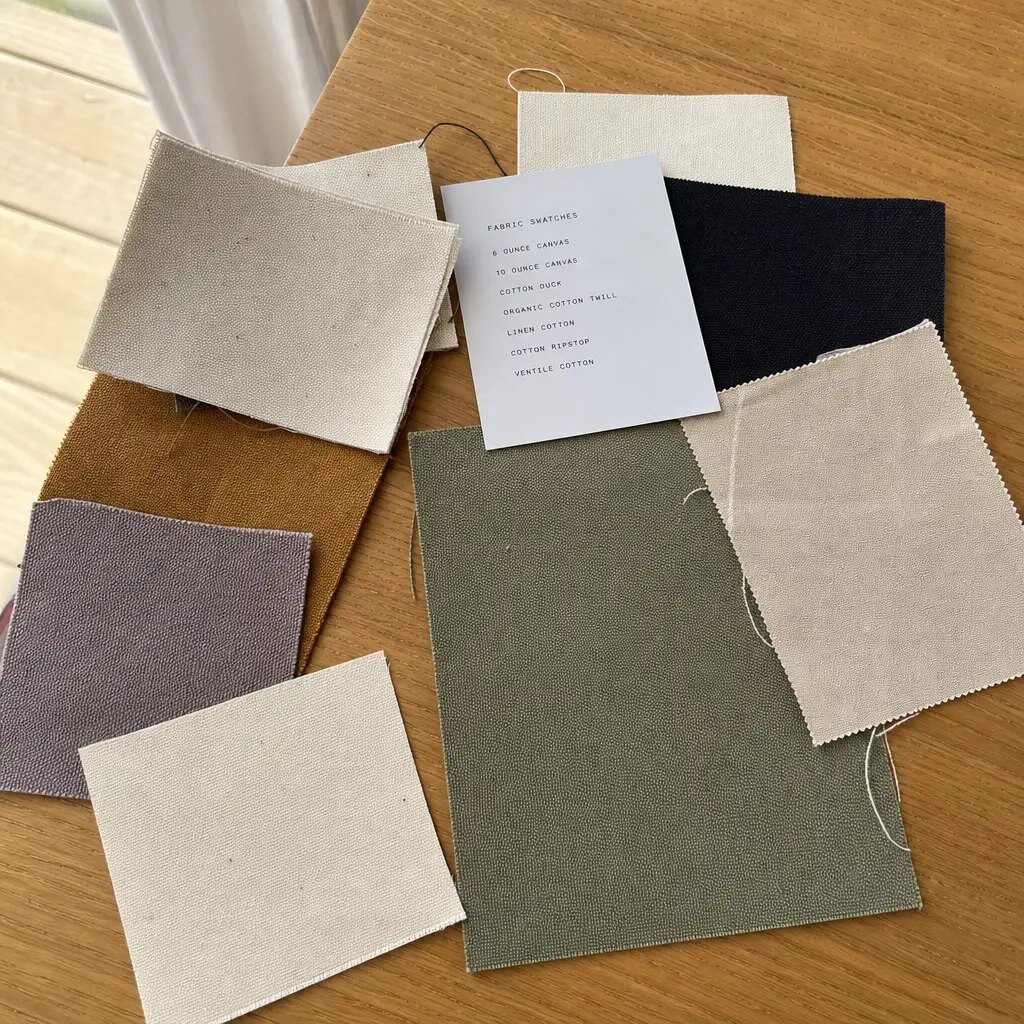
Weave is equally important. A tighter plain weave usually supports sharper printing and a neater retail look. A looser weave can feel more natural, but it may show contents, distort print edges, or create a more casual appearance than the hotel wants. If the logo has small text, ask to see it printed on the intended fabric before approving production.
- Use 220-260 gsm for standard spa, amenity, souvenir, and gift pouches.
- Use 280-340 gsm when the pouch must feel more structured or carry heavier contents.
- Ask whether the quoted fabric is plain weave, canvas-like cotton, muslin-style cotton, or another construction.
- Request a fabric swatch from the intended production material, not a generic showroom sample.
Control Color and Shrinkage Early
Base color sounds simple until repeat orders begin. Natural unbleached cotton is popular for hotel retail because it feels honest and low-key, but it can vary from lot to lot. One batch may look warmer, another slightly cooler or darker. That variation may be acceptable for a natural product story, but it should be approved rather than discovered at receiving.
Bleached white cotton gives a cleaner background for print color, especially for spa, wellness, or bath retail collections that use crisp packaging. Dyed cotton can align with a property palette or seasonal line, but it needs stronger shade controls and a colorfastness check. If the pouch will touch light-colored goods, rub testing becomes more important.
Shrinkage should be discussed before the first sample. The factory may use pre-shrunk fabric, manage shrinkage through cutting allowance, or recommend washing only under certain conditions. Buyers do not need to over-engineer the spec, but they should know whether the approved sample is representative of bulk production. A pouch that becomes slightly smaller after finishing or storage can create fit problems if the original size was tight.
- Approve a shade range for natural cotton if exact color matching is not realistic.
- Use white or dyed cotton when brand color accuracy matters more than natural variation.
- Ask how shrinkage is handled and whether the sample reflects the production process.
- Check for color transfer if the pouch will touch light goods, paper inserts, towels, or apparel.
Specify Cord and Construction Clearly
The drawstring is not a small detail. It is the moving part the guest touches. A weak cord, narrow channel, or poorly reinforced exit can make an otherwise attractive pouch feel cheap. For retail, a double drawcord is usually safer because it closes more evenly and feels familiar in hand.
The RFQ should state cord material, cord diameter, cord length, channel height, seam allowance, and cord-end finish. Cotton cords can match the body nicely, while polyester blends may slide differently and resist some wear. Cord ends may be knotted, heat-sealed where appropriate, or finished with tips if the brand wants a more polished look. Each choice affects both cost and feel.
Reinforcement matters most at the cord exits and high-stress seams. Ask whether bartacks or extra stitching are included. If the pouch will hold a heavy jar or boxed item, test the sample by opening, closing, and lifting it repeatedly with the real fill weight. A still photo will not show whether the channel binds or the exit begins to fray.
- Specify single or double drawcord, cord material, diameter, length, and end finish.
- Confirm top channel height so the cord moves smoothly without making the opening bulky.
- Require reinforcement at cord exits for retail handling or reusable pouches.
- Test closure action after the pouch is filled, not only when it is empty.
Build a Smart Size Family
Too many custom sizes make hotel retail programs harder to manage. Every extra size can create a separate MOQ, sample, carton configuration, barcode, purchase order line, and reorder risk. A tighter size family is usually easier to buy and easier for properties to replenish.
A practical approach is to create three core sizes and add one custom hero size only when a product truly needs it. Small pouches can hold jewelry, soap, sample sets, or small amenities. Medium pouches can work for spa goods, candles, folded textiles, or gift bundles. Larger pouches can carry robes, slippers, apparel, or multi-item sets. The exact dimensions should come from the product range, not from a supplier's default list alone.
When comparing suppliers, ask whether one construction can be used across multiple sizes. Keeping the same fabric, cord, print method, and packing route while changing only dimensions can reduce complexity. It also helps the finished collection look consistent across different hotel outlets.
- Group products by size and weight before creating pouch dimensions.
- Limit the range to core sizes unless a custom size solves a real fit problem.
- Keep fabric, cord, and decoration consistent across the assortment where possible.
- Assign unique SKUs and barcodes only after size and packing are locked.
Match Decoration to Cotton Reality
A screen print is often the most practical decoration for cotton drawstring pouches. It works well for one- or two-color logos, short wordmarks, and simple icons. For hotel retail, that restraint can be an advantage. A clean mark on natural fabric often looks more premium than an overworked graphic.
Cotton is absorbent and textured, so artwork needs to be realistic. Fine lines, tiny reversed text, gradients, and close color traps can blur or fill in. A digital proof only confirms placement and basic layout. It does not prove ink spread, opacity, or edge sharpness on the chosen fabric. If the artwork includes small type, ask the factory to confirm the minimum printable size and provide a physical sample.
Woven or sewn labels are useful when the brand wants a quieter finish. A small side label or front label can reduce ink coverage and add a more tailored look. Embroidery may work for certain designs, but it can pucker lighter fabrics and may not suit small pouches. The safest route is to choose the decoration method before sampling and keep the artwork within what that method can reliably produce.
- Use screen print for simple flat artwork and repeatable cost control.
- Use woven or sewn labels for subtle premium branding.
- Avoid small reversed text, gradients, and delicate linework unless physically tested.
- Lock logo placement relative to seams, bottom edge, and drawcord channel.
Compare Supplier Quotes Fairly
A low unit price is only useful when the scope is identical. One quote may include individual polybags, barcode stickers, and export cartons, while another may assume loose bulk packing. One supplier may include a one-color print setup, while another adds it later. Procurement should normalize the quote before judging value.
Ask each supplier to price the same finished size, same gsm, same fabric color, same cord, same decoration, same packing, and same incoterm. FOB is often easier for comparison because export handling is included more consistently, while EXW may work if the buyer already controls logistics. The key is to make the quote readable to finance, merchandising, and operations, not just sourcing.
Also ask who controls each production step. A direct factory with in-house sewing, printing, and packing may offer tighter control for repeat programs. A trading company may be useful when the buyer is consolidating several product types. Neither route is automatically right or wrong. What matters is clear responsibility for fabric approval, print matching, packing accuracy, and shipment readiness.
- Normalize every quote by finished size, gsm, print method, packing, carton count, and incoterm.
- Separate unit cost, setup charge, sample charge, and optional packing charges.
- Ask whether the same supplier controls sewing, decoration, inspection, and packing.
- Request a repeat-order price so the long-term cost is visible.
Approve Samples Like a Buyer, Not a Viewer
A pre-production sample should be made from the intended bulk fabric and decorated with the final method. A mockup is helpful for layout, but it cannot show hand feel, shrinkage, cord movement, print spread, odor, or shelf shape. For hotel retail, those details are the product experience.
Review the sample with the real fill item or a weighted substitute. Close it, open it, place it on a shelf, lift it by the cords, and check how the body falls. Look at the logo in daylight and under white retail lighting. Check whether the opening is wide enough for staff to pack efficiently. If the pouch must be folded in a specific way, test that too.
The approval record should be written and visual. Keep dated photos, dimensions, fabric notes, print notes, packing notes, and any approved tolerances. If the supplier later proposes a fabric substitution or packing change, procurement can compare it against the approved sample instead of relying on memory.
- Approve a physical pre-production sample before mass production.
- Test with the real item, not an empty pouch only.
- Measure finished width, height, channel, cord length, and logo placement.
- Keep a dated approval file with photos and written specs.
Make Packing Retail-Ready
Packing is where many good pouch programs lose their polish. If the pouches are going directly into a hotel retail environment, they should not arrive loose, dusty, or heavily creased. Individual polybags, clean folding, barcode stickers, and consistent inner packs help receiving teams count, scan, and store product quickly.
Carton data should be requested before production is finished. Ask for quantity per carton, carton dimensions, net weight, gross weight, and whether sizes or colors are separated. Mixed cartons may look efficient at the factory, but they can slow receiving and create inventory errors across multiple properties or outlets. If the buyer needs mixed cartons, the mix ratio should be written clearly.
Moisture and odor checks also belong in the packing discussion. Cotton can absorb smells during storage or shipping, and humid lanes can create issues if cartons are not managed well. Buyers should ask about airing time, carton lining, silica packets if appropriate, and final inspection before sealing. Small packing choices can decide whether the pouch feels fresh when opened.
- Use individual packing for shelf retail and bulk packing only for back-of-house use.
- Confirm barcode format, placement, scan readability, and SKU labeling before packing starts.
- Keep sizes and colors separated by carton unless mixed cartons are operationally required.
- Request first-carton photos for orders with strict retail or warehouse requirements.
Specification comparison for buyers
| Spec decision | Recommended option | When it fits | Buyer risk to check |
|---|---|---|---|
| Supplier route | Direct factory with controlled sewing, decoration, and packing | Repeat hotel retail programs, multi-property assortments, and orders where consistency matters | Outsourced printing or packing can create accountability gaps unless responsibilities are written into the quote |
| Fabric weight | 220-260 gsm cotton for most retail pouches; 280-340 gsm for heavier or premium items | Amenity kits, spa retail, gift sets, souvenir packaging, and branded resale items | Thin fabric may reveal contents or feel disposable; heavy fabric can raise cost, carton bulk, and closure stiffness |
| Weave choice | Tight plain weave for cleaner print and a more polished hand feel | Logo clarity, shelf presentation, and repeatable production are priorities | Open weave may distort artwork, absorb ink unevenly, or make the pouch feel too rustic for hotel retail |
| Base color | Natural unbleached, bleached white, or dyed cotton confirmed by shade tolerance | The pouch must match the retail line, spa collection, or property brand palette | Unbleached cotton varies by lot; white and dyed fabrics need stronger shade and color-transfer checks |
| Print method | 1-2 color screen print for simple logos; woven or sewn label for restrained premium branding | The artwork is flat, repeatable, and viewed at close range in a retail setting | Fine text, thin lines, gradients, and reversed details can blur or fill in on absorbent cotton |
| Closure construction | Double drawcord with reinforced channel and bartacks or reinforcement at cord exits | Guests or staff will open and close the pouch repeatedly before or after purchase | Weak cord exits are a common early failure point, especially with heavier fill items |
| Size strategy | Three core sizes plus one custom hero size if needed | The buyer manages several SKUs, properties, or replenishment cycles | Too many custom sizes increase MOQ pressure, sample rounds, carton complexity, and reorder errors |
| Packing route | Individual polybag with barcode for retail; bulk pack only for back-of-house use | Store receiving, inventory scanning, and shelf presentation need to be controlled | Loose packing can cause dust, creasing, count disputes, and slower receiving |
| Sample route | Pre-production sample from intended bulk fabric and final decoration method | Fit, fabric hand, print behavior, and closure performance need approval before production | Digital mockups do not show shrinkage, ink spread, odor, cord function, or shelf shape |
Buyer checklist before sampling
- Define the retail job in one sentence: amenity kit, spa product pouch, souvenir, welcome gift, jewelry pouch, or stand-alone resale item.
- List the exact fill item dimensions, weight, and shape, then state whether the pouch fit should be snug, relaxed, or display-friendly.
- Specify finished size, not cut size, and write the acceptable tolerance before requesting prices.
- Choose the fabric weight range and ask the supplier to confirm the gsm tolerance for the production lot.
- State whether the cotton should be natural unbleached, bleached white, or dyed, and whether shade variation is acceptable across repeat orders.
- Confirm weave type, cord material, cord diameter, cord length, channel height, and cord-end finish.
- Require reinforcement at cord exits when the pouch will be opened repeatedly or used with heavier contents.
- Approve logo placement, decoration method, maximum print colors, minimum text size, and any woven label, sewn label, or hangtag requirements.
- Ask for a pre-production sample made from intended bulk fabric with the final decoration method, not only a digital artwork proof.
- Test the sample with the real fill item or a weighted substitute, then check closure behavior, shelf shape, stitching, odor, and logo appearance under retail lighting.
Factory quote questions to send
- What exact fabric composition, weave, gsm, and gsm tolerance are included in this quote?
- Is the quoted size the finished size after sewing and shrink allowance, or the cut size before assembly?
- What seam allowance, top channel height, and usable internal dimensions are assumed?
- What drawcord material, diameter, length, and cord-end finish are included?
- What print method is included, how many colors are included, and what setup charge applies?
- If woven labels, sewn labels, embroidery, hangtags, or barcode stickers are required, are they included in the unit price or quoted separately?
- What is the MOQ per size, per fabric color, and per artwork version?
- Can the factory keep one base construction and vary only one dimension across the assortment to reduce MOQ pressure?
- What sample cost, sample lead time, and sample revision policy apply before bulk production?
- What carton quantity, carton dimensions, net weight, gross weight, and packing method are quoted for each SKU?
Quality-control points to confirm
- Finished size stays within the agreed tolerance, usually around plus or minus 0.5 cm for smaller pouches unless the buyer approves a different band.
- Fabric weight is within the agreed gsm range, with no obvious thin spots, weak yarn areas, oil marks, holes, or weaving gaps beyond normal fabric character.
- Shade is consistent within the shipment and remains within the approved tolerance for natural, white, or dyed cotton.
- Main seams are straight and even, with no skipped stitches, popped stitches, loose seam ends, or uneven seam allowance that changes the pouch shape.
- Cord exits are reinforced and do not fray, tear, or deform after repeated hand pulls during inspection.
- Cord length is even on both sides, and the drawstring closes smoothly without snagging, twisting badly, or bunching inside the channel.
- Logo placement matches the approved sample, and print opacity, edge sharpness, and color tone are acceptable under daylight and white-light inspection.
- Fine text, small icons, and thin lines remain legible at normal viewing distance, with no heavy ink spread, blur, or fill-in.
- No loose threads longer than 5 mm remain on the inside or outside after trimming and final finishing.
- No visible stains, needle damage, scuffs, odor issues, color transfer, or packing damage appear on fabric, seams, labels, cords, or retail-facing surfaces.