Start with the bookstore program, not the pouch photo
A university bookstore RFQ should explain what the cotton drawstring pouch must do before asking for price. The same pouch shape can be used as paid merchandise, alumni gift packaging, orientation-kit packaging, graduation bundle packaging, stationery storage, jewelry packaging, or a reusable bag for small accessories. Each use changes the right fabric weight, cord style, print method, packing format, and defect tolerance.
The weakest RFQs usually contain a logo, a picture from another supplier, and a target quantity. That leaves the factory to guess the construction and often leads to quotes that are impossible to compare. One supplier may quote 120 GSM cotton with bulk packing, while another quotes 180 GSM cotton with individual labels. Both may call the item a cotton drawstring pouch, but the landed cost and retail result are different.
Begin the RFQ with the commercial purpose, expected handling, and receiving needs. If the pouch is sold as a retail SKU, barcode cleanliness and individual packing may matter. If it is used for bookstore staff to assemble event bundles, flat bulk packing and carton count accuracy may be more important than retail presentation. This context helps suppliers quote a pouch that supports the bookstore operation instead of only matching a visual reference.
- State whether the pouch is for sale, gifting, bundling, product protection, or temporary event packaging.
- List the product or bundle that must fit inside, including the largest item dimensions.
- Identify whether the customer keeps the pouch as reusable merchandise or discards it after opening.
- Note receiving constraints such as department splits, delivery window, PO number marking, and carton labeling.
- Mention brand controls, licensed marks, or university color rules that require formal artwork approval.
Use a fill-in RFQ quote sheet
To satisfy a real procurement workflow, the RFQ should include a compact quote sheet suppliers can complete line by line. This removes ambiguity and gives the buyer a clean comparison across factories, trading companies, and repeat quotes. It also forces suppliers to show which assumptions drive the price.
The quote sheet below can be pasted into an email or spreadsheet. Add one line per pouch size, artwork version, or packing style. If the bookstore has three department logos on the same pouch size, list them as separate lines so setup charges, MOQ, and packing splits are visible. If the supplier offers alternatives, ask them to quote the base specification first and then show optional adders separately.
Keep the quote sheet short enough that suppliers actually complete it. Long RFQs often receive partial answers. The fields below focus on the items that most often cause quote gaps: fabric, print, cord, packing, sample cost, carton data, lead time, and Incoterms.
- RFQ line: item name, finished size, cotton GSM, fabric color, cord type, artwork name, print method, print colors, print area, order quantity, packing method, unit price, setup charge, sample fee, sample lead time, bulk lead time, carton quantity, carton size, gross weight, CBM, Incoterms, payment terms, quote validity.
- Example line: cotton drawstring pouch, 15 x 20 cm finished flat size, 160 GSM natural cotton, braided cotton cord, bookstore crest one side, one-color navy screen print, 8 x 8 cm print area, 2,000 pcs, 100 pcs per inner bag, bulk flat pack, supplier to fill price and carton data.
- Ask suppliers to mark whether price is per size, per artwork, per color, or total quantity.
- Require optional adders for individual polybag, paper band, barcode label, hangtag, second-side print, extra print color, and rush production.
- Request a separate repeat-order price if screens, artwork files, and approved materials can be reused.
Choose cotton GSM by use and pouch size
For most university bookstore cotton drawstring pouches, 140-180 GSM is the practical starting range. It feels reusable, supports screen printing, and still packs efficiently. Lighter 100-120 GSM cotton can work for very low-cost event packaging, but it may look thin, reveal the product outline, and make dark ink appear harsh on natural cotton. Heavier 200-240 GSM cotton can look more premium, but it may raise cost, freight, and cord-channel stiffness.
GSM should be considered together with pouch size. On a small pouch, heavy cotton folded into the top tunnel can make the drawcord difficult to move. On a larger pouch, fabric that is too light may collapse around the logo and wrinkle during handling. A good RFQ connects GSM to finished size, product weight, and how often customers will open and close the pouch.
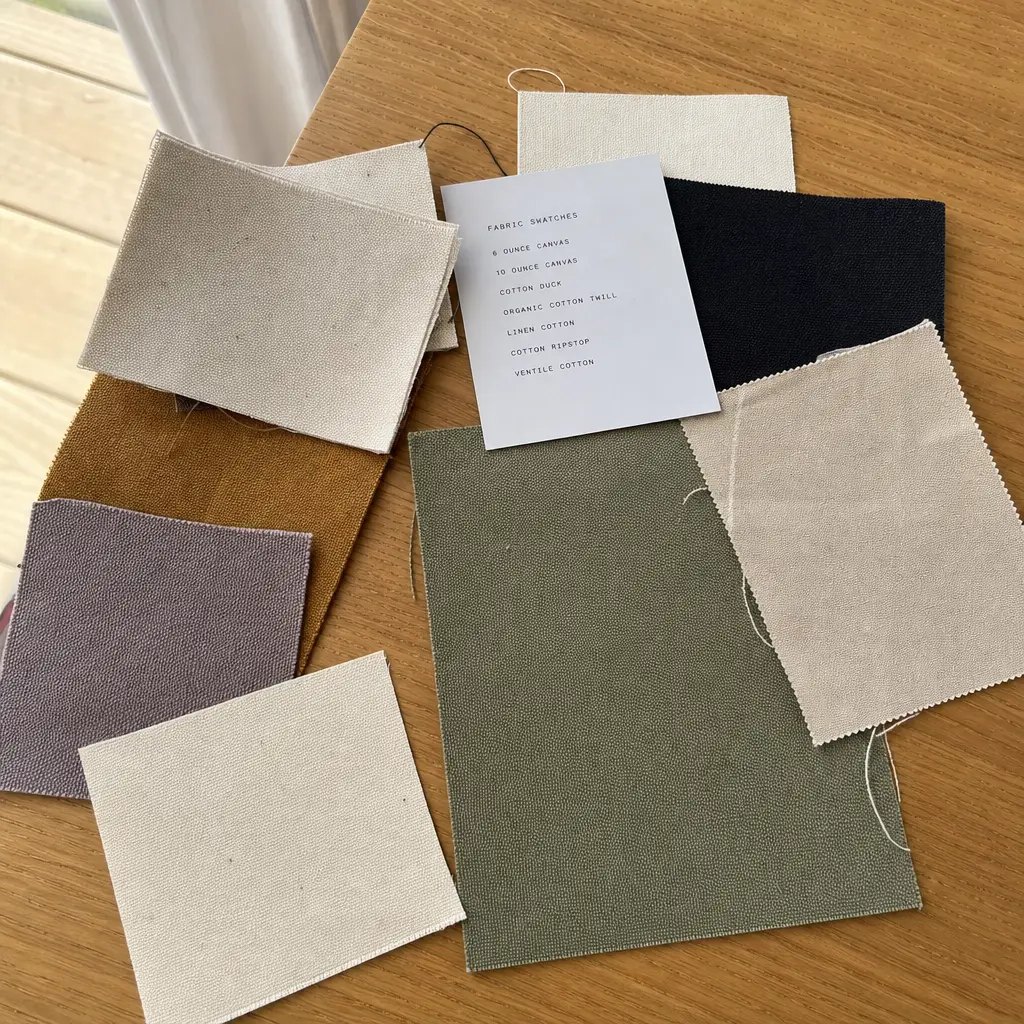
If the bookstore wants a natural sustainability look, unbleached cotton is common, but the shade will vary by batch. Do not approve one photo as the only shade standard. Ask for a physical swatch or a documented shade range, then define which specks, slubs, or natural cotton marks are acceptable and which stains are defects.
- 100-120 GSM: budget event packaging, short campaigns, and low retail expectation.
- 140-160 GSM: balanced option for stationery, small gifts, orientation kits, and accessory pouches.
- 180 GSM: stronger handfeel for paid merchandise, alumni gift packaging, and repeat programs.
- 200 GSM and above: premium positioning, but test tunnel bulk, drawcord movement, and carton cube.
- Dyed cotton: useful for school colors, but confirm dye minimums, color tolerance, and colorfastness expectations.
Specify finished size, usable space, and tolerance
A pouch described as 15 x 20 cm may not fit a 15 x 20 cm product. The drawstring tunnel, top fold, side seams, bottom seam, and closing curve reduce usable capacity. For bookstore buyers packing notebooks, pens, lanyards, jewelry boxes, chargers, or small apparel accessories, the RFQ should include both the finished flat size and the product that must fit inside.
Factories calculate cut size differently. If the buyer provides only an image, one supplier may quote a narrow seam allowance and another may quote a wider tunnel. The unit prices may look close, but the delivered pouches can perform differently. Finished-size measurement should be stated clearly: width from side seam to side seam, height from bottom seam to top edge, measured flat after sewing and pressing.
Tolerance needs to be realistic. Cotton fabric stretches, shrinks, and reacts to pressing. For many small pouches, plus or minus 5 mm is a practical starting point. For very small jewelry pouches or products with tight internal clearance, the buyer should test the sample with the actual product and approve a tolerance based on fit, not only appearance.
- State finished flat size in width x height and identify whether height includes the drawcord tunnel.
- Provide the largest product dimensions and required internal clearance.
- Ask for a simple construction drawing when the pouch must fit a boxed item exactly.
- Set size tolerance before bulk cutting, then measure the approved pre-production sample.
- Avoid many near-duplicate sizes unless the bookstore has a clear SKU or packing reason.
Match decoration to university artwork
University bookstore artwork often includes crests, mascots, department names, graduation years, foundation marks, and licensed color requirements. Screen printing is usually the safest choice for one to three solid colors on cotton drawstring pouches. It works well for bold university names and simple marks, and it supports repeat orders when screens and artwork files are controlled.
Screen printing still has limits. Fine serif text, thin rules, small trademark symbols, distressed artwork, and tight multi-color registration can fail on small cotton pouches. Natural cotton also absorbs ink differently than coated paper or plastic, so Pantone matching should be treated as a target within a reasonable tolerance, not a guarantee of perfect paper-standard color.
Heat transfer can handle gradients, detailed mascots, and many colors, but it may create a different handfeel and may not match the soft cotton look expected in sustainable bookstore packaging. Embroidery is possible on heavier cotton but usually suits simple marks and higher-value pieces. The RFQ should either state the required method or ask the supplier to recommend a method with cost, handfeel, and durability notes.
- Send vector artwork in AI, EPS, or editable PDF when possible.
- Define Pantone targets, print side, print area, and distance from top edge and side seams.
- Set minimum line thickness and smallest approved text height after sample review.
- Confirm whether printing happens before sewing or after sewing because placement accuracy can change.
- Require buyer approval for any artwork simplification, logo resizing, or color substitution.
Compare MOQ and pricing without hidden assumptions
MOQ for cotton drawstring pouches is usually driven by more than total quantity. It may depend on fabric purchase minimums, dyeing minimums, cutting efficiency, screen setup, color changes, sewing line setup, packing labor, and carton planning. A supplier quoting 1,000 pieces may mean 1,000 pieces per size and per artwork. Another may allow 1,000 pieces total but add separate setup charges and higher unit prices.
This matters for university bookstores because one program can include several logos: main bookstore, athletics, alumni association, graduate school, residence life, and a graduation year. Each version may need a separate screen, sample approval, SKU label, and carton split. Without a clear MOQ breakdown, the buyer may choose a low quote and later discover that the real order is below minimum for each design.
Ask suppliers to quote the base line, then provide adders for extra artwork versions, extra colors, individual packing, rush production, and smaller reorder quantities. This gives procurement a fair view of the true cost structure and helps the bookstore decide whether to reduce the number of designs, consolidate sizes, or increase quantity on the strongest SKU.
- Request MOQ per size, fabric color, print design, print color count, and packing format.
- Ask whether multiple artwork versions can share one fabric batch and one cutting run.
- Separate one-time setup charges from unit price and repeat-order price.
- Compare landed cost indicators, not only unit price, by reviewing carton quantity, gross weight, and CBM.
- If volume is low, reduce design variations before reducing fabric quality below the brand standard.
Verify the supplier behind the quote
Direct factory versus trading company is not automatically good or bad. A direct factory can be stronger for repeat pouch programs when the buyer needs stable construction, controlled artwork, predictable replenishment, and direct production feedback. A trading company can be useful for low-volume mixed accessory programs, especially when the bookstore needs several different items from one coordinator. The key is verification, not the label the supplier uses.
Before deposit, ask who will actually cut, print, sew, inspect, and pack the pouches. If production is subcontracted, the buyer should know which site is responsible and how quality records will be shared. This is especially important for licensed university marks, where unauthorized subcontracting or poor artwork control can create brand risk.
Verification does not require an expensive full audit for every small order, but the RFQ should ask for practical evidence. Factory profile, current production photos, previous cotton pouch references, available audit documents, compliance records, and sample-room photos help confirm whether the supplier understands this product category. For repeat or higher-value programs, request a documented production plan and inspection checkpoints.
- Ask for factory business profile, sewing capacity, print capability, and whether printing is in-house or outsourced.
- Request recent production photos of similar cotton drawstring pouches, without asking for confidential customer logos.
- Ask for available compliance documents, audit summaries, material declarations, or restricted-substance controls relevant to the buyer's policy.
- Confirm whether the supplier can provide material inspection, in-line inspection, final inspection, and packing photos.
- Require written approval before changing factory, fabric source, print method, or subcontracted process after sample approval.
Control samples with approval records
Samples should approve construction, fit, and production method, not just appearance in a photo. A showroom sample may show shape and stitching, but it may not use the correct GSM, cord, print method, or packing. For a new bookstore program, the pre-production sample should represent the actual order as closely as possible.
The buyer should test the sample with the intended product or bundle. Close the cord, check whether the top gathers properly, confirm that the logo remains visible, and evaluate whether the pouch feels right for its selling price or gifting role. If the pouch needs a barcode, hangtag, or paper band, test that too. Many production issues are discovered only when the sample is handled like the real item.
The approval record should be more than a verbal yes. Keep dated photos, measured dimensions, fabric notes, cord notes, print color comments, and approved packing details. If the buyer accepts a deviation, record it clearly so the factory and inspection team do not treat it as a defect later.
- Approve finished size, usable fit, fabric GSM, fabric shade range, cord type, cord movement, print color, print placement, and packing method.
- Measure the sample flat with a ruler and photograph key dimensions.
- Load the intended product and close the pouch to check real capacity.
- Run a simple dry rub and tape-pull comparison against the approved print sample.
- Do not authorize bulk cutting until the sample approval record and any allowed changes are confirmed in writing.
Write measurable QC terms into the RFQ
Quality control for cotton drawstring pouches should be measurable enough for a factory, third-party inspector, and bookstore buyer to reach the same decision. Natural cotton can have slubs, seed specks, and small shade variations, but commercial defects such as oil stains, mildew, wrong logo, open seams, incorrect count, and strong odor should not be treated as natural character.
Use an AQL plan for final inspection if the order size justifies it. A common starting point is General Inspection Level II with AQL 0.0 for critical defects, 2.5 for major defects, and 4.0 for minor defects, adjusted to the buyer's policy. The RFQ should define defect categories in plain language. Critical defects may include safety issues, mold, contamination, or unauthorized artwork. Major defects should include wrong size outside tolerance, wrong print color, open seams, broken cord tunnel, severe stains, strong odor, and incorrect packing. Minor defects may include small thread ends or natural marks within the approved range.
Simple functional checks also help. Open and close the pouch repeatedly to test drawcord movement. Apply a moderate pull to the cord and tunnel ends to check seam security. Use a dry white cloth for rub testing and a tape-pull check on a printed area to compare adhesion with the approved sample. These are not substitutes for laboratory testing when required, but they give practical pass/fail evidence for bookstore merchandise.
- Finished-size tolerance: commonly plus or minus 5 mm for small pouches unless the approved sample states otherwise.
- Print placement tolerance: set a measurable off-center allowance, such as plus or minus 3 mm for small pouches.
- Stitching standard: no skipped stitches, open seams, broken threads, loose tunnel ends, or missing backtacks where needed.
- Print standard: no wrong color, heavy bleeding, material pinholes in key logo areas, visible registration shift, or poor adhesion versus approved sample.
- Packing standard: inner counts, carton counts, SKU split, department allocation, PO marks, and barcode labels must match the packing list.
Plan packing and lead time around bookstore receiving
Packing affects both unit cost and receiving labor. Bulk flat packing is usually the most efficient format for cotton drawstring pouches used in bookstore bundles or backroom assembly. Individual polybags, paper bands, hangtags, and barcode labels can be useful for retail SKUs, but they add labor, material, inspection points, and carton volume. The RFQ should make the packing decision explicit instead of letting each supplier assume a different method.
University bookstore receiving teams often manage multiple departments, event deadlines, and seasonal deliveries. If one PO includes several designs or sizes, carton marks must be clear. Mixed cartons can reduce shipping volume, but they increase the risk of receiving mistakes unless the inner packs are labeled and the packing list is precise. Separate cartons by design are easier to distribute but may create more partial cartons.
Lead time should be counted from sample approval and deposit, not from first inquiry. The schedule includes artwork review, material confirmation, screen making, sampling, sample approval, cutting, printing, sewing, inspection, packing, and export handling. For orientation, homecoming, graduation, or semester opening, late pouches can delay the entire program. Build the delivery window into the RFQ and ask the supplier to identify the highest schedule risk before the order is placed.
- Use bulk flat packing when bookstore staff will assemble bundles or merchandise the pouches later.
- Use individual packing only when cleanliness, barcode control, or retail display requires it.
- Mark cartons with PO number, SKU, artwork name, size, quantity, gross weight, carton number, and destination department if needed.
- Confirm carton quantity, carton dimensions, gross weight, and CBM before freight booking.
- Freeze artwork, size, packing, and label format before bulk production to avoid schedule resets.
Specification comparison for buyers
| Spec decision | Recommended option | When it fits | Cost impact | Documentation required |
|---|---|---|---|---|
| Fabric weight | 140-180 GSM cotton for most bookstore merchandise pouches | Stationery kits, gift packaging, small accessories, alumni merchandise, and reusable bundle bags | Medium; heavier GSM raises fabric cost, carton weight, and sometimes sewing time | Fabric swatch, GSM test result or tolerance, shade reference, shrinkage note |
| Fabric finish | Natural unbleached cotton with agreed shade range | Campus sustainability messaging, neutral retail assortments, and simple one-color prints | Low to medium; dyed or bleached cotton may add minimums and dye-lot risk | Approved shade range, fabric composition statement, batch reference if available |
| Print method | Screen print for 1-3 solid colors; transfer only for gradients or many colors | University names, bookstore marks, simple mascots, department logos, and event-year graphics | Setup charges apply; repeat orders become more efficient if screens and artwork files are reused | Vector artwork proof, Pantone references, print area, placement spec, sample photo record |
| Drawcord style | Braided cotton cord for smoother opening; self-fabric cord for softer natural look | Retail pouches opened repeatedly, orientation kits, gift packaging, and reusable storage | Low to medium; thicker cords add material cost and may reduce carton density | Cord diameter, material, color, tunnel width, pull-test expectation |
| Size strategy | One core size plus one optional gift size | Bookstores balancing SKU control, MOQ, receiving space, and repeat ordering | Lower total cost than many close sizes because cutting, packing, and screens are simplified | Finished-size drawing, usable capacity note, size tolerance, product-fit sample |
| MOQ basis | Quote MOQ by size, fabric color, print design, and packing type | Orders split across bookstore, athletics, alumni, departments, and seasonal events | Can increase cost if many versions are ordered below efficient setup quantity | MOQ table, setup charge list, repeat-order pricing, mixed-design rules |
| Packing method | Flat bulk pack by SKU unless retail-ready packing is required | Backroom bundling, distributor receiving, and programs where bookstore staff merchandise later | Lowest cost and lowest cube; individual packing adds labor, material, labels, and inspection | Inner pack count, carton quantity, carton marks, barcode file if needed |
| Supplier route | Direct factory for repeat controlled programs; trading company only with documented factory control | Annual bookstore programs, licensed marks, multiple reorder cycles, or low-volume mixed accessories | Direct factory may be sharper at volume; trading company may cost more but coordinate variety | Factory profile, production photos, audit or compliance records, prior pouch references |
Buyer checklist before sampling
- Define the pouch use case: paid merchandise, gift-with-purchase, graduation kit, orientation bundle, stationery set, jewelry, tech accessory, or reusable retail packaging.
- Specify finished flat size, usable internal height, measurement method, and tolerance instead of only sending a photo or rough dimensions.
- State cotton fabric GSM, composition, finish, color, acceptable shade range, shrinkage expectation, and whether seed specks or slubs are acceptable.
- Attach vector artwork and define print method, Pantone references, maximum print area, placement tolerance, side of print, and smallest approved text size.
- Separate quantity by size, fabric color, artwork version, department allocation, and packing style so MOQ and price can be compared correctly.
- Require a pre-production sample when the size, GSM, cord, print method, artwork, or packing format is new.
- Request measurable QC terms: AQL level, size tolerance, print placement tolerance, cord pull expectation, defect categories, and inspection photo records.
- Define packing: flat or folded, units per inner pack, carton quantity, mixed-carton rules, carton marks, barcode labels, and retail tag requirements.
- Ask for quote lines showing unit price, setup charge, sample fee, sample lead time, bulk lead time, carton dimensions, gross weight, CBM, Incoterms, and quote validity.
- Verify supplier capability with factory profile, production photos, previous cotton pouch references, compliance records, and confirmation of whether production is in-house or subcontracted.
Factory quote questions to send
- What is the MOQ by pouch size, fabric color, artwork version, print color count, and packing type?
- Can multiple university department logos share the same fabric cutting batch, and what setup charge applies to each design change?
- Which cotton GSM options are in regular production, and what GSM tolerance will be written into the production specification?
- Is the quoted fabric natural, bleached, dyed, organic, recycled-content, or conventional cotton, and what documentation is available for that claim?
- Which print method is quoted, how many colors are included, what is the minimum line thickness, and what text height is too small for stable production?
- Are screen charges, plate charges, artwork adjustment fees, sample charges, and sample courier costs included or listed separately?
- What finished-size tolerance, print-placement tolerance, shade tolerance, and AQL inspection level will you accept on the purchase order?
- What cord material and diameter are included, and can the cord pass repeated opening/closing plus a basic pull test without seam failure?
- How many units fit per inner pack and export carton, and what are the estimated carton dimensions, gross weight, and CBM?
- Can you provide factory production photos, material inspection photos, in-line inspection records, final inspection photos, and packing list before shipment?
Quality-control points to confirm
- Use General Inspection Level II with AQL targets agreed in advance, commonly 0.0 for critical defects, 2.5 for major defects, and 4.0 for minor defects unless the buyer sets a stricter plan.
- Finished flat size should be measured after sewing and pressing; a practical small-pouch tolerance is usually plus or minus 5 mm unless the approved sample requires tighter control.
- Print placement should be measured from top edge and side seams; set a maximum off-center tolerance such as plus or minus 3 mm for small pouches and confirm on the approved sample.
- Fabric GSM should be checked from bulk fabric, not only from a showroom sample, with the accepted GSM tolerance written into the order.
- Cord function should be tested by repeatedly opening and closing the pouch, then applying a moderate pull to confirm the cord, knot, tunnel seam, and bartack or seam ends do not fail.
- Print adhesion should be checked with dry rub on a white cloth, light scratch by fingernail, and tape-pull on a non-critical printed area using the same method on the approved sample and bulk lot.
- Major defects should include wrong artwork, wrong print color, heavy ink bleeding, open seams, broken tunnel seams, missing cords, strong odor, oil stains, mildew, and incorrect carton count.
- Minor defects may include small thread ends, slight natural cotton slubs within the approved range, or minor wrinkles that do not affect retail presentation.
- Approved sample records should include dated photos, measured dimensions, fabric GSM, cord type, print color notes, packing method, and named buyer approval before bulk cutting.
- Carton inspection should verify SKU split, department allocation, inner pack count, barcode label, carton mark, PO number, gross weight, and carton numbering before sealing.