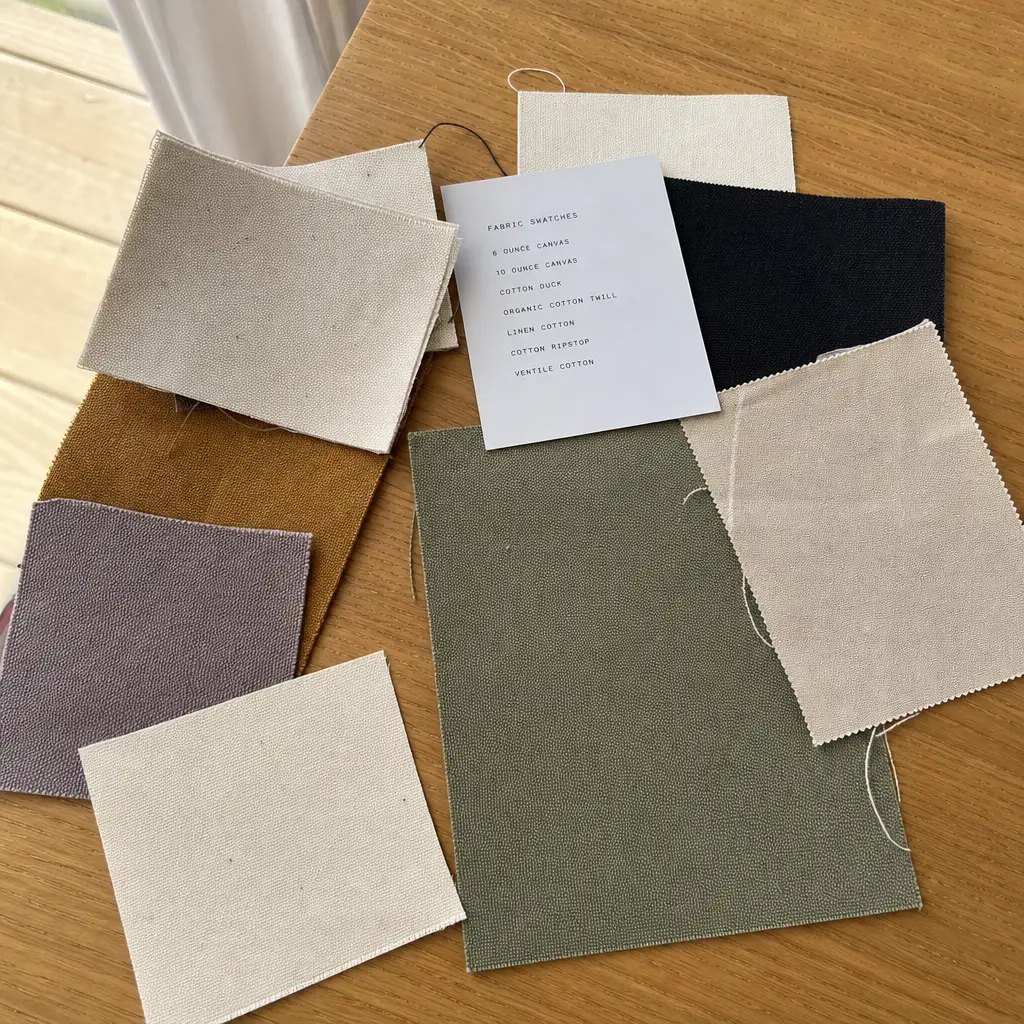
Start With the Receiving Job
Cotton drawstring pouches are easy to buy poorly because the product looks simple. Most receiving problems are not caused by advanced manufacturing issues. They are caused by missing carton marks, mixed logo versions, short inner bundles, barcode labels tied to the wrong SKU, or cartons packed so tightly that pouches arrive wrinkled and prints offset.
Start by defining how the university bookstore will use the pouch. A resale pouch needs cleaner folding, barcode placement, consistent logo orientation, and shelf-ready presentation. An orientation or graduation kit pouch needs fast opening, reliable closure, and bundle counts that match packing-line work. A giveaway pouch may prioritize cost, simple separation by event, and low receiving labor.
The receiving route matters as much as the pouch itself. Shipments may go to a campus warehouse, a bookstore location, a third-party kit packer, a licensed merchandise distributor, or multiple store destinations. Direct-to-store cartons often need lower gross weight and clear destination labels. Distributor shipments may prefer larger inner bundles and pallet-friendly cartons.
- Define the use case before quoting: resale, kit, event, fulfillment insert, or packaging component.
- Confirm the receiving path: campus warehouse, bookstore, distributor, packer, or multi-destination shipment.
- Decide whether cartons must survive courier, LCL ocean freight, pallet movement, parcel distribution, or local truck delivery.
- Identify who approves artwork, barcode data, carton marks, packing photos, and pre-shipment release.
- Put inner pack count and carton data requirements in the first RFQ, not after price negotiation.
Write Comparable Specifications
Supplier comparison starts with a specification that removes guesswork. If one vendor prices 4 oz muslin, another prices 6 oz cotton, and another prices dyed canvas, the lowest unit price is not meaningful. The RFQ should define fabric weight, pouch size, drawcord, print method, print position, packing method, carton data, labeling, and inspection criteria.
Fabric language needs care. Terms such as muslin, calico, canvas, cotton cloth, and natural cotton are not used consistently across suppliers. Ask for both oz weight and GSM where possible, plus fabric color, weave, and whether the cloth is greige, natural, bleached, dyed, or pre-shrunk. Natural cotton may include seed specks, slubs, and shade variation; approve those traits during sampling.
Use realistic tolerances. Cotton pouches are cut-and-sewn soft goods, so exact millimeter consistency is not practical. Common starting points are +/-3 mm for small pouches, +/-5 mm for medium pouches, and +/-8 mm for larger pouches. If the pouch must hold a rigid item, add a fit test as an acceptance requirement.
- Use measurable specs: GSM, oz weight, flat size, cord diameter, print size, print position, inner count, carton dimensions, and AQL level.
- Avoid catalog words such as premium, eco, canvas, or retail-ready unless they are defined in the PO.
- Approve natural cotton shade range, slubs, specks, and hand feel before production starts.
- Set tolerances for size, print position, print color, bundle count, and carton count.
- Classify critical issues such as wrong logo, wrong SKU label, missing cord, open seam, wet carton, mildew odor, or short shipment.
Match Fabric to Program Use
Fabric weight affects hand feel, opacity, print coverage, fold thickness, carton weight, and freight cost. Very light cotton can lower unit price but may show contents, feel thin, or allow print strike-through. Heavy cotton can feel more substantial, yet it may gather poorly at the drawcord, increase carton volume, and raise landed cost.
For many university bookstore programs, 5 oz to 7 oz cotton, roughly 140-220 GSM, is a practical starting range. A low-cost event pouch may work at 4 oz to 5 oz if the buyer accepts lighter structure and lower opacity. Gift pouches, stationery bundles, tech accessory pouches, alumni merchandise, and orientation kits usually benefit from 5 oz to 7 oz. Premium reusable pouches may use 8 oz or heavier cotton after checking closure, stiffness, and carton efficiency.
Finish affects logo appearance. Natural cotton supports a casual campus look, but it is not a bright white print base. Pantone colors may look warmer than on coated paper or white fabric. Bleached cotton improves brightness. Dyed cotton can align with school colors, while custom dyeing usually adds lab dips, dye lot tolerance, MOQ, and lead time.
- Use 4 oz to 5 oz cotton only when low cost matters more than opacity, structure, or reuse.
- Use 5 oz to 7 oz cotton for most bookstore merchandise, gift packaging, and campus accessory pouches.
- Use 8 oz or heavier cotton only after testing stiffness, closure, folding, print appearance, and carton CBM.
- For natural cotton, approve shade range and logo contrast on an actual swatch or sample.
- For dyed cotton, request lab dips, dye lot tolerance, colorfastness expectations, MOQ impact, and added lead time.
Size Around Real Contents
Flat dimensions are not the same as usable capacity. Seam allowance, side seams, bottom seams, fabric thickness, and the gathered top channel reduce internal space. A 15 x 20 cm pouch may not comfortably hold a rigid item close to 15 cm wide, especially if the item has thickness or corners.
A stronger size spec includes flat width x height plus a fit requirement. For example: the pouch must hold a 13.5 x 8 x 2 cm boxed item and close fully with at least 2 cm clearance above the item. If several items go inside, test the actual packing sequence because bulky pieces can distort the pouch and make the drawcord harder to close.
Size also affects carton planning. Small pouches may stack well in 50-piece or 100-piece bundles. Larger pouches, heavier cotton, thick cords, hangtags, or wide prints may need smaller bundles to limit wrinkles and print offset. Each pouch size should have its own pieces-per-carton count, net weight, gross weight, and CBM estimate.
- State size as flat width x height and clarify whether measurement is before or after washing if washing is relevant.
- Provide product dimensions, thickness, corner shape, and required top clearance after closure.
- Ask for a real fit test for cords, pins, ornaments, notebooks, apparel accessories, or multi-item kits.
- Create separate carton plans for each pouch size instead of applying one carton count across all SKUs.
- Approve a packed sample bundle for new sizes, heavy fabrics, or retail-ready formats.
Control Logos and Labels
University bookstore artwork may include licensed school marks, mascots, athletic references, department names, graduation years, alumni messages, or event branding. Small changes can become approval problems. The RFQ should define artwork files, Pantone references, print method, print size, placement, clear space, and approval route before production starts.
Screen printing is usually efficient for one to three solid colors on cotton drawstring pouches, especially for repeat programs. Heat transfer can suit detailed artwork, gradients, many colors, or small SKU splits. Embroidery can look premium, but it may distort lightweight fabric and is often inefficient for small pouches. Choose the method based on artwork, quantity, fabric texture, and retail expectation.
Approve color on actual cotton, not only on a digital proof. Natural cotton can mute color. Dyed cotton can reduce contrast. White ink may need an underbase on darker fabric, changing cost and hand feel. Placement should be measured from fixed references such as top edge, side seam, centerline, or bottom seam.
- Use screen print for simple department marks, event text, solid logos, and repeat bookstore orders.
- Use heat transfer for detailed artwork or small splits after approving film edge, hand feel, adhesion, and color.
- Approve logo color on production fabric because natural and dyed cotton change perceived Pantone accuracy.
- Set print size and position by measurement, with tolerance for top distance, side distance, and straightness.
- Place barcode labels or hangtags where they scan after folding and do not cover artwork, knots, or required copy.
Plan MOQ by SKU Split
MOQ is rarely one clean number. It changes with fabric availability, fabric color, dyeing, cutting efficiency, cord choice, print method, artwork versions, label requirements, packing style, and carton separation. A supplier may support a low MOQ for natural cotton with one black logo, then need a different price for three sizes, four colors, ten department marks, barcode labels, and separate destinations.
University bookstore orders often look large at the PO level but small at the SKU level. A 12,000-piece order split into 24 versions of 500 pieces may require many screens, print setups, artwork approvals, labels, carton marks, separated bundles, and inspection checkpoints. If that complexity is hidden inside one total quantity, errors and extra charges become more likely.
Procurement can reduce cost by grouping low-volume versions. Several departments may share one natural cotton pouch with a standard bookstore mark. Orientation, alumni, and graduation programs may use the same pouch size and fabric color while changing only a hangtag or insert. If school-color fabric is important, confirm whether stock dyed fabric exists before considering custom dyeing.
- Separate MOQ by fabric color, pouch size, cord color, print artwork, label requirement, and packing method.
- Ask for setup charges separately so first-order and repeat-order economics are clear.
- Use stock natural or stock dyed cotton when order quantity or schedule cannot support custom dyeing.
- Consolidate low-volume department versions to reduce screens, labels, carton marks, and inspection complexity.
- Attach a SKU matrix to the RFQ and require suppliers to quote against that exact version.
Build a Practical Carton Plan
Carton packing should serve bookstore operations, not only factory convenience. Options include loose bulk packing, counted inner bundles, paper bands, inner polybags, kraft sleeves, individual retail packaging, or palletized cartons. Each choice affects labor, material cost, carton count, CBM, moisture protection, and receiving speed. For most B2B bookstore orders, single-SKU inner bundles are safer than loose bulk cartons.
Match inner pack counts to allocation. Packs of 25 work well when cartons are split across departments, events, or store locations. Packs of 50 balance counting convenience with packaging cost. Packs of 100 are efficient for warehouse stock or distributor replenishment. Random inner quantities may save a factory step, but they move counting labor to the receiving team.
Master cartons need practical strength and weight. Five-ply export cartons are often preferred for heavier or international shipments, though the right grade depends on the route. Gross weight should generally stay in the 10-15 kg range for manual handling unless the receiving team approves otherwise. Overfilled cartons can bulge, crush corners, wrinkle pouches, and press against printed surfaces.
- Pack by single SKU whenever possible, with inner bundles of 25, 50, or 100 pieces.
- Use paper bands or recyclable wraps when plastic reduction matters, but add moisture protection when route risk requires it.
- Keep carton gross weight preferably 10-15 kg for manual handling unless approved otherwise.
- Require carton marks with PO number, SKU, size, fabric color, logo version, quantity, carton number, and destination.
- For mixed cartons, label every inner bundle and list all SKU quantities on the carton mark and packing list.
Worked Carton Packing Example
A worked example helps buyers compare supplier proposals. Assume a bookstore orders 6,000 cotton drawstring pouches: 3,000 pieces of 15 x 20 cm natural cotton with the main bookstore logo, 2,000 pieces of 15 x 20 cm natural cotton with an athletics logo, and 1,000 pieces of 20 x 30 cm natural cotton for graduation bundles. All use 6 oz cotton, black cotton drawcords, one-color screen print, and paper-banded inner bundles.
For the 15 x 20 cm pouches, a practical starting proposal is 50 pieces per inner bundle and 500 pieces per five-ply master carton. Sample carton dimensions are 50 x 40 x 35 cm, with estimated net weight of 12.5 kg and gross weight of 13.5 kg. CBM is 0.070 per carton. The 5,000 pieces of this size require 10 cartons and about 0.700 CBM.
For the 20 x 30 cm pouches, a practical starting proposal is 50 pieces per inner bundle and 300 pieces per carton because larger fabric panels and cord bulk reduce carton efficiency. Sample carton dimensions are 55 x 45 x 40 cm, with estimated net weight of 12.0 kg and gross weight of 13.2 kg. CBM is 0.099 per carton. For 1,000 pieces, use three full cartons of 300 pieces and one short carton of 100 pieces clearly marked as partial, for about 0.396 CBM if the same carton size is used.
The SKU split should avoid mixing logo versions in the same carton where possible. Main bookstore logo: six cartons of 500 pieces. Athletics logo: four cartons of 500 pieces. Graduation size: three cartons of 300 pieces and one partial carton of 100 pieces. Total shipment: 14 cartons, estimated total CBM about 1.096, with carton numbers tied to SKU and quantity on the packing list.
- 15 x 20 cm example: 50 pieces per bundle, 500 pieces per carton, 50 x 40 x 35 cm, NW 12.5 kg, GW 13.5 kg, 0.070 CBM.
- 20 x 30 cm example: 50 pieces per bundle, 300 pieces per carton, 55 x 45 x 40 cm, NW 12.0 kg, GW 13.2 kg, 0.099 CBM.
- SKU logic: keep main logo, athletics logo, and graduation logo in separate cartons to reduce receiving and barcode errors.
- Partial carton rule: mark the short carton clearly on two sides and show it separately on the packing list.
- Buyer check: ask each supplier to provide its own carton dimensions, NW, GW, CBM, and photos instead of copying this estimate blindly.
Verify Supplier Capability
A capable supplier should be able to discuss more than unit price. Ask how they control fabric purchasing, cutting quantities, print setup, sewing output, trimming, packing counts, and carton records. For university bookstore orders with licensed marks and multiple SKUs, record discipline matters. A low price is not useful if the supplier cannot separate versions, document packing, or correct problems before shipment.
Request practical evidence rather than unverifiable claims. Useful items include photos of similar pouch construction, fabric swatch cards, sample print strike-offs, packed carton photos, carton mark examples, production schedule milestones, and final inspection templates. If the supplier has handled similar cotton drawstring pouch packing, they should know how to discuss inner counts, carton weights, mixed-SKU risks, and moisture protection.
Compare actual packing proposals between vendors. Supplier A may quote a higher unit price but offer single-SKU cartons, 50-piece bundles, lower CBM per 1,000 pieces, and clear carton marks. Supplier B may quote lower but use loose packing, heavier cartons, or undefined mixed-SKU handling. The better commercial choice depends on landed cost, receiving labor, risk, and schedule, not price alone.
- Ask who owns fabric purchasing, printing, sewing, packing, and final inspection: one factory or multiple subcontractors.
- Request production records at shipment: cutting quantity, sewing output, printing quantity, reject count, packed quantity, and carton count.
- Require packed carton photos before shipment when the order has multiple logos, labels, or destinations.
- Compare CBM per 1,000 pieces, gross weight per carton, inner count method, and SKU separation across vendors.
- Treat undefined packing as a quote gap, not a minor detail.
Approve Samples and QC
A sample protects the buyer only when it reflects mass production. Do not approve a pouch made from substitute fabric, different cord, different ink, or a different fold unless those differences are documented. The pre-production sample should use the planned cotton weight, fabric color, drawcord material, cord length, top hem construction, print method, print size, label placement, and inner packing approach.
Sample review should include measurements and handling checks, not just appearance. Record flat size, hand feel, logo position, print color, print coverage, drawcord length, drawcord pull, stitch quality, odor, stains, and fit with intended contents. If the pouch is a retail SKU, review how it looks folded with the barcode or hangtag attached. If it is a kit component, test how quickly packers can open, fill, and close it.
Final QC should inspect both product and packing. Inspectors should open random cartons, count inner bundles, verify pieces per bundle, compare contents to carton marks, scan barcodes when applicable, and photograph open cartons and sealed cartons. Sealed carton counts alone do not reveal mixed logos, short bundles, or wrong labels.
- Approve one production-ready sample and keep one sealed reference sample at the factory.
- Measure logo placement from seam references and record the tolerance in the approval sheet.
- Check drawcord pull, seam security, loose threads, odor, stains, print adhesion, print color, and small-text legibility.
- Open random cartons during inspection to verify bundle counts, SKU separation, carton marks, and packing list accuracy.
- Classify wrong logo, wet carton, mildew odor, incorrect barcode, open seam, and short count as serious release risks.
Specification comparison for buyers
| Supplier packing proposal item | Supplier A example | Supplier B example | Buyer comparison check |
|---|---|---|---|
| Base pouch specification | 15 x 20 cm natural cotton pouch, 6 oz cotton, black cotton drawcord, one-color screen print | 15 x 20 cm natural cotton pouch, 5 oz cotton, blended drawcord, one-color screen print | Do not compare carton data until fabric weight, cord type, print method, and pouch size are aligned. |
| Inner packing | 50 pieces per paper-banded bundle, one SKU per bundle | Loose bulk packing, no inner count separation | Bundles improve receiving speed and count control; loose packing may reduce material cost but shifts labor to the bookstore. |
| Pieces per carton | 500 pieces per master carton, 10 inner bundles | 800 pieces per master carton, loose | Higher pieces per carton can look efficient, but inspect bulging, wrinkles, print offset, and carton gross weight. |
| Carton dimensions | 50 x 40 x 35 cm | 60 x 45 x 45 cm | Calculate CBM per 1,000 pieces; larger cartons may increase air, courier, LCL, or storage cost. |
| Net and gross weight | NW about 12.5 kg; GW about 13.5 kg | NW about 16.0 kg; GW about 17.2 kg | Confirm whether gross weight is acceptable for manual handling and campus receiving rules. |
| CBM estimate | 0.070 CBM per carton; about 0.140 CBM per 1,000 pieces | 0.122 CBM per carton; about 0.153 CBM per 1,000 pieces | Supplier B fits more pieces per carton but may not reduce CBM per pouch; compare landed cost, not carton count only. |
| SKU separation | Single-SKU cartons; carton mark shows PO, SKU, logo version, quantity, carton number, destination | Mixed SKUs allowed; inner labels not defined | Single-SKU cartons reduce barcode, logo, and allocation errors. Mixed cartons require inner labels and a detailed packing list. |
| Carton strength and closure | Five-ply export carton with tape seal and carton mark on two sides | Standard carton, grade not stated | Ask whether the carton is suitable for courier, LCL, pallet movement, or only domestic handling. |
| Evidence required before approval | Packed carton photo, open carton photo, bundle photo, carton mark proof, dimensions, NW/GW, CBM | Packing details to be confirmed after production | Approve the carton plan before bulk packing; do not wait until final inspection to discover weak or bulky packing. |
Buyer checklist before sampling
- Define the pouch use: resale merchandise, event giveaway, orientation kit component, graduation pack, online fulfillment insert, or packaging for another bookstore SKU.
- Write the pouch size as flat width x height and add the actual contents, product thickness, required top clearance, and whether the pouch must close fully after filling.
- Specify fabric weight in both oz and GSM where possible, plus fabric color, weave, acceptable natural specks or slubs, shrinkage expectation, odor standard, and pre-shrink requirement if needed.
- State drawcord material, color, approximate diameter, cord length, knot or end treatment, and whether any all-cotton claim must include the cord as well as the pouch body.
- Attach vector artwork with Pantone references, approved logo versions, license approval route, maximum print area, clear space rules, and any prohibited mark changes.
- Define print placement by measurement from top edge, side seam, centerline, or bottom seam; include placement tolerance rather than relying on visual centering.
- Build a SKU matrix covering size, fabric color, cord color, logo version, print colors, quantity, barcode, hangtag, inner pack quantity, carton mark, and destination.
- Choose inner pack counts based on operations: 25 pieces for department allocation, 50 pieces for mixed campus distribution, or 100 pieces for warehouse replenishment.
- Require carton data in the quote: pieces per inner pack, pieces per carton, carton dimensions, net weight, gross weight, carton count, total CBM, carton material, and carton mark content.
- Ask suppliers for recent production records or packing photos from similar cotton pouch orders, without requesting confidential customer names.
Factory quote questions to send
- Which cotton fabrics are available now by GSM, oz weight, color, weave, and roll quantity, and what MOQ changes apply to natural, bleached, dyed, or custom-dyed cotton?
- What fabric weight tolerance will be used, and how will it be checked: mill record, roll inspection, random GSM cutter test, or another documented method?
- Can the requested pouch size be cut efficiently from standard fabric width, and will any size change affect cutting waste, unit price, lead time, or MOQ?
- What exact drawcord material, diameter, length, color, knot style, end finish, and top hem construction are included in the quoted unit price?
- Which print method is included, what print area is allowed, what setup charges apply, and what artwork format and Pantone references are required?
- What are the expected print position tolerance, color tolerance, curing or drying requirements, and inspection checks for adhesion, tackiness, bleeding, and misregistration?
- Is the price based on loose bulk packing, paper bands, inner polybags, kraft sleeves, individual retail bags, hangtags, barcode labels, master cartons, or pallets?
- For each size and SKU, what are the proposed pieces per inner pack, pieces per carton, carton dimensions, net weight, gross weight, carton count, and total CBM?
- What carton grade and sealing method are included, and is the carton suitable for courier shipment, LCL ocean freight, pallet loading, or only domestic warehouse movement?
- How will mixed sizes, logos, fabric colors, or destinations be separated inside cartons, and what information will appear on inner labels and master carton marks?
Quality-control points to confirm
- Fabric GSM should match the approved standard within the agreed tolerance, commonly +/-5% unless the buyer sets another limit; verify by roll record or random GSM checks.
- Flat pouch dimensions should be measured on relaxed fabric before filling, with agreed tolerances such as +/-3 mm small, +/-5 mm medium, and +/-8 mm large pouches.
- Usable internal fit should be tested with the actual bookstore item or a measured substitute when pouches are used for kits, graduation products, gift sets, or tech accessories.
- Drawcords should pull smoothly from both sides, reopen without jamming, and show no fraying, missing knots, unequal cord lengths outside tolerance, or tearing at the top channel.
- Top hems, side seams, and bottom seams should be secure, with no open seams, skipped stitches, broken stitches, needle damage, loose thread clusters, or exposed raw edges outside the approved construction.
- Print should show acceptable coverage on cotton texture with no major pinholes, cracking, bleeding, misregistration, offset marks, tackiness, curing odor, or unauthorized color change.
- Logo placement should be checked from fixed seam references, with top distance, side distance, straightness, and print size compared to the approved sample or measurement sheet.
- Stains, mildew odor, oil marks, dirt, foreign matter, excessive slubs, holes, and wet fabric should be classified by severity, with mildew or moisture normally treated as shipment-blocking.
- Barcode labels or hangtags should match the SKU file, scan correctly, stay readable after folding, and not cover logo artwork, cord knots, or required retail information.
- Inner pack counts should match the packing plan; inspectors should open random bundles and cartons to verify count, SKU separation, and carton mark accuracy.