Start With the Selling Role
A useful pouch program starts with a commercial decision, not a price request. A cotton drawstring pouch sold as bookstore merchandise needs a cleaner appearance, tighter print control, and stronger presentation than one used only as packaging inside a gift set. A pouch for an orientation kit has a different size logic again, because it must hold the actual kit contents and still close cleanly. If that role is not stated up front, suppliers will fill in the blanks, and the quotes will stop being comparable.
Write the intended use in plain language at the top of the RFQ. Examples: natural cotton pouch for paid retail, one-color university wordmark, bulk packed for campus receiving. Or: cotton pouch for welcome kits, not retail packaged, must hold a cable, lanyard, cardholder, and folded insert. That one sentence usually determines the right GSM, print method, and packing structure. It also stops internal teams from arguing over a price gap that came from different assumptions rather than different supplier skill.
The selling role also drives the acceptable spend. For a giveaway or low-margin insert, the buyer usually wants one size, one logo color, and bulk packing. For an alumni or graduation bundle, the bookstore may reasonably pay more for heavier cotton, cleaner seam finishing, and tighter logo placement. Put that trade-off in the brief so procurement is choosing it deliberately.
- Retail SKU: prioritize cleaner stitching, accurate logo placement, and a handfeel that matches the shelf price.
- Gift packaging: use a size that fits the product, prints cleanly, and does not look transparent over dark contents.
- Orientation kit component: size around the contents and receiving workflow, not around a mockup.
- Giveaway: simplify the spec to protect budget and keep production risk low.
- Online fulfillment insert: consider individual packing, barcode control, and lower lint or odor tolerance.
Lock the Size, GSM, and Construction
Cotton pouch quotes become weak when the size request is vague. Terms like small, medium, and large are not specifications. Even a numeric size can cause confusion if one supplier quotes cut size and another quotes finished size after sewing. University bookstore buyers should state finished width and height after sewing, measured flat, and should include the actual item dimensions if the pouch has to fit a notebook, mug accessory, jewelry card, or tech cable set.
Fabric weight is the next major decision. A 100-120 GSM pouch can be acceptable for temporary packaging, but it often looks thin once printed and may show dark contents through the fabric. A 140-180 GSM cotton pouch is a practical baseline for most bookstore programs because it balances cost, appearance, and print clarity. A 200-220 GSM pouch can feel more premium for graduation sets or alumni gifts, but it adds fabric cost, carton weight, and sometimes sewing difficulty.
Construction details matter more than most buyers expect. Ask for drawcord material, cord color, one-sided or two-sided pull, seam type, stitch color, top channel depth, and whether the pouch is flat or boxed at the bottom. Most bookstore programs use a flat pouch because it is simpler and cheaper, but a simple pouch can still fail if the channel is too tight, the stitch density is uneven, or the cord does not pull smoothly.
- 8 x 10 cm to 10 x 15 cm: pins, patches, jewelry, keychains, and compact tech accessories.
- 15 x 20 cm to 20 x 30 cm: stationery bundles, notebooks, lanyards, welcome kit sorting, and small apparel accessories.
- 25 x 35 cm and larger: folded T-shirts, scarves, event bundles, or premium gift sets.
- 140-180 GSM: practical for most bookstore programs that need a good logo surface without premium canvas cost.
- 200-220 GSM: use when the pouch is sold on its own or included in a higher-value bundle.
- Flat construction: usually the cleanest cost option; boxed bottoms add structure and more sewing time.
Build MOQ Tiers Around Real Production Drivers
MOQ is not just a number a factory chooses. It reflects fabric purchasing, cutting-room efficiency, print setup, cord preparation, sewing changeover, and packing labor. A bookstore might think it is ordering 5,000 pieces, but if the order includes four sizes, two fabric colors, three logo versions, and two packing formats, the factory sees many smaller production runs. That is why a clean spec usually gets a cleaner price.
The best way to buy is to create a pouch family, not a one-off item. Keep the same cotton color, GSM, cord type, and print method across several sizes when the campus brand rules allow it. Then ask for tiered pricing at 1,000, 3,000, 5,000, and 10,000 pieces under the same specification. That shows where the real break comes from and makes reorders easier to forecast.
Also separate total order MOQ from per-SKU MOQ. A supplier may accept 5,000 pieces total but still require 1,000 pieces per size or per artwork version. The same issue applies to dyed cords or custom fabric colors. Put those splits into the RFQ so the final price reflects the actual program, not a blended headline number.
- Ask for MOQ per size, per fabric color, per cord color, per artwork version, and per packing format.
- Keep setup charges separate from recurring unit price so reorders can be compared fairly.
- Use realistic reorder tiers, not only the launch quantity.
- Avoid custom-dyed fabric unless the volume can absorb dye lot minimums and shade approval time.
- Combine small departments under one standard pouch platform when brand rules allow it.
- Ask for a clear price validity period if cotton, freight, or exchange rates are moving.
Choose the Decoration Method First
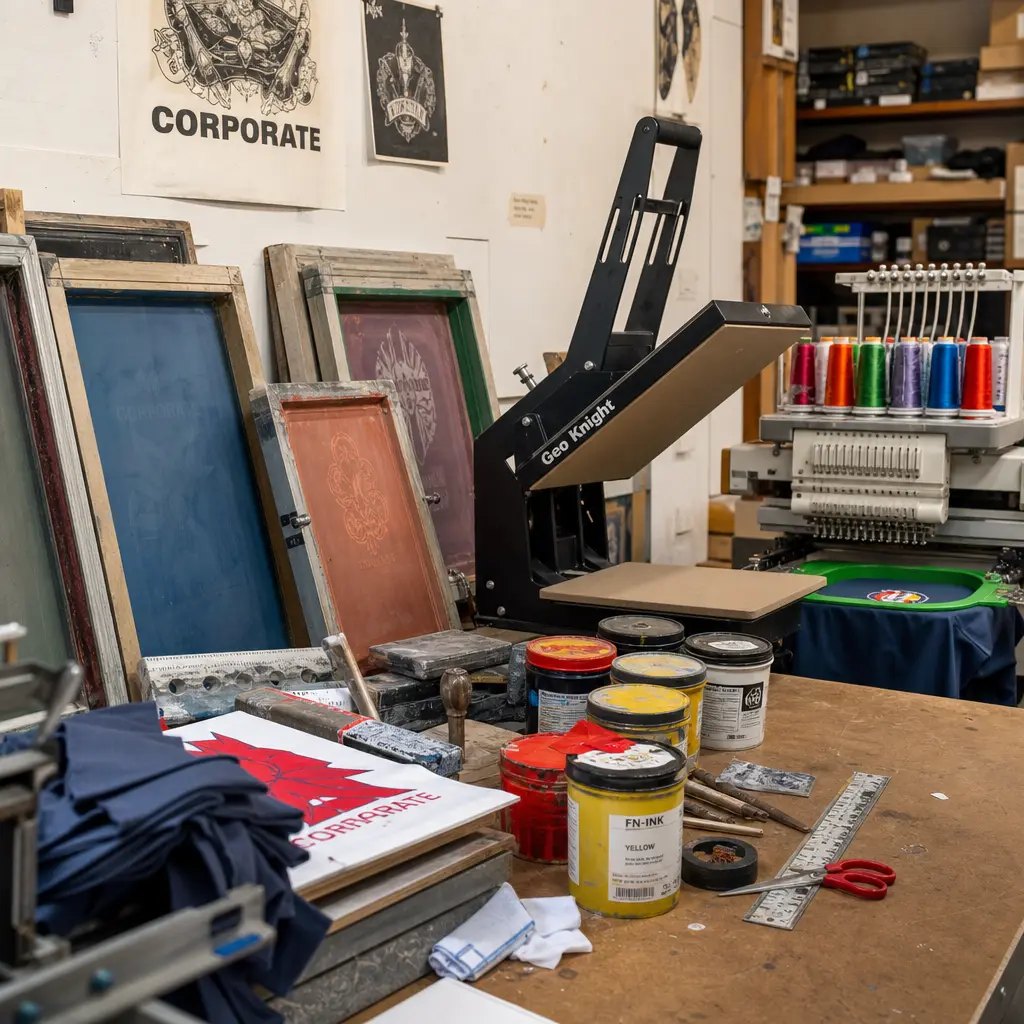
For most university bookstore programs, spot-color screen print is the strongest default. It is stable in bulk production, cost-efficient, and well suited to university names, bookstore logos, and simple emblems. A one-color black, navy, maroon, green, gray, or white mark on natural cotton usually gives the best balance of appearance and unit cost. The important part is to define logo size and placement before pricing, because a larger print area costs more and can change the feel of the pouch.
Heat transfer is useful when the artwork has gradients, small details, or multiple colors that are not practical with standard screen printing. The trade-off is handfeel and durability, so the sample should be checked on the actual GSM. Embroidery can look premium on heavier pouches, but it adds cost quickly and can distort lighter cotton. Woven labels are a clean branding option, but they add sewing labor and need to be placed away from the drawcord path.
Do not leave decoration method open unless the buyer truly wants alternatives. If suppliers choose different methods, the quotes stop being comparable. If you do want options, ask for separate lines for screen print, heat transfer, embroidery, or label sewing using the same pouch size and fabric. Send vector art, Pantone references, and a placement diagram measured from the pouch edges so the supplier is quoting the same thing you expect to approve.
- Screen print: best for one to three solid colors and larger quantities.
- Heat transfer: best for detailed mascot art or many colors, but test feel and durability.
- Embroidery: best for heavier fabric and smaller premium marks, not thin cotton with dense stitch areas.
- Woven label: useful for subtle branding, but it adds sewing steps and may have its own MOQ.
- Logo placement: keep artwork below the drawcord channel and away from side seams.
- Artwork control: provide vector files, Pantone targets, and licensing restrictions in writing.
Compare Supplier Routes With the Same Spec
Supplier route affects risk as much as price. A direct factory is usually the best fit when the bookstore or distributor expects repeat pouch programs, stable specs, and tight control over fabric, stitching, print, and carton data. A trading company or consolidator can be useful when the buyer is sourcing many unrelated products at once, but the quote should still identify who controls the pouch production, decoration, and final inspection. Convenience is useful, but unclear responsibility becomes expensive when the shipment has the wrong logo or mixed SKUs.
Good evaluation starts with evidence. Ask for photos or short video of sewing, print setup, cord insertion, trimming, and packing. Request a production-equivalent sample and ask how the supplier checks GSM, approves print color, and handles defects. A polished catalog does not prove that the supplier can manage a university bookstore order with multiple sizes and a fixed receiving date.
Communication quality is part of supplier quality. A supplier that can explain finished size versus cut size, list the MOQ drivers, provide carton estimates, and identify the approval event that starts lead time is usually easier to work with. If the supplier cannot answer basic questions about fabric tolerance, logo position, packing count, or defect handling, the low unit price may be hiding extra work.
- Direct factory: stronger for repeat programs, custom sizing, and direct technical discussion.
- Trading company: useful for mixed sourcing, but needs transparent subcontractor and inspection responsibility.
- Local decorator: helpful for urgent domestic decoration, but blank pouch quality and decoration cost can vary.
- Importer distributor: convenient for urgent stock items, but custom GSM, size, cord, and logo flexibility may be limited.
- Evidence to request: fabric swatches, printed samples, carton data, process photos, and the inspection standard.
- Warning signs: unclear GSM, vague MOQ, missing carton information, or artwork redrawn without approval.
Read the Quote as a Cost Breakdown
A useful quote should show more than a unit price. It should make the assumptions visible: finished size, fabric GSM, cotton color, cord type, print method, print color count, logo size, packing method, carton quantity, setup fees, sample charges, payment terms, and shipping terms. Without those details, two quotes can appear close while describing different products. The buyer may choose the lower number and later discover that it excluded barcode labels or assumed bulk packing instead of retail-ready packaging.
For university bookstores, landed cost matters more than FOB price alone. Cotton pouches are compact, but carton size, gross weight, inner packing, and labeling still affect freight and receiving labor. Individual polybags are useful for ecommerce or multi-location distribution, but they add material, labor, and carton volume. Bulk inner bags are usually the better choice when the store will apply its own labels or merchandise the pouches from a stockroom.
Ask for pricing at more than one quantity tier under the same specification. If the 10,000-piece price assumes lighter fabric or simpler packing than the 3,000-piece price, the comparison is misleading. Keep one master spec and ask each supplier to quote from that base. Then compare not only price, but also how clearly each supplier explains the cost logic.
- Material cost: driven by pouch size, GSM, cotton color, and cutting yield.
- Decoration cost: driven by print method, color count, artwork size, and setup.
- Labor cost: driven by seam construction, label sewing, trimming, and packing.
- Packing cost: driven by inner bag count, barcode stickers, hangtags, and SKU control.
- Logistics cost: driven by carton dimensions, gross weight, CBM, and destination.
- Administrative cost: driven by artwork revisions, licensing approval, and sample courier fees.
Approve Samples With Measurable Criteria
The sample stage is where pouch risk should become visible. A sample made from whatever fabric is in the room can help confirm the basic construction, but it should not be treated as final approval if the bulk order will use different cotton, cord, ink, or transfer material. For real approval, request a pre-production sample made with production fabric, production cord, actual print method, approved logo size, and intended packing material. If the supplier cannot do that immediately, mark the first sample as a construction reference only.
Sample feedback should be written in measurable terms. Instead of saying the logo should be more centered, state the approved logo position and tolerance. Instead of saying the pouch feels thin, state the target GSM and compare it to the approved swatch. Instead of saying the cord is too short, measure exposed cord length when the pouch is open and closed. This gives the factory a usable standard and protects the buyer during inspection.
The sample should also be tested with the real merchandise. A pouch that looks fine when empty may be too narrow for a notebook, too short for a lanyard bundle, or too weak for a heavier gift set. Put the actual contents inside, close the drawcord, shake lightly, and check whether the logo distorts when filled. If the pouch will hang on a retail peg, sit in a bin, or ship inside an ecommerce order, test that condition before mass production starts.
- Measure finished width and height after sewing and drawcord insertion.
- Compare fabric weight, opacity, and handfeel against the approved standard.
- Check logo size, placement, color, opacity, and edge sharpness.
- Pull the drawcord repeatedly to confirm smooth opening and closing.
- Place the intended merchandise inside and confirm fit and closure.
- Review the packing sample if labels or retail packaging are required.
- Keep signed approval records so later changes are controlled.
Set QC Standards Before Production Starts
Cotton is a natural material, so buyers should expect some slub character and shade variation. The issue is not natural variation; the issue is uncontrolled defects that make the pouch unsuitable for bookstore sale or campus distribution. Visible oil marks, dark contamination, open seams, wrong logo color, print peeling, cord failure, and mixed artwork are not acceptable just because the product is simple. A written defect standard gives the factory something to inspect against and gives the buyer a fair basis for acceptance or rework.
It helps to classify defects before production begins. Critical defects should include wrong university logo, mixed customer artwork, unsafe contamination, severe odor, or any issue that could create brand or safety problems. Major defects should include open seams, broken drawcord channels, print peeling, logo placement outside tolerance, front-panel stains, holes, or missing labels. Minor defects may include small thread ends or slight natural slubs outside the logo area. That classification keeps the inspection conversation practical.
Inspection should be organized by SKU. If the order has three sizes and two logo versions, each size and version needs separate sampling and count verification. A print issue can show up on only one screen. A size problem can occur after one cutting batch. A packing error can affect only one carton group. The inspection should cover appearance, measurement, function, print, packing, and carton marks, then compare the findings to the agreed acceptance level.
- Appearance: inspect the front logo panel, seams, channel, fabric shade, stains, holes, and excess slubs.
- Measurement: record width, height, drawcord length, opening size, and tolerance by size.
- Print: check Pantone match, placement, opacity, edge sharpness, registration, and ink smears.
- Function: open and close the pouch multiple times and check cord movement and knot security.
- Stitching: confirm stitch density, no skipped stitches, no open side seam, and clean thread trimming.
- Packing: verify pieces per inner bag, SKU separation, barcode scan, and carton marks.
- Carton control: confirm carton strength, gross weight, dimensions, PO number, and destination labels.
- Failure plan: state rework, replacement, discount, reinspection, and revised shipment timing before order release.
Pack for Receiving, Retail, and Landed Cost
Packing is not a side issue. It changes unit cost, freight volume, receiving labor, and retail readiness. Bulk packing is usually the best option when a campus bookstore receives goods into a stockroom and applies its own price labels or merchandising process. A common structure is 50-100 pieces per inner bag, with master cartons separated by size and logo version. That keeps handling simple and avoids paying for packaging the store will remove anyway.
Individual packing can make sense when the pouches are sold through ecommerce, shipped to multiple campus locations, or included in controlled gift sets. In that case, the buyer should approve bag size, label placement, barcode scan quality, material content wording, country-of-origin statement, and any importer information required by the destination market. Those details belong in the quote because they add labor and materials.
Carton planning should be part of the pricing conversation because it changes landed cost. Ask for carton dimensions, gross weight, net weight, pieces per carton, and estimated CBM for each size and quantity tier. Campus receiving teams may have handling limits, and very heavy cartons can slow unloading or increase damage risk. Mixed cartons should be avoided unless the receiving team approves them and the carton label clearly shows the breakdown.
- Bulk pack: 50-100 pieces per inner bag, master carton by one SKU whenever possible.
- Individual pack: one pouch per bag with approved warning text, barcode, and label placement when required.
- Retail label: confirm barcode, SKU, material content, country of origin, and importer details.
- Carton label: show PO number, SKU, pouch size, fabric color, logo version, quantity, and gross weight.
- Weight control: keep cartons within the buyer's receiving limits.
- Mixed cartons: use only by approval, with a clear breakdown on the carton label and packing list.
- Freight planning: calculate landed cost after carton dimensions and gross weight are confirmed.
Protect the Semester Delivery Window
University bookstore demand is calendar-driven. Back-to-school, orientation, family weekend, graduation, alumni events, sports seasons, and department campaigns all have fixed windows. A pouch shipment that arrives two weeks late may still be usable, but the main selling period may already be gone. The schedule should start with the required receiving date and work backward through campus receiving, customs, freight, final inspection, production, sample approval, artwork approval, and deposit timing.
Lead time language needs to be specific. When a supplier says production takes 25-40 days, ask when that clock starts. In many cases it starts only after deposit, confirmed artwork, approved sample, and fabric booking. If the bookstore team is still debating logo size or Pantone color, production has not really started. Calendar risk is especially high before peak back-to-school, major holidays, and factory closure periods, so build a buffer for sample transit, inspection findings, and possible rework.
A useful way to shorten the next order is to pre-approve the pouch platform before the busy buying season. Keep the preferred GSM, cotton shade, cord, seam construction, and packing format on file, then adjust artwork and quantity for each campaign. Save the signed sample, final artwork, carton data, and inspection notes so the next RFQ is faster and more precise.
- Artwork preparation: allow time for vector cleanup, Pantone selection, licensing approval, and internal brand review.
- Sampling: plan sample making plus transit time, and do not rely on photos alone for first approval.
- Production: many bulk cotton pouch orders fit a 25-40 day range after approvals, depending on quantity and SKU splits.
- Inspection: reserve time for final inspection, reporting, and possible rework before shipment booking.
- Freight: compare courier, air, sea, or consolidated freight only after carton CBM and gross weight are known.
- Campus receiving: include appointment scheduling, internal routing, labeling, and merchandising time.
- Reorders: keep a signed sample, artwork file, packing standard, and carton data to shorten the next buying cycle.
Specification comparison for buyers
| Procurement decision | Recommended baseline | Use it when | Quote or QC risk to check |
|---|---|---|---|
| Selling role | Define the pouch as retail merchandise, gift packaging, orientation kit component, or giveaway before pricing. Cost impact: high if this is wrong. | This tells the supplier which fabric weight, print standard, and packing format to quote. | A low-cost packaging pouch and a retail SKU can look similar in a quote while requiring different fabric, finishing, and defect tolerances. |
| Fabric weight | Use 140-180 GSM cotton for most bookstore programs; move to 200-220 GSM for premium bundles. Cost impact: medium to high. | Works for branded stationery pouches, pin sets, tech accessories, welcome kits, alumni gifts, and merch bundles. | 100-120 GSM can look thin or print unevenly unless the pouch is clearly temporary packaging. |
| Cotton type | Use conventional natural cotton unless an organic claim is required. Cost impact: medium. | Keeps cost and paperwork simpler when the bookstore only needs a natural cotton look. | Do not rely on verbal organic claims; require valid documents or remove the claim from all copy and labels. |
| Size program | Standardize around 2-4 finished sizes instead of many close custom sizes. Cost impact: high. | Improves cutting efficiency, SKU clarity, receiving accuracy, and reorder planning. | Too many sizes split MOQ, add sample rounds, and weaken bulk pricing leverage. |
| Logo method | Use spot-color screen print for simple marks; use heat transfer for detailed art or gradients. Cost impact: high. | Screen print fits 1,000-20,000 piece runs with one to three solid colors. | Fine lines, heavy ink coverage, or placement too close to the drawcord channel can create poor opacity or uneven edges. |
| MOQ structure | Quote by size, logo version, fabric color, and packing method, with tiered breaks at realistic quantities. Cost impact: high. | Shows whether the supplier is pricing true production efficiency or only giving a headline number. | A low MOQ can hide setup fees, label charges, sample fees, or packing surcharges. |
| Packing format | Bulk pack 50-100 pieces per inner bag unless retail-ready individual packing is required. Cost impact: medium. | Best for bookstore stockrooms, campus receiving teams, and programs where labels are applied locally. | Individual polybags add material, labor, carton volume, and sometimes extra compliance labeling. |
| Supplier route | Use a direct factory for repeat programs with stable specs; use a consolidator only when buying many unrelated items. Cost impact: medium. | Direct discussion helps control GSM, stitching, print placement, samples, and carton data. | Brokered quotes can obscure who controls fabric purchasing, subcontracted printing, final inspection, and replacements. |
| Quality control | Approve a production-equivalent pre-production sample and inspect each SKU separately. Cost impact: high. | Reduces disputes over logo color, finished size, drawcord function, fabric marks, and packing accuracy. | Phone-photo approvals are weak for cotton shade, print opacity, and stain visibility. |
Buyer checklist before sampling
- Define the selling use first: retail SKU, gift packaging, orientation kit component, online fulfillment insert, or alumni gift set component.
- List each pouch by finished width and height after sewing, plus the tolerance you can accept.
- Specify fabric GSM, cotton color, drawcord material, drawcord color, stitch color, seam style, and whether shrinkage or colorfastness testing is required.
- Send vector artwork with Pantone references, logo dimensions, print location from pouch edges, and any university licensing restrictions.
- Separate the RFQ by size, quantity, logo version, print color count, packing method, label requirement, and shipping term.
- Request tiered pricing at launch quantity and likely reorder quantities, such as 1,000, 3,000, 5,000, and 10,000 pieces under the same specification.
- Require a pre-production sample made with production fabric, production cord, actual print method, approved logo size, and intended packing materials.
- Test the sample with the real merchandise: pins, notebooks, cords, apparel accessories, mugs, or orientation materials that the pouch must hold.
- Set written inspection thresholds for fabric stains, holes, slubs in the logo area, broken stitches, cord slippage, print color, print placement, and carton labeling.
- Confirm master carton size, gross weight, pieces per inner bag, pieces per carton, CBM, carton marks, and maximum handling weight before calculating landed cost.
Factory quote questions to send
- What finished pouch size, fabric GSM, weave or yarn description, cotton type, and cotton color are included in this quote?
- Is the quoted size measured after sewing and drawcord insertion, and what tolerance applies to width, height, and cord length?
- Which print method is included, how many colors are priced, what is the maximum print area, and are setup charges listed separately?
- Can you quote 1,000, 3,000, 5,000, and 10,000 pieces using the same specification so we can compare the bulk pricing plan clearly?
- What is the MOQ per finished size, fabric color, drawcord color, logo version, print color count, and packing format?
- Will the pre-production sample use actual bulk fabric, actual cord, actual ink or transfer material, and the same sewing construction as mass production?
- What sample fee, screen fee, courier fee, and sample lead time apply, and which charges are refundable after bulk order placement?
- What packing is included: bulk inner polybag, individual polybag, barcode sticker, hangtag, retail carton, carton divider, or SKU-specific carton labeling?
- What are the master carton dimensions, gross weight, net weight, pieces per carton, and estimated CBM for each quantity tier and each size?
- What production lead time starts after which approval event: deposit, artwork confirmation, sample approval, fabric booking, or receipt of brand authorization?
Quality-control points to confirm
- Check fabric weight with an agreed method against the approved standard before purchase order release.
- Measure finished width and height after sewing and drawcord insertion, and record the tolerance by size.
- Inspect for oil marks, dark contamination, weaving holes, excessive slubs, shade bands, and visible stains, especially on the front logo panel.
- Compare print color under consistent light against the Pantone target or the signed approved sample, not a phone photo.
- Measure print placement from fixed pouch edges and confirm the logo stays outside the drawcord channel and clear of side seams.
- Run a basic dry rub check and, where relevant, a damp cloth check on the printed area before bulk packing.
- Check seams for even stitch density, no skipped stitches, no open side seam, and no loose thread ends that affect retail appearance.
- Pull the drawcord from both sides to confirm smooth movement, stable knots, no fraying, and no cord blockage in the channel.
- Verify the correct SKU count per inner bag, no mixed logo versions unless approved, and carton labels that match the packing list.
- Keep cartons within the agreed handling weight and confirm carton strength, PO marks, SKU marks, and dimensions used for freight calculation.