Start with the use case, not the pouch name
Cotton drawstring pouches look simple, so many startup teams buy them with a short brief: size, logo, quantity, and target price. That is not enough for a procurement-grade quote. Two suppliers can both write cotton pouch on a quotation while one uses light open-weave cloth, thin loose cord, basic stitching, and mixed bulk packing, and the other uses heavier canvas, reinforced cord exits, stable print curing, and carton-level SKU control. The buyer only sees the difference after samples arrive or, worse, after the first inbound shipment.
For tech accessories, the pouch is often part packaging, part storage case, and part brand touchpoint. It may hold cables, charging bricks, adapters, compact hard drives, small peripherals, or employee onboarding items. These goods create different stress points than jewelry, cosmetics, or apparel trims. A charger pulls down on the bottom seam. A cable kit stresses the drawstring channel through repeated opening. A retail bundle exposes print quality and size consistency. The purchasing brief needs to reflect that reality.
- Identify the exact item and target loaded weight before asking for price
- Separate light promotional use from reusable storage or retail packaging
- Require comparable quotes by fixing GSM, cord, print, seam, tolerance, and packing assumptions
Set fabric weight and weave in measurable terms
Fabric weight is the quickest way to narrow the field, but GSM alone does not tell the whole story. A 230 GSM tight canvas can feel stronger and print cleaner than a similar-weight loose plain weave. A 300 GSM canvas may look premium, but it can increase carton weight, show fold marks, and cost more than the contents justify. For many tech startup accessory programs, 230-260 GSM is a practical middle range. For heavier or more premium pouches, 300-340 GSM is a better starting point, provided the buyer tests the final construction with the real contents.
Light fabric is not automatically wrong. A 140-180 GSM cotton pouch can work for event giveaways, stickers, or a very light cable insert that is not meant to become a daily-use storage bag. Problems start when a light promo pouch is used for chargers, adapters, or resale kits without upgrading seams, cord channel, and print expectations. Procurement teams should ask for measured GSM tolerance, fabric construction, and composition, not just cotton. If recycled cotton, organic cotton, or a blended fiber is part of the brand story, request the exact percentage and any available certification or transaction documentation rather than relying on a broad eco description.
- Light promo: 120-180 GSM for low-stress, short-life use
- Standard accessory: 230-260 GSM for cables, small adapters, and kits
- Premium or heavier contents: 300-340 GSM with freight and folding review
- Ask for fabric swatches from the intended bulk material, not a generic sample card
Engineer the drawstring system around repeated handling
The drawstring is where users interact with the pouch most often. A weak cord can fray, flatten, shed fibers, or pull through the side opening. A narrow cord may reduce cost but feel cheap beside premium electronics. A cord that is too thick for the channel will jam and stress the seam. For many reusable tech pouches, a 4-6 mm braided cotton cord gives a better balance of hand feel, strength, and appearance than a thin loose-twist cord. Polyester or blended cords may be suitable when colorfastness or abrasion targets are more important than an all-cotton claim, but that change should be disclosed in the specification.
Cord finishing deserves explicit approval. Knotted ends are simple and visible. Stitched tabs can look cleaner but add labor. Heat-cut ends work only for synthetic or blended cords that respond to heat; pure cotton does not melt like polyester. The channel should be double-turned so raw edges are enclosed, and the side exits need reinforcement because that is where the pulling force concentrates. A pouch can pass a quick visual inspection while still failing after a few dozen open-close cycles if this area is weak.
- Match channel width to cord diameter so the cord moves freely without a sloppy opening
- Use backtack or bartack at side seam and cord exit stress points
- Check cord shedding, fraying, pull-through, and draw smoothness on the approved sample
Specify seams before negotiating cents
Seam construction is a hidden cost driver and a common failure point. Buyers often compare pouch quotes at the same size and fabric weight, then discover the cheaper option has low stitch density, narrow seam allowance, exposed raw edges, or no reinforcement at the cord exit. A basic lockstitch can be suitable when executed well, but the factory needs a written target: seam allowance, stitch density, backtack requirements, channel construction, and accepted thread color.
For small tech accessory pouches, 8-10 stitches per inch is a useful reference range, but the correct setting depends on fabric weight, thread, machine setup, and seam type. Too few stitches can open under stress; too many can perforate some fabrics or create puckering. The buyer does not need to become a sewing engineer, but the RFQ should prevent suppliers from saving cost where the user will feel it first. During sample review, turn the pouch inside out, inspect the seam allowance, pull gently at stress areas, and compare against the written standard.
- Require enclosed raw edges at the cord channel and clean finishing inside the pouch
- Treat open seams, skipped stitches, seam grin, and missing backtack as major defects
- Use the buyer’s loaded product or dummy weight to test bottom and side seam behavior
Choose branding method by wear pattern and artwork
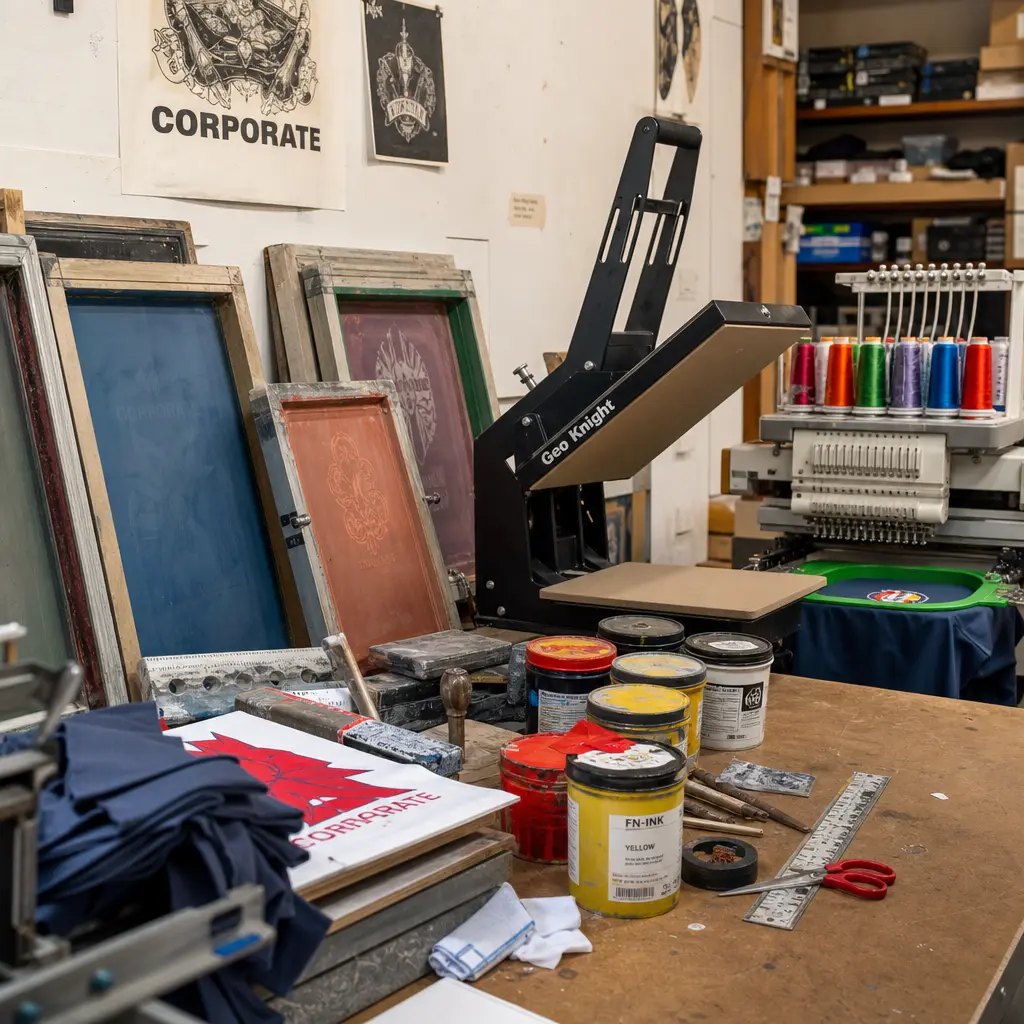
Screen printing is a common choice for startup pouch orders because many logos are simple, one-color, and cost-sensitive. It can perform well on cotton when the ink system, curing, fabric texture, and artwork are controlled. It is not automatically durable just because it is screen print. Thick ink on coarse canvas may crack when folded. Poor curing can rub off. Fine lines can fill in on textured fabric. The quote should state print size, number of colors, ink type if available, curing method, print position tolerance, and artwork limitations.
Heat transfer can solve some artwork problems, especially gradients, small details, or multi-color marks. It also introduces different risks: edge lift, press marks, plastic hand feel, and cracking across fold lines. Woven labels or small sewn patches can be stronger for compact premium branding, but they add label MOQ, color approval, and sewing control. The safest route is to test the actual logo method on the actual fabric with the actual fold and packing method planned for production.
- Use screen print for simple logos after rub, fold, and curing review
- Use heat transfer for complex artwork only after edge adhesion and fold testing
- Use woven labels when small durable branding is more important than a large front graphic
- Set print position tolerance, commonly ±0.5 cm for small to medium pouches
Make durability testing practical and pass/fail
A cotton drawstring pouches for tech startups durability testing checklist should not read like a laboratory fantasy. It should be repeatable by the supplier, buyer, or inspection agency using agreed sample sizes and clear pass/fail language. A practical pre-production test can use 5-10 pieces per size or per critical SKU. For final inspection, pull samples across cartons and production lots rather than taking only the top pieces from one carton. If one SKU carries a heavier charger and another carries a cable, test them separately.
Useful tests include loaded hang, repeated open-close, cord pull, short drop, dry rub, fold review, and dimensional check. For example, load the pouch with 1.25 times the expected item weight for 24 hours and fail any piece with seam opening, cord exit tearing, or permanent distortion that prevents normal use. Run 100 open-close cycles and fail cord jamming, pull-through, or channel tearing. Drop the loaded pouch from 75 cm onto a clean hard surface 5 times on different orientations and fail any open seam or functional damage. For print, use 20 dry rub strokes with white cotton cloth or tissue and record unacceptable pigment transfer, peeling, or cracking. These are commercial acceptance tools, not universal lab standards; buyers can tighten or relax them by product value and channel risk.
- Sample size: 5-10 pieces per size for pre-production durability review
- Load hold: 1.25x expected item weight for 24 hours with no seam opening
- Open-close: 100 cycles with no cord pull-through, tearing, or severe jamming
- Drop simulation: 5 drops at 75 cm loaded weight with no functional seam failure
- Rub review: 20 dry strokes with no unacceptable pigment transfer or print breakdown
Control samples like production evidence
A sample is useful only if it represents bulk production. A beautiful pouch made from substitute fabric, different cord, or a hand-applied logo does not prove manufacturing readiness. The approval flow should move from material swatch to blank fit sample to printed pre-production sample. The pre-production sample must use the approved fabric, actual cord, actual seam construction, actual logo method, and the planned packing fold. If the pouch will be packed flat, folded, or tied, approve that condition too because packing can crease print surfaces and change presentation.
Once approved, create a golden sample file. Record finished dimensions, fabric GSM, cord diameter, print size and placement, logo color reference, seam notes, and packing method. Keep one signed sample with the buyer or inspection agency and one with the factory. For repeat orders, the golden sample prevents drift when staff, fabric lots, or subcontracted processes change. If a startup expects fast reorders after launch, this step is cheaper than rebuilding the spec under deadline pressure.
- Do not approve bulk from a digital mockup alone
- Mark the approved sample with date, PO, SKU, artwork version, and supplier name
- Photograph critical details: cord exit, inside seam, print close-up, carton label, and packing fold
- Require written approval before bulk fabric cutting or print setup
Verify supplier capability, not just unit price
The lowest quote may still be suitable, but only if the supplier can prove control over the steps that matter. Ask whether cutting, sewing, printing, dyeing, and packing are done in-house or subcontracted. Subcontracting is common and not automatically a problem; unmanaged subcontracting is the risk. If printing is outsourced, confirm who controls curing, color approval, and rework. If fabric is purchased from the market, confirm whether the same fabric can be reserved for bulk after sample approval.
For higher-risk programs, use a buyer-appointed inspection agency or require the factory’s final inspection report with photos. Production photos are not a substitute for inspection, but they help catch obvious drift early: wrong cord color, wrong fold, mixed fabric shade, or missing carton labels. Lab test reports can be useful for colorfastness, fiber content, or restricted substance requirements when the sales channel demands them. Avoid asking for tests nobody will read; focus on the risks tied to the product, market, and brand promise.
- Confirm which processes are in-house and which are subcontracted
- Request production photos at material arrival, first sewing output, first print output, and packed carton stage
- Use third-party inspection for first orders, tight launch windows, or retail-channel requirements
- Ask for lab reports only where composition, colorfastness, or compliance claims matter
Plan MOQ and cost around variants
MOQ is rarely just one number. It may apply by fabric color, fabric type, pouch size, print artwork, cord color, woven label, or packing style. A startup that wants three sizes, two colors, and different logos can accidentally create twelve small production lots. That drives setup cost, material leftovers, shade variation, and inspection complexity. A more efficient launch often uses one base fabric and one branding method across multiple sizes, then expands colors or trims after sales data proves demand.
Compare costs on a landed usable basis, not only ex-factory price. Heavier GSM increases material cost and freight. Individual polybags add labor and packaging cost. Poor carton labeling creates receiving labor. Low-cost print that fails rub review can become a rework or disposal expense. A good RFQ asks suppliers to show price breaks by quantity and variant structure so buyers can decide whether the commercial gain of customization is worth the operational complexity.
- Ask MOQ by size, color, artwork, cord, label, and packing configuration
- Use shared fabric and logo setup where possible to reduce small-lot penalties
- Compare ex-factory cost, inspection cost, freight weight, and warehouse handling together
- Clarify whether overruns or underruns are allowed and at what percentage
Write packing and inspection rules into the PO
Packing is part of quality for soft goods. Natural cotton can attract dust and lint. Dyed fabric can transfer color if poorly controlled. Screen print can mark adjacent pieces if packed too soon or compressed incorrectly. The purchase order should state whether pouches are packed flat, folded, tied, individually bagged, or bulk packed in counted inner bags. It should also require carton labels with SKU, size, color, quantity, PO number, carton number, and gross weight. Mixed cartons should be prohibited unless the buyer approves the exact layout.
Inspection criteria need the same clarity. Define critical, major, and minor defects before final inspection. Critical defects may include contamination, unsafe foreign matter, or severe odor. Major defects include wrong artwork, missing cord, open seam, wrong size outside tolerance, failed cord pull, severe print defects, and incorrect SKU count. Minor defects include small thread tails or slight natural slub variation within the approved standard. State whether acceptance is by total lot or by SKU; otherwise one failing size can become a negotiation rather than a clear decision.
- Require SKU-level carton labels and carton sequence numbers
- Set finished size, print position, and count tolerance before production
- Classify seam failure, cord pull-out, wrong artwork, and wrong packing as major defects
- Keep final inspection before balance payment or shipment release when possible
Specification comparison for buyers
| Pouch option | Best use case | Typical buyer specification | Main risk to verify |
|---|---|---|---|
| Light cotton promo pouch | Event giveaways, stickers, light cable sets, non-premium inserts | 120-180 GSM cotton, simple single drawstring, basic one-color logo | Can feel thin, distort around print, and wear early at cord channel if used repeatedly |
| Standard tech accessory pouch | USB-C cable kits, small chargers, adapters, earbuds, onboarding kits | 230-260 GSM tight plain weave or canvas, 4-5 mm cord, reinforced cord exits | Supplier may quote same GSM but looser weave; request swatch and measured GSM tolerance |
| Premium structured pouch | Power adapters, compact hard drives, retail bundles, reusable storage | 300-340 GSM cotton canvas, 5-6 mm braided cord, stronger seam allowance | Higher fabric cost and carton weight; confirm freight impact and fold marks on heavier fabric |
| Natural cotton pouch | Minimal brand look, sustainability-focused packaging, neutral retail presentation | Undyed natural cotton with approved shade range and slub acceptance limits | Visible specks, slubs, and shade variation can be normal but must be separated from stains |
| Dyed black or brand-color pouch | Premium electronics branding, contrast logo, color-led SKU programs | Reactive-dyed or pigment-dyed cotton with colorfastness target and shade reference | Dye lot variation and crocking risk; test rub transfer against white tissue or fabric |
| Screen-printed logo pouch | Simple one- or two-color startup logos and medium-volume runs | Approved ink system, print area, curing method, print position tolerance ±0.5 cm | Durability depends on ink, curing, fabric texture, and folding; do not assume all screen print performs equally |
| Heat-transfer logo pouch | Gradients, small details, multi-color artwork, short promotional runs | Transfer type, press temperature/time, edge adhesion, hand-feel approval | Edges may lift or crack on folded cotton if transfer and pressing controls are weak |
| Woven-label pouch | Small premium branding where print wear is a concern | Sewn side label or front patch with label MOQ, stitching standard, and position tolerance | Adds label lead time and sewing step; loose label stitching becomes a visible defect |
| Retail-ready packed pouch | Direct-to-consumer kits, barcode handling, clean-room style fulfillment | Individual bagging or counted inner bags, SKU labels, carton sequence, cleanliness standard | Overpacking raises cost and waste; under-specified packing causes receiving errors and lint issues |
Buyer checklist before sampling
- Define the intended contents by item and weight: cable kit, charger, SSD, mouse, onboarding set, or retail accessory bundle.
- State finished external size and usable internal space in centimeters, including tolerance by size.
- Specify fabric construction and GSM range, such as 230-260 GSM tight cotton canvas or 300-340 GSM heavy canvas.
- Clarify fiber composition, including virgin cotton, recycled cotton blend, organic cotton claim, or mixed fiber content percentage.
- Approve color standard: natural cotton shade range, stock dyed color, or Pantone target with acceptable deviation.
- Choose cord material, diameter, color, end finish, and single- or double-drawstring opening.
- Define seam details: double-turned channel, enclosed raw edges, side seam reinforcement, and backtack or bartack at stress points.
- Name the logo method and limits: screen print, heat transfer, woven label, patch, print size, colors, and position tolerance.
- Set practical durability checks before bulk approval: load hold, open-close cycles, cord pull, drop simulation, rub review, and fold review.
- Agree packing by SKU: units per inner pack, inners per carton, carton labels, carton gross weight, and mixed-carton rules.
Factory quote questions to send
- What exact fabric construction is quoted: plain weave, canvas, twill, muslin, or blend, and what is the measured GSM tolerance?
- Can you provide a fabric swatch or lab weight record showing GSM, composition, and shrinkage expectation before sample approval?
- What cord material and diameter are included in the base price, and how are the cord ends secured against fraying or pull-through?
- Is the cord channel double-turned with enclosed raw edges, and how are cord exit points reinforced?
- What stitch density, seam allowance, and backtack or bartack method will be used on side seams and bottom seams?
- Which logo method is quoted, what are the minimum line thickness and maximum print area, and what color-matching tolerance applies?
- What are the MOQ rules by fabric color, pouch size, artwork version, cord color, woven label, and packing style?
- Can multiple sizes share one fabric lot and one logo setup, or will each size be treated as a separate production batch?
- What sample stages are available: material swatch, blank fit sample, printed sample, pre-production sample, and shipping sample?
- What in-house or third-party tests can you support for seam strength, cord pull, colorfastness, print adhesion, dimensional stability, and carton drop?
Quality-control points to confirm
- Fabric GSM checked against approved range using sampled pieces from more than one roll or carton group
- Fabric construction, hand feel, shade, slub level, odor, and cleanliness matching the signed golden sample
- Finished pouch width and height within agreed tolerance, typically ±0.5 cm for small pouches and ±1.0 cm for larger pouches
- Usable internal fit confirmed with the buyer’s actual product or approved dummy weight
- Cord diameter, color, length, end finish, and draw action matching approved pre-production sample
- Cord channel evenly sewn with enclosed raw edges, no missed stitches, no jammed cord, and no exposed seam allowance
- Cord exits reinforced and passing agreed pull or open-close test without tearing, distortion, or cord pull-through
- Bottom and side seams secure with no seam grin, skipped stitches, open ends, broken threads, or weak backtack
- Print or label position within tolerance and free from smudging, pinholes, ghosting, severe color shift, or loose label stitching
- Print surface passing agreed dry rub, fold, and adhesion review without unacceptable cracking, peeling, or pigment transfer