Start With the End Use and Distribution Channel
Coffee roasters buy cotton drawstring pouches for different jobs, and the job should drive the specification. A pouch used for sample sets at a trade show has different demands than a pouch that ships as a retail add-on, a gift-with-purchase, or a subscription insert. If the supplier only sees a size and a logo, they will fill in the missing details with their own assumptions. That usually creates a quote that looks usable but fails when the pouch is packed, labeled, or distributed.
Write the intended use into the RFQ in plain language, then give the supplier the actual contents that will go inside the pouch. A bag that holds a 50 g coffee sample, a branded card, and a tasting note needs a different tolerance than a pouch that carries a small tin, a merch item, or a retail bundle. If the fill item is rigid, sharp-edged, or moisture-sensitive, say so. Those details affect fabric weight, seam strength, closure behavior, and packing method more than buyers often expect.
- State the fill item dimensions and weight, not only the pouch size.
- Tell the supplier whether the pouch is promotional, retail-facing, reusable, or disposable after opening.
- Describe the shipping path if it matters: direct to consumer, warehouse intake, trade-show handout, or retail shelf.
Turn Brand Intent Into a Measurable Spec
The biggest sourcing mistake is treating the pouch like a commodity without defining the working spec. For procurement, a cotton drawstring pouch is only simple if every variable is explicit. Start with finished dimensions, but do not stop there. Specify fabric GSM, weave type, color, shrinkage allowance, seam allowance, cord length, and any tolerance that affects the actual use case. A quote with no tolerance is not a usable quote; it is only a placeholder.
Coffee brands often want a natural look, but natural does not mean undefined. Unbleached cotton varies more in shade, while bleached cotton usually gives a cleaner print surface. Heavier fabric improves structure and print coverage, but it also changes freight weight, pack count, and material cost. If the pouch is meant to sit beside premium coffee products, handfeel and visual consistency matter. If it is meant to move in volume, repeatability and pack efficiency may matter more. Put those priorities in the spec so the supplier can quote against the right tradeoff.
- Define finished width, height, and acceptable tolerance before sampling.
- List the target GSM, color family, and whether the cotton is bleached or natural.
- Include shrinkage allowance and note whether the pouch must look consistent across replenishment orders.
Choose Construction Details That Match the Risk
Construction details are where pouches fail in use, even when they look acceptable in a sample photo. The drawcord channel, top hem, side seams, and any reinforcement stitching should be selected for the actual load and handling pattern. If the pouch will be opened repeatedly at events or in stores, the closure needs to survive more cycles. If the pouch carries a heavier insert, stress moves to the bottom corners and the top anchoring points. Ask the factory how the construction prevents those failure modes instead of accepting a generic sewing description.
For most coffee roaster programs, the practical questions are not abstract. Is the cord thick enough to pull easily without cutting into the fabric? Is the hem folded in a way that keeps the opening neat? Are the seams clean enough that threads will not shed onto the product? If the pouch is part of a premium retail set, even minor distortion can make the item look lower quality than the coffee it carries. Ask for close-up images of the seam, the cord path, and the reinforcement points before approving bulk production.
- Ask where the factory reinforces stress points and request close-up photos of those areas.
- Confirm cord diameter, cord material, and whether the cord end is heat-sealed, knotted, or finished another way.
- If the pouch is carrying a heavier item, ask the supplier to test a sample under realistic load before bulk approval.
Choose Decoration Method and Artwork Controls
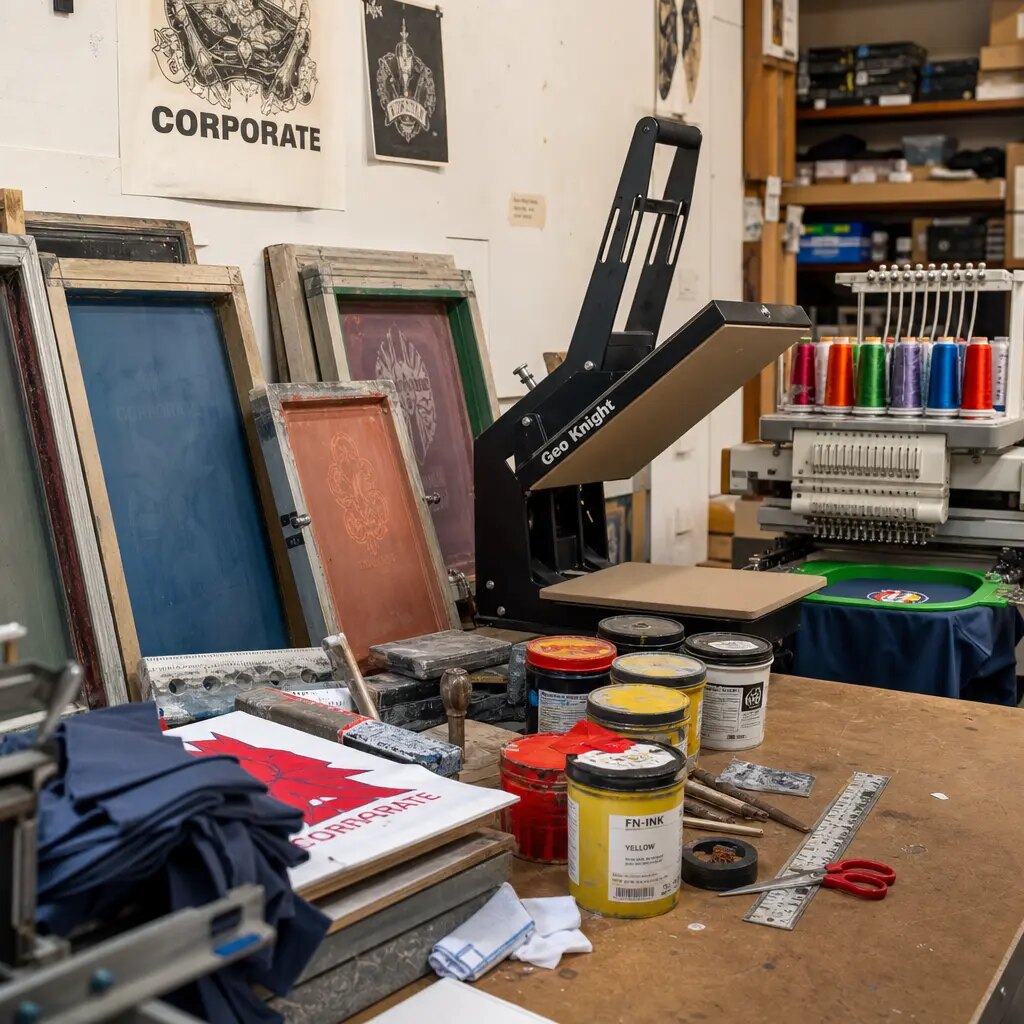
Decoration is a sourcing decision, not just a design preference. One-color screen print is usually the most practical option for cotton drawstring pouches because it is legible, economical, and stable across volume. It also gives the buyer a straightforward approval path: artwork, placement, ink color, and print quality. Embroidery, woven labels, sew-on patches, and specialty transfers can look more premium, but each adds cost, lead time, and more ways for the result to drift away from the approved sample.
The print or label spec should be precise enough that the supplier can quote without guessing. Give the artwork in vector format, define the maximum print area in millimeters, and state the exact logo color count. If your brand requires color accuracy, reference a Pantone or another controlled color standard rather than describing the ink as close enough. Ask what happens to print clarity after folding, packing, and handling. That matters because coffee roaster pouches often move through warehouses and event kits before the customer ever sees them.
- Provide vector artwork and a defined print box in millimeters.
- Set a color standard for the logo if color fidelity matters to the brand.
- Ask for a printed sample with a rub check or handling check before approving the bulk run.
Treat Supplier Compliance as Evidence, Not Sales Language
For B2B procurement, compliance is not a marketing claim. It is a check on whether the supplier can show how the order will be controlled from material source to packed carton. Ask for business registration, factory address, production scope, and the list of processes performed in-house. If cutting, printing, sewing, and packing are split across different sites, note where each handoff happens and who owns the quality decision at each stage. A supplier can look capable on paper while still losing control when the order moves between workshops.
Material and packaging documentation should be matched to the actual components in the order. The fabric, drawcord, ink, label, and carton may each need different evidence depending on the market, retailer, or import program. If the supplier only sends a generic certificate without explaining what it covers, the file is not strong enough for procurement use. Ask for the document owner, the issue date, whether the document is batch-specific or company-level, and whether subcontractors are covered. That is the fastest way to separate a real compliance program from a paperwork bundle.
- Request a process map that shows fabric source, cutting, sewing, printing, packing, and final inspection.
- Separate product compliance from social compliance so the evidence set is clear.
- Ask which documents are current, which are generic, and which are tied to the specific batch or material lot.
Build the Sample and Approval Gate Before Bulk
The sample stage is where most avoidable order failures can still be stopped. A blank sample checks the shape, fabric handle, cord behavior, and closure. A printed sample checks logo placement, ink density, and curing. The pre-production sample is the critical gate because it should reflect the exact fabric lot, print setup, and packing method that the factory intends to use for the bulk order. If any of those steps are skipped, the buyer is approving an approximation, not the actual shipment.
Use a two-step approval process when the order is new or high-value. First, approve the blank pouch against the dimensional spec and the actual fill item. Then approve the decorated version with the final artwork and print position. Seal a gold sample, label it with SKU, revision date, and the approved measurement range, and keep a photo record with front, back, side seam, closure, and carton view. This gives both sides a fixed reference if a bulk dispute appears later. For coffee roasters, that matters because the pouch is often a brand touchpoint, not just a carrier bag.
- Approve a blank sample before moving to print if the size or fabric is new.
- Approve the print sample separately if logo position or color matters.
- Seal and label the gold sample by SKU, version, and date so there is one agreed reference.
Compare Quotes on Landed Cost, Not Unit Price
A low unit price can hide a weak commercial structure. For cotton drawstring pouches, the real comparison is landed cost per usable pouch, not just the sewn-bag price. Ask whether the quote includes sampling, tooling, print setup, carton charges, inner packs, testing, and inland freight. If the factory bundles those items into one number, you cannot compare suppliers cleanly, and you will probably uncover extra charges later. A procurement-ready quote is itemized enough that changes in size, print method, or pack format can be priced quickly.
MOQ logic matters just as much as unit price. MOQ can move with size, color, print count, or finishing method, and the buyer needs to know which variable is driving the minimum. If you are buying for a seasonal coffee campaign, simplify the number of variables where possible. One pouch size, one fabric base, and one print color usually price better than multiple SKUs with the same launch date. If you need to compare two suppliers, normalize the quote into the same spec, same packaging, and same delivery terms before making the decision.
- Request quote lines for unit price, sample cost, tooling, packaging, testing, and freight.
- Ask for MOQ by size, color, and decoration method instead of accepting one headline minimum.
- Compare suppliers on landed cost and rejection risk, not only on the invoice price.
Lock Packing, Cartons, and Warehouse Receipt Rules
Packing determines how much downstream work your team will inherit. For a coffee roaster program, the pouch should arrive in a format that supports warehouse receiving, storage, and redistribution without repacking every carton. Specify whether the pouches go in polybags, bundles, or bulk cartons, and define the number per inner pack. Ask for carton size, gross weight, and carton marks before the order is released. If your warehouse uses barcode scanning or SKU labels, the supplier needs that information at the start, not after packing has begun.
Natural cotton can pick up dust, smell, and moisture during transit, so the packing spec should protect the product without over-compressing it. Too much compression can leave permanent folds and distort the print area. Too little protection can leave the pouches creased or dirty on arrival. If the product is retail-facing, ask for fold direction, bundle count, and outer label placement. If the product is going straight to warehouse stock, ask for pallet pattern and receiving notes so the inbound team knows how to handle the shipment quickly.
- Specify inner pack count, carton count, and whether the pouches are polybagged or bulk packed.
- Request carton dimensions, gross weight, and pallet pattern before final approval.
- Give the supplier barcode, label, and carton-mark requirements before production starts.
Define Inspection Checks That Match the Failure Modes
Inspection should focus on the ways these pouches actually fail. Start with dimensions, then move to fabric quality, stitching, print, cord function, and pack accuracy. If your company uses AQL or another inspection framework, apply it consistently, but make sure the critical defects are tied to the real use case. A missing cord, broken seam, loose print, wrong size, or mixed SKU is more serious than a minor cosmetic issue. The inspection plan should say which defects are critical, major, and minor so the factory understands what will block shipment.
A useful check sheet for cotton drawstring pouches usually includes measurement control, visual appearance, print integrity, closure function, and carton correctness. Ask the factory to run a first-piece check on the line and a final packed-carton check before booking the shipment. If possible, inspect the actual fill item with the pouch so the buyer can verify insertion, closure, and how the bag behaves when full. This is especially useful for coffee roasters because the pouch may need to hold not just a product, but a branded presentation experience.
- Check finished dimensions, seam condition, cord operation, and print placement on sample lots.
- Separate critical, major, and minor defects so shipment holds are consistent.
- Ask for first-piece and final packed-carton photos when the order is time-sensitive.
Release the PO Only After Change Control Is Clear
The purchase order should be the point where ambiguity disappears. Before release, the buyer file should contain the approved spec sheet, artwork, gold sample reference, quote, packing plan, and required compliance evidence. It should also show who owns changes if something needs to shift after approval. Without that control, a factory may change fabric lot, print setup, carton size, or even a subcontracted process and treat it as normal. For a coffee roaster, that can turn a simple pouch order into a brand-quality problem.
Lead time should also be documented by stage, not as one flat promise. Ask for material reservation, print setup, sewing, inspection, packing, and booking dates separately so you can see where the schedule is vulnerable. If the supplier cannot explain the path to shipment, the burden of schedule control moves to the buyer. A strong PO pack keeps that burden where it belongs. It also gives the receiving team enough detail to compare what arrived against what was approved, which is the last step in turning a pouch purchase into a controlled procurement event.
- Keep one revision-controlled buyer file with the approved spec, artwork, sample, quote, and compliance records.
- Require written confirmation if the factory wants to change fabric, print method, carton format, or subcontractors.
- Ask for stage-by-stage lead time so you can see where the schedule can slip.
Specification comparison for buyers
| Supplier option | What to verify | Commercial advantage | Buyer risk to control |
|---|---|---|---|
| Direct sewing factory | cord material proof, reinforcement close-ups, load-test photos, approved sample tag, and bulk-line first-piece record | Better sample-to-bulk control and faster production feedback | May be weaker on export paperwork or branded packing unless checked early |
| Trading company | Factory name, production photos, trim-source proof, and who owns QC decisions | Can coordinate small mixed orders and extra services | Markup can hide real factory capability and slow defect decisions |
| Specialized bag workshop | cord diameter, eyelet or reinforced channel, bottom corner reinforcement, seam allowance, bar-tack position, and load target | More practical for detailed construction, trims, and repeat programs | Capacity may be limited during peak seasons |
| Low-price general supplier | 6-10 oz cotton canvas, 210D polyester, rPET, or blended cotton with shrinkage and colorfastness expectations set before sampling | Useful for simple promotional runs with loose specs | Material downgrades, weak packing, and vague inspection scope can erase savings |
| Retail-ready supplier | fold direction, cord protection, bundle count, carton compression, moisture bag, and retail label position | Can handle labels, SKU separation, carton marks, and receiving rules | Higher unit cost must be compared against reduced warehouse work |
| Compliance-focused supplier | Fabric records, labeling review, test plan, and production traceability | Safer for retail programs and repeat brand orders | Documentation claims need evidence, not only sales language |
| Local sample room plus bulk factory | Signed sample, bulk factory handoff, first-piece photos, and deviation owner | Good for complex branding before large production | Sample room quality may not match bulk line unless handoff is controlled |
Buyer checklist before sampling
- Define the pouch use case first: coffee bean samples, retail add-on, gift-with-purchase, subscription insert, trade-show handout, or internal sample distribution.
- Give the supplier the actual fill item dimensions, weight, surface sensitivity, and whether the contents are rigid, sharp-edged, or moisture-sensitive.
- Lock the fabric spec with GSM, color, weave, shrinkage allowance, and whether the cotton is bleached, unbleached, or combed.
- State the decoration method, print area, logo color count, and artwork approval process before requesting a quote.
- Ask for MOQ by size, color, and decoration method instead of relying on one headline minimum.
- Request blank, printed, and pre-production samples when the order has a new size, new fabric, or new logo placement.
- Require a signed gold sample with SKU, revision date, approved measurement range, and a photo set of the front, back, seam, and closure.
- Specify inner pack count, carton count, carton labels, pallet needs, and any warehouse receipt rules before production starts.
- Ask the supplier to separate unit price, sample cost, tooling, testing, packaging, and freight in the quotation.
- Confirm lead time by stage: fabric, print setup, sewing, inspection, packing, and booking.
Factory quote questions to send
- What exact fabric GSM are you quoting, and is the cotton combed, bleached, unbleached, or blended?
- Is the quoted price based on in-house cutting, sewing, printing, and packing, or are any steps outsourced?
- What is the MOQ by size, color, and print color count?
- What is the blank sample, printed sample, and pre-production sample timeline?
- What dimensional tolerance can you hold on finished width, height, and cord length?
- What shrinkage allowance do you build into the fabric and the finished bag?
- Which compliance documents can you provide for fabric, ink, cord, label, and packaging materials?
- Can you share a process map showing fabric source, cutting, sewing, printing, packing, and final inspection?
- What are the carton count, carton dimensions, gross weight, and pallet pattern?
- What is the lead time after sample approval, and which events can add days to the schedule?
Quality-control points to confirm
- Finished size should stay within the agreed tolerance so the pouch fits the intended coffee sample or retail item without excess slack.
- Fabric weight should match the approved GSM; thinner substitutions usually reduce structure and weaken print opacity.
- Drawcord should pull smoothly, close fully, and stay anchored after repeated opening and closing.
- Cord channel, top hem, and side seams should show consistent stitching with no skipped stitches, seam puckering, or loose thread tails.
- Bar tacks or reinforcement points should be placed consistently at stress areas, especially near the cord channel and top corners.
- Print placement should match the approved artwork position, and print density should remain even after folding and handling.
- Ink should cure properly and pass the buyer's rub expectation so the logo does not smear during packing or distribution.
- Shrinkage after wash, steam, or humidity exposure should stay inside the buyer's limit if the pouch is reused or sold at retail.
- Cartons should match the approved pack plan with clean lot traceability and no mixed sizes or mixed print versions.
- Outer packaging should protect against dust, moisture, and crease damage without over-compressing the pouches.