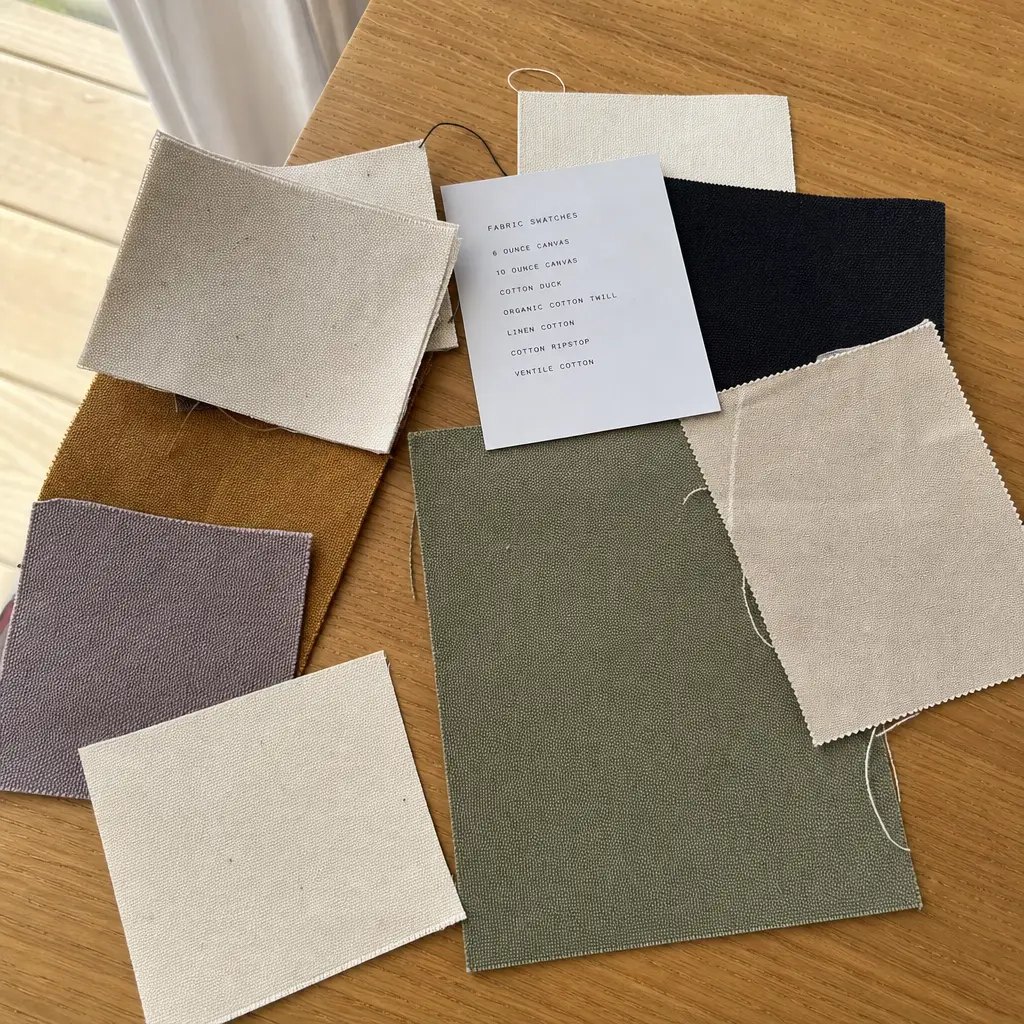
Start with the use case, not the logo
Wholesale cotton drawstring pouches for subscription boxes are usually judged in the first ten seconds after the box is opened. That means the pouch is doing more than holding an item. It is carrying the brand, shaping the reveal, and often affecting how premium the whole shipment feels. For a procurement buyer, the key decision is not where the logo looks nicest on a mockup. It is where the logo survives production, folding, kitting, and delivery without becoming a defect risk.
The most common mistake is to treat logo placement as a design approval problem instead of a manufacturing specification. A flat proof can look balanced while still ignoring the top hem, side seam, drawcord channel, and bottom fold. Once the factory cuts and sews the fabric, that same art can shift, compress, or land in a crease. If the pouch is for a monthly or quarterly box, the cost of an inconsistent logo is multiplied across every reorder. The right way to source it is to define the use case first: insert holder, reusable retail-style pouch, premium gift wrap, or internal accessory bag.
That use case tells you how much brand visibility you need and how much durability the pouch must have. A simple insert pouch can use a smaller print and lighter fabric. A pouch that will be kept by the customer needs stronger seams, cleaner print edges, and a decoration method that will still look acceptable after repeated handling. Buyers should lock that expectation before sending artwork. Otherwise, the factory is forced to guess whether the job is cosmetic, functional, or both.
For subscription programs, there is also a logistics angle. The pouch must fit the kitting line, the box cavity, and the warehouse receiving process. A technically good pouch can still be a poor purchase if it arrives folded in a way that slows packing or if the logo disappears after the first crease. The procurement spec should therefore include both appearance and handling requirements. That is what keeps the order measurable.
- Define whether the pouch is an insert, a reusable gift bag, or a product holder.
- Treat logo placement as part of the production spec, not just the design proof.
- Decide up front whether the pouch must look premium after folding and kitting.
- Write the use case into the RFQ so the factory can quote the right fabric and decoration method.
Choose the base spec before discussing decoration
The fabric spec drives more of the final result than the logo itself. Cotton drawstring pouches commonly sit in the 120-180 GSM range, but that range only becomes useful when matched to the job. Around 120-140 GSM, the bag is lighter, cheaper to ship, and easier to fold flat for high-volume kitting. Around 150-180 GSM, the pouch has more body, takes print more cleanly, and feels more substantial in a subscription box reveal. There is no universal best choice. The decision depends on how much structure, opacity, and reuse you need.
A tighter weave usually supports cleaner print edges and more predictable logo placement because the cloth holds shape better during cutting and sewing. If the fabric is loose or irregular, a large logo can look uneven even when the artwork file is correct. Buyers should ask whether the cloth is pre-shrunk, washed after cut, or expected to move after the first handling cycle. If the pouch will be filled with products that create bulk, seam allowance and corner construction matter as much as the GSM number.
One useful procurement habit is to separate the fabric decision from the branding decision. First approve pouch size, fabric weight, weave, cord style, and shrinkage expectation. Then apply the logo to that locked structure. When buyers approve logo placement first, they often end up redesigning the bag later because the art field is too close to the opening or too large for the actual panel. That causes avoidable revision rounds and makes the factory guess which version should be treated as final.
The same logic applies to color. Natural cotton is usually the easiest starting point because it is forgiving, common, and less likely to create ink opacity issues. Dyed pouches can work well, but they raise color control demands and may change how the logo reads under retail lighting. If the pouch color is brand-critical, ask for a bulk shade reference and one approved sample from the same fabric lot before authorizing production.
- 120-140 GSM: lighter, lower freight, simpler flat packing.
- 150-180 GSM: better body, cleaner print, and stronger premium feel.
- Tighter weave generally improves print clarity and logo edge definition.
- Lock fabric, size, and shrinkage expectation before approving artwork placement.
- Ask for a shade reference if the pouch color is brand-critical.
Place the logo with a ruler, not a mood board
Front-center is still the most dependable placement for subscription box buyers because it gives the clearest unboxing moment and is easiest to inspect in production. But front-center only works if the logo field is measured. The approved drawing should show the exact print area, the distance from the top hem, the distance from each seam, and the allowable shift in millimeters. That is the level of detail that prevents the common problem of a logo that is technically printed correctly but visually feels too high, too low, or slightly off-center once the pouch is sewn.
A lower-front logo can look more restrained and premium, especially on reusable pouches. The downside is that the print can collide with the fold line or disappear when the pouch is tied closed. A side-gusset placement is usually better for small marks or a woven label. It keeps the front panel clean, but it also reduces visibility in photos and retail-style presentation. A back-panel logo works only when the front is reserved for other content or when the pouch is intentionally quiet branding.
The practical question is not which location is fashionable. It is which location can survive the actual sewing sequence. The cord channel compresses the top edge, side seams can pull the cloth inward, and folding can change the eye’s perception of center. If the factory is not given a placement diagram, the team will interpret the art file with local judgment. That may be acceptable for a one-off promo item, but it is a poor system for recurring subscription orders where consistency matters.
A strong placement workflow starts with an annotated sample photo. The factory marks the proposed placement on a blank pouch, the buyer checks it against the spec, and both sides sign off before bulk production. If there is any ambiguity, the buyer should ask for a second sample with the corrected position. A little delay at this stage is cheaper than a carton of pouches with a misaligned logo.
- Front-center gives the cleanest unboxing visibility and easiest inspection.
- Lower-front placement needs enough margin to avoid fold-line interference.
- Side-gusset and woven-label placements work best for minimalist branding.
- Require a measured placement drawing with millimeter tolerances.
- Approve a marked-up sample photo before bulk production starts.
Pick the decoration method by art complexity and handling risk
For most cotton drawstring pouch programs, screen printing remains the default choice because it gives a good balance of cost, clarity, and repeatability. It is usually the right answer for one-color logos, simple two-color marks, and repeat orders where the goal is to keep the brand visible without turning the pouch into a premium printed garment. The buyer should still ask for the minimum line thickness, the smallest negative space, and whether the ink system is suitable for the chosen fabric color. A logo that looks clean in an Adobe file can still lose detail if the lines are too fine for the mesh and cloth.
Woven labels are the right answer when the pouch needs discreet branding or when the front panel must stay visually clean. They are durable and inspectable, but they do not replace a front print if the pouch itself is supposed to carry the brand in a visible way. Embroidery creates a premium tactile effect, but it changes the fabric behavior. On lighter GSM pouches it can pucker the panel, and on small bags it can consume too much visual real estate. It is usually more appropriate for heavier cotton and small logos than for detailed wordmarks.
Heat transfer is worth considering when the design is short-run, multi-color, or still in testing. The tradeoff is wear performance. If the pouch will be folded, tied, and handled frequently, the buyer needs to test for cracking, edge lift, and stiffness after a few handling cycles. For a subscription box that ships once and is immediately discarded, that risk may be acceptable. For a reusable pouch, it may not be.
The point is to choose decoration based on how the pouch will be handled, not on what looks most impressive in a sales presentation. Ask the supplier to recommend a method only after the buyer has stated the use case, the fabric weight, the logo size, and the expected reorder pattern. That is the only way to compare decoration methods on the same basis.
- Screen print: best for simple logos, one to three colors, and repeat orders.
- Woven label: best when the brand mark needs to be small and durable.
- Embroidery: best for heavier fabric and premium presentation, not fine detail.
- Heat transfer: best for launch tests or short runs with more complex artwork.
- Confirm minimum line thickness and spacing limits before approving the art.
Build the quote so unit price is actually comparable
A pouch quote is only useful if the factory is pricing the same thing you think you asked for. Cotton pouch pricing is shaped by fabric GSM, cut size, cord type, decoration setup, number of colors, label addition, packing format, and inspection burden. If one supplier quotes a decorated bag and another quotes a blank bag, the comparison is meaningless. B2B buyers should request line-item pricing so the team can see what drives cost and where a supplier is making a compromise.
A clear RFQ should split the order into base fabric cost, sewing cost, drawcord cost, print or embroidery setup, packaging cost, and any labeling or carton-marking fee. That makes it easier to compare two quotes with different decoration methods. It also reveals whether the low price is driven by a smaller logo field, a lighter fabric, or a simpler packout. If the pouch is part of a recurring subscription program, ask the factory to show first-order pricing and reorder pricing separately. Setup amortization matters, especially when screens, plates, or digitizing files can be reused.
MOQ is usually tied to setup and changeover cost, not just material usage. A simple front print may allow a smaller first run than embroidery or a pouch with multiple placements. Changing pouch size, pouch color, or logo position can increase MOQ because the factory needs to reset cutting and sewing templates. The buyer should not assume one MOQ applies to every version. Ask for MOQ by size, color, and decoration method so the ordering plan matches reality.
If the goal is comparison, ask every supplier to quote the same scenario: same fabric GSM, same finished size, same cord style, same logo placement, same inner pack quantity, and same delivery window. Anything less will produce fake savings. A cheaper quote that depends on a different spec is not a better quote; it is a different product.
- Ask for separate line items for fabric, sewing, cord, decoration, packing, and setup.
- Compare first-order pricing and reorder pricing separately.
- Request MOQ by size, color, and decoration method.
- Hold all suppliers to the same spec before comparing quotes.
Compare sourcing routes before you decide how to buy
Direct factory sourcing gives the buyer the most control over production detail. That matters when the pouch needs a specific logo position, a stable shade, and a repeatable pack format. It also makes sample approval more meaningful because the factory that quotes the job is the one that should actually produce it. The tradeoff is that the buyer must manage the technical detail more closely and cannot rely on a middle layer to interpret the spec.
Trading companies can be efficient when the buyer is sourcing packaging alongside other items or when the internal team needs one point of contact. The convenience is real, but it should not reduce diligence. Ask who makes the pouch, who owns the print setup, and who performs inspection. If the supplier cannot answer that clearly, the buyer loses visibility right where textile orders usually go wrong: placement, shade, and finishing.
Blank import plus local decoration is useful when the design changes often and the fulfillment center already holds blank stock. It can reduce decorated inventory risk and make campaign changes faster. The hidden cost is that two vendors now control quality. The blank supplier must deliver consistent fabric and size, and the local decorator must handle the logo without damage. If either side drifts, the warehouse sees the result as one problem, even though the fault sits in two different places.
A hybrid route can make sense for subscription brands that need both stability and flexibility. For example, the company may hold standard blank pouches in inventory and print locally for seasonal themes, while core evergreen branding stays on the factory order. That is a sound model only if the buyer has enough internal discipline to track specs, shade, and artwork versions. Without that control, the number of handoffs increases faster than the benefit does.
- Direct factory: strongest control over spec, sample, and inspection.
- Trading company: useful for bundled buying, but factory identity must be clear.
- Blank plus local decoration: good for fast campaign changes when blanks are already stocked.
- Hybrid: useful when some branding stays fixed and some changes by season.
Approve samples like a production buyer
Sampling should prove that the pouch can be made to spec, not just that the mockup looks good. Start with the finished dimensions, opening width, seam allowance, and cord exit points. Then check the logo placement against the drawing with a ruler. Cotton is forgiving in appearance and deceptive in inspection; a pouch can look centered at a glance and still be too close to a seam or slightly rotated once the stitching tension settles. A good sample process catches that before the bulk run starts.
Where possible, request two samples: a blank construction sample and a decorated pre-production sample made from the same fabric, cord, and decoration method that will be used in bulk. The blank sample confirms construction and handfeel. The decorated sample confirms ink opacity, stitch behavior, label placement, and visual balance. If the pouch uses a woven label or side tag, approve that exact position in the same round so the factory does not treat it as an optional detail later.
Keep a signed golden sample on both sides. That sounds basic, but it is the difference between a defensible approval and a vague memory. The golden sample should be supported by photos of the front, back, side, top opening, and close-up logo area, with a ruler in frame. If the buyer has a packaging team, a warehouse team, and a brand team all touching the same order, the golden sample becomes the anchor document that prevents separate interpretations.
The sample stage is also where buyer instructions need to become explicit negative instructions. If the logo must not overlap the seam, say so. If the pouch must not feel stiff, say so. If the cords need heat-sealed tips rather than knots, say so. Textile orders rarely fail because the factory had no method. They fail because the buyer left too much room for interpretation.
- Measure the sample against the final drawing, not against a concept sketch.
- Request a blank sample and a decorated pre-production sample when the job is custom.
- Keep one signed golden sample and ruler-marked photos for both sides.
- Write down what is not acceptable, not only what is desired.
Set QC thresholds the warehouse can enforce
Quality control for cotton pouches should be simple enough for incoming inspection and specific enough to prevent disputes. The spec should define acceptable dimension tolerance, logo placement tolerance, seam quality, thread trim standards, shade variation, and packaging accuracy. For subscription box use, logo position often deserves a tighter tolerance than body size because that is what customers notice first. The bag can function with a slightly generous width, but a shifted logo will still look wrong.
The QC plan should reflect how the pouch will be used. If it only holds a lightweight insert, then print clarity, count accuracy, and neat trimming may be enough. If it will carry jars, bottles, or heavier accessories, ask for seam pull checks, cord retention checks, and a simple load test. For printed pouches, rub resistance matters because customers handle the bag before it disappears into a closet or is reused in travel. If the print smears under normal handling, the order should not pass just because the dimensions are correct.
Defect severity should be agreed in advance. Loose threads may be acceptable if they are limited and can be trimmed without damage. A broken stitch near a load point, a mislocated logo, or a print with obvious smear should be treated as a major defect. If the pouch is part of a monthly subscription program, the buyer should also state whether the shade band is strict or whether some natural cotton variation is acceptable. That decision belongs in the approval package, not in the receiving dock.
A practical inspection flow is pre-production, in-process, and final. Pre-production checks confirm the right cloth, cord, print setup, and placement jig. In-process checks catch drift before the whole lot is sewn. Final inspection confirms count, packing, labels, and appearance. Even small pouch orders benefit from this structure because small textile defects become expensive when they are discovered only after cartons are closed.
- Use a tighter tolerance for logo placement than for overall pouch dimensions.
- Treat mislocated logos, broken stitches, and print smear as major defects.
- Add seam pull or load checks when the pouch holds heavier contents.
- Verify carton count, inner pack count, and labels before shipment release.
Specify packing for kitting, not only for shipping
Packaging detail affects labor cost more than many buyers expect. A pouch that arrives in the right carton but is folded the wrong way can slow the kitting line. A pouch packed too tightly can hold crease marks across the logo. A pouch packed too loosely can waste carton space and increase freight cost. For subscription boxes, the right packout is whatever helps the warehouse insert the pouch quickly while preserving presentation.
The RFQ should state whether the pouch ships flat, pre-folded, or pre-tied. Those three choices are not interchangeable. Flat packing is usually safest for logo visibility and warehouse flexibility. Pre-folding can reduce handling time if the fold direction is matched to the box layout. Pre-tying makes sense only when the pouch arrives as a finished gift item and the warehouse does not need to reopen it. The factory should not choose this by habit; the buyer should choose it based on the kitting process.
Inner pack quantity and carton count should be part of the quote. So should carton dimensions and carton label format. If the order will be received by multiple fulfillment centers, label text and batch identification should match the receiving system before shipment leaves the factory. That prevents avoidable inbound exceptions and makes it easier to resolve claims if a carton is short or damaged.
If the pouch will be distributed through several launch cycles, ask the factory to label cartons by size, color, and print version. That simple step saves time in the warehouse and reduces the chance that a crew opens the wrong carton during a live pack run. For buyers managing recurring subscription shipments, the packing spec is not a minor detail. It is part of the operating system.
- Specify whether pouches ship flat, pre-folded, or pre-tied.
- Fold direction should protect the logo from hard crease lines.
- Ask for inner pack quantity, carton count, carton dimensions, and carton labels.
- Match carton labeling to the warehouse receiving process before shipment.
Plan lead time around sample cycles and freight, not just sewing time
Cotton pouch lead times are often manageable, but only if the buyer separates sampling, setup, bulk production, and transit. A project with new artwork or a new pouch size may need a sample round, a revision round, and then bulk production. If the factory needs to source custom fabric or a special cord, the calendar stretches again. For subscription boxes, the important date is not when sewing ends. It is when cartons are actually available for kitting.
A useful scheduling habit is to ask the supplier for three dates: sample ready date, bulk completion date, and ready-to-ship date. Those dates should be aligned with the subscription calendar and should include buffer for art approval, inspection, export paperwork, and freight booking. The buyer should not let the supplier hide transit time inside a vague delivery promise. A factory can finish on time and still miss the launch if the shipment is not booked or cleared in time.
When the order is recurring, reorder speed matters almost as much as first-order speed. If screens, plates, or embroidery files are retained, the second order can usually move faster than the first because setup time is reduced. If not, every campaign behaves like a new project. Buyers should ask which parts of the setup can be reused and whether the factory can hold a master sample and matching production notes for the next run. That is a small question with a real impact on procurement workload.
Lead time claims should always be checked against seasonality. Packaging factories do not move at a fixed speed all year. If the brand is buying near a peak period, the quote should state whether the promised timeline is current capacity or a theoretical best case. That is where procurement discipline saves programs from late-stage surprises.
- Separate sample time, production time, and transit time in the schedule.
- Ask for sample ready date, bulk completion date, and ready-to-ship date.
- Confirm whether print or embroidery setup can be reused on reorder.
- Treat freight booking and export paperwork as part of lead time.
- Check whether the quoted timeline reflects current capacity or a best-case assumption.
Specification comparison for buyers
| Buying route / decoration | Typical starting spec | When it fits | Key tradeoff | Price / lead-time note |
|---|---|---|---|---|
| Direct factory, one-color screen print on front panel | 120-180 GSM cotton, one print location, artwork kept 15-25 mm away from seams and cord channel | Best default for subscription box inserts and repeat orders | Lowest complexity and easiest QC, but print art must be simple | Usually the best unit cost for recurring runs; setup is slower on first order but reusable on reorder if screens are retained |
| Direct factory, woven side label | 140-180 GSM cotton, small woven label sewn into side seam or near hem | Use when the pouch is reused often or the front panel must stay minimal | Smaller branding field and stitch placement must not weaken the seam | Label cost is higher than a simple print, but repeatability is strong if the label design stays stable |
| Direct factory, embroidery | 160-180 GSM cotton or heavier, small logo with modest stitch count | Good for premium gift sets or durable reusable bags | Can pucker lighter fabric and raises stitch-time cost | Usually slower and more expensive than print; best for small logos, not dense artwork |
| Blank pouch import plus local decoration | Stable blank pouch spec, decoration added near fulfillment | Useful when artwork changes by campaign or there is already blank inventory | Two vendors create two failure points and more handling | Can shorten brand turnaround after blanks are on hand, but total landed time is only better if inventory is planned well |
| Trading company bundling bag, print, and packing | Any standard pouch spec, one-stop buying for packaging bundles | When procurement bandwidth is limited and several accessories are being sourced together | The middle layer can obscure who actually makes the pouch | Convenient for consolidated RFQs, but factory identity, inspection rights, and setup ownership still need confirmation |
| Heat transfer on cotton | 140-180 GSM cotton, short-run or multi-color artwork | Useful for launch tests or designs with more detail | Edge lift, cracking, or stiffness may appear sooner on folded pouches | Often faster to start than embroidery or complex print, but should be validated with handling and rub checks |
Buyer checklist before sampling
- Final pouch size, seam allowance, finished opening width, and allowed dimensional tolerance
- Fabric GSM, weave type, shrinkage allowance, and whether the cloth is pre-shrunk or washed after cut
- Logo placement drawing with exact distance from seams, top hem, drawcord channel, and bottom hem
- Artwork file in vector format, color standard, minimum line thickness, and required clear space around the logo
- Decoration method, number of colors, setup charge, and whether screens, plates, or embroidery files are reusable
- Cord material, diameter, knot or tip finish, and whether an eyelet or reinforcement is required
- Packing method, inner pack quantity, master carton quantity, carton dimensions, and carton label format
- Acceptance limits for print shift, shade variation, loose threads, skipped stitches, contamination, and broken cords
- Signed pre-production sample reference with photos of front, back, side, top opening, and close-up decoration
- Overrun or underrun tolerance, shipment window, inspection method, and claim process if defects exceed the agreed limit
Factory quote questions to send
- What GSM do you quote for the cotton fabric, and what shrinkage allowance is already built into the cut size?
- What is the finished pouch size, and what tolerance do you allow for width, length, and opening width?
- Where exactly is the logo placed, and how many millimeters of shift are allowed from the approved drawing?
- What print method are you using, how many colors are included, and what is the minimum line thickness that can be held cleanly?
- Are screens, plates, or embroidery files reusable on reorder, and is there a stored setup fee?
- What is the MOQ by size, color, and decoration method, and does MOQ change if we switch from print to woven label?
- Can you send a blank sample and a decorated pre-production sample, and what is the fee and lead time for each?
- What packing is included per inner pack and per carton, and what carton dimensions do you quote?
- What is your current lead time for sampling and bulk production, and how does it move during peak season?
- Who performs final inspection, what visual standard or AQL do you use, and can inspection photos be shared before shipment?
Quality-control points to confirm
- Fabric weight matches the approved spec within the agreed tolerance, and the cloth handfeel is consistent across the lot
- Finished pouch dimensions stay within drawing tolerance, especially opening width, body length, and cord-channel depth
- Logo position matches the approved measurement, with no visible skew, seam interference, or fold-line collision
- Print opacity, edge sharpness, and registration are acceptable under normal warehouse lighting, not only under factory lights
- Seams are secure, corners are clean, and there are no skipped stitches, broken stitches, or excessive loose threads
- Drawcord moves smoothly through the channel, knots or tips are secure, and no fraying appears at the exit points
- Color shade across the order stays within the approved master sample or shade band
- Carton count, inner pack count, and carton labels match the purchase order and packing list
- No oil marks, dust, fiber contamination, or handling stains are visible on the pouch surface
- If the pouch will hold a heavier item, seam pull and load checks show that normal handling will not open the bag