Start Carton Planning Before Sampling
For artisan bakeries, cotton drawstring pouches are not only decorative packaging. They are also store supplies, gift components, fulfillment inputs, and shipping units. A pouch for wrapped cookies has different operating needs than a pouch for mini panettone, boxed biscotti, coffee-and-bakery bundles, jam sets, or corporate holiday gifts. If carton planning starts after the sample is approved, the buyer may discover too late that the packing method is hard to count, expensive to ship, or awkward for store teams.
A complete RFQ should include the pouch specification and the packing specification together. Ask for inner pack count, master carton quantity, carton dimensions, gross weight, net weight, board strength, sealing method, carton mark content, and pallet assumptions. These details affect landed cost as much as unit price. Two suppliers can quote a similar pouch price while creating very different freight bills and receiving labor.
The exact-match topic of cotton drawstring pouches shipping carton planning for artisan bakeries is long, but the procurement issue is simple: define how the pouch will move before you buy it. Holiday launch dates, market events, and corporate gifting schedules leave little time for repacking, emergency air freight, or relabeling cartons at the warehouse.
- Request carton data in the first RFQ, not after the purchase order.
- Compare quotes using pouch price plus inner packing, carton count, gross weight, and cube.
- Ask whether cartons can be lifted, scanned, opened, counted, and allocated by the buyer's team.
- Treat carton changes as commercial changes because they can affect cost, lead time, and inspection scope.
Define Product Fit and Food-Contact Limits
Start with the product that goes inside the pouch. Give the supplier the bakery item or retail box dimensions, filled weight, depth, corner shape, and fragility. A flat cookie favor may need only easy insertion and clean closure. A rigid box needs corner clearance. A glass jar or mixed gift set needs weight support, side-seam strength, and enough room for staff to position the contents without forcing the fabric.
Cotton should not be treated as a grease, moisture, crumb, oxygen, or aroma barrier. In many bakery programs, the food is already wrapped, boxed, or sealed before entering the pouch. If direct food contact is required, raise that requirement before sampling so the supplier can address material suitability, compliance documents, handling controls, and local regulatory expectations. Do not assume a natural cotton pouch is food-contact approved for every market.
Fit also affects packing speed. During seasonal peaks, bakery staff may fill hundreds or thousands of pouches in a limited window. A tight opening slows the line, wrinkles the print, stresses seams, and prevents the cord from closing evenly. The safest approval is a loaded sample using the real product or a dimension-and-weight-equivalent dummy.
- Provide product width, depth, height, filled weight, and packing orientation.
- Test rigid box corners against seams, bottom fold, and print position.
- Use wrapped or boxed food unless direct-contact compliance is specified and approved.
- Ask staff to insert, close, reopen, and repack the sample several times before approval.
Specify Finished Size and Measurement Method
Buy finished size, not cut panel size. The purchase specification should state finished width x finished height after sewing and pressing, plus the usable internal height below the drawcord channel. The channel fold, seam allowance, cord thickness, fabric shrinkage, and pressing can all reduce usable space. For bakery buyers, the usable height often matters more than total height because the product must sit low enough for the pouch to close neatly.
Tolerances should be supplier-confirmed commercial targets, not universal rules. For many small sewn cotton pouches, ±5 mm on finished width and height may be practical. Larger pouches may use a percentage tolerance such as ±2-3%. The right tolerance depends on pouch size, GSM, seam type, channel fold, and how close the product is to the pouch dimensions. If the bakery item is rigid and the fit is tight, ask whether a larger finished size is safer than chasing a very tight tolerance.
Make the measuring method visual. Include a simple diagram showing width, total height, channel height, and usable internal height. Inspectors should measure the pouch flat, relaxed, with seams aligned, and without stretching the fabric. If the pouch has rounded corners, a gusset, thick cord, or a bottom fold, show exactly where measurements start and stop.
- State finished width, finished height, channel height, and usable internal height.
- Define whether measurements are taken after sewing, pressing, washing if applicable, or packing.
- Use written tolerances only after the supplier confirms they suit the construction.
- Approve loaded fit before bulk cutting when the product is rigid, tall, fragile, or high value.
Select GSM, Fabric, and Cord Construction
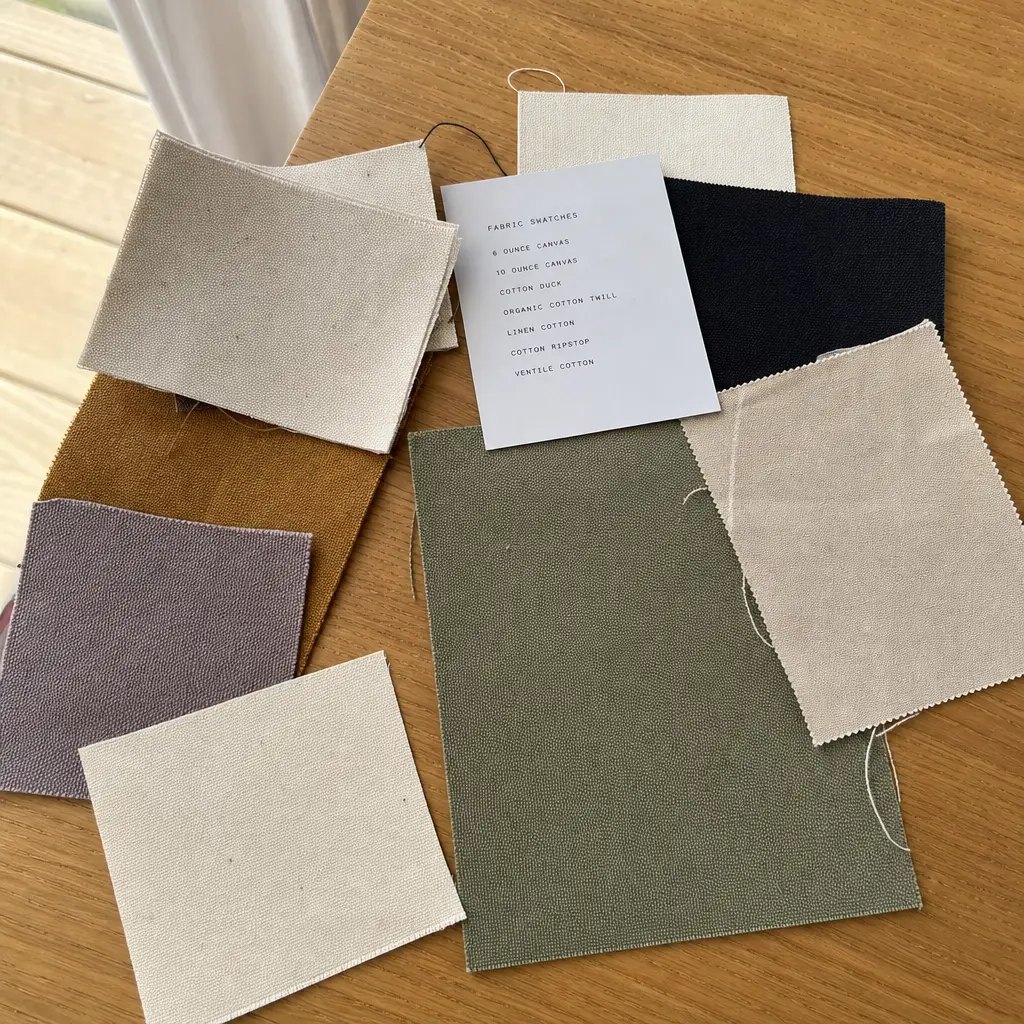
GSM should follow use case. As commercial examples, 140-160 GSM cotton can suit lightweight wrapped favors where compact packing matters. Around 180 GSM is often a balanced option for bakery gift packaging because it provides more substance without making cartons too bulky. 200-240 GSM can support a premium reusable feel, but it increases material cost, folded thickness, gross weight, and carton cube. These ranges are not standards; they are quote starting points that should be confirmed by sample approval.
The RFQ should also define fabric color and surface expectations. Natural cotton may include visible seed specks and shade variation. Bleached, dyed, or custom-color fabric can improve presentation but may add MOQ, dye-lot risk, and lead time. If the pouch will cover a dark box, printed carton, or chocolate assortment, test opacity with the actual item inside rather than judging an empty pouch under showroom lighting.
Drawcord details are easy to overlook. Specify material, diameter, color, length after knotting, pull direction, knot or tip finish, and whether aglets or plastic tips are allowed. Cotton cord diameters around 3-5 mm are common commercial examples, but the right choice depends on pouch size and hand feel. Thicker cords can feel better and be easier to pull, yet they add bulk at the top and can reduce pieces per carton.
- Use lighter GSM for protected event favors where cube and cost matter most.
- Use mid-weight cotton for general bakery gifts and moderate reuse expectations.
- Use heavier cotton only when the premium feel justifies carton and freight impact.
- Confirm natural specks, shade range, opacity, cord diameter, and channel width by sample.
Control Artwork, Printing, and Labels
Bakery artwork often appears simple: a one-color logo, seasonal icon, location name, or small side label. Procurement still needs measurable controls. Provide vector artwork, color references, print size, print location, registration expectations, and placement tolerance. Screen printing is usually practical for simple one- or two-color graphics. Heat transfer can support fine detail, gradients, or small text, but adhesion and hand feel should be checked. Woven or cotton labels can give a reusable premium look without a large ink film.
Printing affects packing. Ink or transfers may need curing, cooling, and a waiting period before stacking. Large dark prints can offset onto another pouch if folded too soon or compressed too tightly. Ink can stiffen the panel, and fold lines can become visible on natural cotton. Ask the supplier how printed faces will be stacked, whether tissue is needed, and whether the print panel should face inward or outward in the bundle.
For labels, specify more than the logo. Confirm label material, dimensions, fold style, stitch color, placement from the seam, orientation, and acceptable skew. If several seasonal designs ship together, use design codes on artwork proofs, inner labels, carton marks, and packing lists. That prevents similar natural cotton pouches from being mixed during receiving.
- Approve print or label proofs before bulk decoration.
- Request curing, adhesion, dry-rub, and anti-offset controls for printed pouches.
- Use placement tolerances that the supplier confirms for the pouch size and method.
- Mark every design split with clear item codes from proofing through carton labels.
Build MOQ Around Real Production Drivers
MOQ is not always one number. It may be driven by fabric availability, dyeing, cord color, cutting efficiency, screen setup, heat-transfer setup, woven labels, packing method, or carton configuration. A 10,000-piece order in one design is much simpler than 10,000 pieces split across 20 store names or seasonal graphics. The second version creates more proofing, sorting, labeling, and inspection risk.
A practical strategy is to standardize the pouch body and vary only the decoration. Keep the same size, GSM, fabric color, cord, seam construction, inner pack, and carton quantity where possible. That lets the buyer compare the true cost of artwork variation instead of receiving quotes that hide changes in fabric or packing assumptions.
Ask the supplier to show total MOQ, per-size MOQ, per-fabric-color MOQ, per-cord-color MOQ, per-design MOQ, label MOQ, and packing-configuration MOQ. Also ask whether cartons will be single-design or mixed-design. Single-design cartons are easiest for store allocation. Mixed cartons can reduce leftovers, but only when the matrix, inner labels, and carton marks are controlled.
- Separate MOQ by size, fabric color, cord color, print design, label, and packing method.
- Request setup charges for screens, transfers, labels, artwork adjustment, and packing changes.
- Avoid very small design lots unless proofing and sorting controls are clear.
- Use single-design cartons when stores or warehouses allocate by design.
Choose Inner Packing for Bakery Operations
Inner packing should match how the bakery will use the pouches after delivery. Central production teams may prefer bulk access with reliable counts. Store networks often prefer counted bundles of 50 or 100 so locations can receive packaging without recounting. Retail accessory sales may require individual bags, barcodes, hang tags, and cleaner folds. A good inner pack saves labor after delivery; a poor one creates hidden cost.
Loose bulk can reduce material cost, but it can also create count disputes and expose pouches to dust once a carton is opened. Individual polybags protect each pouch and support scanning, but they increase labor, plastic use, carton volume, and sometimes freight cost. Paper bands, kraft sleeves, or counted bundles are often a useful middle option for back-of-house bakery programs.
Inner labels become critical when several designs, sizes, or destinations ship together. Natural cotton pouches can look very similar when folded. Require labels showing item code, design code, quantity, PO number, and destination if relevant. If the supplier proposes mixed cartons, request a clear matrix showing exactly which bundles are inside each carton.
- Use loose bulk only when carton-level count control is acceptable.
- Use bundles of 50 or 100 for production lines, events, or store allocation.
- Use individual packing when the pouch is a retail SKU or must stay shelf-clean.
- Require inner labels and a mixed-carton matrix when multiple designs ship together.
Set Master Carton Rules for Landed Cost
A carton-ready quote includes pieces per carton, inner packs per carton, carton L x W x H, gross weight, net weight, board specification, sealing method, carton marks, and palletization assumptions. Without these details, landed-cost comparison is incomplete. A supplier with a lower pouch price may use larger cartons, heavier cartons, or a packing method that increases receiving labor.
Carton weight should follow the buyer's handling rules. Some companies set internal manual-handling limits around 15-18 kg gross weight, but each buyer should apply its own safety policy. Heavier cartons can reduce carton count, yet they may increase drop damage and make store handling difficult. Very small cartons are easier to lift but can waste freight space and increase carton handling.
Carton fill affects pouch appearance. Over-compression can crease cotton, flatten cords, distort labels, or mark printed panels. Under-filled cartons waste cube and may collapse in transit. For sea freight, consolidation, or long storage, ask about board grade, moisture exposure controls, sealing tape quality, stacking suitability, and whether pallets are included. Carton marks should match the packing list and remain readable through normal handling.
- Compare suppliers using unit price, carton quantity, gross weight, and carton cube.
- Set maximum carton gross weight according to the buyer's handling policy.
- Approve carton marks with PO, SKU, design code, quantity, carton number, weight, destination, and origin if needed.
- Check compression risk around print panels, labels, knots, and folded edges.
Approve Samples, QC, and Shipping Evidence
A flat pouch sample shows fabric, sewing, and artwork, but it does not prove operational readiness. A stronger approval route includes material swatch, size sample, print strike-off or label proof, loaded pouch test, inner pack mock-up, and master carton packing evidence. For fixed launch dates or holiday programs, this sequence reduces late surprises without overcomplicating the purchase.
The pre-production sample should use the same GSM, color, cord, print method, label, seam construction, and folding method intended for bulk. If an early sample uses substitute material, mark it as reference only. Written approval should list what is approved and what remains open, because fabric, artwork, and carton packing are often confirmed at different times.
QC should focus on buyer risk: fit, seams, cord function, cleanliness, odor, print position, curing, label placement, counts, design separation, carton marks, and carton condition. Inspectors should measure finished width, finished height, and usable internal height using the approved diagram. They should open random cartons to verify bundle counts, carton contents, packing list accuracy, and any mixed-design matrix. Carton dimensions and gross weight should be checked against the approved quote because unexpected changes affect freight and warehouse planning.
- Approve the loaded pouch, not only the empty pouch.
- Require photos of folded bundles, inner labels, packed cartons, carton marks, and gross weight when available.
- Classify critical defects such as contamination, mold, sharp objects, severe odor, or wrong artwork.
- Classify major defects such as open seams, short dimensions beyond tolerance, cord failure, print offset, or wrong count.
- Reconcile PO quantity, design split, carton count, and packing list before shipment release.
Specification comparison for buyers
| Planning decision | Buyer action | Supplier evidence required | Carton-cost impact |
|---|---|---|---|
| Fabric GSM and opacity | Select a GSM by product weight, opacity need, reuse expectation, and freight budget. Commercial examples often range from 140-160 GSM for light favors, around 180 GSM for balanced gift use, and 200-240 GSM for premium reusable pouches. | Approved swatch, quoted GSM tolerance, fabric color standard, opacity photo with sample product inside, and confirmation of whether fabric is stock, dyed, or made to order. | Heavier fabric increases folded thickness, gross weight, carton cube, and sometimes freight class or volumetric charge. |
| Finished pouch size | Specify finished width x finished height after sewing and pressing, plus usable internal height below the drawcord channel. Use supplier-confirmed tolerances, such as ±5 mm only where suitable for the size and construction. | Measurement diagram, size sample, tolerance statement, and loaded pouch photo using the bakery item, retail box, or dummy. | Tight sizes slow filling and cause rejects; oversized pouches waste fabric and may reduce pieces per carton. |
| Product-fit allowance | Give product width, depth, height, filled weight, corner shape, and packing speed expectations. Test closure with staff, not only with a flat sample. | Loaded sample, closure photo, seam-stress check, and supplier recommendation for clearance around rigid boxes or mixed gifts. | Poor fit can force repacking, increase damaged pouches, or require a larger size that changes carton quantity. |
| Print or label method | Choose screen print, heat transfer, woven label, or cotton label based on artwork detail, hand feel, reuse target, and design split. | Artwork proof, strike-off, color reference, print position tolerance, curing or adhesion checks, and label placement proof. | Large print areas and sewn labels can change folding, require extra packing time, or need protective stacking to avoid offset. |
| Drawcord construction | State cord material, color, diameter, length after knotting, pull direction, knot or tip finish, and channel reinforcement. Commercial cotton cord examples are often about 3-5 mm depending on pouch size. | Cord swatch, channel stitch sample, pull test result, knot/tip photo, and confirmation that cord bulk is included in carton planning. | Thicker cords improve handling but increase top-bulk, reducing carton efficiency and risking compression marks. |
| Inner pack format | Match inner packs to operations: loose bulk, bundles of 50 or 100, paper bands, bulk polybags, or individual retail bags. | Inner pack mock-up, label content, bundle count, barcode or item code if needed, and photos of packed bundles. | Individual packing improves cleanliness and scanning but increases labor, material cost, plastic use, and carton volume. |
| Master carton setup | Require pieces per carton, inner packs per carton, carton L x W x H, gross/net weight, board type, seal method, carton marks, and pallet assumptions in the quote. | Carton spec sheet, packed-carton photos, gross weight reading if available, carton mark layout, and pallet plan when relevant. | Missing carton data hides landed cost; oversized, under-filled, or overweight cartons raise freight and receiving costs. |
| MOQ and design split | Separate total MOQ from MOQ by size, fabric color, cord color, print design, label, and packing configuration. | MOQ matrix, setup charges, artwork proofing lead time, and single-design versus mixed-carton proposal. | Too many small splits increase setup cost, sorting labor, carton labeling complexity, and leftover inventory. |
| QC and count control | Define critical, major, and minor defects; inspect dimensions, seams, cords, print, cleanliness, inner packs, and carton counts. | Inspection checklist, measurement records, random carton-opening results, defect photos, and PO-to-packing-list reconciliation. | QC prevents short shipment, wrong design allocation, carton relabeling, and late repacking before seasonal launches. |
Buyer checklist before sampling
- Define the bakery item packed inside: product or box dimensions, filled weight, fragility, corner shape, moisture or grease risk, and whether cotton will ever touch food directly.
- State finished pouch width and height after sewing and pressing, usable internal height below the drawcord channel, closure clearance, and measurement method.
- Use supplier-confirmed commercial tolerances for size, GSM, print placement, and label placement; do not copy tolerances from another pouch without checking construction.
- Choose cotton GSM, fabric color, weave appearance, opacity target, seed-speck allowance, and whether the pouch is event packaging or a reusable gift component.
- Confirm cord material, diameter, color, length after knotting, pull direction, knot or tip style, and whether metal aglets, plastic tips, loose ends, or fraying are prohibited.
- Provide artwork files, color references, print size, print position, label placement, registration tolerance, and acceptance criteria for curing, adhesion, rub resistance, and hand feel.
- Break quantity by pouch size, design, fabric color, cord color, label, and packing configuration so MOQ and setup charges are comparable.
- Request inner pack quantity, bundle style, master carton quantity, carton dimensions, gross weight, net weight, board strength, seal method, carton marks, and pallet assumptions in every quote.
- Ask the supplier to price packaging components separately, including individual bags, paper bands, barcodes, hang tags, inserts, custom carton marks, desiccants if needed, and pallets if required.
- Approve a loaded pouch test with the actual bakery product, retail box, or dimension-and-weight-equivalent dummy before bulk production.
Factory quote questions to send
- What cotton GSM, GSM tolerance, fabric width, weave appearance, color standard, and sourcing route are assumed: stock fabric, dyed greige fabric, or made-to-order fabric?
- What finished pouch size tolerance can you hold after cutting, sewing, channel folding, pressing, and packing, and how do you measure finished height and usable internal height?
- What drawcord material, diameter, color standard, length after knotting, knot or tip finish, and channel stitch construction are included?
- How much clearance do you recommend between the bakery product and finished pouch size for fast hand filling, product bulge, and clean closure?
- Which print or label method is quoted, how many colors are included, what is the maximum print area, and at what artwork size or color count does cost change?
- For print production, what curing time, packing-wait time, adhesion check, dry-rub check, and anti-offset controls are used before folding?
- Is MOQ based on total pouch quantity, pouch size, fabric color, cord color, print design, label design, packing method, or carton configuration?
- Can one pouch body be used with multiple seasonal prints, and what split gives the most efficient setup cost, lowest sorting risk, and shortest lead time?
- What are the proposed inner pack quantity, bundle method, inner label content, master carton quantity, carton dimensions, gross weight, net weight, board specification, and sealing method?
- Will cartons be single-design or mixed-design, and can carton labels show item code, design code, quantity, PO number, gross weight, carton number, destination, and origin information if required?
Quality-control points to confirm
- Finished pouch width and height should be measured flat after sewing and pressing, using the approved measurement diagram and tolerance in the purchase specification.
- Usable internal height below the drawcord channel should be measured separately and checked against the bakery product or approved dummy to confirm filling and closure.
- Fabric GSM should be checked against the approved material standard, with PO-stated tolerance; ±5% is a common commercial example only when the supplier and buyer agree to it.
- Fabric color, weave appearance, opacity, hand feel, and shade consistency should be compared with the approved swatch or pre-production sample under agreed lighting.
- Seams should be straight, locked, and free from skipped stitches, open seams, loose threads, puckering, broken needles, sharp contamination, exposed raw edges where prohibited, or visible repair marks.
- Drawcords should pull smoothly, have even length after knotting, match approved diameter and color, resist fraying, and not tear or distort the channel during repeated opening and closing.
- Print or label should match approved artwork position, size, color tolerance, registration, curing, adhesion, label fold, stitch color, placement tolerance, and acceptable hand feel.
- Pouches should be clean, dry, odor-controlled, and free from oil stains, mold marks, dust, loose fibers, insect evidence, foreign matter, unacceptable shade variation, and packing debris.
- Inner pack quantities should be verified by random opening, with bundle count, bundle label, SKU/design separation, barcode or item coding, and packing list details checked against the approved packing specification.
- Master carton counts should match the approved packing specification, and inspectors should reconcile carton quantity, total pieces, design split, PO line details, and any mixed-carton matrix.