The RFQ Problem to Solve
Cotton drawstring pouches look simple, which is why many trade show orders are under-specified. A buyer sends a logo, a size, and a deadline, then receives quotes that are not comparing the same product. One factory may quote a thin plain cotton bag with single cord and one-color print. Another may quote heavier canvas, double cotton drawcord, better stitching, and export cartons. The unit price gap looks like a sourcing win until the sample arrives too flimsy or the carton data is missing for show delivery.
For exhibitors, the buying problem is not only price. The pouch must fit the insert, carry the brand mark cleanly, arrive before the show, and unpack without confusion. A strong RFQ gives the factory enough information to quote the same construction, calculate realistic lead time, and flag risk before the purchase order is issued.
- Use the RFQ to lock the product standard before negotiating cents.
- Treat the show date as a production constraint, not a delivery preference.
- Quote finished pouch size, fabric weight, print method, packing, carton data, and sample approval path together.
Define the Pouch Use First
A pouch for a badge cable, cosmetic mini set, jewelry card, coffee sample, or VIP gift does not need the same fabric, size, or drawstring. Before the factory quotes, define what will go inside and how visitors will receive it. If the pouch is a giveaway container opened once, a lighter cotton can work. If it becomes a reusable branded item, a stronger fabric and cleaner cord construction are worth the extra cost.
The insert also controls sizing more than many buyers expect. A 15 x 20 cm pouch may not fit a rigid 15 cm product because seams and gathered drawcord reduce usable internal space. For boxy or thick inserts, send the product dimensions and weight, not only the desired pouch size. A factory can then suggest a larger finished size or gusseted option before sampling.
- For flat paper inserts or badges: lightweight cotton can be acceptable if opacity is not critical.
- For cosmetics, electronics accessories, or retail kits: use midweight cotton and stronger seam construction.
- For premium sponsor gifts: consider heavier canvas, cotton tape drawcord, and tighter print inspection.
- For irregular inserts: provide product length, width, thickness, and packed weight in the RFQ.
Fabric GSM and Construction
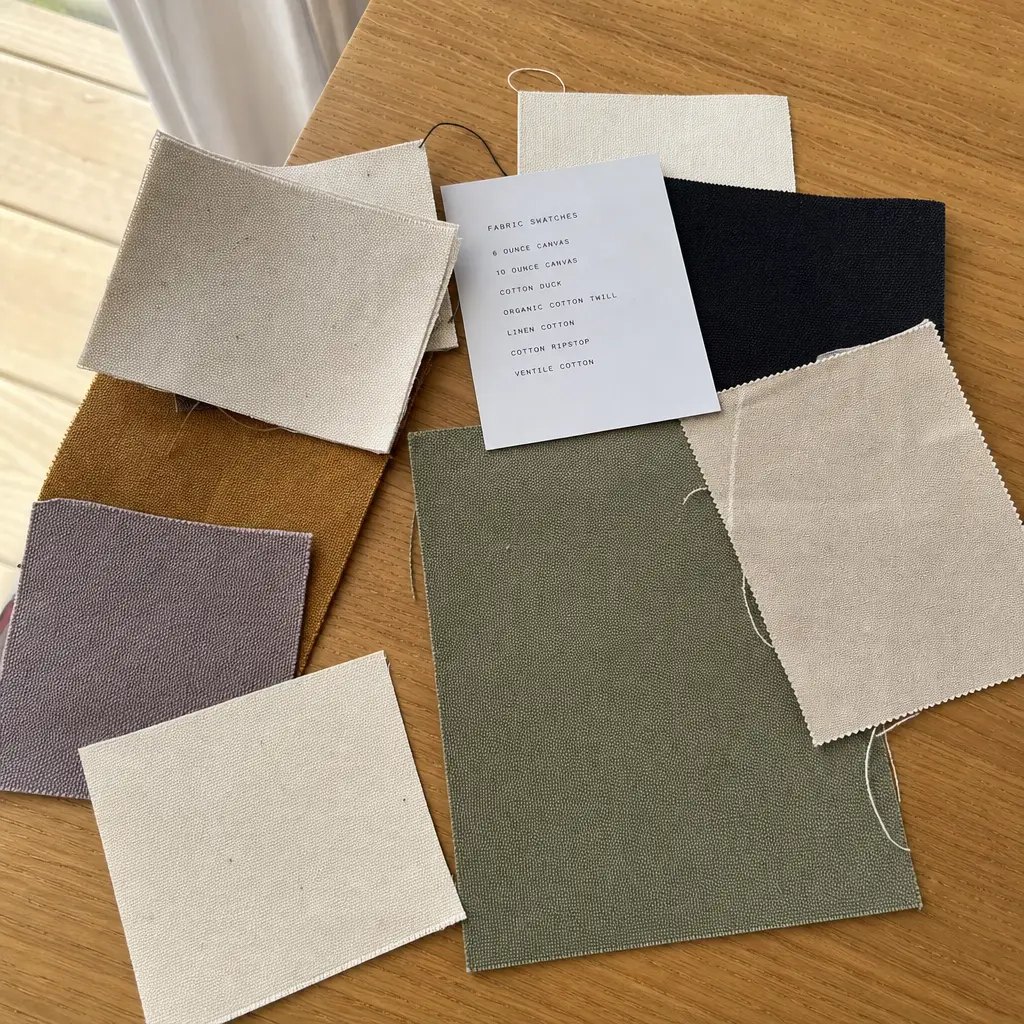
Cotton drawstring pouches are commonly quoted by GSM, ounces, or both. For small trade show pouches, 120-140 GSM plain cotton is economical but can feel light and show the product outline. Around 140-180 GSM or 5 oz to 6 oz cotton is a practical middle ground for most exhibitor programs. Heavier canvas, such as 8 oz or above, gives more body but increases cost, sewing thickness, carton volume, and freight.
The RFQ should state whether natural, bleached, dyed, organic cotton, or recycled cotton is required. Natural cotton is not pure white and may show cotton seed flecks; this can be attractive for eco-positioned brands but may surprise a buyer expecting a clean cosmetic look. Dyed cotton needs colorfastness attention, especially if white cords or light printed logos are used.
- Economy range: 120-140 GSM for light inserts and short-term giveaway use.
- Standard exhibitor range: 140-180 GSM or 5 oz to 6 oz for better hand feel and print stability.
- Premium range: 220 GSM and above when the pouch itself is part of the gift value.
- State fabric color clearly: natural, bleached white, dyed Pantone reference, black, or custom color.
Size, Cord, and Sewing Details
Finished size must be written as width x height after sewing, measured flat. This matters because fabric cutting size includes seam allowance and the top channel fold. If a quote does not say finished size, the buyer may approve a sample that looks close but cannot fit the final insert. For small pouches, even 5 mm matters because the drawstring gathers the top and reduces opening width.
Cord specification is another quiet cost driver. Cotton cord fits the natural pouch look and feels better for gift packaging. Polyester cord is often cheaper, smoother, and easier to dye in bright colors. Flat cotton tape can make the pouch feel more premium but needs a larger channel. Double drawstring closure is better for repeat use and creates a balanced look; single cord is cheaper and acceptable for simple packaging.
- Write finished size, allowed tolerance, and whether the pouch needs a gusset.
- Name single drawstring or double drawstring before comparing prices.
- Specify cord material, color, approximate diameter, and whether metal or plastic cord ends are excluded.
- Require clean side exits with no fraying, skipped stitches, or tight channel that blocks closure.
Logo Printing Choices
Most trade show cotton pouches use screen printing because it is cost-effective, durable, and predictable for one to three solid colors. The RFQ should include artwork in vector format, Pantone color references, print size, print position, and whether printing is on one side or both sides. A logo that looks small on a PDF may be too large for the pouch once seam allowance and the drawstring channel are respected.
Heat transfer can handle gradients, fine detail, and small artwork, but it changes the hand feel and may not suit a natural cotton texture. Embroidery is possible on heavier pouches, but it can distort lightweight fabric and is slower for large show quantities. For artwork with a large solid block, the buyer should request a strike-off because heavy ink on thin cotton can feel stiff, crack if poorly cured, or show uneven coverage over seed flecks.
- Screen print: best for clean logos, sponsor marks, and standard exhibitor branding.
- Heat transfer: useful for detailed artwork but requires wash and rub expectations to be clear.
- Embroidery: better on heavier canvas than on light cotton pouches.
- Digital print: possible for complex graphics but should be tested on the exact fabric shade.
MOQ and Cost Drivers
MOQ for cotton drawstring pouches is not only a total unit count. It may apply per size, per fabric color, per drawcord color, and per print design. A distributor ordering 5,000 pouches split across ten exhibitor logos may think the order is large, while the factory sees ten small print setups. The RFQ should show the quantity breakdown by version so the quote reflects real production handling.
Main cost drivers include fabric weight, pouch size, number of print colors, number of artwork versions, sewing complexity, drawcord type, individual packing, and delivery deadline. Rush orders may cost more because the factory has to reserve sewing lines, print outside normal batching, or use faster freight. A cheap quote that ignores these variables may become expensive after revisions.
- Low MOQ with many logo versions usually increases setup cost per piece.
- Large pouch size increases fabric consumption more than buyers often expect.
- Individual polybagging adds labor, material, carton space, and inspection time.
- Custom dyed fabric may require higher MOQ and longer lead time than natural cotton.
Quote Data You Need
A useful quote should be more than a unit price. For a trade show order, the buyer needs cost and operational data: sample fee, screen charge, unit price by quantity tier, bulk production time after approval, carton dimensions, gross weight, CBM, packing method, payment terms, and validity period. Without carton data, the buyer cannot compare air, sea, courier, or truck delivery properly.
Request the factory to quote against a single RFQ sheet rather than scattered email replies. The cleanest format is one line per pouch version, with columns for size, fabric, GSM, color, cord, print method, print colors, quantity, unit price, setup cost, sample cost, lead time, and packing. This makes supplier comparison easier and reduces the chance that a lower quote is missing a required item.
- Require unit price and all one-time charges separately.
- Ask for carton quantity, carton size, gross weight, and total CBM.
- Request price breaks at realistic quantities, such as 1,000, 3,000, 5,000, and 10,000 pieces.
- State Incoterms clearly, such as EXW, FOB, CIF, DDP, or courier delivered.
Sample Approval Workflow
For trade show exhibitors, sample approval is where many schedules fail. A buyer waits for the perfect physical sample, then loses a week to courier time and another week to artwork revision. The RFQ should define whether the first sample is for construction only, print strike-off only, or full pre-production approval. When time is tight, approve fabric and pouch construction with photos or swatches, then approve print placement from a strike-off before bulk printing.
A physical pre-production sample is still the safest route when the order is large, the pouch carries a major brand, or the insert fit is critical. The sample should be checked with the actual product, not only by appearance. Pull the cord several times, test the opening, rub the print, look at seam ends, and measure the finished size after the pouch is flattened. Written approval should list any accepted deviation so the factory does not treat a sample comment as optional.
- Approve fabric weight and color before mass cutting.
- Approve logo size, position, and print color before bulk printing.
- Test the real insert inside the pouch before signing off finished size.
- Keep one approved sample at the buyer side and one sealed reference sample at the factory.
Packing for Show Delivery
Packing should match how the pouches will be used at the event. If booth staff will hand them out in bulk, 50 or 100 pieces per inner bag is usually easier than individual polybags. If the pouches are part of a pre-packed retail kit or VIP kit, individual packing may be required. The RFQ should state whether pouches must be folded, flat packed, banded, polybagged, or packed unfolded to reduce creasing.
Carton labels are not cosmetic for trade show orders. They prevent venue receiving problems and reduce sorting time during setup. Labels can include buyer PO number, exhibitor name, booth number, SKU, pouch size, logo version, quantity per carton, carton number, and gross weight. If multiple logo versions ship together, mixed cartons should be avoided unless the buyer specifically accepts them.
- Bulk packing lowers cost and reduces plastic for booth giveaways.
- Individual packing protects retail-ready items but increases volume and labor.
- Do not overpack cartons if heavy creasing will hurt presentation.
- Use clear carton markings for hotel, warehouse, decorator, or show advance receiving.
Lead Time and Schedule Risk
A normal cotton pouch order may look quick, but trade show timing adds hard risk. Artwork approval, sample making, print screen preparation, fabric availability, sewing capacity, inspection, packing, export pickup, customs, and final delivery all sit in the timeline. If the show opens on Monday, delivery on Friday may not be good enough if booth setup starts earlier or the venue has restricted receiving hours.
The PO should include milestone dates, not only a required delivery date. Name the latest artwork approval date, sample approval date, mass production start, inspection date, ship date, and required arrival date. A responsible factory can then warn if the schedule is too tight. When the deadline is fixed, reduce variables: use stock fabric color, standard cord, standard size, and one print method where possible.
- Stock natural cotton is faster than custom dyed fabric.
- One-color screen print is faster to approve than multi-color artwork with tight registration.
- Multiple logo versions need more pre-press and sorting time.
- Air freight may solve transit time but cannot recover late artwork approval or failed samples.
Specification comparison for buyers
| Spec decision | Recommended option | When it fits | Buyer risk to check |
|---|---|---|---|
| Fabric weight | 5 oz to 6 oz cotton canvas or 140-180 GSM plain cotton | Good balance for trade show gifts, cosmetic samples, cables, tea packs, jewelry, and small retail inserts | Below 120 GSM can look transparent and wrinkle heavily; above 220 GSM may increase freight and make small pouches bulky |
| Pouch size | Quote 2-3 exact finished sizes, such as 10 x 15 cm, 15 x 20 cm, or 20 x 30 cm | Useful when several product teams want different insert sizes but the show deadline is shared | Factories may quote cutting size instead of finished size; tolerance must be stated before sampling |
| Drawcord material | Matching cotton cord, flat cotton tape, or polyester cord if cost and color matching matter more | Cotton cord gives a natural look; polyester cord is smoother for repeated opening and can match Pantone colors better | Cord diameter and colorfastness are often missed in RFQs; weak cord changes the perceived quality quickly |
| Print method | Screen print for 1-3 spot colors; heat transfer only for small detailed artwork or gradients | Screen print is reliable for exhibitor logos and sponsor marks on medium runs | Large solid ink areas on lightweight cotton can feel stiff; require strike-off approval before bulk printing |
| Closure construction | Double drawstring with folded top channel and reinforced side exits | Better for giveaway pouches that visitors open and close many times during a show | Single-cord pouches can be cheaper but may look less balanced and close unevenly |
| MOQ structure | One base fabric, multiple print versions if the factory can gang production | Works for distributors handling several exhibitor logos under one purchase order | MOQ may apply per size, per fabric color, and per print design, not only total order quantity |
| Packing method | Bulk pack 50-100 pcs per inner polybag, export carton labeled by design and size | Best for booth teams who will unpack quickly and distribute at venue or hotel receiving dock | Individual polybags add labor, plastic, and carton volume; request only when retail or kit assembly requires it |
| Pre-show schedule | Approve pre-production sample before mass cutting; book freight buffer of at least 7-10 calendar days | Appropriate for fixed event dates where late delivery has no recovery value | Artwork delay, fabric dyeing, and customs inspection can consume the buffer unless milestones are named in the PO |
Buyer checklist before sampling
- State the finished pouch size in width x height and define whether size is measured flat, empty, and closed or open.
- Specify cotton fabric type and target GSM or oz weight, not only the word cotton.
- Attach artwork as vector files and include Pantone references, print size, placement, and number of print sides.
- Separate total order quantity from quantity per size, per color, and per logo version.
- Define drawcord material, color, diameter or tape width, and whether it is single or double drawstring.
- Request unit price, sample cost, tooling or screen charge, bulk lead time, packing data, carton size, gross weight, and payment terms in one quote sheet.
- Require one physical pre-production sample or approved photo/video sample before bulk printing when the event date is fixed.
- Set QC acceptance criteria for size tolerance, print position, color deviation, seam strength, drawcord function, stains, and packing count.
- Confirm carton markings, delivery address type, and whether goods ship to warehouse, hotel, show decorator, or booth advance receiving.
- Add the latest approval date and required handover date so the factory can judge feasibility instead of giving a vague normal lead time.
Factory quote questions to send
- What fabric construction and GSM are included in your quoted price, and can you send a fabric swatch before sample making?
- Is the quoted MOQ based on total quantity, each pouch size, each fabric color, or each printed logo version?
- Which print method are you quoting, and what is the maximum printable area for each pouch size?
- Are screen charges, artwork setup, sample charges, and courier fees included or listed separately?
- What finished size tolerance, print placement tolerance, and color tolerance do you normally apply for this pouch style?
- Can the drawstring channel, side seams, and cord exits be reinforced for repeated booth handling?
- What is the bulk production lead time after sample approval, and what sample approval date must we meet for our show deadline?
- What are the carton dimensions, pieces per carton, gross weight, and estimated CBM for the full order?
- Can cartons be labeled by exhibitor name, booth number, SKU, pouch size, and logo version?
- Which inspection photos or inline QC records can you provide before shipment?
Quality-control points to confirm
- Finished pouch size within agreed tolerance, usually plus or minus 5 mm for small pouches and plus or minus 10 mm for larger pouches.
- Fabric weight verified against the approved swatch, with no obvious transparency, slubs beyond approved character, oil marks, mildew odor, or shade mixing.
- Print color compared under consistent light against approved strike-off or Pantone target, allowing realistic textile variance.
- Print placement centered or positioned within the approved tolerance; no skew that is visible when the pouch is lying flat.
- Ink adhesion checked by dry rub and light scratch test after curing, especially on natural cotton and dyed fabric.
- Drawcord slides through the channel smoothly and closes the mouth evenly without catching in the side seam.
- Side seams, bottom seams, and cord exit points show no skipped stitches, loose threads, broken seams, or open corners.
- Packing count matches inner bag and carton labels, with logo versions separated so booth teams do not sort mixed cartons under time pressure.
- Cartons are strong enough for export handling and not overpacked to the point that pouches crease heavily or cartons burst.