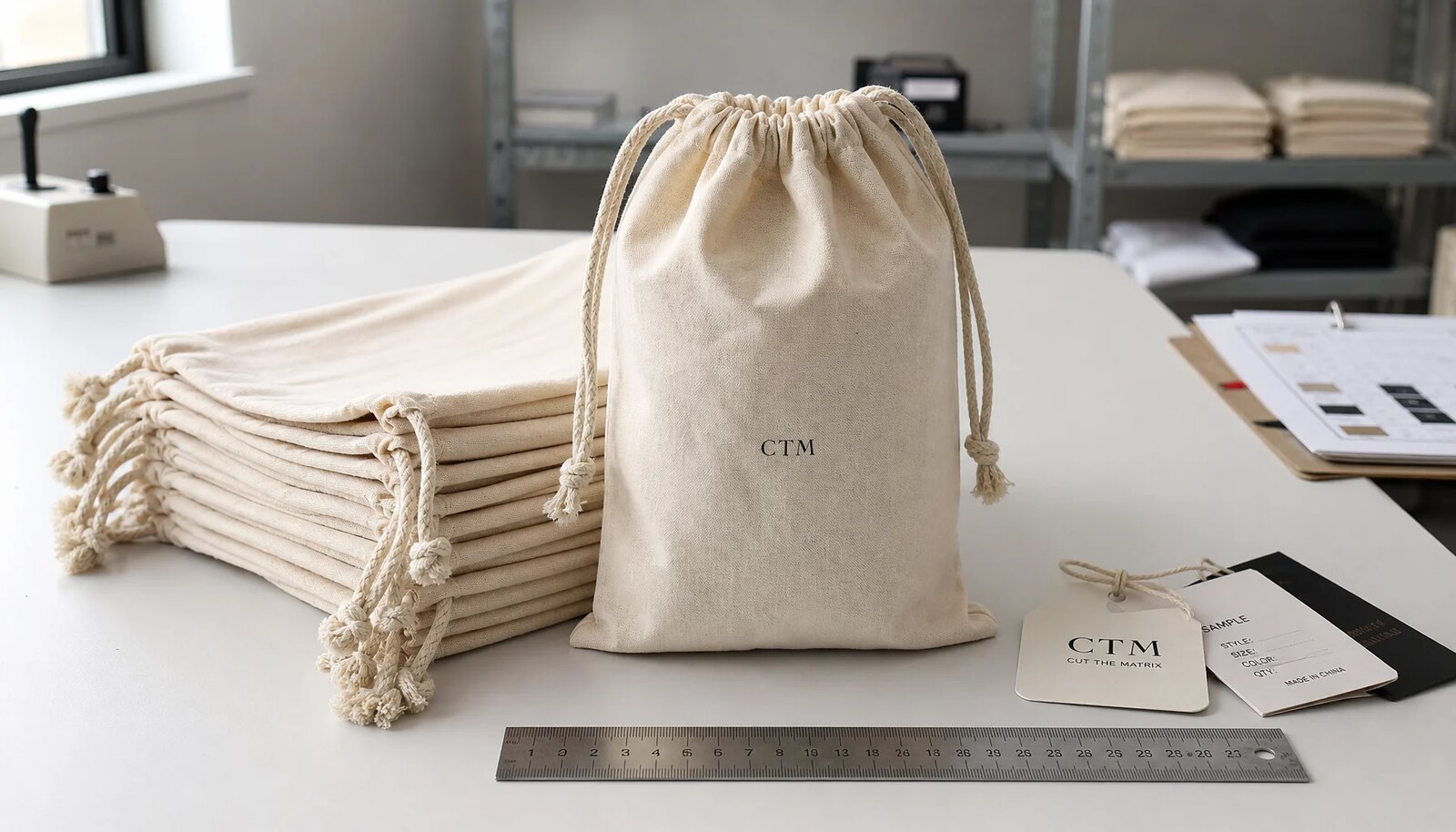
Why event buyers need a procurement-grade checklist
Cotton drawstring pouches look simple, which is exactly why quality problems often appear late. A buyer may approve a clean digital mockup, then receive bulk goods with thin fabric, fuzzy logo edges, uneven cords, weak seams, or cartons that are hard for the warehouse to receive. For event planners, the cost is not only the pouch itself. Poor control can delay kitting, disappoint sponsors, slow venue receiving, and force last-minute sorting when the schedule has no room left.
A strong cotton drawstring pouches quality inspection checklist for event planners turns a soft promotional item into a measurable purchase. It gives procurement, marketing, suppliers, inspectors, and warehouse teams the same language for what must be made, approved, inspected, packed, and received. It also prevents a common sourcing problem: suppliers quoting different construction levels while using the same product name.
The checklist should be written before sampling. If quality expectations are added only after the first production run, the supplier may have already purchased fabric, made screens, cut panels, or packed finished goods. Early specification lets the supplier price the actual pouch, not the cheapest interpretation of it. It also gives final inspectors clear accept and reject criteria instead of relying on personal judgment.
For event programs, the best quality system is practical rather than excessive. You do not need a laboratory test plan for every simple pouch order, but you do need clear specs, a physical approval sample, measurable tolerances, known defect classes, and a packing plan that matches the event workflow.
- Primary event risks: thin fabric, poor print clarity, weak seams, rough drawstring function, mixed cartons, wrong counts, and late defect discovery.
- Best procurement goal: a pouch that matches the approved sample, protects the event presentation, and can be received quickly by the warehouse or kitting team.
- Where the checklist helps most: RFQ writing, quote comparison, sample approval, in-line review, pre-shipment inspection, and receiving checks.
Start the RFQ with measurable pouch specifications
Many event pouch projects begin with quantity, logo file, delivery date, and a request for best price. That is fast, but it gives the supplier too much room to define the product. One supplier may quote 90 GSM natural cotton with loose bulk packing, while another quotes 140 GSM cotton, cleaner stitch control, and fixed inner packs. Both quotes may say cotton drawstring pouch, but they are not the same purchase.
Start the RFQ with the physical build: finished flat size, usable internal size, fabric GSM, weave, fabric color, fabric finish, cord type, cord color, closure structure, print area, and packing method. Then add artwork details. This order keeps the quote anchored in measurable construction instead of in a mockup that may hide fabric and sewing choices.
Usable internal size is especially important for event planners. A pouch listed as 15 x 20 cm does not offer the full 15 x 20 cm for contents. Seam allowance, bottom seam shape, channel depth, fabric thickness, and the way the mouth closes all reduce usable space. If the pouch must hold a notebook, bottle, badge holder, charger, skincare sample, snack, or boxed gift, list the item dimensions and ask the supplier to confirm fit with a loaded sample photo.
Do not let artwork approval replace product approval. A logo can be correct while the pouch is still wrong for the event. A low-cost pouch may be suitable for an empty token giveaway, while a sponsor kit with mixed contents needs better fabric stability, stronger seams, and cleaner packing. The RFQ should name the event use case so the supplier understands the quality tier being quoted.
- Include flat dimensions, usable internal dimensions, and intended contents where fit matters.
- State whether fabric should be natural, bleached white, dyed, washed, unwashed, or pre-shrunk.
- Ask suppliers to quote against one named spec version, such as Pouch Spec V1.2, so sample comments and pricing remain traceable.
- List the event use case, expected load, presentation level, and receiving format before asking for final unit price.
Use realistic tolerances for size, GSM, and construction
A pouch specification without tolerances is incomplete. Cotton is flexible, cutting is manual or semi-manual in many workshops, and sewing can introduce small variation. The goal is not to demand impossible uniformity; it is to define the amount of variation the event can accept.
For small and medium cotton drawstring pouches, a common working tolerance is around +/-5 mm for finished width and height. A tighter tolerance may be needed when the pouch must fit a rigid product, a box, or an automated kitting process. A looser tolerance may be acceptable for low-cost giveaways. Whatever the target, it should be written in the PO, sample approval, or inspection checklist.
GSM should also have a tolerance. A quote that says 120 GSM cotton is clearer if it says 120 GSM +/-5% or another agreed range based on the fabric source. Inspectors should not judge GSM from handfeel alone. For higher-risk orders, ask the supplier how GSM is verified and whether fabric weight is checked before cutting. For smaller event runs, at least compare production pieces against the approved sample and investigate any obvious carton-to-carton difference.
Construction tolerances should include drawstring channel depth, cord finished length, print placement, and label placement when used. Cord length should be measured after knots or finishing, because raw cord length does not tell the buyer how the finished pouch will look or function. Print placement should be measured from fixed points such as top edge, side seam, or centerline, not from an approximate visual center.
- Practical size target: consider +/-5 mm for many small or medium pouches, then adjust for fit-critical projects.
- GSM target: write a range or tolerance instead of a single vague material name.
- Placement target: define logo position from physical reference points and include an allowable drift.
- Measurement rule: inspect pouches flat, without stretching, using the same method used for sample approval.
Fabric selection drives perceived quality
Fabric is the first quality signal a buyer and attendee will notice. GSM matters, but it is not the only variable. Weave density, yarn consistency, fabric finish, shade, shrinkage behavior, and the print surface all affect the final pouch. A 120 GSM fabric with a dense plain weave can look cleaner than a heavier fabric with loose construction and uneven slubs.
For most branded event pouches, 120-140 GSM cotton is a practical starting range. It usually provides enough body for a clean branded feel without making the drawstring channel bulky or the cost unnecessarily high. A 100-120 GSM pouch can work for budget handouts if the weave is stable and the pouch is not expected to carry heavy contents. Below 100 GSM, buyers should carefully check opacity, wrinkling, seam strength, and whether the logo looks washed out over the fabric texture.
Fabric above 150 GSM can be suitable for premium kits or reusable accessory pouches, but it changes the build. The channel may need more space, the mouth may not close as neatly, and sewing through folded layers can become more difficult. If the event contents are dense, such as bottles, electronics, or printed catalogs, do not solve the problem only by increasing GSM. Also check seam construction, stitch density, reinforcement, and load behavior.
Color control deserves its own approval step. Natural cotton is not one exact shade; it can range from cream to grey-beige depending on the lot. Bleached white can look cool, warm, or slightly dull. Dyed cotton adds shade matching, dye lot, and crocking risk. Event buyers should approve a physical fabric swatch or actual-material sample under consistent lighting, especially when sponsor colors are important.
- Default range: 120-140 GSM for many branded event pouches.
- Budget caution: 100-120 GSM can be acceptable, but inspect opacity, print clarity, wrinkle behavior, and seam strength.
- Premium caution: heavier fabric may improve handfeel but can make the drawstring channel stiff or bulky.
- Fabric defects to classify: stains, holes, heavy slubs in logo area, shade bands, colored yarn contamination, loose weave, and inconsistent handfeel.
Match decoration method to artwork and inspection needs
Decoration is where many pouch orders fail the brand review. A logo may look perfect in a PDF proof and still print too pale, too thick, too low, off center, cracked, fuzzy, or unreadable on cotton. The inspection plan should be tied to the decoration method, not treated as a generic visual check.
Screen printing is often the practical choice for one- or two-color event logos. It is cost-efficient at many event quantities and works well for bold artwork. Inspection should check opacity, edge sharpness, pinholes, smudging, registration, placement, curing, and dry rub resistance. Fine reverse text, thin lines, and tight spacing may break down on textured cotton, so ask the supplier to flag artwork limits before screens are made.
Heat transfer can be useful for gradients, detailed artwork, or smaller runs, but it brings different risks. Inspect adhesion, edge lift, cracking during flex, surface feel, trapped lint, and whether the film looks too glossy or plastic for the intended presentation. If pouches will be folded, bundled tightly, or handled heavily during kitting, flex and peel checks are more important.
Embroidery, woven labels, side tags, hangtags, and insert cards can lift the presentation, but they add complexity. Embroidery may pucker light cotton and can be too heavy for small pouches. Woven labels require placement guides and clean stitching. Hangtags and insert cards add SKU control and packing checks. Each decoration choice needs its own defect list.
Print placement must be inspectable. Write the logo size and position in millimeters, such as logo 70 mm wide, centered horizontally, top of logo 65 mm below top edge, placement tolerance +/-3 mm or another agreed target. The exact tolerance should match the brand requirement, pouch size, and production method.
- Screen print checks: opacity, edge sharpness, no major pinholes, correct cure, no smudge, dry rub result, and correct placement.
- Heat transfer checks: adhesion, edge lift, cracking, film feel, flex behavior, and peeling resistance.
- Label checks: straight attachment, correct direction, approved position, clean stitch, no frayed edge, no missing labels.
- Artwork rule: test fine text, thin lines, and small sponsor marks on actual cotton before approving bulk production.
Compare supplier quotes beyond unit price
Cotton drawstring pouch quotes can look deceptively similar. The same size, same logo, and same quantity may hide different fabric weight, cord quality, sewing standard, printing method, packing format, inspection scope, and lead time assumptions. For B2B procurement, the lowest price is only useful after the build and service level are confirmed.
Ask every supplier to quote against the same specification sheet. The quote should identify fabric GSM and tolerance, fabric color and finish, cord material and finished length, decoration method, print colors, print positions, setup charges, sample cost, packing method, carton quantity, QC method, production lead time, and shipping handover point. If a supplier cannot confirm these details, the buyer cannot reliably compare pricing.
Supplier route also matters. In-house production is not automatically better, but it can make sample matching and corrective action easier. If printing is outsourced, ask how printed panels are checked before sewing. If sewing is outsourced, ask how the approved sample is communicated to operators. If packing happens at another facility, ask how SKU separation, carton counts, and carton marks are verified.
Quote validity should be checked. A supplier may quote from an available fabric lot that is not reserved until deposit or sample approval. If that lot sells out, the bulk order may shift shade, weight, or handfeel. Ask how long the price, fabric lot, and production slot are valid. For fixed-date events, schedule certainty can be more important than a small unit-price difference.
Separate production lead time from shipping lead time. A factory may say 20 days, but that may mean 20 days after sample approval for production only. Sampling, sample freight, artwork revisions, fabric procurement, export booking, transit, customs, warehouse receiving, and kitting all sit outside that number unless the quote spells them out.
- Compare GSM, weave, fabric source, cord, print method, packing, setup fees, inspection, and lead time together.
- Ask what is included and what is separate: screens, artwork setup, PMS matching, individual polybags, carton labels, insert cards, sample freight, or inspection support.
- Treat a very low quote as a prompt for questions, especially around GSM, packing, and outsourced steps.
- Keep quote comparisons tied to one approved spec version so suppliers do not quietly price different products.
Turn samples into production control tools
A sample is not just a presentation item. For procurement, it is the physical standard that production and inspection must follow. The most useful pre-production sample uses actual bulk fabric, actual cord, actual decoration method, actual logo size, and proposed packing style. A blank sample is useful for early fit, handfeel, and sewing review, but it cannot approve print behavior, color, curing, transfer adhesion, or final presentation.
Inspect the sample as if it came from a random production carton. Measure width, height, channel depth, mouth opening, cord length, print size, and print position. Pull the drawstring several times, then check whether the cord catches, the channel puckers, the mouth closes evenly, or the cord ends fray. Place intended contents inside the pouch and close it. Watch for seam strain, distorted logo position, or insufficient usable space.
Document sample approval with photos and numbers. Record accepted fabric shade, GSM range, pouch dimensions, logo dimensions, placement measurements, cord description, stitching comments, and packing format. If a compromise is accepted, such as slight natural flecks or visible weave texture through ink, write it down. Otherwise the same condition may become a final-inspection dispute.
For brand-sensitive or repeat orders, use a golden sample and a supplier-retained seal sample. Both should be signed, dated, and linked to the PO, artwork version, and spec sheet. The buyer keeps one reference; the factory keeps the other. This creates a shared standard for operators, QC staff, inspectors, and receiving teams.
- Approve physical sample quality, not only digital artwork or a rendered mockup.
- Measure the sample and record the numbers before bulk production starts.
- Test with real event contents when the pouch will carry more than a light card or small accessory.
- Use signed golden and seal samples for orders where brand presentation, repeatability, or dispute prevention matters.
Classify defects before final inspection
A final inspection is only useful when the buyer and supplier agree on defect classes before production. Cotton drawstring pouches should be judged by safety, function, brand presentation, and receiving accuracy. This removes vague arguments about whether goods look good enough and replaces them with a decision framework.
Critical defects are issues that make the pouch unusable, unsafe, unacceptable for the brand, or impossible to receive correctly. Examples include mold, strong chemical or mildew odor, oil contamination, wrong logo, wrong fabric color, missing cords, broken seams, severe print misplacement, mixed SKUs in cartons, or incorrect carton marks that prevent receiving. Critical defects usually require rejection, sorting, or immediate corrective action.
Major defects are problems that a typical attendee, sponsor, or kitting team would notice, or that may reduce function. Examples include open seam sections, weak stitching, drawstrings that do not slide, uneven cord lengths, obvious shade mismatch, print cracking, heavy smudging, unreadable small text, pouch size outside tolerance, or labels sewn in the wrong position. Major defects usually drive AQL decisions.
Minor defects are small imperfections that do not strongly affect function or overall presentation but should still be monitored. Examples include short loose threads, mild fold marks, tiny ink specks outside the logo area, or slight natural cotton variation within the approved standard. Not every cosmetic issue should be treated as critical; otherwise inspection becomes unrealistic. The aim is to control the defects that matter to the event outcome.
For larger orders, use a recognized AQL sampling approach and define the inspection level and accept/reject limits before shipment. If the buyer does not specify formal AQL, the PO should still state a sample size, inspection method, and defect list. For tight event deadlines, add an in-line check before all goods are packed, because correcting print shift or sewing defects during production is far easier than sorting finished cartons after shipment.
- Critical examples: mold, contamination, wrong logo, missing cord, broken seam, wrong color, severe print error, mixed cartons, unreadable carton marks.
- Major examples: weak seam, skewed print, print cracking, size outside tolerance, rough cord function, obvious shade mismatch, misplaced label.
- Minor examples: short loose thread, slight fold mark, tiny surface speck, mild natural cotton variation within the approved look.
- Inspection record: include sample size, defect counts, defect photos, carton numbers, measurements, and final pass, fail, or hold decision.
Inspect sewing, seams, and drawstring function under load
Sewing quality is easy to overlook because the pouch is a simple shape, but it determines whether the pouch survives event handling. Side seams and bottom seams carry the load. The drawstring channel carries repeated friction. A pouch can pass a quick desk review and still fail during kitting if seams are weak or the channel is poorly sewn.
Start with seam security. The seam line should be reasonably straight, with no long skipped sections, broken threads, open seam gaps, or fabric pulling out of the seam allowance. Heavy puckering distorts the pouch and makes it look poorly made. Loose thread clusters should be trimmed, especially near the mouth, cord exit, and printed face.
Bottom corners need attention because contents settle there. If the event kit includes small bottles, chargers, boxed samples, or dense printed materials, load a sample pouch and handle it as the attendee would. Check whether the bottom seam strains, corners open, or the shape collapses in a way that affects presentation. For heavier kits, ask whether stress points can be reinforced or stitch density adjusted.
Drawstring function should be tested repeatedly. Open and close the pouch several times, then check whether the mouth closes evenly, the cord slides smoothly, and the channel fabric does not tear or bunch excessively. Cord length should be specified as finished length after knots or end treatment. Uneven cord lengths are often a presentation defect even when the pouch technically closes.
Cord material should match the event positioning. Cotton cord supports a natural look but can fray if ends are poorly finished. Polyester cord may slide smoothly but can feel less aligned with an all-cotton message. Flat tape, braided cord, and round cord each affect draw, look, and knot security. The key procurement control is to specify cord material and finish so it is not substituted without approval.
- Inspect side seams, bottom seam, channel stitch, open-mouth edge, bottom corners, and cord exits.
- Perform repeated open-close pulls on approval samples and random production pieces.
- Define finished cord length, cord diameter, cord color, material, and end treatment.
- Use loaded pouch checks when the event kit includes bottles, boxes, electronics, dense print, or multiple loose items.
Control packing and carton receiving details
Packing quality determines whether acceptable pouches arrive in usable condition. Cotton can absorb moisture, collect dust, and crease under pressure. Printed faces can scuff, transfer, or pick up lint if packed before the ink is cured or if bundles move too much inside the carton. A pouch that looks good at the factory can still create work if cartons arrive crushed, damp, mislabeled, or inconsistent in count.
Specify fixed inner pack counts. Depending on pouch size and warehouse workflow, that might be 25, 50, 100, or another agreed quantity. Fixed counts let receiving teams verify inventory faster. If the order includes multiple sizes, colors, sponsor logos, or destination versions, avoid mixed cartons unless the warehouse specifically requests them and the packing list identifies the mix clearly.
Logo protection should be planned before bulk packing. Some pouches can be stacked or bundled with logo faces protected by orientation. Others may need tissue, interleaving, or individual polybags. Individual polybags add cost and material use, so they should serve a clear purpose: retail presentation, moisture control, pre-kitting, or clean handout. If the event team will remove every bag before assembly, clean bulk bundles may be more efficient.
Carton marks should match the purchase order and receiving plan. At minimum, request PO number, item name, SKU or style code, size, color, print version, quantity per carton, carton number, gross weight, net weight if needed, and event or destination code when applicable. Labels should be readable, consistent, and placed on the same carton face.
Carton strength should fit the transit route. Courier shipments, long ocean transit, humid storage, and multiple handling points create different risks. Ask the supplier not to overfill cartons to the point where pouches are heavily crushed. Inspect carton dryness, odor, sealing, and exterior damage before accepting shipment into the event workflow.
- Set fixed inner pack counts and master carton quantities before bulk packing begins.
- Use clear carton labels for PO, SKU, size, color, print version, quantity, carton number, and destination code if needed.
- Define whether individual polybags, bundle packing, tissue, or interleaving is required.
- Reject or rework mixed cartons unless the mixing plan is intentional, documented, and useful for receiving.
Specification comparison for buyers
| Spec decision | Procurement-grade target | When it fits | Inspection risk to control |
|---|---|---|---|
| Fabric weight | 120-140 GSM cotton, quoted with tolerance such as +/-5% or agreed mill range | Most conference kits, wellness gifts, sponsor giveaways, amenity bags, product samples, and reusable accessory pouches | Under 100 GSM may look transparent and distort during printing; over 150 GSM can raise cost, bulk up the channel, and reduce smooth closure |
| Fabric construction | Plain woven cotton with stable yarn density, clean print face, and approved finish | Orders where logo readability, consistent pouch shape, and carton-to-carton uniformity matter | Loose weave can stretch during cutting, create fuzzy print edges, and produce uneven finished dimensions |
| Finished size | Flat width and height measured without stretching, plus channel depth and usable internal size | Pouches holding known items such as notebooks, bottles, cables, samples, badges, or boxed gifts | A nominal 15 x 20 cm pouch may not fit a 15 cm product after seam allowance and channel depth are deducted |
| Size tolerance | Common working target: +/-5 mm for small to medium pouches, tighter only when fit is critical | Event kits, kitting lines, multi-SKU programs, and sponsor-approved layouts | No written tolerance turns minor size drift into a dispute and makes final inspection subjective |
| Fabric color | Natural, bleached white, dyed, washed, or unwashed fabric approved by physical swatch | Natural branding, high-contrast white pouches, or dyed brand programs | Natural cotton varies by lot; dyed fabric needs shade tolerance, crocking review, and usually more lead time |
| Print method | 1-2 color screen print for simple logos; heat transfer, digital print, label, or embroidery only when artwork requires it | Screen print for most event logos; transfer for gradients or fine detail; label for premium trim effect | Screen print can lose fine lines; transfer can peel or feel plastic; embroidery can pucker light fabrics; labels add placement variation |
| Print placement | Measured from top edge, side seam, bottom seam, or centerline with written tolerance | Sponsor-facing branding, multiple pouch sizes, strict brand guidelines | Visual wording such as centered nicely cannot be inspected consistently across cartons |
| Cord and closure | Cotton cord or specified alternative, finished length defined after knotting, smooth draw through channel | General event use, amenity kits, sample bags, jewelry, stationery, and accessories | Uneven cord lengths, frayed ends, tight channel, weak channel stitching, or missing cord can make the pouch fail during kitting |
| Sewing construction | Straight side seams, secure bottom seam, clean channel stitching, adequate seam allowance, reinforced stress points if load requires it | Pouches expected to carry mixed kits, small bottles, electronics, printed materials, or retail-adjacent gifts | Skipped stitches, open seams, puckering, narrow seam allowance, and loose thread clusters affect both function and presentation |
Buyer checklist before sampling
- Confirm flat pouch width and height, usable internal dimensions, drawstring channel depth, seam allowance expectation, size tolerance, fabric GSM, weave type, fabric finish, fabric color, cord material, cord diameter, finished cord length, and cord-end treatment.
- Define the event use case in the RFQ: empty giveaway pouch, welcome-kit container, amenity bag, product sample holder, registration-kit bag, retail insert, or reusable accessory pouch. The expected contents should drive fabric, seam, and packing decisions.
- Request the quoted GSM and tolerance in writing, such as 120 GSM +/-5%, instead of accepting only broad terms such as cotton, cotton canvas, muslin, or cotton cloth.
- Ask whether fabric is greige, pre-shrunk, washed, bleached, dyed, calendered, or otherwise finished, and confirm whether final size is measured before or after pressing and packing.
- Specify print method, number of colors, artwork size, artwork placement, Pantone or brand color reference, minimum readable text requirement, registration tolerance, and acceptable placement tolerance.
- Request a pre-production sample made with actual production fabric, actual cord, actual decoration method, actual logo size, and proposed packing style. Treat blank samples as fit and construction checks only.
- Approve one signed golden sample and require the supplier to keep a matching signed seal sample tied to the same PO, artwork version, and specification sheet.
- Set sewing expectations for side seams, bottom seam, drawstring channel, open-mouth edge, back-tacking, bartack or reinforcement where required, stitch density range, and maximum loose thread length after trimming.
- Define drawstring function checks: smooth opening and closing, equal left and right finished cord length, clean knot or finish, no fraying, no channel tearing, and no fabric bunching that prevents closure.
- Classify critical, major, and minor defects before production. Include examples for contamination, wrong artwork, missing cords, print defects, stitching defects, fabric flaws, size deviation, shade variation, and carton labeling errors.
Factory quote questions to send
- What exact fabric GSM, GSM tolerance, weave type, yarn count if available, fabric finish, and shrinkage control are included in this quotation?
- Is the fabric in stock, purchased from a market lot, mill-made to order, bleached to order, or dyed to order, and how will you control shade consistency across the full order?
- What finished size tolerance do you quote for pouch width, pouch height, drawstring channel depth, mouth opening, cord length, and print placement?
- What is the quoted decoration method: screen print, heat transfer, digital print, embroidery, woven label, side tag, hangtag, or another method, and how many print colors and positions are included?
- What artwork limits apply, including minimum line width, smallest readable text height, maximum print area, halftone or gradient limits, registration tolerance, and color matching method?
- What is the MOQ by size, fabric color, print version, packing style, and label or hangtag version, and what setup charges apply below the standard production quantity?
- Can the pre-production sample be made with actual bulk fabric and actual bulk cord, and will sample cost, sampling lead time, revision cost, and sample freight be listed separately?
- Will fabric cutting, printing, sewing, finishing, QC, and packing be handled in-house or by subcontractors, and which step creates the highest quality or schedule risk?
- What inspection standard do you use before shipment, and can you share a QC report template showing sample size, AQL level if used, defect classification, measurement results, carton checks, and photos?
- How do you test seam strength, drawstring function, print adhesion, dry rub resistance, heat-transfer flex, dye crocking if fabric is dyed, and carton packing stability?
Quality-control points to confirm
- Fabric weight should match the approved GSM range within the written tolerance. A pouch for event gifting should not look see-through, collapse immediately when filled, or vary noticeably between cartons.
- Fabric surface should be clean enough for branding. Inspect for stains, oil spots, colored yarn contamination, holes, snags, heavy slubs in the print area, weaving bars, and shade variation beyond the approved sample.
- Color should match the approved swatch, Pantone target where relevant, or golden sample under consistent lighting. Natural cotton still needs control against unacceptable yellowing, grey cast, or mixed-lot appearance.
- Finished dimensions should stay within the approved tolerance for width, height, mouth opening, drawstring channel depth, and cord length. Measure pouches flat, without stretching, using the same method recorded at sample approval.
- Side seams and bottom seams should be straight, secure, and free from open seams, skipped stitches, broken threads, heavy puckering, loose thread clusters, and seam allowance so narrow that fabric may pull out.
- Drawstring channels should pull smoothly without catching. Cord ends should be even, cleanly knotted or finished, and resistant to fraying during normal opening and closing.
- Print edges should be sharp enough for the approved artwork. Check opacity, pinholes, smudging, registration, color match, placement, ink transfer, cracking, and readability of small text.
- Screen prints should pass basic dry-rub and cure checks and should not feel sticky, shed loose ink dust, or transfer to adjacent pouches after packing.
- Heat transfers should pass basic adhesion, edge-lift, and flex checks. Inspect for peeling, cracking, trapped lint, glossy film mismatch, and distortion over seams or fabric texture.
- Labels, tags, or hangcards should be attached in the approved position, facing the correct direction, and consistent across the order. Misplaced labels are major defects when they affect presentation or SKU identification.