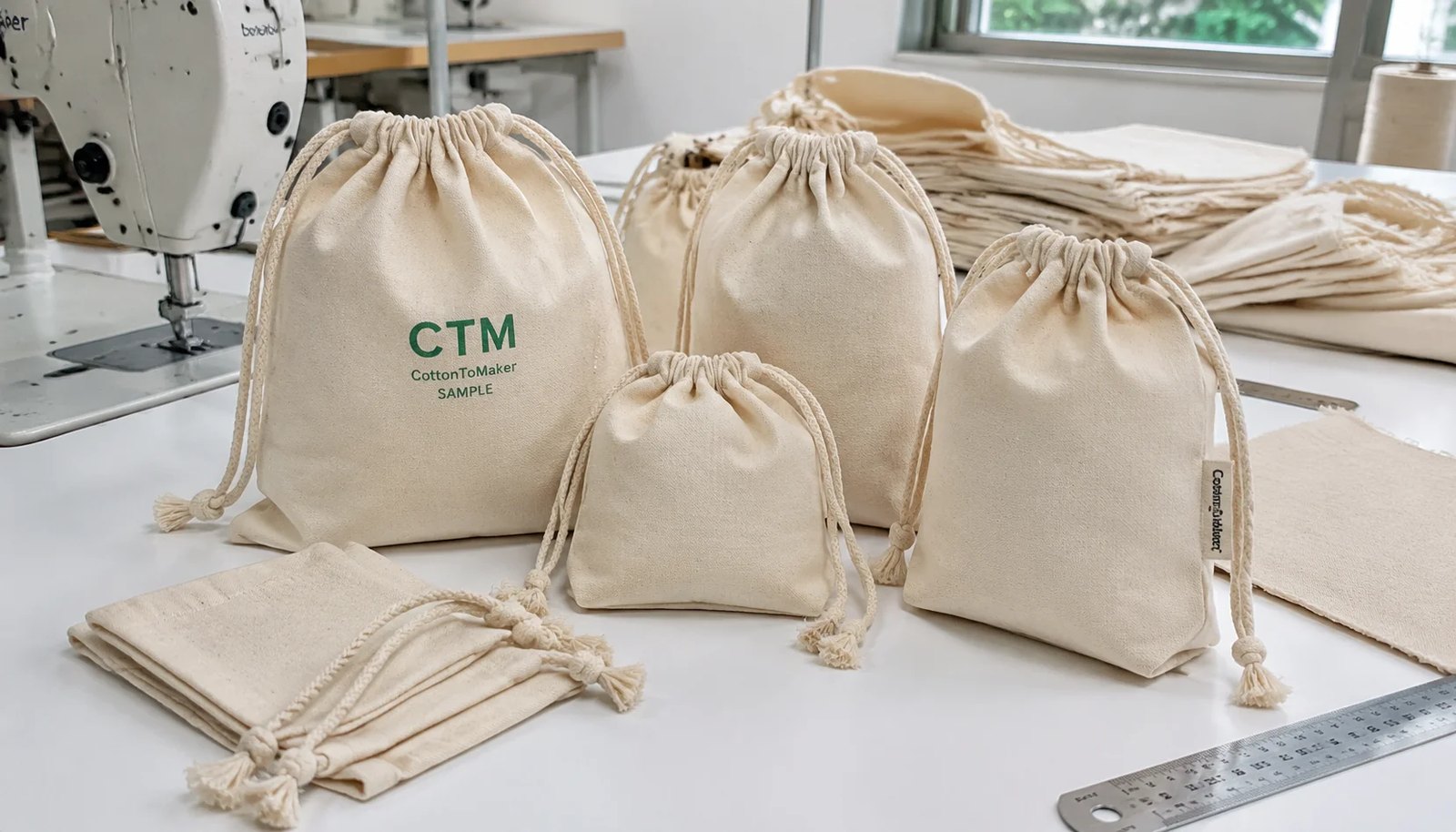
Buying problem: a small pouch can create a large retail complaint
Cotton drawstring pouches look simple on a quote sheet, but natural grocery programs expose every weak detail. Store teams open cartons quickly, customers handle the pouch directly, and buyers often expect a natural look without stains, odor, crooked logos, or drawstrings that jam. The real quality risk is not one dramatic failure; it is a mix of small defects that make the pouch look cheap beside premium organic, refill, or local products.
For procurement teams, the useful starting point is to treat the pouch as packaging plus reusable merchandise, not as a disposable cloth bag. That changes the RFQ. The factory needs to know what will go inside, how heavy it is, how the pouch will be displayed, whether it touches food packaging, and whether stores will repack it. Without that information, suppliers quote the lightest cloth and simplest stitch, then the buyer discovers the problem during sampling or, worse, at receiving inspection.
- Use case drives fabric weight: a tea sampler pouch and a refill jar pouch should not share the same spec.
- Retail visibility drives print tolerance: front-facing pouches need tighter logo position control than backroom utility pouches.
- Distribution method drives packing: direct-to-store cartons need clearer count control than one bulk warehouse delivery.
- Brand positioning drives shade control: natural cotton can vary, so approve a realistic shade range rather than a single studio photo.
Set the pouch specification before requesting prices
A clear pouch specification prevents suppliers from filling gaps with assumptions. The minimum commercial spec should include finished size, fabric GSM, cotton color, drawstring material, stitch type, print size, print color count, packing method, and inspection standard. If the pouch must hold a fixed item such as a spice jar, soap bar, candle tin, granola pack, or sampling bottle, include product dimensions and weight in the RFQ.
Finished size matters more than cutting size. Cotton fabric shrinks and shifts during cutting, sewing, steaming, and pressing. For small pouches, even 5 mm can affect fit and appearance. A buyer who writes only “10 x 15 cm cotton pouch” may receive samples that are technically close but not usable for the intended product. A better RFQ states “finished flat size 100 x 150 mm, tolerance plus or minus 5 mm, measured from outer seam to outer seam, drawstring relaxed.”
- Common small retail pouch: 8 x 10 cm, 10 x 15 cm, or 13 x 18 cm for samples, soaps, tea, spices, or gift items.
- Medium reusable pouch: 15 x 20 cm, 20 x 25 cm, or 25 x 30 cm for refill kits, produce-adjacent items, or multi-item bundles.
- Recommended tolerance: plus or minus 5 mm for small pouches; plus or minus 10 mm for medium and larger pouches.
- Add a fit test when the packed item has rigid corners or glass packaging.
Fabric GSM and cotton type: where cost and quality separate
For natural grocers, unbleached cotton is common because it gives a simple, lower-processed appearance. That does not mean every natural cotton pouch is equal. Fabric weight, yarn quality, weaving density, slub level, and finishing affect transparency, print sharpness, seam strength, and customer perception. A 90 GSM pouch may work for a seed packet or very light giveaway, but it often looks too thin for a branded grocery retail environment.
For most bulk orders, 120-160 GSM is the practical range. It gives enough body for a clean logo and still keeps material cost and freight weight under control. If the pouch must carry heavier jars or be sold as a premium reusable item, 180-220 GSM can be justified, but the drawstring channel must be adjusted because thicker cloth can bunch at the top. Above that range, the product starts behaving more like a canvas bag than a soft pouch.
- 90-110 GSM: lowest cost, light use, more transparency, less premium hand feel.
- 120-140 GSM: balanced option for sampling, store kits, and light packaged products.
- 150-160 GSM: stronger hand feel and better retail presentation without becoming stiff.
- 180-220 GSM: premium or heavier use, higher unit cost, larger carton volume, slower drying if washed.
- Natural cotton shade: accept controlled variation; reject oil stains, black spots, mildew marks, and strong odor.
Drawstring and sewing details that inspectors should not skip
The most common functional complaints are drawstrings that do not close smoothly, channel openings that tear, and side seams that open near the top. These problems usually come from undersized channels, weak reinforcement, inconsistent cord thickness, or cutting that leaves the grain unstable. In a natural grocery setting, staff and customers may open and close the pouch many times, so the top channel deserves more attention than a normal flat fabric seam.
Cotton cord is the default choice because it matches the pouch and feels natural. Flat cotton tape can look more premium but needs a wider channel and may twist if the sewing is tight. Polyester cord is smoother and often cheaper, but some natural grocery brands avoid it for positioning reasons. The buyer should decide this in the spec instead of letting each supplier quote a different cord and then comparing prices as if they were equal.
- Channel width should allow the cord or tape to move freely after pressing, not only before finishing.
- Drawstring exit points should be reinforced with backstitching, bar tack, or secure folded construction.
- Side seams should not show skipped stitches, open seams, raw fraying, or twisting after light pulling.
- Cord ends should be knotted, heat-sealed only if synthetic, or finished as specified to prevent unraveling.
- Stitch density should be consistent; very loose stitches reduce strength and look unprofessional on natural fabric.
Logo printing: choose the method by artwork, not habit
Most cotton drawstring pouches for natural grocers use screen printing because it is stable, economical, and suitable for simple logos. For one-color or two-color artwork, screen print usually gives the best balance of cost and durability. The buyer should define print size, exact position, ink color, and acceptable registration tolerance. A small centered logo may look clean on an approved sample, but bulk production can drift if print jigs are not controlled.
Water-based ink is often preferred for a softer hand feel, especially on natural cotton. However, natural fabric absorbs ink differently from bleached white fabric, so the final color may look less bright. Heat transfer can reproduce fine details, gradients, or many colors, but it may create a different surface feel and can look less natural on an eco-positioned product. Embroidery is possible on heavier GSM pouches, but it can pucker light fabric and raise cost.
- Screen print: best for solid logos, simple brand marks, repeat programs, and cost control.
- Water-based ink: softer look, less heavy hand, color can appear muted on unbleached cotton.
- Plastisol ink: stronger opacity, heavier feel, may not fit natural brand expectations.
- Heat transfer: useful for detailed artwork, but test adhesion and hand feel before approval.
- Embroidery or woven label: premium effect, better on heavier fabric, needs pucker control.
MOQ logic and cost drivers behind supplier quotes
MOQ for cotton drawstring pouches is not only about total order quantity. It depends on fabric sourcing, cutting efficiency, printing setup, number of sizes, number of designs, cord color, packing style, and inspection workload. A single design in one size may be efficient at a few thousand pieces, while the same total quantity split across five sizes and three logo versions may become expensive or difficult to schedule.
When comparing quotes, separate the cost drivers instead of focusing only on the unit price. A lower quote may exclude screen setup, sample cost, inner packing, barcode labels, export carton strength, or pre-shipment inspection support. It may also assume thinner fabric or smaller print coverage. For a fair comparison, require suppliers to quote against the same technical sheet and to list all assumptions in writing.
- Fabric cost changes with GSM, cotton grade, dyeing or bleaching, finishing, and available stock.
- Printing cost changes with color count, print area, ink type, registration difficulty, and number of artwork versions.
- Sewing cost changes with pouch size, seam reinforcement, drawstring type, and packing speed.
- Packing cost changes with individual bags, paper bands, hang tags, carton labels, and store allocation.
- Freight cost changes with carton volume as much as unit weight, especially for thick fabric and loose packing.
Sample approval: approve the real production method, not a pretty sample
A polished sample can hide production risk if it uses substitute fabric, hand-cut panels, different ink, or special sewing attention that will not be repeated in bulk. For retail grocery programs, the pre-production sample should represent the bulk process as closely as possible. It should use actual fabric GSM, actual drawstring, actual print method, actual logo size, actual seam construction, and actual packing if packing affects presentation.
The approval record should include measurements, photos, fabric weight, print color reference, cord details, and any agreed concessions. If the buyer accepts natural shade variation, document the approved shade range using swatches or high-quality reference photos. If the pouch must fit a product, keep one approved sample packed with the intended item and share the same reference with the factory and inspection company.
- Measure finished size in at least three samples before approving.
- Pull the drawstring open and closed repeatedly to identify channel resistance.
- Rub the printed logo with a dry and slightly damp white cloth to detect weak curing.
- Pack the real item inside the pouch and leave it for 24 hours to see shape, seam stress, and print distortion.
- Seal a sample in a polybag overnight and smell it after opening to detect trapped odor.
Quality inspection checklist with practical acceptance thresholds
A useful inspection checklist turns subjective complaints into measurable acceptance criteria. For cotton drawstring pouches, inspection should cover fabric appearance, finished size, print quality, stitching, drawstring function, odor, packing, and carton count. Critical defects should include contamination, sharp foreign objects, mold, severe odor, wrong logo, wrong material, and safety-related issues. Major defects include open seams, badly misprinted logos, wrong size outside tolerance, broken drawstrings, and visible stains on the front face.
The inspection sample size and AQL level should match the order value and retail risk. Many buyers use critical defects at 0, major defects at 2.5, and minor defects at 4.0 as a working framework, but the contract should state the exact inspection plan. Natural cotton has small slubs and shade variation, so do not reject normal fiber character if it was approved. Reject stains, holes, mildew, oil marks, severe weaving faults, and defects that damage brand presentation.
- Finished size: within agreed tolerance, measured flat with no stretching.
- Print position: centered or aligned within agreed distance from edge and seam, commonly within plus or minus 5 mm for small pouches.
- Print surface: no smearing, peeling, heavy pinholes, wrong color, or obvious registration shift.
- Stitching: no open seams, skipped stitches over agreed limit, broken threads, or loose thread tails longer than specified.
- Drawstring: opens and closes smoothly, no missing cord, no frayed or mismatched cord unless approved.
- Cleanliness: no oil stain, mold spot, dirt mark, insect remains, strong odor, or wet carton.
- Packing: correct quantity per inner pack and carton, correct carton marks, correct SKU separation.
Packing and distribution: protect the pouch without overpacking
Natural grocery buyers often want less plastic, but fabric pouches still need protection from dust, moisture, odor, and carton abrasion. Bulk packing can work well when the pouches are used by store staff or packed into kits after receipt. If the pouches go directly to retail shelves or store-specific allocations, inner packing, paper bands, labels, or counted bundles may be necessary. The right choice depends on handling, not on a generic sustainability statement.
Carton strength and count accuracy matter more than many buyers expect. Soft cotton pouches compress, so overfilled cartons can deform print areas and create counting errors during receiving. Underfilled cartons waste freight space. For distribution centers, carton markings should show PO number, SKU, pouch size, color, quantity, gross weight, net weight, carton dimensions, and country of origin where required. If stores receive mixed sizes, require clear separation to avoid sorting labor.
- Bulk pack: lowest cost, less packaging, suitable for warehouse repacking or backroom use.
- Bundle pack: counted groups of 25, 50, or 100 pieces help store teams verify quantities faster.
- Individual polybag: protects each pouch but adds plastic, labor, and disposal concerns.
- Paper band or belly band: useful for retail-ready sets, but test scuffing and humidity resistance.
- Carton liner: practical compromise when avoiding individual bags but still protecting against dust and moisture.
Lead time and schedule risk in bulk pouch orders
Lead time depends on whether the fabric is available, whether the print screens are ready, how many sizes are being cut, and whether packing is simple or store-specific. A normal schedule may include artwork confirmation, sample making, sample shipping, approval time, fabric preparation, cutting, printing, sewing, trimming, final inspection, packing, and export booking. Delays often happen because the buyer approves artwork but not print placement, or approves pouch size but later changes the item that must fit inside.
The schedule should include decision deadlines, not only factory production days. If procurement needs internal brand approval, legal review, or retail allocation planning, add that time before promising a launch date. For seasonal grocery promotions, late pouches can miss the selling window even if the product itself is ready. The safest workflow is to freeze the size and artwork first, approve a physical sample quickly, then allow production to proceed without small design changes during cutting or printing.
- Artwork review and proof: usually fast, but delayed by missing vector files or unclear color references.
- Sample making: slower when actual bulk fabric is not in stock or multiple print methods are tested.
- Bulk production: affected by fabric availability, print curing time, sewing capacity, and packing complexity.
- Inspection and rework: needs schedule space; do not book vessel or air freight before final quality status.
- Export booking: carton volume and ready date must be confirmed before comparing freight options.
Specification comparison for buyers
| Spec decision | Recommended option | When it fits | Buyer risk to check |
|---|---|---|---|
| Fabric weight for grocery retail use | 120-160 GSM cotton for light dried goods, sampling kits, produce-adjacent merchandising, or checkout promotions | Best when the pouch needs a natural hand feel, reasonable print coverage, and freight efficiency | Below 110 GSM can feel too transparent; above 180 GSM may increase cost and slow drawstring closing on small sizes |
| Fabric construction | Plain weave unbleached cotton with stable shrinkage control | Suitable for natural grocers that want a simple low-dye appearance and consistent shelf presentation | Lot-to-lot shade variation is normal in natural cotton; define acceptable shade range before production |
| Drawstring material | Cotton cord or flat cotton tape matched to pouch size | Cotton cord fits most reusable grocery pouches; flat tape feels more premium on gift or private-label packs | Cord diameter must pass through the channel smoothly after washing and pressing; thick cord can jam on small pouches |
| Print method | Screen print for 1-3 solid colors; heat transfer only for fine gradients or small complex artwork | Screen print is durable and cost-effective for bulk grocery programs with repeat logos | Water-based ink can look softer on natural cotton; plastisol may feel heavy if print area is large |
| Seam construction | Double-needle or lockstitch side seams with reinforced top channel ends | Needed when pouches hold bulk foods, sample jars, soap bars, snacks, or store kits | Weak bar tacks or loose threads at the drawstring opening cause early failure during store handling |
| Size tolerance | Finished size tolerance of plus or minus 5 mm for small pouches and plus or minus 10 mm for larger pouches | Practical for factory cutting, sewing, washing, and pressing variation | If the pouch must fit a specific jar, bottle, or retail carton, require a physical fit test, not only size measurement |
| MOQ logic | Set MOQ by fabric, size, print color count, and packing style rather than only total units | Useful for multi-store rollouts with 2-4 sizes but one shared logo | Splitting many small colorways or sizes can push each line below efficient cutting and print setup quantities |
| Retail packing | Bulk carton packing for backroom use; inner polybag or paper banding only when required for store distribution | Keeps cost and plastic use controlled for natural grocery buyers | Overpacking increases landed cost and conflicts with sustainability goals; underpacking causes dust, moisture, and count disputes |
| Inspection level | AQL inspection with critical defects at 0, major defects commonly at 2.5, minor defects commonly at 4.0 | Appropriate for branded reusable pouches shipped to retail or distribution centers | Inspection must include pull testing, print rub testing, size check, carton count, and barcode or label verification when applicable |
Buyer checklist before sampling
- Define the exact pouch use: bulk food, gift set, checkout promotion, store sampling, produce-adjacent display, or refill kit.
- Specify finished size, not only cutting size, and include tolerance by pouch size.
- State fabric GSM, cotton type, color, and whether natural shade variation is acceptable.
- Provide artwork files in vector format and identify Pantone, CMYK, or natural ink matching requirements.
- Choose the drawstring type, cord diameter or tape width, and whether the cord must be natural, dyed, or contrast color.
- Confirm seam construction, drawstring channel width, reinforcement method, and loose-thread trimming standard.
- Request a pre-production sample using actual fabric, actual print method, actual cord, and actual packing.
- Include performance checks such as print rub, cord pull, seam strength, shrinkage, odor, and fit test with intended product.
- Define packing method, units per inner pack, units per export carton, carton markings, and pallet requirements if any.
- Require quote data broken down by pouch size, GSM, print colors, packing, sample fee, mold or screen cost, lead time, and Incoterm.
Factory quote questions to send
- What fabric GSM options are available from current stock, and which require greige fabric weaving or dyeing lead time?
- Is the quoted size a finished size after sewing and pressing, and what tolerance will the factory accept in writing?
- Which print method is quoted, and is the print cost based on logo size, color count, print position, or total units?
- What is the MOQ per size, per fabric weight, per print design, and per packing method?
- Can the pre-production sample be made with bulk fabric and bulk ink, or will it be a close substitute?
- What shrinkage rate should be expected if the pouch is steamed, pressed, or washed during production?
- How many pieces are packed per inner bag and per export carton, and what are the estimated carton dimensions and gross weight?
- What quality inspection standard does the factory use for size, stitching, print defects, stains, odor, and carton count?
- What production capacity is reserved after deposit, and what events can move the shipment date?
- Which Incoterm is quoted, and are export cartons, document fees, local charges, and customs data included or excluded?
Quality-control points to confirm
- Fabric GSM verified by cutting and weighing sample swatches from bulk production, not only by supplier declaration.
- Finished pouch dimensions measured flat, with drawstring relaxed and seams aligned.
- Top channel width checked against cord diameter so the pouch opens and closes without snagging.
- Print position measured from seam and top edge to prevent skewed retail appearance.
- Print rub resistance tested with dry and slightly damp white cloth before carton release.
- Seam strength checked by controlled hand pull or agreed pull force, especially at drawstring exits.
- Loose threads trimmed to an agreed maximum length, commonly under 3 mm for visible areas.
- Natural cotton shade and slub level compared against approved sample and tolerance swatch.
- Odor checked after sealed carton storage because cotton, ink, and packing can trap chemical or musty smells.
- Carton count, inner count, carton marking, barcode, and packing list matched before shipment booking.