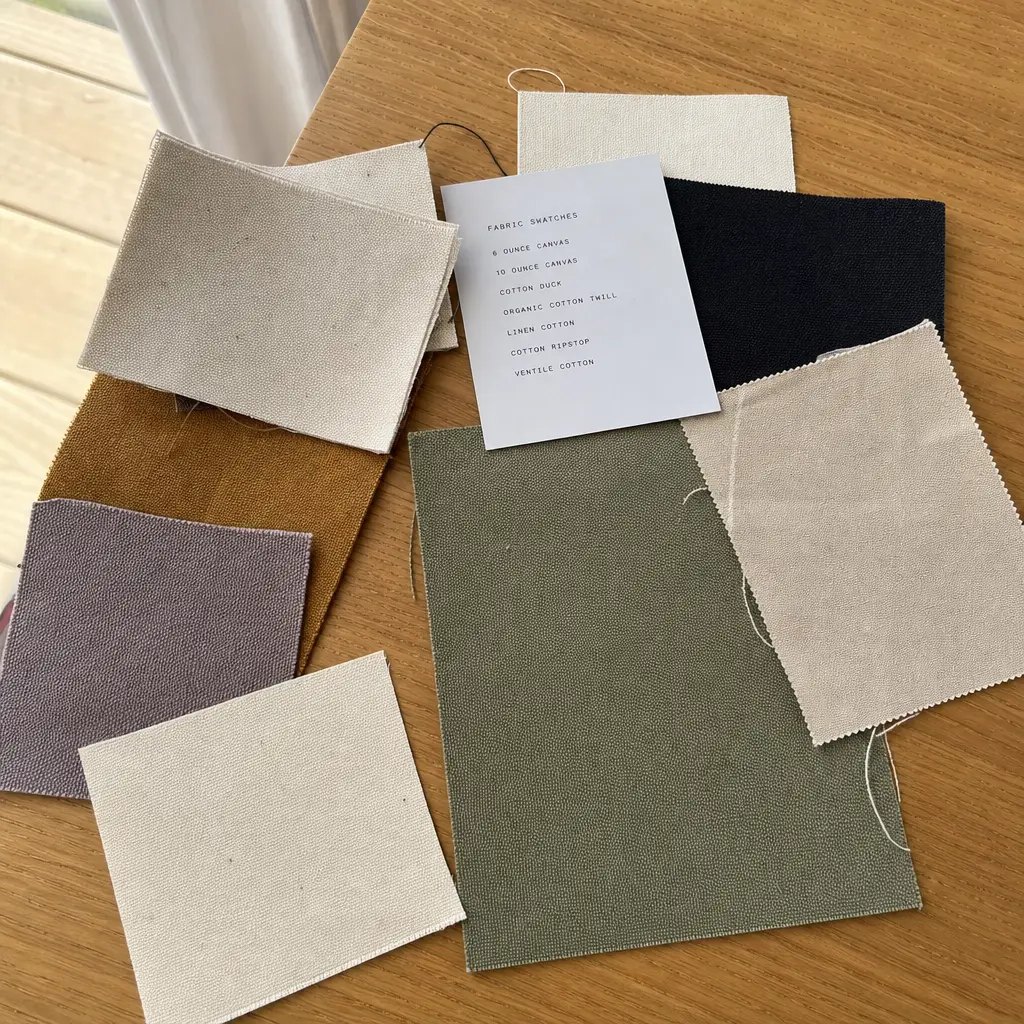
Why MOQ Gets Complicated for University Bookstore Pouches
A university bookstore pouch order looks simple from a distance: cotton bag, drawstring, school logo. In the RFQ, it quickly becomes more layered. One buyer may need small pouches for pins, jewelry, and tech accessories; medium pouches for stationery or orientation items; and larger pouches for dorm kits, graduation bundles, or alumni gifts. The logo may stay the same, but the fit, selling price, shelf presentation, packing method, and delivery date can all change by SKU. That is why a cotton drawstring pouches MOQ negotiation guide for university bookstores needs to focus on the full buying program, not just the factory's first quantity number.
Factories set MOQ around real production costs. Cotton fabric buying, cutting yield, cord sourcing, print setup, ink mixing, sewing line changeover, trimming, inspection, and carton packing all affect the minimum run that makes sense. When a buyer asks only for a lower MOQ, the supplier has to protect margin somewhere else. The result may be a higher unit price, fewer material choices, looser packing control, or a quote that changes after sampling. A stronger approach is to show the supplier which parts of the order can be standardized and which parts are not negotiable.
Bookstore procurement also has constraints that general promotional buyers may not have. The pouch may carry a licensed school mark. It may have to arrive before orientation, homecoming, graduation, or holiday retail. It may be received by a campus team that needs carton labels to match internal routing. Small errors create visible headaches because peak bookstore seasons are short and staff time is already tight.
- Treat MOQ as a production cost structure that can be shaped, not as a random barrier.
- Separate real selling requirements from preferences carried over from past orders.
- Use one fabric, one cord spec, one construction standard, and one print color where the brand guide allows it.
- Ask the supplier to explain which parts of the spec drive MOQ before negotiating price.
- Do not accept a lower MOQ if the supplier cannot explain how sampling, production, and QC will stay controlled.
Start With a SKU Matrix Before Asking for Price
The cleanest negotiation starts before the quote request. Build a SKU matrix that makes the program easy to understand at a glance. Include finished pouch size, fabric weight, base color, cord material, cord color, logo method, print position, packing format, barcode needs, and intended use. That document helps the factory decide whether the order can run as one coordinated production program or several small programs. It also keeps suppliers from filling in missing details with their own assumptions.
A vague RFQ forces every supplier to quote a different version of the product. One factory may assume 4 oz cotton, bulk packing, and a small one-color logo. Another may assume 8 oz canvas, individual packing, and a larger print. Those quotes cannot be compared fairly. A clear SKU matrix turns the conversation from 'Can you do a lower MOQ?' into 'Which of these SKUs can share fabric, cord, setup, and packing?' That is a much more useful question.
The matrix should also separate retail products from internal packaging. A pouch sold on the bookstore shelf needs cleaner stitching, better shape, and a presentation that feels finished. A pouch used inside a gift bundle may be simpler, as long as it protects and presents the contents properly. If the same pouch must serve both roles, state that clearly. The factory may recommend a slightly better fabric or a more controlled packing method because the item will be handled by customers, not just by fulfillment staff.
- List each SKU by finished size, such as 4 x 6 in, 6 x 8 in, or 10 x 12 in, instead of small, medium, and large.
- Identify which SKUs share the same artwork, fabric, cord, print position, and packing format.
- Mark retail SKUs separately from pouches used only for kits, checkout packaging, or internal distribution.
- State the requested receiving date, in-store date, and any campus approval deadline.
- If the pouch must fit another item, provide the actual product or insert dimensions, not only a general description.
Specify Fabric Weight Like a Buyer, Not a Browser
Cotton drawstring pouches are often described too casually. The word cotton does not tell procurement enough. A 4 oz muslin pouch and an 8 oz canvas pouch may both be cotton, but they will not look, sew, pack, print, or ship the same way. For many bookstore merchandise programs, 6 oz to 8 oz cotton canvas, roughly 200-270 GSM, is a practical starting range. It gives the pouch enough body to feel retail-ready while still closing easily with a drawstring. Lighter 4 oz to 5 oz cotton can work for low-cost packaging or light giveaways, but it usually has less structure and can show contents more easily.
Natural cotton is usually easier to source than custom dyed school colors. That matters for MOQ. If the bookstore wants a navy, maroon, green, or gold pouch body, the buyer should ask whether the supplier is using stock fabric, market-available cloth, or custom dyeing. A stock or near-stock color may support a lower MOQ. A custom dye lot may require a fabric MOQ before pouch production even begins. The same question applies to the cord: natural cotton cord is generally simpler than a dyed cord that must match a school color.
Shrinkage should not be treated as an afterthought. Cotton fabric can move during production, pressing, packing, shipping, or light use. If the pouch must fit a boxed item, booklet, charger, ornament, or graduation set, the buyer should ask whether the quoted size is before or after sewing and whether the supplier can confirm finished dimensions on the pre-production sample. A small size change may be acceptable for a casual merchandise pouch; it may be a problem for a kit that has to close cleanly.
- 4 oz to 5 oz cotton: suitable for lightweight packaging, small giveaways, and low-cost event use when contents are light.
- 6 oz cotton: a practical middle option for campus merchandise, stationery pouches, and gift packaging.
- 8 oz cotton canvas: stronger handfeel and better shelf presence for higher-value retail items or alumni gifts.
- Natural cotton: often easier to source and easier to negotiate than custom dyed school-color fabric.
- Pre-shrunk or shrinkage-tested fabric: useful when the finished pouch must fit a specific product or insert.
Negotiate Construction, Cord, and Print Together
A pouch is a small product, but the construction details still affect MOQ. The sewing line has to handle fabric thickness, channel folding, side seams, trimming, cord insertion, knots, and final inspection. A standard cotton cord running through a reinforced channel is easier to scale than a special cord, custom closure, or unusual channel detail. If the buyer wants a lower MOQ, keeping construction stable across sizes creates more room than arguing over the number alone.
Print method belongs in the same conversation. Screen printing is usually the strongest default for solid one-color or two-color university marks. It is efficient at volume, works well on cotton, and gives a clean result when the artwork is prepared correctly. Heat transfer can be useful for detailed art, short pilot runs, gradients, or designs that are difficult to screen print cleanly, but buyers should approve handfeel and edge quality before bulk production. Embroidery may suit heavier canvas, but it can pucker small pouches or add cost. Woven labels can be a good option when the pouch face should stay simple and the brand can sit on a side seam or small tag.
For licensed marks, do not let the factory interpret the logo. Send vector art, Pantone references, approved sizing, and placement requirements. If the school has clearance rules around the logo, include them in the RFQ. The factory cannot protect brand compliance if the buyer sends a low-resolution file or informal mockup and asks production to 'match as close as possible.' Good artwork discipline helps MOQ negotiation because it reduces rework risk.
- Keep cord material and diameter consistent across all sizes unless the product function requires a change.
- Ask the supplier's recommended cord diameter for the chosen fabric weight and channel height.
- Use one print position across the line where possible to avoid repeated setup and alignment work.
- Confirm whether the logo will sit below the drawstring channel with enough clearance for sewing and gathering.
- For multiple print colors, ask for pricing by color count and by setup count so the cost is visible.
Use Samples to Prove the Final Specification
A blank sample can confirm rough size and sewing shape, but it cannot approve the program. For bookstore orders, the useful sample is a pre-production sample made with the final fabric, final cord, final logo method, final print placement, and intended packing. That sample proves the important things: size, handfeel, logo opacity, drawstring movement, channel strength, seam appearance, and whether the pouch still looks right after packing. If the pouch is going into a bundle, the sample should be tested with the actual contents or a representative filler.
Sampling also protects the calendar. University programs often need licensing review, internal merchandising signoff, or department approval before production can begin. If those steps are not built into the schedule, the buyer may approve a quote that cannot realistically meet the in-store date. Ask the factory how long each sample stage takes, whether sample transit time is included, and what happens if the first sample needs revision. A supplier's bulk lead time usually starts after sample approval, not after the first email inquiry.
Document the approval. Record finished size, fabric weight, logo dimensions, print position, cord type, packing count, carton label format, and any accepted deviation. Keep one approved sample or photo set with procurement and make sure the factory has the same reference. If a change is approved verbally and not written down, it may disappear by the time the sewing line starts bulk production.
- Measure flat finished size, including body width, body height, channel height, and usable interior height.
- Check whether the drawstring opens and closes smoothly when the pouch is empty and when it is filled.
- Review logo placement after the cord is pulled, because gathering can visually change the front panel.
- Test the pouch with the real gift bundle, product box, insert, or sample filler when fit matters.
- Approve inner pack, barcode label, carton mark, and carton quantity before mass packing begins.
Ask for Quotes That Reveal the Real Cost
A unit price by itself is not a quote procurement can rely on. Cotton drawstring pouches have costs that may sit outside the unit price: sample charges, screen charges, transfer film charges, artwork handling, custom labels, individual packing, carton upgrades, inspection, and payment terms. Trade term also matters. A low EXW unit price may lose its advantage once freight, pickup, export handling, or carton volume is considered. Ask each supplier to quote on the same basis so landed cost can be compared cleanly.
Price breaks are especially useful in MOQ negotiation. The difference between 300 and 500 pieces may be meaningful because setup is spread across more units. The difference between 2,500 and 3,000 pieces may be smaller if the material purchase is already efficient. A buyer may discover that adding a modest quantity to a proven SKU lowers the blended cost more than pushing the supplier below MOQ. For bookstore planning, that can be helpful when the same pouch will be used for orientation now and alumni weekend later.
The quote should also show overage and shortage policy. Small textile products are often produced with a tolerance because cutting, printing, and inspection can create rejects or extras. That is manageable when the buyer knows the rule in advance. It becomes a problem when the bookstore expects exactly 1,000 pieces of each SKU and receives 970 of one size and 1,030 of another without a clear invoice adjustment. Put the tolerance, billing method, and shortage handling in writing before issuing the PO.
- Request the same trade term, such as EXW or FOB, across supplier quotes before comparing costs.
- Ask for carton dimensions, carton count, net weight, and gross weight so freight can be estimated.
- Separate sample charges, setup charges, artwork charges, packing charges, and unit price.
- Request price breaks by SKU and by combined order quantity to see where the real threshold sits.
- Confirm overage or shortage tolerance and how the supplier invoices quantities by SKU.
Set Quality Tolerances Before Bulk Production
Quality problems often begin as undefined expectations. A buyer writes 'good quality cotton pouch' and the supplier follows its standard. The finished goods may be acceptable by factory norms but not by bookstore needs. A better RFQ asks the supplier to state its standard finished-size tolerance, print position tolerance, print color tolerance, and stitching standard. The buyer can then decide whether those tolerances work for the product and the retail context.
Size tolerance should be tied to function. If the pouch only holds loose stickers, a small variation may not matter. If it needs to fit a boxed ornament, graduation cord, stationery set, or welcome kit insert, the range should be tighter. Print position should also be controlled, especially on small pouches where a few millimeters can make a logo look off-center. For color, Pantone references help, but cotton fabric texture and ink opacity can still affect the result. That is why the strike-off and pre-production sample matter.
Inspection should cover more than appearance. Check fabric weight against the approved swatch, measure finished size, pull the cord repeatedly, inspect seam ends, review print opacity, and verify packing count. If the order runs over several production days, inspect early and late cartons because print density, sewing tension, and thread trimming can drift. If fabric or cord is dyed, add a basic rub check so color does not transfer to the pouch body, other merchandise, or retail fixtures.
- Measure production fabric weight rather than relying on catalog descriptions or prior samples.
- Confirm logo edge sharpness, opacity, registration, and placement against the approved strike-off.
- Check that seam ends, channel openings, and stress points are back-tacked and trimmed cleanly.
- Inspect beginning and ending cartons from the run for consistency, not only the easiest carton to reach.
- Load-test the pouch with representative contents when the pouch is used as packaging.
Make Packing Work for Campus Receiving
Packing looks minor until the shipment arrives during a peak week. If several pouch sizes are mixed in unmarked cartons, staff have to open, sort, count, relabel, and route them before the product can be sold or assembled into kits. That labor may erase any small savings from simpler factory packing. For university bookstores, master carton labels should match the purchase order language and show PO number, SKU, size, color, quantity, carton count, and destination or department when needed.
The packing format should match the sales model. Flat bulk packing is efficient for internal packaging or kit assembly. Retail-ready pouches may need barcode labels, paper bands, hangtags, or inner packs that support shelf replenishment. If the bookstore has sustainability rules, specify acceptable materials before the supplier quotes. For example, the buyer may prefer bulk paper wrapping over individual polybags, but that decision should be checked against dust protection, moisture risk, and how the goods will be stored.
Mixed cartons should be a deliberate choice, not a default. They may make sense for a small sample shipment or a single department packout. They are usually less helpful when multiple campus locations, departments, or event teams need clean allocation. Ask receiving what format will reduce touches. That internal answer belongs in the RFQ because the factory cannot design the carton plan around a workflow it has never seen.
- Use SKU-separated cartons when receiving needs fast counting, allocation, and replenishment.
- Ask for carton labels that mirror the PO language instead of factory shorthand.
- Confirm whether the bookstore wants bulk flat packs, inner packs, barcode labels, hangtags, or paper bands.
- If cartons will sit in storage, ask for protection against dust, moisture, and fabric crushing.
- Avoid mixed cartons unless the receiving team has approved the format and counting method.
Build a Negotiation Strategy That Reduces Risk
The best MOQ negotiation usually simplifies the order. If a bookstore needs 1,200 pieces across three sizes, a supplier may be more flexible when all three use the same natural cotton, same cord, same one-color logo, same print position, and same packing logic. The factory can buy material more efficiently, keep the sewing line moving, and avoid repeated setup. Procurement gets a cleaner quote and a better chance at a combined MOQ.
That does not mean every spec should be flattened. If the large pouch needs 8 oz canvas because it carries heavier items, say so. If the small pouch must hold jewelry and needs a tighter drawstring closure, keep that requirement. The point is to remove differences that do not help the bookstore sell, receive, or use the product. A second print color, custom dyed cord, or special hangtag may be worth it for a premium retail item. It may not be worth it for an internal kit pouch.
Phased buying can also help. A first order can cover the immediate season, while a forecast shows likely demand for future semesters or annual events. Keep the forecast separate from the committed PO so both sides understand what is firm. Still, a reasonable forecast can help the factory plan fabric and discuss better price breaks. Stability across semesters often has more value than a one-time discount that forces a new sample, new setup, and new MOQ discussion every season.
- Use a common base fabric across all SKUs whenever the product role allows it.
- Keep the first order to one print color if the university brand guide permits it.
- Negotiate setup charges separately so they do not disappear inside the unit price.
- Share a reorder forecast only after the committed first order is clearly defined.
- Do not trade away sample approval, carton control, or inspection just to reach a lower MOQ.
- If a supplier offers a very low MOQ with softer tolerances, treat that as a risk tradeoff and document it.
Plan Backward From the In-Store Date
Bookstore demand is calendar-driven. Orientation, homecoming, graduation, alumni events, and holiday retail do not move because a sample took longer than expected. Build the schedule backward from the date goods need to be on shelf, not from the date procurement hopes production will begin. A quote that says production takes 20 days may only describe sewing and printing. The real path includes artwork approval, licensing review if needed, sampling, sample transit, deposit, material preparation, bulk production, inspection, carton booking, freight, receiving, and internal allocation.
MOQ and landed cost should be reviewed together before the PO is placed. Heavier fabric can raise freight cost. Individual packing can increase labor and carton volume. A lower unit price may be less attractive if it creates bulky cartons, slow receiving, or a higher reject risk. For a new program, a slightly higher unit price with stable specs, documented tolerances, and clean packing can be the better procurement decision.
Create a short internal approval note before releasing the order. It should record the target sell date, approved sample reference, final quantity, trade term, tolerance range, packing method, and inspection plan. This is not paperwork for its own sake. It keeps the decision from being reopened after production starts, and it gives receiving, merchandising, and procurement the same version of the order. When the next semester's reorder comes around, that note becomes the starting point for a faster and cleaner negotiation.
- Build the calendar backward from the shelf date or kit assembly date, not from the desired ship date.
- Add time for licensing approval when the school mark is controlled by brand standards.
- Confirm whether inspection happens before packing, after packing, or both.
- Compare freight impact using carton volume and gross weight, not product weight alone.
- Keep a contingency buffer for artwork fixes, sample transit delays, inspection findings, and shipment booking changes.
Specification comparison for buyers
| Spec decision | Recommended option | When it fits | Buyer risk to check |
|---|---|---|---|
| Base fabric for bookstore merchandise | 6 oz to 8 oz cotton canvas, roughly 200-270 GSM, with shrinkage behavior confirmed on the approved sample | Retail pouches, alumni gifts, graduation bundles, campus kits, and higher-value merchandise that needs a sturdier handfeel | Very light 4 oz cotton can look thin on shelf, show contents, wrinkle heavily, or distort when packed |
| MOQ negotiation route | Combine sizes under one fabric color, one cord spec, one print color, and one packing logic so setup can be shared | Programs with several pouch sizes but one common campus brand treatment | Different print positions, separate label rules, special cartons, or custom dyed components can still trigger separate setup charges |
| Print method for school logo | Screen print for solid one- to two-color marks; transfer only when artwork needs fine detail, gradients, or a short pilot run | Most university wordmarks, simple mascots, crests, department names, and event marks on natural cotton | Thin lines, small type, tight registration, and textured fabric need a strike-off before bulk approval |
| Cord and closure choice | Cotton cord with reinforced channel seams and a consistent cord diameter across the order | Retail pouches that will be opened and closed repeatedly by customers, staff, or event teams | Cord that is too thin can cut into the channel seam; dyed cord should be checked for rub transfer |
| Sample approval standard | One pre-production sample made with bulk fabric, final cord, final print method, logo placement, and intended packing | Licensed merchandise, bookstore retail orders, graduation kits, and any pouch tied to a fixed selling date | A blank size sample does not validate print color, placement, opacity, handfeel, closure behavior, or packing fit |
| Packing format | Flat-packed by SKU with master cartons labeled by PO, SKU, size, color, quantity, carton count, and destination if needed | Receiving teams that separate goods by department, campus location, program, or selling season | Mixed cartons may reduce factory labor but can increase receiving time, miscounts, and internal rework |
| Lead time planning | Approve artwork and sample before the PO is locked; use 25-40 days after sample approval as a planning example when materials are available | Imported custom cotton pouches with available fabric, final artwork, and a standard print process | Rush schedules break when licensing approval, fabric sourcing, inspection booking, or freight timing is left outside the calendar |
| Quote comparison basis | Request EXW or FOB, sample charge, setup charge, carton data, packing count, overage tolerance, shortage handling, and payment terms in one quote sheet | Procurement teams comparing suppliers on landed cost instead of unit price alone | A quote without carton dimensions, gross weight, and packing count cannot support freight comparison |
| Reorder planning | Keep fabric, cord, construction, print method, and packing stable so the spec can be reused for future semesters | Orientation, homecoming, graduation, holiday retail, alumni weekends, and recurring campus programs | Changing fabric, cord, print method, label style, or packing format can reset MOQ and weaken price continuity |
Buyer checklist before sampling
- Define the selling use before negotiating MOQ: retail gift pouch, dorm welcome kit, graduation item, bookstore packaging, alumni merchandise, or event giveaway.
- Build a SKU matrix that lists finished size, fabric weight, fabric color, cord type, logo method, print position, packing style, and intended use for each pouch version.
- State fabric in both oz and GSM where possible; do not write only cotton, because 4 oz muslin and 8 oz canvas behave very differently in production and on shelf.
- Provide vector artwork with Pantone references, logo size, print area dimensions, placement from seams, and clearance from the drawstring channel.
- Confirm whether the school mark needs licensing approval before sampling, before bulk production, before shipment booking, or at more than one stage.
- Set acceptable finished-size tolerance, especially when the pouch must fit a gift bundle, product box, tray, retail insert, or department kit.
- Confirm cord material, cord diameter, knot style, cord length, and whether the cord color must match a school color or remain natural.
- Require a pre-production sample made with final fabric, final cord, final logo method, final print position, and intended packing format.
- Specify carton labeling, inner packing, SKU separation, barcode format, routing marks, and whether cartons may contain mixed sizes.
- Compare quotes using unit price plus setup, sample, packing, freight volume, inspection, payment terms, and overage or shortage policy, not unit price alone.
Factory quote questions to send
- What is your standard MOQ for this pouch size and fabric, and which parts of the MOQ are driven by fabric purchase, sewing setup, printing setup, cord sourcing, or packing labor?
- Can different pouch sizes share one MOQ if they use the same cotton fabric, same base color, same cord, same print color, and same packing method?
- What price breaks apply at 300, 500, 1,000, 2,500, and 5,000 pieces per SKU and for the combined order?
- Which fabric weights do you keep in regular stock, and which weights or colors require dyeing, special sourcing, or a separate fabric MOQ?
- What is the maximum print area for each proposed pouch size, and how many screens, plates, transfer films, or setup steps are required for the artwork?
- What sample types are available: blank size sample, fabric swatch, print strike-off, pre-production sample, and sealed approval sample?
- What finished-size tolerance, print position tolerance, and color tolerance can you commit to in production, and how will those tolerances be measured?
- How many pieces fit per inner pack and master carton, and what are the estimated carton dimensions, net weight, gross weight, and carton count?
- What is the realistic bulk lead time after sample approval, and which dates do you need for artwork approval, deposit, inspection, and shipment booking?
- What overage or shortage tolerance do you apply, and how will shortages by SKU be handled on the invoice and packing list?
Quality-control points to confirm
- Fabric weight should be verified against the approved swatch using production fabric, not a catalog description or a prior season's sample.
- Finished pouch size should be measured flat after sewing, including body width, body height, channel height, seam allowance, and usable interior height below the channel.
- Drawstring channels should open and close smoothly after repeated pulls without cord fraying, seam tearing, skipped stitches, or uneven gathering.
- Logo print color, opacity, position, and edge sharpness should match the approved strike-off under daylight or the agreed inspection light source.
- Stitching should have secure back-tacks at stress points, no open seams, no loose threads beyond the agreed trim standard, and no broken or skipped stitch lines.
- Dyed fabric and dyed cord should pass a basic dry and light rub check so school-color components do not mark the pouch body or nearby goods.
- Packing count, SKU labels, carton marks, barcode labels, and inner pack quantities should match the purchase order and receiving instructions.
- Random inspection should include cartons from the beginning and the end of production because print density, sewing tension, and trimming consistency can drift during a run.
- Corner and seam stress should be checked after loading the pouch with a representative product weight, gift bundle, or sample filler.
- Carton moisture protection should be verified if goods will move through humid transit, sit in warehouse storage, or arrive before the selling season opens.