Why MOQ Negotiation Is Different for Cotton Drawstring Pouches
Cotton drawstring pouches look simple, but the MOQ is not only a fabric number. A factory has to buy or allocate fabric, set up cutting, prepare cords, print panels before or after sewing depending on artwork, sew small pieces with repeated handling, trim threads, and pack by logo version. For a tech startup, the first order is often a launch kit, device insert, investor event, employee onboarding set, or retail pilot. That means the buyer wants a controlled quantity, while the factory wants enough volume to cover setup loss and line changeover.
Good MOQ negotiation starts by separating what must be custom from what can remain standard. If the pouch uses stock natural cotton, standard cord, one size, one logo, and bulk packing, many factories can be more flexible. If the buyer requests dyed cotton, custom cord color, multiple logos, individual barcode packing, and tight retail carton sorting, the MOQ becomes a production-control issue, not a sales argument. The strongest position is a clean RFQ that shows you understand these cost drivers and are not asking the supplier to absorb hidden work.
- Negotiate finished product MOQ separately from custom fabric MOQ.
- Keep fabric and cord standard if the main goal is a lower first-order quantity.
- Use tiered quantities in the RFQ so the supplier can show real price breaks.
- Treat multiple logo versions as separate production control items, even if the pouch body is the same.
- Avoid forcing a low MOQ and a complex packing plan into the same first order.
Start With the Use Case Before Discussing Quantity
The best pouch specification depends on what the startup is putting inside. A pouch for a USB-C cable, sticker sheet, or conference badge does not need the same fabric strength as a pouch for a compact hardware device, charger, adapter set, or retail accessory bundle. If the item has sharp edges or weight, a thin cotton pouch can look fine on the sample table but fail after transport because corners push through the fabric or distort the seams.
Buyers should write the use case into the RFQ. Include the packed item size, approximate weight, whether the pouch is part of retail packaging or only a protective giveaway, and whether end users are expected to reuse it. This gives the factory a reason to recommend 120 GSM, 140 GSM, 160 GSM, or heavier canvas instead of quoting the cheapest fabric to win the first email comparison.
- For stickers, pins, and light cables, 120-140 GSM cotton is usually enough.
- For chargers, adapters, and small hardware, 160-200 GSM gives better shape and seam support.
- For retail display or premium kits, consider heavier cotton canvas and cleaner packing.
- For items with corners, test the real item inside the pouch before approving bulk production.
- For repeated opening and closing, prioritize drawstring channel smoothness and cord strength.
Fabric GSM Choices That Affect MOQ and Quote Accuracy
Fabric GSM is one of the easiest places for quotes to become misleading. One supplier may quote 120 GSM natural cotton while another quotes 180 GSM cotton canvas. Both may call the product a cotton drawstring pouch, but the cost, feel, sewing behavior, and freight weight will be different. For fair comparison, state the GSM range and ask each supplier to confirm actual tested weight or fabric specification used in the quote.
Natural cotton is usually more MOQ-friendly than dyed cotton because factories can source or hold common greige or natural fabric more easily. Bleached white, black, navy, or custom Pantone fabric may involve dye lots, higher fabric minimums, color approval steps, and additional shrinkage control. If the startup is still testing market response, a natural cotton pouch with printed brand color is often a better first-order strategy than custom dyed fabric.
- 120 GSM reduces fabric cost but may be semi-transparent on larger pouch sizes.
- 140 GSM is a common balance for event and promotional pouches.
- 160 GSM improves hand-feel and print stability for branded kits.
- 180-200 GSM supports premium positioning but raises fabric cost and carton weight.
- Custom dyed cotton can change MOQ more than a logo print change.
Print Method Decisions: Logo Quality Versus Setup Cost
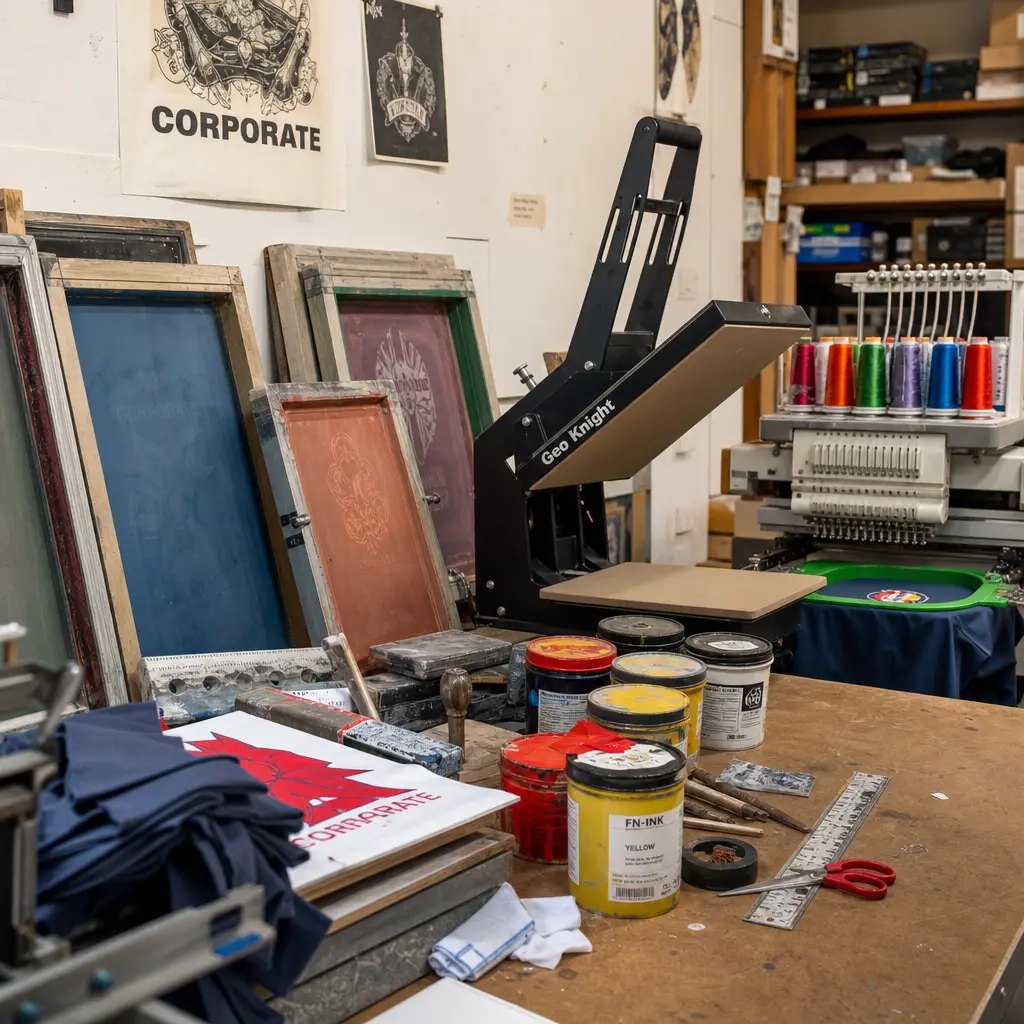
For most tech startup logos, screen printing is the practical default. It gives clean solid color, stable cost, and good repeatability when artwork is simple. The buyer should provide vector artwork, Pantone references, print size, and position measured from pouch edges. If the logo includes thin type, small QR-like detail, gradients, or app-style illustrations, the factory should review whether screen print can hold the detail on cotton texture.
Digital print and heat transfer can solve multi-color artwork problems, but they introduce other questions. Transfers may change the hand-feel of the pouch and can look too glossy if the brand wants a natural cotton appearance. Digital print can be useful for short runs, but the buyer must approve color on actual fabric, not on a computer rendering. The MOQ negotiation should include setup fees separately, because a low unit price with hidden print setup cost is not a real comparison.
- Use screen print for one-color or two-color startup logos with solid shapes.
- Request a print strike-off when Pantone color matters to the launch brand guide.
- Avoid tiny disclaimer text unless the factory confirms minimum readable height.
- For gradients, test digital or transfer print on the same GSM cotton before approval.
- List setup, screen, film, and sampling charges outside the unit price.
MOQ Levers That Actually Work With Factories
A buyer can often reduce first-order MOQ by lowering complexity rather than pushing only on price. The most effective levers are standard fabric, one pouch size, one drawstring color, one print position, and bulk packing. These choices reduce factory setup work and material fragmentation. In contrast, asking for five sizes, six department logos, custom dyed cord, and individual kitting at 300 pieces will usually produce either a refusal or a quote padded with setup costs.
A useful negotiation format is to request several quantity tiers in one RFQ: for example 500, 1,000, 2,500, and 5,000 pieces. This shows where the supplier’s cost curve changes. The buyer may discover that 1,000 pieces is much more expensive than 2,500, or that 500 pieces is possible if setup costs are charged separately. That information is better than demanding one low MOQ and receiving a vague price.
- Keep one body size and split logo versions only if the supplier confirms print changeover cost.
- Use stock natural fabric when cash flow matters more than exact fabric color.
- Accept bulk packing for the pilot order if the goods are not retail-facing.
- Offer a forecast for repeat orders, but do not expect the factory to price the first order as if the forecast is guaranteed.
- Approve standard carton quantities unless distribution rules require special sorting.
Sample Approval Should Lock More Than Appearance
Many startups approve a pouch sample based only on logo look, then discover during bulk production that the opening is too tight, the drawstring pulls unevenly, or the packed item does not fit after sewing tolerance. The sample should be treated as a technical control sample. It needs to represent actual GSM, actual cord, actual print method, actual finished dimensions, and actual packing if packing affects presentation.
For a first order, one prototype sample may be followed by a pre-production sample. The prototype confirms design direction. The pre-production sample confirms the factory’s real bulk method before cutting and printing all goods. Buyers should sign off measurements and photos, not just say the sample is approved. If the sample is a different fabric or substitute cord, it should not be used as final production approval.
- Measure flat width, flat height, channel height, and usable opening.
- Test the real packed item inside the pouch, including any insert card or cable tie.
- Pull drawstrings repeatedly to check channel friction and knot security.
- Rub the printed area lightly with a clean white cloth after curing or drying.
- Keep one approved sample with the buyer and one sealed sample with the factory.
Packing Choices Can Change Both MOQ and Landed Cost
Packing is often added late, but it can affect labor, material purchase, carton size, inspection time, and retail readiness. Bulk packing is the simplest: pouches are counted into inner bundles or master cartons by SKU. This works well for event giveaways, internal kits, or when another warehouse will do final kitting. Individual polybags, kraft sleeves, barcode labels, hang tags, and carton assortment rules create more handling and more places for error.
If the order ships to distributors or retail buyers, the packing specification should be written clearly from the beginning. Include pieces per inner pack, pieces per master carton, carton marks, barcode placement, country-of-origin marking if required by the destination, and whether each pouch needs to be folded in the same direction. A low MOQ becomes harder when every pouch has retail packing because the factory must allocate labor and manage more materials for a short run.
- Use bulk packing for non-retail event distribution when speed and cost matter.
- Use individual packing when pouches go directly into retail, subscription boxes, or distributor inventory.
- Confirm carton dimensions and gross weight before comparing freight quotes.
- Separate pouch production cost from packing material and packing labor cost.
- Provide barcode files and carton mark layout before sample approval, not after production.
Lead Time Risks Behind Small Custom Orders
Small orders are not always faster. A 500-piece custom pouch order can still wait for fabric, print setup, sample approval, sewing line scheduling, packing material, and inspection. If the factory is running large repeat programs, a small complex order may be fitted between larger jobs. Buyers should negotiate lead time using milestones rather than one general delivery date.
A realistic schedule separates artwork review, material confirmation, sample making, sample shipping, approval time, bulk cutting, printing, sewing, trimming, packing, inspection, and export handover. Startup launch dates are often fixed by events, investor demos, retail drops, or hardware ship dates. The buyer should build buffer around sample approval and freight, because those are the two places where optimistic schedules fail most often.
- Reserve time for artwork correction before the factory makes screens or transfers.
- Do not start bulk production until the actual fabric and print sample are approved.
- Allow extra time for dyed fabric, custom cord, retail labels, or barcode packing.
- Use air freight only after comparing the added cost against the value of the launch deadline.
- Set a latest inspection date, not only an ex-factory date.
Quote Data Needed for a Fair Supplier Comparison
A useful quote is more than a unit price. For cotton drawstring pouches, the RFQ should force all suppliers to price the same fabric GSM, size, print method, color count, drawstring, packing, carton quantity, lead time, and Incoterm. Without that structure, the lowest quote may simply be using thinner cotton, smaller finished size, cheaper cord, no setup cost disclosure, or bulk packing when the buyer assumed individual packing.
Importers and distributors should also request carton data early because freight can change the landed cost decision. A heavier 200 GSM pouch may look only slightly more expensive at factory price, but the carton gross weight and volume can affect air freight or courier cost sharply. If the goods ship by sea with other products, carton efficiency still matters because warehouse receiving, palletization, and final distribution may be charged by carton or cubic volume.
- Require unit price at each quantity tier and list setup charges separately.
- State Incoterm clearly, such as EXW, FOB, CIF, or DDP if the supplier offers it.
- Ask for carton dimensions, gross weight, net weight, and pieces per carton.
- Confirm whether sample cost is refundable, credited, or separate from bulk order.
- Compare total landed cost, not only factory unit price.
QC Thresholds for Bulk Cotton Drawstring Pouch Orders
Quality control should focus on defects that affect brand presentation and user function. For a tech startup, the pouch may be the first physical touchpoint a buyer or end user sees. Stains, crooked logos, loose seams, and blocked drawstring channels make the product feel careless even if the item inside is high quality. The purchase order should define what counts as critical, major, and minor defects.
Inspection can be done during production for larger orders or before shipment for smaller runs. The approved sample becomes the reference for fabric feel, logo color, seam construction, drawstring, and packing. If multiple logo versions are produced, each version should be checked separately because print placement and carton sorting mistakes often happen during changeovers.
- Treat wrong logo, wrong pouch size, severe stains, and unusable drawstrings as major or critical defects.
- Set print placement tolerance before production, especially for centered logos.
- Inspect random cartons from different production batches, not only the top cartons.
- Open and close drawstrings during inspection instead of only viewing folded pouches.
- Match carton marks and quantities against the purchase order before shipment release.
Specification comparison for buyers
| Spec decision | Recommended option | When it fits | Buyer risk to check |
|---|---|---|---|
| Fabric weight for startup event giveaways | 120-140 GSM natural cotton, plain weave | Good for chargers, stickers, small onboarding gifts, and lower freight weight | Too light may show contents, distort after printing, or feel disposable if the pouch is large |
| Fabric weight for retail or premium device accessories | 160-200 GSM cotton or canvas cotton | Fits paid kits, hardware accessories, premium launch packaging, and reuse expectations | Higher GSM increases fabric consumption, sewing time, carton weight, and MOQ pressure |
| Print method for 1-2 color logos | Screen print with confirmed Pantone reference and strike-off | Best for clean startup logos, predictable unit cost, and stable repeat orders | Small logos with fine text can fill in on coarse cotton if artwork is not adjusted |
| Print method for gradients or app artwork | Heat transfer or digital print after factory test on actual fabric | Useful for campaign graphics, QR-style artwork, or multi-color brand illustrations | Transfer hand-feel, wash resistance, edge yellowing, and minimum sheet cost must be approved |
| MOQ negotiation lever | Keep pouch size, fabric, cord, and packing standard; negotiate print quantity or mixed artwork | Best route when cash flow is tight but product quality cannot be reduced | Supplier may accept lower MOQ but charge screen, setup, cutting, or packing fees separately |
| Drawstring material | Cotton cord for natural look; polyester cord when color consistency and strength are priorities | Cotton cord suits eco-positioned merchandise; polyester cord suits bright custom colors | Cord diameter, knot security, dye rub, and channel smoothness affect actual user experience |
| Packing format | Bulk pack by design and carton mark, or individual OPP/kraft sleeve only when needed | Bulk pack reduces labor and waste; individual pack helps retail distribution and kitting | Retail packing can add hidden MOQ, barcode control, carton volume, and inspection workload |
| Supplier route | Direct pouch factory for custom sewing and print control; trading company for mixed small SKUs | Direct factory fits repeat pouch programs; trader fits one-off multi-item startup kits | Direct factory may have stricter MOQ; trader may quote easier but with weaker production visibility |
Buyer checklist before sampling
- Define pouch use: event giveaway, device accessory, retail insert, employee kit, or distributor bundle.
- Specify finished size with tolerance, not only flat cutting size; include usable internal dimensions if the item must fit.
- Select fabric by GSM and hand-feel target: 120-140 GSM for light giveaways, 160-200 GSM for premium reuse.
- State natural, bleached, dyed, or custom Pantone fabric; custom dye usually needs higher MOQ than natural stock fabric.
- Confirm drawstring type, cord diameter, channel width, knot method, and whether single or double drawstring is required.
- Send vector artwork with Pantone colors, print size, print position, and minimum readable text height.
- Separate pouch MOQ from artwork MOQ if multiple departments, event cities, or launch markets need different logos.
- Require pre-production sample approval using actual fabric, actual cord, actual print method, and actual packing.
- Set measurable QC tolerances for size, print placement, seam strength, color variance, stains, and drawstring function.
- Request quote data in a comparable format: unit price, setup cost, sample cost, packing cost, carton data, lead time, and Incoterm.
Factory quote questions to send
- What is your MOQ for this pouch size using stock natural cotton fabric, and what changes if fabric is dyed or custom woven?
- Can you quote 500, 1,000, 2,500, and 5,000 pieces so we can see the real price break instead of only one MOQ number?
- Which fabric GSM is included in the price, and can you provide a swatch or photo under consistent lighting before sampling?
- Is the quoted size finished size after sewing, and what tolerance do you apply for width, height, and drawstring channel?
- Which print method are you quoting, how many colors are included, and are screen, film, plate, or setup charges separated?
- Can you produce one pre-production sample on actual material with actual logo placement before bulk cutting?
- What packing method is included: bulk pack, individual polybag, kraft sleeve, barcode label, inner carton, or master carton only?
- What carton dimensions, gross weight, net weight, and pieces per carton are assumed in the quotation?
- How many days are required for sampling, bulk production, printing, inspection, and export packing after sample approval?
- Which defects are considered major during inspection, and will you rework pouches with blocked drawstrings, stains, or off-position printing?
Quality-control points to confirm
- Finished size tolerance should normally be controlled within about +/-5 mm for small pouches and +/-8 mm for larger pouches unless the design requires tighter limits.
- Print placement tolerance should be defined from the top edge or side seam, usually within +/-3 mm to +/-5 mm depending on pouch size and print area.
- Seams should have no open stitches, skipped stitches, loose thread nests, broken lockstitch lines, or puckering that changes the usable opening.
- Drawstrings must pull smoothly through the channel without fabric blockage, hard knots inside the channel, or uneven left and right cord length.
- Fabric must be free from visible stains, oil marks, mildew smell, heavy slubs in the logo area, and color panels mixed across cartons.
- Logo color should match the approved strike-off within an agreed tolerance and should not show obvious bleeding, pinholes, cracking, or weak coverage.
- Packing must match the purchase order by SKU, logo version, carton mark, barcode, inner quantity, and master carton quantity.