Start with the hotel retail use case, not the pouch catalog
Cotton drawstring pouches used in hotel retail are usually small packaging products, but they carry brand expectations similar to a retail bag. A guest may buy a spa oil set, candle, soap bar, jewelry item, slipper set, tea pack, or amenity refill in the pouch. The pouch must protect the item, look intentional on a shelf, and still feel easy for hotel staff to pack at the counter. If the RFQ only says cotton drawstring pouch with logo, suppliers will fill the gaps differently, and the quotes will not be comparable.
The first buying decision is the actual job of the pouch. A pouch for a dry soap bar can use lighter cotton than a pouch for a ceramic mug or candle jar. A pouch sold as part of a premium spa kit needs better opacity, cleaner stitching, and stricter print registration than a back-of-house amenity bag. The correct material choice comes from the product weight, retail price point, and visual standard, not from the cheapest GSM line in a supplier quotation.
- For small dry products such as soap, tea, or jewelry: 4 oz to 5 oz cotton can work if opacity and stitching are approved.
- For hotel shop gift sets and spa products: 5 oz to 6 oz cotton is the safest commercial starting point.
- For heavier glass jars, candles, mugs, or premium reusable packaging: 7 oz to 8 oz cotton gives better structure but increases unit cost and carton weight.
- For luxury presentation, fabric feel, print clarity, cord quality, and pressing standard matter as much as the pouch weight.
Choose cotton weight by opacity, hand feel, and product load
Cotton pouch weight is often quoted in ounces per square yard, while many buyers compare fabric in GSM. As a working reference, 4 oz cotton is roughly 135 GSM, 5 oz is about 170 GSM, 6 oz is about 200 GSM, 7 oz is about 240 GSM, and 8 oz is about 270 GSM. These conversions vary by weave and finishing, so the RFQ should state both the target weight and the accepted tolerance range. A practical tolerance may be plus or minus 5 percent, depending on the fabric source.
For hotel retail, very light cotton can create two problems: the contents show through, and the pouch collapses on a display shelf. Heavy cotton solves opacity but can make a small pouch feel stiff, reduce the smoothness of the drawstring closure, and raise freight cost. The best selection is usually the lightest fabric that still gives acceptable opacity, seam strength, and shelf appearance with the real product inside.
- 4 oz cotton: economical for very light contents, but sample carefully for transparency and wrinkling.
- 5 oz cotton: good general option for many hotel amenity and retail gift pouches.
- 6 oz cotton: stronger hand feel and better opacity for mid-range hotel shop packaging.
- 7 oz to 8 oz cotton: best for premium reusable pouches or heavier merchandise, but requires wider top channel and stronger stitching.
- Above 8 oz: usually unnecessary for small pouches unless the bag is positioned as a reusable accessory.
Natural, bleached, dyed, organic, and recycled cotton have different risks
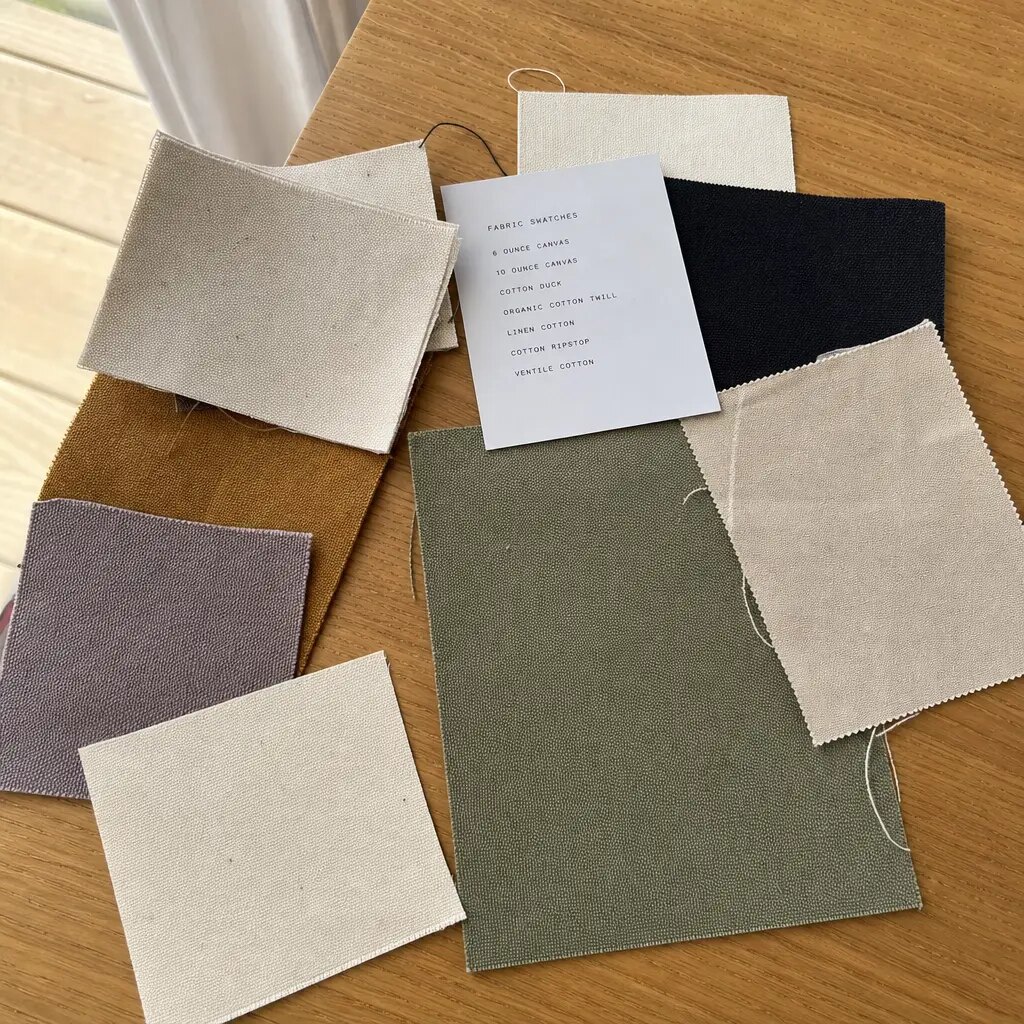
Natural unbleached cotton is popular in hotel retail because it supports a relaxed, spa-like, low-waste presentation. It also hides minor handling marks better than white fabric. However, natural cotton is not a uniform solid color. Seed specks, small shade differences, and small neps are normal unless a higher-grade fabric is specified. If a luxury hotel buyer expects a perfectly clean ivory look, natural cotton may disappoint unless the approved sample clearly shows the acceptable character of the fabric.
Bleached cotton gives a cleaner white base for colored logo printing, but it can show dirt and packing marks more easily. Dyed cotton can match a brand palette, but it adds lab dip time, dye-lot control, and colorfastness considerations. Organic and recycled cotton can support brand positioning, but the buyer should define documentation requirements before quotation. A supplier cannot price fairly if one quote includes certified organic cotton and another uses conventional natural cotton.
- Natural cotton: specify acceptable seed specks and shade range using an approved sample.
- Bleached cotton: better for clean logo contrast, but needs stricter handling during sewing and packing.
- Dyed cotton: approve lab dips under both office light and store lighting before bulk cutting.
- Organic cotton: state whether certification documents are required for the fabric, the factory, the transaction, or only marketing reference.
- Recycled cotton: verify hand feel and fiber shedding because recycled yarn can vary more between lots.
Construction details decide whether the pouch survives retail handling
A drawstring pouch looks simple, but the failure points are predictable. The top channel must let the cord move smoothly. The side seams must not open when the pouch is filled. The cord ends must stay knotted or finished. The print area must not sit too close to a heavy seam or wrinkled drawcord channel. If the pouch is handled by hotel staff many times before sale, weak construction becomes visible before the guest even buys it.
For most cotton drawstring pouches, a double-fold top channel is safer than a raw-edge or single-fold channel. Stitch density should be consistent, often around 8 to 10 stitches per inch depending on fabric weight and machine setup. Seam allowance should normally be around 0.5 cm to 0.8 cm for small and medium pouches. Bigger or heavier pouches may need stronger side seams, backstitching at the channel opening, or reinforcement at stress points.
- Use a double-fold channel when the pouch will be opened and closed repeatedly.
- Keep logo artwork away from seams, cord channels, and bottom folds unless the design intentionally wraps.
- For small pouches, avoid cord that is too thick because it can make the top bulky and reduce usable space.
- For heavier contents, test the filled pouch by lifting it from the cord and from the body seam.
- Define whether loose threads must be trimmed to under 3 mm or another agreed standard.
Match print method to artwork and hotel retail expectations
Screen printing is usually the most practical method for cotton drawstring pouches with one to three solid logo colors. It gives good coverage on natural cotton, handles repeat orders well, and keeps cost predictable at bulk quantities. For small hotel logos, monograms, and simple line artwork, screen print is often the best balance of durability and price. Buyers should specify print size, color reference, placement, and whether the print must be soft-hand or high-opacity.
Heat transfer can reproduce gradients, fine details, or small photographic artwork, but it must be tested carefully on cotton. Poor transfers may feel plasticky, lift at the edge, or crack after bending. Embroidery can look premium but is not always suitable for small pouches because it adds cost, can distort lightweight cotton, and may reduce internal smoothness if the backing is not trimmed well. Woven labels are a strong option when the brand wants a retail garment-like finish without printing directly on the fabric.
- Screen print: best for solid hotel logos, simple marks, and larger bulk runs.
- Heat transfer: use only when artwork detail requires it, and approve flexibility and adhesion.
- Embroidery: suitable for premium heavier cotton pouches, not ideal for very small or thin pouches.
- Woven label: good for subtle branding and repeat programs with multiple pouch colors.
- Inside care label or side label: useful when compliance, material content, or country-of-origin information must appear on the item.
Understand the real cost drivers before comparing quotes
The lowest pouch quote is often low because the supplier has assumed a lighter fabric, smaller finished size, thinner cord, basic packing, or a simpler print. For hotel retail programs, buyers should compare cost by specification line, not just by unit price. Fabric weight, fabric type, pouch size, logo method, number of print colors, cord type, packing format, and carton quantity all change the factory cost. A one-cent saving on fabric may not be worthwhile if the pouch becomes too transparent for a premium spa shelf.
MOQ is also driven by setup logic. A factory may accept a lower total quantity if all sizes use the same fabric color, cord color, and print color. The cost rises when every hotel property wants a different pouch color, different logo, or different cord. For distributors handling multiple hotels, grouping orders by shared raw materials can reduce waste, speed production, and make the quote easier to negotiate.
- Fabric cost increases with GSM, dyed finishing, organic certification requirements, and tighter shade control.
- Print cost increases with each color, each position, oversized artwork, and special ink requirements.
- Cord cost changes by material, diameter, color, tipping, knotting, and custom dyeing.
- Labor cost rises with smaller pouch sizes, complex seams, individual packing, and strict thread trimming.
- Carton volume and gross weight affect landed cost, especially for bulky heavy cotton pouches shipped by air.
Build samples around the actual product, not a nice empty pouch
A flat empty sample can look acceptable while the filled retail pouch fails. The product may push against the side seam, the drawcord may not close fully, or the print may sit in the wrong visual position once the pouch is filled. For hotel retail, the approval sample should be packed with the real item or a dummy with the same dimensions and weight. This is the only reliable way to judge usable size, closure, display appearance, and fabric opacity.
A serious sample process usually includes a material swatch or blank sample, then a printed pre-production sample. For dyed cotton, lab dips should be approved before bulk fabric ordering. For printed logos, the buyer should approve print placement from the top edge, side edge, and bottom seam. The factory should keep one sealed sample, while the buyer or inspection team keeps another. Final inspection should compare bulk goods to the sealed sample, not to an email screenshot.
- Measure the internal fit with the product inserted, not only the flat outside dimensions.
- Pull the cord open and closed at least 20 times during sample review to expose channel problems.
- Place the filled pouch upright, flat, and hanging to judge how it will appear in the hotel retail area.
- Rub the print lightly with a dry white cloth after full curing to detect obvious ink transfer.
- Review wrinkles after packing because overly tight cartons can damage retail presentation.
Set QC thresholds that fit bulk hotel retail orders
Quality control for cotton drawstring pouches should focus on visible retail defects and functional failures. Hotel buyers usually care about logo appearance, fabric cleanliness, pouch size consistency, and whether staff can close the pouch neatly. Small cotton characteristics may be acceptable on natural fabric, but stains, oil marks, large slubs on the logo area, open seams, and misprinted logos should not pass. The inspection standard needs to separate normal fabric character from true defects.
For bulk orders, the purchase order should state acceptance criteria before production. A common practical approach is to define critical, major, and minor defects, then inspect against an agreed sampling plan. Critical issues include unsafe contamination or wrong product. Major issues include incorrect fabric, wrong size outside tolerance, broken drawcord, open seam, wrong logo color, or print placement obviously outside approval. Minor issues include small loose threads, slight shade variation within the approved range, or minor creasing from flat packing.
- Finished size: use a defined tolerance such as ±0.5 cm for small pouches and ±1 cm for larger sizes.
- Print placement: define allowed movement, for example ±0.3 cm to ±0.5 cm depending on artwork size.
- Fabric defects: reject holes, oil marks, strong stains, and large flaws on the front display area.
- Seam strength: no open seams, skipped stitch runs, or unraveling at the channel ends.
- Cord function: pouch must open and close smoothly with the intended product inside.
- Carton accuracy: quantity per inner bundle and export carton must match the packing list.
Packing affects retail appearance and landed cost
Cotton pouches are often packed flat in bundles because this is efficient and keeps freight cost under control. For hotel distributors, bulk flat packing can be the right choice if the pouches will be filled locally. However, hotel retail programs sometimes need each pouch to arrive as a sellable unit or as part of a gift kit. Individual packing protects the pouch but adds labor, material, carton volume, and disposal concerns. Buyers should choose packing based on the next handling step, not habit.
A good factory quote should include pieces per inner polybag or paper band, pieces per export carton, carton dimensions, gross weight, net weight, and carton mark details. This data matters for landed cost and warehouse planning. If a pouch is made from 7 oz cotton instead of 5 oz, the unit price difference is only part of the cost; carton weight and volume may also increase. For air shipments, this can matter more than the sewing price.
- Bulk flat packing: lowest packing cost and efficient for local filling or distributor warehouses.
- Inner bundles of 25, 50, or 100 pieces: practical for count control and hotel property allocation.
- Individual bags: useful for retail shelf protection but should be justified by the selling format.
- Paper belly bands: can improve presentation but need testing for scuffing and barcode placement.
- Carton compression: avoid overpacking that creates hard creases across the logo area.
Plan lead time around approvals, raw materials, and peak hotel seasons
Lead time problems often start before production. Artwork is not vectorized, the buyer has not approved the cotton shade, the hotel group changes the logo size, or the product dimensions are revised after the pouch sample is made. For normal cotton drawstring pouches, sample timing may be short when stock fabric is used, but dyed cotton, organic documentation, custom cord colors, or multiple logo versions can add time. The calendar should separate artwork approval, fabric approval, sample approval, bulk production, inspection, and shipping.
Hotel retail orders are also seasonal. Resort launches, holiday gift sets, spa openings, and brand refreshes often create fixed in-store dates. If delivery is late, the pouch may miss the selling window even if the product is technically correct. Procurement teams should build a schedule with decision deadlines, not only a requested ship date. A factory can control cutting and sewing better when approvals are locked early and the RFQ does not keep changing.
- Stock natural cotton programs are usually faster than dyed or custom-certified fabric programs.
- Lab dips and print strike-offs should be scheduled before the buyer commits to bulk packaging artwork.
- Multiple hotel property logos can slow screen setup and inspection if files are not standardized.
- Final inspection should happen before carton release, not after goods are already booked for pickup.
- If air freight is a fallback plan, compare the cost impact of heavier GSM before approving fabric.
Specification comparison for buyers
| Spec decision | Recommended option | When it fits | Buyer risk to check |
|---|---|---|---|
| Fabric weight | 5 oz to 6 oz cotton for most hotel retail gift and amenity pouches | Works for soaps, candles, slippers, minibar sets, room accessories, and light retail merchandise | Below 4 oz can look transparent and wrinkle heavily; above 8 oz may feel bulky and raise freight cost |
| Cotton type | Natural unbleached cotton for relaxed hospitality retail; bleached or dyed cotton for controlled brand colors | Natural cotton fits spa, resort, wellness, and eco-positioned hotel shops; dyed fabric fits luxury and uniform brand palettes | Natural cotton has seed specks and shade variation; dyed lots need lab dip approval and colorfastness checks |
| Construction | Double-fold top channel with side seam reinforcement and 0.5 cm to 0.8 cm seam allowance | Best for repeat opening, gift packing, and staff handling at retail counters | Single-fold channels can fray; weak bartacks or loose backstitching cause cord channel failure |
| Drawcord | Cotton cord for premium natural look; polyester cord when color consistency and strength are priorities | Cotton cord suits boutique hotel presentation; polyester cord suits high-volume retail sets and darker colors | Cotton cord can shrink and twist after washing; polyester cord may look less natural against unbleached fabric |
| Print method | Screen print for 1 to 3 solid colors; heat transfer only for fine gradients or small photo-like artwork | Screen print is stable for hotel logos, line artwork, and retail branding on medium runs | Heavy ink on light cotton can stiffen the fabric; transfers may crack if low quality or applied with wrong temperature |
| Size tolerance | Agree finished size tolerance of ±0.5 cm for small pouches and ±1 cm for larger pouches | Keeps retail sets consistent when pouches are packed with fixed products such as bath salts, mugs, or slippers | Fabric shrinkage, cutting stack movement, and cord tension can change usable internal space |
| MOQ logic | Consolidate sizes in the same fabric and cord to improve MOQ efficiency | Useful when hotels need several pouch sizes for different room or shop items | Too many fabric colors, prints, or cord colors split the production run and increase setup cost |
| Packing format | Flat bulk packing with inner polybag bundles, or individual recyclable bags only when retail display needs it | Flat packing saves carton space for distributors; individual packing protects sellable units in hotel shops | Overpacked pouches add labor, plastic, carton volume, and inbound handling time |
Buyer checklist before sampling
- Define the pouch contents first: product dimensions, weight, sharp edges, fragrance oils, moisture risk, and retail shelf format.
- Choose fabric weight by purpose, not by the lowest quote: 5 oz to 6 oz for most hotel retail use, 7 oz to 8 oz for premium or heavier goods.
- State finished size, not cutting size, and include allowed tolerance for width, height, drawcord position, and usable opening.
- Specify natural, bleached, dyed, organic, or recycled cotton separately; do not let suppliers quote different cotton types under the same line item.
- Send artwork as vector files and define print size, Pantone or CMYK reference, placement from pouch edges, and acceptable registration tolerance.
- Approve a pre-production sample using the real product inside the pouch, not an empty display sample only.
- Confirm cord material, cord diameter, cord color, knot style, and whether the pouch must close fully after products are inserted.
- Require carton dimensions, gross weight, pieces per carton, inner bundle quantity, and carton drop-test suitability before finalizing freight.
- Separate sample lead time, bulk production lead time, and shipping time in the sourcing calendar.
- Keep one approved sealed sample and one signed specification sheet for final inspection comparison.
Factory quote questions to send
- What fabric weight in oz and GSM are you quoting, and is it measured before or after dyeing or finishing?
- Is the cotton natural, bleached, dyed, organic, recycled, or blended, and can you provide the same fabric for repeat orders?
- What is the finished pouch size tolerance after sewing, pressing, and packing?
- Which print method is included in the price, and how many colors, positions, and print sizes are covered?
- What drawcord material, diameter, and color are included, and is cord-end knotting or metal/plastic tip finishing priced separately?
- What is the MOQ per size, per fabric color, per print design, and per cord color?
- Does the quoted price include sampling, screen setup, lab dips, printed pre-production sample, export carton, and inner packing?
- What sample lead time and bulk lead time apply after artwork approval and deposit, and what are the peak-season risks?
- How many pieces fit per export carton, what are the carton measurements, and what is the estimated gross weight?
- Which inspection points will your factory control before shipment, and can final inspection be done against an approved sealed sample?
Quality-control points to confirm
- Finished size within agreed tolerance, measured flat after sewing and pressing.
- Fabric GSM within agreed range, with no large stains, holes, oil marks, or obvious weaving defects on the front print area.
- Seams straight and secure, with no skipped stitches, loose threads longer than the agreed limit, or open seams at stress points.
- Drawcord channel smooth enough for easy opening and closing without tearing the top edge.
- Cord length consistent across the lot, with knots secure and no fraying beyond the approved sample condition.
- Print color, size, placement, opacity, and registration matching the approved pre-production sample.
- No ink bleeding, transfer lifting, scorching, or fabric distortion around the logo area.
- Pouch closes properly with the intended product inside and does not expose the item in normal retail handling.
- Inner packing quantity and carton markings match the purchase order and packing list.
- Cartons strong enough for the chosen shipping method, with no over-compression that causes hard creases on the retail-facing pouch surface.