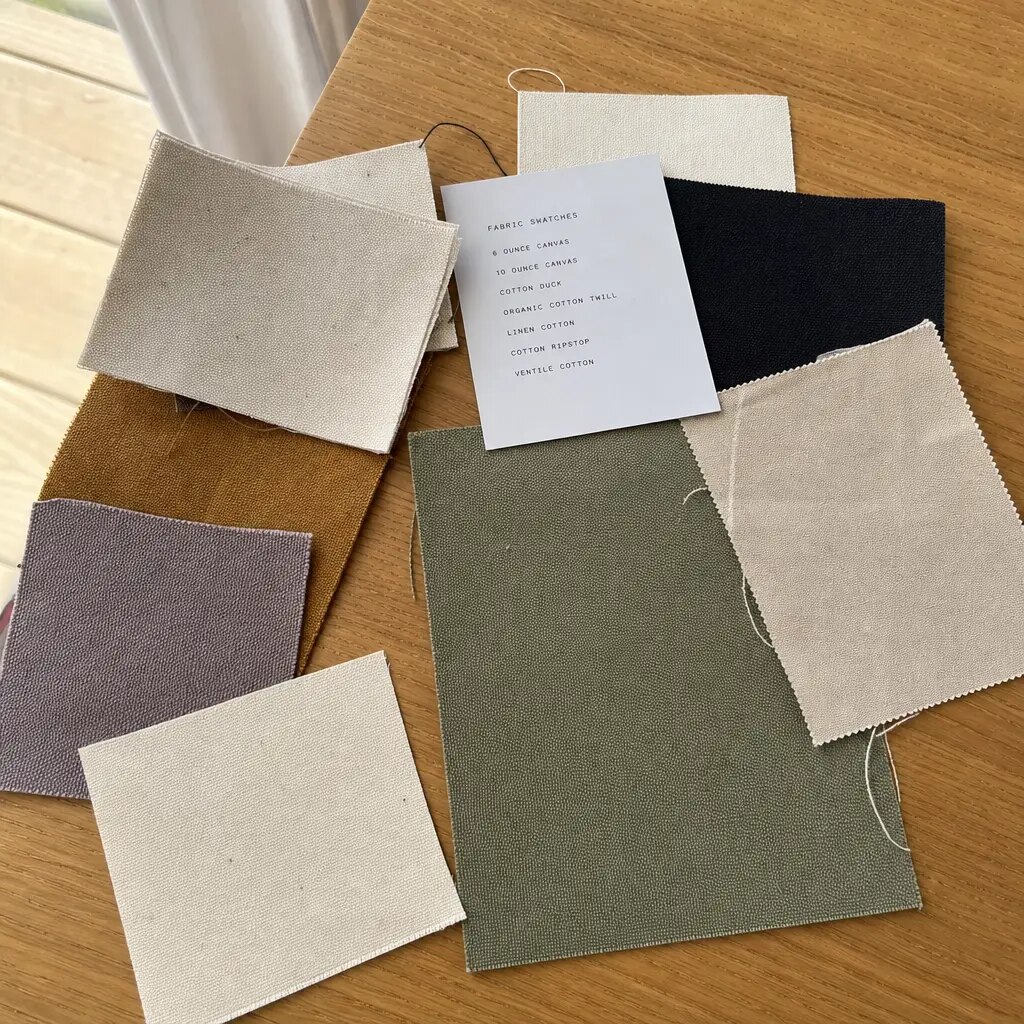
What craft fair buyers actually need from a cotton drawstring pouch
For craft fairs, a cotton drawstring pouch is more than empty packaging. It protects the product, supports presentation on the booth table, and signals whether the item feels handmade, premium, or gift-ready. A pouch used for soaps, candles, jewelry, bath salts, or small accessories has to do three jobs at once: hold the item cleanly, look consistent from unit to unit, and pack quickly enough that booth staff are not slowed down during busy sales periods.
That is why material selection matters. A pouch that looks acceptable on a sample card can still fail in real use if the fabric is too thin, the channel is too stiff, or the print smears after folding. For procurement buyers, the question is not whether cotton is the right material in general. It is which cotton construction will support the way the pouch is actually used, sold, and replenished across the fair season.
The best starting point is to define the pouch’s role. Is it an inner pack that disappears after the sale, a reusable retail bag the customer keeps, or a presentation pouch that helps justify a higher perceived value? Each role changes the acceptable fabric weight, weave density, cord spec, print method, and packing format. A pouch sold as an accessory in its own right should be held to a much neater standard than a pouch used only to protect a soap bar or sample kit.
Craft-fair sourcing also has a landed-cost angle. A low unit price can be misleading if the pouch arrives wrinkled, prints poorly, or requires manual rework during packing. The real cost includes sample revisions, inspection time, shipping cube, carton damage risk, and the chance of having to buy replacement stock mid-season. Buyers who specify the pouch around the selling use case usually get fewer surprises and more comparable quotes.
A useful procurement habit is to treat the pouch like any other custom packaging component: define the spec, approve a physical sample, write down the acceptance limits, and make sure the reorder version can be repeated without reinterpreting the design every time. That approach is especially important for craft fairs because timing is tight and the product must often look polished from the first day of the event.
For seasonal programs, also think about replenishment. The ideal pouch is one the supplier can repeat with the same cloth, the same cord, and the same print setup next time. If the first order succeeds and the stock needs to be topped up quickly before a peak fair weekend, a stable spec will save both time and money.
- For lightweight jewelry or sample inserts: prioritize print clarity and easy closure.
- For soaps, candles, and bundled gifts: prioritize body, seam strength, and packability.
- For reusable retail pouches: prioritize fabric consistency, cord reliability, and neat finishing.
- For seasonal programs: prioritize repeatable supply and short sample approval cycles.
- For higher perceived value: prioritize clean weave, restrained branding, and consistent shade.
Choose fabric weight by use case, not by habit
Fabric weight is one of the biggest levers in pouch performance. GSM affects body, drape, opacity, print clarity, sewing efficiency, and freight cost. For many craft fair programs, 120 to 150 GSM cotton is the most balanced range because it gives enough structure to look intentional without making the pouch overly stiff or expensive. It is also a workable middle ground for repeated opening and closing at a booth.
Below about 100 GSM, pouches often start to feel thin. They may wrinkle quickly in cartons, show more of the contents underneath strong light, and look less intentional beside handmade merchandise that is meant to feel premium. Above 180 GSM, the fabric can be durable, but the pouch becomes bulkier and the channel can feel more rigid. That may be acceptable for a premium reusable bag, but it can slow packing and increase sewing cost if the pouch is only meant as simple presentation packaging.
The correct weight depends on the contents. A pouch for a flat card set, a small soap bar, or a few lightweight accessories may work at 100 to 120 GSM if the branding is simple. A pouch for a candle tin, a heavier soap, or a multi-item gift bundle usually benefits from 130 to 160 GSM. If the pouch will be resold or reused frequently, 140 to 180 GSM may be justified, but only if the sewing quality and cord action remain clean.
When asking for a quote, do not stop at a GSM number alone. Ask the supplier how they measure GSM, whether it is taken from production fabric or a reference swatch, and what tolerance they can actually hold on bulk. A supplier quoting 130 GSM on sample fabric may produce a 120 GSM lot on bulk if the raw cloth source changes. That difference matters if the pouch must stand up well, photograph cleanly, or maintain print opacity.
It also helps to state the intended contents in the RFQ. A 120 g soap bar, a set of wax melts, or a small candle tin all create different stress points on the bag. If the buyer shares the use case, the factory can recommend a fabric weight that is tied to performance rather than habit. That reduces the chance of overpaying for cloth that is too heavy or under-specifying a bag that collapses in display.
For cost control, remember that a heavier GSM affects more than unit price. It can increase carton weight, reduce pieces per carton, and add labor if the pouch becomes harder to close quickly. In a craft fair environment, where staff may fill many pouches in a short time, a fabric that is too stiff can slow operations in ways the unit quote does not show.
- 100-110 GSM: suitable for very light items and lower-cost inner packaging.
- 120-150 GSM: the most practical working range for general craft fair use.
- 160-180 GSM: better for premium or reusable pouches, with higher cost and bulk.
- Ask for the actual production GSM and the acceptable tolerance range.
- State the intended item weight and how often the pouch will be opened and closed.
- Check whether heavier fabric changes carton count, freight cost, or closing speed.
Natural, bleached, or dyed cotton changes both appearance and quote structure
Color base affects more than appearance. Natural cotton gives the familiar artisan look that suits handmade soaps, botanical products, rustic gifts, and neutral packaging programs. It usually needs fewer finishing steps, which helps keep the order straightforward. The tradeoff is that natural cotton can vary slightly in tone across lots, so it is best when a little shade variation is acceptable or when the brand position is intentionally organic and casual.
Bleached cotton usually creates a cleaner, brighter base. It can improve contrast for logos and text, especially if the design is small or uses darker ink. This makes it useful when the pouch needs to look more retail-ready or when the customer will see it as part of the product presentation. The buyer should still ask for an approved swatch and make sure the production lot matches the agreed shade, because “white” can vary from one factory to another.
Dyed cotton opens up more brand alignment but usually adds risk and complexity. If the pouch has to match a specific color family, the quote should state whether the cloth is stock-dyed or custom-dyed, what shade reference is being used, and how lot-to-lot variation will be handled. Custom dyeing may raise MOQ, extend lead time, and make repeat orders less flexible. That is not a reason to avoid color entirely; it is a reason to understand the production path before committing.
If the pouch is being used for a craft fair collection, keep the color logic simple. One base natural or bleached cloth is often enough for the first order. If the line sells well, a second color can be added later. This gives the buyer a cleaner read on what customers actually value without creating too many inventory splits from the start.
Ask the supplier to quote the color basis in more than one way. A physical swatch is the most important reference, but a written shade description and a lot reference from an approved sample help prevent confusion later. Pantone alone is not enough on cotton because weave, finish, and ink interaction can all affect appearance.
For reorders, ask whether the same cloth mill or dye lot will be used again. If that is not possible, ask for the supplier’s color acceptance window. A clearly defined approval window is better than assuming a repeat order will match by eye. That simple step can prevent disputes when the next shipment arrives slightly warmer, cooler, brighter, or duller than the first one.
- Natural cotton: good for artisan positioning and lower setup complexity.
- Bleached cotton: better contrast for logos and more retail-ready presentation.
- Dyed cotton: stronger brand alignment, but higher MOQ and shade-control risk.
- Ask whether the color is stock, custom dyed, or finished after sewing.
- Keep a physical swatch and lot reference for reorder comparisons.
- Define an acceptance window for shade variation before bulk production starts.
Weave, texture, and surface finish decide how the pouch feels in hand and prints on press
Two pouches can share the same GSM and still behave very differently if the weave is not the same. A tighter plain weave usually gives a cleaner hand feel, reduces lint, and supports sharper print edges. A looser weave can create a more rustic look, which may fit some craft brands, but it also makes fine text harder to read and can expose more texture in product photography. For procurement buyers, weave is not cosmetic detail; it is part of whether the pouch reads as premium or casual.
Surface finish matters too. A lightly brushed fabric can feel softer and more tactile, but if it sheds lint or fuzz, it can look dusty in cartons and can interfere with print quality. A more pressed or calendared finish can look neat and can help presentation, but if it is too crisp the pouch may feel stiff and less pleasant to close. The right answer depends on what the pouch is supposed to communicate at the fair.
Ask the supplier for a swatch that shows the actual cloth under strong light and close inspection. Then check the front, back, and cut edge. Look for lint, loose weave, yarn slubs, or thin spots. If you have more than one fabric option, compare them side by side while folded and while filled with the intended product. That quick test often reveals whether the bag will hold shape, wrinkle too easily, or look too rough for the selling environment.
One simple buyer test is to fold the sample, open it again, and rub the print area lightly with a clean cloth. You are not trying to simulate every possible use case; you are checking whether the surface sheds lint, the cloth springs back, and the logo remains clear after handling. For craft fairs, where the pouch may be touched many times before sale, the way the fabric ages in the booth matters almost as much as the way it looks in the carton.
If the supplier uses terms like “good cotton” or “nice texture,” ask for better language. Request weave description, finish description, pre-shrink status, and if available yarn count or fabric density details. The point is not to overload the supplier with textile jargon. The point is to remove ambiguity so the sample can actually be reproduced in bulk.
For premium programs, also ask about shrink control. Even a small shrinkage change can affect the finished opening and how the pouch sits when filled. If the bag will be packed flat and then filled later, the buyer should know whether the material is likely to tighten or distort after handling or light washing.
- Tighter weave: better for logo clarity and a cleaner retail look.
- Looser weave: acceptable for rustic positioning, but text can blur more easily.
- Check lint, fold recovery, and visual consistency under bright light.
- Ask whether the cloth is pre-shrunk, shrink-controlled, or untreated.
- Request weave and finish descriptions instead of vague quality language.
- Compare swatches filled with an actual sample product before approving bulk.
Print method should match the logo, the fabric, and the handling cycle
The right print method depends on how the pouch will be seen and handled, not just on the artwork file. For simple logos, short text, and line art, screen printing is usually the most practical choice. It is repeatable, relatively cost-controlled, and works well on cotton if the artwork is simplified for the fabric surface. Buyers should ask for the minimum line thickness and minimum text height the factory can hold consistently, because cotton texture can reduce clarity at small sizes.
Heat transfer can be useful when detail matters or when the order is too small to justify a more complex print setup. But it should be tested carefully on the actual pouch cloth. On some cotton surfaces, transfers can crack, lift at the edges, or look glossy in a way that does not match the rest of the bag. If the pouch is handled repeatedly, the buyer should ask how the print performs after folding, rubbing, and repeated opening and closing.
Sewn labels and woven side tags are often a strong option for reusable or premium pouches because they give a durable brand cue without relying entirely on print. A sewn label can also help when the logo is too detailed for clean printing on a textured cloth. For many craft fair programs, the most balanced approach is a small printed mark on the front plus a woven label in the seam. That combination usually gives a neat appearance without increasing production risk too much.
When reviewing the quote, ask for the exact print placement window, acceptable color density, and any cure or drying process used. A logo that looks fine on day one but scuffs during packing creates a product return problem later. The supplier should be able to tell you whether the ink is fully cured and whether the print is intended to survive normal folding and handling.
The most useful quote question is practical: what is the smallest text size and thinnest line the factory recommends on this fabric? That question pushes the supplier to state real production limits instead of simply saying yes to everything. It also helps the buyer decide whether to simplify artwork before samples are made. In many cases, a slightly larger logo prints more cleanly and looks better from a booth distance anyway.
If the pouch is part of a retail collection, ask for a rub test on the printed area using the actual production fabric. The supplier does not need to run a lab-level battery for every small order, but they should be able to show whether the ink smears, flakes, or transfers after basic handling. That is the kind of detail that matters when the pouch is being touched, stacked, and re-packed all day at a craft fair.
- Screen print: best for simple, repeatable branding and reorder programs.
- Heat transfer: only when detail matters more than long-term abrasion resistance.
- Woven or sewn label: useful for premium, reusable presentation.
- Ask for minimum text size, minimum line thickness, and placement tolerance.
- Confirm whether the print is designed for one-time packaging or repeated handling.
- Request a rub test on the actual fabric before bulk approval.
Pouch size, channel construction, and closure design must fit the contents
A common sourcing mistake is to judge the pouch by its outer dimensions only. For drawstring packaging, the usable opening, interior depth, and channel height matter just as much. If the pouch is too shallow, the product can sit awkwardly or press into the closure area. If it is too large, the bag may look sloppy or waste fabric. The correct size depends on the actual item going inside, such as a soap bar, a candle tin, a small accessory set, or a flat product card.
The closure design also affects booth operations. A single drawstring with a top channel is the most common and usually the most economical option, but the channel must be stitched cleanly and wide enough for the cord to move smoothly. If the channel is too tight, staff will waste time forcing it closed. If the cord is too thin, the pouch may feel weak. If the cord is too thick, the top can become bulky and awkward.
When comparing suppliers, request both finished size and cut size, plus seam allowance, channel height, cord length, and the target opening width after closure. Those details are what make the pouch functional after sewing losses are applied. If the buyer needs the pouch to fit a specific product, ask for a sample packed with the actual item or a close substitute. This is often the fastest way to see whether the size really works.
Tolerance should be defined in practical terms. Buyers do not always need laboratory precision, but they do need a clear acceptable window. If the pouch is sold individually, appearance matters, and tighter control is worth more. If it is used only as internal packaging, a slightly broader range may be fine. What matters is agreeing on the tolerance before bulk begins, not after a carton arrives too small or too loose.
The cord also needs a written spec. Ask whether the factory measures cord length before or after insertion, whether the left and right side lengths must match, and how the cord ends are secured. Uneven cord tails or ends that pull back into the channel create a poor retail impression even when the bag itself is sewn well. These are small defects that become visible the moment a customer opens the pouch in front of your staff.
If the pouch will be reused by the customer, test how it looks after several open-close cycles. The opening should still sit evenly, the cord should not jam, and the channel should not twist. Those are simple checks, but they tell you whether the bag will feel like a worthwhile keep item or just disposable packing.
- Confirm internal usable opening and depth, not only flat cut dimensions.
- Specify channel height, cord type, and finished cord length.
- Test the pouch with the real product or a weighted substitute.
- Define acceptable size tolerance before sample approval.
- Ask how the supplier prevents cord pull-back and uneven tails.
- Check opening behavior after multiple open-close cycles.
Supplier route affects control, not just price
Different sourcing routes create different levels of visibility. A direct factory is usually the best option when the buyer needs repeatable size, stable construction, and tight control over the pouch sewing line. It is easier to verify cloth source, channel construction, and in-process QC when the supplier makes the pouch in-house. For orders that may be reordered across several craft-fair seasons, that control is often worth more than a slightly lower initial quote.
A trading company can be useful when the buyer wants speed, broader product options, or a bundled order across several packaging items. The tradeoff is transparency. The buyer may receive good-looking samples but less evidence of how the pouch is actually made. That does not make the route unsuitable, but it does mean the buyer should ask for more proof: production photos, line information, and clear confirmation of who owns final QC responsibility.
A domestic converter can make sense for urgent restocks, small runs, or buyers who need a shorter logistics chain. The landed cost may be higher, but that can still be the right trade if the risk of missing a fair date is more expensive than the unit savings from offshore sourcing. The key is to compare total cost and supply risk, not quote price in isolation.
Regardless of the route, ask a supplier to explain the sewing sequence and where the main risk points are. A good supplier can say how the channel is formed, when the cord is inserted, how the seams are trimmed, and where inspection happens. If they cannot describe the process clearly, that is a warning sign. Good procurement is partly about buying product and partly about buying process control.
For reorder planning, separate stock elements from custom elements. Stock cloth and standard cord can usually be repeated quickly. Custom dyeing, special labels, and unusual packaging insert requirements take longer and are more likely to cause delays. If the craft-fair calendar is fixed, the buyer should keep the first order as repeatable as possible and only add complexity when there is a clear business reason.
A practical supplier-verification checklist should include production photos, a sample from the current production path, confirmation of inspection steps, and a named contact who can answer spec questions quickly. That combination is more useful than a glossy catalog alone.
- Direct factory: best for repeat orders and tighter process control.
- Trading company: useful for convenience, but verify the real production source.
- Domestic converter: useful for urgent replenishment or smaller programs.
- Ask for production photos and a clear sewing sequence.
- Ask who owns final inspection and how nonconforming units are handled.
- Separate stock items from custom items so you know what drives delay.
Build the quote comparison around measurable acceptance criteria
A quote only helps if every supplier prices the same spec. If one supplier is quoting 100 GSM natural cotton with bulk carton packing and another is quoting 140 GSM bleached cotton with printed inner packs, the unit price is not comparable. Before reviewing numbers, line up the same finished size, fabric weight, weave, color base, cord spec, print method, packing count, and shipping destination. That is the only way to judge commercial value fairly.
The quote should also break out the pieces that change cost. Material, sewing, printing, labels, packing, and setup charges should be visible separately if possible. That way, the buyer can see whether a higher price is due to heavier cloth, a more complex print setup, or simply a different packing format. When the line items are mixed together, it becomes hard to adjust the spec later or to know where savings can be found.
Add the real acceptance criteria to the comparison. For craft-fair pouches, the useful checks are seam strength, cord pull behavior, print rub resistance, size tolerance, and carton count accuracy. Ask the supplier how they test each one and what failure threshold they use. It is better to hear that a supplier rejects pouches with loose top stitching than to discover after shipment that the supplier had no meaningful internal inspection standard.
Quote comparison should also include assumptions that affect landed cost. One supplier may use a lighter carton count but more cartons; another may use heavier cartons with fewer units. One may include pre-shrinking, another may not. One may pack 100 units per inner bag, another 50. Those differences change freight, handling, and receiving effort. A procurement buyer should compare total landed cost and operational load, not only ex-factory price.
The clearest question at this stage is simple: if the buyer reorders the same spec in three months, what exactly will stay the same? If the answer is vague, the quote is likely built on informal assumptions. If the supplier can name the unchanged materials, inspection points, and packing pattern, the buyer is more likely to get a repeatable supply.
A good rule is to attach the same spec version to the quotation, sample approval, and inspection report. That creates a paper trail and prevents the common problem where each stage is based on a slightly different understanding of the pouch.
- Compare only after aligning size, GSM, weave, color, cord, print, and packing.
- Separate material, sewing, printing, label, packing, and setup costs when possible.
- Use measurable acceptance criteria, not only descriptive wording.
- Ask what tests the supplier uses for seam, cord, and print quality.
- Include the shipping and receiving impact in landed-cost comparison.
- Keep the same spec version tied to quote, sample, and inspection.
MOQ logic: the cheapest pouch is often the one with fewer variations
MOQ is not just a supplier policy; it reflects setup reality. Every change in size, color, print version, or label style creates new cutting, stitching, or packing work. If a buyer spreads volume across too many variations, the unit price rises because the factory loses efficiency. That is why a stronger buying plan usually starts with one base fabric, one closure style, and one label or print version rather than trying to customize every detail at once.
For standard cotton drawstring pouch programs, a practical MOQ range is often 500 to 3,000 pieces per size, color, or print version, depending on complexity and whether the fabric is stocked. Custom dyeing, special labels, or unusual packing requirements can push the number higher. Instead of asking only whether the MOQ is acceptable, ask why it is what it is. The answer often reveals which part of the spec is driving setup cost.
The most expensive mistake is mixing too many variables into a small first order. Three colors, two logo placements, and two cord styles can turn a simple pouch into a fragmented production job. If the business is still testing market response, it is usually smarter to keep the first order simple and let customer demand justify expansion later. That way, the buyer learns which version actually sells before creating more inventory risk.
Packing also affects MOQ behavior. Multiple inner-pack counts, retail inserts, barcode labels, and custom carton marks all take handling time. Sometimes it is cheaper to keep the pouch simple and do final kitting closer to the point of sale or distribution. The right answer depends on labor cost, warehousing setup, and how much of the finishing work the supplier is expected to do.
A useful buying discipline is to protect the first order from complexity. Use the simplest acceptable fabric, the simplest acceptable branding method, and the fewest SKUs that can still support the fair calendar. That approach gives the procurement team cleaner market data and lowers the chance that the first buy gets trapped in a high-cost, hard-to-repeat spec.
If the product becomes a repeat seller, the buyer can then layer on upgrades such as dyed cloth, woven labels, or more refined packing. The best order structure is often the one that lets the supplier scale without having to rethink the job from scratch.
- Use one base fabric and one closure style when possible.
- Limit colors and label variations on the first order.
- Expect higher MOQ for dyed fabric, specialty labels, or custom inserts.
- Ask the supplier to separate the cost of each variation.
- Keep the first order simple, then expand after sell-through data is available.
- Remember that packing complexity can raise MOQ just as much as fabric changes.
Sample approval, QC tests, and failure thresholds should be written before bulk starts
A strong sample process is what separates a usable pouch program from a fragile one. The buyer should approve a physical sample that reflects the final fabric, print method, cord, and packing format—not just artwork on paper. For craft fair programs, the sample should be checked with the intended product inside if possible. That one step often exposes issues with size, opening behavior, or appearance that are invisible on a flat sample.
Before bulk production begins, define the quality-control points and the failure thresholds. For example, the buyer should know the acceptable size window, the seam standard, the print placement window, and the cord length tolerance. The supplier should also confirm how they test seam integrity, whether they use a pull test or visual inspection, and what happens when a pouch fails. Clear thresholds make inspection faster and reduce arguments later.
Useful QC items for this category include seam opening, skipped stitches, loose threads, channel straightness, cord pull-back, print rub resistance, shade match, and shrinkage. None of those need to be overcomplicated, but they do need to be specified in a way that the supplier can execute. If the pouch is sold into retail or used in a brand-sensitive presentation, add more detailed photo approval around logo position and edge finishing.
Ask the supplier to show one pre-production sample, one first-run approval sample, and final shipment photos if the order is important. If the supplier has an in-process check, ask where it happens: after cutting, after sewing, after printing, or before carton sealing. Buyers do not need a lab report for every low-risk order, but they do need enough evidence to know the factory is controlling the process rather than sorting defects at the end.
A practical acceptance rule is to reject any sample or bulk lot that cannot meet the agreed measurement window or that shows visible defects in the closure area, stitching path, or branding mark. If the pouch is meant for retail resale, the acceptable standard should be stricter than for an internal packaging insert. That is not being difficult; it is matching quality control to the commercial role of the pouch.
Finally, ask for written approval of any deviation. If a factory proposes a different cord, a slightly different shade, or a changed carton count, get it confirmed before shipment. A small substitution can be acceptable, but only if the buyer has approved it against the original spec.
- Approve a physical sample with the final fabric, cord, and branding method.
- Check the sample with the intended product inside whenever possible.
- Define size tolerance, seam standard, print placement window, and cord length tolerance.
- Specify seam, cord, print, color, and shrinkage tests before bulk.
- Request pre-production, first-run, and final shipment evidence for important orders.
- Reject unapproved material or packing substitutions in writing.
Specification comparison for buyers
| Spec decision | Recommended option | When it fits | Buyer risk to check |
|---|---|---|---|
| Fabric weight | 120-150 GSM cotton | General craft-fair packaging, gift sets, soaps, candles, and reusable retail pouches | Ask for actual production GSM and tolerance; under 100 GSM can look thin, while above 180 GSM can add stiffness and closing friction |
| Weave / finish | Tight plain weave, pre-shrunk or shrink-controlled | When you need cleaner print edges, more consistent sizing, and a retail-ready look | Loose weave can fuzz and reduce logo clarity; request a close-up swatch under strong light |
| Color base | Natural or bleached cotton | Natural for artisan positioning; bleached for higher contrast branding | Shade variation across lots can matter on reorders; confirm approved swatch or prior lot reference |
| Cord spec | Cotton cord, 3-5 mm, finished ends secured | Most jewelry, soap, sample, and small gift applications | Too thin can feel weak; too thick can make the channel bulky and slow to close |
| Branding method | 1-color screen print or sewn label + small print mark | Simple logos, short text, and repeatable reorder programs | Small type, fine lines, and gradients may blur on cotton; ask for minimum text size and placement tolerance |
| Supplier route | Direct factory with pouch sewing capability | Repeat orders, custom sizing, and tighter QC control | Verify factory photos, production process, and who owns final inspection |
| MOQ logic | Consolidate by base fabric and limit variation count | Seasonal craft-fair programs with multiple SKUs | Each extra size/color/label can raise setup cost and fragment volume |
| Packing method | Bulk inner packs with carton labels, or retail pack only if needed | Wholesale replenishment, distributor orders, or final kitting at the booth | Overpacking adds labor and freight; underpacking creates dust, creasing, and count errors |
| QC standard | AQL inspection plus seam, cord, size, and print checks | Retail resale, branded giveaways, and e-commerce fulfillment | Acceptance criteria should include test method and failure thresholds, not only visual approval |
Buyer checklist before sampling
- Confirm the pouch role: disposable insert, reusable retail bag, or premium presentation pouch.
- Define finished size, internal usable opening, cut size, and seam allowance in writing.
- Select fabric weight in GSM and request the supplier’s measurement method and tolerance.
- Approve weave type, finish, and color basis with a physical swatch before bulk.
- Specify cord material, diameter, finished length, and how cord ends are secured.
- Approve the branding method, minimum text size, placement window, and color tolerance.
- Request a sewn production sample, not only a flat artwork proof.
- Set packing count per inner bag and carton before comparing quotes.
- Ask for shrinkage expectation, colorfastness basis, and pre-production approval steps.
- Compare suppliers using landed cost, not only unit price, and ask what changes on reorder.
Factory quote questions to send
- What is the fabric composition, weave type, and confirmed production GSM for this pouch?
- Is the quoted price based on natural, bleached, or dyed cotton?
- Has the fabric been pre-shrunk or shrink-controlled, and what shrinkage range should we expect after handling or light washing?
- What is the MOQ per size, per color, and per print or label version?
- Which print method is included, and what setup or screen charges apply?
- What are the finished size tolerance, seam allowance target, and cord length tolerance?
- What is the cord material, diameter, and end finish, and how is cord pull-back prevented in the channel?
- How are pouches packed inside cartons, and what are the inner pack count and carton count?
- What is the sample timeline, pre-production approval timeline, and bulk lead time after approval?
- Can you show recent production photos or a short factory video of sewing, printing, and packing?
Quality-control points to confirm
- Fabric GSM matches the approved range within the agreed tolerance, with the measurement method documented.
- Weave density, finish, and shade match the approved sample or approved swatch reference.
- Finished dimensions are checked after sewing and pressing, not only on cut fabric.
- Top channel is straight, secure, and wide enough for smooth cord movement without snagging.
- Cord length is even on both sides, and cord ends are secured so they do not pull back through the channel under normal use.
- Stitch density is even, with no skipped stitches, seam gaps, loose threads, or needle damage.
- Seam allowance is consistent at the top, side seams, and bottom corners.
- Print placement, registration, cure, and opacity match the signed sample and approved placement window.
- Rub test on the printed area does not show unacceptable scuffing or transfer after normal handling.
- Carton marks, inner pack counts, and quantity labels match the PO, and carton weight stays within the agreed shipping range.