Start With The Winery Use Case, Not The Fabric Name
For boutique wineries, a cotton drawstring pouch is usually a brand-touch item as much as a package. It may hold a corkscrew, stopper set, wine key, small bottle accessory kit, tasting-room purchase, club shipment insert, or a seasonal gift presented alongside a bottle. That means the material decision should begin with the item inside and the customer moment around it, not with a fabric term pulled from a supplier catalog. The same pouch can feel right in one setting and wrong in another. A light giveaway pouch is not the same procurement choice as a retail add-on or a pouch meant to make a club shipment feel more intentional.
The use case changes what matters most. In tasting rooms, the pouch is handled in the open, so handfeel, look, and closure quality are visible immediately. In club fulfillment, the pouch has to pack flat, survive carton compression, and arrive without ugly crease marks. For retail shelf display, the pouch needs enough body to look deliberate on its own. That is why fabric weight, weave density, and finishing are not abstract textile details. They are presentation variables that affect how the winery is perceived at the point of sale.
The most common planning mistake is approving a pouch by empty size alone. A bag can look fine on paper and still fail when loaded because the opening is too narrow, the drawstring channel twists, or the cloth collapses around a rigid object. A procurement brief should therefore describe the filled item, the intended handling, and the expected look when the pouch is tied. If the pouch is part of a gift set, the filled sample matters more than the flat spec. If the item is hard-edged, the seam and channel design matter more than a generic “cotton bag” description.
- State the exact product inside the pouch, including any hard edges, corners, or labels.
- Define whether the pouch is decorative, protective, or both.
- Describe where customers will see it: tasting room, club shipment, retail shelf, or event giveaway.
- Quote the pouch with the filled use case in mind, not only the empty dimensions.
Match Cotton Structure To Presentation And Load
Cotton drawstring pouches are usually built from plain weave, twill, canvas, brushed cotton, or organic cotton. These fabrics can all work for wineries, but they do not perform the same way. Plain weave is the simplest build and often the most economical. It gives a natural look that suits rustic or low-cost programs, but a light plain weave can feel flimsy and may show the contents more readily. Twill has a denser, more refined face and tends to give cleaner print edges. Canvas has the most body and can make the pouch feel closer to a merch item or premium gift accessory. Brushed or soft-finish cotton can create a more tactile feel, but it needs checking for pilling and print sharpness.
For many boutique winery applications, the useful range is often 140-200 GSM, but the right number depends on what the pouch has to do. A 120-150 GSM pouch can work for a simple tasting-room giveaway or a light accessory. A 160-180 GSM pouch is often the best middle ground for club inserts and retail add-ons. A heavier 180-220 GSM or above can be justified when the pouch must hold its shape, look premium on shelf, or protect a harder accessory set. The buyer should not ask for a single “best GSM.” Instead, ask which cloth weight gives the right balance of body, print clarity, opacity, and freight cost for the intended use.
Base color matters as much as weave. Natural cotton gives a rustic and generally lower-risk look. Bleached cotton creates a cleaner background and usually improves logo contrast. Dyed cotton can support a stronger brand palette, but it raises the need for shade control and approval discipline. If the winery wants a natural story, a slightly uneven natural tone may be acceptable. If the pouch sits in a premium retail display, the buyer should ask how lot-to-lot tone is controlled and whether the fabric can be matched against a sealed reference swatch.
The practical decision rule is simple: lighter cloth suits simpler use, denser cloth suits more visible presentation, and higher body should be justified by the contents. That is especially true for boutique wineries, where the pouch is often part of the customer experience and not a throwaway insert. The most expensive choice is not always the heaviest fabric; it is the one that looks wrong for the brand or fails after packing.
- 120-170 GSM is usually best for light giveaways and simple accessory pouches.
- 140-200 GSM is the most versatile band for many boutique winery uses.
- 180-240 GSM is more appropriate when the pouch should feel premium or hold its shape.
- Ask whether the cloth was pre-shrunk, steam-set, or otherwise finished before cutting.
Use A Fabric Comparison That Buyers Can Actually Act On
A credible material guide should compare the fabric options side by side in a way that helps a buyer choose, not just list textile terms. For pouch sourcing, the main variables are GSM, opacity, print behavior, shrinkage stability, handfeel, and freight impact. Plain weave is easiest to source and sew. Twill often gives the best balance between appearance and print control. Canvas adds structure but also weight and cost. Brushed cotton changes the feel in the hand. Organic cotton is usually a positioning or certification decision rather than a performance upgrade.
In practice, the supplier should be able to explain how each cloth behaves after finishing and conditioning. Buyers should ask for the finished GSM, not only the raw fabric weight, because finishing can change the number that matters to the end user. A cloth that looks acceptable on a swatch card may feel different after wash, steam, or conditioning. That matters when the pouch is used in a retail environment where first impression is immediate. A buyer is not simply comparing fabrics; the buyer is comparing how those fabrics behave once cut, stitched, printed, packed, and handled.
If the supplier cannot explain the fabric in terms of finished performance, that is a useful warning sign. For wineries, the cloth is part of the product story. It should be evaluated with the same discipline as a label stock or a bottle closure.
- Compare fabrics on finished GSM, opacity, print behavior, and shrinkage stability.
- Treat heavier cloth as a presentation decision, not automatically a better one.
- Ask for a swatch of the actual fabric and, if possible, a filled sample.
- Do not compare quotes unless the fabric construction is the same.
Choose Decoration Around The Fabric, Not The Other Way Around
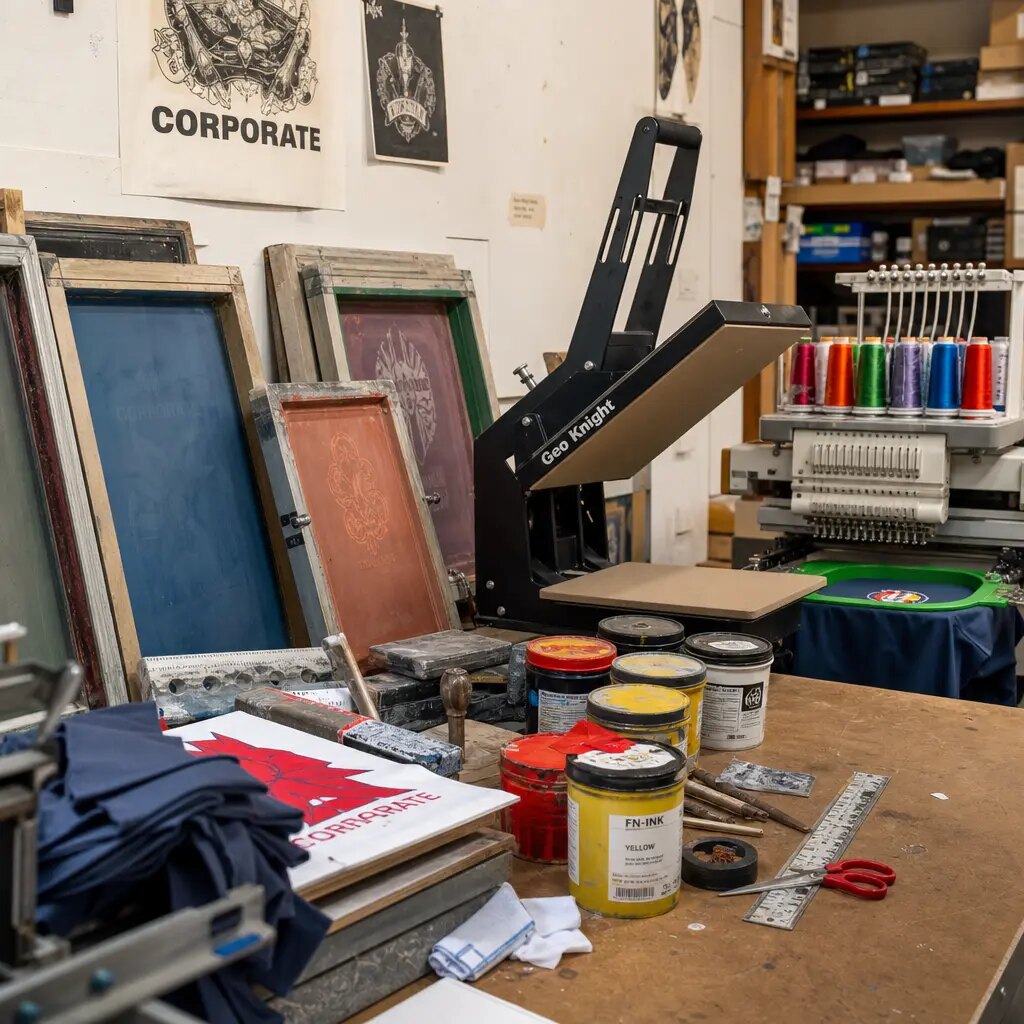
Decoration should be matched to the cloth, not chosen in isolation. Screen printing is usually the most practical option when the design is simple, the logo is one or two colors, and the pouch volume is moderate to high. It gives clean branding on cotton and generally keeps the handfeel softer than some other methods. The main limitation is that very fine lines or subtle gradients can lose clarity on an open weave. For a vineyard mark, a small wordmark, or a one-color emblem, screen print is often the most reliable route.
Embroidery can look premium and can work very well for boutique winery branding, but it changes the way the pouch behaves. Heavy stitch density can pull on lighter cloth, create puckering, or distort the top edge. If embroidery is used, the buyer should ask where the stitch density will be reduced and whether the design needs to move away from seam stress points. Woven labels are a strong option when the brand wants a refined identity without adding too much ink or stitch load to the pouch body. They work especially well on natural cotton or twill where the rest of the pouch is meant to stay understated.
Transfers may be proposed for small runs or complex artwork, but the buyer should not approve them based on artwork alone. Ask for the finished feel, wash or rub behavior if relevant, and how the transfer ages after folding. The real question is not what the factory can technically do; it is what performs well on this fabric, for this customer setting, with this artwork. A supplier that can explain why one method is not recommended is usually more useful than one that says yes to everything.
- Use screen print for simple logos and clean unit economics.
- Use embroidery only when the fabric weight and placement can support the stitch load.
- Use woven labels when branding should stay visible but the pouch body should remain clean.
- Ask the supplier which decoration method they would avoid on the selected cloth and why.
Specify The Build So Every Quote Means The Same Thing
A quote for cotton drawstring pouches should never stop at a single unit price. The same finished size can price very differently depending on fabric weight, base color, cord type, seam construction, label type, print area, and packing method. For winery programs, the hidden cost drivers are often cord-channel reinforcement, setup charges for decoration, and pack density. A pouch that carries a small accessory set may need more seam support than a simple giveaway bag even if the dimensions are identical. If the supplier does not describe how the channel is made or whether the cloth is stock or custom dyed, the quote is not yet comparable.
MOQ also changes with the build. Stock natural cotton with one-color printing can often support lower minimums and shorter lead times. A custom-dyed cloth, special cord color, or woven brand label usually pushes MOQ higher because the factory has to manage additional materials and setup steps. That matters to boutique wineries, where launches are often seasonal, small, or tied to club releases. It is usually smarter to buy a simpler pouch that can repeat reliably than to force a highly customized build into a small order and then pay for delays or excess inventory.
The buyer should also confirm what is and is not included in the number. Screen charges, label charges, sample charges, packing charges, and carton marking may look minor individually but can change the commercial picture. A quote that appears cheaper may simply be missing components. Procurement teams should normalize offers to the same build, the same pack count, and the same carton method before comparing them.
- Separate fabric, cord, print, label, packing, and carton costs.
- Ask whether custom dyeing changes MOQ and lead time.
- Confirm whether setup charges are included or billed separately.
- Request a cost delta for stock natural fabric versus custom dyed fabric.
Make Sampling Prove The Real Fit, Not Just The Flat Spec
A pouch sample should be judged in use, not only in flat form. The buyer needs to see how it looks empty, partially filled, and fully loaded with the actual winery item. A pouch that looks clean on a sheet can still fail in real use because the opening is too narrow, the cord channel twists, or the cloth collapses around the contents. This is especially important when the pouch is part of a gift bundle, a club shipment insert, or a retail presentation where appearance matters as much as function.
A practical approval process uses three checkpoints. First is the initial sample, which confirms that the factory understood the brief. Second is the sealed or approved sample, which locks size, cloth, decoration, and construction. Third is a production-style sample or packed sample, which shows how the pouch behaves in transit and on receipt. If the order has multiple sizes, use the most demanding size as the benchmark because that is where seam and print issues often show up first. For boutique wineries, the filled sample should be the rule, not the exception, because the pouch is rarely sold as a standalone textile item.
Good sample approval also needs measurable tolerances. Define how far the logo may shift, what size variation is acceptable, and whether a small natural shade difference is within range. This reduces later arguments and keeps the factory from guessing. A short approval note with actual numbers is more useful than a long email that says the sample looks “good enough.”
- Test the pouch with the actual product or a dummy load inside it.
- Approve initial sample, sealed sample, and packed sample when the program matters.
- Set tolerance limits for size, color, print placement, and seam alignment.
- Keep one signed or photographed reference sample for bulk comparison.
Use Winery-Specific QC Thresholds Instead Of Generic Defect Lists
Cotton drawstring pouch QC should focus on what a winery buyer, warehouse team, or customer will actually notice. The most relevant defects are uneven seams, weak cord channels, off-center print, ink bleed, contamination marks, loose threads, broken stitches, and inconsistent cord length. In a rustic program, some fabric variation may be acceptable. In a premium tasting-room or retail program, the bar should be tighter because the pouch becomes part of the brand presentation. QC should therefore reflect the use case, not a generic textile checklist.
It helps to classify defects by seriousness. Critical defects are those that make the pouch unusable, such as a broken seam, a hole in the body, or a drawstring that cannot close. Major defects are those that affect appearance or function in a visible way, such as a clearly miscentered logo, a twisted channel, or a visible stain in the print zone. Minor defects are small issues that fall within the agreed range, such as slight tonal variation or a loose thread that can be trimmed. If the supplier uses AQL, ask what level is applied to each category. If they do not use AQL, ask for their internal method and how they decide acceptance.
Buyer value goes up when the inspection plan includes actual checkpoints. Ask to inspect the front, back, seam lines, cord exits, open mouth, and closed pouch condition. If the pouch will be packed in mixed cartons or shipped to multiple winery locations, ask how the supplier isolates a lot shift or a carton with color drift. A good answer is not “we will check carefully.” It is a clear process for containment, replacement, and communication.
- Classify defects as critical, major, or minor before bulk production starts.
- Inspect seam lines, cord channels, print alignment, and fabric contamination.
- Ask for open, closed, and filled-pouch photos during approval.
- Clarify whether the supplier works to AQL and what level applies to each defect type.
Set Measurable Acceptance Criteria For Fit, Stitching, And Decoration
Procurement teams get better results when acceptance criteria are written in numbers. For size, define width and height tolerance separately. For example, a pouch can be acceptable at the nominal size only if the finished dimensions remain within the agreed band after conditioning. For seam quality, define what a straight side seam looks like, how much puckering is acceptable, and whether skipped stitches are a reject. For the drawstring, define acceptable cord length difference from left to right and whether the cord must move smoothly without snagging.
Decoration also needs measurable limits. Print placement should be defined in millimeters from the centerline or top edge. If the logo is large, define where a small shift becomes visible enough to reject. For embroidery, set an upper bound on puckering and ask whether the underlay is adjusted for the chosen fabric. For woven labels, define placement position, stitch count, and whether the label must sit flat after folding. These are not academic details. They prevent “it looks okay to us” conversations after bulk arrives.
QC gets especially important for winery programs because the pouch often sits near the bottle and the brand mark is seen up close. A small print shift on a promotional giveaway might be tolerated. The same shift on a premium gift set can make the item look rushed. Put those thresholds into the spec before the order is placed.
- Define width and height tolerances separately.
- Set stitch quality limits: no skipped stitches, no popped seams, no unacceptable puckering.
- State print placement tolerance in millimeters.
- Require cord length equality and smooth operation within the approved range.
Pack For Freight Efficiency Without Damaging First Impression
Packing can change landed cost more than buyers expect. Cotton drawstring pouches fold flat, so it is easy to assume pack-out will be straightforward. In practice, the wrong fold method can leave hard crease lines, especially on printed areas or heavier fabrics. For winery programs, the pack method should match the route to market. If the pouch is opened immediately in a tasting room or retail setting, visible creasing can hurt the first impression. If it will sit in a warehouse or be re-shipped, density and carton control matter more.
Ask for pack count, inner pack method, carton dimensions, gross weight, and estimated CBM before approving the PO. Those numbers show whether the quote remains economical once freight is added. A low unit price can become expensive if the carton is bulky or inefficient. A tight pack can reduce freight, but too much compression may leave pressure marks or flatten the cloth in a way that looks tired on arrival. The buyer should ask for a sample pack or packing photo before bulk release.
If the pouch will be SKU-controlled, define where the barcode or outer label goes. A clear carton mark can save receiving time and reduce errors when orders are split across tasting-room stores, club fulfillment, and retail channels. That is part of total procurement cost, not a clerical afterthought. In some programs, the outer carton should carry most of the operational information so the pouch stays clean. In others, an inner label or small barcode sticker is worth the added cost because it speeds handling later.
- Request carton dimensions and CBM before finalizing the order.
- Balance freight density against crease risk and presentation quality.
- Ask for a sample pack photo or sample carton before bulk approval.
- Use barcode and carton marking only where they reduce receiving or SKU errors.
Compare Suppliers On The Variables That Change Total Cost
The lowest unit price is not always the best procurement choice for cotton drawstring pouches. A factory with tighter fabric control may quote a little higher but reduce rejects, re-sampling, and packing problems. A trading company can simplify communication when the order uses several decoration types, but the buyer may lose visibility into where the fabric and printing are actually happening. A local decorator can be practical for a very small launch or a fast regional program, but the blank pouch quality can become the hidden variable. The best route depends on quantity, timeline, and how much control the buyer needs over the build.
When comparing suppliers, normalize the quote to one exact specification. If one supplier offers 150 GSM plain weave and another offers 200 GSM twill, the numbers are not comparable. Ask each supplier to quote the same size, the same print count, the same packing count, and the same carton method. Then compare landed cost, not only ex-factory price. Freight density, screen fees, label charges, and carton size all affect the real commercial outcome. For boutique wineries, the pouch is part of the brand story, so the cheapest quote is not a saving if it creates appearance issues or inspection failure.
Process clarity is also a useful supplier filter. Which supplier gave the most complete sample plan? Which one stated shrinkage behavior, defect handling, and packing detail without being prompted? Which one can show defect photos for the issues you care about? Those signals matter because they tell you how the supplier will behave once production starts. Vague but cheap often turns into extra labor later. A clear, complete, and slightly higher offer is sometimes the safer commercial choice.
- Normalize all offers to one exact build before comparing price.
- Compare landed cost, not only ex-factory cost.
- Treat vague process answers as a commercial risk.
- Weight sample discipline and QC transparency alongside price.
Specification comparison for buyers
| Fabric type | Typical GSM range | Best-fit winery use | Print and decoration behavior | Buyer caution |
|---|---|---|---|---|
| Plain weave cotton | 120-170 GSM | Low-cost tasting-room giveaways, light accessory pouches, simple bottle tags or inserts | Works well for one-color screen print; fine lines may soften on a looser weave | Check opacity, weave consistency, and finished size after conditioning; thin lots can look uneven under warm retail lighting |
| Cotton twill | 140-200 GSM | Retail add-ons, club shipment inserts, premium gift kits | Cleaner face for logos and woven labels; better definition than open plain weave | Ask for fabric direction, shrinkage data, and whether the twill line affects logo placement |
| Cotton canvas | 180-240 GSM | Higher-end gift presentation, heavier accessory sets, shelf display | Supports bold branding and embroidery better than lighter cloth | Higher freight weight and more seam bulk; verify stitch quality at stress points and cord channel recovery |
| Brushed or soft-finish cotton | 140-200 GSM | Lifestyle-style winery merch where handfeel matters | Print can look softer and less crisp; embroidery should be tested for puckering | Confirm abrasion behavior and pilling risk if the pouch will be handled often or reused |
| Organic cotton | 140-200 GSM | Brand programs with sustainability positioning or certification requirements | Decoration performance is similar to equivalent GSM cotton, but base tone can vary more by lot | Request certification documents, lot traceability, and a tighter shade control plan |
| Material choice is still open | Do not quote by GSM alone | Use the actual bottle, insert, or gift set to decide pouch body and opening size | A fabric may look good flat yet fail when filled or tied | Ask the supplier to show the pouch loaded with a dummy product before approval |
| Construction choice is still open | Set after the product is known | Cord channel, seam allowance, and reinforcement must match load and handling | Wrong construction can create puckering, twisting, or poor closure | Require a sample that shows seam, channel, and cord behavior under load |
| Decoration choice is still open | Set after artwork and fabric are chosen | Screen print, embroidery, woven label, or transfer each changes feel and cost | Some methods suit retail presentation better than others | Ask the supplier which method they would not recommend on the chosen cloth |
Buyer checklist before sampling
- Define the winery use case before choosing fabric: tasting-room gift, club shipment insert, retail add-on, bottle accessory pouch, or seasonal wrap. The use case drives body, opacity, opening size, and the need for structure.
- Measure the actual contents, not just the empty bag. If the pouch must hold a corkscrew, stopper set, bottle-neck tag, or boxed accessory, record the widest point and the thickest point.
- Set a GSM range instead of a single target number. That gives suppliers room to quote comparable fabrics while still protecting feel, opacity, and freight cost.
- Choose the fabric structure based on presentation and handling: plain weave for simple value, twill for a cleaner retail look, and canvas when the pouch must stand up visually.
- State the decoration method before sampling. Print, embroidery, woven label, or transfer each changes price, handfeel, and defect risk.
- Ask for a filled sample, not only a flat sample. A pouch that looks fine empty can fail when closed around a bottle accessory set.
- Request pre-production photos of the fabric, seams, channel, cord ends, print area, and the pouch filled with the actual item or a dummy load.
- Confirm finished dimensions with tolerances, not just a nominal size. Include width, height, opening width, and acceptable deviation.
- Build acceptance criteria for color shade, seam alignment, print placement, cord length, and stitch density before bulk approval.
- Ask for packing details early: inner pack count, carton dimensions, gross weight, and estimated CBM. Packing changes landed cost and can affect crease marks.
Factory quote questions to send
- What exact cotton construction are you quoting: plain weave, twill, canvas, brushed cotton, or organic cotton, and what is the finished GSM after finishing or pre-shrinking?
- What is the intended end use you are quoting for: retail shelf, tasting-room gift, club shipment insert, or accessory pouch?
- Can you itemize fabric, cutting, stitching, cord, label, printing, packing, and carton costs so I can compare like for like?
- What is the MOQ by fabric color, print color, and decoration method, and what changes if we use stock natural cotton instead of custom dyed cloth?
- What is the expected finished size tolerance, and do you cut before or after finishing?
- What shrinkage do you expect, and how do you test it? Please state the test condition used, such as conditioning, steam, or wash.
- Which decoration method do you recommend for this artwork on this fabric, and what line thickness or registration limits should I keep in mind?
- What is your seam construction at the side and bottom corners, and where is reinforcement added around the cord channel?
- What AQL or internal inspection standard do you use, and how do you classify critical, major, and minor defects for this pouch?
- Can you provide a sealed pre-production sample, bulk fabric photo, and seam close-ups before production starts?
Quality-control points to confirm
- Fabric should meet the agreed GSM range with no obvious thin spots, weave holes, contamination marks, or color streaking in the logo area.
- Finished dimensions should stay within the agreed tolerance. For buyer use, set width and height tolerances separately rather than relying on a single nominal size.
- Open-mouth width should allow the actual bottle accessory, insert, or gift item to enter without forcing the seams or distorting the opening.
- Side seams and bottom seams should not pop, gap, or snag when the pouch is filled to intended load and closed repeatedly.
- The drawstring channel should be straight, consistent, and free of twisting. Left and right cord lengths should match within the agreed tolerance.
- Cord movement should be smooth. The cord should not bind, slip unevenly, or fray excessively at the exit points.
- Print should stay centered within the approved area, with placement tolerance defined in millimeters before production starts.
- Print should not bleed heavily into the weave, crack at the fold line, or show obvious ink pooling, pinholes, or ghosting.
- If embroidery is used, stitch density should not pucker the cloth or distort the pouch top edge beyond the agreed tolerance.
- Woven labels should sit flat, with no curling corners, loose stitches, or offset placement from the approved position.