1. Why liquor retailers should engineer carton planning at RFQ stage
Cotton drawstring pouches for liquor retailers shipping carton planning should be treated as one sourcing decision, not two separate tasks. The pouch spec determines how the carton performs, and the carton plan affects the real landed cost of the pouch. If the pouch folds badly, the cord tangles, or the carton is packed too tightly, the buyer can lose money even when the piece price looks favorable.
That is why buyers should ask suppliers to quote the product and the pack-out together. A pouch that fits the bottle, presents cleanly on shelf, and ships in an efficient carton is usually a better commercial buy than a cheaper-looking offer that fails in warehouse handling. Freight cube, replenishment speed, and store allocation are part of the cost picture whether they are written into the RFQ or not.
The first quote should already reflect the intended bottle size, artwork method, carton count, and bundle logic. If those points are left open, the supplier will fill in the blanks with whatever is easiest for production. That may produce a low initial number, but it can also create a product that is too bulky, too loose, or awkward to receive in bulk.
A strong RFQ therefore locks the fit problem, the branding problem, and the packing problem at the same time. Once that happens, price comparison becomes more honest. It also becomes easier to repeat the order later, because the approved standard is clear and no one is guessing how the sample was packed or how the cartons were filled.
- Compare suppliers on landed system cost, not only ex-factory price.
- Freeze carton quantity, carton dimensions, and gross weight during quotation if possible.
- Require the factory to quote against actual bottle dimensions, not only bottle volume.
- Use replenishment practicality as a buying criterion: counting, branch allocation, and storage all matter.
2. Start from actual bottle geometry, not a generic 750ml assumption
A bottle marked 750ml does not automatically fit the same pouch as every other 750ml bottle. Shoulder flare, base diameter, neck height, cap width, foil wrapping, and gift toppings can change the required pouch size. That is why procurement buyers should send dimensions, not just nominal volume.
At minimum, provide overall height, base diameter or width, maximum body diameter, shoulder width, neck diameter, and closure width. If the bottle has a stopper, wax seal, neck tag, ribbon, or decorative topper, include those features in the fit data as well. They often affect the top opening more than the buyer expects.
The closure position should also be defined. Some programs want the pouch to close below the shoulder. Others want the top gathered at the neck, and premium gift formats may need the drawstring to close above the cap. Those choices change usable internal height and can alter the visual look of the finished pouch by a surprising amount.
If one brand family includes minis, standard bottles, and larger gifting formats, consider whether a single oversized pouch is truly the best answer. Oversizing can inflate fabric consumption, create extra fold bulk, and make the pouch look untidy when closed. In many programs, two accurately sized pouches are more efficient than one size forced to cover every bottle shape.
The best sourcing practice is to nominate a fit-control bottle and have the supplier build the pouch around that reference. Once the fit-control bottle is clear, the rest of the assortment can be checked against it instead of being judged by eye alone.
- Provide a filled bottle sample if practical; photos and dimensions help, but a real fit sample is better.
- State whether closure should sit below the shoulder, at the neck, or above the cap.
- Include all decorative additions that affect circumference or top height.
- For shared-size programs, identify the largest bottle as the fit-control reference.
3. Fabric construction, GSM, and tolerance: what to specify clearly
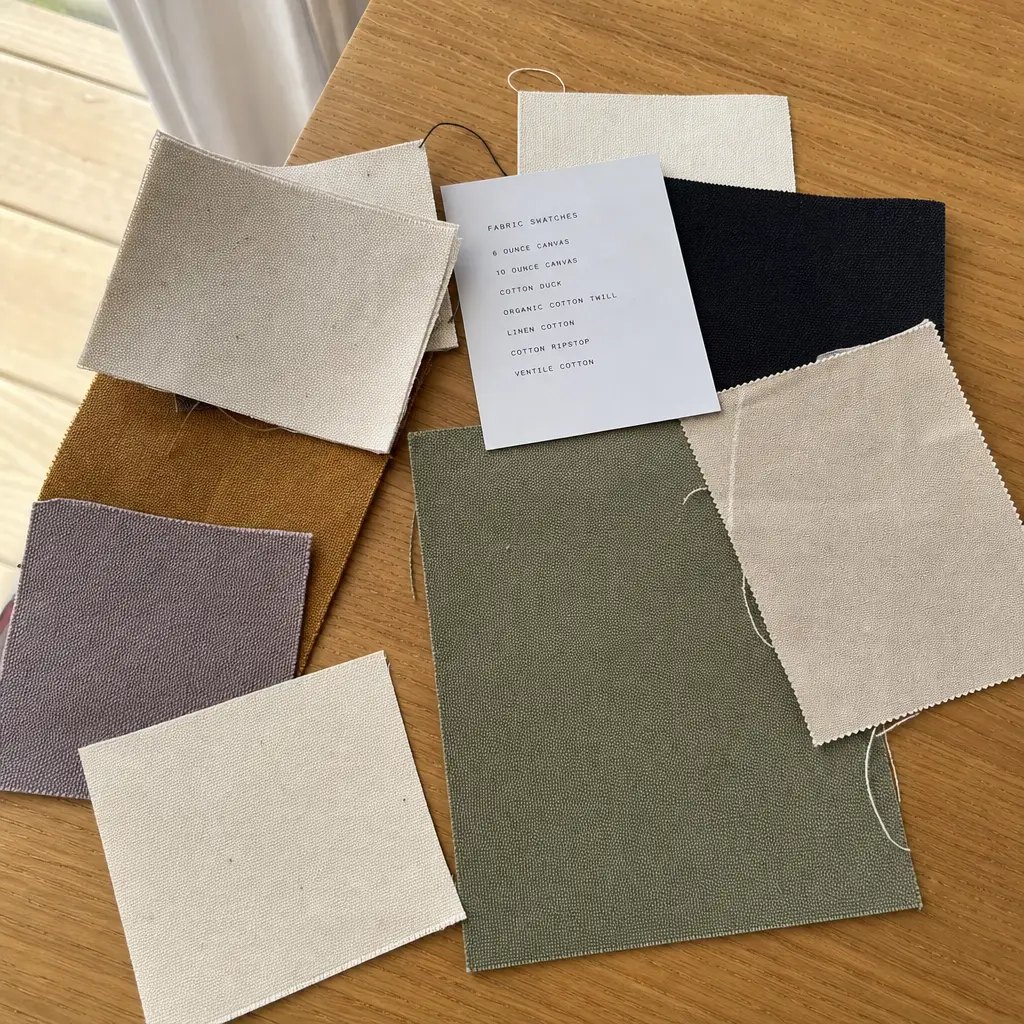
Avoid vague phrases such as heavy cotton or premium canvas. Buyers should ask for the exact fabric construction being quoted: cotton sheeting or cotton canvas, fiber content, weave description, and finished GSM. For liquor retail pouches, a practical commercial range is often about 150-300 GSM, but the right point inside that range depends on the bottle, the branding method, and the carton plan.
Lighter fabric can be acceptable for short-term promotional use or where the pouch functions mainly as a gift cover. It will usually pack more efficiently, but it can look thin, wrinkle easily, and show the bottle shape more strongly. Heavier canvas gives a cleaner and more premium hand, yet it can raise fold bulk and reduce the number of pieces that fit in a carton without compression.
GSM should be part of the approved spec, not a loose discussion point. A sensible RFQ line is target GSM with allowable tolerance, such as plus or minus 5 percent, subject to the supplier’s normal manufacturing capability. That gives procurement a measurable basis for inspection and reduces the chance that a lower-cost fabric sneaks in after pricing is agreed.
Color route should be considered alongside fabric weight. Stock natural and stock black are common because they reduce MOQ pressure and simplify replenishment. Natural cotton can show nep, specking, and staining more readily, which can be fine for rustic branding but must be accepted knowingly. Black fabric can look sharper for spirits, but buyers should ask about crocking, shade stability, and lot consistency before placing the PO.
If sustainability claims are required, state them early. Recycled cotton content, organic cotton, or certification documents are commercial requirements, not decorative add-ons. They can change the supplier pool, the raw material lead time, and sometimes the MOQ, so they belong in the RFQ rather than in a later email thread.
- Use finished GSM in the approved spec and quote sheet.
- Ask whether quoted fabric is sheeting or canvas; the feel and structure differ.
- Set a realistic GSM tolerance and test fabric from more than one roll during QC.
- Choose stock fabric shades if replenishment speed matters more than custom color precision.
4. Drawstring and sewing details that buyers often under-specify
The drawstring pouch looks simple until the small details are missing from the spec. Buyers should define whether the pouch uses a single cord or a double cord, what the cord is made from, the approximate cord diameter, the opening side, and the expected exposed cord length after assembly. If these are left open, the factory may substitute cheaper components that change both appearance and function.
For liquor bottle pouches, cord diameter often sits around 4-6 mm, though the final choice should follow pouch size and visual balance. A cord that is too thin can look weak next to the bottle and may bunch the fabric awkwardly. A cord that is too thick can overload the channel, slow closure, and make the top gather look heavy.
Sewing should be defined with enough precision to guide production but without pretending every machine setting is identical. Ask for stitch type and approximate stitch density on the side seams and top hem. More importantly, ask how the supplier reinforces the channel openings, because those points take the most stress when the pouch is opened and closed repeatedly in retail use.
Usable internal height is another point that often gets missed. Buyers may receive a finished pouch that matches the nominal size on paper but loses too much space to the hem allowance and channel construction. That is a problem when the bottle cap sits high or when the pouch must close above the neck. The supplier should confirm not only nominal height, but also how much actual room remains after sewing.
Clear construction notes make the quote more trustworthy. They also help the factory price the work correctly the first time. A vague brief may look flexible, but it usually leads to scope creep later when the buyer asks for stronger reinforcement, a better cord, or tighter tolerances after the sample arrives.
- Confirm cord material: cotton, polyester, or blend.
- Define whether cord ends are knotted, heat-cut, or finished another way.
- Ask how channel openings are reinforced against pull stress.
- Separate nominal pouch height from usable internal height in the approval sheet.
5. Branding routes: screen print, woven label, and what affects carton performance
For most liquor retail pouch programs, one-color screen printing is still the most practical branding method. It is cost-effective, easy to repeat, and usually compatible with bulk pack-out. But buyers should not stop at sending the logo file. The RFQ should define print size in millimeters, placement from seam references, number of print sides, and the desired visual position when the pouch is flat and when it is filled.
Large solid print areas deserve extra caution. Heavy coverage can crack at fold lines, ghost onto adjacent pouches, or offset under pressure if the cure is not fully complete before packing. That risk is higher when the pouch is folded tightly into cartons. If the artwork uses metallic or special-effect ink, ask the factory to confirm rub resistance after curing and after a pack simulation, not just on a fresh sample.
A woven label is a sensible option for repeat SKUs that need stable branding without a large front print. It can look clean and often packs flatter than a broad ink panel. The tradeoff is that it adds a component and another sewing step, so placement tolerance and label construction should be stated clearly. Buyers should define label size, fold style, seam insertion point, and allowed positional drift.
Heat transfer and patch branding can work too, but they should be selected with care. On textured cotton, fine detail may look good at first and then become vulnerable where the pouch bends repeatedly. For many B2B liquor retail programs, a simpler branding route is the safer choice because it behaves better in carton compression and warehouse handling.
The key point is comparison discipline. A supplier quoting a large front print and a supplier quoting a small seam label are not offering the same product, even if the unit price is close. The decoration method changes both cost and pack performance, so it must be fixed before the pricing round ends.
- Define print position from bottom seam and side seam, not only centered visually.
- Require cure confirmation before bulk packing approval.
- Test packed samples for offset, scuffing, and fold-line cracking.
- Treat label placement tolerance as part of the approved spec, not a minor cosmetic issue.
6. MOQ, size splits, and how hidden setup costs distort quote comparison
MOQ is rarely just one number in this category. A supplier may quote a low minimum, then add cost when the order is split across sizes, fabric colors, print colors, or trim types. Liquor buyers often need a size family for minis, standard bottles, and gifting formats, so the RFQ should show the intended split from the start.
The cleanest way to structure the order is by material platform. One approved fabric shade, one cord type, and one decoration method can support several pouch sizes. From there, the supplier can quote a separate running price per size and list any one-time setup charges that apply by size or by screen. That makes the quote easier to compare and reveals the true cost of assortment planning.
Setup charges can hide in print and sorting work. Even if the logo is the same, the print area may change by size, and the supplier may need a separate screen or an additional setup step. If the PO includes multiple SKUs, the warehouse may also need extra labor for sorting, bundling, and relabeling. Those costs are legitimate, but they should be visible before the PO is approved.
Repeat order economics matter too. Launch MOQ can be higher because the supplier is recovering sample and setup cost. Reorders should ideally run against the same approved fabric, same branding route, and same packing method. Buyers should ask where the first-order price differs from the repeat-order price so the long-term program cost is not underestimated.
For seasonal liquor promotions, that distinction is especially important. A low first quote can be misleading if it only works when the order is simple and single-SKU. Once real brand-family planning is added, the quote may no longer be competitive.
- Ask for MOQ by fabric color, by size, and by decoration method.
- Separate one-time setup charges from running unit price.
- Confirm whether multi-size POs trigger extra sorting or packing labor.
- Use the same carton assumptions across all suppliers when comparing quoted MOQs.
7. Master carton planning: piece count, gross weight, and bundle logic
Carton planning should balance manufacturing convenience with warehouse reality. The highest possible piece count is not always the smartest choice. If cartons are overfilled, the pouches can flatten at the gathered top, cords can tangle, and printed faces can rub against each other during transit. A small saving in carton count can turn into a bigger loss in appearance or receiving speed.
For cotton drawstring pouches, master carton quantities often sit around 50 or 100 pieces, with inner bundles of 10, 20, or 25 pieces depending on size and distribution workflow. Heavier canvas or larger pouches usually need lower carton counts than lighter promotional pouches. The right answer depends on fold bulk, not just on how many pieces the supplier wants to fit.
Buyers should also set maximum carton dimensions and gross weight before bulk production starts. A practical handling target is often around 12-15 kg gross weight, though that will vary by warehouse practice and local shipping rules. The point is not to chase a perfect number; it is to prevent cartons from drifting into a weight or cube profile that creates pain later in the supply chain.
Fold direction and cord arrangement should be spelled out. If the print must face inward or outward, say so. If the cords should be tucked, aligned, or lightly tied in the bundle, say that too. These are small details, but they reduce scuffing, improve carton fill consistency, and make receiving faster because the team spends less time untangling or reworking bundles.
Carton board strength should not be ignored just because the product itself is lightweight. Long sea transit, pallet stacking, and compression inside a container can still crush weak cartons. If inserts, labels, or heavier canvas are involved, the carton spec may need to be upgraded to maintain shape and protect the folded product.
- State pieces per inner bundle and pieces per master carton in the PO.
- Set maximum outer carton dimensions and gross weight before bulk production.
- Define fold direction and cord arrangement to reduce tangling and print transfer.
- Require clear external labels with SKU, size, color, PO, carton number, and quantity.
8. Sample approval should cover fit, fold, and pack simulation
A flat pouch sample is not enough to approve this item. The buyer should review a pre-production sample made in final fabric, with final branding, filled with the real bottle, and closed the way it will be used in retail. That is the only reliable way to see whether the usable height is correct, whether the logo reads properly on the filled pouch, and whether the drawstring closes evenly.
After that, test the packing method. Put the approved sample quantity into a trial carton using the intended fold direction and inner bundle logic. Leave it compressed for a realistic period, then inspect the result. This step often reveals the issues that a tabletop sample misses: print offset, cord tangling, wrinkle marks, and distortion around the channel opening.
Each pouch size in a multi-size program should be approved on its own. A successful 750ml sample does not automatically validate the 375ml or 1L version, because even small changes can affect closure behavior and carton efficiency. If the range is broad, buyers should insist on separate approvals rather than assuming the tooling and spec will scale without adjustment.
The approval file should include the signed sample, the bottle reference used, measured dimensions, the approved carton ratio, and the agreed fold method. That record matters when the second order is placed months later by a different buyer or merchandiser. It also protects the team if there is a dispute over what was originally approved.
Where possible, request a sealed bundle reference and a carton reference. Even if the supplier does not ship a full carton sample, photos and packing notes should show the bundle arrangement clearly enough to be repeated on the production line.
- Approve with actual bottle inserted, not only a dimensional mock-up.
- Record measured finished width, height, and usable internal height on the sample sheet.
- Run a fold-and-pack simulation before freezing carton quantity.
- Keep signed approval references for both product and packing method.
9. QC plan: tolerances, inspection priorities, and defect language buyers should use
Quality control for liquor bottle pouches should focus on fit, function, and retail presentation. Cotton is a natural material, so minor slubs or slight shade movement may be acceptable if they match the approved sample. What should not pass casually are wrong size, poor closure function, print drift, visible stains, open seams, or count shortages.
Define tolerance language before production starts. Finished width and height need separate tolerances. Print placement should be measured from fixed seam references. If the cords are expected to look even, define the allowable difference in exposed cord length. For stain-sensitive natural cotton, write down which marks are rejectable so inspection is not left to interpretation on the day of final check.
Function testing should use the real bottle. An empty pouch may look fine on the table and still fail when filled because the shoulder shape stresses the seam or the top hem crowds the channel. Drawstring operation should be checked on filled samples to confirm smooth gathering and balanced closure, not just basic cord movement.
Carton-level control matters too. Inspect bundle count, carton count, and SKU segregation. A shipment with good sewing but bad pack counts still creates immediate warehouse trouble. If the buyer uses an AQL system, the checklist should include dimensions, print, stains, stitches, cord function, and quantity control instead of relying on generic textile inspection language.
A practical defect priority list is useful: wrong SKU, wrong size, major shortage, severe stain, open seam, and unusable closure belong at the top. Minor slubs or the natural character of cotton may be acceptable when they are consistent with the approved sample. The point is to put inspection effort where the business risk is highest.
- Measure finished size after sewing, laid flat and lightly smoothed.
- Inspect print after cure and after folded-pack simulation.
- Test drawstring closure on filled bottle samples, not only empty pouches.
- Verify bundle count and carton count as part of final inspection, not only product appearance.
10. Compare landed cost with a standard quote sheet, then plan repeatability
To compare suppliers fairly, procurement teams should normalize every offer onto one quote sheet. That sheet should list pouch size, fabric construction, finished GSM, branding method, cord specification, pieces per inner bundle, pieces per master carton, carton dimensions, gross weight, sample charges, setup charges, lead time, and any assumptions about MOQ splits. Without that structure, a low unit price can hide a lighter fabric, a smaller usable pouch, or a more aggressive carton fill than the buyer intended.
Landed cost should also include the freight basis. Even if shipping rates change, carton cube and gross weight per thousand pieces are useful planning metrics. They show whether a slightly heavier pouch is still commercially acceptable or whether the spec needs adjustment. This is especially useful for liquor retailers that manage seasonal replenishment, branch allocation, or multiple promotional calendars at once.
Repeatability should weigh heavily in supplier selection. A factory that can reproduce the approved fabric, print position, cord behavior, and carton plan on future orders may be more valuable than one that only wins on the first quote. For retail programs that recur every season, consistency saves time, reduces inspection friction, and protects store presentation.
After the first shipment, record what actually happened: sample timing, production timing, inspection results, carton compliance, and warehouse feedback. That record becomes the basis for a better second PO and a stronger sourcing benchmark next time. In practice, the best pouch program is not the cheapest sample. It is the one that moves cleanly from factory to freight to warehouse with the fewest surprises.
- Use one quote template for all factories to eliminate hidden assumptions.
- Compare carton cube per thousand pieces, not only piece price.
- Track first-order performance to improve repeat-order accuracy.
- Prioritize suppliers who can repeat the approved carton plan and tolerance standard consistently.
Specification comparison for buyers
| Spec decision | Recommended option | When it fits | Buyer risk to check |
|---|---|---|---|
| Fabric weight for single 750ml bottle pouch | 8 oz cotton canvas, about 230-280 GSM finished fabric | Best balance for standard 750ml spirits or wine bottles when pouch must look retail-ready and remain pack-efficient | Below about 180 GSM may telegraph bottle shape and wrinkle heavily; above about 300 GSM increases fold thickness, carton cube, and sewing bulk |
| Fabric weight for lower-cost promotional pouch | 5-6 oz cotton, about 150-200 GSM | Suitable when pouch is a short-term gift cover and bottle protection comes from gift box, divider, or shipper | Light fabric can look thin, logo may show through bottle contours, and channel area can collapse after repeated handling |
| Fabric color route | Stock natural or stock dyed black | Fits MOQ-sensitive programs and faster replenishment where approved stock shade is acceptable | Natural cotton can show stains, nep, and shade variation; black fabric should be checked for crocking and shade lot consistency |
| Logo method | 1-color screen print, water-based or plastisol depending artwork and fabric shade | Most commercial liquor retail orders with moderate logo size and simple artwork | Large solid areas can offset under compression if cure is incomplete; metallic or special-effect inks need extra rub testing |
| Premium branding route | Small woven label sewn into side seam or top seam plus plain pouch body | Works for repeat SKUs needing stable brand presentation with less front-panel print risk | Label placement tolerance must be defined; extra trim adds one more incoming material and sewing defect point |
| Drawstring construction | Single or double cotton cord, about 4-6 mm diameter, heat-cut or knotted ends depending material | Common for bottle pouches where closure appearance matters but heavy load is limited to one bottle | Cord material substitution, uneven cord length, or weak knot finishing can create poor closure symmetry and retail presentation |
| Carton pack ratio | 50 or 100 pcs per master carton with inner bundles of 10, 20, or 25 pcs | Useful for distributor receiving, branch allocation, and manageable counting | Overfilled cartons can flatten gathered tops, transfer print, and increase tangling; mixed inner counts slow warehouse allocation |
| Individual packing method | Bulk flat pack without individual polybag unless compliance requires otherwise | Preferred for wholesale distribution and lower packaging waste | If print cure, fold direction, or bundling is poorly controlled, bulk packing can increase offset, scuffing, and cord entanglement |
| MOQ structure | MOQ by fabric color and logo method, with size split confirmed in quote | Good for 375ml, 750ml, and 1L programs under one brand family using same fabric base | Low headline MOQ may hide extra charges per size, per screen, per label, or per carton split |
Buyer checklist before sampling
- Provide actual bottle dimensions in millimeters: overall height, base diameter or width, shoulder width, neck diameter, cap or closure width, and any neck tag, wax seal, stopper, or gift insert.
- Specify intended closure position: below shoulder, at neck, or above cap. This directly affects finished pouch height and drawstring channel position.
- State finished fabric requirement in GSM or oz, fabric type, and tolerance. A practical sourcing format is finished GSM target with allowable tolerance such as plus or minus 5 percent.
- Confirm whether fabric is cotton sheeting or cotton canvas, and whether recycled content, organic claims, or certification documents are required.
- Define finished size tolerance separately for width and height, because top hem and drawstring channel sewing often reduce usable height more than buyers expect.
- Specify print method, artwork size in millimeters, print location from bottom seam and side seam, ink color count, and acceptable print-position tolerance.
- Approve drawstring material, diameter, number of cords, insertion style, opening side, knot type, and finished exposed cord length tolerance.
- Set master carton maximum dimensions, maximum gross weight, inner bundle quantity, fold method, and whether carton labels must include SKU, PO, carton number, and quantity.
- Require a pre-production sample with the real bottle inserted and the pouch packed in the intended export fold direction, not a flat sample only.
- Add QC points for GSM, finished size, stitch density, seam strength, print rub resistance, cord function, stain control, bundle count accuracy, and carton count accuracy.
Factory quote questions to send
- Based on our exact bottle dimensions and closure position, what finished pouch size do you recommend, and what usable internal height remains after top hem and channel sewing?
- What fabric are you quoting exactly: cotton sheeting or canvas, fiber content, weave, finished GSM, and normal GSM tolerance by lot?
- Does your quote assume stock natural, stock dyed black, or custom dyed fabric, and what MOQ and lead-time changes apply to each option?
- What finished size tolerance can you hold in production for width and height, and how are these dimensions measured after sewing and pressing?
- What print method is included, what is the maximum print area assumed in the price, what curing method is used, and what rub-test standard do you apply before packing?
- What drawstring material, diameter, insertion style, and finished cord length are included in your base price, and what is the tolerance for left-right cord length difference?
- What stitch type and approximate stitch density do you use on side seams and top hem, and do you add bartack or backstitch reinforcement at channel openings?
- What is the quoted packing plan: pieces per inner bundle, pieces per master carton, carton outer size, gross weight, net weight, and carton board specification?
- What sample stages are available: blank fit sample, printed pre-production sample, sealing sample for carton trial, and what charges or lead times apply to each stage?
- How does pricing change if one PO is split across 375ml, 750ml, and 1L pouch sizes using the same fabric and logo method, and are there separate setup charges per size?
Quality-control points to confirm
- Finished size should be checked after sewing with pouch laid flat and lightly smoothed, measured from side seam to side seam and from bottom seam to top edge. Width and height tolerances should be specified separately.
- Usable internal height should be verified on at least one filled bottle sample because the top hem and drawstring channel reduce effective capacity.
- Fabric GSM should be spot-checked from multiple production panels or rolls. For procurement control, define an allowable tolerance such as plus or minus 5 percent from approved standard where commercially realistic.
- If custom dyed or black fabric is used, check shade consistency against approved standard under consistent lighting and inspect for visible lot variation within the same shipment.
- Print position should be measured from fixed seam references, with agreed tolerance in millimeters. Skew, incomplete print, smudging, ghosting, and visible offset should be recorded as defects.
- Print rub resistance should be checked after full cure and after folded-pack simulation, because carton compression can reveal problems not visible on a flat fresh print.
- Side seams and top hem should be checked for skipped stitches, broken stitches, open seams, seam grin, and uncontrolled puckering. Channel openings should be reinforced and free of excessive fray.
- Drawstring function should be tested on filled samples: the cord should slide, gather evenly, and close without channel blockage. Left-right exposed cord lengths should remain visually balanced.
- Cord diameter, material, and cut finish should match approval sample. Loose knotting, unraveling ends, or material substitution should be treated as nonconformance.
- Cleanliness checks matter on natural cotton. Inspect for oil marks, rust marks, mildew odor, water stains, colored contamination, and dust trapped in folded bundles.