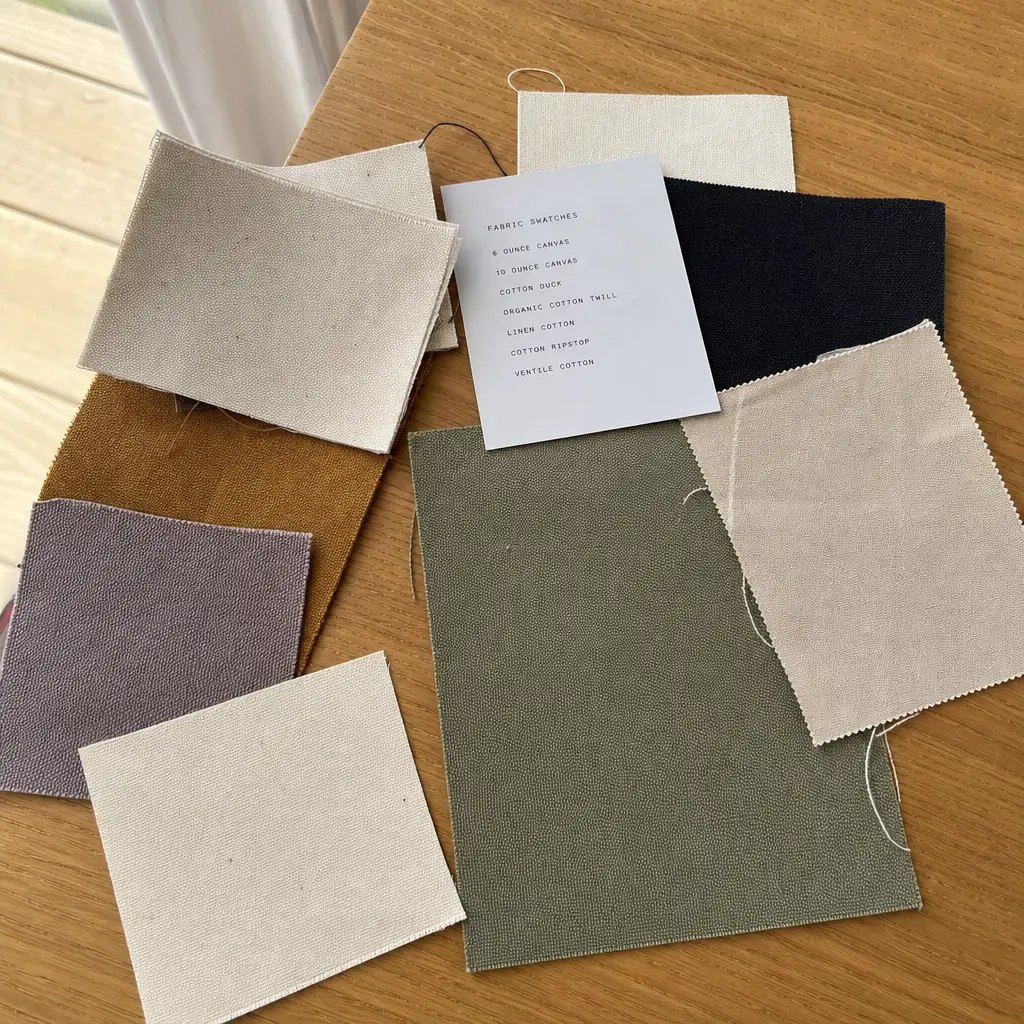
Why material selection is the main buying problem for liquor retail pouches
For liquor retail use, the wrong cotton pouch material creates problems long before the product wears out. A fabric that is too light makes the bottle shape print through, corners stress the seams, and the pouch looks cheap on shelf or in gift sets. A fabric that is too heavy can push unit cost up fast, reduce print sharpness on folded areas, and add unnecessary shipping weight. Most buying mistakes happen because the RFQ says only 'cotton drawstring pouch' without defining bottle size, presentation level, and fabric performance.
Liquor retailers usually need one of three outcomes: a low-cost promotional bag, a presentable reusable bottle pouch, or a premium gift-packaging component that supports a higher basket value. Those three uses do not need the same cloth, cord, print, or packing method. If procurement aligns the pouch spec to the retail role first, supplier quotes become easier to compare and sample approval moves faster.
- Promotional use prioritizes cost and logo visibility
- Gift-packaging use prioritizes bottle fit and shelf appearance
- Premium reusable use prioritizes structure, touch, and repeat handling durability
- The bottle format matters: mini bottle, standard 750 ml, tall spirits bottle, or accessory kit
Choose the fabric weight by bottle load, not by generic canvas wording
Suppliers often use broad labels such as cotton, canvas, or muslin, but those terms are not enough for accurate quoting. GSM is the working number that controls feel, drape, opacity, and how much support the pouch gives the contents. For liquor retailers, 140-170 GSM is usually suitable only for light accessories or mini bottle programs. For standard wine or spirit bottle presentation, 180-220 GSM is typically the safe commercial range because it balances cost with a cleaner shape. For premium gifting, 240-300 GSM gives better body, though not every print design benefits from thick canvas texture.
The load in the pouch is not the only factor. Bottle base diameter, glass shoulder shape, foil cap, and any added neck tag or gift card affect friction during insertion. If the pouch opening is narrow and the fabric is very light, operators may stretch seams during packing. If the fabric is thick and stiff, drawstring closure can bunch awkwardly at the top. That is why many buyers end up with 180-220 GSM as the practical middle ground for regular liquor retail programs.
- 140-170 GSM: low-cost, softer drape, better for flat gift items or mini packs
- 180-220 GSM: most common commercial choice for standard bottle pouches
- 240-300 GSM: stronger structure and premium hand feel, but higher cost and carton weight
- Request both GSM and weave description in the quote, not just a fabric nickname
Fabric construction, gusset, and seam design decide whether the bottle fits cleanly
A pouch for liquor retail is not just a flat rectangle with cords. Construction determines how easily the bottle slides in and whether the pouch hangs straight when carried or displayed. A flat pouch can work for soft gift items, but for bottles it often twists around the body and creates uneven side stress. A bottom gusset is usually the better choice for a single bottle because it gives the base somewhere to sit and reduces corner pull on the side seams. For wider or squarer spirit bottles, a side-gusseted design can work, but it costs slightly more in cutting and sewing complexity.
Seam allowance also matters. A narrow seam on a light fabric may save material, but it can open under repeated loading, especially near the bottom corners. Drawstring channel height should match the cord thickness. Too tight and the cord does not move smoothly; too loose and the top collapses in a messy way. These are small factory details, but they affect retail presentation and customer use more than buyers expect.
- Bottom gusset improves bottle seating and display shape
- Side gusset suits wider bottle profiles but may add sewing complexity
- Use actual bottle dimensions including cap and neck tag space when setting pouch width and height
- For premium programs, request sample insertion video with the intended bottle size
Print method should match fabric texture, logo style, and reorder volume
For most cotton drawstring pouches in liquor retail, screen printing remains the most practical method. It gives reliable solid logos, handles 1-2 color branding well, and usually offers the best cost on repeat bulk orders. On smoother 180-220 GSM cotton, screen print edges are clearer than on very slubby or heavily textured cloth. If buyers move to thick canvas with visible weave, fine detail can break up slightly, which is normal and should be understood before sample approval.
Heat transfer is useful when artwork includes gradients, photo elements, or many colors, but it changes the hand feel and can show a transfer edge depending on fabric texture. Embroidery is possible for premium branding, yet it can distort lighter cotton and add backing marks inside the pouch. For liquor retail, a simple one-color or two-color screen print is usually the most stable route unless the brand identity requires something more decorative.
- Screen print: best for simple logos and repeat programs
- Heat transfer: better for multicolor artwork, but check hand feel and edge visibility
- Embroidery: premium look but higher cost and possible puckering on light fabric
- Set print placement tolerance from seam reference points, not general center wording
MOQ logic is driven by fabric, color, and artwork splits more than by total order volume
Many buyers assume that a large combined order automatically gives a low unit cost, but pouches are often quoted by effective production grouping. If you order three sizes, two fabric colors, and four logo versions, the factory may treat that as multiple smaller runs even when the total piece count looks high. Setup time for cutting, screen preparation, thread changes, and packing separation can keep the unit cost from dropping as much as expected.
The easiest way to improve MOQ efficiency is to standardize one base fabric and one body color across several SKUs, then vary only size where needed. Another good approach is to keep the logo artwork consistent and use a shared print screen where dimensions permit. For liquor retailers running seasonal gift programs, the largest quote savings often come from reducing complexity, not from negotiating a few cents without changing the spec.
- MOQ may apply per size, per fabric color, and per logo version
- Natural cotton stock fabric usually supports lower MOQ than custom dyed fabric
- Shared fabric across multiple pouch sizes helps reduce sourcing fragmentation
- Too many small artwork changes increase setup cost and packing errors
Sample approval should test bottle fit, print position, and real use handling
A pre-production sample is only useful if it reflects the actual bulk plan. Buyers should avoid approving a shape sample made from substitute fabric if GSM, weave, or color will change later. A lighter sample can hide seam stress that appears in bulk, while a smoother sample can make the print look cleaner than the final production cloth. For liquor retail programs, sample review should include actual bottle insertion and top closure, not just flat photos.
Use the sample to confirm details that are costly to fix later: bottle neck clearance, how the pouch stands or hangs, whether the logo remains visible after closure, and whether the cord opens smoothly when store staff handle it repeatedly. If there is any retail gifting element such as hangtags, neck cards, or inserts, test them together. Many pouch problems show up only when all components are assembled.
- Approve size using the real bottle or a dimensional equivalent
- Measure logo placement from a fixed seam or hem reference
- Review seam tension at bottom corners after insertion
- Confirm drawstring closes evenly without twisting the front print
- Use bulk-intended fabric for final sample whenever possible
Quote comparison should separate visible cost from hidden cost drivers
When suppliers quote different prices for what appears to be the same pouch, the gap is often caused by details missing from the RFQ. One supplier may quote 150 GSM stock cotton while another assumes 220 GSM canvas. One may include a bottom gusset and thicker braided cord, while another quotes a flat pouch with thinner string. Print setup, individual polybagging, carton marks, and export carton strength also move the number. Without a line-by-line breakdown, the cheapest quote can easily become the expensive one after revisions.
A useful comparison method is to separate cost into fabric, printing, sewing complexity, and packing. Fabric usually drives the biggest percentage change. Print color count and print area are the next common variables. Sewing cost rises when gussets, reinforcements, or special cords are added. Packing extras matter less per piece but can still affect total landed cost when the order is large or split across many SKUs.
- Fabric cost changes with GSM, weave, stock status, and dyed color requirement
- Printing cost changes with color count, print area, and setup quantity per artwork
- Sewing cost changes with gusset type, reinforcement, and cord construction
- Packing cost changes with polybag count, barcode labels, and carton sorting by SKU
- Request quotes in the same incoterm before comparing numbers
Packing standards affect warehouse efficiency and freight more than buyers expect
Because cotton pouches are light, buyers sometimes treat packing as a routine detail. In practice, poor packing causes count errors, mixed SKU confusion, and extra labor in the distribution center. For liquor retail replenishment, the best approach is usually to keep one SKU per inner polybag and one SKU per carton unless the order volume is extremely small. This reduces receiving mistakes and helps store allocation if goods are later repacked by channel or region.
Carton planning also matters for freight. Thick 240-300 GSM canvas pouches consume more volume per piece than lighter sheeting, so the lowest FOB unit cost is not always the lowest landed cost. If the pouch includes cords with decorative knots or tags, compression inside overfilled cartons can crease the top area and distort the display appearance. Carton dimensions and fill rate should therefore be reviewed during sample or pilot packing, not after bulk production is finished.
- Common inner packing is 10-25 pcs per polybag depending on size and fabric thickness
- Use one SKU per carton where warehouse accuracy matters
- Do not overpack heavy canvas pouches if presentation creases are a concern
- Request carton dimensions and gross weight in advance for freight planning
- Mark cartons clearly by SKU, quantity, PO, and destination if split shipments are possible
Lead time risk usually comes from fabric and approval delays, not only sewing capacity
Buyers often focus on sewing capacity, but pouch lead time is more often delayed by fabric availability, dyeing, print approval, and late packing instructions. Natural stock cotton generally moves faster than custom-dyed fabric because mills or converters may already hold inventory. Once dyed color matching enters the program, additional approval steps can add days or weeks depending on the supplier chain and the exact shade requirement.
Another avoidable delay happens when the artwork is approved before the final pouch dimensions are frozen. If the print area shifts after size changes, the screens may need updating. Packing details can also hold shipment if barcodes, inner pack quantities, or shipping marks are changed late. For a stable schedule, procurement should lock fabric, size, print, and packing in that order, then release production.
- Stock natural cotton usually shortens sourcing time
- Custom dyed fabric adds approval and dyelot coordination time
- Artwork approval should follow final pouch dimensions
- Late carton mark or barcode changes can delay packed goods release
- Build time for pre-production sample review before committing vessel booking
Use simple acceptance criteria to prevent the most common bulk claims
The majority of claims on cotton drawstring pouches are not dramatic failures. They are recurring commercial issues such as inconsistent size, print off-center placement, rough cords, shade variation in natural cloth, or cartons packed with mixed counts. These can be reduced significantly if the PO and approved sample set basic acceptance criteria. Buyers do not need a long legal document; they need measurable tolerances and reference points that the factory and inspector can use the same way.
For this product category, it is better to define the few points that affect retail usability than to over-specify every sewing detail. If the pouch must fit a standard 750 ml bottle, then insertion and closure should be part of acceptance. If the logo must remain visible in gift display, define its position range. If the pouches are going to store chains, carton count accuracy may matter more than tiny inside-seam appearance. Good QC follows the retail use case.
- Set size tolerance appropriate to pouch dimensions and gusset design
- Define print placement tolerance from top seam or side seam
- Approve natural cotton shade against a retained sample if exact whiteness matters
- Test random bottle insertion during final inspection for fit-sensitive programs
- Record carton quantity and SKU separation as a shipping acceptance point
Specification comparison for buyers
| Spec decision | Recommended option | When it fits | Buyer risk to check |
|---|---|---|---|
| Fabric weight for mini bottles and bar tools | 140-170 GSM plain cotton | Low-cost promo pouches, corkscrews, gift sets, mini bottle packs under light load | Too soft for premium shelf display; fabric may show bottle outline and wrinkle heavily |
| Fabric weight for standard 750 ml bottle pouch | 180-220 GSM cotton sheeting or light canvas | Best balance for most liquor retailers needing shape, print clarity, and manageable cost | If bottle base is heavy or corners are sharp, seam strain can increase on side and bottom joins |
| Fabric weight for premium gift bottle presentation | 240-300 GSM canvas | Higher-end gifting, reusable packaging, dark prints, and more structured retail presentation | Higher FOB cost, more carton weight, and thicker seams can reduce print smoothness near folds |
| Fabric construction | Single-layer cotton with bottom gusset for bottle use | Single bottle pouches that need standing shape and easier bottle insertion | Flat pouches without gusset often twist around bottle and create poor shelf presentation |
| Drawstring type | 8-10 mm braided cotton cord or herringbone tape | Premium retail programs where opening feel and durability matter | Loose weave cords can shed fibers; thin cords can cut into channel seam under repeated pull |
| Print method | 1-2 color screen print for most logos; heat transfer only for photo detail | Simple brand marks, event programs, and repeat bulk orders | Registration shift on seams, ink rub on dark liquor labels, and transfer edge visibility on soft fabric |
| Fabric color route | Stock natural cotton when timeline matters; dyed fabric when brand color is mandatory | Natural for faster production and lower MOQ; dyed for consistent branded retail sets | Dyelot variation between bulk rolls can affect chain-store color consistency |
| MOQ strategy | Use one base fabric and share artwork across sizes | Programs with several bottle formats or mixed store packs that need lower unit cost | Too many sizes and print changes split MOQ and raise setup cost per SKU |
| Inner packing | 10-25 pcs per polybag by size, then export carton by same SKU | Standard wholesale replenishment where counting and warehouse handling matter | Mixed sizes in one carton create receiving errors and slow retail DC put-away |
Buyer checklist before sampling
- Define exact pouch use: single 750 ml bottle, mini bottle, gift accessory, or multi-item set
- State finished size in millimeters including width, height, and gusset if bottle insertion is required
- Set target fabric weight range, not just 'cotton', for example 180-220 GSM natural cotton
- Specify whether recycled look, smooth print surface, or premium structure matters most
- Decide if stock natural fabric is acceptable or if dyed pantone-matched fabric is required
- Confirm drawstring material, cord diameter, color, knot style, and whether cords are single or double pull
- Provide print size, print position, and maximum acceptable print color count
- Note if the logo can cross seam areas or must stay on a flat panel only
- Request pre-production sample based on actual bulk fabric, not substitute swatch fabric
- Set basic QC points: size tolerance, seam security, print placement, color variance, and cord function
Factory quote questions to send
- What cotton fabric options do you recommend for a 750 ml glass bottle pouch, and what GSM range is most stable in bulk?
- Is your quoted fabric stock greige, bleached, or dyed, and does the quote include shrinkage allowance after cutting and sewing?
- Is the pouch body flat, bottom-gusseted, or side-gusseted, and how does that affect unit cost and bottle fit?
- What is included in the print quote: screen charge, color count, print area, strike-off, and print placement tolerance?
- If we use natural cotton, what shade variation should we expect between lots and within the same production run?
- What MOQ applies per size, per fabric color, and per logo artwork version?
- Can you provide sample photos or video of seam reinforcement at the drawstring channel and bottom corners?
- What lead time do you quote for sample, lab dip or fabric approval if dyed, bulk production, and export booking?
- How are pouches packed per inner polybag and carton, and what carton dimensions and gross weight do you expect?
- What in-line and final inspection points do you normally record for size, stitching, print quality, and cord function?
Quality-control points to confirm
- Finished size tolerance should be agreed by pouch type; common working tolerance is around plus or minus 5-10 mm depending on size and gusset design
- Fabric GSM should be verified from bulk lot, especially if comparing multiple suppliers quoting the same 'canvas' description
- Natural cotton shade should be visually reviewed under consistent light because off-white tone can vary by lot
- Drawstring channel stitching must be even and fully caught; skipped stitches near the cord opening are a frequent failure point
- Bottom seam and gusset corners should be checked with actual bottle insertion, not flat-table inspection only
- Screen print placement should be measured from top seam or side seam, not judged by eye
- Print rub resistance should be tested after full curing, especially for dark or metallic inks
- Cord pull function should open and close smoothly without channel bunching or trapped seam allowance
- Loose threads inside pouch opening should be trimmed to avoid snagging labels, foil tops, or gift inserts
- Carton count accuracy matters because pouches are light and receiving teams often rely on carton labeling rather than piece recount