Plan From the Usable Inventory Date
Wellness studio buyers usually need pouches before the public-facing date. A retreat welcome pouch must arrive before the team fills it with oils, cards, sachets, facial tools, or samples. A retail pouch for a spa shelf must be received, counted, inspected, and paired with the right product set. A distributor order may need barcode checks and allocation before it can move into channel inventory.
Start with the date inventory must be usable at the warehouse, studio, event venue, or kitting location. Then work backward through receiving, quality checks, internal kitting, relabeling, allocation, and transportation to individual studios. If a retreat begins on June 1, the safer pouch arrival target may be mid-May, not the last week of May.
The first sourcing decision is the pouch role. A free event giveaway can tolerate simpler packing and a less premium hand-feel than a paid retail kit. A refill pouch for repeat customers may need dependable sizing and quick replenishment. A studio opening kit may need destination-specific carton marks. This classification tells the supplier which details matter most.
- Use warehouse-ready date, not campaign launch date, as the planning anchor.
- Separate retail, refill, retreat, event, opening kit, and distributor stock requirements.
- Add time for receiving, inspection, counting, kitting, and allocation before goods are needed.
- Flag fixed dates such as retreats, holiday launches, subscription packing windows, and new studio openings.
- Decide early whether a missed pouch date delays revenue, guest experience, or only a low-risk giveaway.
Give Suppliers a Complete RFQ
Lead time slips often begin with an incomplete quote request. A factory can price a basic cotton pouch from size and quantity, but that quote may not cover the real product. Procurement should send finished flat size, usable fill area, fabric weight, fabric color, cord details, drawstring construction, decoration method, artwork, label needs, packing method, carton rules, destination, and requested warehouse-ready date.
Finished size and usable space are not the same. Seam allowance, fabric thickness, channel height, and the gathered mouth reduce the space available for bottles, tins, soap bars, sachets, cards, crystals, or gua sha tools. Send product dimensions, filled weight, and the intended arrangement inside the pouch. A simple product photo with a ruler can reduce sample rounds.
Measurement method should be stated before sampling. Cotton pouches can measure differently before ironing, after ironing, or after packing. If the pouch must fit a rigid insert, boxed product, or exact shelf display layout, ask the supplier whether the requested tolerance is realistic before confirming price.
- List finished flat size, usable fill area, channel height, seam allowance expectation, and measurement point.
- Specify fabric composition, GSM or oz weight, weave if known, color standard, shrinkage expectation, and natural cotton variation limits.
- Define single draw or double draw, cord material, cord diameter, cord length, cord color, knot finish, and channel construction.
- Attach vector artwork with print size, print location, Pantone target, minimum line thickness, and scaling rules.
- Include packing, carton marks, barcode needs, inspection level, and Incoterms in the first RFQ.
Choose Fabric by Use Case
Fabric weight affects cost, feel, printing, sewing speed, closure, carton volume, and freight. Very light cotton may be fine for sachets, cards, or short-term promotional samples. It may look too transparent or disposable for a paid wellness kit. Heavy cotton or canvas can feel premium, but it may make small pouch mouths bulky and reduce pieces per carton.
For many studio programs, 5 oz / about 170 GSM natural cotton is a practical starting point. It gives more substance than low-cost promotional cotton while staying flexible enough for drawstring closure. For glass bottles, facial tools, candle accessories, massage stones, or higher-value retail bundles, 6 oz / about 200 GSM may be more appropriate.
Natural unbleached cotton needs approval because seed flecks, slubs, small dark fibers, and shade variation are normal unless controlled differently. Dyed cotton can support a brand palette, but it adds lab dips, shade approval, dye lot management, and possible bulk fabric preparation time.
- 4 oz / about 130 GSM: lightweight sachets, cards, product samples, and low-cost event giveaways.
- 5 oz / about 170 GSM: common option for branded wellness pouches, refill packaging, and light retail kits.
- 6 oz / about 200 GSM: stronger option for glass bottles, tools, premium bundles, and reusable packaging.
- Natural cotton: approve shade range, seed flecks, slubs, odor, and cleanliness before production.
- Dyed cotton: add time for lab dips, bulk shade approval, and lot-control records.
Match Decoration to Artwork
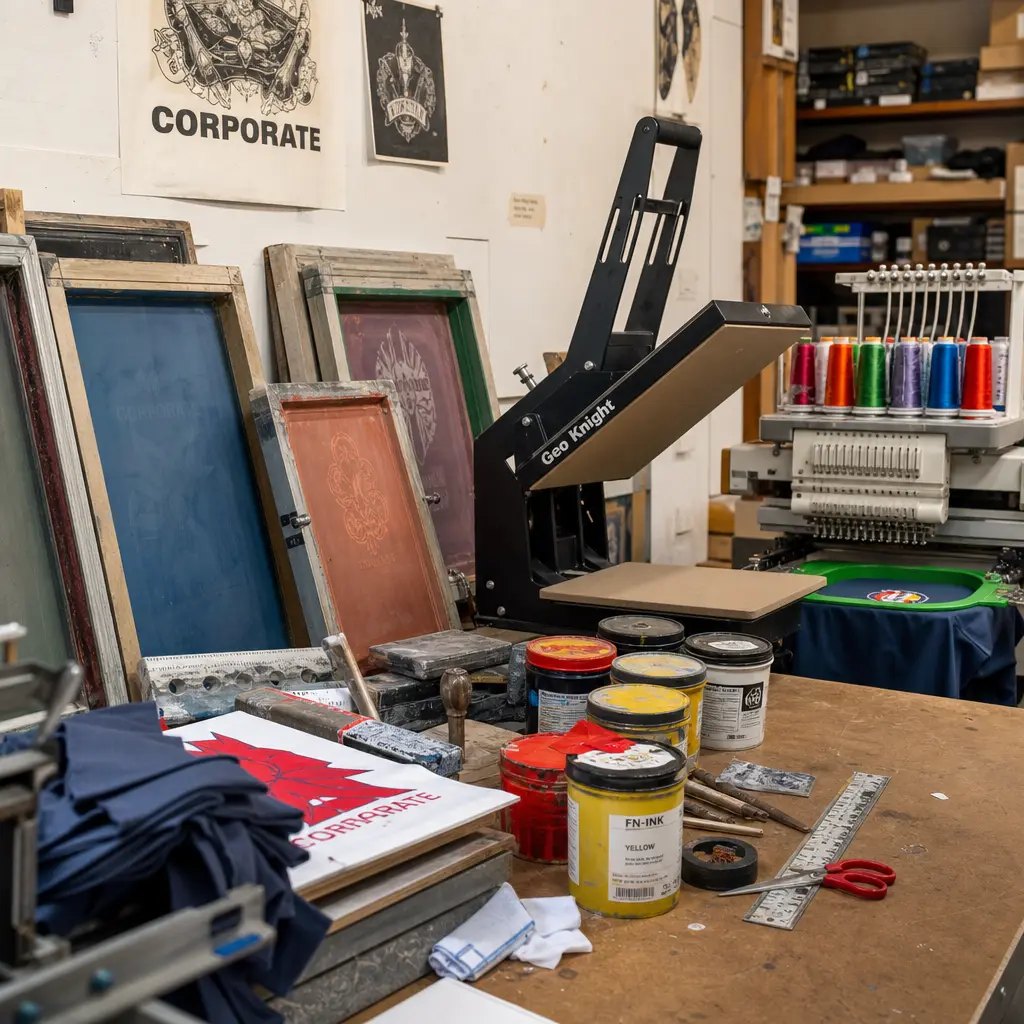
One-color screen printing is often the most dependable choice for cotton drawstring pouches. It suits calm wellness branding, simple logos, botanical line art, retreat marks, and product category icons. It is also efficient for repeat programs when the same fabric, ink, and artwork are used.
Cotton is not coated paper, so artwork limits should be practical. Fine lines below about 0.3–0.5 mm may fill in on textured fabric, depending on ink, screen mesh, and fabric surface. Large solid areas can feel stiff or show uneven coverage. Pantone references should be confirmed with a physical strike-off on the final fabric.
Other branding methods can work when the buyer accepts the tradeoffs. Heat transfer can handle complex graphics but may feel smoother or glossier. Digital print can support detail but should be tested on natural cotton. Embroidery can look premium but is slower and not ideal for tiny text. Woven labels create subtle branding but add label sourcing and placement controls.
- Use screen print for simple one- or two-color logos and repeatable studio packaging.
- Approve a strike-off on final fabric before bulk production for color-sensitive or fine-line artwork.
- Check logo visibility after the pouch is filled, closed, and viewed from the retail display angle.
- Confirm curing, rub resistance, opacity, line clarity, and print-position tolerance in the QC standard.
- Treat embroidery, heat transfer, digital print, and woven labels as separate processes with separate sampling time.
Build the SKU Matrix Before Pricing
MOQ is rarely only about total units. For custom cotton drawstring pouches, minimums can apply by size, fabric color, print design, cord color, label, and packing format. An order for 10,000 units may be simple if it uses one size and one logo. The same quantity can become slow and expensive if split across many studio locations, fabric colors, printed slogans, and destination cartons.
A procurement SKU matrix keeps commercial choices visible. Include pouch role, finished size, usable fill area, fabric, cord, print version, label, packing method, carton mark, destination, and required date. This helps the supplier quote setup charges and production timing accurately. It also helps internal teams decide which variations are necessary.
For fixed launch dates, standardize the first order where possible. One fabric, one ink color, a limited size range, and one packing flow reduce approval rounds and inspection points. Location-specific logos or special event marks can be added later once the base supply chain is proven.
- Ask MOQ per size because cutting and sewing setup may differ.
- Ask MOQ per print design because each logo or slogan may need separate artwork handling and screens.
- Ask MOQ per fabric color because stock availability and dye minimums can change the schedule.
- Ask MOQ per packing format because bulk packing, retail polybags, labels, and mixed cartons use different labor flows.
- Consolidate fabric, ink, cord, label, and carton programs when variation does not add customer value.
Use Samples to Prevent Rework
Sampling should confirm function, appearance, and packability before bulk production. A pouch can look right when empty and still fail when filled with glass rollers, jars, soap bars, incense boxes, crystals, folded cards, or small bottles. Test the sample with real products or accurate dummies matching both size and weight.
Different samples answer different questions. A blank size sample checks dimensions, seam construction, channel height, drawstring movement, and filled fit. A print strike-off checks ink color, line sharpness, print size, opacity, and curing on the selected fabric. A full pre-production sample confirms the final combination of fabric, cord, print, label, closure, packing direction, and carton assumptions.
Sampling moves faster when the buyer supplies complete inputs at the start. Send artwork, Pantone references, fabric target, cord preference, product dimensions, product weight, label needs, packing rules, and photos of the intended presentation. Digital mockups are useful for alignment, but they should not replace physical approval for retail or event-bound orders.
- Use a blank sample to check size, seam, channel height, drawstring function, and filled fit.
- Use a print strike-off to check ink color, line weight, opacity, curing, and artwork clarity.
- Use a full pre-production sample to approve final fabric, cord, print, label, closure, and packing direction.
- Fill and close the sample before approval, then photograph it from the customer-facing display angle.
- Record the approved sample, date, revision, and any allowed deviations in the purchase file.
Schedule by Procurement Milestone
A reliable timeline is built from milestones, not one broad production estimate. Typical steps include RFQ clarification, artwork proofing, sample payment, blank sample or strike-off, pre-production sample approval, material preparation, cutting, printing, curing, sewing, trimming, inspection, packing, export handover, freight, customs, receiving, and kitting.
When a supplier says production takes 25–40 working days, confirm what starts the clock. In most B2B custom orders, bulk production timing should begin only after sample approval, deposit, artwork lock, and purchase order lock. It should not be counted from the first inquiry or early quotation.
For standard stock natural cotton with simple screen print, many buyers should plan about 8–12 weeks from sourcing start to usable inventory, depending on approval speed and freight. More complex programs need more buffer. Dyed fabric, embroidery, multiple SKU splits, individual retail packing, third-party inspection, or fixed event delivery can extend the calendar.
- Fast repeat order: artwork and specs unchanged, stock fabric, limited sampling, production 25–35 working days after PO lock plus freight and receiving.
- Standard new order: RFQ 2–5 working days, artwork proof 2–7, sample 5–12, production 25–40, inspection and packing 3–7, then freight and receiving.
- Complex program: add time for dyed fabric, embroidery, multiple SKU splits, labels, barcodes, mixed cartons, or third-party inspection.
- Freight buffer: allow separate time for booking, export handover, transit, customs, local delivery, and warehouse check-in.
- Receiving buffer: reserve time for count verification, QC spot check, relabeling, kitting, and allocation to studios or events.
Protect the Launch With Buffers
Buffers should be assigned to named risks, not hidden in vague deadlines. Artwork approval may wait for brand review. A print strike-off may reveal line-weight issues. Fabric may be in stock but not in the required shade or weight. Freight may be available but not aligned with the studio’s receiving window.
Ask the supplier for the latest safe approval date for the required warehouse-ready date. This is the date by which sample approval, deposit, artwork lock, and PO details must be complete. If that date slips, the buyer should make an active decision rather than hoping the same delivery date still holds.
Recovery options include reducing SKU complexity, approving a partial shipment for launch-critical quantities, switching to stock natural cotton, simplifying packing, using one-color artwork, or air freighting a small balance. Skipping inspection is usually a poor recovery plan for retail or event-bound goods because defects are discovered too late to correct.
- Hold internal approval meetings before the sample arrives so artwork and fit decisions are not delayed.
- Freeze quantity splits, artwork versions, packing rules, and destination allocations before production starts.
- Use partial shipments only when carton marks and warehouse receiving can handle split deliveries.
- Escalate freight only after confirming goods are complete, inspected, packed, and export-ready.
- Document any deadline-driven risk acceptance in the purchase order file.
Lock Packing and Carton Rules
Packing is part of the specification, not a warehouse afterthought. Bulk flat packing is efficient when the buyer will fill pouches after arrival. Individual polybags may be needed when pouches are sold standalone, handled through multiple warehouses, or kept clean for direct distribution. Retail labels, barcodes, suffocation warnings, hangtags, and inserts add labor and must be quoted early.
Carton marks matter for studio groups and distributors. Receiving teams should identify size, color, print version, SKU, purchase order, quantity, carton number, and destination without opening every carton. One SKU per carton is usually safer than random mixed cartons. If mixed cartons are required for location allocation, the exact mix must be defined and inspected.
Carton density affects appearance. Over-compressed cartons can crease printed panels, especially if pouches are packed too soon after printing or stacked under pressure. Underfilled cartons can crush during transit. Request pieces per carton, carton dimensions, gross weight, net weight, and CBM before confirming freight assumptions.
- Define bulk packing, inner bag quantity, individual polybags, retail labels, barcodes, inserts, and hangtags.
- Keep one SKU per carton unless pre-assorted mixed cartons are intentionally designed and checked.
- Use carton marks that match purchase order SKU names and warehouse receiving terminology.
- Set carton gross weight limits, often about 12–18 kg unless the warehouse approves heavier handling.
- Ask for carton dimensions, pieces per carton, gross weight, net weight, and CBM before freight planning.
Write Inspectable QC Criteria
Quality requirements should be measurable before production starts. Key inspection points include finished size, usable fit, fabric weight, fabric appearance, print position, print color, print curing, seam security, drawstring function, loose threads, odor, cleanliness, count accuracy, SKU separation, and carton condition.
Tolerance should match the product use. A common practical range is about ±5 mm for small pouches and about ±8–10 mm for larger drawstring bags, depending on fabric and sewing method. Print position often needs tighter control, commonly about ±3–5 mm, because an off-center logo is obvious on retail packaging.
Classify defects before inspection. Critical defects may include mold, strong odor, unsafe contamination, or wrong artwork. Major defects may include open seams, blocked channels, incorrect size beyond tolerance, wrong print, severe stains, or unusable drawstrings. Minor defects may include small thread ends or slight natural cotton variation within the approved standard. If using third-party inspection, align AQL level, defect definitions, sample size, and filled-product test method before production.
- Measure finished size using the agreed method and tolerance before judging pass or fail.
- Compare fabric weight, tone, slubs, seed flecks, odor, and hand-feel against the approved sample.
- Check print position, color, line clarity, opacity, curing, cracking, smearing, pinholes, and unwanted gloss.
- Test drawstrings for smooth movement, cord length consistency, knot security, frayed ends, and blocked channels.
- Inspect seams for skipped stitches, open corners, broken thread, weak backstitching, puckering, and loose threads.
- Verify carton count, SKU separation, barcode accuracy, inner packing, carton marks, gross weight, and carton condition.
Specification comparison for buyers
| Supplier or process choice | Best fit for wellness buyers | Typical lead time impact | Procurement risk to control |
|---|---|---|---|
| Stock natural cotton with screen print | Standard studio retail kits, product samples, welcome gifts, and refill pouches using simple one-color artwork | Usually fastest because fabric preparation is reduced; still needs sampling, printing, sewing, inspection, and freight | Approve shade, seed flecks, fabric weight, odor, and print strike-off before bulk production |
| Custom dyed cotton | Brand programs requiring a specific fabric color across studios, events, or retail packaging | Adds lab dip approval, dye lot control, and possible fabric preparation time before cutting | Color variation between lots, late lab dip rejection, and different fabric hand-feel after dyeing |
| Screen print production | Clean logos, retreat marks, botanical line art, and repeat repeatable brand packaging | Efficient after artwork and screen approval; curing and print inspection must be scheduled | Fine lines, large solid ink areas, off-center placement, poor curing, and Pantone mismatch |
| Embroidery or woven label branding | Premium reusable pouches, spa retail gift sets, and quieter branding where ink is not preferred | Adds sampling and setup time; embroidery may slow sewing and inspection | Small text, puckering, label placement variation, higher MOQ, and longer approval cycles |
| One SKU per carton | Studio groups, distributors, and warehouses that receive by SKU and allocate inventory later | May use more cartons but makes receiving and count checks faster | Higher carton count if quantities are small, but lower risk of mixed inventory errors |
| Pre-assorted mixed cartons | Opening kits, retreat kits, or multi-location drops where each destination needs a fixed mix | Adds packing labor and inspection time because mix ratios must be checked | Incorrect allocation, unlabeled inner packs, and receiving delays if carton marks are unclear |
| Third-party pre-shipment inspection | Retail kits, fixed launches, distributor orders, or large programs with multiple pouch versions | Adds booking and inspection time but can prevent costly warehouse discoveries | Inspection standard must be agreed early, including tolerances, AQL, sample size, and filled-product test |
| Air freight for urgent balance | Small launch-critical quantities, event recovery plans, or partial shipments for studio openings | Can reduce transit time but does not shorten sampling, production, or inspection | High freight cost, carton volume inefficiency, and pressure to skip QC controls |
Buyer checklist before sampling
- Set the required warehouse-ready date, then work backward from receiving, counting, kitting, studio allocation, and launch or retreat dates.
- Classify each pouch SKU as retail packaging, gift-with-purchase, refill pouch, retreat welcome kit, event giveaway, studio opening kit, or distributor stock.
- Create a SKU matrix showing finished size, usable fill area, fabric weight, fabric color, cord type, cord color, print design, label, packing method, quantity, and destination.
- Send real product dimensions and filled weight for bottles, jars, tins, facial tools, soap bars, sachets, cards, inserts, protective wrap, or bundles.
- Define finished size tolerance, channel height tolerance, print placement tolerance, seam construction, cord length, knot finish, and measurement method.
- Provide vector artwork, Pantone or physical color target, print size, print location, minimum line thickness, and scaling rules for each pouch size.
- Confirm whether the logo must remain visible after the pouch is filled, closed, and placed on a retail shelf, treatment room tray, or welcome table.
- Approve a physical pre-production sample made with final fabric, cord, print method, ink color, label, packing direction, and carton assumptions.
- Count lead time from final sample approval, deposit, artwork lock, and purchase order lock, not from the first inquiry or first quotation.
- Freeze SKU count, artwork versions, packing splits, and destination allocations before bulk production starts.
Factory quote questions to send
- What exact fabric is quoted, including composition, weave, GSM or oz weight, finish, color, shrinkage expectation, and stock or made-to-order status?
- Is natural cotton quoted as unbleached, bleached, or dyed, and what seed flecks, slubs, dark fibers, shade variation, or odor level is acceptable?
- What finished size tolerance is included, and is the pouch measured flat before ironing, after ironing, or after packing?
- What usable internal space remains after seam allowance and drawstring channel, and can you test closure with our actual product dimensions and filled weight?
- What drawstring construction is included: single draw or double draw, cotton cord or braided cord, cord diameter, cord length, knot finish, cord color, and channel height?
- Which seam construction is included, and are stress points near the channel and side seams backstitched or reinforced?
- Which print method is included, and what are the limits for line thickness, ink coverage, Pantone matching, curing, and maximum print area?
- Can you provide a print strike-off on the final fabric, and how many working days are required after artwork approval and sample payment?
- What is the MOQ per size, fabric color, print design, cord color, label type, and packing format?
- Can several pouch sizes share the same fabric lot, ink color, print setup, label program, or carton program, and where will separate setup charges apply?
Quality-control points to confirm
- Finished pouch size is within agreed tolerance, commonly about ±5 mm for small pouches and ±8–10 mm for larger drawstring bags unless another tolerance is approved.
- Usable fill area and closure are checked with the buyer’s real product or an accurate dummy matching dimensions and weight, not only with an empty flat measurement.
- Fabric weight is checked against the approved sample and purchase specification, with no obvious mixing of lighter or different fabric in the same production lot.
- Fabric appearance matches the approved standard for natural cotton tone, seed flecks, slubs, stains, holes, dark fibers, odor, and surface cleanliness.
- Print position is aligned within the agreed tolerance, commonly about ±3–5 mm depending on pouch size, artwork sensitivity, and print area.
- Print color is compared with the approved strike-off, Pantone reference, or physical target under consistent lighting, not judged only from phone photos.
- Print curing is checked with an agreed rub or tape test and inspection for cracking, smearing, pinholes, heavy ink buildup, poor opacity, or unwanted gloss.
- Drawstring opens and closes smoothly on empty and filled pouches without twisted cord, blocked channel, loose knots, frayed ends, or uneven cord length.
- Seams have secure backstitching, no skipped stitches, no open corners, no broken thread, no excessive puckering, and no raw thread ends affecting retail appearance.
- Pouch mouth gathers evenly when closed, especially for product sets displayed in studio retail areas, spa treatment rooms, retreat welcome kits, or gift boxes.