Specify the Retail Use Before the Fabric
Hotel retail teams often begin with a simple request: natural cotton drawstring pouch, logo printed, quote by size. That sounds clear, but it leaves too much room for interpretation. One supplier may price a light muslin-style pouch. Another may assume 6 oz cotton with a smoother print surface. A third may include heavier canvas, different cord, or retail packing. The lowest price can look attractive while the actual specifications are not comparable.
For hotel retail, the pouch is not always a throwaway wrapper. It may hold a spa kit, soap collection, candle, fragrance bottle, resort accessory, minibar gift, amenity refill, jewelry item, wedding favor, or branded welcome product. Fabric weight changes how the pouch feels in the hand, how much of the contents shows through, how cleanly the logo prints, how easily the cord closes, and how much bulk goes into each carton.
Start with the filled product, not the fabric name. Share the loaded weight, product dimensions, sharp corners, fragile parts, oil or fragrance exposure, and the way the pouch will be filled. Then describe where guests will see it: in a guest room, on a spa boutique shelf, in a resort gift shop, at an event table, inside an e-commerce shipment, or on a back-of-house assembly line. A factory can recommend better fabric when it understands the job the pouch must do.
It also helps to separate appearance from performance. Appearance includes cotton tone, surface texture, logo color, print placement, cord color, and shelf presentation. Performance includes GSM tolerance, seam strength, cord sliding, print rub resistance, shade consistency, and packing protection. Hotel retail needs both. The pouch should look intentional when presented, and it should still function after staff, guests, and fulfillment teams handle it.
- Use 4 oz to 5 oz cotton when the pouch is secondary amenity packaging and low cost matters more than retail body.
- Use 6 oz cotton as the first sample point for most hotel gift shop and spa retail pouches.
- Use 8 oz cotton canvas when the pouch is part of the product value, expected to be reused, or holding heavier contents.
- For glass, candles, ceramics, or angular products, specify seam and closure performance as well as fabric weight.
- For hotel groups, keep one fabric standard across related SKUs unless each property or product tier has a clear reason to differ.
Use GSM and Ounce Terms Correctly
Factories may describe cotton pouch fabric by ounces, GSM, or familiar names such as muslin, cotton, canvas, or heavy cotton. GSM, meaning grams per square meter, is the better inspection number because it can be measured from fabric swatches. Ounce ratings are common in bag sourcing, but they are not always used consistently across mills, regions, and fabric constructions. One supplier's 6 oz cotton may feel closer to another supplier's 5 oz fabric if the yarn, weave, finish, or naming convention differs.
A procurement-ready specification should use both terms: the commercial fabric class and a measurable target. For example, write: natural unbleached cotton drawstring pouch, 6 oz class, target 200 GSM, tolerance plus or minus 5 percent. The ounce class gives the supplier a familiar sourcing direction. The GSM target gives the buyer and inspector a control point that is not dependent on sales language.
Approximate ranges are useful during early sourcing. A 4 oz cotton is often around 135 GSM. A 5 oz fabric is often around 150-170 GSM. A 6 oz cotton commonly sits around 190-210 GSM. An 8 oz cotton canvas is often around 260-280 GSM. Treat these as sourcing ranges, not universal conversions. Fabric width, yarn, weave density, finishing, and commercial standards can all move the number.
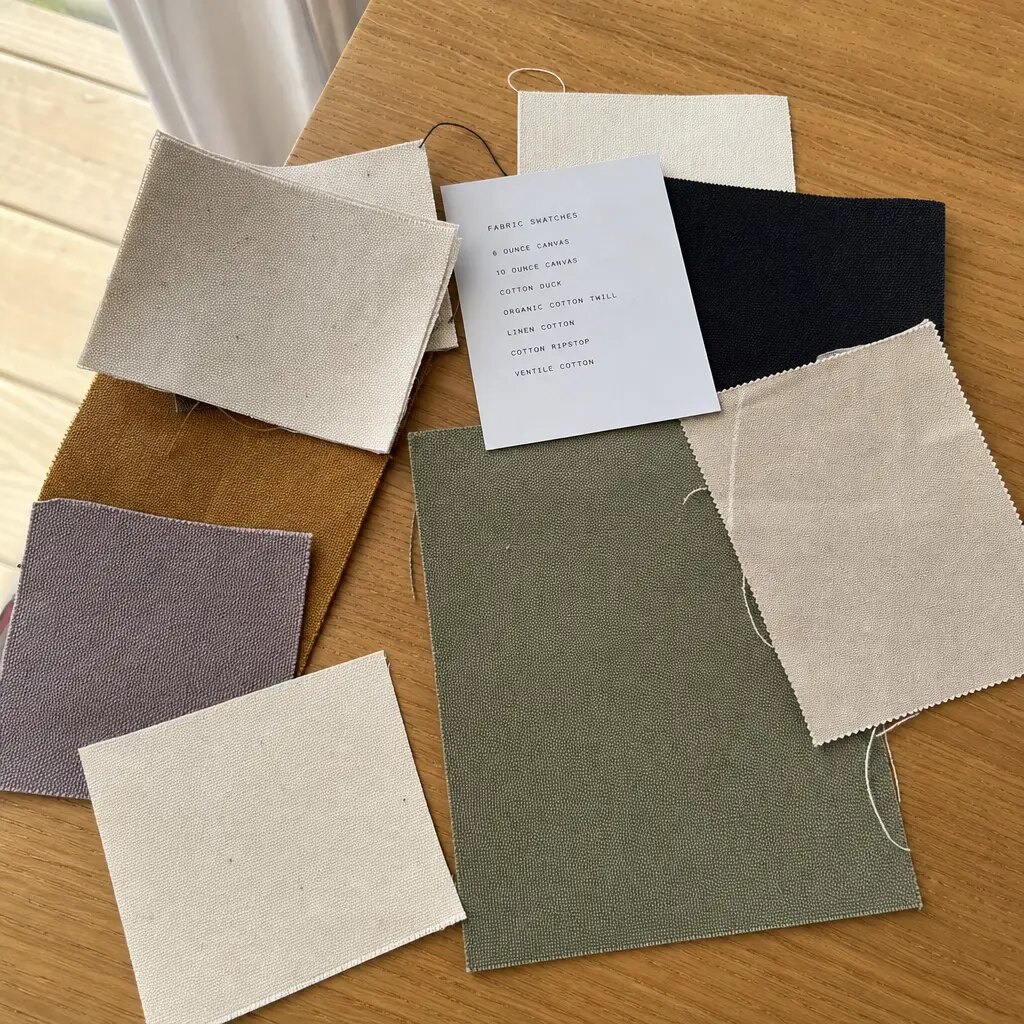
Do not approve on weight alone. Two fabrics with the same GSM can behave differently. A tight plain weave may print a logo more cleanly than a loose rustic fabric. Washed cotton may feel softer but wrinkle more. Canvas may add body, yet create bulk inside the drawstring channel. Approve the measured GSM and the hand feel together, then store labeled swatches with the purchase file.
- Write target GSM and tolerance into the PO, not only into email notes.
- Use ounce class as a commercial reference, not as the only inspection standard.
- Ask whether the fabric is stock fabric, mill-booked fabric, or custom finished fabric.
- Confirm whether GSM is measured before or after washing, dyeing, or softening if those processes are used.
- Reject quote comparisons that do not state fabric weight, finish, cord, print, and packing assumptions.
Match Fabric Weight to Load and Shelf Result
Approve the pouch with the actual product inside. Empty samples can be misleading because the fabric lies flat, the seams are relaxed, and the drawstring has not been stressed. Add soap bars, bottles, candles, folded textiles, jewelry boxes, or multi-item kits, and the same pouch may sag, wrinkle, reveal dark contents, or pull at the side seams. Hotel retail buyers should judge the pouch the way staff and guests will see it: filled, tied, handled, and packed.
For small sachets, eye masks, amenity refills, lightweight skincare, or low-cost turndown gifts, 4 oz to 5 oz cotton may be enough. Check opacity before approving it, especially with dark products, dark inserts, or dark logos. If the pouch supports a paid retail product, the cost saving from lighter fabric may not offset the weaker hand feel.
For soap sets, spa kits, travel accessories, resort merchandise, and moderate-weight retail items, 6 oz cotton is usually the most practical starting point. It gives more body and opacity than lightweight cotton without the closure bulk and carton weight of heavier canvas. It also often works well with screen printing when the weave is reasonably smooth.
For candles, glass bottles, multi-item gift sets, and reusable merchandise packaging, test 8 oz cotton canvas. It can improve tactile value and shelf presence, but it will not turn a soft pouch into a rigid box. If upright display matters, test the pouch together with the display tray, insert, belly band, hang tag, or shelf bin that will be used in store.
- Under 100 grams loaded weight: 4 oz to 5 oz can work for amenities, inserts, and giveaways if opacity is not critical.
- 100-300 grams loaded weight: 6 oz is often the practical retail choice for hand feel, print, and cost.
- 300-600 grams loaded weight: compare 6 oz with stronger seams against 8 oz canvas before purchase approval.
- Above 600 grams loaded weight: review whether a drawstring pouch is the correct format or whether a tote, box pouch, or reinforced bag is safer.
- For oily, dark, sharp, or irregular contents, test staining, show-through, pressure marks, and seam stress before confirming lightweight cotton.
Control Finish, Color, and Shade
Natural unbleached cotton is popular for resort, spa, wellness, and eco-style retail because it looks relaxed and tactile. It may include seed flecks and a shade range from cream to beige. Those natural features can be attractive, but they should be approved deliberately. If the hotel brand expects a clean, uniform tone, set an approved shade range instead of relying on a single photo or a digital mockup.
Bleached white cotton gives a cleaner background for spa programs, minimalist retail, and sharper logo contrast. Print colors can appear clearer on white than on natural cotton. The trade-off is visibility of handling. White fabric shows dust, oil, carton marks, warehouse dirt, and lint more easily. If the pouches must arrive retail-ready, packing protection and clean production handling become more important.
Dyed cotton can support hotel group color systems, seasonal retail, kids' programs, wedding packages, or property-specific merchandise. It also adds sourcing steps. Custom dyeing may require lab dips, shade tolerance approval, fabric MOQ, extra lead time, and tighter inspection. Compare dyed cotton with natural or white cotton only after those extra costs and timing requirements are included.
Finish changes both the hand feel and the way the pouch behaves in production. Washed cotton can feel softer but may shrink, distort, or wrinkle. Stiffened cotton may stand better but can feel less natural. Brushed or textured surfaces may look warm, yet reduce fine print clarity. Ask what finish the quote assumes, and confirm that the approved sample uses the same finish planned for bulk.
- Approve a shade range for natural cotton, especially for repeat orders and multi-property programs.
- Use bleached white when clean logo contrast is more important than hiding marks.
- Use dyed cotton when brand value justifies lab dip approval, MOQ, and extra lead time.
- Confirm whether shade evaluation will happen before cutting, after dyeing, or after final sewing.
- Keep swatches from approved lots so reorders can be compared to a physical reference rather than a screen image.
Choose Print Method by Fabric and Artwork
Printing on cotton drawstring pouches depends on the artwork and the fabric surface. Lightweight cotton can absorb ink unevenly, wrinkle during printing, or show shadows from the reverse side. Heavy canvas improves opacity, but a coarse weave may break fine lines. Natural cotton also shifts the look of ink because the base is not pure white. A logo approved on a digital mockup may need adjustment after a fabric strike-off.
Screen printing is usually the practical choice for hotel retail pouches with one to three spot colors. It suits resort logos, spa marks, collection names, event branding, and simple retail graphics. Buyers should specify print size, position, Pantone or brand color references, number of colors, and whether a white underbase is needed on darker fabric. When brand color matters, approve a physical strike-off.
Heat transfer can handle gradients, fine detail, and multicolor artwork. It may suit limited runs or complex graphics, but review the edge feel, flexibility, gloss level, and durability after folding. A transfer can look clean in a photo and still feel too synthetic for a natural spa or wellness pouch.
Embroidery can look premium on 6 oz or 8 oz cotton, especially for simple marks, initials, or small emblems. It is less forgiving on very light fabric, tiny lettering, or large dense stitch areas because puckering and distortion can occur. If embroidery is requested, confirm backing, stitch count, minimum text height, thread color, placement, and whether the inside of the embroidery affects the product inside the pouch.
- Screen print suits clean logos, solid colors, repeat orders, and cost-controlled hotel programs.
- Heat transfer suits multicolor artwork, gradients, and fine detail, but must be checked for feel and fold behavior.
- Embroidery suits simple premium marks on heavier fabric, not tiny lettering on lightweight cotton.
- Define placement by measurement, such as centered 70 mm below top edge, rather than by eye.
- Check print after filling and tying because the print panel may curve, wrinkle, or crease in real use.
- Include print strike-off approval for brand-sensitive logos, natural cotton bases, and darker ink coverage.
Engineer the Channel, Cord, and Seams
Fabric weight changes pouch construction. A 4 oz cotton folds easily into a narrow top channel. An 8 oz canvas can create bulk at side seams and channel openings. If the channel is too narrow, the cord drags or jams. If seam allowance varies, the top corners feel stiff or uneven. A heavier fabric should be approved as a complete pouch, not only as a swatch.
The standard construction is a folded top channel made from the main body fabric. It is efficient and clean for most retail pouches. For heavier fills or a more refined presentation, the supplier may recommend reinforced channel openings, double-needle stitching, stronger side seams, a separate top band, or bottom seam reinforcement. These choices affect cost, sewing speed, appearance, and tolerance, so they should be quoted clearly.
Cord is not a minor trim detail. Cotton cord supports a natural look and pairs well with unbleached cotton. Polyester cord often slides smoothly and can be cost-effective, especially on smaller pouches. Cord diameter must match the channel width. A thick cord can look premium but jam. A thin cord may feel weak or cut into the fabric under load.
Confirm the closure style before sampling. A one-sided pull is simpler and uses less cord. A two-sided drawstring is often easier for guests and retail staff because it closes more evenly. Cord ends may be knotted, tipped, sewn, wrapped, or heat sealed depending on the material. If the pouch will be reused, the end finish affects both function and perceived quality.
- Specify channel width, cord diameter, and cord length together, not separately.
- Measure usable height below the channel, because total height can overstate actual product space.
- Test closure after filling with the real product weight and shape.
- Check channel openings for stress, broken stitches, bunching, and uneven cord exit points.
- Confirm stitch density, seam allowance, thread color, loose thread standard, and trimming requirement.
- Keep large prints away from heavy crease zones near the channel when tied.
Understand Cost Drivers Behind Fabric Weight
A heavier pouch costs more for reasons beyond cotton consumption. Higher GSM raises material cost, cutting weight, sewing difficulty, carton gross weight, and sometimes the defect risk around thick channel areas. If the order ships by air or includes many low-volume SKUs, freight and handling can become meaningful. Compare landed cost and operational fit, not just unit price.
Fabric availability is a major driver. Standard natural cotton in common weights is usually easier to source than custom dyed fabric, unusual GSM, special weave, or washed finish. If the requested fabric falls below mill MOQ, the supplier may quote higher, use available stock, or suggest a substitute. Have that conversation before sample approval, because changing fabric later can require new print and construction tests.
Printing cost depends on method, color count, print area, setup, curing, defect allowance, and artwork complexity. A large dark screen print on natural cotton is not priced the same as a small one-color logo. Heat transfer may include transfer sheet cost and application labor. Embroidery depends on stitch count, thread colors, backing, and placement difficulty.
Packing also changes the economics. Individual polybags, barcode labels, hang tags, inner cartons, carton liners, and SKU separation add material and labor. Heavier fabric raises gross weight; bulky packing raises carton volume. For hotel groups distributing to multiple properties, accurate labeling and SKU separation may save more downstream labor than a small reduction in pouch unit cost.
- Compare quotes only when fabric GSM, finish, print, cord, construction, and packing are aligned.
- Ask for price breaks at launch quantity, reorder quantity, and annual program quantity.
- Include carton dimensions, units per carton, gross weight, and packing method in quote comparison.
- Treat custom dyeing, special cord colors, and individual retail labels as separate cost and lead-time items.
- A cheaper 5 oz pouch can be false economy if the retail shelf requires the opacity and hand feel of 6 oz cotton.
Plan MOQ for Multi-SKU Hotel Programs
MOQ is often misunderstood because one finished pouch can involve several minimums. There may be a minimum for fabric purchase, dyeing, printing setup, embroidery setup, size cutting, label production, barcode application, and packing style. A factory may accept a modest MOQ for stock natural 6 oz cotton with one-color print, but require a larger order for custom dyed 8 oz canvas with multiple retail labels.
Hotel retail programs often include several sizes: soap pouch, amenity pouch, jewelry pouch, candle pouch, and gift set pouch. Combining those sizes under one fabric weight, one fabric color, one cord color, and one print color can reduce setup pressure and make QC easier. Splitting every SKU into different weights and trims may look strong in a merchandising plan, but it can create higher cost and more receiving risk.
Hotel groups and distributors should plan beyond the first launch order. Reorders may be smaller and spread across properties. Ask for pricing at realistic reorder quantities, not only at the first bulk quantity. If property-specific printing creates too many versions, consider a shared base pouch with property-specific hang tags, belly bands, barcode labels, or inserts.
MOQ decisions also affect consistency. Very small split orders may push suppliers toward available fabric lots, which can create shade or texture differences. Larger consolidated runs make material control and inspection easier. When the brand needs consistent presentation across locations, consolidation may be more valuable than SKU-level customization.
- Ask whether MOQ is per size, color, artwork, print color, setup, packing style, or total PO quantity.
- Use one common GSM across related pouch sizes when possible.
- Group print colors and artwork versions to reduce setup and inspection complexity.
- Treat custom dyed fabric as a separate MOQ and lead-time decision.
- Confirm whether unused custom fabric can be stored for reorders, for how long, and under what cost terms.
- For distributors, request a quote structure that separates launch volume, reorder volume, and annual forecast.
Build a Sample and QC Approval Path
A sample can look correct and still fail in hotel retail use. The opening may be too tight, the cord may drag, the channel may twist, the fabric may show the product, or the print may crease after packing. Store staff may open and close the pouch repeatedly, and guests may reuse it after purchase. Function testing belongs in sample approval, not after production.
A strong sample path is staged. First approve a fabric swatch for GSM, finish, color, and hand feel. Then approve a construction sample if the pouch size, channel, seam, cord, or closure needs confirmation. Next approve a print strike-off when artwork or color matters. Finally approve a pre-production sample made with actual bulk fabric, actual cord, actual print, actual labels, and intended packing. If a sample uses substitute material, mark it as construction reference only.
Written QC criteria should be set before bulk production. Include GSM tolerance, finished size tolerance, print placement tolerance, shade range, seam defects, loose thread standard, cord length tolerance, closure function, print rub checks, and packing rules. Without written criteria, inspection becomes subjective and disputes are harder to resolve.
Control the approved samples. The factory should keep one sealed approved pre-production sample. The buyer, agent, or inspector should keep another. These samples become the reference for fabric, construction, logo, cord, labels, and packing. Photos are useful for communication, but they cannot replace physical references for cotton tone, thickness, and hand feel.
- Measure width, total height, usable height below channel, channel width, and cord length.
- Fill the pouch and test closure, seam stress, knot security, and handling comfort.
- Rub the print by hand and with a dry cloth to check surface transfer or weak adhesion.
- Inspect after folding and carton compression to identify logo creasing or pressure marks.
- Do not release bulk cutting until fabric, cord, print, labels, and packing are approved.
- Set final inspection before pickup, while cartons can still be opened and corrected.
Specify Packing, Labels, and Lead Time
Packing is part of the product specification. Cotton pouches can crease, absorb odor, collect lint, or pick up handling marks. Printed panels may show pressure lines if cartons are overfilled. If pouches ship empty and will be filled at destination, warehouse teams need clean sorting and predictable bundle counts. If another supplier will fill the pouches, carton labels and SKU separation must support fast assembly.
Individual polybags protect white or retail-ready pouches, but they add cost and packaging waste. Bundle packing can work well when cartons are clean, inner bundle counts are consistent, and pouches are not over-compressed. Hang tags, barcode stickers, size labels, price stickers, retail inserts, and hotel collection labels should be included before quote approval because they affect labor, packing sequence, and lead time.
Lead time usually begins after deposit, artwork confirmation, and sample approval, not when the first inquiry is sent. Common delays include unclear fabric weight, late artwork revision, custom color matching, missing barcode data, unresolved label files, and changed packing instructions. A simple stock natural 6 oz pouch with one-color screen print is easier to schedule than a multi-size dyed canvas program with several labels and split shipments.
For hotel openings, seasonal retail launches, conferences, weddings, and holiday programs, lock fabric weight and print method early. Changing GSM after sample approval is not a small edit. The pouch may need new sewing tests, closure checks, print strike-offs, and carton packing review. Treat any change to weight, fabric finish, print method, cord, or packing as a controlled revision.
- Use inner bundles by SKU, size, artwork, and color to prevent receiving errors.
- Mark cartons with PO number, SKU, size, fabric color, quantity, gross weight, net weight, carton number, and destination if needed.
- Request units per carton, carton dimensions, gross weight, packing photos, and carton label artwork before final approval.
- Protect printed panels from moisture, odor, dirty carton surfaces, and heavy compression.
- Approve hang tags, barcode stickers, retail labels, and carton marks before bulk packing begins.
- Build the schedule around swatch approval, sample making, sample shipping, production, inspection, packing, and freight.
Specification comparison for buyers
| Spec decision | Recommended option | When it fits | Buyer risk to check |
|---|---|---|---|
| Low-cost amenity pouch fabric | 4 oz to 5 oz cotton, commonly about 135-170 GSM, with agreed tolerance | Slippers, mini toiletries, turndown gifts, welcome notes, small amenity refills, and packaging where the pouch is secondary to the product | Can be translucent, wrinkle quickly, or feel too light for paid retail; dark contents may show through natural or white cotton |
| Core hotel retail pouch fabric | 6 oz cotton, commonly about 190-210 GSM, specified by measured GSM rather than name only | Spa kits, soap sets, candles under moderate weight, travel accessories, wellness sets, gift shop merchandise, and reusable branded packaging | Some suppliers quote lighter 5 oz class fabric as 6 oz; require swatch approval, measured GSM, and a filled sample test |
| Premium or heavier retail pouch fabric | 8 oz cotton canvas, commonly about 260-280 GSM, with construction adjusted for bulk | Higher perceived value, multi-item gift sets, glass items, candles, resort merchandise packs, and pouches intended for reuse | Thicker fabric can jam in the drawstring channel or create bulky corners; test closure after filling, not only when empty |
| Fabric finish and color | Natural unbleached for relaxed resort positioning; bleached white for clean spa retail; dyed cotton only when brand color control justifies MOQ | Natural suits wellness, resort, and low-intervention looks; white supports high logo contrast; dyed fabric supports coordinated collections | Natural cotton varies by lot; white shows dirt and handling marks; dyed cotton adds lab dip approval, mill MOQ, shade tolerance, and lead time |
| Print method | Screen print for 1-3 spot colors; heat transfer for gradients or fine multicolor art; embroidery mainly on heavier fabrics with simple artwork | Screen print suits repeat hotel logos and moderate volumes; transfer suits detailed artwork; embroidery can work for premium marks or monograms | Ink can crack or look uneven on coarse fabric; transfers can feel plastic-like; embroidery can pucker lightweight pouches |
| Cord and closure | Specify cotton or polyester cord, diameter, color, cord length, one-sided or two-sided pull, and end finish | Cotton cord supports natural branding; polyester cord slides smoothly; two-sided drawstring improves handling for retail and reuse | Cord may fray, slip, jam, or look uneven if diameter, channel width, knotting, tipping, or heat sealing is not controlled |
| Construction detail | Folded top channel for standard use; reinforced side openings, stronger seams, or added top band for heavier use | Standard channels suit most retail pouches; reinforcement helps repeated opening, heavier fills, or premium presentation | A neat empty sample can twist, bunch, or resist closure when loaded; check usable height below the channel as well as total height |
| MOQ basis | Clarify MOQ by fabric, color, size, print artwork, print color, packing style, and total order quantity | Useful for hotel groups ordering several pouch sizes, seasonal collections, or property-specific versions | Small split SKUs can raise unit price even when total order quantity is large; quote comparisons fail if MOQ basis is unclear |
| Packing format | Flat packed in clean inner bundles, cartons labeled by SKU and size, with optional polybags, hang tags, barcode labels, or carton liners | Best for importers, distributors, hotel retail buyers, and fulfillment teams that need clean receiving and inventory control | Over-compression can crease logos; poor SKU separation causes receiving errors; cotton can absorb moisture, odor, lint, or handling marks |
Buyer checklist before sampling
- Define the loaded product before specifying fabric: item weight, shape, fragility, sharp corners, retail price point, fill method, and whether the pouch is packaging, presentation, or a reusable product component.
- State target fabric weight in GSM and commercial ounce class, for example 6 oz class natural cotton, target 200 GSM, tolerance plus or minus 5 percent, instead of only asking for cotton canvas or natural cotton pouch.
- Confirm fabric construction and finish: plain weave cotton, cotton canvas, washed cotton, bleached cotton, dyed cotton, brushed cotton, softened finish, or stiffened finish, because similar GSM can feel and print differently.
- Request physical swatches before sample approval for natural, bleached, dyed, washed, custom-colored, or heavy canvas cotton; label each swatch with supplier code, GSM, finish, color, and date.
- Specify the use case clearly: guest amenity packaging, spa boutique retail, resort gift shop shelf display, e-commerce insert, event gift, minibar set, or reusable merchandise pouch.
- Provide artwork size, vector file format, Pantone or brand color reference, placement measurements, print method preference, number of print colors, and whether print approval requires a strike-off.
- Confirm cord material, diameter, color, cord length, draw direction, knotting, tipping, heat sealing, pull symmetry, and whether one-sided or two-sided closure is required.
- Set sample checks for measured GSM, finished size tolerance, usable height below channel, shrinkage if washing is involved, print rub resistance, color fastness where relevant, seam strength, closure function, and carton packing.
- Require quote data by pouch size, fabric weight, finish, color, print method, print area, MOQ basis, sample cost, sample lead time, bulk lead time, carton quantity, carton dimensions, gross weight, and packing method.
- Avoid splitting a small order across many fabric weights, colors, cords, prints, and packing styles unless the retail merchandising reason is strong enough to justify higher setup, QC, and inventory complexity.
Factory quote questions to send
- What exact fabric weight are you quoting in measured GSM and commercial ounce class, and what tolerance will be used for incoming fabric inspection?
- Is the quoted cotton greige, natural unbleached, bleached white, dyed, washed, softened, stiffened, or canvas, and can you provide a swatch from the same mill batch or an approved equivalent batch?
- What is the minimum fabric purchase requirement for this weight and color, and how does it affect MOQ if we order several pouch sizes under the same fabric?
- Is the MOQ calculated per size, per artwork, per fabric color, per print color, per print setup, per packing style, or by total order quantity?
- Which print method is included in the quote, how many colors are included, what ink, transfer, or embroidery assumptions are used, and what is the maximum print area for each pouch size?
- Will the drawstring channel be folded from the main fabric, made with an added top band, or reinforced at the side openings, and how does that affect thickness, appearance, and closing performance?
- What cord type, diameter, color, length, draw direction, knotting, tipping, heat sealing, and end finishing are included in the unit price?
- What finished size tolerances are proposed for width, total height, usable height below channel, channel width, side seam allowance, and cord length?
- What sample stages do you recommend: fabric swatch, construction sample, print strike-off, pre-production sample, and carton packing sample?
- What carton quantity, carton dimensions, gross weight, inner bundle method, moisture protection, carton lining, and carton marking format are assumed in the quote?
Quality-control points to confirm
- Fabric GSM should be verified from cut swatches before bulk sewing; inspection should use the agreed tolerance and test method rather than visual judgment or the supplier's commercial fabric name.
- Finished pouch size should be measured flat, including width, total height, usable height below the drawstring channel, channel width, and any tolerance for washing, pressing, or finishing.
- Logo placement should be checked against approved measurements from top edge, bottom edge, side seam, or centerline, not only by visual alignment.
- Print adhesion should pass a method-appropriate check such as tape pull, dry rub, hand rub, or controlled abrasion suitable for the selected ink, transfer, embroidery, and fabric texture.
- Drawstring closure should be tested after the pouch is filled with the intended product weight and shape, not only when empty on a sample table.
- Cord length, diameter, knot security, end finishing, pull direction, and two-sided pull symmetry should be checked against the approved sample and PO specification.
- Side seams, bottom seams, channel openings, and stress points should be checked for skipped stitches, broken stitches, loose threads, uneven seam allowance, and thread trimming quality.
- Natural cotton shade variation should be judged against the approved swatch range before full cutting, especially for repeat orders, multi-property programs, or replenishment SKUs.
- Printed panels should be reviewed after folding and packing because creases, ink transfer, pressure marks, and fabric shine may appear only after carton compression.
- Carton packing should protect printed panels from heavy creasing, moisture, odor transfer, dust, mixed-SKU receiving errors, and direct contact with dirty carton surfaces.