Durability starts with the retail use, not the pouch photo
Cotton drawstring pouches for hotel retail are often treated as simple packaging, but guests handle them more like small reusable bags. They may hold spa products, soaps, candles, slippers, amenity kits, jewelry, minibar accessories, or seasonal gift sets. The durability requirement changes completely depending on whether the pouch is opened once in a room or sold on a hotel boutique shelf as part of a premium product.
Before comparing supplier quotes, define the pouch load and the number of handling cycles. A pouch for a 50 g soap bar can use a lighter cotton and simple cord. A pouch for a candle, ceramic item, or multiple toiletry bottles needs stronger seams, better fabric stability, and print that will not crack when the fabric gathers at the drawstring channel.
- Low-risk use: one light item, short-term packaging, limited guest reuse.
- Medium-risk use: several small spa items, retail shelf handling, repeated open-close use.
- High-risk use: heavier glass, candles, bottles, sharp box corners, or a pouch sold as reusable merchandise.
- RFQ input to add: product dimensions, total packed weight, expected shelf life, and whether guests will wash or reuse the pouch.
Choose fabric GSM by load, feel, and print result
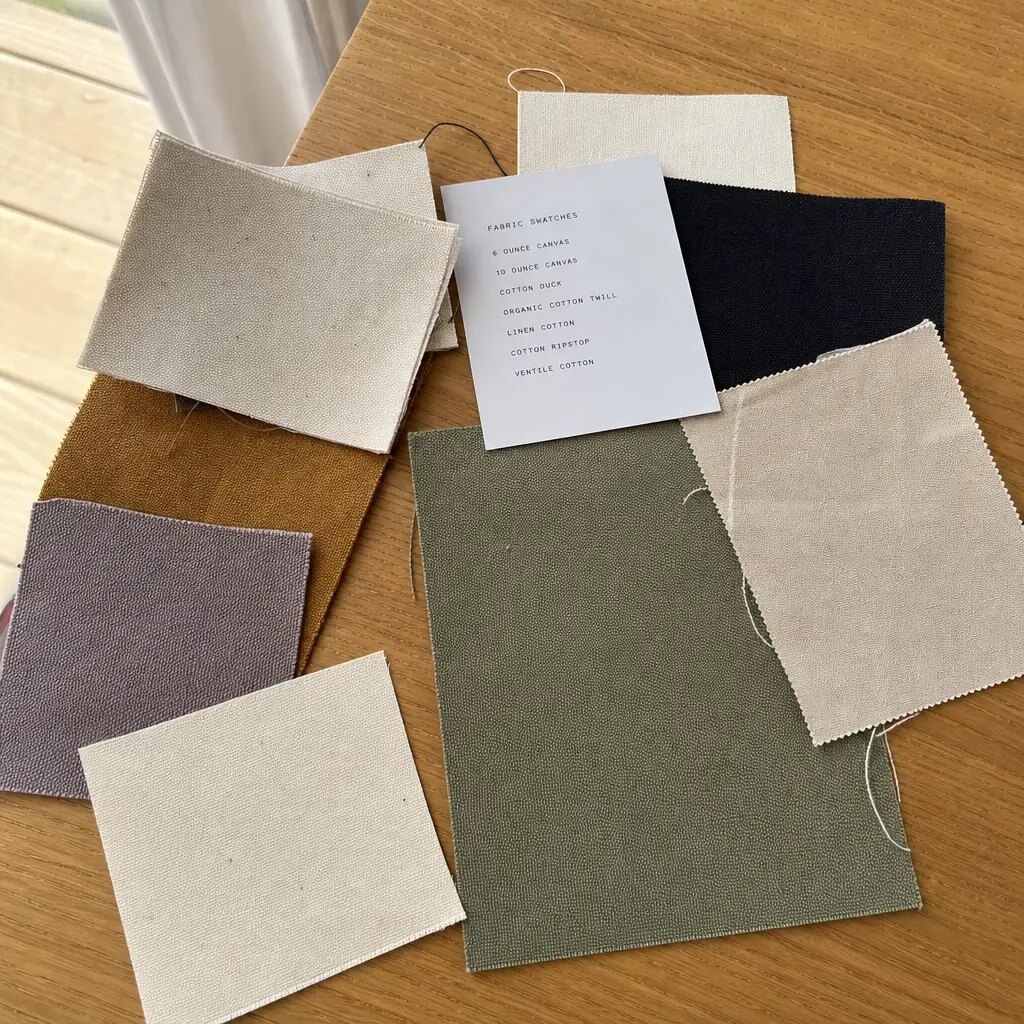
The most common mistake in RFQs is writing “cotton pouch” without fabric weight. Suppliers may quote 4 oz cotton, 6 oz cotton canvas, or 8 oz canvas under the same general description, and the price difference can be significant. More importantly, each option behaves differently during sewing, printing, packing, and guest use.
For hotel retail, 6 oz to 8 oz cotton canvas is usually the safer range when the pouch is part of the product value. It gives enough body for shelf presentation and reduces transparency. For low-cost amenity packaging, 4 oz to 5 oz cotton can be acceptable if the contents are light and the buyer accepts a softer, less structured pouch.
- 4 oz to 5 oz cotton, about 130-170 GSM: economical, soft, good for light amenities, but more wrinkling and less load resistance.
- 6 oz cotton canvas, about 200 GSM: balanced cost and handfeel for most hotel retail gift pouches.
- 8 oz cotton canvas, about 270 GSM: stronger shelf presence and durability, but may feel bulky on small pouches.
- Natural cotton may show seed flecks and shade variation; bleached or dyed cotton needs tighter shade approval.
- If the pouch is washable, request shrinkage data or run a wash test before approving finished size.
Size engineering prevents fit failures after sewing
A drawstring pouch becomes smaller after seam allowance, bottom seam, and top channel folding. If the buyer sends only the product size and asks for a “matching pouch,” the first sample may look correct flat but fail when the real item is inserted. This is common with boxed soaps, candle tins, folded slippers, and cosmetic sets where thickness matters.
The RFQ should state finished external size, usable internal height below the drawcord channel, and the required opening width. For products with sharp corners, include extra allowance so the corners do not stress the side seams. For a premium hotel retail pouch, a little extra breathing room usually looks better than a tight pouch with distorted printing.
- Measure the product length, width, depth, and actual packed weight.
- Add allowance for fabric thickness, seam bulk, and easy insertion at packing line.
- Keep logo artwork away from heavy fold areas and the gathered top channel.
- For small pouches, hold finished size tolerance around +/-5 mm where possible.
- For larger pouches, +/-8 mm is usually more realistic with cotton cutting and sewing.
Seam and drawcord construction are the main failure points
Most durability complaints on cotton drawstring pouches come from the side seam tearing near the cord exit, the bottom corners opening under load, or the drawcord fraying after repeated use. These failures are rarely visible in a product photo. They show up only when the pouch is loaded, pulled, opened, closed, and packed tightly.
For hotel retail, specify an inside overlock seam and a clean folded top channel. The cord exit area should not rely on a weak raw hole in the fabric. Depending on design, the factory can reinforce the side opening by bartack, denser stitching, cleaner folding, or using a channel construction that reduces stress at one point.
- Cord diameter of 3-5 mm is practical for most small and medium cotton pouches.
- Cotton cord matches a natural look but can fuzz with abrasion.
- Polyester cord is stronger and smoother, useful for repeated opening cycles.
- Very thin cord reduces cost but can cut into the channel and feel low grade.
- Cord length should allow easy opening without excessive dangling after knots.
Print durability depends on artwork, fabric, and pouch movement
A hotel logo printed on a flat cotton pouch may look excellent in the sample photo but fail after the pouch is tightened, rubbed in a carton, or handled on a retail shelf. Drawstring pouches are not rigid packaging. The fabric gathers, bends, and rubs against the cord channel and neighboring units. Print method selection must reflect this movement.
Screen printing is usually the best commercial option for one- to three-color hotel retail logos, especially on natural or dyed cotton. It gives good cost control at volume and strong color coverage when the ink is matched to the fabric. Heat transfer can work for detailed artwork, gradients, or small runs, but the buyer should pay attention to edge lifting, handfeel, and cracking on gathered areas.
- Keep solid logo prints away from the drawcord channel and heavy fold lines.
- For natural cotton, approve ink color on actual fabric, not white paper.
- For dark dyed cotton, confirm whether an underbase is needed for bright logos.
- Set print placement tolerance, commonly +/-5 mm to +/-10 mm depending on pouch size.
- Run dry rub and light wet rub tests if pouches contact skincare, soap, or damp bathroom environments.
Use a sample approval sequence that catches bulk problems early
One sample is not always enough. A blank size sample confirms fit and sewing shape. A printed pre-production sample confirms logo size, print handfeel, print position, and fabric behavior. A packing sample confirms whether the printed panel creases, whether the cord tangles, and whether the carton count is workable for the hotel retail distribution center.
The safest approval sequence depends on order value and launch deadline. For a simple natural cotton pouch with one-color print, one printed pre-production sample may be enough if the buyer has already approved the fabric swatch. For dyed cotton, multi-color printing, or a pouch sold with a premium spa or gift product, the sample process should include fabric shade approval and a real product fit test.
- Blank prototype: verifies finished size, channel width, cord function, and product fit.
- Printed sample: verifies artwork scale, ink adhesion, logo position, and fabric show-through.
- Loaded handling sample: verifies seam strength with the actual product weight inside.
- Packing sample: verifies fold method, bundle quantity, carton count, and barcode position.
- Shipment sample: useful for distributors who need a retained reference for incoming QC.
MOQ logic: what actually drives the minimum order
MOQ is not only a factory preference. For cotton drawstring pouches, the practical minimum depends on fabric availability, dyeing, cutting efficiency, print setup, and sewing line changeover. A natural cotton pouch in a common size can often run at a lower MOQ than a custom dyed pouch with multiple logo versions for different hotel properties.
Buyers can often improve pricing by consolidating sizes, fabric color, or print color. For example, several hotel locations may use the same natural cotton base pouch with different one-color logos. That still creates separate print setups, but it may help the factory purchase fabric more efficiently. On the other hand, every different size, dyed color, cord color, and print artwork increases production handling.
- Lower MOQ is more realistic with stock natural cotton fabric and simple one-color screen print.
- Custom dyed fabric usually requires higher MOQ because dye vats and shade control have minimum batch needs.
- Multiple pouch sizes reduce cutting efficiency and increase QC sorting work.
- Multiple hotel logos require separate artwork setup and packing separation.
- Small trial orders should still use production fabric and production print method, or the trial will not predict bulk quality.
Quote comparison: separate unit price from durability value
The cheapest quote may be using lighter cotton, thinner cord, simpler seams, smaller finished size, or less protective packing. If the supplier quote does not show these details, the buyer is not comparing equal products. A price difference of a few cents can be reasonable if it includes better fabric weight, stronger cord, reinforced stitching, and carton packing that protects retail appearance.
For a clean comparison, request a quote sheet that breaks out the main cost drivers. The factory does not need to disclose its full costing, but it should identify what is included. This allows procurement teams to compare landed cost risk, not just FOB unit price.
- Fabric: GSM, cotton type, fabric color, and whether pre-shrinking or dyeing is included.
- Sewing: seam type, channel construction, reinforcement, trimming standard.
- Cord: material, diameter, color, knot or end finish.
- Printing: method, number of colors, print size, setup charges, and artwork revision limit.
- Packing: inner pack, carton quantity, carton size, barcode labels, and retail-ready requirements.
- QC: inspection standard, sample approval steps, and whether testing is included or charged separately.
- Logistics: carton cube and gross weight, because bulky packing can raise landed cost.
Packing choices affect print appearance and landed cost
Cotton pouches can be packed flat, folded, bundled, or individually bagged. The best method depends on whether the pouch is sold empty, filled at the buyer’s facility, or packed together with the final retail item at the factory. Packing that is efficient for freight may create hard creases through the logo. Packing that looks premium may increase labor, plastic use, and carton volume.
Hotel retail buyers should decide whether shelf appearance or warehouse handling is the priority. If the pouch will be filled later, flat packing in controlled bundles often works well. If the pouch is already part of a finished retail set, the factory needs the final configuration, barcode requirements, and drop carton limits early in the project.
- Flat bundle packing reduces wrinkles compared with tight folding across the logo.
- Individual polybags protect against dirt but may conflict with plastic reduction policies.
- Paper bands or recyclable inner packs can work if the route is clean and dry.
- Cartons should not be overpacked to the point that drawcord knots emboss into printed panels.
- For humid routes, discuss moisture control, carton strength, and whether silica gel is permitted.
Lead time risks usually come from approvals, not sewing speed
Sewing a cotton drawstring pouch is not the longest step in many hotel retail programs. Delays usually come from late artwork, unclear logo colors, fabric shade approval, sample revisions, holiday production gaps, or waiting for the buyer’s real product to test fit. A rushed approval often transfers risk into bulk production.
A realistic production schedule should include fabric sourcing, sample making, print setup, bulk cutting, sewing, trimming, inspection, packing, and export documentation. If the pouch is one component in a larger retail kit, align the pouch schedule with the filling or kitting schedule. Pouches arriving late can delay the entire retail launch even if the product inside is ready.
- Allow time for artwork cleanup before screen setup.
- Add lab dip or shade approval time for dyed fabric or dyed cord.
- Do not approve bulk cutting before finished size and fit test are signed off.
- Hold a pre-production sample as the control sample for QC and dispute resolution.
- Plan extra time before peak seasons, national holidays, and hotel opening deadlines.
Specification comparison for buyers
| Spec decision | Recommended option | When it fits | Buyer risk to check |
|---|---|---|---|
| Fabric weight for retail shelf pouch | 6 oz to 8 oz cotton canvas, roughly 200-270 GSM depending on weave | Hotel gift shops, spa amenity kits, premium minibar bundles, souvenir sets | Too light can feel disposable; too heavy can make small pouches bulky and increase freight cube |
| Fabric weight for low-cost amenity pouch | 4 oz to 5 oz plain cotton, roughly 130-170 GSM | In-room welcome kits, low-value accessory packaging, short promotion runs | Light fabric may show contents, wrinkle more, and fail seam stress if overfilled |
| Seam construction | Inside overlock plus folded top channel; reinforced side seam at cord exit | Most repeat hotel retail orders where handling is frequent | Single weak lockstitch at the cord exit can tear after repeated opening cycles |
| Drawcord material | Cotton cord 3-5 mm or braided polyester cord when higher abrasion resistance is needed | Cotton cord for natural look; polyester cord for repeated retail use and darker dyed colors | Thin cord may cut into fabric channel; waxy cord may slip and feel cheap |
| Print method | Screen print for solid hotel logos; heat transfer only when artwork requires fine gradient or many colors | Screen print fits most one- to three-color branding and larger volumes | Thick ink can crack on gathered fabric; transfer edges can lift after rubbing and packing compression |
| Size tolerance | Finished size tolerance of +/-5 mm for small pouches and +/-8 mm for larger pouches | Retail sets where pouch must fit soap, candles, slippers, cosmetics, or bottle accessories | Specifying only flat cut size instead of finished size causes fit failures after sewing shrinkage |
| Shrinkage control | Pre-shrunk fabric or approved shrinkage allowance, target within 3-5% after wash test where relevant | Programs marketed as washable, reusable, or premium cotton | Uncontrolled shrinkage can distort logo position and make drawcord channel tight |
| Packing method | Flat packed in inner polybag bundles or paper-banded bundles; silica gel for humid routes if allowed | Hotel retail distribution, store replenishment cartons, and mixed SKU deliveries | Over-compression creates hard creases across printed logos; loose packing increases carton deformation |
| Inspection level | AQL final inspection with functional cord pull test and print rub test added to visual checks | Importers and distributors consolidating several hotel retail SKUs | Standard visual inspection alone may miss weak cord stitching and ink adhesion issues |
Buyer checklist before sampling
- Define pouch use: retail sale, amenity packaging, gift-with-purchase, spa product bag, or room presentation pouch.
- List the actual contents with weight, dimensions, sharp edges, and whether the pouch will be opened repeatedly by guests.
- Specify finished size, not only cut size, and include usable internal size if the item must fit tightly.
- Select cotton fabric by GSM or ounce weight and request the supplier’s actual fabric swatch, not only a catalog photo.
- Set a seam requirement: overlock inside seams, reinforced cord exit points, and clean trimming with no loose threads longer than 5 mm.
- Define drawcord type, diameter, color, knot finish, and whether the cord must pass a pull and abrasion test.
- Approve print method based on artwork, fabric color, order quantity, and rub resistance requirement.
- Require a pre-production sample using production fabric, production cord, and actual logo print method.
- Test the sample with the real retail item inside before signing off size, fabric handfeel, and cord function.
- Add acceptance criteria for print position tolerance, color variation, seam strength, shrinkage, and packing crease limits.
Factory quote questions to send
- What is the exact fabric construction you are quoting: cotton type, weave, GSM or ounce weight, and whether it is greige, bleached, dyed, or pre-shrunk?
- Is the quoted size the finished pouch size after sewing, and what tolerance will your factory accept in bulk production?
- Which seam construction is included in the price, and how will the cord exit area be reinforced?
- What drawcord material, diameter, and end finishing are included, and can you provide cord pull test results from the sample?
- Which print method are you pricing, how many colors are included, and what print size limit applies before the unit price changes?
- What is the MOQ by fabric color, print design, and pouch size, and can multiple hotel properties share the same fabric batch?
- What sample types are included: blank size sample, printed pre-production sample, packing sample, or shipment sample?
- What are the standard defect limits for stains, slubs, broken stitches, uneven channel width, print misregistration, and shade variation?
- What packing method is included in the quote, and what is the estimated carton size, carton weight, and units per carton?
- What is the realistic lead time after artwork approval and deposit, and which inputs from the buyer can delay production?
Quality-control points to confirm
- Finished size measured flat after sewing, with top channel relaxed and drawcord not tightened.
- Fabric GSM verified from actual bulk material or supplier test report, not only sample tag.
- Seam strength checked at side seam, bottom corners, and cord exit points with loaded pouch handling test.
- Drawcord pull function tested through repeated open-close cycles without fabric tearing or cord fraying.
- Print adhesion checked by dry rub and light wet rub where the pouch may contact skincare, soap, or damp towels.
- Print placement measured from pouch top edge and side seam, allowing realistic tolerance for cotton cutting and sewing.
- Color consistency reviewed between approved sample and bulk, especially for dyed fabric and dark ink on natural cotton.
- Loose thread, lint, oil marks, needle holes, and fabric stains controlled before retail packing.
- Carton compression and packing crease review completed for printed panels before shipment release.
- Random fit test conducted using the buyer’s real product or approved dummy insert.