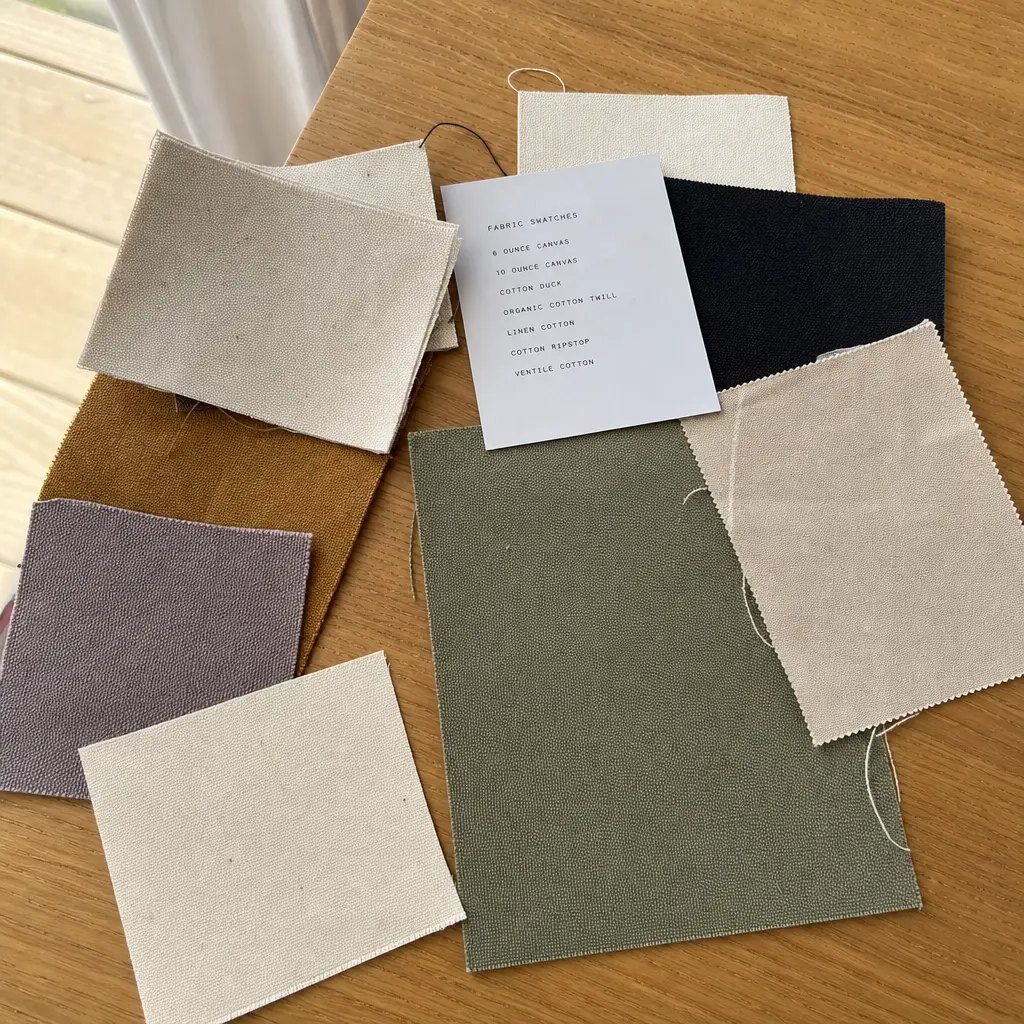
Start With the Box Use Case
Cotton drawstring pouches for subscription boxes are packaging components, not generic giveaway bags. The pouch has to fit the insert, protect what is inside, and still look neat when the customer opens the box. That means the RFQ should start with the real use case: what goes in the bag, how often the bag is handled, whether the pouch is decorative or reusable, and whether it is packed by the factory or your fulfillment team.
That context changes the spec more than most buyers expect. A pouch holding jewelry samples can tolerate a lighter hand and a softer weave. A pouch carrying skincare, tea, or a multi-piece gift set needs more structure, better seam integrity, and enough internal space to close cleanly after pack-out. If the pouch is part of a subscription box assembly line, the supplier also needs to know whether it must ship empty, pre-folded, pre-labeled, or already packed with a card or sample.
- Name the contents, target fill weight, and whether the pouch must stay flat or support a bulkier shape.
- State whether the pouch is a one-time insert, a reusable brand item, or a retail-style accessory.
- Tell the factory if the pouch must accept a card, tissue wrap, or small product sample without bulging.
- Include the exact destination flow, such as direct to warehouse, 3PL, or box-stuffing line.
Get the Finished Size Right
The most common RFQ mistake is to provide only a flat bag size and assume everyone means the same thing. For a sewn pouch, the factory needs the finished usable internal size, the cut size if available, the channel depth, and the seam allowance that disappears during sewing. A pouch that looks adequate on paper can become too tight once the top hem, side seams, and drawcord channel are actually built.
A practical way to size the bag is to work backward from the insert. If a product measures 100 x 150 mm, a finished internal pouch around 115 x 170 mm is often safer than a tighter spec if the contents include a card, tissue, or another small accessory. The exact number depends on the product shape and how much ease you want for packing, but the key point is to define the minimum clearance in writing instead of leaving it to factory judgment.
- Write finished usable internal size, not just cut size or nominal flat size.
- Add the minimum clearance around the widest and tallest part of the insert.
- State whether the sample must fit flat items, rounded items, or a mixed kit.
- Define the measurement points so every supplier measures the same way.
- If the fit is tight, require a pre-production sample against the real contents before bulk release.
Pick Fabric Weight and Weave
Most cotton drawstring pouch programs sit in three useful bands. Around 120 to 140 GSM works for light inserts, jewelry, samples, and promotional packaging that does not need much structure. Around 150 to 180 GSM is the most practical default for subscription box use because it balances hand feel, print quality, and cost. Around 180 to 220 GSM is better when the bag is meant to feel reusable, protect heavier contents, or carry a more premium retail impression.
Weight alone does not tell the whole story. A tighter weave generally gives cleaner print edges and a more controlled appearance, while a looser weave looks softer and more natural but can show texture, print spread, or uneven shade more easily. If your brand wants natural cotton, unbleached cloth, or a specific dyed shade, say that in the RFQ. Also ask whether the fabric is pre-shrunk or whether the supplier expects any shrinkage after finishing, because that affects both fit and repeatability.
- Use 120 to 140 GSM for light, low-load inserts and test programs.
- Use 150 to 180 GSM as the default range for most subscription box pouches.
- Use 180 to 220 GSM when the pouch needs more structure or a more reusable feel.
- Specify plain weave, weave density, and whether the fabric should be soft, crisp, or natural-looking.
- If washability matters, ask for the supplier's shrinkage expectation and how they test it.
Choose Closure and Brand Execution
The drawcord choice affects both the buying price and the customer experience. A single drawcord is usually the simplest and least expensive option, which makes sense when the pouch is mostly an insert. A double drawcord can feel more premium and close more evenly, but it adds material, labor, and a little more chance for variation during sewing. The RFQ should name the cord material, diameter, length, and end finish so the supplier does not replace it with a cheaper or rougher detail.
Branding is the other place where quotes diverge quickly. Screen print is still the cleanest choice for flat logos and repeat orders because it is predictable on cotton and easier to compare across suppliers. Embroidery, woven labels, sewn patches, and heat transfer each change both the look and the cost structure. For example, a one-color print on one side is usually a very different job from a two-sided print with a woven side label and individual bagging. If the logo is near the top, remember that the hem and drawcord channel often consume 20 to 35 mm of the bag height, so placement has to be defined in millimeters, not estimated by eye.
- Specify single or double drawcord and the exact cord material.
- State cord length and whether the ends must be knotted, heat sealed, or left raw.
- Define the logo method, print area, and where the art sits relative to the seam and top edge.
- If you accept a fallback method, list the approved fallback before quoting starts.
- If the pouch will be handled repeatedly, ask the factory to test the cord action on a production-like sample.
Compare Supplier Routes Before Price
Two quotes can look similar while coming from very different supplier routes. A direct factory with sewing and printing in one place usually has the clearest production control and the fewest handoffs. A trading company or sourcing agent can simplify communication if the pouch is only one piece of a larger subscription kit, but the cost structure is often less transparent. A domestic decorator using imported blanks can be fast for small launches, but the blank bag may not match the bulk spec if you later scale the program.
The commercial question is not just who is cheapest. It is who owns each production step, where the setup fees sit, and how many times the bag changes hands before it reaches your warehouse. A job with 2 handoffs is easier to manage than one with 4. An order with 1 print color and 1 size is easier to control than a kit with 3 colors, 2 sizes, and mixed pack counts. The best source route is the one that matches your volume, launch timing, and tolerance for operational risk.
- Use a direct factory when the pouch will repeat month after month.
- Use a trading company when you need one quote across several packaging components.
- Use a domestic decorator when speed matters more than the lowest unit price.
- Use dual sourcing when stockout risk is higher than the cost of duplicate approvals.
- Ask who prints, who sews, who packs, and who inspects so the quote does not hide handoffs.
Structure the RFQ So Quotes Are Comparable
A useful RFQ reads like a production brief. It should separate fabric, cutting, sewing, decoration, packing, labeling, and export handling instead of hiding everything in one unit price. If the supplier only sends a lump sum, you cannot tell whether the lower price came from lighter cloth, looser packing, a cheaper cord, or reduced inspection. That is how the quote looks attractive and then turns expensive once the details are filled in later.
Ask for the order in the quantity bands you actually plan to buy. If you may start with 3,000 pieces and move to 10,000 or 25,000 on a repeat run, get those numbers quoted up front. Then ask for exclusions: screens, plates, samples, cartons, barcode labels, and freight terms. Once those items are visible, you can compare apples to apples instead of comparing a complete quote to an optimistic placeholder.
- Break the quote into fabric, sewing, decoration, packing, and carton cost.
- Ask for pricing at the order tiers you are likely to reorder.
- Require the supplier to list all exclusions and assumptions in writing.
- Make packaging and label details part of the quote, not a later add-on.
- Ask whether the sample fee is credited back if the bulk order is placed.
Set Sample Approval Criteria Before Bulk Starts
Sample approval should be a gate, not a formality. A first sample is for structure and proportions, a second sample is for production realism, and the pre-production sample is the version that should match the final material and decoration path. Buyers get into trouble when they approve a pretty photo or a hand-finished sample that hides the real production details. If the production fabric is looser, the cord is rougher, or the finished size shrinks after sewing, the first bulk run becomes a rework problem instead of a launch item.
The approval standard should be measurable. Check the bag with the real contents inside it, then measure finished size on at least 3 pieces from the sample lot. If your supplier can measure color, you can ask for a target such as a Delta E limit; if not, use a physical master sample and require the bulk run to match it. Also test the bag through a few open-and-close cycles so you are not approving a pouch that looks right once but performs poorly in use.
- Approve against a signed physical sample, not only a photo.
- Measure finished dimensions on multiple sample pieces, not just one.
- Check fit with the actual product set, not a filler item.
- Define whether color is controlled by Pantone reference, physical master sample, or both.
- Confirm that any approved exception is written down before bulk production starts.
Write QC Tolerances for Bulk
Most pouch defects are practical rather than dramatic. The common problems are off-center prints, weak seams, loose threads, uneven cord lengths, mixed shades, and wrong carton counts. In a subscription box, those problems become visible immediately because the pouch is one of the first things the customer sees. That is why the QC standard should separate major defects from minor ones and use clear thresholds instead of vague language like good quality or no visible issue.
A workable buyer standard is simple. Reject any hole, open seam, broken stitch line, incorrect size outside tolerance, or logo placement that misses the approved location by more than 3 mm to 5 mm depending on the design. For minor defects, allow only issues that do not affect use or presentation, such as short loose threads or light wrinkling that can be corrected by folding. Inspecting 3 cartons from different parts of the lot is a practical start for bulk checks, especially when you want to confirm that the lot is consistent rather than just the top carton.
- Reject open seams, holes, broken cords, and wrong-size pieces outright.
- Use a written placement tolerance for the logo, usually plus or minus 3 mm to 5 mm.
- Treat mixed shade lots as a reject unless mixed packing was approved in advance.
- Check 3 cartons from different parts of the shipment, not only the first carton opened.
- Record seam, print, and packing defects separately so the supplier can fix the right process.
Plan Packing for Fulfillment, Not Only Shipping
Packing is part of the product when the pouch goes into a subscription box. Bulk-packed bags may be the cheapest factory option, but that saving disappears if your warehouse has to count, fold, or re-bag every unit. Define whether the bags arrive flat-folded, nested, bundled by count, or pre-packed with cards and inserts. If the goods go to a 3PL, the carton format matters as much as the unit price because it affects receiving speed, storage density, and manual handling.
Ask for carton count, inner bundle count, carton marks, barcode labeling, and a maximum carton weight that fits your warehouse process. If the team handles boxes manually, many buyers set a practical ceiling around 12 to 15 kg so receiving does not become a strain or a safety issue. If the pouch is light-colored or natural cotton, also confirm the carton interior and wrapping method so transit dust or rubbing does not mark the bags before they reach the box line.
- State the fold style and the count per inner bundle and master carton.
- Specify whether the pouch is packed loose, flat-folded, nested, or pre-inserted with other items.
- Require barcode labels, SKU marks, or carton marks if your warehouse depends on them.
- Set a maximum carton weight if the receiving team handles cartons manually.
- Ask for carton dimensions so you can estimate storage and freight efficiency before award.
Close the RFQ and Award the Job
The strongest RFQ closes with a decision list, not a vague request for quotes. It should show the product name, exact size, fabric target, branding method, packing format, quantity bands, sample path, lead time, and destination terms. It should also state what you do not want: weak seams, rough cord ends, undersized bags, mixed shades, and carton counts that do not match the packing list. That level of specificity gives suppliers a clear target and reduces the chance that the cheapest quote wins by assuming the easiest version of the job.
For cotton drawstring pouches used in subscription boxes, the cleanest award decision is usually the supplier that can repeat the same spec without re-interpreting it every cycle. That matters more than a tiny difference in unit price. A quote that is slightly higher but includes better inspection, clearer packing, and a realistic production schedule often creates less total cost than a quote that looks cheap but needs follow-up on every detail.
- Attach artwork, a reference sample, and a dimension sheet to the RFQ.
- List the target quantity, reorder band, and destination terms.
- Ask the supplier to quote sample, bulk, and packing lead times separately.
- Require the quote to state assumptions, exclusions, and inspection responsibility.
- Award only after the sample, QC plan, and packing format are aligned.
Specification comparison for buyers
| Supplier route | Commercial profile | Main cost drivers | Defect or delay risk | Best fit |
|---|---|---|---|---|
| Direct factory with in-house sewing and printing | Usually the cleanest route for repeat orders because cutting, sewing, and decoration sit in one production flow. | 1 or 2 setup fees, fabric yield, print color count, and carton packing. | Lower handoff risk, but confirm whether labels, cartons, or specialty packing are subcontracted. | Recurring subscription box programs with stable artwork and predictable volume. |
| Trading company or sourcing agent | Useful when the pouch is one line item inside a larger kit and you want one commercial contact. | Agent margin, third-party factory MOQ, and markup on labels or packing extras. | Two or more handoffs can hide the real factory and blur responsibility for defects. | Multi-component subscription kits or buyers without local supplier management. |
| Domestic decorator using imported blanks | Fast for small launches because the base pouch already exists and only the branding step is added. | Blank pouch cost, decoration setup, domestic labor, and any rush freight. | Blank quality may not match bulk production later, so sample approval can be misleading. | Short runs, test launches, and one-color branding with tight delivery dates. |
| Low-MOQ sample shop | Good for prototypes or market testing, but unit cost is usually the least efficient. | Setup spread over 25 to 100 units, plus any custom fabric surcharge. | Easy to approve a sample that cannot scale into a stable bulk spec. | Early-stage validation before a larger production award. |
| Dual-source primary plus backup factory | Higher management effort, but better continuity for annual subscription programs. | Duplicate approvals, matched materials across 2 plants, and extra coordination time. | Shade, size, or print drift if the spec is not frozen tightly enough. | High-volume recurring programs where stockouts are expensive. |
| Factory with in-house packing and kitting | Strong option when pouches must ship folded, bundled, and pre-inserted with cards or samples. | Manual insert labor, count verification, and extra inspection steps. | Count accuracy issues if the warehouse process is not documented. | Fulfillment-driven orders where labor savings matter as much as unit price. |
| Regional supplier near the fulfillment center | Often more expensive on factory price, but transit time and replenishment are easier to manage. | Domestic freight, smaller batch runs, and faster replenishment cycles. | The base price may look higher, so compare landed cost rather than ex-factory price only. | Urgent replenishment or programs that need a short domestic supply chain. |
| Audit-ready export factory | Best when documentation, repeatability, and formal supplier approval matter. | Documentation work, export packing, and tighter pre-production controls. | First-order lead time can stretch if approvals are strict. | Retail, distributor, or larger brand programs with supplier onboarding requirements. |
Buyer checklist before sampling
- State the actual packed contents, not just the pouch size, so the factory can quote fit and material correctly.
- Specify finished usable internal size, cut size if known, and the minimum clearance around the widest insert.
- Write the fabric target in GSM, weave, color, and whether the cotton is bleached, unbleached, or dyed.
- Define the closure style, cord material, cord length, and end finish so the supplier cannot substitute cheaper details.
- Choose a branding method before quoting, including print location, print size, and any acceptable fallback method.
- Include packing format, bundle count, master carton count, and any insert or label requirements.
- Ask for sample stages, sample fees, and the exact approval point before bulk starts.
- Require the quote to list assumptions, exclusions, lead times, and who owns final inspection.
Factory quote questions to send
- What part of the price is fabric, cutting, sewing, decoration, packing, and export handling?
- Which MOQ is driven by fabric roll yield, print setup, labor efficiency, or packaging materials?
- Who makes the fabric, who prints or embroiders, and who performs the final inspection?
- What measurement points are you using for finished size, and what tolerance are you quoting against?
- How many sample stages do you provide, and does the sample fee apply to bulk if the order is placed?
- What exactly is included in the unit price for packing, carton marks, inner bags, and labels?
- What is excluded from the quotation, including screens, plates, cartons, hang tags, or freight?
- What is the lead time after artwork approval, after sample approval, and after deposit?
- Can you quote the same bag in two GSM options so I can compare cost versus feel?
- If the logo moves, the size changes, or the carton spec changes, how is the price adjusted?
Quality-control points to confirm
- Finished dimensions must stay within the approved tolerance, typically plus or minus 5 mm for standard bags and tighter when the insert fit is critical.
- Logo placement should remain within plus or minus 3 mm of the approved location, with no obvious skew or bleed.
- Side seams and bottom seams must be fully closed, even, and free from skipped stitches or seam gaps greater than 2 mm.
- Drawcords should slide cleanly through the channel, close evenly, and show no fraying at the cut ends after simple handling checks.
- Fabric shade should be consistent within the lot, with no mixed shades unless mixed-shade packing was approved in writing.
- Cartons must contain the correct count, correct fold method, and no mixed sizes, mixed prints, or damaged pouches.
- Stains, oil marks, holes, open seams, or broken cords are major defects and should be rejected outright.
- Loose threads, light wrinkling, or small fold marks can be minor defects only if they do not affect function or appearance in the box.