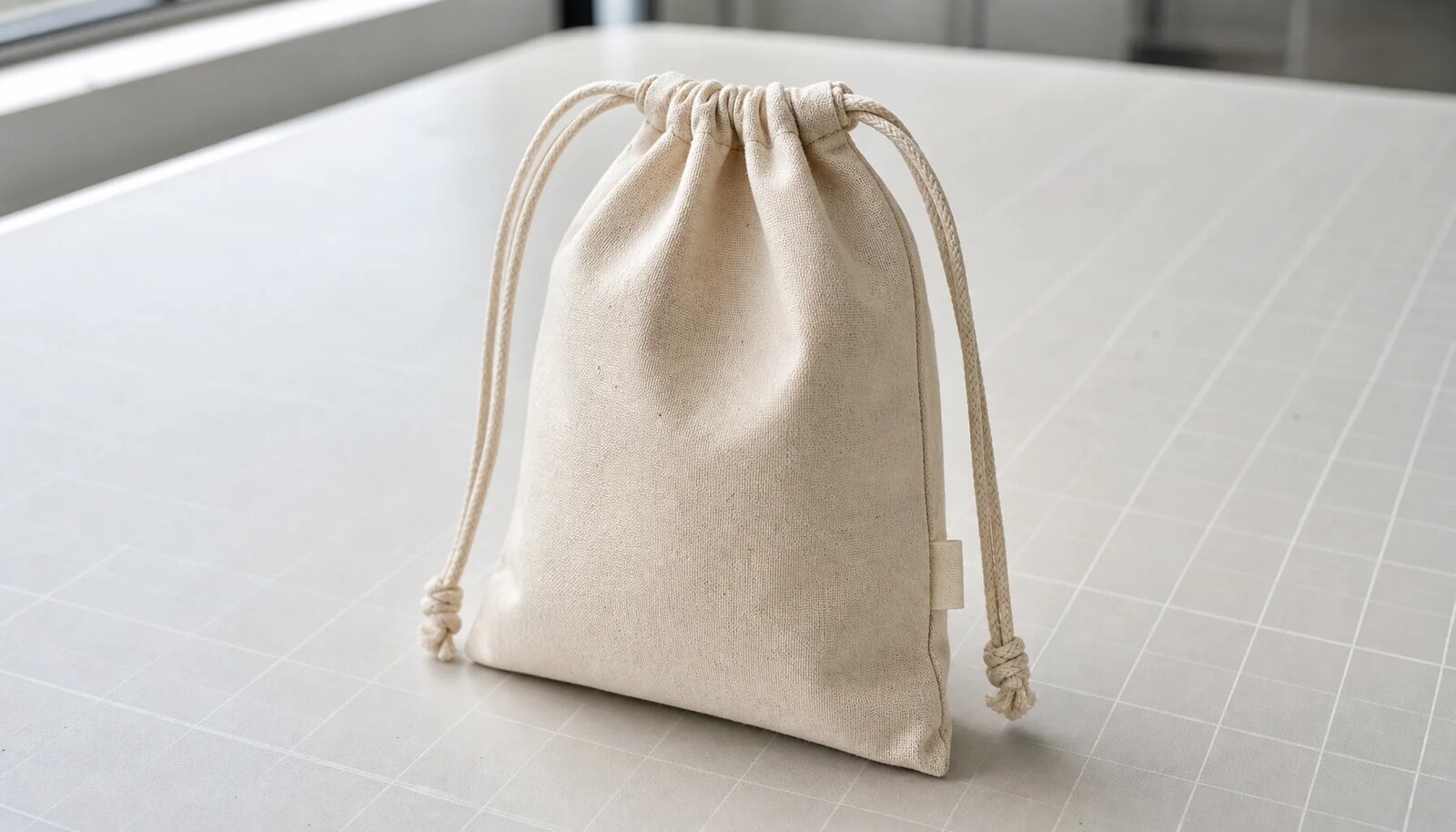
Start With the Event Job, Not the Pouch Photo
A cotton drawstring pouch can look harmless in a catalog image and still become a procurement headache once it enters the event workflow. The real question is not simply whether the pouch is attractive. It has to fit the contents, move through packing without slowing the team, carry the brand mark cleanly, arrive in the right cartons, and still look presentable when a guest, sponsor, VIP, or hotel staff member handles it.
Begin by naming the job the pouch must do. Is it the visible outer gift package on a registration table? Is it an inner organizer inside a tote? Is it a room-drop amenity, a sponsor sample container, a jewelry-style pouch, a retail add-on, or a reusable conference kit? Those roles call for different fabric weights, closure strength, cleanliness standards, and packing methods. A pouch for a flat card can be simple. A pouch holding a candle, small bottle, charger, cosmetic item, or stacked sample kit needs more structure and better seam control.
Procurement teams should also map the handling path. A pouch may be packed at the factory, opened during receiving, moved to a kitting line, repacked by venue, staged at a hotel, placed on a bed or tray, and finally handled by the attendee. Every touchpoint increases the value of better fabric body, cleaner packing, stronger seams, and clearer carton labels.
Vague words create expensive guesswork. Premium, eco, natural, reusable, soft, and heavy duty are not enough for a supplier to quote accurately. Convert the event requirement into specifications: finished size, content weight, target GSM, fabric base, weave, color standard, cord diameter, closure style, print method, print placement, tolerances, sample approval, inspection scope, carton marks, and delivery deadline.
- Classify the pouch as guest-facing, internal, reusable, retail-style, or single-event packaging.
- Share actual content dimensions, content weight, photos, and insertion direction with the supplier.
- Use heavier fabric and stronger cord when contents are bulky, hard-edged, or handled repeatedly.
- Set stricter cleanliness standards for pouches displayed on tables, beds, trays, shelves, or sponsor counters.
- Avoid premium upgrades when the pouch is only a temporary inner pack and will not be seen by guests.
Size for Contents, Hands, and Speed
Finished size is one of the easiest details to underestimate. A pouch that is short by a few millimeters may still look acceptable when flat, but it can slow packing, bend printed cards, strain side seams, or prevent the drawcord from closing neatly. Always specify the finished sewn size after pressing or finishing. Do not rely on cut fabric size, because seam allowance, top channel depth, washing, pressing, and fabric shrinkage can change the final result.
Flat contents need working clearance. Badges, jewelry cards, sachets, stationery, gift cards, and sponsor inserts should slide in without forcing or curling. A practical starting point is 10-20 mm extra width and height for small flat items, then adjust for stack thickness and the desired visual fit. If the pouch will be opened and refilled during the event, give the team more space than a one-time factory pack would require.
Bulky contents need a physical fit test. Bottles, candles, cosmetics, chargers, folded textiles, and product samples consume width and height as they create depth inside the pouch. Flat item dimensions are not enough. Send the supplier the product or a detailed dummy and ask for a sample that can be filled, closed, shaken lightly, and repacked. Check the opening after the drawcord channel is sewn; usable opening width may be smaller than the outside width.
Labor matters. If a warehouse team has to fill thousands of pouches, a tight opening can add real time and inconsistency. The best pouch is usually the smallest finished size that allows comfortable insertion, clean closure, and the intended presentation after the cord is pulled. Oversizing adds fabric cost and carton volume. Undersizing adds rework, rejects, and frustration at the worst moment.
- Specify finished sewn width and height, and state whether height includes the drawcord channel.
- Request usable opening width and usable internal height, not only outside dimensions.
- For flat inserts, add practical clearance so products do not bend or buckle during kitting.
- For bulky or rigid products, approve the size only after a physical fit test.
- Define size tolerance in writing, such as +/-5 mm for many small to medium event pouches, adjusted for pouch scale and buyer requirements.
Choose GSM by Load, Opacity, and Feel
GSM is a useful anchor, but it is not the whole fabric specification. GSM measures fabric weight per square meter. It does not prove weave tightness, opacity, print stability, tear resistance, or the way the pouch closes. A tightly woven 160 GSM cotton can feel more dependable than a loose 180 GSM cotton. Still, GSM affects cost, handfeel, carton weight, print support, and perceived value, so it belongs in every serious RFQ for cotton drawstring pouches for event planners.
For light favors, sachets, jewelry cards, small stationery, and paper inserts, 120-140 GSM woven cotton may be enough. It folds easily and helps control unit cost and freight. The tradeoff is visibility and perceived value. Light cotton can look semi-sheer under bright venue lighting, wrinkle quickly, or feel too temporary for a guest-facing gift. Test it with the actual contents inside, especially if printed cards or colored products may show through.
For most event welcome kits, hospitality amenities, sponsor giveaways, and light tech accessories, 160-180 GSM is a practical starting range. It gives better body, better opacity, and more stable support for simple printing without becoming too stiff or bulky. This range often works well when the pouch will be opened repeatedly, photographed as part of a kit, or handled by multiple teams before distribution.
For premium gifts, candles, bottles, retail-style packs, and heavier contents, 200-240 GSM cotton or cotton canvas may be appropriate. The pouch feels more substantial and resists distortion better. The buyer should still check closure behavior. Heavier fabric can bunch at the channel, increase carton volume, raise freight cost, and make small pouches feel stiff. Choose the weight for a clear performance or presentation reason, not because heavier automatically sounds better.
State both target GSM and tolerance. If the target is 180 GSM, ask whether the factory will hold +/-5%, +/-10 GSM, or another agreed range. Clarify whether GSM is measured before or after dyeing, washing, softening, or pressing. Keep the approved physical sample as the reference for handfeel and appearance, because numbers alone will not settle every production dispute.
- Use 120-140 GSM for light, low-load inserts where cost and packability matter most.
- Use 160-180 GSM as a starting point for most event welcome pouches and sponsor kits.
- Use 200-240 GSM when load, reuse, or premium presentation justifies extra weight.
- Confirm opacity, stiffness, closure behavior, and print support with actual contents inside the pouch.
- State a GSM tolerance and require bulk fabric checks before cutting when consistency matters.
Match Cotton Base, Weave, and Finish
The cotton base sets the first impression before anyone reads the logo. Natural unbleached cotton has a warm tone, visible texture, and occasional seed specks. It works well for wellness, hospitality, craft, cultural, outdoor, handmade, and sustainability-positioned events where texture feels intentional. It may also hide minor handling marks better than bright white fabric. The tradeoff is consistency. Natural cotton will not look perfectly uniform from unit to unit.
Bleached white cotton gives a cleaner background for corporate marks, sponsor logos, and photography-sensitive presentations. It can make screen print colors look sharper and event tables feel more controlled. It also shows problems quickly: dust, oil, scuffs, colored lint, yellowing, thread contamination, print residue, and rough handling. If white pouches are required, write tighter cleanliness rules into the specification and protect them during packing.
Dyed cotton is useful when color helps the operation, not only the brand. It can separate attendee tiers, venues, tracks, departments, product categories, or sponsor groups. Approve a physical lab dip, swatch, or strike-off instead of relying on a screen image. Dye lots can vary, and shade variation becomes more obvious when cartons from different runs appear together at one registration desk.
Weave and finish change the result as much as color does. Plain weave cotton is common and practical. Muslin-style cloth can feel soft and natural but may be more open and irregular. Canvas-like cotton gives more body but can feel stiff in small sizes. Washing or softening can improve handfeel while adding wrinkles and dimensional variation. Pressing or calendaring can smooth the print surface, but the effect may reduce after folding and transit. Ask the supplier to name the weave and finish, then approve the sample made from the intended bulk fabric.
- Use natural unbleached cotton only after approving acceptable shade variation, seed specks, and slubs.
- Use bleached white cotton when logo contrast and clean presentation outweigh the higher risk of visible marks.
- Use dyed cotton when pouch color supports sorting, branding, attendee segmentation, or venue control.
- Approve shade under daylight and typical indoor lighting, especially for dyed or white pouches.
- Ask for weave style and finish details instead of accepting broad terms such as premium cotton or soft cotton.
Specify Cord, Channel, and Seam Details
The drawstring system is where many low-cost pouches reveal themselves. The body fabric may look acceptable, while the cord feels thin, frays, drags in the channel, stains the cotton, or tears the exit point after repeated use. For event teams, this is not a small annoyance. A pouch that closes poorly slows kitting, makes table displays uneven, and creates a weaker guest experience.
Cord material should match the job. Braided cotton cord gives a cohesive natural look and is common on cotton pouches. Polyester cord can provide more consistent color and abrasion resistance, though it may look less natural depending on sheen and texture. Flat tape, twisted cord, and round braided cord all handle differently. For small pouches, a cord around 3-4 mm may be sufficient. Larger or heavier pouches may need 5 mm or more, provided the channel is sized for it.
The channel and exits need the same attention as the cord. If the channel is too tight, the cord catches and the top puckers. If it is too loose, the closure can look sloppy and uneven. Cord exits should be clean, strong, and positioned consistently. For heavier contents or reusable programs, reinforced exits, bartacks, or stronger stitching at stress points may be worth the added sewing time.
Cord-end finish is part of the specification. A simple knot is common for cotton cord. Metal tips can look more premium but may scratch contents, add cost, or raise corrosion and compliance questions. Plastic tips may not suit a natural cotton positioning. Heat sealing applies to synthetic cords, not cotton cords. Approve the end finish with the actual contents in mind, especially for glass, cosmetics, plated items, paper cards, or printed surfaces.
Seams deserve measurable language too. Define thread color, stitch type, stitch density, seam allowance, backstitching, and thread trimming expectations. Loose threads and crooked seams may sound minor, but they are very visible on simple pouches with little else to distract the eye.
- Specify cord material, diameter, construction, color, length, closure style, and end finish.
- Check that the channel depth allows smooth closing without bunching, twisting, or tearing.
- Use reinforced cord exits or bartacks for heavier contents and reusable pouches.
- Define seam allowance, stitch density, thread color, backstitching, and thread trimming expectations.
- Test opening and closing with the actual contents for at least 10-20 cycles before approving bulk.
Choose Decoration by Artwork Risk
Decoration should be selected after looking at the artwork and the fabric together. Single-color screen printing is often the most practical choice for cotton drawstring pouches for event planners. It works well for clean logos, event names, dates, sponsor marks, and large repeat orders. It is also easier to compare between suppliers because print size, ink color, setup charges, and placement can be specified clearly.
Screen printing still has limits. Cotton texture can soften edges. Small type can fill in, especially on natural or loose-weave cloth. Thin lines may break or look uneven. Ask for the printer's minimum line width and minimum readable text height on the chosen fabric. If sponsor text must be readable, print it at final size on the actual fabric before approving production.
Multi-color screen printing adds registration risk. Fabric can shift slightly during printing, and each color has to align. A 1-2 mm movement may be acceptable on bold artwork but obvious on tight outlines, small icons, or stacked sponsor logos. If the design has several colors, simplify where possible, increase spacing, or request a strike-off that shows the real registration result.
Digital transfer, heat transfer, or related methods can be useful for gradients, photographs, short runs, and many-color graphics. Test them beyond the first look. Check the film edge, handfeel, tackiness, odor, cracking after folding, corner lifting, and rub resistance. A transfer that looks sharp on a proof can feel too plastic on a natural cotton pouch, which may not suit hospitality, wellness, or premium gifting.
Labels and patches may solve branding problems without forcing a large print area. A woven side label can add a restrained detail and keep the cotton surface clean. A sewn patch can feel more retail-like but adds placement tolerance, sewing cost, and extra inspection points. Whichever method you choose, define decoration size, placement from the top and side seams, color reference, print area, and safe distance from the drawcord channel.
- Use single-color screen print for clean event logos and cost-controlled bulk programs.
- Ask for minimum line width, minimum text height, and print area limits before final artwork approval.
- Use multi-color screen print only when the design can tolerate normal registration movement.
- Use transfer methods for complex artwork only after checking handfeel, film edge, rub resistance, odor, and folding behavior.
- Set print placement tolerance, commonly +/-3 mm to +/-5 mm depending on pouch size and artwork sensitivity.
Compare MOQ, Price, and Landed Cost
MOQ is not just a number on a quote sheet. It is shaped by fabric sourcing, dyeing, cutting efficiency, sewing setup, print screens, color changes, cord changes, individual packing, carton sorting, and destination splits. One size, one fabric color, one cord, one artwork, and one packing format is straightforward. A program with five venues, several sponsor versions, color-coded groups, and different carton labels behaves like a collection of smaller runs.
Ask what the MOQ applies to. A supplier may quote MOQ per total purchase order, per size, per fabric color, per artwork, per cord color, per packing style, per SKU, or per shipping destination. A 5,000-piece program split across many variables may not get the same efficiency as a single 5,000-piece production lot. This affects price, lead time, sampling, inspection, and risk of SKU mixing.
Request enough cost detail to make real decisions. Fabric weight, dyeing, cord upgrades, screen setup, label setup, sample charges, individual packing, carton labels, inspection, and freight assumptions should be visible. Otherwise a buyer may cut the wrong feature. Reducing GSM may save less than simplifying artwork, combining colorways, or changing packing from individual bags to counted bundles.
Compare landed cost, not just factory unit price. A heavier pouch can increase weight and carton volume. Individual packaging can protect white cotton but adds material, labor, space, and unpacking time. Air freight can erase savings if sample approval is late. Confirm the incoterm and what it includes, whether EXW, FOB, CIF, DDP, or another basis. For fixed-date events, an inexpensive quote with unclear inspection, packing, or transit assumptions is not a bargain.
- Ask whether MOQ applies per PO, size, color, artwork, cord, packing format, SKU, or destination.
- Limit variables when the schedule is tight or the budget is fixed.
- Separate setup charges, sample charges, packing costs, inspection costs, and freight assumptions from the unit price.
- Compare landed cost and operational labor, not only factory price.
- Treat late artwork changes, new colorways, and venue-specific packing as cost and schedule changes.
Approve Samples With Real Acceptance Criteria
A pre-production sample should be a control document in physical form. It should use the intended bulk fabric, GSM, finish, cord, stitching, print method, label, and packing format. If the supplier sends a sample made from stock fabric or substitute cord, mark it as a reference sample only. Do not let it become the production standard unless it truly matches the intended build.
Measure the sample instead of only photographing it. Record finished width, finished height, usable opening width, channel depth, cord length, print size, print placement, label placement, and any seam or pocket detail. Put the tolerance beside each critical point. A pouch can meet the outside dimensions and still fail if the opening is too narrow or the print is too close to the top channel.
Test the sample with real contents. Fill it, close it, open it, fold it, place it into the intended carton or kit, and handle it the way the event team will. Watch for show-through, strained corners, seam puckering, print cracking, cord snagging, odor, lint, dirt pickup, and contents pressing through the fabric. If the pouch will ship folded, inspect the decoration after folding and compression.
Approval language should be specific. Instead of saying approved or looks good, identify the approved sample version, date, fabric, shade, GSM, print method, decoration size, cord, closure, packing, and any accepted variation. If natural cotton slubs are accepted, say so. If shade must stay within a physical range, identify the swatches. Keep one approved sample for the factory, one for incoming inspection if possible, and clear photos for remote alignment.
- Approve production-intent samples, not only showroom or stock samples.
- Measure and record finished size, opening width, channel depth, cord length, print size, and placement.
- Fit-test the pouch with actual contents before signing off.
- Keep a physical approved sample and clear photos as inspection references.
- Document accepted natural fabric variation, shade range, and any approved deviations in writing.
Build QC Around Event-Critical Defects
Quality control should focus on defects that can disrupt the event. A small irregular slub may be acceptable on a natural inner pouch. A visible stain, strong odor, unreadable sponsor mark, wrong carton label, undersized opening, or mixed artwork version can create a serious operational problem. QC standards should reflect visibility, replacement options, schedule risk, and the pouch's role in the attendee experience.
For fabric, inspectors should check GSM, shade, surface cleanliness, odor, slubs, seed specks, and contamination against the approved sample. Natural cotton needs an accepted range for texture and specks. White cotton needs tighter controls for oil marks, dirt, colored lint, yellowing, print dust, and handling contamination. Dyed cotton should be checked across cartons so shade differences do not appear together at one venue or display table.
For construction, inspectors should measure finished dimensions and opening width from units across cartons, not only top-of-carton samples. They should pull the cords and close the pouches, not just view them flat. Checks should include seam security, stitch density, backstitching, open seams, skipped stitches, loose thread trimming, channel shape, cord exit strength, cord length, and cord end finish. If the pouch carries heavier contents, some samples should be filled and handled.
For decoration, inspect print position, color, opacity, edge clarity, registration, curing, rub resistance, transfer edge lifting, cracking, and odor. Sponsor programs need version control: the right logo on the right pouch in the right carton. Print defects should be judged from normal viewing distance and also close enough to catch obvious production errors.
Packing QC deserves its own line in the inspection plan. Incorrect carton marks can send the right pouches to the wrong city. Wrong inner counts slow receiving. Mixed SKUs create kitting errors. Before shipment release, verify inner pack count, master carton quantity, PO number, SKU, artwork version, destination, barcode labels, carton condition, and carton dimensions. If using third-party inspection, define the sampling plan and acceptance level before production, such as a buyer-approved AQL plan or a custom checklist for event-critical defects.
- Inspect product defects and packing defects in the same QC plan.
- Measure random units from different cartons, not only top-of-carton samples.
- Check cord function by opening and closing sampled pouches.
- Use the approved sample as the standard for fabric, print, stitching, and packing.
- Verify carton labels, counts, SKU mix, venue splits, and PO references before shipment release.
Plan Packing and Freight Backward From the Date
Packing should be part of the RFQ, not an afterthought. It affects unit cost, cleanliness, counting, warehouse labor, carton size, freight, and event readiness. Bulk packing is usually efficient when pouches are components for later kitting. Counted bundles of 25, 50, or 100 units can make receiving easier. Guest-facing or retail-style pouches may need individual polybags, paper bands, hangtags, barcode stickers, or cleaner inner cartons. Each added step should be quoted and justified.
Choose the packing format around the next user in the chain. If a warehouse will insert products later, bulk bundles may be fastest. If the supplier will fill the pouches, write a separate kitting specification with insertion order, product orientation, closure requirement, and reject rules. If cartons are split by city, venue, attendee tier, sponsor, or delivery window, carton labels must be precise and easy to read. Ask for carton dimensions, units per carton, net weight, gross weight, and label layout before freight is booked.
Cotton can absorb odors and can be affected by damp storage or poor cartons. Request clean, dry packing conditions and carton protection suitable for the route. White or light-colored pouches may need inner liners or protective bundling to reduce contamination, but that protection should be balanced against waste, cost, and unpacking labor.
Work backward from the event date. Build in time for artwork finalization, sample making, sample transit, approval, fabric procurement, dyeing if needed, printing, sewing, final inspection, packing, export handling, freight, customs, domestic delivery, warehouse receiving, kitting, and venue delivery. If the event date is fixed, late artwork and sample changes are formal schedule risks. The clearest specification usually protects both cost and deadline.
- Use bulk bundles for warehouse kitting and internal distribution.
- Use individual packaging when pouches are guest-facing, retail-facing, white, easily marked, or barcode controlled.
- Define carton counts, inner packs, barcode labels, PO labels, and destination labels in the RFQ.
- Request carton dimensions and gross weight before freight planning.
- Build schedule buffer for sample approval, inspection, customs, receiving, kitting, and venue delivery.
Specification comparison for buyers
| Spec decision | Recommended option | When it fits | Buyer risk to check |
|---|---|---|---|
| Fabric weight | 120-140 GSM woven cotton | Flat favors, jewelry cards, sachets, stationery inserts, light samples under about 150 g per pouch | May be semi-sheer; confirm opacity, seam strength, and whether the pouch feels too light for guest-facing use |
| Fabric weight | 160-180 GSM woven cotton | Most conference welcome kits, hotel amenities, sponsor giveaways, light tech accessories, and repeat-handling event packs | Do not approve by GSM alone; ask for weave construction, finished sample, and bulk GSM tolerance such as +/-5% |
| Fabric weight | 200-240 GSM woven cotton or cotton canvas | Premium gifts, retail-style pouches, heavier kits, candles, bottles, or reuse-focused programs | Higher weight increases carton volume, freight cost, sewing difficulty, and stiffness around the drawstring channel |
| Fabric base | Natural unbleached cotton | Wellness, hospitality, handmade, organic, cultural, and sustainability-positioned events where texture is part of the look | Seed specks, slubs, and shade variation are normal; define written limits and approve a physical shade range |
| Fabric base | Bleached white cotton | Corporate programs, sponsor logos, high-contrast printing, photography-sensitive presentations, and clean kit tables | Shows dust, oil, scuffs, print residue, and mixed threads quickly; packing and inspection need tighter cleanliness controls |
| Fabric base | Dyed cotton | Brand-color events, attendee tiering, city programs, department coding, or multi-track distribution | Dye lots may vary; approve a lab dip or strike-off and define shade tolerance under daylight and indoor light |
| Decoration | Single-color screen print | Clean logos, event names, sponsor marks, dates, and larger repeat orders with controlled cost | Minimum line width, small text, ink opacity, and placement tolerance must be checked on the exact fabric |
| Decoration | Multi-color screen print | Limited-color artwork where registration can tolerate normal fabric movement | Registration drift of 1-2 mm may be visible; request a printed sample before approving bulk |
| Decoration | Digital or heat transfer | Short runs, detailed artwork, gradients, photographic designs, or many sponsor colors | Check film edge, handfeel, cracking after folding, corner lifting, odor, and rub resistance |
Buyer checklist before sampling
- Define the pouch role: outer gift presentation, inner kitting pouch, room-drop amenity, registration giveaway, VIP pack, retail add-on, or sponsor sample container.
- List each insert with dimensions, approximate weight, hard edges, leak risk, odor risk, and whether the item may stain or press through cotton.
- Confirm the required finished pouch size after sewing and finishing, not just the flat cut size.
- Add clearance for contents: for flat items allow at least 10-20 mm extra width and height; for bulky items request a sample fit test instead of relying on flat dimensions.
- Specify target GSM, acceptable GSM tolerance, fabric base, weave style, finish, color standard, and whether natural slubs or seed specks are acceptable.
- Choose cord material, diameter, color, length, end finish, and whether one-sided or two-sided draw closure is required.
- Set decoration method, print size, placement from top and side seams, Pantone or brand color reference, minimum line width, and minimum readable text height.
- Request a production-intent pre-production sample using the same fabric, cord, stitch, print method, label, and packing format planned for bulk.
- Test the sample with actual contents by filling, closing, opening, folding, and handling it at least 10-20 cycles before approval.
- Define finished size tolerance, print placement tolerance, acceptable defect limits, inspection method, and carton labeling rules before the PO is issued.
Factory quote questions to send
- What exact fabric is included: GSM, weave type, yarn count or construction if available, greige/natural/bleached/dyed status, and final finishing process?
- What GSM tolerance will you hold in bulk production, and will GSM be checked from production fabric before cutting?
- Is the quoted size the finished sewn size, and what tolerance applies to width, height, opening width, channel depth, and cord length?
- What is the recommended finished size for our actual contents, and how much clearance do you suggest for easy insertion and closing?
- What drawcord material, diameter, construction, color, end finish, and closure style are included in the quote?
- What stitch type, stitch density, seam allowance, thread color, backstitching, and reinforcement are included at the side seams and cord exits?
- What decoration method is included, how many colors are covered, what is the maximum print area, and what setup or screen charges apply?
- What artwork limits apply on this fabric, including minimum line width, minimum text height, safe distance from seams, and expected registration tolerance?
- Can you provide a strike-off or pre-production sample with the exact bulk fabric, cord, stitching, print, label, and packing format?
- Is the MOQ per total PO, per size, per fabric color, per artwork, per cord color, per packing style, or per shipping destination?
Quality-control points to confirm
- Finished pouch width and height are within the agreed tolerance, commonly +/-5 mm for small to medium pouches or a buyer-approved range for larger sizes.
- Opening width allows the intended contents to be inserted without forcing, tearing the top hem, or distorting the print area.
- Drawcord channel depth is consistent and large enough for smooth cord movement without bunching, catching, or twisting.
- Bulk fabric GSM matches the approved specification within the agreed tolerance, such as +/-5%, unless a different range is approved in writing.
- Fabric shade, slubs, seed specks, weave texture, and surface cleanliness match the approved physical sample and accepted shade range.
- White cotton is free from visible oil marks, dirt, colored lint, yellowing, print dust, and handling contamination under agreed inspection lighting.
- Dyed cotton is checked for shade consistency across cartons and for obvious color transfer risk during normal dry handling.
- Cord material, diameter, color, length, and end finish match the approved sample and do not fray, unravel, scratch contents, or stain the fabric.
- Cord pulls smoothly through the channel and closes the pouch without tearing cord exits, distorting the top edge, or causing severe puckering.
- Seams are straight and secure, with no open seams, skipped stitches, broken threads, loose backstitching, excessive puckering, or uneven seam allowance.