1. Start with the buyer problem: MOQ is not just a number
For cotton drawstring pouches used at craft fairs, the MOQ problem is rarely about whether a factory can make the product. The real issue is how many variables you introduce before production starts. If you ask for three pouch sizes, two fabric colors, a printed logo, and individual retail packing, your MOQ will usually rise because the factory has to manage separate cutting plans, print setups, and packing lines. The most useful negotiation starts by reducing the number of production decisions that create changeover cost.
A clean MOQ conversation should separate what you need for the first event from what you need after sell-through. If your goal is to test a craft-fair assortment, the first order should usually be structured around one size, one fabric weight, one print location, and one packing method. That gives you a quote you can compare between suppliers on a like-for-like basis and helps you find the true break point where unit cost drops.
- One size and one print position usually gives the strongest MOQ leverage.
- Every added color, size, or packing instruction can create a separate setup cost.
- For first runs, the factory should quote both the tested MOQ and the next price tier.
2. Choose the pouch spec around how craft-fair buyers will handle it
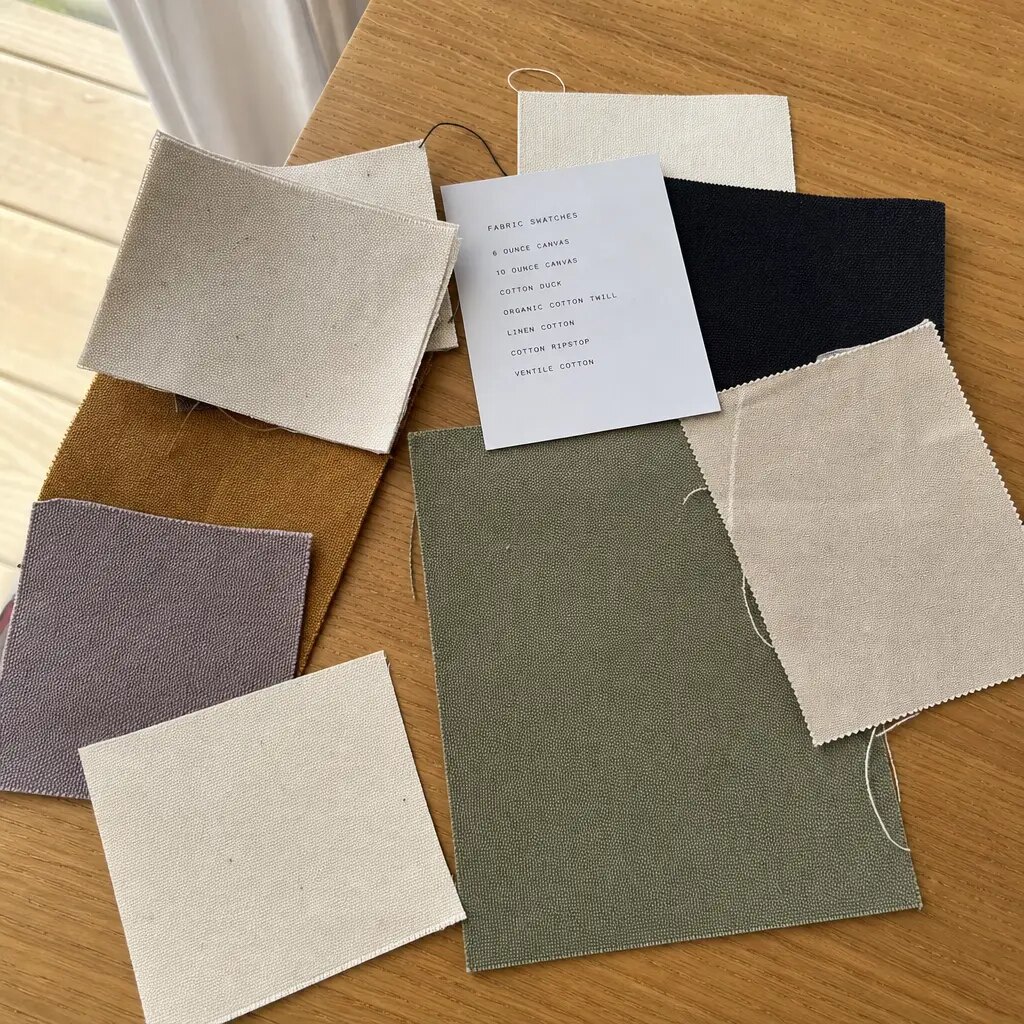
A craft-fair pouch is handled differently from a shipping pouch. Shoppers pick it up, squeeze it, read the logo, and often reuse it as a gift bag or organizer. That means the fabric weight and finish matter as much as the print. In practice, 120–140 gsm cotton is a sensible entry range for lightweight packaging and low-cost retail giveaways, while 160 gsm gives a more premium feel and hides contents better. If the pouch will hold jewelry, candles, soaps, or small handmade sets, the heavier option usually reduces complaints about show-through and weak hand feel.
The cord and seam construction should match the product value. Thin cord on a thick pouch looks unbalanced, and overbuilt cord on a low-cost pouch can push the unit price up without helping sales. For most fair-use applications, plain woven cotton with a stitched drawstring channel is the safest spec because it is easy to source, easy to print, and easy to inspect. Avoid overcomplicating the pouch with decorative closures unless the bag itself is part of the retail story.
- 120–140 gsm: better for low-cost accessory packs, samples, and giveaways.
- 160 gsm: better for retail presentation, re-use, and reduced transparency.
- Use a simple woven cotton base if you need consistent print and repeat orders.
3. Use print method choice to control MOQ, not just artwork appearance
The fastest way to increase MOQ is to ignore print economics. Screen print is usually the best fit for cotton drawstring pouches when the logo is simple and the order needs to stay commercially realistic. One or two colors keep setup manageable and the print result is durable enough for handling at craft fairs. If the artwork includes gradients, thin lines, or multiple PMS conversions, the factory may need extra screens or a more expensive process, which can alter MOQ and lead time immediately.
Heat transfer or digital decoration can be useful on short runs, but it often trades away some durability or cost stability. If the pouches are going to be touched frequently, loaded with products, and resold, a direct print with controlled ink coverage is usually the safer choice. The buyer should define not just the logo file but also the acceptable print edge, coverage density, and placement tolerance. That prevents a factory from delivering a technically printed pouch that still looks wrong in retail.
- Screen print is usually the most MOQ-friendly option for simple logos.
- Keep artwork flat and bold when you need stable print pricing.
- Include placement tolerance in mm, not just a visual reference.
4. Compare supplier routes before you negotiate the first quote
The best MOQ negotiation depends on which supplier route you choose. A direct factory usually gives better control over fabric weight, stitching, and print setup, especially if you expect repeat orders. A trading company may be helpful if you need mixed categories, smaller quantities, or more flexible payment coordination, but the quote often includes another layer of margin and can blur the true production MOQ. For procurement teams, that difference matters because a low initial quote is not useful if the actual factory rejects the order quantity later.
If you are sourcing for distributors or retail chains, ask for a route comparison rather than a single price. One supplier may offer a lower MOQ by using stock fabric and a standard cord, while another may require a higher MOQ but provide a more stable spec and better color consistency. The right choice depends on whether your priority is launch speed, margin, or repeatability. A fair buyer needs to know which one is being bought.
- Direct factory: better for repeat SKUs and tighter spec control.
- Trading route: useful for mixed orders, but confirm the real production MOQ.
- Stock-fabric offer: lower MOQ, but higher risk of color and shade variation.
5. Read the quote like a production document, not a price sheet
A useful quote for cotton drawstring pouches should show the cost drivers separately. The buyer should see fabric gsm, bag size, cord type, print method, packing method, and any setup charges. If those items are buried in one line, it becomes impossible to compare suppliers fairly. One supplier may quote a lower unit price but use thinner cloth, while another includes heavier fabric, better stitching, and more controlled packing. Those are not equal offers.
For MOQ negotiation, ask for at least three quote layers: the tested MOQ, a mid-volume tier, and a repeat-order tier. That structure reveals how much of the price is driven by setup versus material. It also shows whether the factory is willing to reward a cleaner forecast. If the price barely moves between the first and second tiers, the quote may be padded or the supplier may be using a fixed stock model rather than true production economics.
- Separate unit price from setup, tooling, and print screen charges.
- Request 3-tier pricing so you can see the volume break points.
- Compare quotes only after matching gsm, print method, and packing.
6. Negotiate MOQ with a simple structure that factories can actually use
Factories negotiate better when the order plan is easy to slot into production. The cleanest approach is to offer a single production specification and then trade volume for flexibility. For example, accept one fabric color, one print location, and one carton pack size, but ask for a lower MOQ in exchange for a small deposit and a commitment to reorder if sell-through is acceptable. This is more credible than asking for an unrealistically small quantity across many variants.
A practical MOQ deal is often built on what the factory can cut, print, and pack without interruption. If the supplier says the MOQ is 5,000 pieces but your initial demand is 2,000, negotiate by reducing the number of variants rather than pushing for a blanket exception. In many cases, you can reach a workable first run by dropping custom dyeing, using natural cotton, and standardizing the pouch dimensions to a common cutting width.
- Reduce variants before pushing the unit MOQ down.
- Use a simple deposit and re-order signal if you want the factory to cooperate.
- Standard sizes and natural cotton often unlock lower starting quantities.
7. Sample approval should test the real production risks
A sample is only useful if it matches the actual order path. A pre-production sample should use the same fabric weight, same cord, same print method, and same stitching sequence as the bulk run. If the factory sends a hand-made sample with better cloth than the bulk order, the approval is misleading. The buyer should inspect the sample for print sharpness, seam alignment, drawcord movement, and the way the pouch opens and closes after multiple pulls.
Pay attention to practical details that often disappear in a PDF mockup. Does the pouch stand open enough to fill quickly at the booth? Does the print stay centered after the bag is filled? Does the cord fray at the cut end? If your craft-fair staff needs to pack or hand over pouches in a hurry, those issues matter more than a perfect render. One poor sample can reveal a whole production risk before it becomes a claim.
- Approve from a physical sample, not just artwork artwork proofs.
- Test opening speed, draw closure, and print appearance when filled.
- Reject samples that use substitute fabric or different cord construction.
8. Packing and carton planning affect both labor and landed cost
For cotton drawstring pouches, packing is a hidden cost driver that buyers often under-specify. Loose bulk packing is cheaper at the factory but can create receiving problems if sizes and colors are mixed. If the goods are going into a distribution center or retail prep process, ask for each size and color to be packed separately and labeled clearly. If you need each pouch individually packed for resale, specify that early because it changes labor time, carton counts, and carton volume.
Carton planning also affects freight. Cotton pouches are light but bulky, so carton dimensions can influence the shipped cost more than the actual product cost. Ask the factory for estimated gross weight and cubic meters before confirming the PO. If the cartons are overfilled or underfilled, the goods may crush during transit or waste container space. Good packing discipline is part of the product spec, not an afterthought.
- Separate sizes and colors unless you have a local repacking plan.
- Use carton dimensions and gross weight to compare air and sea freight.
- Count sheets and carton marks reduce inbound receiving errors.
9. Build a landed-cost comparison that exposes the real winner
The cheapest FOB quote is not always the best buy. For cotton drawstring pouches, landed cost can move sharply once you add setup fees, sample freight, inner packing, carton volume, and rework risk. A factory offering a slightly higher unit price may still win if the print quality is stable and the packing is efficient. That is especially true for craft-fair programs where you need consistent presentation and a low return rate.
A useful comparison sheet should include the quote price, estimated setup charges, sample cost, carton data, and the cost impact of any extra labor at destination. If one supplier wants the pouches packed 50 per polybag while another offers 100 per polybag, the receiving labor and damage risk are not the same. Buyers should compare on the total path from factory floor to booth shelf, not on the bag price alone.
- Compare setup, unit price, packing labor, and freight volume together.
- Treat packing efficiency as part of the landed-cost equation.
- Use the same spec sheet across all suppliers or the quote comparison will be distorted.
10. Keep the order repeatable for the next craft-fair season
The best MOQ negotiation is the one that creates a repeatable spec. After the first order, save the approved fabric swatch, print reference, packing standard, and carton mark format. If the pouch becomes a regular seasonal item, that documentation cuts the time needed for the next RFQ and prevents drift between suppliers or production cycles. Repeatability is where buyers recover margin.
If the product is likely to expand, build the order structure in stages. Start with the core pouch, then add one controlled variant only after the base model proves itself. That might mean a larger size for gift bundles or a different print position for promotional use. Keeping the first order disciplined makes later negotiations easier because you can show real sell-through and real production data rather than guessing.
- Archive approved sample, spec sheet, and carton data for reorders.
- Introduce new variants only after the base SKU proves demand.
- Use the first shipment to establish a stable quality benchmark.
Specification comparison for buyers
| Spec decision | Recommended option | When it fits | Buyer risk to check |
|---|---|---|---|
| Fabric weight | 120–140 gsm cotton for entry retail packs; 160 gsm for better hand feel and less show-through | Craft-fair pouches that will be handled repeatedly, filled with small goods, or used as gift packaging | Too-light fabric can look thin under print and may shrink or wrinkle harder after washing |
| Fabric type | Plain woven cotton with low-lint yarn and a clean calendered finish | When the pouch is part of a brand presentation or needs a smoother print surface | Unfinished or highly slubbed cloth can create uneven print edges and inconsistent seam appearance |
| Print method | 1–2 color screen print for stable MOQ and lower setup cost; heat transfer only for short-run personalization | When artwork is simple and you need consistent repeat orders across craft fairs | Multiple colors or gradients raise cost and can weaken MOQ leverage if the supplier must change screens often |
| MOQ route | Single standard size with one fabric color and one print position to get the lowest practical MOQ | When testing a new fair program, new SKU, or seasonal event pack | If you split size, color, and print options at the start, each line may be treated as a separate MOQ |
| Closure style | Cotton drawcord with sewn channel; avoid decorative cord types unless the buyer can accept longer assembly time | For low-risk, general-purpose pouch packaging and repeatable factory production | Loose cord ends, weak bar tacks, or inconsistent channel width can create returns and rework |
| Supplier route | Direct factory for repeat volumes; trading company only when you need mix-and-match sourcing or very small runs | If you value cost control, direct communication, and stable specs | Trading layers can hide actual fabric weight, print process, or carton packing details |
| Packing method | Bulk packed by size/color in poly bags, then export cartons with clear carton marks and count sheets | For distributors, wholesalers, and buyers repacking locally | Loose mixed packing slows receiving and increases count errors, especially across multiple craft-fair SKUs |
| Sample approval | Pre-production sample with actual fabric, cord, print color, and stitch construction | Before any bulk order with branding or retail-facing packaging | A mockup proof alone does not show shrinkage, print hand feel, or cord threading quality |
| Lead time planning | Add fabric procurement + sample approval + bulk production + inspection buffer before event date | When your fair calendar is fixed and late delivery means missed sales | Short lead times often push suppliers into stock fabric substitutions or rushed print curing |
Buyer checklist before sampling
- Confirm pouch size, finished seam allowance, and usable internal capacity, not just flat-cut dimensions.
- Set a target fabric weight in gsm and a minimum acceptable hand feel before asking for quotations.
- Limit artwork to the exact number of print colors the budget can support at MOQ.
- Request a pre-production sample using the same fabric, cord, and print method as bulk order.
- Define packing unit: dozen, inner bag count, carton count, and whether hangtags are inserted at factory.
- Collect carton size and gross weight estimates early if the goods will ship by air or mixed LCL.
- Write down acceptable shade tolerance for natural cotton because raw fabric can vary lot to lot.
- Separate event-use pouches from retail resale pouches; the QC standard is usually different.
Factory quote questions to send
- What is the exact fabric construction, gsm, and shrinkage allowance for this pouch?
- Is the quoted MOQ per size, per color, per print design, or per total order?
- What print method is included in the price, and what is the setup charge per color or artwork?
- Will the sample be made from production fabric and production cord, or from substitute materials?
- How are pouches packed: loose in bulk, poly-bagged by dozen, or individually packed with inserts?
- What is the standard production lead time after sample approval, and what parts are excluded from that timing?
- Can you quote separate prices for plain pouches, printed pouches, and branded packing so we can compare landed cost?
- What carton quantity, carton size, and estimated gross weight should we use for freight planning?
Quality-control points to confirm
- Fabric weight must stay within the agreed gsm tolerance and not feel noticeably thinner than the approved sample.
- Finished size must match the spec sheet after sewing, not before cutting.
- Cord channels must be even, with no skipped stitching, loose threads, or uneven entry points.
- Print registration should stay aligned on the pouch front panel and not drift toward seams or folds.
- Ink coverage must be solid enough to hold against wrinkling without cracking under normal handling.
- Bar tacks or reinforcement stitches at stress points must be visible and secure at the cord openings.
- Smell, dust, and lint levels should be acceptable for retail display, especially for white or light-colored pouches.
- Carton count must match the packing list exactly, with size and color separated if the buyer requested sorting.