Start With What Can Go Wrong
Cotton drawstring pouches look simple. That simplicity can be deceptive for procurement teams. A pouch has only a few visible parts, yet each one can create a problem at the exact moment the gift is opened. Thin fabric may show the contents. A narrow mouth can slow the kitting line. A weak side seam can split when someone inserts a candle, boxed accessory, small jar, or dense multi-item kit. A logo that looked sharp in a supplier photo can crack once the pouch is folded into an event carton.
Most pouch problems do not begin with a careless factory. They begin with an RFQ that asks for a price before the buyer defines construction, use, and inspection requirements. For corporate gifting, the pouch is part of the recipient experience. It frames an employee welcome kit, client thank-you gift, conference handout, onboarding package, or promotional campaign. If it feels flimsy, arrives stained, or slows fulfillment, the low unit price is quickly forgotten.
A useful cotton drawstring pouches for corporate gifting quality inspection checklist starts with failure modes. What would make the campaign look cheap? What would delay receiving? What would force repacking at the warehouse? What would cause complaints from marketing or the end client? Once those risks are clear, convert them into measurable specifications: GSM, finished size tolerance, print placement tolerance, seam checks, cord length, inner pack count, and carton labeling.
- Identify contents, gift weight, distribution method, handling steps, and recipient expectations before requesting quotes.
- Turn each business risk into a measurable requirement such as GSM range, opening width, print placement tolerance, or carton count.
- Compare supplier prices only after finished size, fabric weight, cord, decoration, label, and packing format are fixed.
Size the Pouch Around the Actual Gift, Not a Catalog Photo
The most important sizing question is not the nominal flat size printed in a catalog. It is whether the finished pouch fits the real gift with enough usable space. Buyers should share the length, width, height, and weight of the contents, along with any sharp corners, fragile surfaces, retail boxes, sleeves, or protective packaging. A pouch can measure correctly on paper and still be difficult to use if the drawcord channel reduces usable height or the opening is too tight for a rigid item.
A better RFQ separates finished flat width and finished flat height from usable internal height and opening width. That difference matters. The top channel, seam allowance, cord path, and fabric thickness all reduce practical space. For small pouches, a starting tolerance of +/-5 mm may be realistic if the supplier confirms it. For larger pouches, +/-10 mm or +/-3% is often more practical. Avoid loose wording such as approximate size. State where the measurement is taken and whether the tolerance applies after sewing, after washing if washing is required, or after packing.
Filling speed is another sizing issue. If operators must force every gift into the pouch, the order may still pass a basic dimension check but fail in the warehouse. Test the sample with the real contents inside. Check whether the top closes cleanly, whether the logo remains visible, whether the pouch bulges awkwardly, and whether bottom corners show stress. A few millimeters of extra opening can be worth more than a small unit-price reduction.
- Specify finished flat width, finished flat height, opening width, usable internal height, and expected contents.
- Use realistic starting tolerances such as +/-5 mm for small pouches and +/-10 mm or +/-3% for larger pouches, subject to supplier confirmation.
- Test the approved sample with the real gift inside before releasing bulk production.
Choose Cotton GSM With a Clear Commercial Purpose
Fabric weight should match the gift and the brand position. A 120-140 gsm cotton pouch can work well for light giveaways, badges, cards, seed packets, stationery, small accessories, and budget conference items. It is soft, foldable, and usually cost efficient. The tradeoff is presentation. Lighter cotton may look thin, reveal the shape or color of the contents, or feel too casual for a premium campaign.
For welcome kits, cosmetics, reusable gift packaging, stationery sets, and programs where the pouch should feel more substantial, 180-220 gsm is often a stronger starting range. It usually provides better opacity and body. Above 220 gsm, test before assuming heavier is better. Extra fabric weight can increase seam bulk at the drawcord channel, slow closure, raise carton volume, and add freight cost.
GSM tolerance belongs in writing. A common starting point is +/-5%, but the supplier may propose a different range depending on mill source, finishing, and order quantity. If a quote says 180 gsm, ask whether bulk fabric could arrive between 171 and 189 gsm, whether that is measured before or after finishing, and how it will be verified. For tighter programs, ask for a fabric swatch, mill reference, or agreed test method rather than relying on words like thick, premium, natural, or eco style.
- Use 120-140 gsm for light, cost-sensitive gifts and 180-220 gsm when opacity, hand feel, and perceived value matter more.
- Confirm GSM tolerance, shade reference, acceptable slubs, opacity expectation, and shrinkage requirements if washing is relevant.
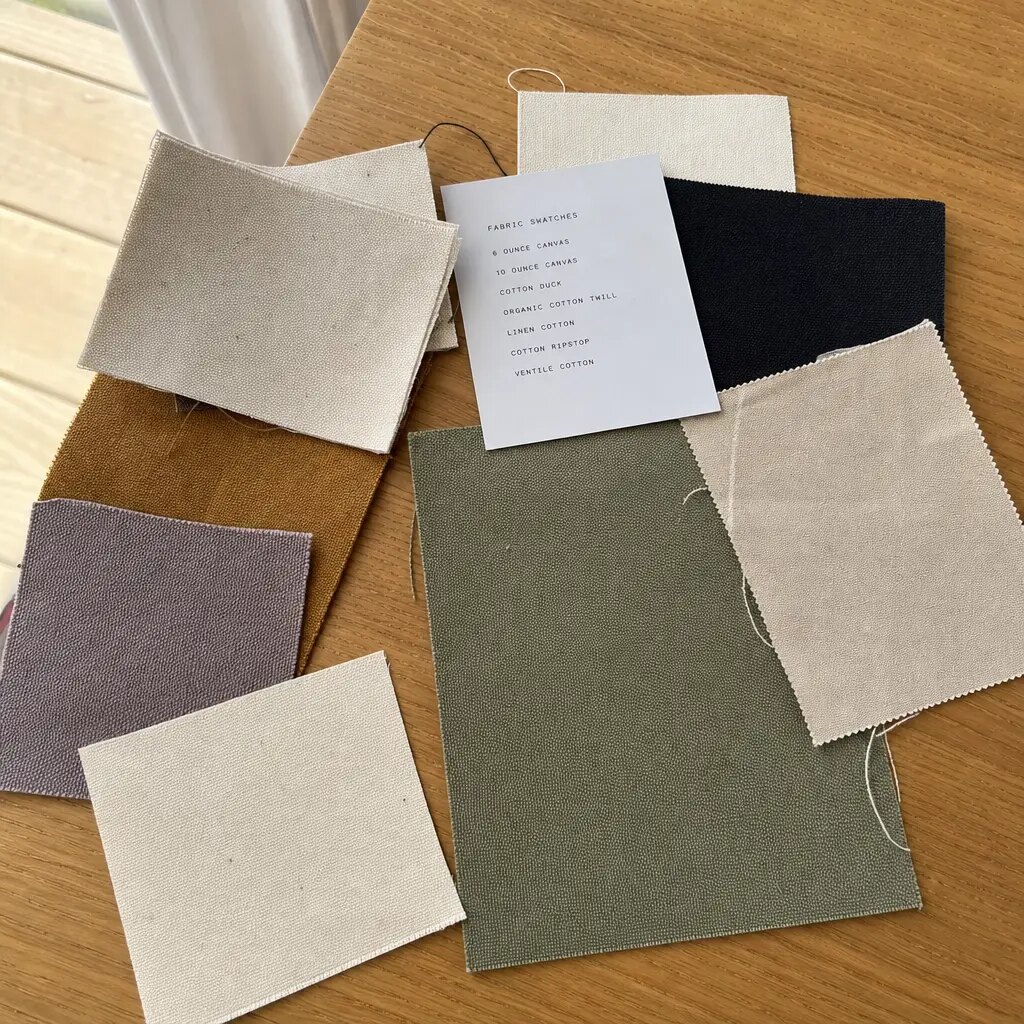
- Approve fabric color and hand feel against a physical swatch or sample, especially for natural cotton and dyed lots.
Control Color, Finish, and Natural Cotton Variation
Cotton color sounds easy until the order is on the receiving dock. Natural cotton can include seed flecks, slubs, and lot-to-lot shade variation. Some buyers like that character; others see it as dirt or inconsistency. Bleached cotton may look cleaner and brighter, but stains, handling marks, and creases can appear more obvious. Dyed cotton can support a brand palette, yet it introduces color matching, shade band, and migration questions.
The solution is not to remove every natural variation. That may be unrealistic for the chosen fabric and price level. The practical step is to define what is acceptable. Use an approved swatch or pre-production sample as the shade standard. If the pouch is natural cotton, clarify whether visible seed flecks and small slubs are acceptable. If the pouch is dyed, request a shade reference and decide how much variation can be tolerated across cartons.
Inspection should separate natural fabric character from true defects. A small slub within the approved standard is not the same as an oil mark, water stain, mold, strong odor, or dirty handling mark. Check shade under consistent lighting and compare production with the approved standard. If the corporate gift is high visibility, ask the supplier to segregate obvious shade lots rather than mixing visibly different tones in the same inner pack.
- Approve a physical shade standard before bulk cutting whenever color presentation matters.
- Define acceptable natural cotton character separately from stains, oil marks, mold, odor, or heavy dye variation.
- Ask how the supplier controls shade lots if the order uses dyed fabric or multiple production batches.
Treat the Drawcord and Channel as Functional Components
The drawcord is the recipient's first physical interaction with the pouch. If it feels weak, catches in the channel, or frays immediately, the whole package feels less considered. Common options include cotton rope, braided cotton cord, flat cotton tape, and, in some programs, polyester or blended cord when a specific color, lower lint, or additional durability is needed. The RFQ should state cord material, color, diameter or tape width, finished length, end treatment, and whether construction is single-draw or double-draw.
The channel needs enough room for smooth movement without creating a bulky top edge. Stress often appears where the channel meets the side seam. This is where inspectors should look for skipped stitches, weak backtacking, puckering, broken threads, uneven channel depth, and loose thread ends. For many simple cotton pouches, an approximately 8-10 mm seam allowance and 8-10 stitches per inch may be used, but the correct standard should be confirmed against the approved sample, fabric weight, and supplier capability.
Do not judge stitching only from the front panel. Turn sampled pouches inside out. Look at the bottom corners, side seams, channel ends, backtacks, and thread trimming. Uneven seam allowance can twist the shape. Needle damage can create small holes in lighter cotton. If the pouch will hold a dense item, apply a moderate hand pull to the side seams, bottom seam, and cord-channel corners. That quick test often finds weak construction before the order ships.
- Define cord material, color, diameter or width, finished length, end treatment, and single-draw or double-draw construction.
- Agree seam allowance, stitch density, thread color, channel depth, and backtacking expectations against the approved sample.
- Open and close sampled pouches at least five times and inspect cord balance, channel stress, fray control, and loose threads.
Match Decoration to Artwork, Fabric, and Handling
Logo decoration should be chosen after reviewing the actual artwork, fabric texture, fabric weight, print size, and handling conditions. For many corporate gifting programs, one- or two-color screen printing is the most practical option. It is repeatable, clean, and cost controlled at volume. The main control point is curing. Under-cured ink can feel tacky, transfer color, or crack after folding. Too much ink can create a stiff patch that looks heavy on soft cotton.
Embroidery, woven labels, and sewn tabs can look more premium, but they are not automatic upgrades. Embroidery on lightweight cotton can pucker the front panel. Woven labels must be straight, secure, and clean on the inside. Heat transfer may be useful for some artwork, yet buyers should check edge adhesion, hand feel, and folding behavior. Small text, thin lines, gradients, and multi-color logos require extra review because a digital proof may not translate cleanly onto cotton texture.
Approval should include the artwork file, final print size, color reference, placement measured from fixed points, and placement tolerance. Typical starting points are +/-3 mm for small logos and +/-5 mm for larger artwork on textured fabric, but confirm the supplier's real capability. If the pouch will be folded with the logo facing out, test that fold. If the logo must look centered after the gift is inserted, approve it in filled condition as well as flat condition.
- Use screen printing for clear one- or two-color corporate logos and volume programs requiring predictable cost.
- Use embroidery, woven labels, or sewn tabs only after checking puckering risk, label straightness, inside backing, and attachment strength.
- Include artwork size, color reference, placement tolerance, curing check, dry rub test, and fold test in the approval process.
Make Supplier Quotes Comparable Before You Negotiate
A low quote is not useful if it excludes items another supplier included. Cotton pouch pricing can vary because one supplier includes fabric, drawcord, sewing, printing, setup, trimming, inner packing, carton marks, export cartons, and standard inspection, while another quotes only the sewn blank pouch. MOQ can also change by size, fabric color, artwork version, print color count, label option, or packing format.
The supplier route changes the risk profile. A direct factory that controls cutting, sewing, printing, inspection, and packing may offer tighter sample-to-bulk control. A trading company can be valuable when procurement is buying several gift components and wants one coordinator, but the buyer should know which factory is making the pouches and who signs off QC. Stock blank pouches with local decoration can be the right choice for urgent or small runs, provided blank inventory, shade consistency, and print alignment are checked.
Use a quote matrix. Ask each supplier for the same finished size, GSM, cord, decoration, label, quantity, packing format, sample fee, setup charge, production lead time, carton dimensions, gross weight, payment terms, and overrun or underrun policy. If a supplier recommends a different construction, require the change to be stated clearly. Quiet substitutions, such as lighter fabric, shorter cord, smaller print, or looser packing, make price comparisons unreliable.
- Ask every supplier to quote the same finished size, GSM, cord, decoration, label, quantity, and packing format.
- Separate unit price from setup fees, sample fees, screen charges, label charges, packing charges, carton charges, and freight-sensitive carton data.
- Confirm whether MOQ is per total order, per size, per fabric color, per artwork, per print color, per label version, or per packing format.
Write an RFQ That Leaves Less Room for Assumptions
A strong RFQ does not need to be complicated. It does need to remove guesswork. At minimum, state pouch style, finished dimensions, usable opening, fabric composition, GSM range, fabric color reference, drawcord type, decoration method, print size, print placement, label requirement, quantity by variant, packing format, delivery window, and inspection expectations. If the contents are available, include their dimensions and weight. If they are not final, state the estimated load and expected use.
Context helps the supplier flag problems early. A pouch for a one-day conference giveaway does not have the same priorities as a new-hire welcome kit shipped to individual employees. A pouch packed inside a gift box may need clean folding and low bulk. A pouch handed directly to guests may need stricter front-panel presentation and stain control. Tell the supplier whether the pouch will be used for kitting, mailing, retail-style presentation, event handout, or internal distribution.
Ask for assumptions and exclusions in writing. If the supplier chooses the fabric, the quote should name the GSM and tolerance. If the supplier chooses the print method, the quote should state artwork limits. If packing is included, it should list inner pack count, carton count, carton dimensions, gross weight, and carton marks. This prevents a common issue: a sample approved under one assumption and bulk production made under another.
- Include finished size, usable opening, GSM range, fabric color, cord type, decoration method, quantity by variant, and pack format in the RFQ.
- State contents, handling method, distribution method, and delivery deadline so the supplier can identify fit, durability, and schedule risks.
- Require the supplier to list assumptions and exclusions around printing, labels, packing, cartons, tolerances, and inspection.
Approve Samples as Production Evidence
A pre-production sample should prove that the supplier can make the actual pouch. It should not be merely a nice photo or a close substitute. The sample should use final or confirmed-equivalent fabric weight, final cord, final decoration process, final label if any, and intended packing style. If substitute fabric or a temporary print method is used, document the gap and close it before bulk release.
Physical review is straightforward. Measure width, height, channel depth, opening width, and usable internal height. Pull the cord open and closed several times. Turn the pouch inside out and inspect seams, thread trimming, channel reinforcement, and bottom corners. Check opacity over the actual contents. Insert the real gift and judge the filled shape. For printed pouches, check color, placement, edge sharpness, curing, dry rub resistance, and folding behavior. For labels or embroidery, check straightness, stitch security, and puckering.
Photo documentation can support approval when it is specific. Ask for front, back, side seam, bottom seam, drawcord channel, inside finish, logo close-up, filled pouch, folded pouch, inner pack, and carton label photos. Procurement, marketing, logistics, and the supplier then share the same reference. For first-time suppliers, complex artwork, or high-visibility campaigns, a pilot run or production trial may be worth considering before releasing the full quantity.
- Approve a pre-production sample made with final fabric, final cord, final print method, final label, and final packing wherever possible.
- Measure dimensions, test cord movement, inspect seams, check opacity, and evaluate the pouch with the real gift inside.
- Request detailed sample photos covering construction, decoration, filled appearance, folded condition, inner packing, and carton labeling.
Set the Quality Inspection Plan Before Bulk Starts
Quality control works best when defect criteria are agreed before production. The PO should define finished size tolerance, GSM tolerance, shade reference, print placement tolerance, cord length tolerance, stitch requirements, and packing accuracy. It should also identify critical, major, and minor defects. Critical defects may include wrong artwork, wrong size that prevents use, broken cords, open functional seams, severe stains, mold, odor, or unsafe foreign matter. Major defects may include visible print misalignment, poor curing, significant shade mismatch, loose stitching at stress points, incorrect label placement, or incorrect pack counts.
For larger orders, buyers often use ANSI/ASQ Z1.4 or ISO 2859-1 sampling with General Inspection Level II. A common starting point is Critical 0, Major 2.5, Minor 4.0, but the exact AQL should be agreed with the supplier and adjusted for order risk. Event-critical and premium programs may need stricter limits for visible stains, logo defects, and carton count errors. Budget giveaways may allow more minor thread ends, but they should still reject functional failures.
Inspection should sample across the order, not just from one easy carton. If the order has multiple sizes, colors, or artwork versions, each variant needs attention. Pull cartons from the beginning, middle, and end of the packed lot when possible. Inspectors should measure finished dimensions, verify fabric against the approved standard, test drawcord function, review seams, check decoration, and confirm packing. The approved sample should be present during inspection, not buried in an email thread.
- Put tolerances, defect categories, AQL level, and acceptance rules into the PO before production begins.
- Classify wrong artwork, unusable size, broken cords, open functional seams, severe stains, mold, odor, and unsafe foreign matter as critical or near-critical risks.
- Sample across sizes, colors, artwork versions, and carton locations instead of relying on one convenient carton.
Specification comparison for buyers
| Spec decision | Recommended option | When it fits | Buyer risk to check |
|---|---|---|---|
| Supplier route | Direct factory with cutting, sewing, printing, inspection, and packing control | Best when you need repeatable size, print placement, carton counts, and documented sample-to-bulk control | Confirm which processes are actually in-house; if printing or dyeing is outsourced, define who owns defect claims and rework cost |
| Supplier route | Trading company with named production partner and written QC plan | Useful when procurement needs one contact for several gift components, multiple pouch styles, or consolidated shipment | Ask for factory name, production address, inspection responsibility, and whether the trading company will share pre-shipment inspection photos and carton data |
| Supplier route | Stock blank pouch plus local decoration | Works for urgent events, small runs, or simple one-color logo programs where custom sewing is not practical | Check blank inventory, size consistency, fabric shade variation between batches, and whether local printing can hold placement on sewn pouches |
| Fabric weight | 120-140 gsm cotton | Suitable for flat inserts, cards, badges, seed packets, lightweight accessories, or budget conference giveaways | Check opacity over the real contents, shrinkage if washing is expected, fabric skew, and whether the pouch still looks presentable when folded |
| Fabric weight | 180-220 gsm cotton | Better for welcome kits, cosmetics, reusable gift packaging, stationery sets, and programs needing a stronger hand feel | Confirm seam bulk at the drawcord channel, print hand feel, filling speed, carton cube, and crease control during packing |
| Fabric weight | Above 220 gsm cotton or canvas | Use only when structure, opacity, or load support matters for dense gifts or premium reusable packaging | Test seam stress, cord channel thickness, closure smoothness, needle damage, and freight-volume impact before approval |
| Finished size tolerance | Typical starting point: +/-5 mm for small pouches; +/-10 mm or +/-3% for larger pouches, subject to factory capability | Useful for RFQs where gift fit and carton counts depend on size repeatability | Do not accept vague phrases such as approximate size; state whether tolerance applies to finished flat width and height after sewing |
| Print placement tolerance | Typical starting point: +/-3 mm for small logos; +/-5 mm for larger artwork or textured fabric | Important when logo centering is visible on event gifts, onboarding kits, and retail-style presentation | Measure from fixed reference points such as side seam, bottom seam, or top edge; check filled and flat appearance if both matter |
| Print method | One- or two-color screen print | Best for most corporate logos, volume programs, and predictable cost control | Check artwork line thickness, ink curing, rub resistance, registration, edge sharpness, and cracking after folding |
Buyer checklist before sampling
- Define finished flat size, usable internal height, opening width, fabric GSM, fabric color, cord type, decoration method, print area, label requirement, and packing format before requesting prices.
- Send the supplier the actual gift dimensions, weight, shape, and any sharp edges so the pouch is engineered around the contents rather than a generic catalog size.
- Specify whether the pouch must fit a flat item, a boxed item, a bottle-like item, cosmetics, glass, electronics, stationery, apparel, food-adjacent gifts, or a mixed kit.
- Ask whether the quoted MOQ applies per finished size, fabric color, print artwork, print color count, label version, packing format, or total order quantity.
- Request a pre-production sample using final fabric weight, final cord, final decoration method, final label, and final packing method whenever possible.
- Put measurable tolerances in the PO: finished size, GSM, fabric shade reference, print placement, cord length, pack count, and acceptable defect limits.
- Use typical starting tolerances only after supplier confirmation: GSM +/-5%, finished size +/-5 mm to +/-10 mm depending on size, print placement +/-3 mm to +/-5 mm, and cord length +/-10 mm.
- Ask for front, back, side seam, bottom seam, drawcord channel, inside finish, logo close-up, filled pouch, folded pouch, inner pack, and carton label photos before bulk approval.
- Require lead time by stage: artwork check, sample, sample revision, material booking, cutting, sewing, printing or curing, trimming, packing, inspection, and ship-ready date.
- Lock overrun and underrun tolerance in writing; for event distribution, ask whether exact quantity and exact carton count can be guaranteed.
Factory quote questions to send
- What exact fabric composition, weave, GSM, color, and finish are you quoting, and what GSM tolerance will appear on the PO or proforma invoice?
- Is the pouch cut, sewn, printed, inspected, and packed in the same facility, or are dyeing, printing, embroidery, labels, or packing outsourced?
- If any process is outsourced, who is responsible for sample approval, bulk QC, defect replacement, rework cost, and schedule recovery?
- What is the MOQ by finished size, fabric color, print method, print color count, artwork version, label option, and packing format?
- What does the unit price include: fabric, drawcord, sewing, printing, labels, trimming, inner packs, export cartons, carton marks, and standard inspection?
- What are the separate charges for screens, print setup, artwork adjustment, sample making, courier samples, woven labels, private labeling, nonstandard cartons, and barcode labels?
- What sample options are available: stock sample, material swatch, printed strike-off, size sample, pre-production sample, or pilot run?
- Will the pre-production sample use actual bulk fabric and actual decoration, or a substitute material or temporary printing process?
- What print method do you recommend for this artwork, and what limits apply to minimum line thickness, small text, registration, Pantone matching, and print area?
- What finished size tolerance, print placement tolerance, cord length tolerance, seam allowance range, and GSM tolerance can you hold in bulk production?
Quality-control points to confirm
- Measure finished flat width and height against the approved pre-production sample and written tolerance, not only against a catalog drawing.
- Measure opening width and usable internal height if the pouch must fit a boxed, tall, or rigid gift.
- Verify fabric GSM by the agreed method or mill certificate plus spot check, and compare hand feel, opacity, weave, shade, slubs, stains, odor, and fabric skew against the approved standard.
- Check fabric shade under consistent light and compare with an approved swatch; separate natural cotton character from unacceptable stains, oil marks, or dye variation.
- Inspect cutting alignment so the pouch is not twisted, tapered, bowed, or visibly uneven after filling.
- Review seam stitching for skipped stitches, open seams, loose threads, inconsistent seam allowance, needle damage, weak backtacking, and poor thread trimming.
- Inspect the drawcord channel at both top corners because this area often shows stress, puckering, broken stitching, or unfinished thread ends.
- Test drawcord movement by opening and closing sampled pouches at least five times, then check cord balance, fray control, knots, tips, and channel symmetry.
- Apply moderate hand pull to side seams, bottom seams, and cord-channel corners on sampled units to identify weak construction before shipment.
- Rub the print with a clean dry white cloth after curing to look for tackiness, color transfer, cracking, lifting, or poor adhesion.