Why farmers market buyers need a durability plan, not just a pouch price
Cotton drawstring pouches for farmers market vendors are not simple giveaway bags. They are handled, retied, refilled, and stacked all day, often with damp produce, small goods, or reusable retail items inside. If the pouch is too thin, the customer notices it quickly: the fabric looks weak, the cord feels rough, and the print starts to wrinkle at the fold lines.
For procurement teams, the real risk is not only product failure. The bigger problem is quote comparison based on unfinished specs. One factory may quote a 100 GSM pouch with a loose channel and heat transfer print, while another quotes 140 GSM with reinforced stitching and screen print. On paper the bags may seem similar, but the durability and landed cost are not.
- A farmers market pouch must survive repeated opening and closing, not one-time use.
- The look and feel at the stall matters because it supports brand presentation and repeat purchase.
- Quality claims should be tied to measurable criteria: GSM, stitch density, pull strength, and print wear.
Choose the fabric weight based on use, not just unit cost
For this product, fabric weight is the first durability decision. A 90–100 GSM cotton pouch may be acceptable for very light sampling or promo packing, but it is usually too thin for retail resale or vendor use where the pouch is stuffed and retied many times. Most buyers land in the 120–150 GSM range for an all-purpose retail pouch because it balances hand feel, opacity, and cost.
If the pouch will carry heavier contents, or if your brand wants a sturdier premium feel, move up to 160–180 GSM. That extra weight improves body and seam stability, but it also affects folding thickness, carton count, and freight density. Buyers sometimes miss this and approve a great sample only to see shipping cost rise because fewer pieces fit per carton.
- 90–100 GSM: promo use, low price, higher risk of translucency and seam stress.
- 120–150 GSM: common retail range, good balance for farmers market resale.
- 160–180 GSM: premium feel, better for heavier contents and repeated reuse.
Durability testing checklist for cotton drawstring pouches
A practical durability test should reproduce what a farmer’s market vendor actually does: fill the pouch, open it repeatedly, load it unevenly, and handle it on a table with some friction. A lab-style spec sheet alone will not catch weak cord channels or poor print adhesion. Before you approve bulk, run a simple but disciplined check on the pre-production sample and the first production lot.
The point is not to over-engineer the test. It is to catch failure modes early enough to protect the order. If your pouch is going to be resold, then seam integrity, cord pull resistance, and print wear matter more than a perfect catalog photo. A pouch that looks clean but frays after one weekend at market is a bad buy, even if the unit price is attractive.
- Fill test: pack with the heaviest expected contents and close/open 30–50 times.
- Cord pull test: tug both cords from the top opening and inspect the channel ends for damage.
- Seam check: look at side seams and bottom corners under tension for skipped stitches or puckering.
- Abrasion check: rub the printed area and folded edges by hand or with a simple friction pass.
- Moisture handling: place a slightly damp item inside and confirm the pouch dries without staining or odor retention.
Print method matters more than buyers expect
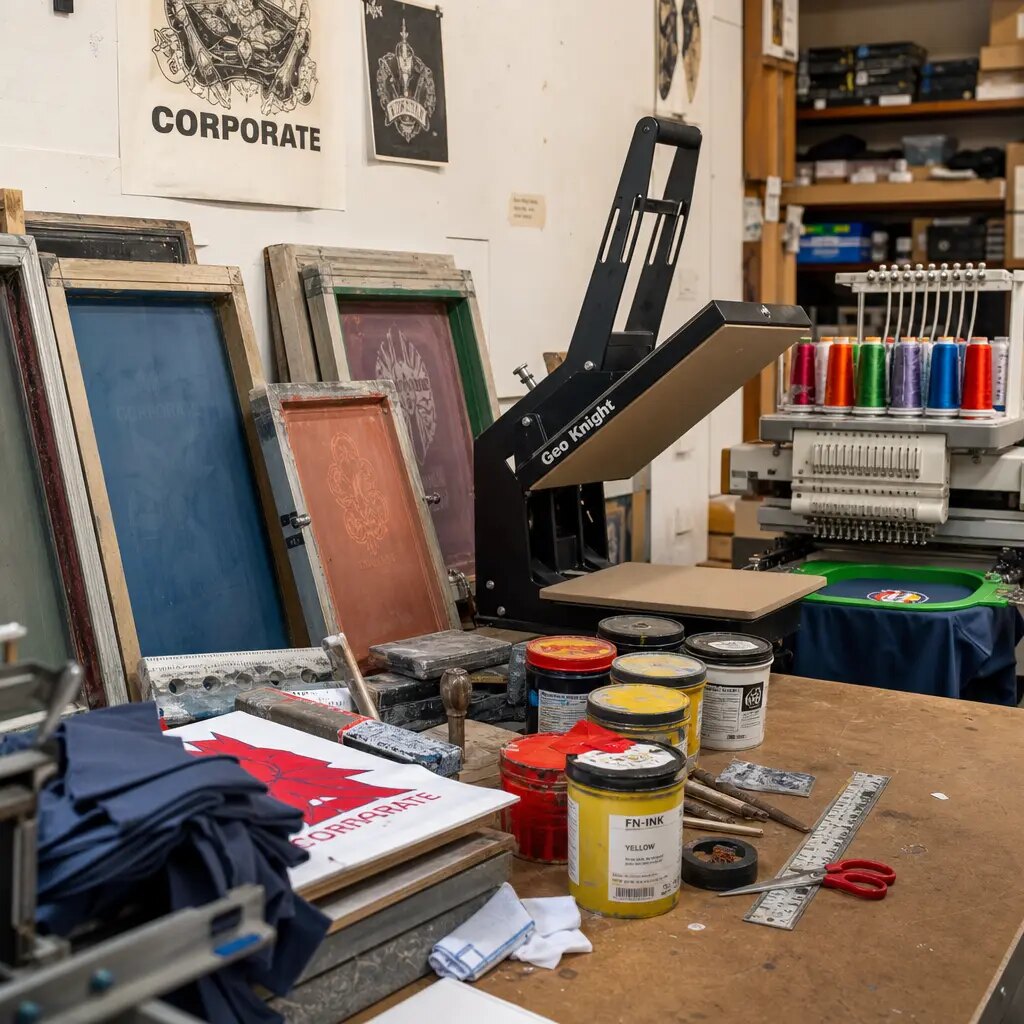
Many pouch complaints are actually print complaints. If the logo cracks, peels, or bleeds into the cotton weave, the bag is often treated as defective even when the sewing is fine. For simple one-color branding, screen print is usually the best commercial choice because it gives consistent opacity on cotton and holds up better to handling than a low-grade transfer.
Heat transfer can work when the run is short or when you need quick artwork changes, but it is less forgiving on textured cotton and may show edge lift after folding. Embroidery adds perceived value, but it increases cost, changes the hand feel, and can distort lightweight fabric if the thread density is too high. The right method depends on how the pouch will be used, not just how it looks in a sample photo.
- Screen print: best for simple logos, repeat orders, and durable brand visibility.
- Heat transfer: useful for small runs or detailed art, but test for cracking and peeling.
- Embroidery: premium appearance, but confirm fabric GSM can support the stitch load.
How to compare supplier quotes without getting misled by a low unit price
A quote for cotton drawstring pouches only becomes useful when the spec is fixed. Compare suppliers on the same fabric weight, same pouch size, same drawcord construction, same print method, and same packing format. If those variables are not aligned, the cheapest quote is usually just the lightest construction or the least controlled production route.
For procurement teams, the best comparison is a landed-cost view, not a unit-cost view. Add sample fee, print setup, inner pack materials, carton cost, and any color or artwork surcharge. A supplier with a slightly higher ex-works price may still win if their packing is more efficient, their rejection rate is lower, and their lead time is more reliable.
- Compare like-for-like GSM, size, print color count, and packing count.
- Separate one-time setup cost from recurring unit cost.
- Add freight impact if the fabric weight changes carton efficiency.
Supplier options and sourcing routes buyers should compare
The best sourcing route depends on how much control you need over the pouch construction. A direct factory route is usually the strongest option when you need repeated orders, specific seam details, or consistent print placement. It gives you better visibility into fabric source, stitch quality, and real production capacity.
Trading companies can be useful when you need multiple categories in one shipment or when your team lacks time to manage sampling cycles. The tradeoff is transparency. You may get faster coordination, but the actual factory standard can be harder to verify. For a simple promo pouch, that might be acceptable. For retail resale, many buyers prefer a direct factory quote with a retained sample and clear QC checkpoints.
- Direct factory: better for custom specs, repeat programs, and QC control.
- Trading route: easier coordination, but verify who owns fabric, printing, and inspection.
- Local decorator: faster for small urgent runs, but often higher unit cost and less carton efficiency.
Comparison table: which sourcing route fits which buyer need
Use the table below to compare sourcing routes before you request final quotes. It is designed for a real buying decision, not a generic spec sheet. The goal is to match the route to your order size, brand risk, and need for repeatability.
Packing rules should cover fold direction, cord protection, bundle count, carton compression, moisture bag, and retail label position. These details affect cost, damage rate, receiving speed, and whether the goods can move directly into retail or distribution.
- Write decisions in measurable language, not only descriptive wording.
- Ask for sample photos plus one physical approval sample for important orders.
- Keep quotation, sample approval, and inspection notes tied to the same spec version.
What sample approval should include before bulk production starts
A sample is only useful if it is approved against the final production intent. Buyers often approve a sample because the logo looks right, then later discover the bulk order changed fabric shade, cord thickness, or stitch density. To avoid that, treat the sample as a controlled reference: record size, GSM, print method, placement distance, and packing format.
If your team uses a gold sample, keep one sealed reference copy and send the factory a signed approval note. For custom retail orders, that note should mention what is acceptable and what is not. For example: print alignment within tolerance, no visible lint on front panel, channel stitching intact after pull test, and carton count matching purchase order breakdown.
- Approve against size, GSM, cord construction, print placement, and packing.
- Retain a signed gold sample for dispute resolution.
- Require a revised sample if any of those variables change after approval.
Packing, cartonization, and lead time are part of durability
Durability does not end when the pouch passes stitching inspection. Poor packing can create fold marks, print scuffing, and cord tangles that make the goods look old before they reach the warehouse. Flat packing is usually preferred for cotton drawstring pouches, but the carton plan must match the pouch thickness and the destination handling method.
Lead time also needs a realistic structure. A normal custom pouch order may need 7–12 days for sampling and 25–40 days for bulk after sample approval, depending on fabric availability and print complexity. If the fabric must be dyed, pre-shrunk, or matched to a strict color, the schedule extends. The biggest delay is often not sewing; it is late artwork approval or repeated sample revisions.
- Flat pack to reduce bulk and preserve pouch shape.
- Separate SKUs and print colors clearly in carton labels.
- Build time for artwork sign-off, sample corrections, and carton confirmation.
A practical landed-cost view for procurement teams
When you compare cotton drawstring pouches, the unit price alone hides several real costs. A lower-priced pouch may use thinner cotton, a cheaper transfer print, and loose carton packing, but the hidden cost shows up in rework, complaints, or freight inefficiency. A better approach is to estimate the full landed cost by line item and then decide which compromise is acceptable.
A useful cost framework includes fabric weight, print complexity, cord style, labor for stitching, packing format, and shipping density. For example, moving from 120 GSM to 160 GSM may add cost on the factory floor but improve product presentation and reduce return risk. That is often a good trade for retail buyers, especially if the pouch is used as a branded sales accessory.
- Base fabric cost changes with GSM and pre-treatment.
- Print setup affects small runs more than large runs.
- Packing density and carton size can change freight cost enough to matter.
Specification comparison for buyers
| Spec decision | Recommended option | When it fits | Buyer risk to check |
|---|---|---|---|
| Fabric weight | 120–150 GSM unbleached cotton for retail resale; 160–180 GSM if pouches will carry heavier produce or get reused daily | Farmers market vendors who want a better hand feel and fewer seam complaints | Lightweight cloth can look fine in samples but fail after repeated stuffing and knot tension |
| Drawcord construction | Double-cord with sewn eyelets or reinforced channel ends | Higher-volume retail sets and vendor kits | Single-cord options may twist, fray, or pull through after repeated opening |
| Print method | 1-color screen print for simple logos; heat transfer only for short runs or variable branding | When logo durability matters and artwork is not too detailed | Transfers can crack or peel on textured cotton after abrasion and folding |
| Sourcing route | Direct factory with sampling and QC sign-off before bulk | Buyers with repeat orders, custom sizing, or multi-market programs | Trading routes can add margin and hide who actually controls fabric and stitching quality |
| MOQ logic | Start with a low first-run MOQ only if size, fabric, and print are already approved | New designs or seasonal test orders | Very low MOQ can raise unit cost and reduce consistency if the factory combines your order with mixed materials |
| Packing method | Flat-packed with size labels, then carton packed by SKU and print color | Retail distribution and distributor reorders | Loose mixed packing increases count errors and makes warehouse receiving slower |
| Sample approval level | Pre-production sample plus sealed gold sample retained by buyer | Any custom pouch intended for a season launch | Without a retained reference sample, disputes over shade and print placement become hard to resolve |
| Lead time structure | Sample 7–12 days, bulk 25–40 days after approval depending on fabric stock and print complexity | Standard custom orders with stocked greige fabric | Lead time slips usually come from artwork approvals, dye lot sourcing, or late trim changes |
| QC standard | AQL-based inspection plus wash/abrasion check for logo and seam integrity | Branded pouches sold through retail channels | Counting only visual defects misses weak stitching, cord pull issues, and print wear problems |
Buyer checklist before sampling
- Confirm finished pouch size in both flat and filled states, including seam allowance and usable internal space.
- Lock fabric weight in GSM, color target, and whether the cotton is bleached, unbleached, or dyed.
- Specify cord type, cord diameter, cord length, and whether ends need knots, aglets, or heat-sealed tips.
- Choose print method, logo placement, and maximum acceptable wash or rub wear for branding.
- Define the first-order MOQ by SKU, color, and print version, not just one total quantity.
- Require a pre-production sample and a retained gold sample with signed approval notes.
- State packing format, carton count per SKU, and any barcode or inner label requirements.
- Set inspection criteria for stitching, cord pull resistance, print alignment, odor, contamination, and size tolerance.
Factory quote questions to send
- What GSM cotton do you propose, and is it greige, bleached, or pre-shrunk fabric?
- Which print method is included in the quote, and what is the unit cost change for a second color or second placement?
- What is the MOQ by size and print color, and do mixed sizes share the same fabric stock?
- Can you provide seam type, stitch density, and drawcord channel construction in the spec sheet?
- What sample stages are included before bulk, and what is the sample lead time?
- How will cartons be packed, labeled, and counted for each SKU?
- What is the estimated bulk lead time after sample approval, and what delays most often extend it?
- Which QC checks do you perform before shipment, and can you share an inspection report format?
Quality-control points to confirm
- Fabric weight must stay within the agreed GSM tolerance; thin lots should be rejected before printing.
- Stitching around the channel and side seams should hold under manual pull testing without skipped stitches or seam opening.
- Drawcords should slide smoothly without snagging, and both ends must be secure after repeated opening cycles.
- Print registration should stay centered within the approved tolerance and show no pinholes, smearing, or edge lift.
- Dimensions must match the approved sample within the agreed size tolerance after packing and light handling.
- No visible oil marks, cotton lint contamination, broken needles, or foreign fibers on finished pouches.
- Carton counts, SKU labels, and inner pack quantities must reconcile to the packing list before dispatch.