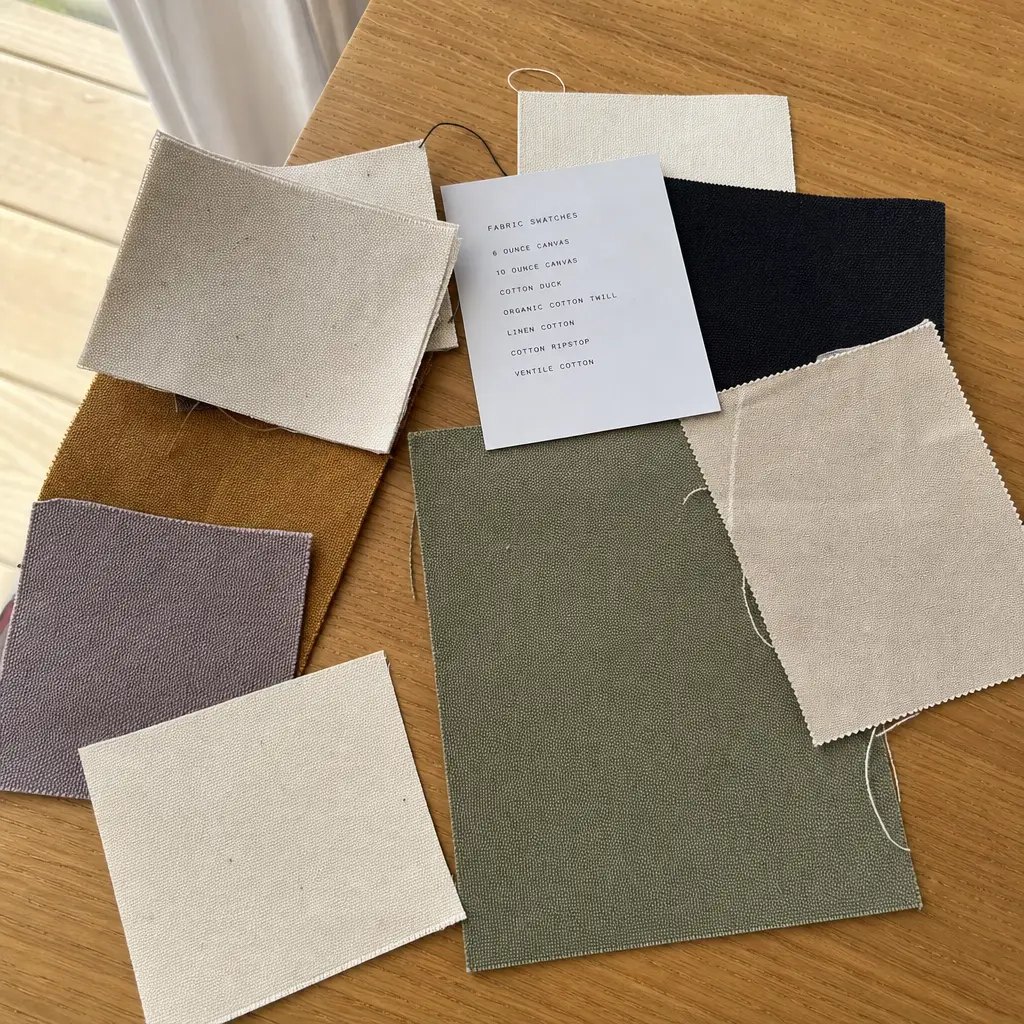
Start With the Bookstore Use Case
A cotton drawstring pouches fabric weight guide for university bookstores has to begin with the job the pouch is doing. The same pouch size can be a low-cost sleeve for orientation coupons, a retail package for spirit merchandise, a reusable checkout add-on, or a premium holder for an alumni gift. Those programs should not share a fabric spec just because the product name sounds similar.
GSM means grams per square meter. It affects fabric cost, opacity, hand feel, print behavior, seam stress, folding bulk, carton weight, and the way the pouch closes when filled. A 130 GSM plain cotton pouch may be exactly right for badges and stickers. Put the same fabric around a graduation gift, a boxed tech accessory, or a multi-item bookstore bundle and it can feel thin, show corners, or strain at the bottom seam.
The practical buying rule is simple: use the lightest fabric that still supports the contents, brand presentation, print quality, and handling path. Heavier is not automatically better. Above 200 GSM, small pouches can become hard to close, channels get bulky, and freight cube rises. Below 140 GSM, opacity and perceived value become the first things to check.
- Use 120-150 GSM when the pouch is mainly event packaging for light, low-risk contents.
- Use 150-170 GSM for most university bookstore retail pouches and moderate merchandise bundles.
- Use 180-220 GSM when the pouch must feel substantial or carry heavier, higher-value contents.
- Test above 220 GSM only when the pouch itself is intended to be a durable premium item.
- Never compare supplier prices unless GSM, fabric construction, finished size, cord, print method, and packing are all named.
Match GSM to Campus Programs
Orientation, admissions, retail, alumni, athletics, and department programs each create different stress on the pouch. High-volume event pouches usually need cost control and reliable print placement. Retail pouches need better hand feel and repeatable shelf appearance. Alumni and graduation pouches need a more finished look because the pouch becomes part of the gift experience.
For welcome kits and admitted-student events, 130-160 GSM often works when contents are light: cards, stickers, badges, pens, lanyards, coupons, or small stationery. At the lower end, approve a filled sample. Dark inserts, keychains, and boxed items can show through thin natural cotton. If the event requires a large school name or mascot print, check whether the ink coverage makes the fabric feel stiff.
For bookstore retail packaging, 150-170 GSM is usually the most dependable middle range. It folds cleanly, holds print well, and feels more intentional than a thin promotional pouch without creating the cost and closure issues of heavier canvas. For premium alumni, graduation, donor, or athletics gift programs, 180-220 GSM gives stronger structure, but the buyer should test the actual packed shape before committing.
- Gift card, jewelry, earbud, USB, and pin pouches: prioritize closure and internal fit over heavy fabric.
- Socks, decals, stationery, and small spirit bundles: start around 150-170 GSM.
- Graduation and alumni gifts: review 180-220 GSM with final print and cord choices.
- Dorm, apparel, and larger multi-item kits: test 180 GSM or higher for bottom seam stress and filled appearance.
- Event giveaways with paper goods only: 120-150 GSM may be acceptable if opacity and print are approved.
Compare Fabric Construction, Not Just Weight
GSM does not tell the whole material story. Plain weave cotton and cotton canvas can share a similar weight while feeling different in the hand. Yarn size, weave density, finishing, dyeing, and calendaring all affect body, texture, shrinkage, print detail, and sewing behavior. A useful RFQ names the construction, not just the weight.
Plain weave cotton is the workhorse for university bookstore sourcing. It is flexible, folds efficiently, accepts simple screen printing well, and keeps carton cube manageable. Canvas is better when the pouch should feel like a product rather than a disposable wrapper. It has more structure and shelf presence, but it can create bulk at the drawstring channel and may soften fine logo detail because of surface texture.
Natural unbleached cotton is popular for campus lifestyle programs, but buyers should approve a range for shade, flecks, and slub. Dyed cotton can support brand-color assortments or department programs, yet it usually adds lab dip approval, shade tolerance work, and possible MOQ or lead-time changes. Organic cotton or recycled cotton blends can be appropriate when the university has material goals, but the buyer should verify the documentation behind any claim.
- Plain weave cotton: best for high-volume, flexible, cost-conscious bookstore pouches.
- Canvas: better for premium feel, larger pouches, and reusable merchandise positioning.
- Natural cotton: approve shade and fleck variation before bulk production.
- Dyed cotton: require lab dip, colorfastness expectations, and cord/thread color matching.
- Organic or recycled cotton: confirm certificate scope, fiber content, and claim language before printing or selling.
Build the RFQ Around Measurable Specs
A product photo and target price are not enough for a fair quote. One supplier may price a 140 GSM promotional pouch with a thin cord and bulk packing. Another may price 180 GSM canvas with individual bags and heavier cord. Both may call the item a cotton drawstring pouch, but they are not quoting the same product.
The RFQ should state finished flat dimensions after sewing and pressing, not fabric cut size. It should include the drawstring channel depth and usable internal height because the pouch cannot be filled to the top edge. If a boxed item or folded garment must fit, send item dimensions and approximate packed weight. For small pouches, even a few millimeters matter.
Multi-department buying needs extra clarity. Admissions, alumni relations, athletics, and academic departments may each want separate artwork, but they may be able to share one base pouch, fabric color, cord, and packing method. That can reduce production complexity. The RFQ should show quantity by design, whether designs can ship separately, and whether delayed art for one department can hold the whole order.
- State target GSM, accepted tolerance, fabric construction, and fabric color.
- List finished width, finished height, channel depth, usable internal height, and size tolerance.
- Define single or double draw, cord fiber, diameter, color, knot finish, and cord length.
- Provide vector artwork, Pantone references, print size, placement, and clear space from seams or channel.
- Specify order quantity by size, design, department, SKU, and destination.
- Require suppliers to quote the same packing method and shipment term for comparable landed cost.
Choose the Logo Method Carefully
University bookstore artwork often includes protected marks: school names, seals, mascots, athletic logos, department lockups, and licensed graphics. Fabric weight and texture influence how those marks reproduce. Light cotton can shift during printing if handling is poor. Canvas can support heavier ink but may break up fine lines. Natural cotton flecks can reduce contrast on small text or thin outlines.
Screen printing is usually the practical choice for bold one-color or spot-color bookstore pouches. It is efficient for repeat programs and simple marks. Heat transfer can help with detailed mascot art, gradients, or multi-color graphics, but buyers should approve edge quality, gloss, flexibility, and wash or rub expectations if reuse matters. Embroidery can look premium on heavier cotton or canvas, yet it can pucker light fabric and overwhelm small pouches. A woven label is sometimes cleaner than forcing fine artwork onto textured cotton.
The print strike-off is the decision point. It should use the approved fabric or an equivalent fabric confirmed by the supplier, at the intended print size and placement. Inspect line clarity, registration, ink opacity, edge quality, hand feel, color, and cracking after folding. For multi-color printing, ask for a registration tolerance. For placement, measure from one fixed reference point.
- Screen print: strong for bold bookstore names, simple seals, and repeat campus orders.
- Heat transfer: useful for detailed mascot art, with gloss, edge, and flexibility approved.
- Embroidery: reserve for heavier pouches where backing and stitch density will not pucker the fabric.
- Woven label: useful when fine detail would not print cleanly on natural or canvas texture.
- Large ink areas: test stiffness, cracking at folds, and whether the pouch still closes cleanly.
Understand Supplier-Side Cost Tradeoffs
The lowest unit price often comes from changing the specification quietly: lighter GSM, smaller cord, simpler packing, looser tolerance, or a different base fabric. Buyers can prevent that by asking suppliers to quote controlled options rather than one vague pouch price. A 140 GSM event option, 160 GSM retail option, and 200 GSM premium option can be compared clearly when size, artwork, cord, packing, and shipment term stay constant.
Fabric weight is only one cost driver. Pouch size affects fabric consumption. Dyed or custom fabric affects MOQ and lead time. Print color count and area affect setup and labor. Individual bags, barcode labels, hangtags, paper bands, and SKU sorting can add more cost than a small GSM change. Heavier fabric also reduces units per carton and raises gross weight, which matters for air freight, campus storage, and distributor receiving.
Variation is another hidden cost. A 10,000-piece program split into many sizes, fabric colors, cord colors, artwork designs, and packing formats may behave like several small runs. When possible, standardize the base pouch and vary only the artwork or hangtag. That helps sewing, inspection, packing, and reorder consistency.
- Ask for option pricing by GSM band using the same size, artwork, cord, and packing assumptions.
- Separate setup, sampling, lab dip, strike-off, barcode, hangtag, and carton labeling charges from unit price.
- Compare units per carton, carton dimensions, gross weight, and net weight before awarding the order.
- Use stock fabric and cord colors when brand rules allow it.
- Reduce complexity by sharing one base pouch across departments where contents and retail use are similar.
- Do not reduce GSM until the supplier has tested print coverage and filled closure.
Set Sample Acceptance Rules
Sample approval should answer practical questions, not simply confirm that the pouch looks nice. Does the fabric feel right for the bookstore use? Does the pouch close over the actual contents? Is the school mark readable at the intended size? Does the cord look proportionate? Does the packing fold protect the print and make receiving easy?
For a low-risk event order using a standard base pouch, a fabric swatch and print strike-off may be enough if time is tight. For retail-facing, premium, custom-dyed, multi-SKU, or event-critical orders, request a pre-production sample. It should match final fabric, GSM, cord, stitching, print, dimensions, and packing. A sample made from substitute cloth can support early discussion, but it should not become the golden sample for inspection.
The golden sample should be documented with measurements and photos. Record finished width and height, channel depth, usable internal height, fabric GSM, construction, cord diameter, cord length, print size, placement, stitch details, and packing method. The purchase order should reference the approved sample and written tolerances so the inspection team has a measurable standard.
- Measure the sample flat after sewing and pressing, not pulled tight.
- Fill it with actual or equivalent contents and check closure, bottom corners, and seam stress.
- Check opacity with typical dark or angular contents inside.
- Measure logo position from the agreed edge, seam, or channel reference point.
- Dry-rub and fold the print area to check obvious ink transfer, cracking, or surface weakness.
- Open and close the pouch repeatedly to test cord movement, knot security, and channel stress.
- Approve packing fold, inner quantity, SKU label, barcode position, and carton mark before bulk packing.
Inspect Construction Details That GSM Cannot Fix
Fabric weight cannot compensate for weak construction. Two 170 GSM pouches can perform differently if one has a narrow channel, uneven stitch tension, weak bottom corners, or a cord that is too thin for the pouch size. Bookstore goods may pass through factory packing, freight, distributor handling, campus receiving, kit assembly, retail display, and student use. Construction decides whether the pouch stays clean and functional through that path.
Side seams and bottom corners deserve special attention when contents are heavier than paper. Boxed tech accessories, folded apparel, ceramic items in protective packing, or stacked stationery can press into corners and distort the pouch. Ask the supplier how the bottom is finished, what seam allowance is used, what stitch density is typical, and whether reinforcement is recommended for the selected size.
Drawstring design affects both function and appearance. A thin cord can make a premium pouch look cheap. A thick cord can make a small pouch bulky and hard to close. Double drawstrings often feel better for retail and gift programs, while a single draw may be acceptable for basic giveaways. Cord length should allow the pouch to open fully without slipping into the channel.
- Side seams should be straight, secure, and free from skipped stitches, loose thread tails, and visible openings.
- Bottom corners should not tear, pucker, or distort when filled with intended contents.
- Channels should be wide enough for smooth cord movement after sewing, printing, pressing, and packing.
- Cord diameter should match pouch size and GSM.
- Knot finish, cord length, and cord color should be consistent across the order.
- Thread color should be specified when contrast stitching would affect shelf appearance.
- Print placement should stay clear of seams and channels unless specifically approved.
Plan Packing and Receiving Early
Packing is part of the product, especially for university bookstores that receive by SKU, department, event, campus location, or distributor order. If packing instructions arrive after production, the supplier may need to reopen cartons, sort designs, add labels, or repack goods. That adds cost and creates avoidable delay.
Fabric weight changes packing economics. A 220 GSM canvas pouch weighs more and takes more space than a 140 GSM plain cotton pouch in the same flat size. For air freight, weight and dimensional volume can affect landed cost quickly. For ocean freight or warehouse receiving, carton cube, pallet layout, moisture protection, and storage conditions may matter more. Request units per carton, carton dimensions, gross weight, net weight, and inner quantities before order award.
Campus packaging preferences should be written into the PO. Some bookstores want individual polybags for cleanliness, barcode handling, or retail display. Others prefer paper bands or bulk inner packs to reduce plastic. Natural cotton should be protected from dust, moisture, odor, and carton abrasion during shipping and storage.
- Bulk flat pack: efficient for kit assembly and backroom handling.
- Individual bag: protects fabric and print, but confirm campus packaging rules.
- Paper band: useful for retail presentation when plastic reduction is preferred.
- Barcode label: specify placement on bag, band, hangtag, or approved retail surface.
- Inner packs: separate by size, design, department, event, SKU, and destination.
- Carton marks: include PO number, SKU, design name, quantity, carton count, and destination.
- Moisture protection: consider liners or desiccant for natural cotton and long transit.
Define Pre-Shipment QC Before Production
Quality control should be agreed before the order is made. For larger programs, buyers may use an AQL-based inspection plan according to their own policy. Even without formal AQL, the PO should define how cartons are selected, how many units are measured, which checks are performed, and what counts as a critical, major, or minor defect.
Measurement checks should cover finished width, finished height, channel depth, logo placement, print size, cord length, and carton quantity. Inspectors should measure the pouch flat and relaxed after sewing and pressing. Print should be compared against the approved strike-off or golden sample under consistent light. Natural cotton shade should be judged against an approved range, not a single phone photo.
Defect language prevents arguments. A trimable loose thread may be minor. Wrong GSM, unstable ink, severe crooked logo placement, wrong cord color, mixed SKU cartons, or pouches that cannot close around approved contents may be major. Mold, strong odor, contamination, missing barcodes needed for retail, or unauthorized trademark color changes can block shipment until the buyer approves a remedy.
- Verify GSM against approved fabric records or test data within the agreed tolerance.
- Measure finished size and logo placement using the written reference points.
- Inspect print for pinholes, smudges, bleeding, rough edges, cracking, transfer, and registration shift.
- Test drawstring function with contents inside the pouch.
- Check seams, bottom corners, channel stitching, cord length, knots, and thread color.
- Confirm shade, cord color, packing format, barcode, inner quantity, carton marks, and carton counts.
- Open cartons across the shipment rather than checking only the easiest cartons on top.
Specification comparison for buyers
| GSM band | Best bookstore uses | Sample acceptance thresholds | Cost impact and failure modes |
|---|---|---|---|
| 120-130 GSM plain cotton | Very light orientation handouts, coupon packs, sticker sets, key cards, pins, USB drives, small event giveaways where the pouch is a sleeve rather than merchandise | Approve only if contents do not show through in normal light, pouch closes fully when filled, seams do not distort with intended item weight, and print edges remain readable on the selected lot | Lowest fabric cost and carton weight, but higher risk of transparency, weak perceived value, seam strain at corners, and large ink areas feeling stiff or uneven |
| 140-150 GSM plain cotton | Admissions kits, welcome desk items, light bookstore bundles, gift-card packaging, small stationery, badge or lanyard sets, and moderate-volume campus events | Finished size should stay within agreed tolerance after pressing; logo placement should remain centered; fabric should not skew noticeably; opacity should be checked with dark contents inside | Good cost-control range, but suppliers may treat it as a default promotional grade; failure modes include visible contents, uneven natural shade, and pouch mouth losing shape after repeated opening |
| 160-170 GSM plain cotton | General university bookstore retail packaging, socks, small spirit bundles, checkout add-ons, department gifts, bookstore private-label pouches, and reusable light merchandise bags | Use a physical swatch and print strike-off; check closure with actual contents; confirm cord diameter looks proportionate; inspect print rub, seam tension, and carton count before shipment | Usually the best balanced range for cost, print support, foldability, and perceived value; risks are mainly specification drift if GSM, weave, cord, and packing are not fixed in the PO |
| 180-200 GSM cotton or light canvas | Alumni gifts, graduation merchandise, premium campus bundles, tech accessory packaging, and pouches expected to replace a paper gift bag or small box | Pre-production sample should match final GSM, cord, print, and packing; filled pouch should hold shape without corner stress; channel should close smoothly without bunching | Higher unit price, carton cube, and freight weight; failure modes include stiff mouth closure, bulky seams, print cracking on folds if ink coverage is heavy, and reduced internal space on small sizes |
| 210-220 GSM canvas | Premium keepsake programs, donor-facing gifts, large spirit sets, apparel accessory packs, and heavier multi-item bookstore bundles | Approve the filled shape, bottom corners, channel width, cord pull, and packed carton presentation; small pouches should be tested carefully because heavy fabric reduces usable volume | Strong retail hand feel but added cost and bulk; failure modes include difficult closure, thick drawstring channel, higher dimensional freight, and carton compression marks if packed too tightly |
| Above 220 GSM canvas | Special premium projects where the pouch itself is a durable product, not just packaging | Use only after sample approval with final contents; confirm whether the supplier can sew clean corners and channels at scale; inspect top-channel bulk and stitch consistency | Material and sewing cost rise quickly; failure modes include oversized seams, poor closure, high carton weight, slow production, and a pouch that feels overbuilt for bookstore use |
| Natural unbleached cotton, 140-180 GSM | Sustainability-oriented bookstore lines, wellness kits, simple campus lifestyle packaging, and programs where shade variation is acceptable | Approve a shade and fleck range, not one perfect swatch; test dark and light artwork on the actual lot; check odor, dust, and carton protection | Often attractive and cost-efficient, but shade, seed flecks, and slub vary; failure modes include low logo contrast, mixed-carton shade differences, and buyer rejection when natural variation was not defined |
| Dyed cotton, 150-200 GSM | Brand-color packaging, athletic programs, department-color pouches, retail displays needing consistent shelf color | Require lab dip approval, colorfastness expectation, shade tolerance, and confirmation that dyeing does not change the usable GSM or shrinkage beyond spec | Adds approval time and may raise MOQ; failure modes include shade mismatch, crocking, longer lead time, and difficulty matching cord, thread, and print colors |
| Canvas versus plain weave at similar GSM | Canvas when structure and premium feel matter; plain weave when foldability, cost, and high-volume packing matter more | Compare hand feel, print detail, seam bulk, closure, and carton quantity side by side rather than choosing by GSM alone | Canvas can feel stronger at the same GSM but may print fine detail less sharply and pack bulkier; plain weave may be easier for retail kits and repeated department orders |
Buyer checklist before sampling
- Define the pouch contents first, including dimensions, weight, sharp corners, abrasion risk, and whether the pouch must close fully when filled.
- Choose a GSM band based on use: 120-150 GSM for light event sleeves, 150-170 GSM for most bookstore retail packaging, and 180-220 GSM for premium or heavier contents.
- Specify fabric construction as well as GSM: plain weave cotton, canvas, natural unbleached cotton, dyed cotton, organic cotton, or recycled cotton blend.
- State finished flat dimensions after sewing and pressing, including width, height, channel depth, usable internal height, and accepted measurement tolerance.
- Request GSM tolerance in the quote and PO, and ask whether the supplier measures before or after dyeing, washing, calendaring, or other finishing.
- Send final vector artwork with Pantone references, print size, placement from a fixed edge or seam, clear space, and university trademark requirements.
- Require a swatch and print strike-off for seals, mascot art, fine text, dark ink on natural cotton, multi-color logos, or large ink coverage.
- Confirm drawstring material, cord diameter, color, single or double draw, knot finish, cord length, and whether substitutions require approval.
- Review seam construction, stitch density, channel width, bottom corner finish, thread color, and reinforcement expectations for the packed item weight.
- Fix packing requirements before order award: bulk pack, individual bag, paper band, hangtag, barcode, inner quantity, SKU sorting, carton marks, and moisture protection.
Factory quote questions to send
- What GSM is included in the quoted unit price, what production tolerance do you hold, and is the weight measured before or after dyeing, washing, calendaring, or finishing?
- Is the material plain weave cotton, cotton canvas, organic cotton, recycled cotton blend, natural unbleached cotton, bleached cotton, dyed cotton, or another construction?
- For our contents and packed weight, which GSM band do you recommend, and what tradeoff should we expect in cost, opacity, print quality, closure, and carton quantity?
- What finished size tolerance can you hold after sewing and pressing, and how much internal height is lost to the drawstring channel and seam allowance?
- Which print method do you recommend for this fabric and artwork, and what maximum print area, minimum line width, and color count can you support cleanly?
- What logo placement tolerance, registration tolerance, ink coverage limit, and rub-resistance expectation should we use for bookstore logos, seals, mascot marks, and department art?
- Are screen setup charges, Pantone matching, lab dips, swatches, strike-offs, pre-production samples, courier fees, hangtags, barcodes, and carton labels included or separate?
- What MOQ applies per pouch size, fabric color, cord color, print design, packing format, certification requirement, and ship-to destination?
- What seam construction, stitch density, channel width, bottom corner finish, and reinforcement will be used for the selected pouch size and intended item weight?
- What units per carton, carton dimensions, gross weight, net weight, inner quantities, carton marks, and pallet recommendations are included in the quoted packing plan?
Quality-control points to confirm
- Fabric GSM should be checked against the approved swatch, roll record, or test report within the tolerance stated in the purchase order.
- Finished size should be measured after sewing and pressing with the pouch laid flat and relaxed, using the same reference points defined in the approved spec.
- Usable internal size should be verified with actual or equivalent contents when the pouch is small, bulky, heavy, or required to close completely.
- Logo position should be measured from one fixed reference point, such as the top edge, channel seam, side seam, or bottom edge, with a written tolerance.
- Print defects should include smudging, pinholes, weak ink coverage, registration shift, crooked placement, bleeding, rough edges, wrong color, cracking, and excessive hand feel.
- Print durability should be checked by dry rub, light scratch, folding across the printed area, and inspection for ink transfer to nearby pouches or packing materials.
- Drawstring function should be tested with contents inside, including opening width, full closure, cord pull smoothness, knot security, and channel stress.
- Side seams, bottom seams, and channel seams should be checked for skipped stitches, loose threads, seam opening, uneven tension, fraying, and weak corners.
- Natural or dyed fabric shade should be compared under consistent lighting with the approved swatch, lab dip, or accepted shade range.
- Packing should be inspected for correct SKU sorting, barcode position, inner quantity, carton marks, moisture protection, carton count, and mixed-design controls.