Why fabric weight is the main buying decision for coffee roaster pouches
For cotton drawstring pouches used by coffee roasters, fabric weight controls more than the first handfeel. It affects how the pouch hangs when filled, whether it keeps a neat retail shape, how clearly the logo prints, how much stress the side seams receive, and how many cartons are needed for shipment. In B2B sourcing, two quotes can both say “cotton drawstring pouch” and still describe very different products. One supplier may be quoting a light plain cotton pouch with a thin polyester cord, while another is quoting denser canvas with a cotton drawcord and reinforced channel. The unit prices are not comparable until the fabric weight and construction are normalized.
Coffee roasters often use pouches as secondary packaging around sealed coffee bags, so the pouch usually does not need to be food-contact primary packaging. Even then, buyers should not treat the pouch as purely decorative. A low-GSM pouch can wrinkle heavily, collapse around the contents, show seam grin at the sides, and make a dark logo look uneven on textured natural cotton. The customer may read that as a packaging downgrade, especially for premium beans, holiday gift sets, or subscription welcome kits.
The most useful sourcing approach is to define a finished GSM range tied to the pouch’s job. A light sample pouch may work well at 140 to 170 GSM. A mainstream branded pouch for 100 g to 500 g sealed coffee bags often needs about 190 to 220 GSM. A premium reusable pouch or accessory bundle may need 240 to 300 GSM canvas. These are starting points, not universal rules, because size, weave, drawstring type, and seam construction all change the result. Procurement teams should ask for physical swatches and a pre-production sample rather than approving fabric from a digital mockup.
- Low GSM reduces material cost but increases softness, wrinkling, and print show-through
- Mid GSM is usually the safest balance for branded coffee retail presentation
- High GSM improves structure and durability but raises sewing time, carton weight, and freight cost
- The same nominal ounce weight can perform differently when weave density, finishing, or yarn count changes
- Finished GSM is more useful than vague descriptions such as light cotton, medium cotton, or heavy canvas
Match GSM to the pouch's actual job, contents, and finished size
The right fabric weight depends first on how the coffee roaster will use the pouch. A pouch that only holds a tasting card and a small sample sachet has different requirements from a pouch that wraps a 500 g coffee bag or a mug-and-beans gift bundle. For outer presentation packaging around a sealed coffee bag, the pouch mainly needs to look clean, pull closed smoothly, and survive normal handling. For merchandise or reusable storage, it needs better seam strength, better abrasion resistance, and a drawstring channel that will not distort after repeated opening and closing.
Procurement buyers should document the intended contents in the RFQ. Instead of saying “medium cotton pouch for coffee,” state something like: “finished size 18 x 28 cm, to hold one sealed 250 g coffee bag, natural cotton, one-color front print, bulk packed in inner bundles of 50.” That allows the supplier to judge whether the quoted GSM and channel width are realistic. A small 12 x 18 cm pouch may feel acceptable in 170 GSM because there is little surface area to collapse. A 30 x 40 cm pouch in the same fabric can feel loose and underbuilt even when it carries a relatively light product.
Finished size also changes how fabric weight is perceived. Wider pouches need more body to avoid sagging at the side seams. Taller pouches need enough stiffness so the upper panel does not fold over the logo. If the pouch is designed to stand upright for photography, retail display, or gifting, the buyer may need canvas or a heavier GSM even when the contents are not especially heavy. For B2B comparison, link each size to its own GSM range rather than applying one fabric specification across every SKU without testing.
- 50 g to 100 g sample packs: lighter weights can work if the pouch is mainly promotional
- 100 g to 250 g sealed coffee bags: 170 to 200 GSM may work, but sample the exact size before committing
- 250 g to 500 g bag-over-bag use: 190 to 220 GSM is usually a safer procurement starting point
- Gift sets with cups, bottles, brushes, filters, or brewers: 240 GSM and above gives better body
- Large pouches need more structure even when the loaded weight is moderate
Understand GSM, ounces, and why supplier conversions can be confusing
International pouch quotes often mix GSM and ounce terms. GSM means grams per square meter and is the clearer specification for global procurement. Ounce terms such as 4 oz, 6 oz, or 8 oz are common in cotton bag sourcing, but suppliers do not always use the same conversion basis. Some refer to the fabric category used in their market, some round the number for simplicity, and some quote based on fabric before finishing. This can create a situation where one supplier’s “6 oz cotton” feels noticeably lighter than another supplier’s “6 oz cotton canvas.”
For coffee roaster pouch programs, the RFQ should specify a finished GSM range and ask where in the process that GSM is measured. Finished fabric may change after washing, dyeing, calendering, or other finishing processes. Natural unbleached cotton may also vary slightly by lot. If the buyer only states “6 oz,” the supplier has room to select a fabric that technically fits their internal label but misses the buyer’s expected handfeel. A better request is: “natural cotton canvas, finished fabric 190 to 220 GSM, swatch approval required, bulk roll variation to remain within agreed tolerance.”
The buyer should also consider that a tighter GSM range can affect cost and lead time. If the supplier has stock fabric at 180 GSM and 230 GSM, asking for exactly 205 GSM may require a special booking or a different mill source. For many pouch orders, a practical range is easier to control than a single number. The key is to set a range that protects the product experience while still allowing production flexibility.
- Use GSM as the controlling specification and oz only as a reference term
- Ask whether the quoted GSM is measured before or after dyeing, washing, or finishing
- Set a practical finished GSM range rather than a single unrealistic number
- Require bulk fabric to match the approved swatch in weight, shade, and handfeel
- Do not compare 6 oz plain cotton and 6 oz canvas as if they are automatically equivalent
Plain cotton versus cotton canvas: equal GSM does not guarantee equal performance
Many buyers compare cotton pouch offers by GSM alone and miss the impact of weave. A 200 GSM plain weave cotton and a 200 GSM cotton canvas may weigh the same per square meter, but they do not necessarily feel or perform the same. Canvas is usually denser and more structured, which helps the pouch hold shape and gives the print a cleaner visual platform. Plain weave cotton can be softer, less expensive, and easier to fold, but it may wrinkle more in bulk packing and show more distortion near seams.
This difference matters for coffee brands because many logos are minimal, dark, and high contrast. A black, dark brown, or deep green mark printed on natural cotton will reveal fabric texture, uneven ink coverage, and placement drift. Canvas generally gives a more stable print base, especially for larger logos. Plain weave can still be suitable for a relaxed craft look or a simple low-cost promotional pack, but buyers should approve a real print strike-off before assuming the logo will look sharp.
Weave also affects sewing. Denser canvas may require a slightly wider seam allowance, correct needle selection, and a channel size that allows the drawstring to move without excessive friction. Lighter plain weave may sew quickly but can stretch or skew during cutting and printing. The final decision should account for the whole construction, not just the fabric roll price. When reviewing samples, evaluate shape, logo clarity, side seam straightness, and pull function together.
- Canvas usually offers better body, shelf appearance, and print definition
- Plain weave often costs less, folds flatter, and works for soft promotional packaging
- Weave density affects seam holding power, fabric skew risk, and channel bulk
- Request actual swatches from the quoted production fabric, not a generic cotton color card
- If the pouch must look premium, test canvas even when the GSM is similar to plain cotton
Choose drawstring, channel, and seam construction before locking the fabric weight
Fabric weight is only one part of pouch performance. The drawstring and channel construction determine whether the customer can open and close the pouch smoothly. A heavier canvas pouch with a narrow channel and thick cord may feel stiff and difficult to use. A lighter pouch with a thin slippery cord may close easily but feel cheap. For coffee roasters, common options include round cotton cord, braided cotton cord, polyester cord, flat cotton tape, and herringbone tape. Cotton cord usually supports a natural packaging story, while polyester cord may be cheaper and smoother but less aligned with a natural cotton pouch unless specified intentionally.
The drawstring layout should be defined as single-pull or double-pull. A single-pull pouch is simpler and lower cost, with one cord path and one side pull. A double-pull pouch uses two cords running in opposite directions, allowing the user to pull both sides closed. Double-pull construction often feels more finished for retail gifting, but it increases cord consumption and handling. Buyers should state whether cord ends are knotted, stitched, heat sealed, capped, or left raw. For cotton cord, knot consistency matters because uneven knots look messy and can slip inside the channel.
Seam details also need to match fabric weight. Heavier fabrics benefit from adequate seam allowance and secure backstitching. If the pouch carries heavier contents, bartacks or reinforced stitching at stress points may be justified. If the side seam intersects the drawstring channel poorly, the cord can snag. A quote that does not define channel fold, seam allowance, stitch density, and reinforcement may look attractive but create functional problems in bulk.
- Match cord diameter or tape width to the channel width so the pouch closes smoothly
- Specify single-pull or double-pull because cord usage and labor differ
- Define cord end finish: knot, stitch, aglet, heat seal, or raw end
- For heavier canvas, review channel bulk and seam allowance on a loaded sample
- Check drawstring function after inserting the actual coffee bag or gift contents
Select the print method based on artwork, MOQ, and reorder pattern
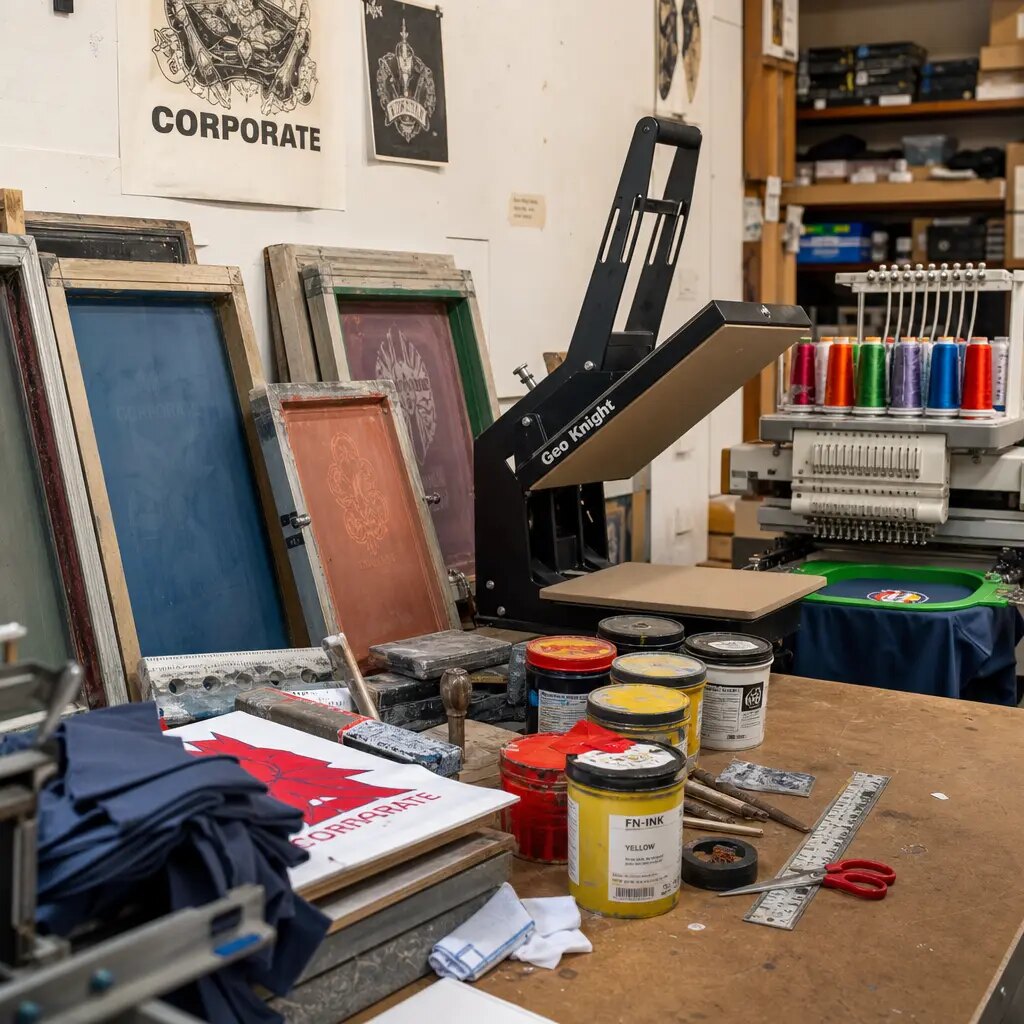
Most coffee roaster pouch programs use one-color or two-color logos, which makes screen printing the practical default. Screen printing gives solid opacity, good unit economics at volume, and a finish that suits natural cotton. It is especially appropriate for repeat programs where the same logo and pouch size will be reordered. The tradeoff is setup cost, screen preparation, and print queue time. If a buyer orders only a few hundred pieces, the per-piece impact of setup can appear high even when the supplier is pricing correctly.
For complex seasonal graphics, gradients, or many colors, transfer-based methods such as heat transfer or DTF can be useful. They handle detail well and can reduce setup friction for short runs. The buyer should still approve the handfeel and edge behavior. A large transfer panel on a natural cotton pouch may feel less breathable or less premium than ink printed into the fabric surface. If the pouch is intended as reusable merchandise, test whether the transfer cracks, lifts, or changes after repeated handling.
Embroidery and woven labels are alternatives when the brand wants texture rather than a large printed mark. Embroidery can look premium on heavier canvas but may pucker lightweight cotton or distort small pouches. Woven labels can be clean and consistent, especially as a side tab or lower-corner brand detail, but placement tolerance and label sewing quality must be defined. Whatever method is chosen, artwork approval should include size, position, color target, and acceptable variation on natural cotton.
- Screen print: best for one to three spot colors, larger volumes, and repeat orders
- Heat transfer or DTF: useful for small runs, multi-color artwork, and event graphics
- Embroidery: premium option but risky on lightweight fabric and small panels
- Woven label: good for subtle branding, but placement and stitch quality must be controlled
- Dark logos on natural cotton need a real strike-off because base cloth shade changes appearance
How MOQ and price breaks really work on cotton drawstring pouch quotes
MOQ on cotton drawstring pouches is usually driven by the least flexible step in production, not by sewing alone. Fabric availability, dye lot, print setup, trim sourcing, and packing complexity all influence the practical minimum. A natural cotton pouch made from stock fabric with a one-color logo can often support lower minimums than a dyed canvas pouch with several sizes, retail barcode stickers, and individual inserts. When a buyer sees a very low advertised MOQ, it is important to ask what assumptions make that MOQ possible.
Procurement teams should request quantity breaks using the actual SKU split. A quote for 5,000 pieces is not meaningful if the supplier assumes one size and one artwork, while the buyer actually needs five SKUs of 1,000 pieces each. Screen printing setup, fabric cutting, sewing line changeover, barcode control, and carton assortment all become more complex as SKU count rises. The factory may still accept the order, but the unit price and lead time should reflect that complexity.
A clear RFQ should ask how MOQ applies: per order, per size, per fabric color, per print artwork, or per packing style. It should also ask what changes at 1,000, 3,000, 5,000, and 10,000 pieces. Sometimes a slightly higher order quantity reduces unit cost enough to offset inventory carrying cost. In other cases, the cost reduction is small because the expensive part is the fabric choice or packing labor, not the sewing run length. Buyers should compare total landed cost and inventory risk, not just the lowest ex-works price.
- Natural stock fabric usually lowers MOQ pressure
- Custom dye, multiple sizes, multiple logos, and retail packing increase effective MOQ
- Printing setup often drives small-order cost more than sewing labor
- Ask for price breaks by exact SKU mix, not only total order quantity
- Confirm whether MOQ applies per color, per artwork, per size, or per entire PO
Sample approval: separate a good-looking prototype from a safe bulk order
A development sample is useful, but it does not always prove bulk production reality. Factories may make early samples from substitute fabric that is close in color and weight but not identical to the planned production lot. They may also use a sample-room sewing process that is more careful than the mass production line. For coffee roaster buyers, the risk is a sample that looks acceptable but does not accurately represent bulk handfeel, print opacity, shade, cord movement, or seam finish.
A safer approval process uses two stages. The first sample confirms size, construction direction, and artwork layout. The second sample, often called a pre-production sample, should be made from actual bulk fabric, actual drawstring material, and the actual print method. This is the sample that should be signed, sealed, photographed, measured, and used as the inspection standard. If the buyer approves only a prototype made from available stock fabric, the supplier may not have a reliable physical reference for bulk production.
Sample review should be measurable. Check total size, usable internal height, channel width, cord length, logo dimensions, logo distance from the bottom edge and channel, stitch density, seam allowance, and closing function when loaded. Also check how the pouch looks after being folded or bundled, because bulk packing can introduce wrinkles. The approval comments should be written clearly: approve, approve with listed changes, or reject and resample. Ambiguous comments such as “make it nicer” or “premium feel” are difficult for the factory to execute.
- Approve actual bulk fabric before full cutting begins
- Review logo placement relative to the drawstring channel and usable pouch area
- Test the drawcord pull with the intended coffee bag or accessory set inside
- Measure the sample and record tolerances instead of relying on visual approval only
- Keep one sealed approval sample with the buyer and one with the factory
Build a quote comparison sheet so the cheapest offer does not become the most expensive
When three suppliers quote the same cotton drawstring pouch concept, the lowest price often reflects a different specification. The fabric may be lighter, the cord may be polyester instead of cotton, the print area may be smaller, the channel may be single-fold instead of double-fold, or the packing may exclude carton liners and bundle sorting. A procurement quote comparison sheet should normalize every offer into the same unit of measure before price is judged.
Useful comparison columns include finished size, usable height, GSM range, weave, fabric finish, drawstring type, cord diameter or tape width, channel construction, seam allowance, print method, number of print colors, print area, sample cost, MOQ by SKU, packing method, carton quantity, carton dimensions, gross weight, lead time start point, and inspection standard. This level of detail may look excessive for a simple pouch, but it prevents small omissions from becoming disputes after deposit.
Coffee roaster importers should also consider landed cost. A heavier 8 oz canvas pouch may only add a moderate ex-works cost, but it can increase carton weight and reduce pieces per carton. If packing changes cause more cartons, freight and warehouse handling costs can move noticeably. Conversely, a very light pouch may save freight but damage the perceived value of a premium gift set. The best quote is the one that meets the required retail experience at the lowest reliable landed cost, not simply the lowest factory unit price.
- Separate fabric, print, sewing, packing, sampling, and freight assumptions when reviewing quotes
- Compare carton dimensions and pieces per carton, not only price per pouch
- Look for hidden downgrades such as thinner fabric, polyester cord, smaller logo, or loose packing
- Review whether lead time starts after deposit, artwork approval, or pre-production sample approval
- Use a side-by-side specification table before negotiating price
Packing details that affect warehouse efficiency and pouch condition
Packing is often treated as an afterthought, but it affects receiving speed, cleanliness, and downstream labor. Bulk packing is usually the most economical option for B2B buyers that will repack locally or use the pouches in subscription assembly. However, bulk packing should still be structured. Inner bundles of 25 or 50 pieces make counting easier and reduce handling at the destination warehouse. If the buyer wants to avoid individual polybags, carton liners or inner bags may be needed to protect natural cotton from dust and carton abrasion.
Retail-ready packing can make sense when each pouch needs a barcode, insert card, hangtag, or marketplace-ready label. This can save labor after import, but it increases factory handling time and introduces mix-up risk. If there are multiple pouch sizes, print versions, or barcode versions, the packing instruction must define exactly which item goes into each carton and how cartons are marked. Random mixed cartons can create receiving delays and chargebacks for distributors or fulfillment warehouses.
Moisture control is another practical issue for natural cotton. The pouch should arrive without mildew odor, water stains, or dirty handling marks. Buyers can specify clean cartons, carton liners, silica gel when appropriate, and a maximum carton gross weight suitable for manual handling. Carton labels should include item code, size, color, artwork version, quantity, carton number, PO number, and destination information if required. Good packing instructions reduce both product damage and administrative friction.
- Set standard inner bundle quantities such as 25 or 50 pieces per size and artwork
- Use carton liners or inner bags if eliminating individual polybags
- Define carton maximum gross weight for safer warehouse handling
- State whether barcode labels go on the pouch, inner bundle, carton, or all three
- Require carton markings to match SKU codes and packing list exactly
Specification comparison for buyers
| Spec decision | Recommended option | When it fits | Buyer risk to check |
|---|---|---|---|
| 4 oz to 5 oz cotton, about 140 to 170 GSM | Use for light retail accessory use, cupping cards, small sample pouches, or a simple presentation sleeve around a sealed inner pack | Best when the pouch is mainly visual packaging and carries light contents under about 250 g | Can feel too soft on medium or large pouch sizes; wrinkles more in transit; print texture and seam grin are more visible on natural cotton |
| 6 oz cotton, about 190 to 220 GSM | Use as the default starting point for many branded coffee roaster pouches | Fits 100 g to 500 g bag-over-bag presentation, subscription gift sets, and standard retail packs where shape matters but heavy canvas is not required | Some suppliers use 6 oz loosely; require a finished GSM range and confirm whether the fabric is measured before washing, after finishing, or from the final cut fabric |
| 8 oz cotton canvas, about 240 to 300 GSM | Choose for a stronger handfeel, better structure, darker print appearance, and repeat-use packaging | Good for premium roaster gift sets, brewer accessories, grinder brushes, bottle-and-coffee bundles, and reusable merchandise pouches | Increases fabric cost, carton weight, and freight volume; drawstring channel may become bulky unless channel width, seam allowance, and cord diameter are adjusted |
| Plain weave cotton | Choose for economical, soft, flexible pouches with simple one-color branding | Works for basic promotional runs, sample packs, and programs where the pouch folds flat inside a larger carton | Can look less crisp than canvas; fabric skew, wrinkling, and print registration movement are more likely on larger sizes or light weights |
| Cotton canvas | Choose for better body, cleaner print base, and a more substantial handfeel | Use when retail shelf presentation, reuse value, or premium gifting is part of the customer experience | Canvas quotes vary by yarn count, weave density, and finishing; two fabrics with the same GSM may not have the same stiffness or shrinkage behavior |
| Natural unbleached cotton | Use when the coffee brand wants a craft, low-intervention, neutral packaging look | Fits roasters with kraft paper bags, minimal labels, organic positioning, or low-plastic packaging strategies | Shade varies by cotton lot; dark logos can look warmer or cooler depending on base cloth; approve a bulk fabric standard, not only a digital mockup |
| Dyed cotton or dyed canvas | Use when the pouch must match a brand color or seasonal retail program | Fits gift campaigns, club memberships, private label programs, or multi-SKU color coding | Raises MOQ and lead time; colorfastness, shade band, and possible odor from finishing must be controlled before cutting bulk production |
| Screen print | Best value for solid logos and medium to large repeat orders | Fits most coffee roaster branding with one to three spot colors on one or two sides | Ink coverage on natural cotton can shift with fabric shade; ask for print placement tolerance, curing standard, and dry/wet rub resistance criteria |
| Heat transfer or DTF print | Useful for small MOQ artwork with many colors, gradients, or fine detail | Suitable for pilot runs, event packs, seasonal artwork, and short-term promotional programs | Handfeel is less natural; transfer edges may crack, lift, or feel plastic-like during repeated use or washing; approve a real printed sample |
Buyer checklist before sampling
- Define the pouch role before choosing fabric: direct coffee contact, outer packaging around a sealed coffee bag, accessory pouch, gift set pouch, reusable merchandise item, or warehouse kit component
- State the finished size in centimeters as width x height, and clarify whether height includes the drawstring channel or refers only to usable internal height
- List the intended contents and approximate loaded weight, such as one 250 g coffee bag, two 100 g sample bags, a mug and coffee bundle, or a brewer accessory kit
- Specify target fabric weight as a finished GSM range, for example 190 to 220 GSM, instead of relying only on terms such as 6 oz cotton or medium canvas
- Confirm weave and finish: plain weave cotton or canvas, natural unbleached, bleached, dyed, washed, brushed, or preshrunk
- Ask whether GSM is tested on finished fabric, bulk roll fabric, or a pre-finishing greige fabric, and request the test method or sampling method used by the supplier
- Define drawstring construction: cotton cord, polyester cord, braided cord, flat cotton tape, herringbone tape, single-pull, double-pull, knot finish, metal aglet, or sewn end
- Specify channel construction, including folded once or twice, channel width, distance from top edge, and whether bartacks are required at stress points
- Provide artwork as vector files and list logo width, height, print colors, Pantone or closest color target, print side count, and acceptable placement tolerance
- Decide whether the print should sit below the drawstring channel, centered on usable pouch area, or centered on the total front panel height
Factory quote questions to send
- What is the exact finished GSM range of the offered fabric, and is it measured on finished fabric, bulk roll fabric, or greige fabric before finishing?
- Is the fabric plain weave cotton or cotton canvas, and what yarn count, thread density, or weave description supports the quoted weight?
- Can you provide swatches for the quoted GSM options, including natural shade variation if the order uses unbleached cotton?
- What pouch size is included in the price, what is the usable internal height, and what seam allowance and drawstring channel width are assumed?
- Is the channel folded once or twice, and are bartacks, backstitching, or reinforced side seams included in the quoted sewing standard?
- What drawstring material is included: cotton cord, polyester cord, braided cord, flat cotton tape, or herringbone tape, and what diameter or width is quoted?
- Is the drawstring single-pull or double-pull, are the cord ends knotted or finished, and is knotting included in the labor cost?
- What print method is included, how many colors and sides are included, what is the maximum print area, and what setup charges apply?
- What color variation should we expect when printing on natural cotton, and can you provide a strike-off on the actual bulk fabric before production?
- What is the MOQ by size, fabric color, artwork, and packing style, and how does price change at 1,000, 3,000, 5,000, and 10,000 pieces?
Quality-control points to confirm
- Finished size tolerance should be defined by size band; a practical baseline is within plus or minus 0.5 cm for small pouches and plus or minus 1 cm for larger formats, unless the buyer requires tighter control
- Usable internal height should be checked separately from total height because the drawstring channel can reduce the space available for coffee bags or accessories
- Fabric weight should stay within the agreed GSM range across bulk rolls, not only on one lab swatch or one first-piece sample
- Fabric weave, handfeel, and natural shade should be compared against the approved standard, with different fabric lots segregated if shade variation is visible
- Print placement must align with the approved artwork centerline and stay within the agreed tolerance, especially when the logo sits close to the drawstring channel
- Print quality should be checked for missing ink, pinholes, smudging, over-curing, under-curing, color drift, ghosting, and edge roughness on textured cotton
- Rub resistance should be checked by a simple agreed dry-rub and, when relevant, damp-rub test so dark ink does not transfer easily during handling
- No open seams, skipped stitches, untrimmed thread clusters, twisted side seams, weak backstitching, or needle damage should exceed the accepted defect threshold
- Drawstring pull must move smoothly without channel blockage, and knots, cord lengths, or tape ends should be consistent across the lot
- Loaded-function testing should confirm that the pouch can close around the intended coffee bag or accessory set without seam stress or channel distortion